


Organic loose-leaf tea is, quite simply, tea in its purest and most authentic form. It’s made from whole or large-cut dried leaves that have been grown without any synthetic pesticides or fertilisers.
This isn’t just about being natural for the sake of it. This gentle approach keeps the tea's essential oils and complex flavours intact, giving you a brew that’s far richer and more nuanced than the dusty particles you find in most ordinary teabags. It’s a choice that reflects a commitment to incredible taste and sustainable farming.
What Makes Organic Loose Leaf Tea Different
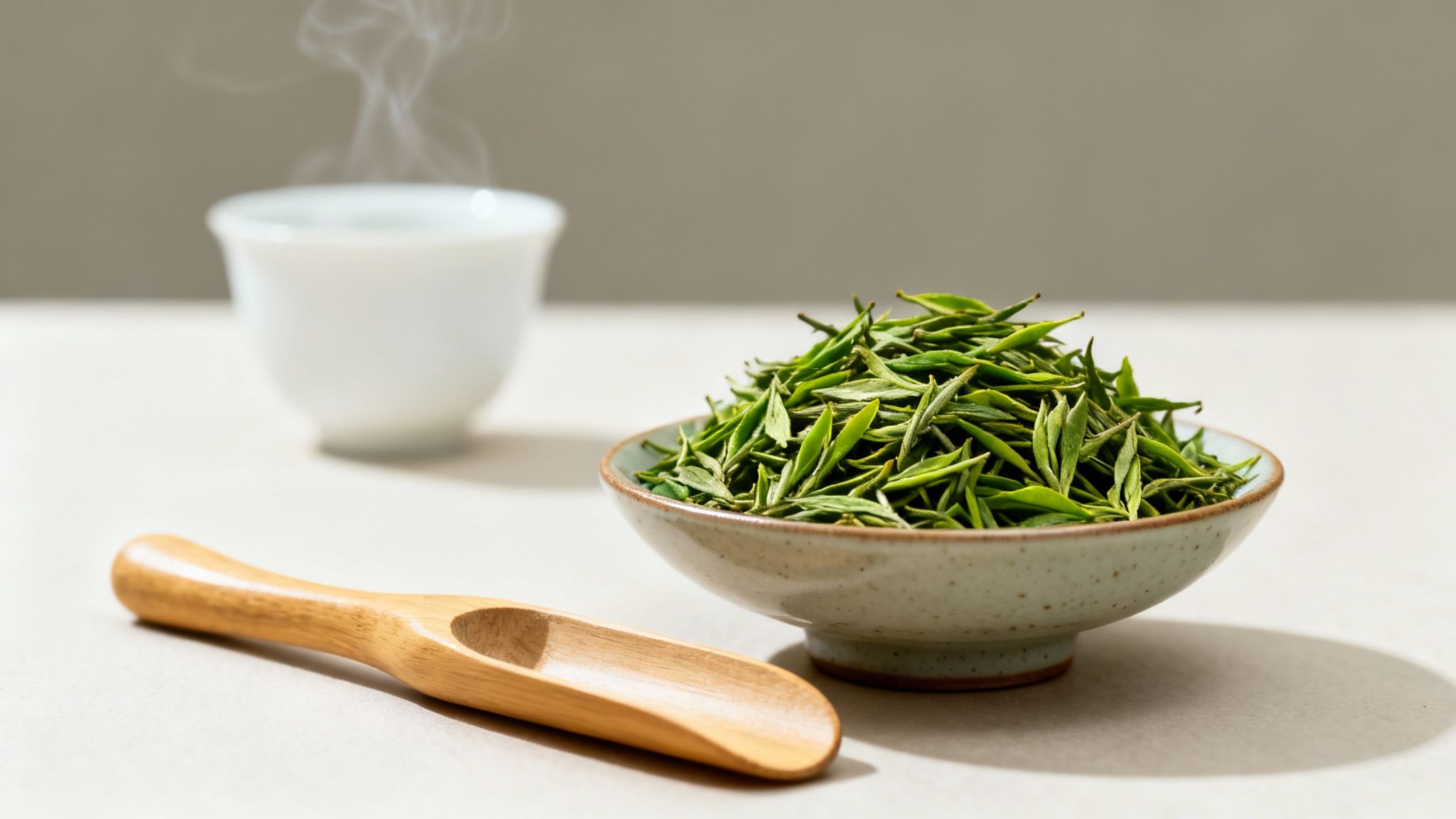
Think of it like this: compare a sun-ripened tomato picked fresh from a garden with a mass-produced one from a supermarket shelf. They’re both tomatoes, of course, but the flavour and experience are worlds apart. The same principle applies when you compare organic tea loose leaf to its conventional counterpart, especially the fine ‘dust’ and ‘fannings’ packed into standard teabags. The difference is fundamental—it’s about quality, form, and philosophy.
The term ‘loose leaf’ just means the tea is uncontained—whole or partially broken leaves, free to move. This freedom is everything. When you add hot water, the leaves have the space they need to unfurl and expand, releasing the full spectrum of aromas, oils, and delicate flavours locked inside. A cramped teabag, on the other hand, stifles this whole process, often resulting in a one-dimensional, disappointing brew.
The Organic Commitment A Philosophy of Purity
Adding the ‘organic’ label takes things a step further. It isn’t just a buzzword; it’s a legally protected standard guaranteeing how the tea was grown. Organic tea farming looks at the entire tea garden as a living ecosystem, nurturing it from the ground up.
The heart of organic farming is about working with nature, not against it. This means no synthetic pesticides, herbicides, or chemical fertilisers. Instead, growers use natural methods like composting and crop rotation to build healthy, resilient soil.
This commitment to doing things naturally has a massive impact on the tea you drink. Without chemical interference, the tea plant develops its true character, reflecting the unique soil, climate, and altitude where it grew—a concept the French call terroir. The result is a cup of tea that is not just cleaner, but often more complex and vibrant in flavour.
From Leaf Form to Flavour Experience
When you bring together whole leaves and organic farming, you get a far superior sensory journey. Because the leaves are left intact, they hold onto more of their volatile compounds—the very things responsible for aroma and flavour. It’s why just opening a tin of quality organic tea loose leaf hits you with a rich, fragrant bouquet before the kettle has even boiled.
Here are a few key differences you’ll notice straight away:
- A Fuller Flavour Profile: Whole leaves release a whole symphony of nuanced notes, from delicate florals to deep, malty undertones. These are the subtleties that are often completely lost when leaves are crushed for teabags.
- Less Bitterness: The tiny particles in teabags have a huge surface area, so they release tannins very quickly. This can easily lead to a bitter, astringent taste, especially if you over-steep. Loose leaves are much more forgiving, giving a smoother, more balanced infusion.
- Multiple Infusions: Many high-quality loose-leaf teas aren't a one-and-done affair. You can often steep them multiple times, with each cup revealing a new layer of flavour. This makes it not only a more interesting experience but also a more economical and sustainable choice in the long run.
Ultimately, choosing loose-leaf tea is about turning a simple daily habit into a more mindful and rewarding ritual. It’s an invitation to explore flavour, purity, and craftsmanship, one cup at a time.
Decoding Organic Certifications on Your Tea
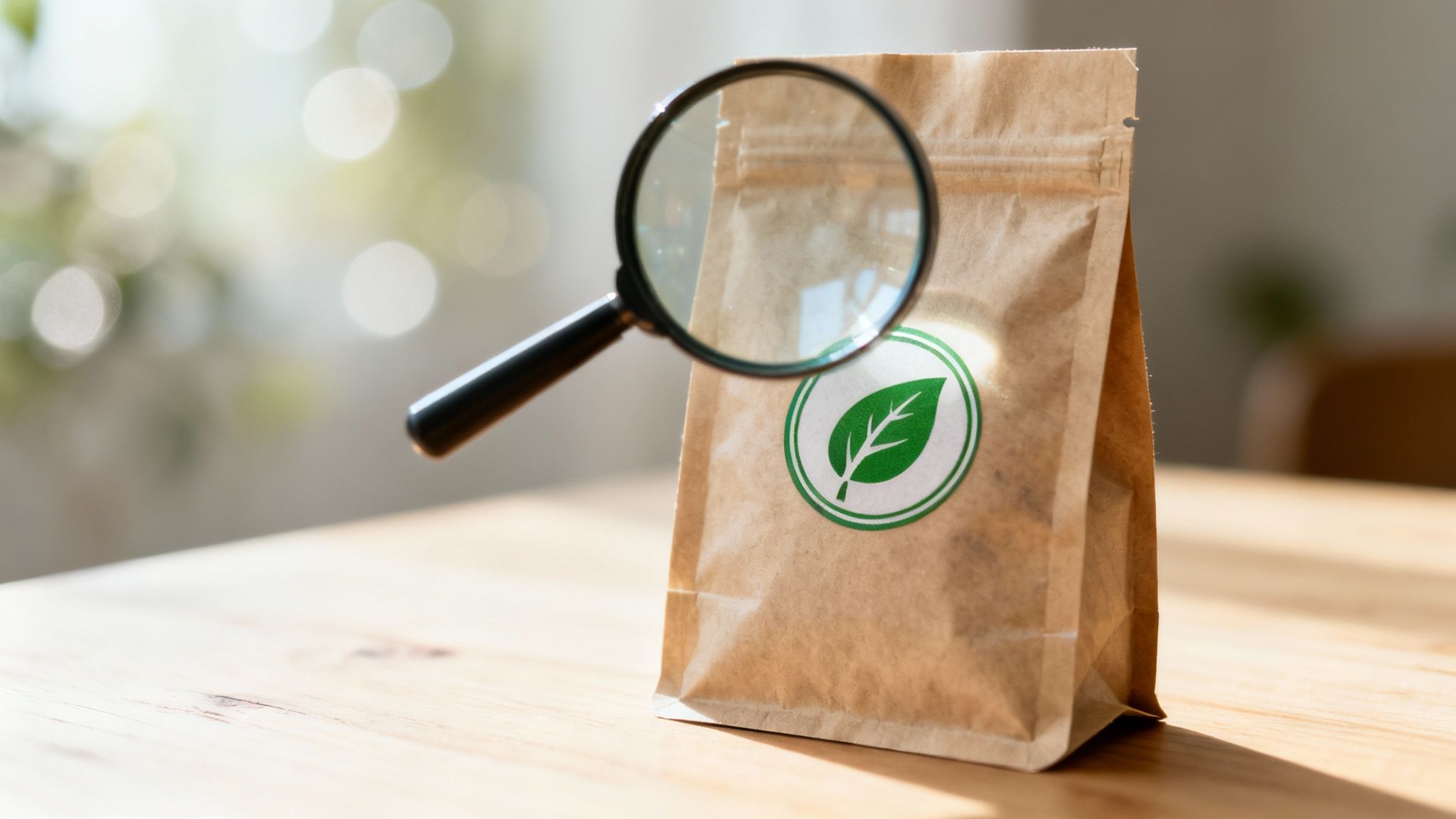
When you pick up a packet of organic tea loose leaf, you’ll almost certainly spot a little logo somewhere on the packaging. It’s easy to dismiss these as just another bit of marketing fluff, but that symbol is actually your guarantee—a seal of approval backed by a formidable set of standards.
Think of an organic certification as your tea’s passport. It’s a verified, transparent record showing the tea has met strict legal requirements every step of the way. This isn't just about dodging a few chemicals; it's a commitment to a holistic way of farming that puts ecological balance first.
Here in the UK, one of the most trusted symbols is the Soil Association logo. Their certification goes even further than the baseline EU organic standards, setting a higher bar for everything from soil health to wildlife protection. When you see their logo, you know that tea comes from a farm that’s actively working to improve the land it relies on.
What Organic Certification Truly Guarantees
Seeing an official organic logo means the tea has survived a pretty demanding inspection. Independent bodies audit every single stage, from the fields to the final packing, to ensure total compliance. This isn’t a one-and-done check-up, either. It’s an ongoing promise that growers have to keep proving.
This meticulous oversight means several key things are guaranteed:
- No Synthetic Nasties: Farmers use natural methods, like encouraging beneficial insects, to manage pests. This keeps harmful chemical residues off the tea leaves and, more importantly, out of your cup.
- No Artificial Fertilisers: Healthy soil is built the old-fashioned way with compost and other sustainable practices. This not only enriches the earth but produces far healthier, more resilient tea plants.
- Protecting Biodiversity: Organic farms are required to manage their land to support local wildlife, creating a richer, more balanced ecosystem.
- A Clear Paper Trail: Every batch of tea can be traced right back to its origins. This unbroken chain of custody is what ensures its organic integrity from the estate to your teapot.
It’s this deep-seated commitment that makes certified organic tea a completely different product from its conventionally grown cousins.
The Difference Between ‘Organic’ and ‘Natural’ Labels
It’s really important not to get "certified organic" mixed up with vague marketing terms like "natural" or "pure." These words sound lovely, but they’re often unregulated and have no legal weight behind them. A product labelled "natural" could quite easily have been grown using standard pesticides and artificial fertilisers.
A certified organic logo is a legally binding promise of how a product was made. A 'natural' label, on the other hand, is often just a marketing claim with no independent proof to back it up.
This is where the real power of certification shines through. It cuts through the marketing noise and gives you a standard you can actually rely on. To make it crystal clear, let's break down what you’re really getting with each label.
Understanding Tea Labels: a Comparison
This table shows just how much—or how little—is guaranteed by the different labels you'll find on tea packaging.
| Standard | Certified Organic (e.g., Soil Association) | Conventional (Non-Organic) | Unregulated 'Natural' Label |
|---|---|---|---|
| Pesticide Use | Prohibits synthetic pesticides and herbicides. | Routine use of synthetic chemicals is common. | No restrictions; can be grown with pesticides. |
| Fertilisers | Only natural fertilisers like compost are allowed. | Synthetic, chemical-based fertilisers are standard. | No specific regulations on fertiliser use. |
| Verification | Verified by independent, accredited third-party auditors. | No third-party verification for growing methods. | No verification; the claim is made by the producer. |
| Traceability | A fully traceable supply chain is mandatory. | Traceability is not a requirement for the consumer. | No traceability requirements. |
Ultimately, choosing certified organic loose-leaf tea isn’t just about what you’re avoiding; it’s about actively supporting a system that champions environmental health, transparency, and a higher standard of quality. It’s your best assurance that the tea you’re about to enjoy is as pure and authentic as nature intended.
The Real Benefits for Your Health and the Planet
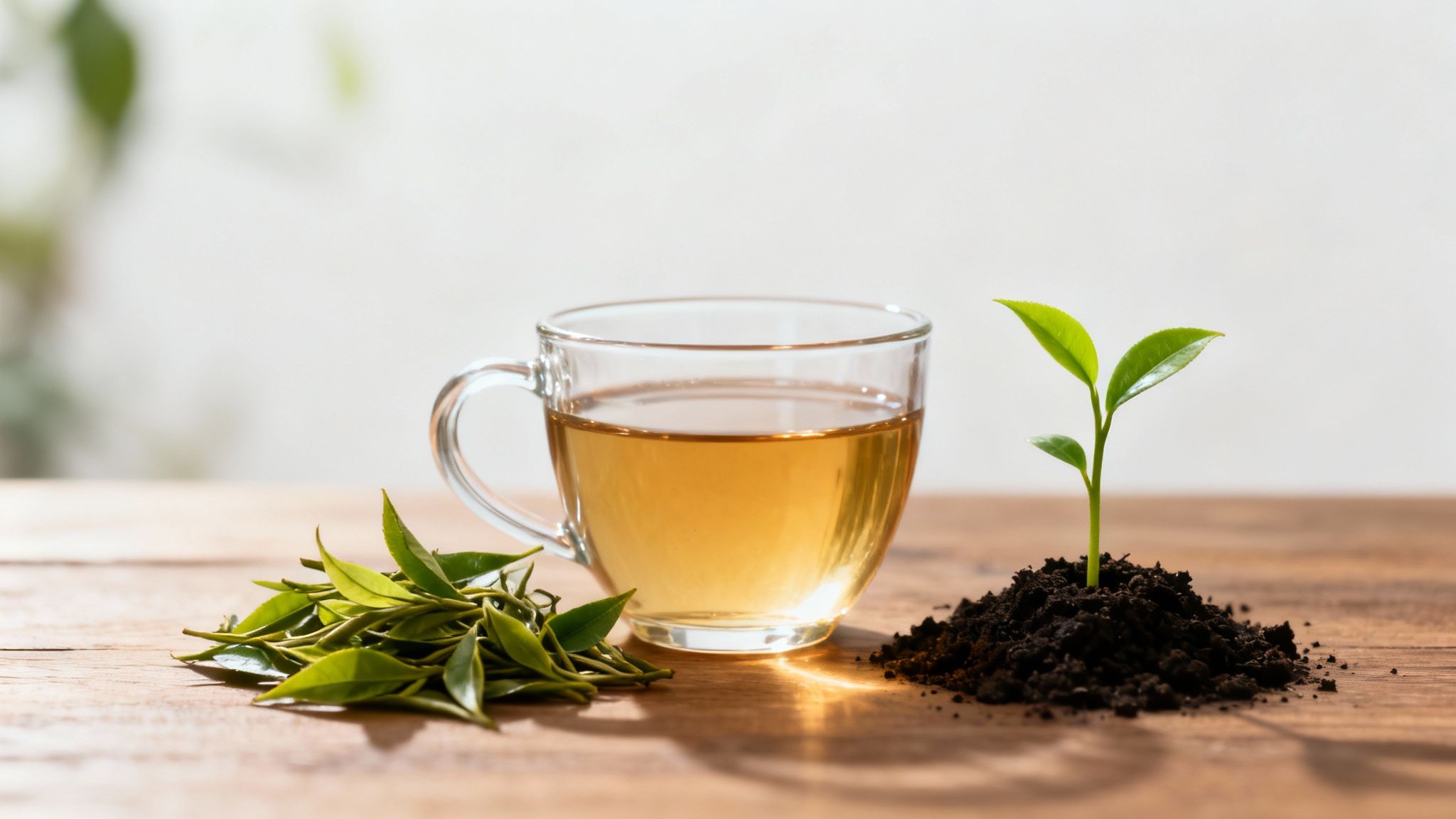
When you choose organic tea loose leaf, you're doing more than just picking out a nice brew. It's a choice that creates positive ripples, starting in your cup and extending all the way out to the tea gardens and the planet itself. It’s a simple act that turns your daily ritual into a vote for something better, connecting what you drink to the world outside your window.
The most immediate benefit is one of purity. At its heart, organic tea is grown without any synthetic pesticides, herbicides, or fertilisers. This gives you peace of mind, knowing that the only thing infusing in your water is pure, unadulterated tea leaf, free from the chemical residues that often tag along in conventionally grown teas.
But it's not just about what's left out; it's also about what's added in. Tea plants grown in healthy, vibrant soil have to work a bit harder, developing more complex and robust compounds to defend themselves naturally. This often means a higher concentration of the good stuff—beneficial antioxidants like polyphenols and catechins, which are famous for their wellness-boosting properties.
A Richer Cup for a Healthier You
Sipping a high-quality organic loose leaf tea means you're enjoying a drink that’s as close to its natural state as possible. The whole-leaf form is key, as it keeps all those delicate, beneficial compounds intact—compounds that often get pulverised and lost in the production of standard teabags.
Here’s what that really means for your health:
- Higher Antioxidant Content: Research suggests organically grown plants can pack a bigger antioxidant punch. These brilliant little compounds help your body fight off oxidative stress, which is a big win for your overall health.
- No Unwanted Extras: You get to skip the dose of synthetic chemical residues. For a drink you might enjoy every single day, that’s a pretty significant plus.
- Enhanced Flavour and Aroma: The essential oils that give tea its incredible scent and taste are much better preserved in whole leaves. This makes for a richer, more satisfying sensory experience—and that mindfulness is a form of self-care in itself.
Choosing organic isn't just about drinking tea. It's about consciously selecting a cleaner, richer, and more beneficial brew that helps support your body's natural balance.
Choosing organic loose leaf tea is a vote for a system that values purity and vitality. It's a recognition that the health of the soil is directly linked to the quality of the leaf, and ultimately, to your own personal wellness.
Nurturing the Planet One Tea Garden at a Time
The positive impact of your cuppa goes far beyond your teapot. Organic tea farming is a fundamentally restorative practice. Instead of taking from the earth, it gives back, nurturing the land for the long term.
Think of organic farmers as custodians of the land. They work in partnership with nature, using sustainable methods that make a real, lasting difference.
Building Healthy Soil: Rather than dousing fields in chemicals, organic farms build fertility from the ground up with composting, cover crops, and natural mulches. This creates a rich, living soil that holds water better, resists erosion, and even locks away more carbon from the atmosphere.
Protecting Waterways: One of the biggest problems with conventional farming is chemical runoff. Nasty pesticides and fertilisers can easily find their way into rivers and lakes, wreaking havoc on aquatic life. Organic farming stops this problem at the source, keeping our precious water sources clean.
Fostering Biodiversity: Organic tea gardens are buzzing with life. By ditching broad-spectrum pesticides, these farms become safe havens for birds, beneficial insects, and other wildlife. This biodiversity creates a naturally balanced ecosystem where pests are kept in check by their natural predators.
This commitment to the environment is part of a bigger picture. Making eco-conscious choices extends to all parts of our lives; you can even explore finding sustainable practices for products around your home. The principles are all connected, from the tea we drink to how it’s packaged. You can read more about our own approach in our post on sustainable packaging solutions. Every small choice adds up to a much larger, positive movement.
Following the Journey from Leaf to Cup
A truly exceptional cup of organic tea loose leaf tells a story that begins long before the leaves even touch your teapot. It's a story of people, place, and partnership. While the flavour is what we all chase, it’s the journey a tea takes from a remote garden to your cup that really defines its quality. Understanding this journey means appreciating the human touch behind every single brew.
The old-school tea supply chain can be a long and winding road, with leaves passing through countless hands before they land on a shelf. This often dilutes not just the tea's quality but also our connection to the farmers who grew it. Ethical sourcing flips this on its head, forging a shorter, more transparent path from the grower straight to you.
At its heart, this approach is about building real relationships with the people who cultivate the tea. It’s a shift from simply buying a commodity to creating genuine partnerships with tea estates and smallholder farmers. When we work directly with growers, it builds trust, ensures fairness, and creates a collaborative space where quality can properly flourish.
The Power of Direct Trade and Transparency
Direct trade is the backbone of ethical sourcing. Instead of getting tangled in a web of brokers and middlemen, we buy tea directly from the farmers or cooperatives that produce it. It sounds simple, but this one change has a huge impact on everyone involved.
For farmers, it means a fair price for their hard work—often much higher than they’d get on the open market. This financial stability lets them invest back into their communities, improve their farming methods, and plan for the future. It's a model built on mutual respect, not just a transaction.
For you, the tea drinker, this transparency offers a clear line of sight all the way back to the tea’s origin. You know exactly where your tea came from, who grew it, and that they were paid fairly for their skill and dedication. That connection adds a whole new layer of appreciation to the daily ritual of making tea.
When you choose a tea from a transparent supply chain, you’re backing a system where quality and ethics go hand-in-hand. It ensures that the value created at the source is recognised and rewarded, fostering a more equitable and sustainable tea industry for everyone.
This desire for traceability is something we're seeing more and more. A recent report showed that 55% of UK buyers now prioritise fair-trade and traceable products, actively looking for brands that are open about their supply chains. People want the story behind what they consume, and that reinforces just how important strong farmer partnerships are. You can dive deeper into this trend by checking out the full market report.
How Strong Relationships Cultivate Better Tea
The benefits of ethical sourcing don't just stop at fairness—they flow directly into the quality of the tea itself. When farmers have a direct, stable relationship with their buyers, they're more motivated to produce their absolute best leaves. They get the security they need to focus on meticulous cultivation and harvesting, knowing their effort will be properly rewarded.
This kind of collaboration often leads to exciting innovations and exceptional small batches of tea that would never see the light of day in a conventional supply chain. Buyers can work with farmers to experiment with different processing methods or to cultivate specific varietals, pushing the boundaries of flavour and quality.
Ultimately, knowing the origin of your organic tea loose leaf is about more than just a name on a map. It’s about recognising that every cup is the result of immense care, skill, and human effort. It's an assurance that the beautiful tea you’re enjoying has not only been grown in harmony with nature but has also supported the people and communities who made it possible. And that simple truth makes every single sip that much more meaningful.
How to Brew the Perfect Cup Every Time
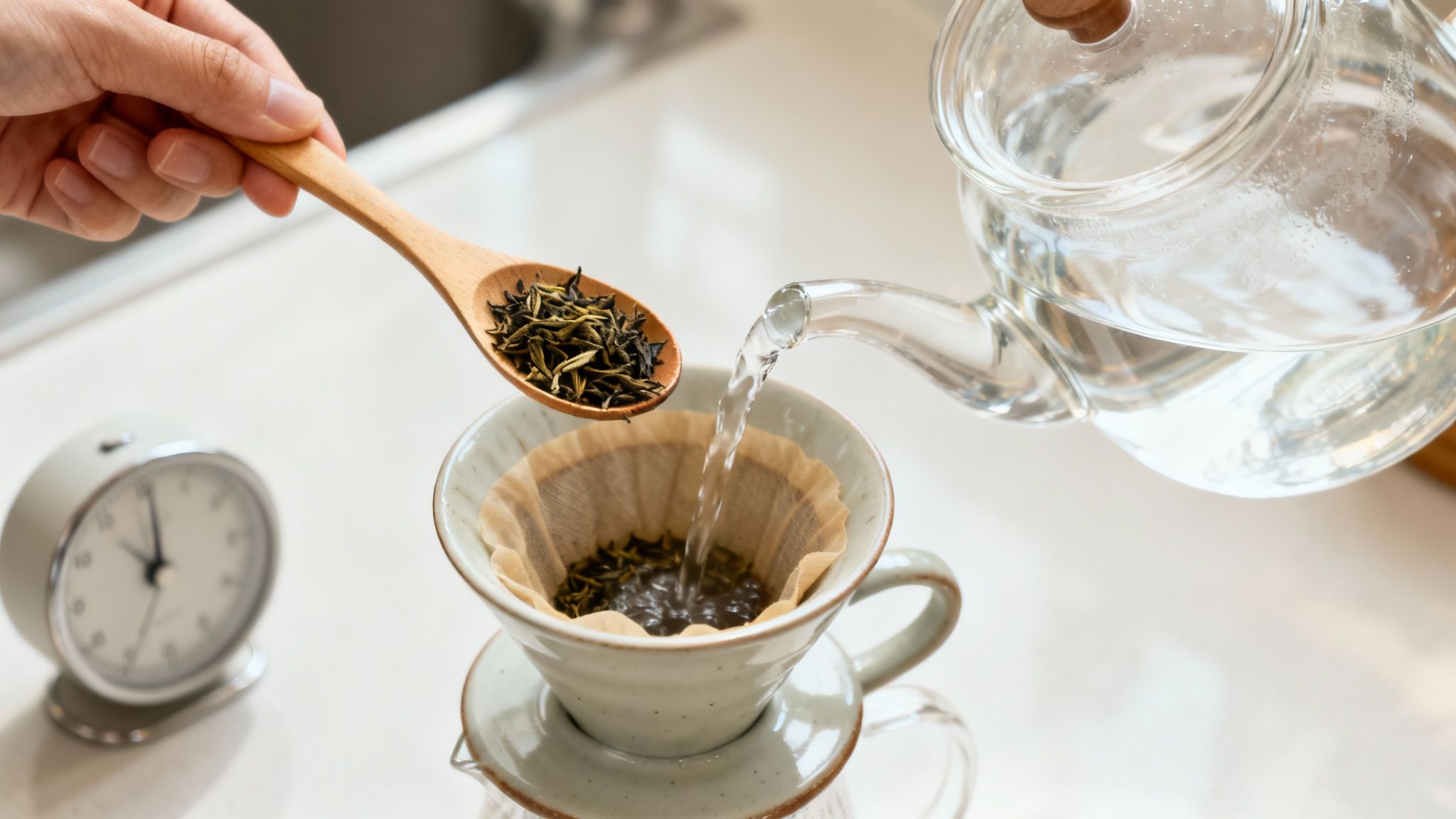
Getting the absolute best out of a premium organic tea loose leaf is an art, but thankfully, it’s one that’s easy to get the hang of. There’s no complex ritual involved, just a few key principles that coax the full character out of those beautiful whole leaves. Say goodbye to guesswork and bitter brews; a consistently perfect cup is well within your reach.
It all boils down to three simple things: how much tea you use, the temperature of your water, and how long you let it steep. Think of it like a favourite recipe – a slight tweak here or there can completely change the final result. Nailing this trio is what turns a simple drink into a truly satisfying daily ritual.
Mastering the Fundamentals of Brewing
First things first, let's cover the golden rules that apply to nearly every type of loose leaf tea. Getting these basics right will instantly elevate your brew and give you a brilliant foundation to build on.
Start with your measurements. A great rule of thumb is 2.5 grams of tea (that's about one teaspoon) for every 200ml of water. This ratio usually hits the sweet spot, but don't be afraid to adjust it. If you like it strong and punchy, add a little more. Prefer a more delicate cup? Use a little less.
Next up, your water. Always go for freshly drawn, filtered water if you can. It’s free from the impurities that can muddy the flavour of a good tea. It’s also best to avoid re-boiling water, as this reduces the oxygen content and can leave you with a disappointingly flat brew.
A Guide to Temperature and Steeping Times
Different teas have different personalities, and they need a unique approach to really shine. Water that’s too hot can easily scorch delicate leaves, leaving you with a bitter taste. On the flip side, water that’s too cool won’t extract the full depth of flavour.
Here’s a simple guide to get you started:
- Black Teas (e.g., Assam, English Breakfast): These robust leaves love the heat. Use water just off the boil, around 95-100°C, and let them steep for 3-5 minutes.
- Green Teas (e.g., Sencha, Gunpowder): A much more delicate character. To avoid bitterness, use cooler water around 75-80°C and a much shorter infusion of 1-3 minutes.
- White Teas (e.g., Silver Needle): The most fragile of them all. Stick to water between 70-80°C and a 2-4 minute steep to protect those subtle, sweet notes.
- Oolong Teas: This wonderfully diverse category sits somewhere between green and black. Aim for 85-95°C for 2-4 minutes. Many high-quality Oolongs can be re-steeped, revealing new layers of flavour each time.
- Herbal Infusions (Tisanes): Most herbals, like peppermint and chamomile, are hardy. They benefit from fully boiled water at 100°C and a longer steep of 5-7 minutes to release all their goodness.
The perfect brew is a personal journey. Use these guidelines as your starting point, but don't be afraid to experiment. If your tea tastes weak, try a longer steep; if it's too bitter, reduce the water temperature or steeping time.
Common Brewing Issues and How to Fix Them
Even the most experienced tea lover has an off-brew now and then. The good news is that most issues are easy to diagnose and fix, helping you tweak your technique for next time. If you want to dive even deeper, our complete guide on how to brew loose leaf tea has plenty more tips and tricks.
Let’s run through a few common problems:
| Problem | Likely Cause | Solution |
|---|---|---|
| My tea tastes bitter or astringent. | The water was too hot or you steeped it too long. This is a classic issue with green teas. | Drop the water temperature and shorten the infusion time. Try knocking 30 seconds off your steep to start. |
| My tea tastes weak and watery. | You might not have used enough tea, the water was too cool, or the steep time was too short. | Add a little more leaf, check your water temperature, or let it steep for a bit longer. |
| My tea tastes flat or dull. | This often comes down to poor water quality or using re-boiled water. | Always start with fresh, filtered water. Never re-boil water that's been sitting in the kettle. |
Brewing a beautiful cup of organic tea loose leaf is one of life’s simple pleasures, and it rewards a little bit of attention to detail. Once you get a feel for these principles, you’ll be making delicious, aromatic brews that are perfectly tailored to your taste, every single time.
Choosing the Best Organic Tea for Your Palate
Finding your perfect organic tea loose leaf is a bit of an adventure. With a whole world of flavours out there, from the deep, malty notes of an Indian Assam to the light, grassy taste of a Japanese Sencha, knowing where to start is half the battle. The first step? Learning to trust your own palate—it’s the best guide you have.
The growing thirst for genuinely good tea has completely changed the game. Here in the UK, the organic tea market is now worth over USD 44 million, which just goes to show how much we’ve all started looking for premium, well-sourced products. This brilliant demand means exceptional teas are easier to find than ever before, putting a world of flavour right at your fingertips. You can get the full picture by exploring the full market analysis on Deep Market Insights.
What to Look for Before You Buy
You can tell a lot about a loose leaf tea long before it ever touches hot water. Your eyes and nose are surprisingly good tools for spotting a quality product, whether you're browsing in a shop or online. A top-notch tea should look vibrant and consistent, with a rich, inviting smell that hints at its freshness.
Take a good look at the dry leaves. Are they mostly whole and intact, or is the packet full of broken bits and dust? Whole leaves are a great sign—it means they’ve been harvested and processed with care, which usually translates to a more complex, nuanced flavour in the cup. The colour should be bright and true to the tea’s type, too—a deep, rich black for an Assam or a vivid green for a Sencha.
A great organic loose leaf tea should smell as good as it tastes. When you open the pouch, a beautiful fragrance should hit you—be it floral, fruity, earthy, or sweet. If it smells dull or musty, it’s probably past its best.
Exploring Origins and Flavour Profiles
Just like with wine, where a tea comes from—its terroir—has a massive impact on how it tastes. Every region gives its own unique character to the tea leaves, creating a huge spectrum of flavours to explore. Getting to know these profiles can help you zero in on what you'll really enjoy.
Here are a few classic places to start your journey:
- India: This is the home of bold, assertive black teas. Try a malty Assam for a strong breakfast brew, or look for the floral, grape-like notes of a Darjeeling for a more delicate afternoon cup.
- China: The diversity here is incredible. You'll find everything from smoky Lapsang Souchong and earthy Pu-erh to smooth, nutty pan-fired green teas like Dragon Well.
- Japan: Known for its signature steamed green teas. Sencha is the fresh, slightly savoury everyday classic, while Matcha offers a rich, umami-packed experience unlike any other.
Finding your favourite brew is a delicious process of trial and error. To help you on your way, we’ve put together a list of some of the best organic tea brands to get you started.
Your Questions Answered
Diving into the world of organic tea can spark a few questions, especially when you’re making the leap from bags to loose leaf. We get it. So, we've put together answers to some of the most common queries we hear, building on what we've covered in this guide.
Is Organic Loose Leaf Tea Really Better Than Organic Tea Bags?
In a word, yes. The difference is all about the quality and wholeness of the leaf. Organic tea loose leaf is made from whole or large pieces of tea leaves, which hold onto their essential oils, complex flavours, and all the good stuff inside. They need room to unfurl as they brew, releasing a depth of aroma and taste you just can't get otherwise.
Most tea bags, on the other hand, are filled with the tiny, broken bits left over from processing – often called 'dust' or 'fannings'. While they brew quickly, the result is usually a one-dimensional, often bitter, cup. Choosing loose leaf means you’re getting the tea as it was always intended to be enjoyed.
Why Does Organic Tea Cost More Than Non-Organic Tea?
That slightly higher price tag on organic tea is a direct reflection of the care and effort that goes into growing it. Organic farmers don't use synthetic pesticides or fertilisers, which are cheaper but have a huge environmental cost. Instead, they rely on more labour-intensive methods like composting and companion planting to keep their soil and plants healthy.
The premium you pay for organic tea isn't just for a label; it's an investment in a cleaner product, a healthier ecosystem, and fair practices that support farmers and protect the land for future generations.
There's also the rigorous process of getting—and keeping—that official organic certification. It's a significant cost for farmers, but it's your guarantee that the tea in your cup is as pure as it gets.
How Should I Store My Loose Leaf Tea to Keep It Fresh?
Great tea deserves great care. To keep your leaves tasting their best, you need to protect them from their four main enemies: light, heat, moisture, and strong smells. It’s simpler than it sounds.
Just pop your tea in an airtight, opaque container and tuck it away in a cool, dark spot like a cupboard or pantry. Keep it away from the spice rack! Steer clear of the fridge or freezer too, as the condensation can ruin the delicate leaves. Stored this way, your organic loose leaf can stay vibrant and full of flavour for up to two years, making every brew as good as the first.
Ready to taste the difference for yourself? Dive into a world of exceptional flavour and conscious sourcing with Jeeves & Jericho. Explore our collection of premium organic teas today.