


Looking for a comforting cuppa without the buzz? A non-caffeine tea is just the ticket. But it's not one single thing. The term actually covers two very different kinds of brews: naturally caffeine-free herbal infusions (think chamomile, rooibos, or peppermint) and decaffeinated versions of classic teas like black or green tea, which have had the caffeine removed.
Your Journey Into the World of Caffeine-Free Tea
Dipping your toes into the world of non-caffeine tea is about discovering a huge range of flavours, aromas, and wellness benefits. It’s more than just swapping out your usual brew; it’s about embracing a more mindful way of life. It’s perfect if you're looking to cut down on caffeine, get a better night's sleep, or simply want a calming ritual to enjoy any time of day.
And it seems many of us are doing just that. Here in the UK, the shift towards herbal, rooibos, and fruit infusions has been huge, even while the traditional tea market has slowed. People are actively choosing these healthier options to help them relax and unwind. This trend really shows a growing appreciation for drinks that soothe rather than stimulate.
Understanding the Basics
The fundamental difference is simple but it's the key to everything. Some infusions are born without caffeine, while others have it taken out.
-
Naturally Caffeine-Free: These are what we often call 'tisanes' or 'herbal infusions'. They aren't made from the traditional tea plant at all, but from a whole host of other plants, fruits, flowers, and spices that simply don't produce caffeine. Think of a bright, zingy peppermint or a gentle, floral chamomile.
-
Decaffeinated Tea: This starts its life as a proper tea from the Camellia sinensis plant – like the leaves used for your morning black or green tea, which are naturally caffeinated. These leaves then go through a special process to wash away most of the caffeine.
Getting your head around this distinction is the first step to finding the perfect brew for you. Whether you're after the familiar, comforting taste of an English Breakfast without the jitters, or you're ready to explore the delicate notes of a new herbal blend, there's a world of non-caffeine tea waiting.
If you're curious about the bigger picture, our guide covering the different types of tea is a great place to start.
Exploring the Main Types of Non Caffeine Tea
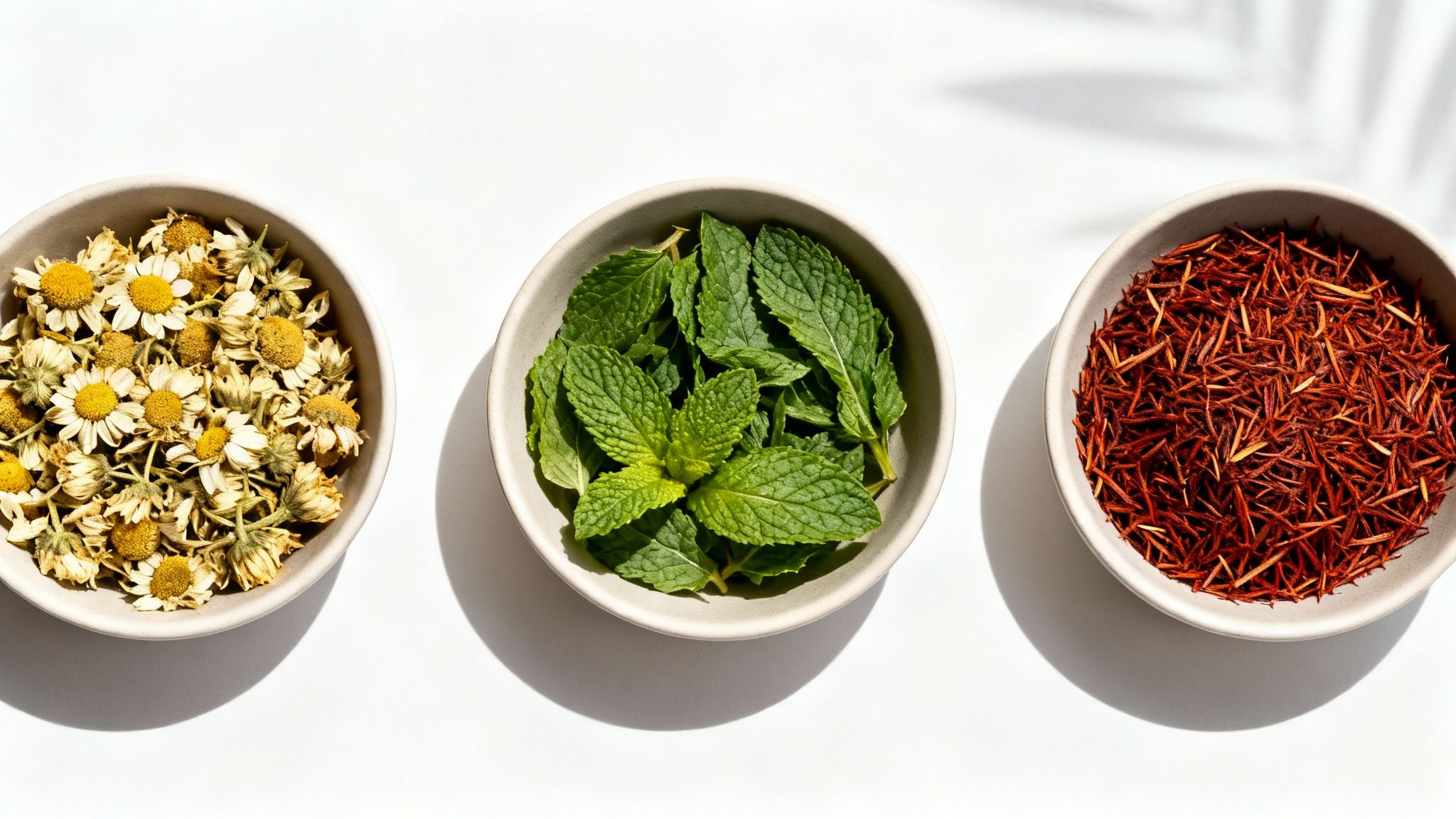
Diving into the world of non-caffeine tea is a bit like opening a globe-trotting spice chest—it’s full of incredible colours, aromas, and stories. While the options seem endless, they neatly fall into a few key categories. Getting to know these groups is your first step to finding the perfect brew for any mood or moment.
The biggest and most well-known group is Herbal Infusions, which you might also hear called by their more traditional name, ‘tisanes’. These are what most of us picture when we think of a caffeine-free cuppa. They aren't actually ‘tea’ in the traditional sense, as they don’t come from the Camellia sinensis plant. Instead, they’re a beautiful medley of dried flowers, herbs, spices, and leaves.
It’s this very diversity that makes herbal infusions so captivating. Each ingredient brings its own distinct character and wellness story to the cup.
Classic Herbal Infusions
Some herbal brews are absolute classics, loved for generations and for good reason. They are the cornerstones of any good tea cupboard.
- Chamomile: With its gentle, apple-like floral notes, chamomile is the quintessential bedtime brew. It’s celebrated for its calming effect, helping you to properly unwind after a long day.
- Peppermint: Sharp, cool, and wonderfully invigorating. A cup of peppermint tea is a brilliant digestive, perfect for settling the stomach after a meal.
- Rooibos: Hailing from South Africa’s Cederberg mountains, this ‘red bush’ tea has a naturally sweet, nutty, and incredibly smooth flavour. It’s packed with antioxidants and entirely caffeine-free, making it a fantastic alternative to your usual black tea.
"Unlike caffeinated teas, herbal teas offer medicinal benefits without the stimulating effects of caffeine. For example, ginger tea is recognized for its anti-inflammatory properties and its ability to boost the immune system."
Taking the time to explore these different caffeine-free herbal teas uncovers a whole world of flavour, from earthy and spicy to light and floral. To learn more, this guide on the best herbal teas for health is a great place to start your journey.
A Quick Comparison of Non-Caffeine Teas
To help you navigate the main options, here’s a simple table breaking down the most popular types of non-caffeine tea. It’s a handy reference for comparing where they come from, what they taste like, and the main reason people love them.
| Tea Type | Source | Flavour Profile | Primary Benefit |
|---|---|---|---|
| Chamomile | Flowers of the Chamomile plant | Delicate, floral, apple-like | Calming, aids sleep |
| Peppermint | Leaves of the Peppermint plant | Sharp, cool, minty, invigorating | Soothes digestion |
| Rooibos | Leaves of the South African 'Red Bush' | Naturally sweet, nutty, earthy | Rich in antioxidants, good black tea alternative |
| Fruit Tisane | Dried fruits, flowers, herbs | Sweet, tangy, fruity | Hydrating, refreshing (hot or cold) |
| Decaffeinated Tea | Camellia sinensis (tea plant) | Classic black/green tea flavour | Familiar taste without the caffeine kick |
As you can see, there's a naturally caffeine-free option for just about any preference, from a comforting night-time brew to a zesty iced drink.
Fruit Tisanes And Decaffeinated Teas
Moving beyond the single-herb classics, you’ll discover vibrant Fruit Tisanes. These are beautiful blends based on ingredients like dried berries, citrus peel, and hibiscus. They brew into stunningly colourful, fragrant cups that are naturally sweet and tangy—a wonderful, healthy alternative to sugary drinks that’s just as delicious iced as it is hot.
Finally, there are Decaffeinated Teas. Now, it’s crucial to know that these are a different beast entirely from naturally caffeine-free infusions. These start life as proper black or green tea leaves from the Camellia sinensis plant, which then go through a special process to remove most of the caffeine.
While a tiny trace amount might be left (usually less than 5 mg per cup), it’s not enough to give you the jitters. This makes them the ideal choice when you’re craving the rich, familiar taste of a traditional cuppa but need to skip the caffeine.
Naturally Caffeine-Free vs. Decaffeinated: What's the Difference?
When you’re on the hunt for a non-caffeine tea, you'll spot two key phrases on the packaging: "naturally caffeine-free" and "decaffeinated." They might sound like they mean the same thing, but they describe two entirely different journeys from plant to cup. Getting your head around this is the secret to finding the perfect brew for you.
Here's a simple way to think about it: naturally caffeine-free teas are like apples. They never had any caffeine in them in the first place. Decaffeinated teas are more like decaf coffee; they started life with caffeine, which was then taken out.
The Pure and Simple Path: Naturally Caffeine-Free
Naturally caffeine-free options aren't made from the traditional tea plant (Camellia sinensis) at all. Instead, they’re what we call infusions or tisanes, brewed from a huge variety of other botanicals that simply don't produce caffeine.
This is where you'll find favourites like:
- Herbal Infusions: Think calming chamomile, zesty peppermint, or warming ginger.
- Fruit Tisanes: Vibrant, tangy blends made from dried fruits and hibiscus.
- Rooibos (Red Bush): A South African plant that gives a smooth, earthy brew, and it's packed with antioxidants.
Because nothing has been stripped away, these infusions keep their full, original flavour profile and all the wonderful natural compounds the plants have to offer. It’s the purest way to enjoy a delicious, stimulant-free drink.
The Decaffeination Process: How It Works
Decaffeinated tea, on the other hand, begins its life as a proper black, green, or oolong tea. The leaves from these plants naturally contain caffeine, which needs to be removed. There are a few ways to do this, but the most respected method for high-quality teas is the CO2 process.
In this clever method, pressurised carbon dioxide (CO2) acts as a natural solvent. It selectively bonds with the caffeine molecules, drawing them out of the tea leaves while leaving most of the good stuff behind. It's incredibly effective and does a fantastic job of preserving the tea's delicate flavour and antioxidant compounds.
It's important to know that decaffeination isn't a 100% complete process. Even after it's been treated, a decaf tea will still have tiny trace amounts of caffeine left, usually around 2-5 mg per cup. To get into the nitty-gritty, you can learn more about the specific caffeine content in teas in our detailed guide.
For most of us, this tiny amount is completely negligible. But if you need to avoid caffeine altogether for health reasons or because you’re particularly sensitive, a naturally caffeine-free herbal infusion is always your safest bet.
Ultimately, the choice comes down to what you fancy: the authentic taste of a classic brew, or the pure, untouched character of an herbal blend?
The Upside of Switching to Non-Caffeine Tea
Choosing a non-caffeine tea isn't just about ditching the jitters; it’s about embracing a whole host of wellness benefits that can quietly transform your daily routine. Think of it less as taking something away and more as adding something wonderful in – botanicals that can soothe, restore, and help your body find its natural balance. The positive ripple effects go far beyond just getting a better night's kip.
Lots of people find that cutting back on caffeine helps level out their mood and takes the edge off daily stress. While caffeine can flick the switch on our 'fight or flight' response, a warm cup of herbal tea does the exact opposite. It creates a small pocket of calm, a simple ritual that can become a surprisingly powerful tool for navigating the day's pressures.
The beauty of caffeine-free teas is that you can enjoy a flavourful, hydrating brew any time of day or night, without a second thought about jitters, energy slumps, or a restless night. It's a simple, satisfying step towards a more balanced way of living.
Better Sleep and Winding Down
One of the best-known perks of non-caffeine tea is its knack for paving the way to a good night's sleep. Certain herbal infusions are famous for their gentle, calming qualities that give your body a nudge, letting it know it's time to unwind.
- Chamomile: The classic bedtime brew. Its calming properties are thought to help ease you into sleep and quieten a busy mind.
- Lavender: That unmistakable soothing scent isn't just for show. Lavender can help relax the nervous system, making it easier to drift off.
- Lemon Balm: Part of the mint family, this herb has a long history of being used to lift spirits and reduce stress.
Weaving one of these into your evening routine creates a lovely, peaceful ritual. It's the perfect way to prepare for a restorative rest, helping you wake up feeling properly refreshed and ready to go.
A Helping Hand for Digestion and Hydration
Beyond just relaxation, many caffeine-free infusions are brilliant for your digestive system. A soothing cup after a big meal can feel like a godsend. Peppermint tea, for example, is well-loved for its ability to ease an unhappy stomach and bloating by helping the digestive muscles to relax. Ginger tea is another hero, often used to help with nausea and keep things running smoothly.
On top of all that, these teas are a fantastic way to stay hydrated. It's no surprise that health-conscious folk across the UK are swapping sugary drinks for flavourful, low-calorie alternatives like herbal teas. You can see this shift in the Ready-to-Drink (RTD) tea market, where home consumption is expected to hit 17.83 million litres. People are actively looking for antioxidant-rich options, and iced herbal teas fit the bill perfectly. You can read more about this growing trend and its impact on the market.
Simply swapping one or two of your daily drinks for a non-caffeine tea is an easy, enjoyable way to top up your fluid intake while getting all these extra benefits.
How to Brew the Perfect Cup Every Time
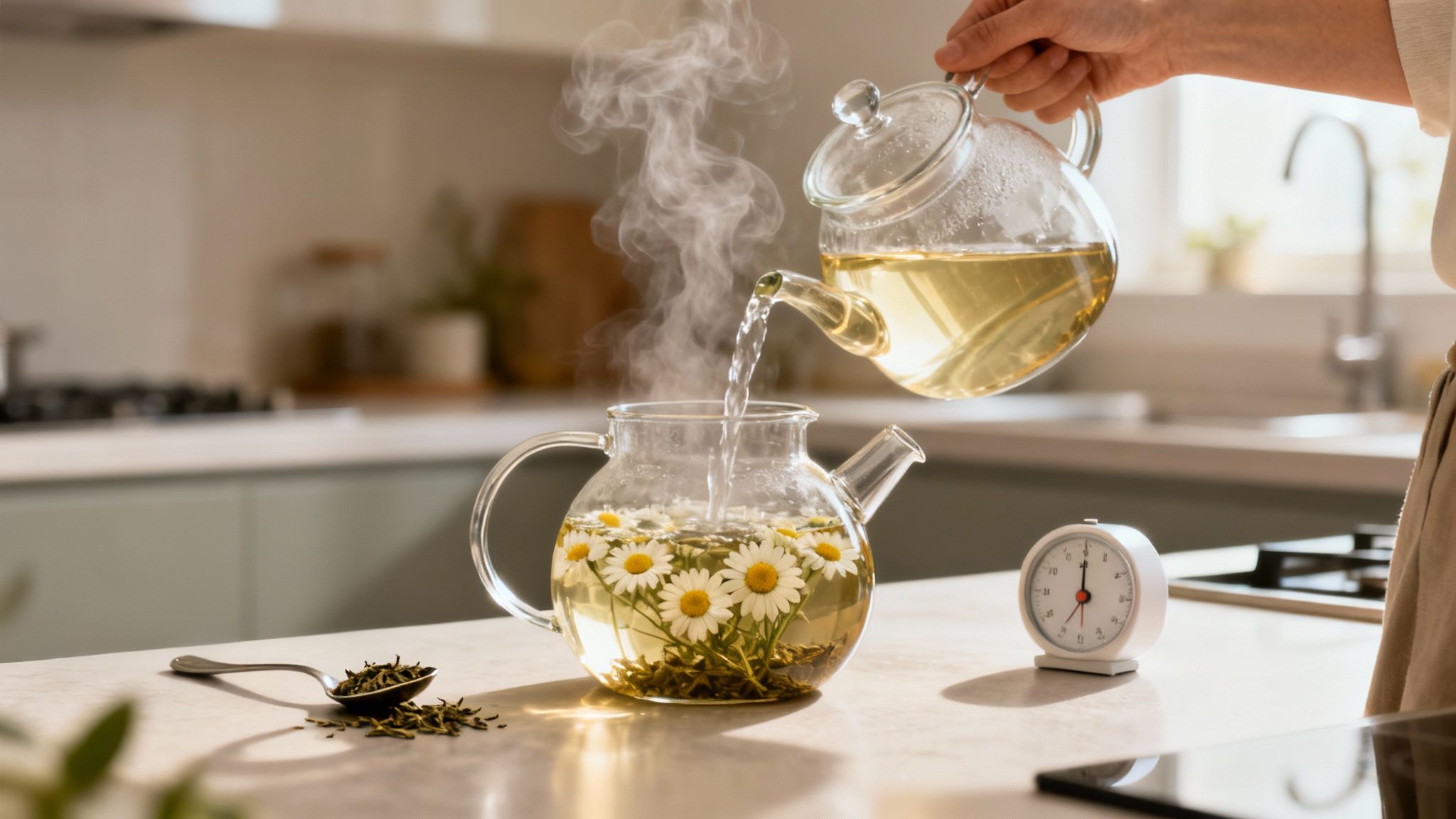
Getting the absolute best out of your non-caffeine tea is less a science and more of a simple art form. It really just comes down to a few key things: the temperature of your water, how long you let it steep, and the right amount of tea for your cup. Get these right, and you’ll elevate your daily brew into something truly special.
The good news is that most herbal infusions are wonderfully robust. Unlike delicate green teas that can turn bitter if the water is too hot, these botanicals love a good, rolling boil. Using freshly boiled water helps them to fully open up, releasing all their beautiful aromas and beneficial compounds.
The perfect brew is all about control. By paying attention to temperature and time, you ensure the delicate botanicals release their intended flavour without becoming bitter or weak. It’s the difference between a good cup and a great one.
If you’re keen on getting temperatures just right for different infusions, an Aicok Electric Kettle with variable settings can be a brilliant tool to have in your kitchen.
Mastering the Fundamentals
Ready to make a proper cuppa? Here’s a straightforward guide that works whether you're using a simple tea bag or beautiful loose-leaf flowers and herbs.
- Water Temperature: For the vast majority of herbal teas—think chamomile, peppermint, and rooibos—you'll want to bring fresh, filtered water to a full, rolling boil (100°C). This high heat is key to extracting the richest flavour.
- Tea-to-Water Ratio: As a solid starting point, use one tea bag or one heaped teaspoon of loose-leaf tea for every 200-250ml of water, which is about a standard mug.
- Steeping Time: This is where you can really start to play around, but a good rule is to steep most herbal infusions for 5-7 minutes. Any less and the flavour might feel a bit thin; much more, and some can taste a little overdone.
Don't be afraid to tweak these to your own taste. You might find that an 8-minute steep gives you the perfect, punchy peppermint you love, or that a lighter, 4-minute chamomile is just the ticket. It's your ritual, after all!
Simple Recipes to Inspire You
Once you've nailed the basics, you can have some real fun. A simple herbal tea can be the foundation for some incredible drinks. Here are a couple of easy ideas to get you started.
Bedtime Chamomile Latte
A wonderfully creamy and comforting drink to help you settle down for the night.
- Brew a strong cup of chamomile tea using two tea bags or two teaspoons of loose flowers.
- While it steeps, gently warm and froth about 150ml of your milk of choice (dairy or a plant-based alternative works perfectly).
- Strain the tea into your favourite mug and pour the frothed milk over the top. Finish with a little drizzle of honey or maple syrup if you have a sweet tooth.
Iced Peppermint & Lemon Infusion
Crisp, cool, and unbelievably refreshing on a warm afternoon.
- Start by brewing a strong batch of peppermint tea (use double the usual amount of tea) and allow it to cool completely to room temperature.
- Fill a tall glass with plenty of ice and add a few fresh slices of lemon.
- Pour the cooled peppermint tea over the ice and garnish with a fresh sprig of mint.
These simple recipes are a great reminder of just how versatile your go-to herbal teas can be, turning a humble cuppa into something a bit more special.
Choosing High Quality Non Caffeine Tea
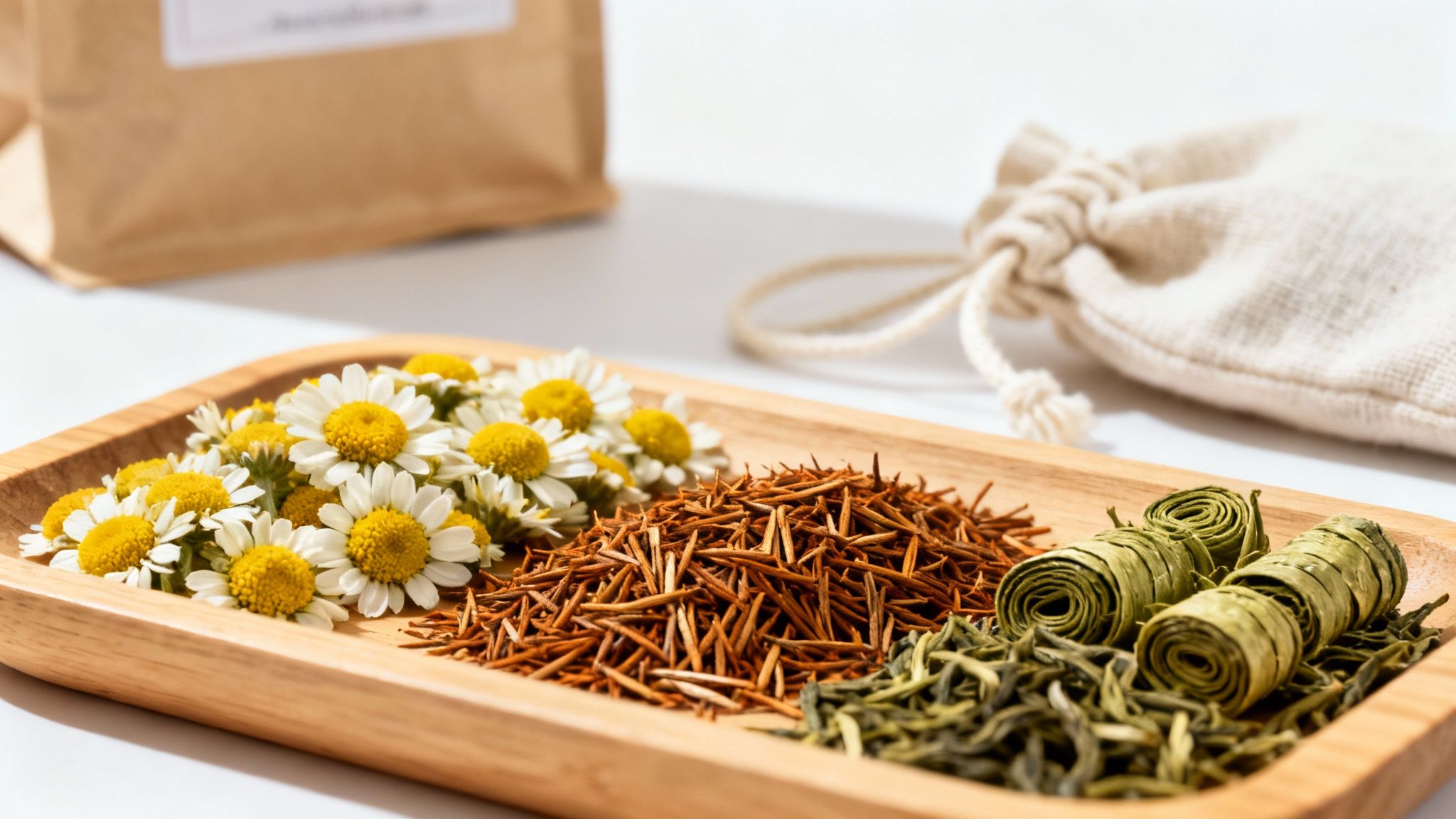
When you’re choosing a non-caffeine tea, you quickly realise that the quality of the ingredients makes all the difference. It’s what separates a bland, dusty cup from a truly memorable, flavourful experience. Learning to spot the signs of a superior product will transform your daily ritual.
For herbal infusions like chamomile or peppermint, the best clue is right there in front of your eyes. You want to see whole, identifiable ingredients: full flower heads, large pieces of leaves, and vibrant fragments of fruit or spice. This is a sure sign the botanicals have been handled with care and still hold all their precious essential oils – that’s where the flavour and aroma live.
The rule is simple: if it looks like potpourri, it will taste like it. High-quality herbal tea should look like a carefully dried version of its fresh self, not unrecognisable dust in a bag.
It’s this principle of wholeness that guarantees a much richer and more complex brew.
Judging Decaffeinated Teas and Ethical Sourcing
When it comes to decaffeinated black or green teas, spotting quality is a little different. Your best bet is to look for suppliers who are open about their decaffeination method. The CO2 process is widely seen as the gold standard for preserving the tea leaf's original character and antioxidant goodness. The leaves themselves should also look the part – uniform in size and colour, not broken into tiny, dusty bits known as fannings.
But it goes beyond just the ingredients. It’s worth thinking about where your tea comes from. Choosing a non-caffeine tea from companies that care about ethical and sustainable practices often just leads to a better product all around.
- Ethical Sourcing: This ensures farmers get a fair wage and work in safe conditions. It fosters a proper partnership that encourages high-quality cultivation from the ground up.
- Sustainable Practices: Farming methods that are kinder to the environment often result in healthier, more robust plants. And healthier plants simply produce more flavourful tea.
When you invest in a well-sourced, high-quality product, you’re not just getting a better-tasting cup. You’re also supporting a system that values both people and the planet, and there’s a real satisfaction in that.
Your Questions Answered
We've covered a lot of ground, but there are always a few lingering questions. Let's clear up some of the most common queries people have when they start exploring the world of caffeine-free tea.
Does Decaffeinated Tea Still Contain Caffeine?
It’s a great question, and the short answer is yes, but only a tiny bit. The decaffeination process is incredibly effective, but it can't quite remove every last trace. A cup of decaf tea usually has around 2-5 mg of caffeine left over.
For most people, this is a negligible amount. However, if you're extremely sensitive or need to cut out caffeine completely for medical reasons, you're better off with a naturally caffeine-free herbal or fruit infusion. Things like rooibos, peppermint, or chamomile are guaranteed to be 100% caffeine-free.
Is Non-Caffeine Tea Safe During Pregnancy?
Many herbal infusions are perfectly fine to enjoy in moderation during pregnancy, and some can be wonderfully soothing. Rooibos, ginger, and peppermint are often recommended for their gentle, calming properties.
That said, it’s vital to remember that not all herbs are created equal, and some can be quite potent. We always recommend having a chat with your doctor or midwife before introducing any new herbal infusions into your routine, just to be on the safe side.
Can I Drink Non-Caffeine Tea at Night?
Absolutely! This is where caffeine-free teas really shine. Without any stimulants to worry about, you can sip away to your heart's content without it meddling with your sleep.
In fact, a warm brew can become a wonderful part of your winding-down ritual.
- Chamomile: Famously known for its gentle, sleep-promoting qualities.
- Lavender: The aroma alone is wonderfully relaxing, helping to calm the mind.
A cup of one of these infusions can be a lovely signal to your body and mind that the day is done and it's time for rest.
At Jeeves & Jericho, we’re passionate about sourcing exquisite whole-leaf teas and botanicals that make every cup a memorable experience. You can explore our hand-picked collection of naturally caffeine-free herbal infusions and expertly decaffeinated teas at https://www.jeevesandjericho.com.