


If you've been looking for natural ways to support your digestion, you're in the right place. The simple act of brewing a cup of tea for gut health can become a powerful daily ritual, with certain teas and herbal infusions working to soothe inflammation, ease uncomfortable bloating, and nourish the complex ecosystem within your gut.
Why Tea Is a Gentle Ally for Your Digestion
Think of your gut as a delicate garden. For it to truly flourish, it needs the right kind of care: good nutrients, a calm environment, and protection from things that might throw it off balance. When this internal garden is struggling, you might experience bloating, discomfort, or just a general feeling of sluggishness.
This is where the time-tested practice of drinking tea comes in. It offers a gentle yet surprisingly effective way to tend to your digestive wellness.
Unlike harsh supplements or overly restrictive diets, tea works subtly. The warmth of the liquid itself can be incredibly soothing, helping to relax the muscles in your stomach and intestines. But more importantly, the leaves and herbs steeped in your cup contain powerful plant compounds that interact directly with your digestive system, helping to restore a sense of harmony from the inside out.
From Ancient Ritual to Modern Wellness
For centuries, cultures all over the world have turned to herbal infusions to settle stomachs and aid digestion. This isn't just folklore; modern science is now catching up, beginning to understand the mechanisms behind these traditional remedies. What was once just a comforting daily habit is now a recognised wellness practice.
This shift is particularly noticeable here in the UK, where tea is a cornerstone of daily life. Britons drink over 100 million cups of tea every day, and while a classic black tea is still a firm favourite, there's a growing appetite for more functional blends. Market analysts see a clear move towards green, herbal, and speciality teas chosen specifically for their benefits related to digestion, bloating, and microbiome support.
For premium British brands like us at Jeeves & Jericho, this evolving interest is a fantastic opportunity to introduce people to higher-quality, whole-leaf infusions designed for wellness. You can see more details on British tea consumption habits and trends.
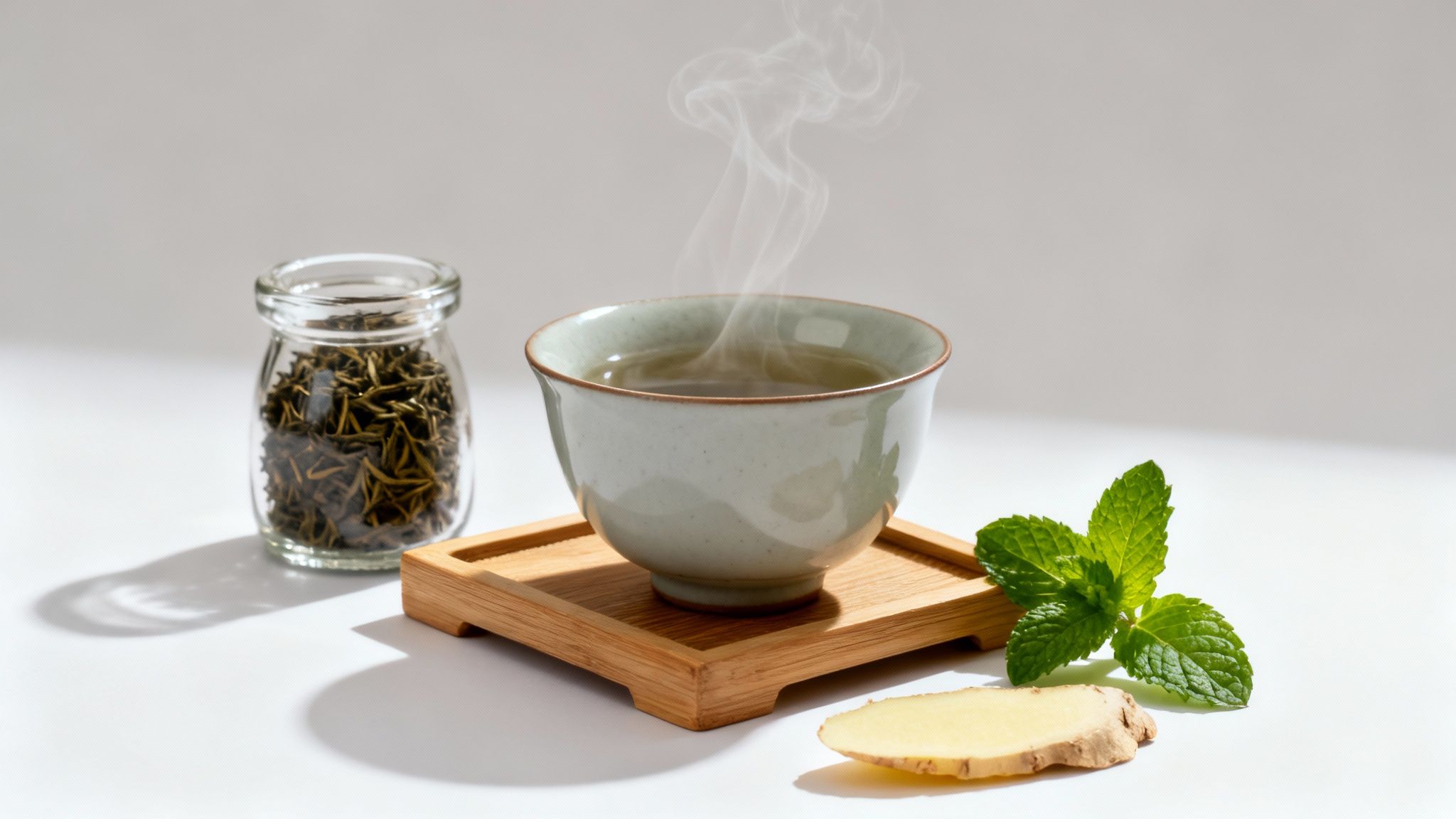
Unlocking the Benefits in Every Cup
The real magic, of course, lies in the quality of the tea itself. High-quality, whole-leaf teas contain far more of the natural oils and beneficial compounds that support your gut. This guide will move beyond generic advice to show you exactly how certain teas can help your inner garden thrive.
We’ll explore:
- The Gut Microbiome: A simple explanation of the ecosystem inside you.
- Key Tea Compounds: How polyphenols act as a kind of "fertiliser" for your good bacteria.
- Top Teas for Digestion: Specific recommendations, from soothing peppermint to powerful green tea.
- Building a Ritual: Practical tips for making tea a consistent, enjoyable part of your routine.
So, let's get ready to discover a practical and genuinely enjoyable approach to nurturing your digestive health.
Your Gut: An Inner Garden
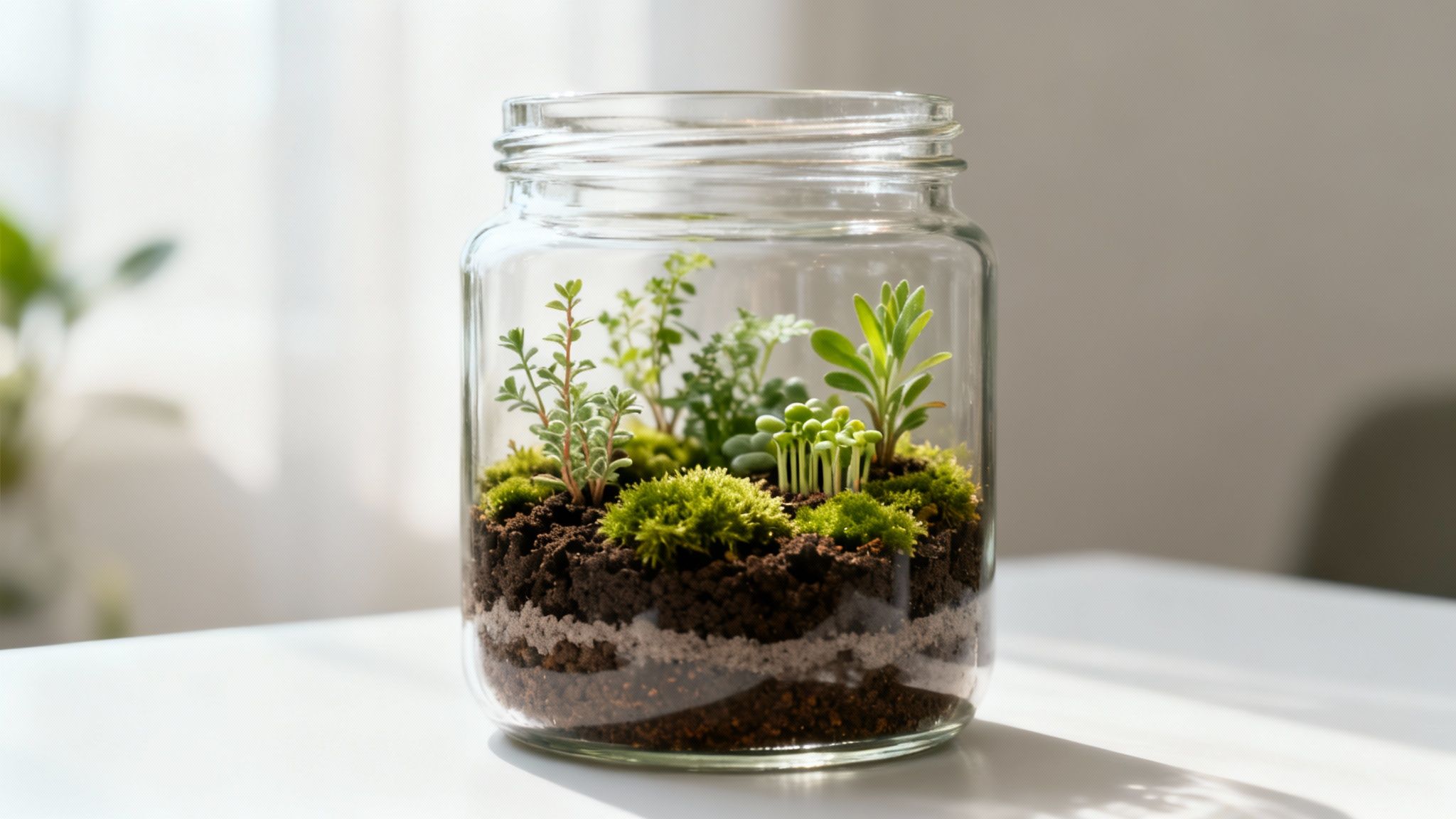
To really get why a good cuppa can do wonders for your digestion, we first need to take a look at the bustling world inside you. Your digestive tract isn't just a simple tube; it’s home to a massive, intricate community of trillions of microorganisms. This living ecosystem of bacteria, fungi, and viruses is what scientists call the gut microbiome.
The best way to picture this internal world is to think of it as a vibrant, living garden. Just like any garden, its health depends on balance, the right kind of nourishment, and a bit of careful tending. When this inner garden is flourishing, it helps with everything from smooth digestion to a robust immune system and even a more stable mood.
But what happens when that balance gets thrown off? If unwanted ‘weeds’ (the less helpful bacteria) start to take over, you might start to feel the effects—bloating, discomfort, or inflammation. The goal, then, is to cultivate a rich, diverse garden full of beneficial organisms. And that's where things get interesting.
The Gardeners of Your Gut
To tend to your inner garden properly, you need to know who the key players are. These terms might sound a bit technical at first, but they make perfect sense when we stick with our garden analogy. Let's break down the three 'biotics' that are at the heart of gut health.
-
Probiotics (The Good Seeds): These are the beneficial, live microorganisms themselves. When you have live yoghurt, kefir, or fermented drinks like kombucha, you're essentially planting more 'good seeds' in your garden. This helps to populate it with the kinds of helpful bacteria that support good digestion.
-
Prebiotics (The Fertiliser): Now this is where tea comes in. Prebiotics are special types of plant fibres that your body can't digest. Instead, they travel down to your lower gut where they become a specialised food source—a fertiliser, if you will—for your friendly probiotic bacteria. Many teas are packed with compounds called polyphenols, which do this job brilliantly.
-
Postbiotics (The Harvest): When your happy, well-fed probiotics munch on all that lovely prebiotic fibre, they produce beneficial compounds as a by-product. This is the 'harvest' from your gut garden. It includes things like short-chain fatty acids, which are fantastic for strengthening your gut lining and calming inflammation.
A healthy gut isn't just about having good bacteria; it's about feeding them well so they can produce the valuable compounds that keep your entire system running smoothly.
Why Balance Is Everything
A balanced microbiome is so much more than just a comfortable tummy. This internal ecosystem influences everything from how well you absorb nutrients from your food to the strength of your immune system—after all, a huge portion of your immune cells live in your gut.
An imbalance, often called dysbiosis, can creep in due to stress, a diet high in processed foods, or certain medications. This is like letting weeds overrun your beautiful garden, crowding out the good plants and throwing the whole ecosystem out of whack.
Cultivating a healthy gut is an ongoing process of encouraging diversity and balance. By choosing foods and drinks that act as both seeds and fertiliser, you’re actively helping your inner garden thrive. If you're keen to get a really detailed picture of your own internal ecosystem, you could even look into specialised gut health tests to understand its specific needs.
Next up, we’ll connect all this directly to your daily brew, exploring exactly how the compounds in tea act as a powerful prebiotic fertiliser, nourishing your gut garden and leading to a healthier, happier you.
How Your Daily Cuppa Feeds Your Gut
If we think of our gut as a living garden, then a cup of tea is far more than just a comforting brew. It’s a direct delivery of plant-based goodness that acts as a specialised food for all those beneficial microbes living inside you. This is where the real magic of tea for gut health begins.
The stars of the show are a group of antioxidants called polyphenols. You can think of them as premium-grade fuel for your good gut bacteria. While our bodies don't fully digest these compounds high up in the digestive tract, they travel down to the colon and become a feast for our microbial allies. This process is exactly what makes tea such a brilliant prebiotic.
By providing this crucial nourishment, tea helps the good bacteria multiply and flourish, which in turn crowds out the less helpful ones. It’s just like adding a fantastic organic fertiliser to your garden, ensuring the healthiest plants grow strong and keep the weeds at bay.
Meet the Polyphenols: Catechins and Theaflavins
Different teas contain their own unique blend of polyphenols, and each offers distinct benefits for your inner ecosystem. Getting to know them helps you pick the right brew for whatever your body needs. For a deeper dive into the world of tea, have a look at our guide on the different types of tea and their unique characteristics.
Two of the most-studied polyphenols in tea are:
-
Catechins (Found in Green Tea): Green tea is packed with a catechin called epigallocatechin gallate (EGCG). Research has shown that EGCG encourages the growth of beneficial bacteria like Bifidobacterium and Lactobacillus. At the same time, it can help stop the less desirable microbes from taking over, creating a much more harmonious environment down there.
-
Theaflavins (Found in Black Tea): When green tea leaves are oxidised to create black tea, the catechins transform into new compounds—mainly theaflavins and thearubigins. These are what give black tea its signature dark colour and robust flavour. Theaflavins are also fantastic prebiotics, feeding your good bacteria and supporting a diverse microbiome.
It's a simple, powerful idea: by selectively feeding the good microbes, the polyphenols in both green and black tea actively help reshape your gut garden for the better, promoting balance and diversity with every sip.
This isn’t just a niche interest anymore, either. Younger drinkers in the UK are increasingly choosing their tea based on these very benefits. A 2023 YouGov survey found that 32% of Gen Z daily tea drinkers choose green tea, a figure way above the national average of 20%. Similarly, 28% enjoy herbal teas, which often contain gut-soothing botanicals, pointing to a clear shift towards brews with tangible health perks.
Calming Inflammation and Strengthening Your Gut Wall
Beyond acting as a fertiliser for your gut, the compounds in tea have another vital role: calming inflammation. Chronic, low-level inflammation in the gut can lead to all sorts of discomfort and disrupt the delicate lining of your intestines.
The polyphenols in tea come with powerful anti-inflammatory properties. They help to soothe irritation all along the digestive tract, creating a calmer, happier home for your microbes. This gentle effect can be a real game-changer for anyone dealing with digestive sensitivity.
What's more, when your healthy gut bacteria feast on these tea polyphenols, they produce their own wonderful by-products called short-chain fatty acids (SCFAs). Think of these as the "harvest" from your well-tended gut garden. SCFAs, especially one called butyrate, are the main fuel source for the cells that line your intestines. They help keep your gut wall strong and secure, which is fundamental to your overall health.
Comparing Teas for Gut Health Benefits
To make things a bit clearer, we've put together a simple table breaking down the most popular teas and how their unique compounds can support your gut.
| Tea Type | Key Active Compound | Primary Gut Health Benefit | Best For |
|---|---|---|---|
| Green Tea | Catechins (especially EGCG) | A powerful prebiotic that encourages beneficial bacteria like Bifidobacterium. | Promoting a balanced microbiome and providing potent antioxidant support. |
| Black Tea | Theaflavins & Thearubigins | Nourishes good bacteria and supports microbial diversity. | A daily brew that contributes to overall gut resilience and health. |
| Peppermint | Menthol & Menthone | Relaxes the muscles of the digestive tract, helping to ease bloating and discomfort. | Soothing an upset stomach, easing cramps, and post-meal relief. |
| Ginger Tea | Gingerols & Shogaols | Stimulates digestive enzymes and helps speed up stomach emptying. | Calming nausea, easing indigestion, and warming the digestive system. |
| Chamomile | Apigenin & Bisabolol | Has anti-inflammatory properties that soothe the gut lining and calm spasms. | Reducing intestinal inflammation and promoting relaxation. |
This quick guide should help you find the perfect match for your digestive wellness goals.
While we're focused on tea, it's worth remembering that other natural foods play a huge part in digestive health, too. For instance, there's growing interest in understanding the benefits of olive oil for a balanced gut microbiome, which just goes to show how much our diet can nurture that inner garden. With this foundational knowledge under your belt, you're now ready to choose the perfect brew for your needs.
The Best Teas for Digestion and Gut Support
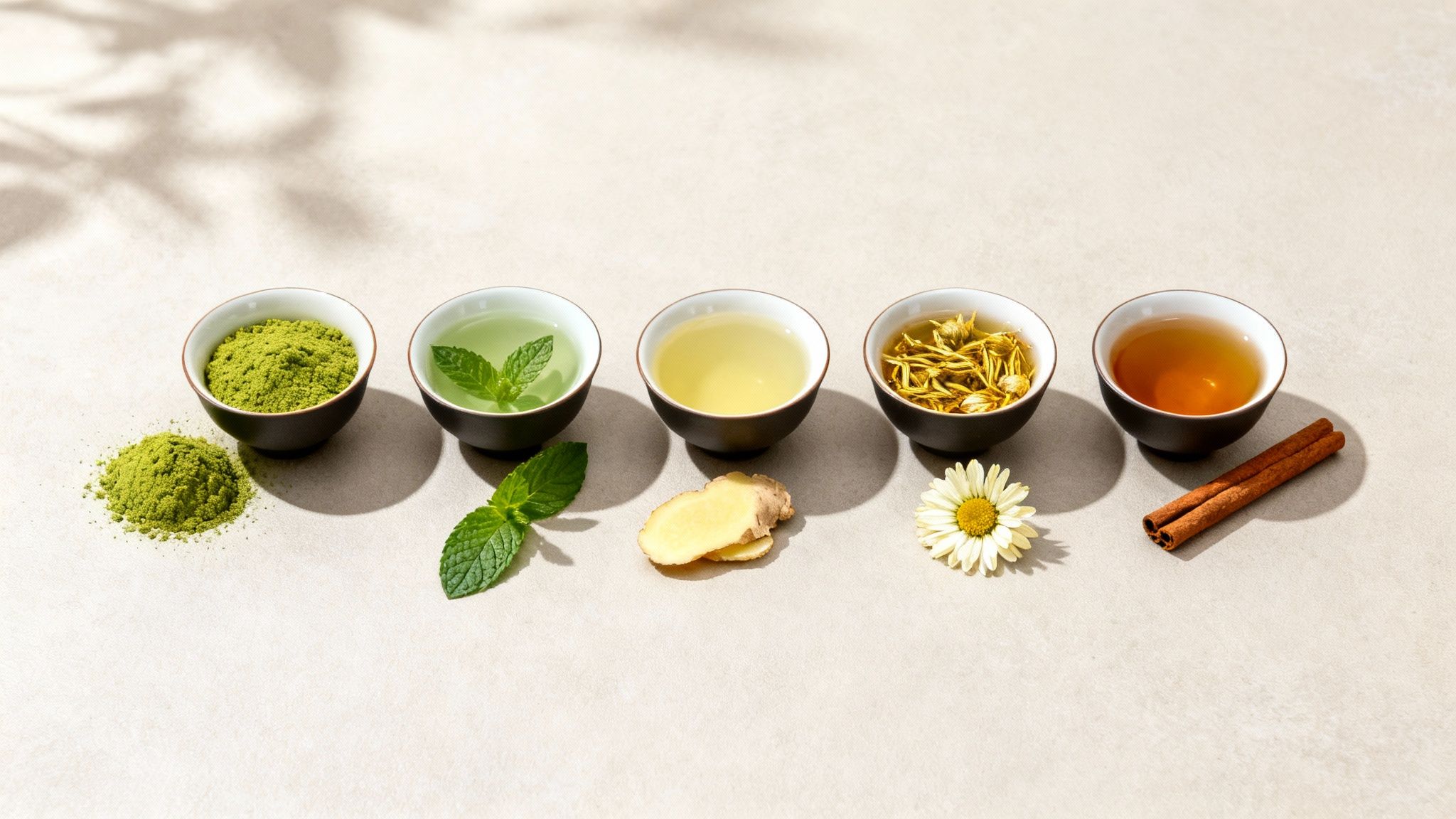
Now that we’ve covered the science of how tea can nourish our inner garden, let’s get practical. The world of tea is vast, and knowing which brews offer the most targeted support can make all the difference to how you feel.
Think of this as your field guide to the top five teas celebrated for their ability to soothe, balance, and invigorate your digestive system. From the prebiotic punch of green tea to the warming spices in chai, you’ll find the perfect brew to match your gut’s needs.
Green Tea: The Microbiome Master
When it comes to nurturing your gut microbiome, green tea is the undisputed superstar. Its fame is well-deserved, thanks to a high concentration of catechins—especially the powerhouse compound EGCG (epigallocatechin gallate). These potent polyphenols are first-class fertiliser for your good gut bacteria.
Studies show that green tea actively encourages the growth of beneficial microbes like Bifidobacterium, which are crucial for maintaining a strong gut lining. By feeding these tiny allies, you help them flourish and create a more balanced internal ecosystem. It’s a fantastic choice for long-term gut maintenance.
For an even more concentrated dose, matcha is the way to go. As it’s a finely ground powder of the whole tea leaf, you get a much more intense burst of catechins and antioxidants. A top-quality blend like Jeeves & Jericho's Premium Matcha delivers a smooth, vibrant flavour and a powerful boost for your gut garden.
Peppermint Tea: The Soothing Specialist
For those moments of digestive distress, few things are as instantly comforting as a warm cup of peppermint tea. Its main active compounds, menthol and menthone, have a remarkable talent for relaxing the muscles of the digestive tract.
This antispasmodic effect is precisely why peppermint is so often recommended for the discomfort of Irritable Bowel Syndrome (IBS). It gets to work easing common symptoms like:
- Bloating: By relaxing the gut muscles, peppermint helps release trapped gas.
- Cramping: It soothes the intestinal spasms that cause pain.
- Indigestion: It’s brilliant at calming an unsettled stomach after a heavy meal.
Drinking peppermint tea is like giving your digestive system a gentle, calming hug from the inside. It's an ideal caffeine-free choice for after dinner or any time your stomach feels a bit out of sorts.
Ginger Tea: The Nausea Tamer
Ginger root has been a trusted digestive aid for centuries, and for very good reason. It’s packed with powerful compounds called gingerols and shogaols, which are behind its distinctive warming spice and impressive ability to quell nausea.
Ginger works by helping to speed up stomach emptying—a process known as gastric motility. When food moves through your system more efficiently, it reduces the chances of indigestion, bloating, and that awful feeling of fullness. This makes it a fantastic ally for managing motion sickness, morning sickness, or general queasiness.
A cup of ginger tea after a meal can gently stimulate your digestive enzymes, promoting smoother digestion and providing a comforting, warming sensation that settles the stomach. It’s a proactive way to keep things moving comfortably.
Chamomile Tea: The Anti-Inflammatory Calmer
When your gut feels irritated or inflamed, chamomile tea is a wonderfully gentle remedy. This delicate floral infusion is rich in antioxidants like apigenin and bisabolol, which have impressive anti-inflammatory and antispasmodic properties.
Chamomile works by soothing the mucous membranes that line your stomach and intestines, helping to reduce irritation. But its benefits go deeper; chamomile is also famous for calming the nervous system. Since stress is a huge trigger for gut issues, a cup of chamomile tackles discomfort on two fronts—calming both your mind and your stomach.
This makes it the perfect bedtime brew. A nightly ritual with chamomile can help ease any digestive tension from the day and prepare your body for a restful night's sleep, which is also vital for gut repair.
Chai Tea: The Digestive Stimulator
Chai is so much more than a delicious, aromatic drink; it's a carefully crafted blend of spices traditionally chosen for their digestive superpowers. While the black tea base provides prebiotic theaflavins, the real magic is in its warming spices.
Each ingredient plays a specific role in stoking your digestive fire:
- Cinnamon: Helps to balance blood sugar and has anti-inflammatory properties.
- Cardamom: Known to soothe the stomach and reduce bloating.
- Cloves: Can help stimulate the secretion of digestive enzymes.
- Black Pepper: Boosts the absorption of all the other nutrients in the blend.
Together, these spices work in harmony to warm the digestive system and promote the efficient breakdown of food. A rich, authentic blend like Jeeves & Jericho's Spiced Bombay Chai is a perfect way to enjoy these perks. To dive deeper, you can explore the many ways that chai tea health benefits your entire system. This spicy, invigorating brew is a fantastic choice for kick-starting digestion after a meal.
Creating Your Daily Gut Health Tea Ritual
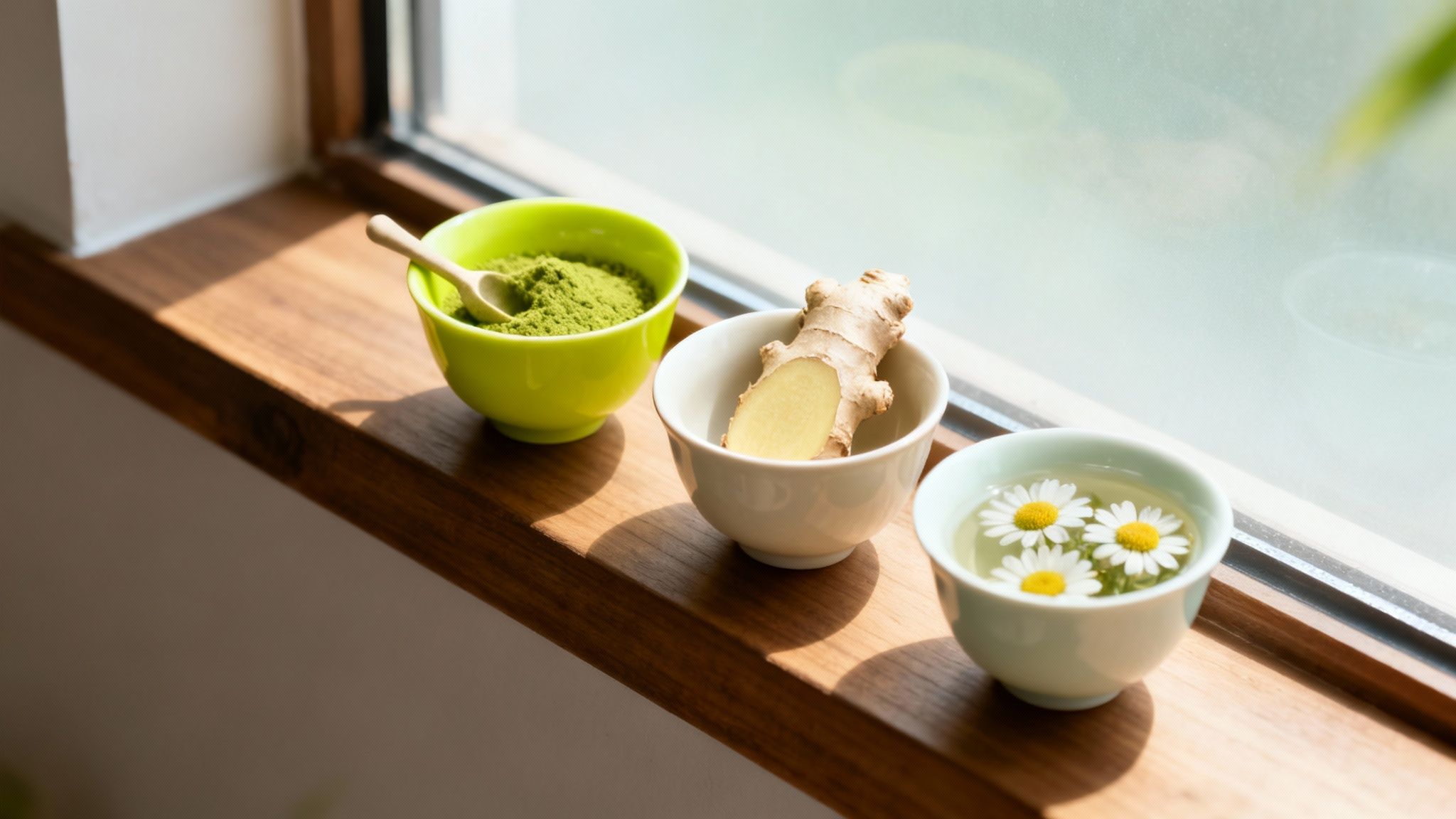
Knowing which teas can help your gut is a brilliant first step, but the real magic happens with consistency. A truly powerful tea for gut health routine isn’t about drinking gallons of the stuff; it’s about weaving a few intentional, comforting sips into your day. When you build this simple habit, you turn a quick brew into a nourishing ritual your digestive system can actually rely on.
The aim is to create a practice that feels like a treat, not a chore. It’s surprisingly easy. By choosing specific teas for different moments, you can give your body targeted support exactly when it needs it most, getting the very best out of every single cup.
A Simple Blueprint for Your Day
Think of this as a gentle framework, not a set of rigid rules. You can—and should—adapt it to your own lifestyle, taste, and how your body is feeling. The whole point is to find a rhythm that feels good for you.
Here’s a sample daily ritual designed for fantastic gut support:
- Morning (7-9 am) Prebiotic Kick-start: Start your day with a bowl of matcha or a bright cup of green tea. The catechins get to work as a brilliant prebiotic, feeding your friendly gut microbes and setting your digestive system up for success.
- After Lunch (1-2 pm) Digestive Aid: About 30 minutes after your midday meal, pour yourself a warming ginger or peppermint tea. Ginger helps to get things moving and can speed up stomach emptying, while peppermint is a saviour for easing any post-lunch bloating.
- Evening (8-9 pm) Calming Wind-down: Draw a line under your day with a soothing, naturally caffeine-free cup of chamomile. This gentle flower helps calm inflammation in the gut and relaxes your nervous system, paving the way for a restorative night's sleep. If you fancy exploring other evening options, have a look at our guide to delicious caffeine-free herbal teas.
This simple three-cup structure provides a steady, gentle stream of gut-loving compounds throughout the day, creating a balanced and supportive environment for your microbiome to thrive.
Mastering the Art of the Brew
How you brew your tea really does matter, especially when you’re looking for those health benefits. Using high-quality, loose-leaf tea means you're getting the whole leaf, which is where you’ll find the highest concentration of all those wonderful polyphenols and essential oils.
Get the water temperature or steeping time wrong, and you might not extract these compounds properly—or worse, you’ll end up with a bitter, disappointing cup.
Perfecting Your Steeping Technique
Different teas need different kinds of care to release their full flavour and potency. Water that’s too hot can easily scorch delicate green tea leaves, while not steeping for long enough will leave you with a weak brew.
Here are the ideal brewing parameters to get the most from your gut-friendly teas:
| Tea Type | Water Temperature | Steeping Time | Why It Matters |
|---|---|---|---|
| Green Tea/Matcha | 75-80°C | 1-3 minutes | Prevents bitterness and protects the delicate catechins. |
| Ginger/Chai | 95-100°C | 5-7 minutes | You need that heat to properly extract the potent oils from roots and spices. |
| Peppermint/Chamomile | 100°C | 5-7 minutes | A full boil and a longer steep are essential to release their soothing essential oils. |
Paying a little attention to these details ensures every cup you make is not only delicious but also brimming with the compounds your gut will thank you for. This mindful preparation is what turns a simple cup of tea into a truly effective ritual.
Your Questions Answered: Tea & Gut Health
Diving into the world of tea for gut health can bring up a few questions. We get it. To help clear things up, we’ve put together answers to some of the queries we hear most often, so you can start brewing with confidence.
What if I Have a Sensitive Stomach?
You can absolutely still enjoy tea, but it’s best to start gently. Teas like chamomile and peppermint are famously soothing and usually a safe bet for even the most delicate systems. Ginger is another brilliant choice for calming an unsettled stomach without being too harsh.
Our advice? Start with one cup a day and see how you feel. It's also a good idea to steer clear of drinking strong black tea on an empty stomach, as its tannins can sometimes be a bit much for sensitive tummies. The golden rule is always to listen to your body.
How Much Tea Should I Drink a Day for Gut Benefits?
There's no one-size-fits-all answer, but aiming for a consistent two to three cups per day is a great goal for most people. This gives your body a regular dose of those gut-friendly polyphenols without overloading you with caffeine.
A simple routine could look something like this:
- A cup of green tea in the morning to get your microbiome going.
- A ginger or peppermint tea after lunch to help with digestion.
- A soothing, caffeine-free chamomile in the evening to wind down.
The key isn't quantity, it's consistency. A daily, mindful cup will do far more good than drinking lots of tea every now and then.
Does Milk or Sugar Ruin the Gut Health Benefits?
This is a great question. The short answer is that, yes, they can have an impact. Refined sugar, especially, is known to feed the less helpful bacteria and yeasts in your gut, which can work against the good you're doing with the tea.
A little splash of milk is less of a concern, though some studies suggest milk proteins can bind with the tea’s polyphenols, making them less available for your body to use. For the full tea for gut health effect, it’s best to drink it straight. If you really need some sweetness, a tiny bit of honey is a much better option than sugar.
Are Loose Leaf Teas Better Than Tea Bags?
In our experience, high-quality loose-leaf tea often comes out on top. That’s because it’s made from larger, whole leaves which hold onto more of their natural oils and beneficial compounds – including all those polyphenols your gut loves.
Many standard tea bags, by contrast, are filled with ‘dust’ and ‘fannings’ – tiny broken bits of tea leaf. These smaller particles lose their flavour and potency far more quickly. While some of the roomier, pyramid-style bags are a decent compromise, for the richest flavour and biggest health benefits, we’d always point you towards loose-leaf.
Ready to start a gut-friendly tea ritual of your own? Explore the incredible collection of whole-leaf teas, authentic chai, and premium matcha at Jeeves & Jericho. Come and taste the difference that quality makes. https://www.jeevesandjericho.com