


When you get right down to it, the choice between black and green tea often comes down to one simple thing: processing. Black tea is fully oxidised, a process that develops its deep, malty flavour and gives it a bit more of a caffeine kick. Green tea, on the other hand, is unoxidised, which is why it keeps its light, fresh taste and has a little less caffeine. It really just depends on whether you're after a robust start to your morning or a more delicate lift for the afternoon.
The Tale of One Plant, Two Teas
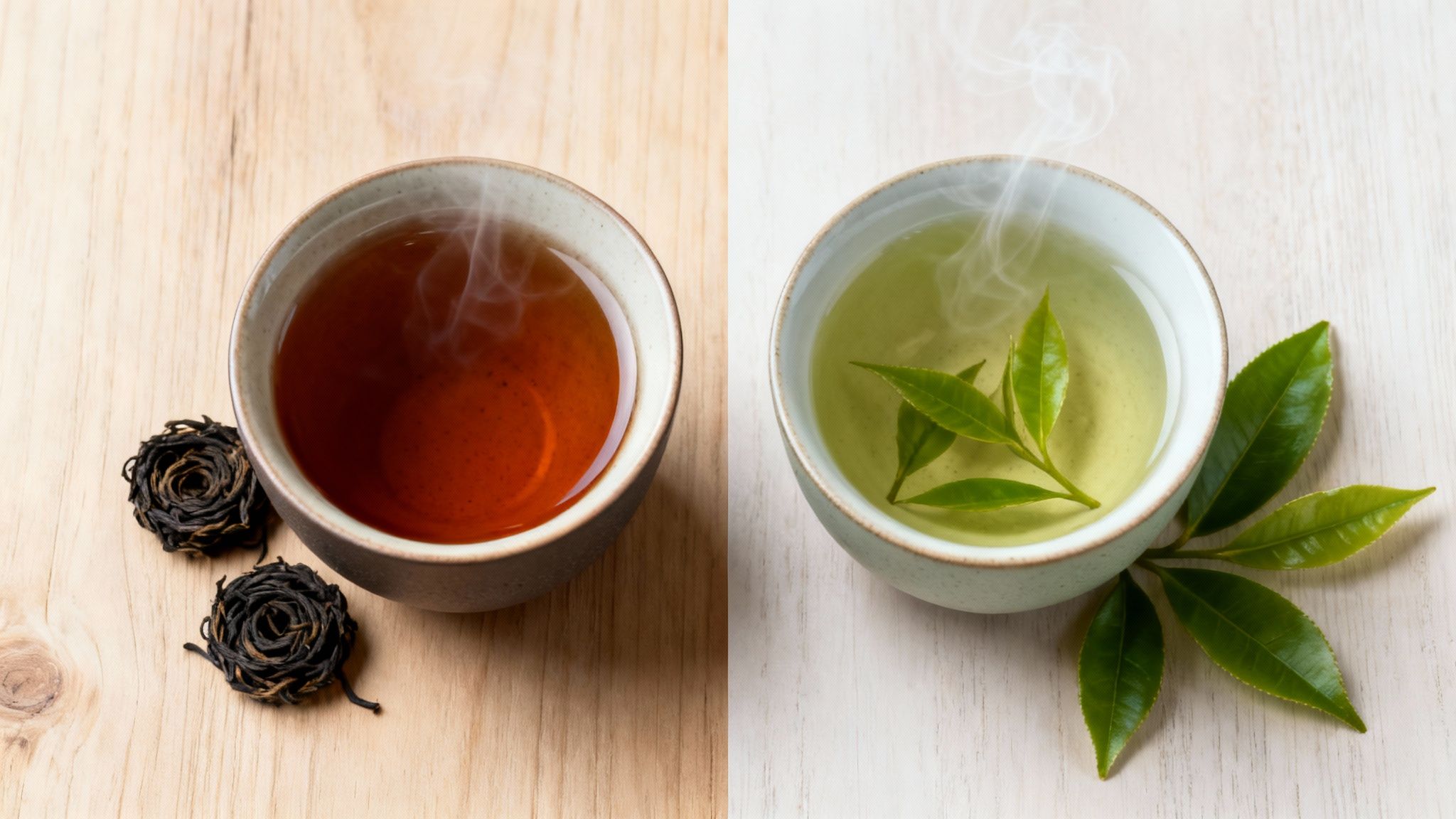
It always comes as a surprise to people, but both black and green teas begin their journey on the exact same plant: Camellia sinensis. Their vastly different colours, aromas, and flavours aren't down to different species, but what happens to the leaves right after they're plucked from the bush. The critical difference is a natural process called oxidation.
The easiest way to think about oxidation is to picture an apple slice turning brown after you’ve left it out. When tea leaves are harvested, they can be rolled and left to react with the oxygen in the air. This completely transforms their chemical makeup, creating those deeper flavours and darker colours we all know and love.
A Quick Look at the Key Differences
Green tea production is all about stopping that process in its tracks. The leaves are heated quickly—either by steaming or pan-firing—which locks in their vibrant green colour and fresh, almost grassy notes.
Black tea is the complete opposite. The leaves are encouraged to oxidise fully, a step that develops the rich, complex, and full-bodied flavours we associate with a proper brew. This single fork in the road of production is what gives us two completely different tea experiences from the very same leaf.
| Attribute | Black Tea | Green Tea |
|---|---|---|
| Processing | Fully oxidised | Unoxidised (steamed or pan-fired) |
| Flavour Profile | Bold, malty, robust, sometimes fruity | Fresh, grassy, vegetal, sometimes sweet |
| Colour | Dark amber to deep red | Pale green to light yellow |
| Caffeine | Higher (approx. 40-70 mg per cup) | Lower (approx. 20-45 mg per cup) |
Here in the UK, the black versus green tea story is really about tradition bumping up against a desire for something new. We get through over 100 million cups a day, and for the longest time, classic black tea blends have been the undisputed favourite. But things are changing. Tastes are evolving, and more and more people are exploring speciality teas and greens, reflecting a bigger shift across the entire hot drinks market. You can dive deeper into the numbers with IBISWorld's analysis of the UK tea processing market.
Flavour and Aroma: A Tale of Two Teas
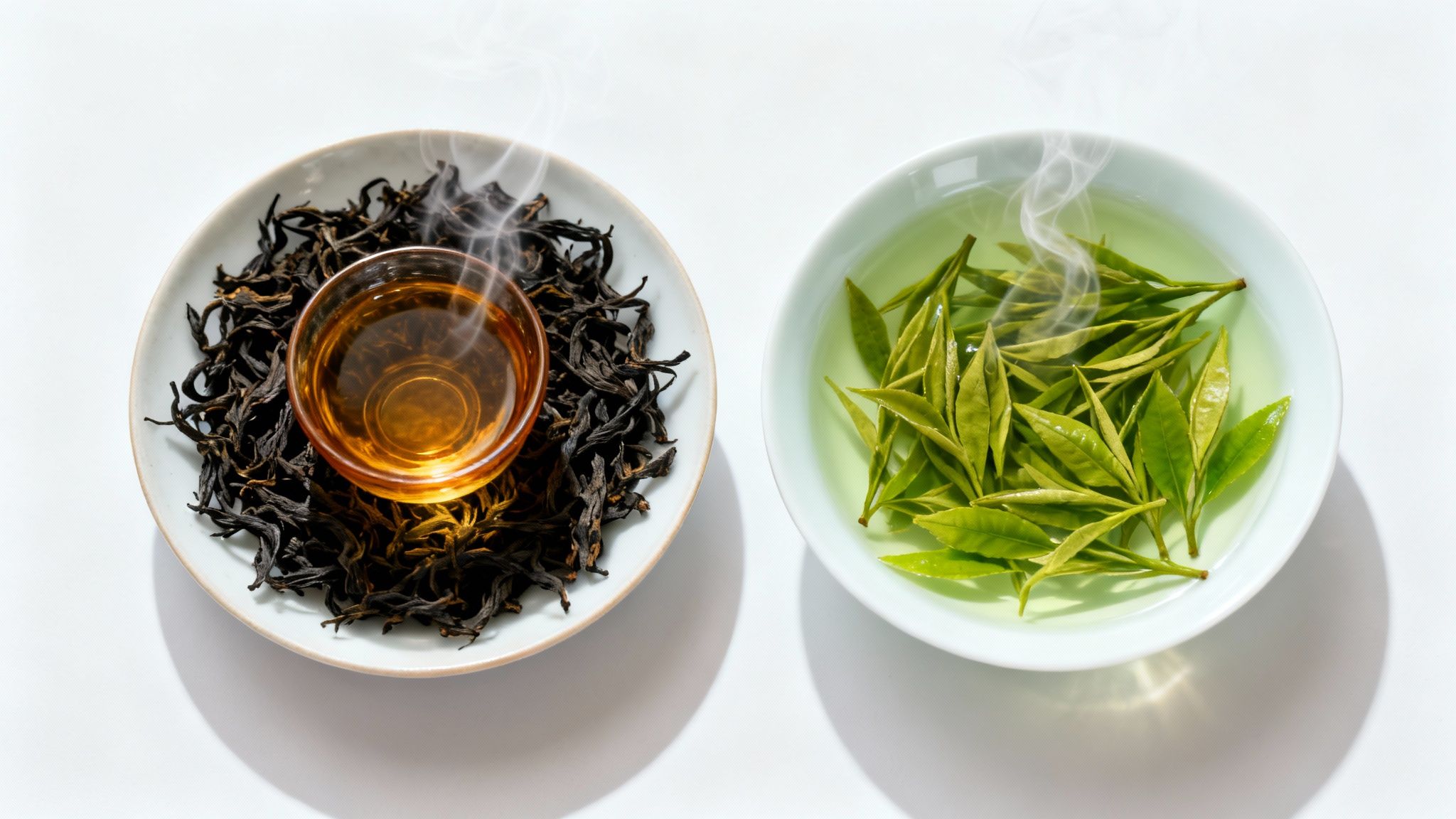
When it comes down to choosing between black and green tea, your palate is always the best place to start. The two offer completely different sensory experiences, and it all boils down to one crucial step: oxidation. This process completely changes the leaf's chemistry, creating two distinct worlds of flavour.
Black tea is fully oxidised, which is how it develops its deep, complex, and robust character. The flavour profile is often described as malty, full-bodied, and brisk. Think of the hearty, comforting notes in a classic Assam or the rich, almost honey-like sweetness of a fine Keemun.
Green tea, on the other hand, skips the oxidation. This preserves a profile that's much closer to the fresh leaf itself, resulting in flavours that are typically light, vegetal, and grassy. The nuances here are vast, from the oceanic, umami notes of a Japanese Sencha to the nutty, sweet character of a Chinese Dragon Well.
The Deep Notes of Black Tea
The aroma of black tea is often warm, rich, and inviting. Depending on where it’s from and how it was processed, you might pick up anything from fruit and spice to hints of cocoa.
- Fruity Notes: A good Darjeeling is a perfect example, often carrying notes of muscatel grapes or stone fruits.
- Malty Richness: Teas from Assam are famous for their bold, malty backbone, which gives blends like our English Breakfast its signature strength.
- Smoky Undertones: Then you have something like Lapsang Souchong, where the leaves are dried over pinewood fires, adding a uniquely smoky, powerful aroma.
This incredible diversity makes black tea a wonderfully versatile choice, perfect for a strong morning brew or a more contemplative afternoon cup.
The Delicate World of Green Tea
Green tea’s aroma is a completely different story—it's fresher, lighter, and much more delicate. The scent can bring to mind freshly cut grass, spring meadows, or even a gentle sea breeze. It’s a direct result of halting oxidation early, locking in all those vibrant, natural compounds.
Ultimately, the choice often comes down to this: are you in the mood for the deep, comforting complexity of an oxidised black tea, or the bright, refreshing purity of an unoxidised green tea? Each offers its own unique journey.
Think of the difference between an Earl Grey and a Jasmine green tea. The Earl Grey offers a bold, citrusy aroma from the bergamot, layered over a sturdy black tea base. A Jasmine green tea, however, is all about that light, floral fragrance, where the delicate tea notes are there to beautifully complement the sweet scent of jasmine blossoms. Understanding these core differences is the first step to finding the perfect tea for you.
Caffeine Kick and Health Perks
Beyond the simple pleasure of the brew, many of us choose our tea based on how it makes us feel. Whether you're after a gentle morning nudge or a long-term wellness boost, both black and green tea have a lot to offer, thanks to their unique chemical makeup.
It's a common belief that black tea is the caffeine heavyweight. While there's some truth to it, the gap isn't as wide as you might imagine. A cup of black tea typically has 40-70 milligrams of caffeine, while green tea sits a little lower at 20-45 milligrams.
Of course, the final caffeine count in your mug depends on a few things: the specific type of tea, the size of the leaves, how hot your water is, and how long you let it brew. A longer steep time will always pull more caffeine out of the leaf, no matter which tea you're using. If you fancy a deep dive, our guide breaks down the nuances of caffeine content in teas.
The Real Difference: Antioxidants
The most fascinating distinction between black and green tea lies in their antioxidants. It all comes down to oxidation. These powerful little compounds, called flavonoids, are what give tea its sterling reputation as a wellness drink.
Green tea is famous for its high levels of catechins, especially one called epigallocatechin gallate (EGCG). Because the leaves aren't oxidised, these delicate compounds are preserved. EGCG is a bit of a star in the wellness world, celebrated for its potential to support cellular health and fire up your metabolism.
During the oxidation process that creates black tea, those catechins transform into something new: theaflavins and thearubigins. These are the polyphenols that give black tea its deep colour and full-bodied flavour.
While they're different, the antioxidants in both teas are fantastic. Green tea's catechins are brilliant for metabolic health, while black tea's theaflavins are often linked to supporting heart function. It's not about which is "better"—it's about what works for you.
Picking Your Brew for Your Body
So, when you're choosing between black and green tea with health in mind, think about what you’re looking for.
- For a Proper Morning Start: If you need a robust, sustained lift to get you going, the higher caffeine in a classic black tea like an English Breakfast is just the ticket.
- For a Gentle Afternoon Boost: When you want to sharpen your focus without jeopardising your sleep, the lower caffeine and calming L-theanine in green tea make it a perfect choice.
- For Heart Health: Studies suggest that regularly drinking black tea, rich in theaflavins, can help support healthy cholesterol levels and overall cardiovascular wellness.
- For a Cellular MOT: If you’re after a serious antioxidant punch with potential metabolic perks, the EGCG-packed goodness of a quality Japanese Sencha is a superb shout.
At the end of the day, both teas are wonderful additions to your routine. By understanding what makes each one unique, you can pick the perfect brew to match your mood, your energy levels, and your wellness goals.
How to Brew the Perfect Cup
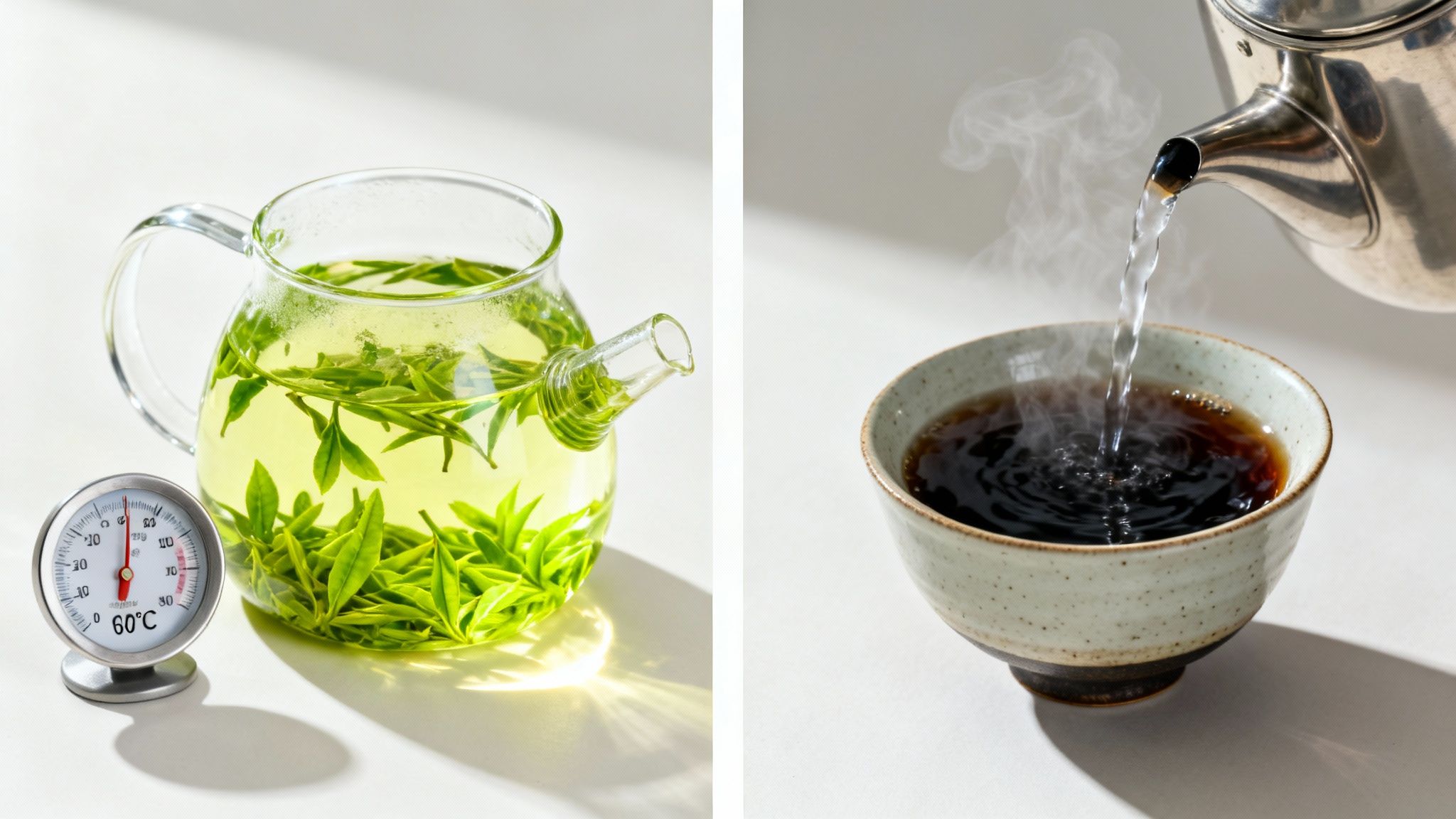
Getting the best from your tea comes down to how you brew it. A few small tweaks to temperature and time can be the difference between a bitter, disappointing mug and a perfectly balanced, delicious cup. When it comes to black or green tea, remember their brewing methods are as distinct as their flavours.
Black tea leaves are tough customers, so they can handle the heat. To coax out their deep, malty character, you’ll want to use water that’s just off a rolling boil, somewhere around 95-100°C. This high heat is crucial for unlocking the complex notes hidden in those fully oxidised leaves.
Green tea, on the other hand, needs a much gentler touch. Its delicate, unoxidised leaves are easily scalded by boiling water, which is what gives it that unwelcome bitter, astringent taste. For most green teas, the sweet spot for water temperature is much lower, typically between 70-80°C.
Steeping for Success
Just as temperature varies, so does the ideal steeping time. Nailing this is the secret to getting a perfect balance of flavour without any harshness. It’s an easy mistake to make, but one that can ruin an otherwise beautiful tea.
- Black Tea: Thanks to its hardy nature, black tea needs a bit longer to unfurl its flavours. Give it 3-5 minutes to let that full-bodied richness develop completely.
- Green Tea: A much quicker brew is all that’s needed for these fragile leaves. Most are at their best after just 1-3 minutes. Steeping for any longer is the number one culprit behind a bitter green tea.
Brewing is a conversation with your tea leaves. Black tea needs a bold declaration with high heat and a longer chat, while green tea prefers a gentle whisper with cooler water and a brief, delicate infusion.
The growing curiosity around different teas points to a wider shift in the UK. While a massive 41% of British adults drink tea at least twice a day, younger generations are clearly looking beyond the classic builders' brew. Nationally, only about 20% of daily tea drinkers opt for green tea. But for Gen Z, that figure leaps to 32%, showing a real change in taste. You can dive deeper into Britain's evolving tea habits in this YouGov research.
Mastering these simple steps will elevate your daily ritual, making sure every cup is as good as it gets. For those of you using loose-leaf, getting the technique spot-on makes all the difference. You can find more expert advice in our guide on how to brew loose-leaf tea.
When to Choose Black Tea vs Green Tea
So, black or green? The best answer often comes down to the moment itself. It depends on your mood, the time of day, and what you’re really looking for in a cup—a strong kick-start or a quiet moment of clarity.
Think of black tea as your trusted ally for the morning rush. When you need to shake off the cobwebs and get going, its higher caffeine content and robust, malty character are just the ticket. It delivers a sustained energy lift that’s perfect for powering through a busy morning or a tough project.
The Morning Ritual vs The Afternoon Pause
A bold English Breakfast blend is the classic choice to get you started. Its brisk, full-bodied flavour stands up beautifully to a hearty breakfast and sets you up for whatever the day has in store. It’s the reliable workhorse of the tea world.
Green tea, on the other hand, is the perfect companion for that gentle afternoon reset. With less caffeine and the calming influence of the amino acid L-theanine, it offers a smoother, more focused lift without the jitters. It’s a wonderful choice for creative work, a thoughtful pause, or simply unwinding after a long day.
Choosing black tea is about seeking energy and embracing a classic ritual. Opting for green tea is about finding clarity and a moment of mindful calm. Let your daily rhythm be your guide.
A Smart Choice for Cafés and Businesses
For our partners in the trade, a well-thought-out selection of both black and green teas is a must. It shows you understand that your customers are looking for different experiences from their tea at different times of the day.
- The Morning Crowd: Keep it classic with an Earl Grey and a strong English Breakfast. These are the go-to brews for customers wanting a familiar, powerful start.
- Lunch & Afternoon: This is where green tea shines. A delicate Jasmine or a smooth Sencha offers a lighter, more refreshing option that won't overpower the afternoon.
- The Tea Enthusiast: Add a few single-origin black teas and high-grade greens to your menu. This not only caters to connoisseurs but also encourages everyone to explore something new.
This kind of curation meets customer expectations and establishes your café as a destination for proper tea. The UK hot drinks market is currently seeing a fascinating trend towards premiumisation. While people aren't necessarily drinking more tea, they're willing to pay more for better quality, as noted in Statista’s UK Tea market outlook. This is a brilliant opportunity to showcase superior loose-leaf teas and give customers a reason to trade up.
In the end, the debate between black and green tea isn't about picking a winner. It’s about understanding what makes each one special and knowing exactly when to reach for the right caddy.
Finding Your Perfect Tea with Jeeves & Jericho
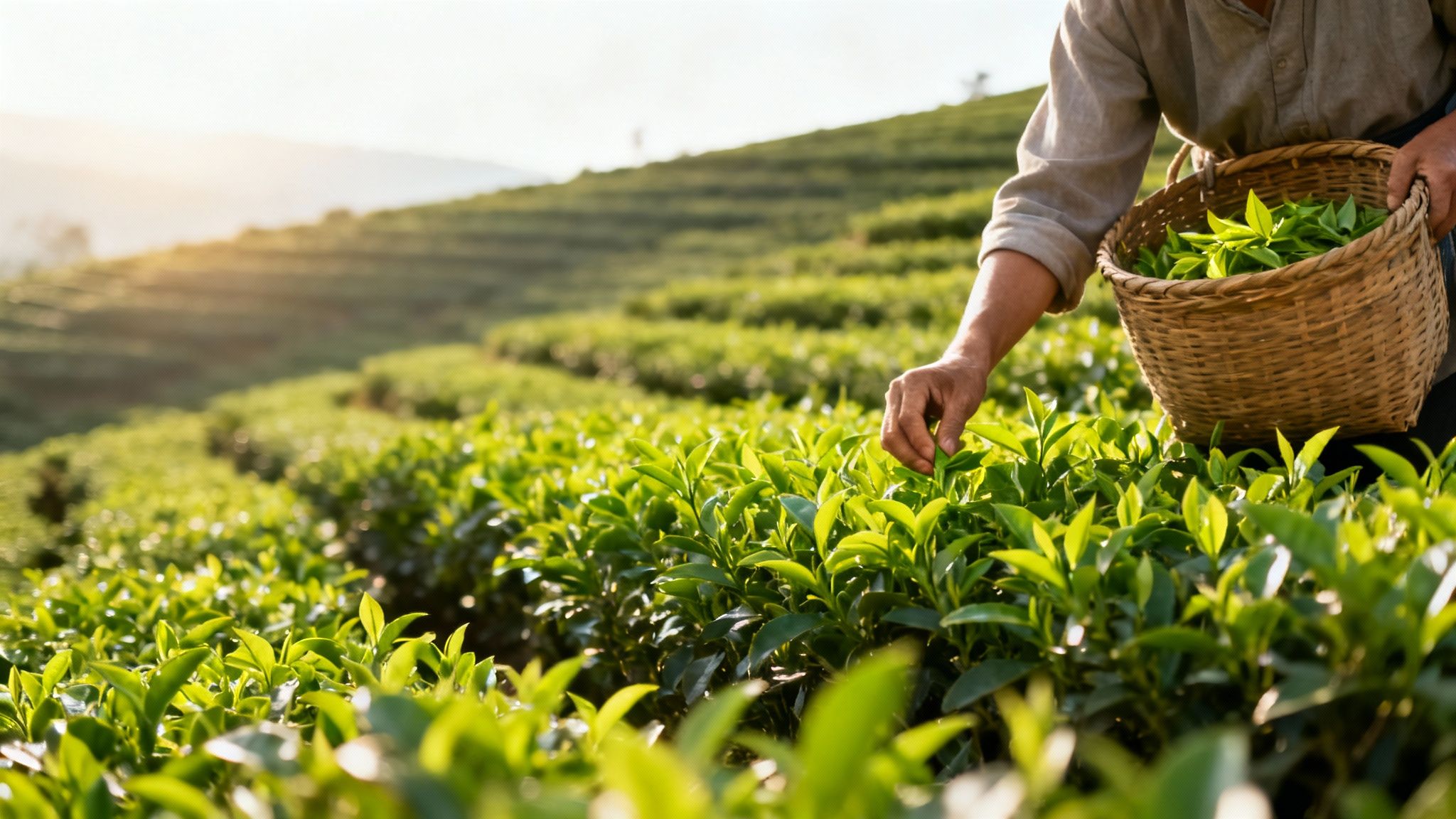
Ultimately, the choice between black tea and green tea comes down to personal taste, but one thing should never be a compromise: quality. We believe a truly exceptional cup begins long before the kettle boils. It starts in the world’s finest tea gardens, with farmers who are just as passionate about tea as we are.
At Jeeves & Jericho, our mission is to bring you the very best of both worlds. Whether you prefer the robust, malty depth of a black tea or the delicate, grassy notes of a green, the experience should always be outstanding.
Sourced with Integrity, Crafted with Care
This dedication is what drives us to source our leaves with such meticulous care. We build direct, lasting relationships with tea estates and their farmers, ensuring every single leaf in our collection is not only bursting with flavour but also grown ethically and sustainably.
It’s this transparency that means you can trust what’s in your cup. It’s about more than just taste; it’s about honouring the craft and the incredible people behind it.
When you choose Jeeves & Jericho, you’re not just buying tea. You’re investing in a product that delivers a superior, authentic flavour, produced with genuine integrity.
This philosophy is woven into every blend we create. From the boldest Assam to the most delicate Sencha, each tea is a testament to our high standards. We invite you to explore our curated collections and taste the remarkable difference that conscious sourcing and expert blending make.
You can learn more about the incredible variety within just one category by exploring our guide to black tea varieties. Discover for yourself how a commitment to quality elevates every single sip.
Common Questions About Black and Green Tea
Even after weighing up all the details, a few questions always seem to surface when it comes to choosing between black and green tea. Let's tackle some of the most common queries to help you pick your next brew with confidence.
Is One Tea Actually Healthier Than the Other?
This is probably the question we hear most, and the honest answer isn't a simple 'yes' or 'no'. Both teas are fantastic for you, just in different ways. Green tea is famous for its high concentration of EGCG catechins, which are brilliant for metabolic and cellular health.
On the other hand, the oxidation process that gives black tea its colour develops compounds called theaflavins, which have been strongly linked to supporting heart health. The best choice really comes down to your own wellness goals. Neither is definitively 'better' – it's about what benefits you're looking for.
The real question isn’t which tea is “better,” but which one is better for you right now. Both offer unique, powerful antioxidants and are an excellent addition to a healthy lifestyle.
Can You Put Milk in Green Tea?
Technically, you can do whatever you like with your cup, but we really wouldn't recommend it. The delicate, grassy, and almost vegetal flavours of a good green tea are easily swamped by the richness of milk.
Adding milk tends to mask all those subtle notes and can create a bit of a flavour clash. If you're after something creamy, a high-quality matcha latte is a much better way to go. It’s best to save the milk for a strong, robust black tea that can hold its own.
Which Tea Lasts Longer on the Shelf?
Black tea is the clear winner here. Because its leaves are fully oxidised, they're much more stable and can keep their character for up to two years if stored properly in a cool, dark, airtight container. Green tea is far more delicate. To enjoy its fresh, vibrant flavour at its peak, you'll want to drink it within 6-12 months of purchase.
Ready to explore the finest examples of both? Jeeves & Jericho offers a curated selection of ethically sourced black and green teas, crafted to bring you the perfect cup every time. Discover your new favourite brew today.