


At its heart, making loose leaf tea is a simple act: scoop your whole tea leaves into an infuser, pour over hot water, and let them steep for just the right amount of time. It’s a process that unlocks the full, complex flavour that often gets lost in a standard tea bag.
Why Loose Leaf Tea Is Worth the Extra Step
Ever wondered why the tea you get in a great café tastes so much richer than the one you brew at home? The secret is almost always in the whole leaves. Switching from bags to loose leaf is one of the easiest upgrades you can make, turning your daily cup from a simple routine into a truly rewarding ritual.
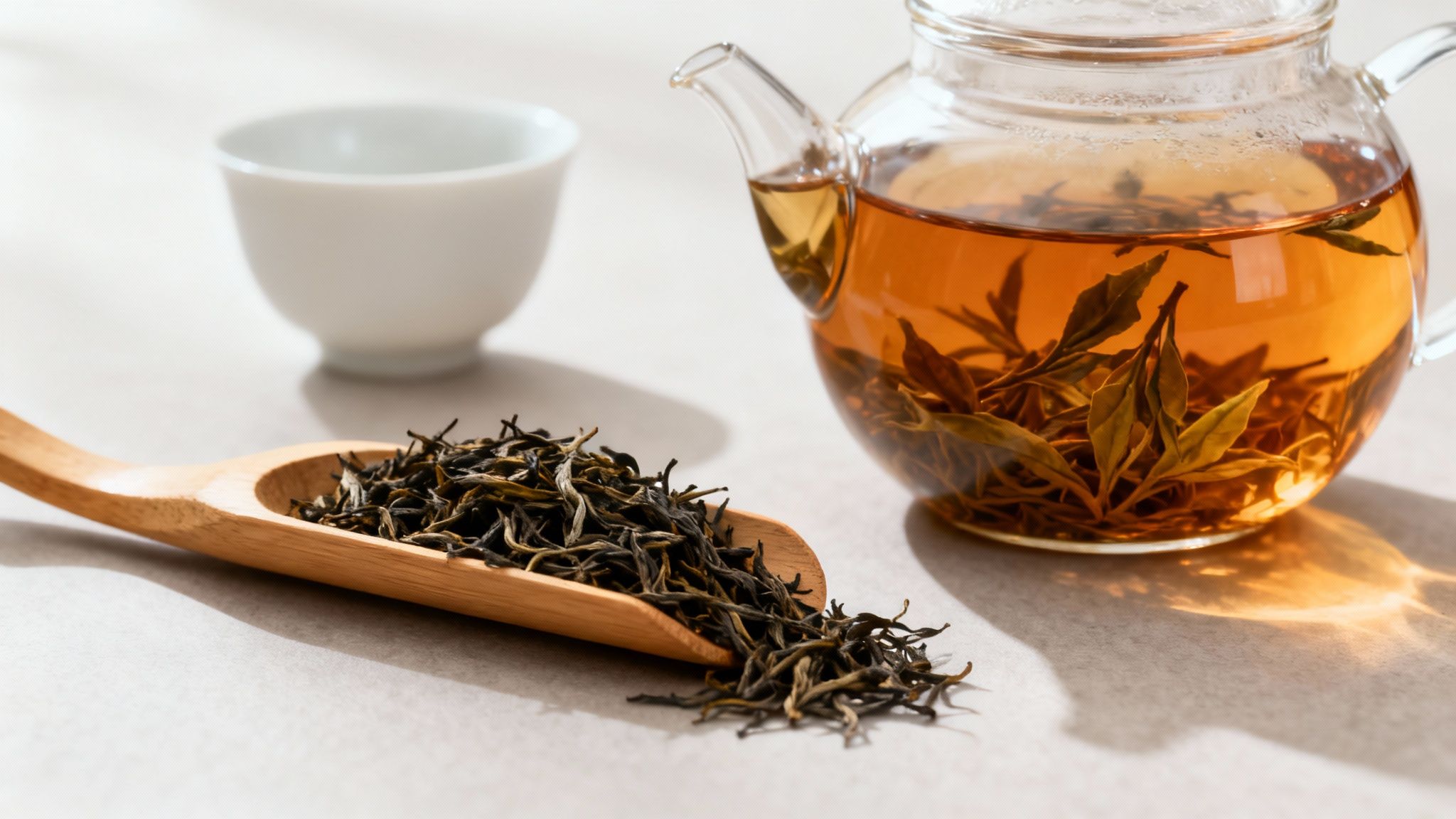
Unlike the fine dust and fannings packed into many conventional tea bags, loose leaf tea is exactly what it sounds like—whole or large broken leaves. This distinction makes all the difference. When hot water hits them, these larger leaves have the space they need to unfurl and expand, releasing their full spectrum of essential oils, nuanced aromas, and intricate tastes.
You can taste the difference immediately. A tea bag often gives a one-dimensional, sometimes bitter brew because the tiny particles infuse so quickly. A loose leaf tea, on the other hand, delivers a smoother, more balanced cup with layers of flavour that reveal themselves with every sip.
A More Mindful and Sustainable Choice
The very process of brewing loose leaf invites a few moments of mindfulness into your day. Taking the time to measure the leaves and watch them dance in the water connects you to the craft and care that goes into every pouch. It’s not just about a better flavour; it’s about a more engaging and sustainable tea experience.
And plenty of tea enthusiasts agree. While tea bags still have a strong hold on the British market, loose leaf is steadily making a comeback. The total volume of tea enjoyed at home in the UK is expected to reach about 64.25 million kg by 2025, a shift driven by a growing appetite for quality and provenance. This really highlights why getting the brewing method right is so important for unlocking a superior cup.
Preserving Quality and Flavour
Ultimately, the integrity of the leaf is what matters most. High-quality whole leaves, like the ones we source at Jeeves & Jericho, hold onto their freshness and character for far longer than tea dust ever could. Of course, proper storage is key to protecting that investment.
For our top tips on keeping your leaves in peak condition, have a look at our guide on the best storage for tea. Choosing loose leaf is choosing to honour the tea’s entire journey, from the garden right to your cup.
Your Essential Loose Leaf Tea Brewing Toolkit
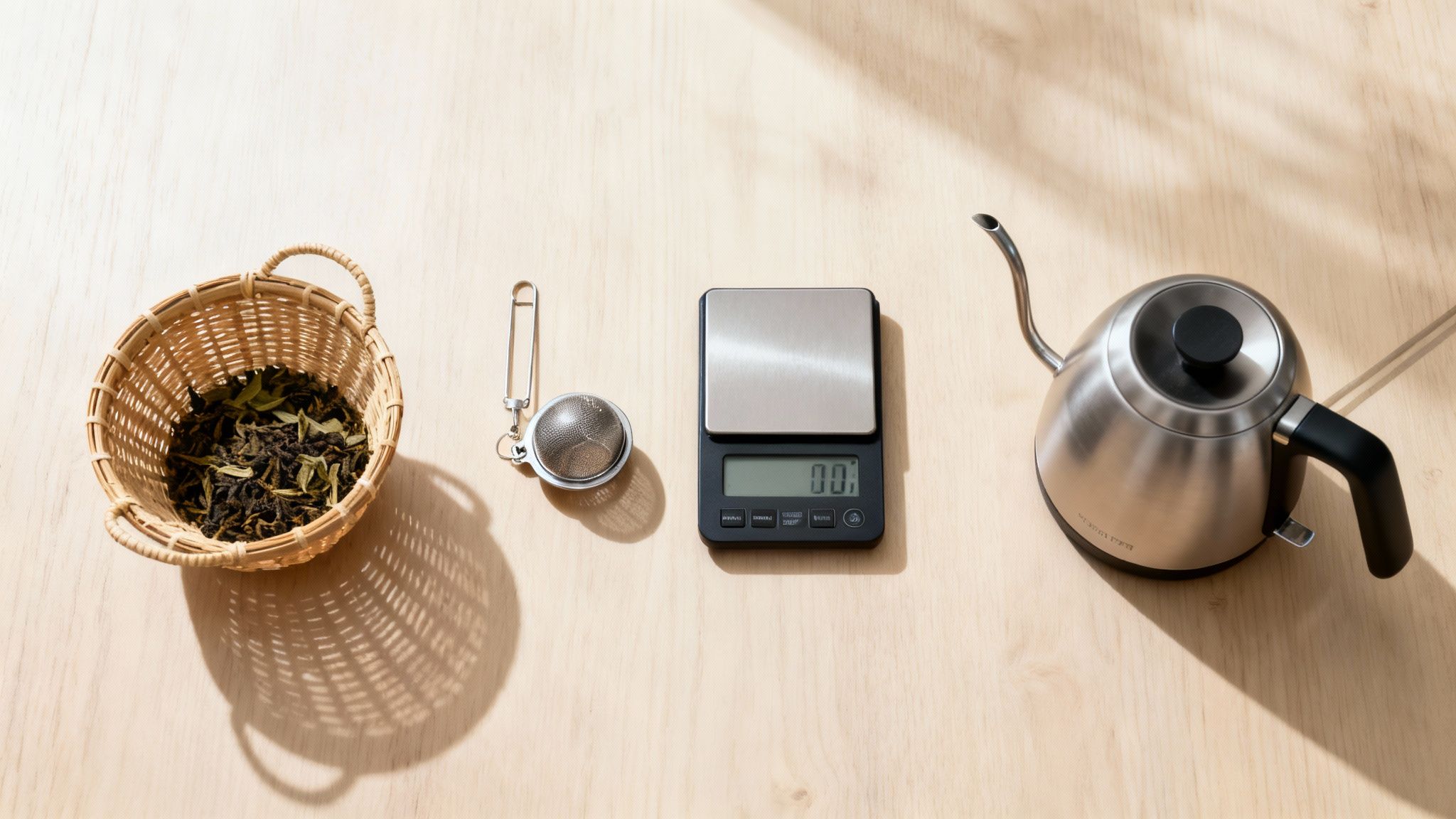
You don’t need a science lab to brew great tea, but having the right tools makes all the difference. The right kit takes your daily cup from something enjoyable to something truly exceptional. Let’s walk through the gear that will help you master loose leaf tea with confidence.
At the heart of any setup is an infuser, the little basket that holds your tea leaves as they work their magic. While a simple tea ball might seem handy, we always recommend a spacious basket infuser. They give larger, whole leaves—like those in our Earl Grey Classic—the room they need to properly unfurl and release all their complex flavours.
The goal is simple: let hot water circulate freely around every single leaf. When leaves are crammed into a tiny space, you get an uneven extraction, resulting in a brew that’s somehow both weak and bitter. The worst of both worlds.
Precision Tools for a Perfect Brew
Beyond the infuser, a couple of key items will bring a new level of precision to your routine. They aren’t strictly necessary when you’re just starting out, but for anyone serious about getting the absolute best from their tea, they’re game-changers.
A digital scale is your best friend for consistency. Measuring by volume with a teaspoon can be surprisingly unreliable—a fluffy white tea takes up far more space than a dense, tightly rolled oolong. Weighing your leaves means you use the perfect amount, every single time.
Likewise, a variable temperature kettle is an incredible asset. Different teas need different temperatures to shine; pouring boiling water over a delicate Japanese Sencha, for instance, will scorch the leaves and create a bitter taste. A kettle that can heat water to a specific temperature—say, 80°C for green tea—gives you complete control.
Choosing Your Brewing Vessel
Finally, you need something to brew in. This could be your favourite mug, a teapot for sharing, or a clever infuser mug. Each has its place.
- Your Favourite Mug: Perfect for a quick, personal cup. Just pop a basket infuser directly inside.
- A Classic Teapot: Ideal when you’ve got guests, letting you make a bigger batch all at once.
- Integrated Infuser Mugs: These are a brilliant all-in-one solution, with a built-in, removable infuser.
If you're looking for inspiration, have a look at our thoughts on the best infuser tea cups that blend style with function. Ultimately, choosing the right toolkit is all about matching your gear to your lifestyle and your favourite Jeeves & Jericho teas.
Getting the Basics Right for the Perfect Brew
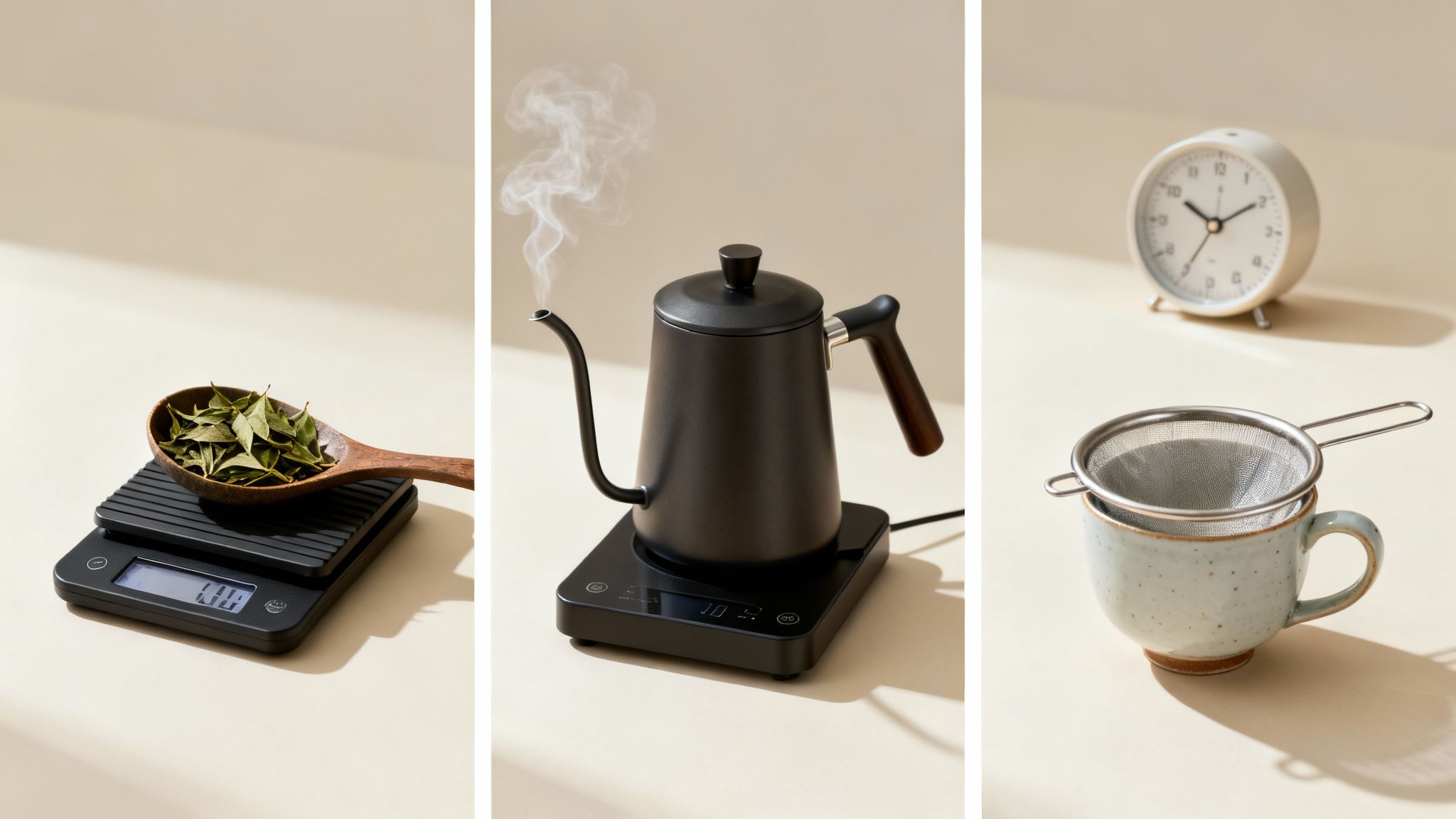
Ready to get the best out of your loose leaf tea? It’s not about following rigid rules but about understanding a few core principles. Think of it like cooking – once you master a few essential cooking techniques for beginners, your food tastes infinitely better. Tea is exactly the same.
By paying attention to these four elements, you’ll quickly develop an instinct for brewing any tea beautifully.
How Much Tea to Use
Getting the right amount of leaf for your water is the first step to a truly flavourful cup. A teaspoon is what many people reach for, but it can be wildly inconsistent. Fluffy leaves like white peony fill a spoon much differently than the dense, tightly rolled pearls of an oolong.
For consistency, nothing beats a digital scale. We find that 2-3 grams of tea per 250ml of water is the perfect starting point for most of our blends. This little bit of precision means you’ll get a reliable, delicious brew every single time, without it being too weak or too punchy.
No scale? A dedicated tea scoop is your next best option. Just keep an eye on the density of the leaves and adjust as you go.
Water Quality and Temperature
It might sound obvious, but since tea is over 98% water, the quality of what you use makes a huge difference. If your tap water has a noticeable taste of chlorine or minerals, those flavours will absolutely come through in your final brew. Filtered or good-quality spring water provides a clean slate, letting the tea's true personality shine.
The temperature of your water is just as important. Pouring boiling water over delicate green or white teas will literally scorch the leaves, leaving you with a bitter, astringent taste. On the other hand, water that’s too cool won’t properly extract the rich flavours from a robust black tea, resulting in a thin, disappointing cup.
A variable temperature kettle is a brilliant tool, but it’s not essential. A simple trick is to boil your water and then just let it stand for a bit. A minute or two off the boil gets you down to about 90°C, and waiting three to four minutes will bring it closer to the 80°C mark – ideal for many greens.
How Long to Steep Your Tea
This is where the magic really happens. The steeping time is the window when all the flavour, aroma, and colour are extracted from the leaves. It's probably the single biggest factor you can control to influence the taste.
If you don't steep for long enough, your tea will taste weak and watery. Steep for too long, and you'll extract too many tannins, which is what causes that unpleasant bitterness. Every tea is different, but here’s a rough guide:
- Green Teas: A short steep is best, usually 1-3 minutes.
- Black Teas: These can handle a bit longer, from 3-5 minutes.
- Herbal Infusions: Often need the longest, anywhere from 5-7 minutes or even more.
We always recommend starting with the time suggested for your specific Jeeves & Jericho tea and then tweaking it to your taste. And whatever you do, set a timer!
Straining and Serving
The final, simple step is to separate the leaves from the water. As soon as your timer goes off, get that infuser out of there. This stops the brewing process in its tracks. If you leave the leaves swimming in the tea, they’ll just keep releasing tannins and your lovely brew will become bitter.
Now, pour it into your favourite mug. Before you take a sip, take a moment to enjoy the aroma. This small pause turns making a cup of tea from a simple routine into a properly restorative ritual.
How to Brew Different Types of Tea
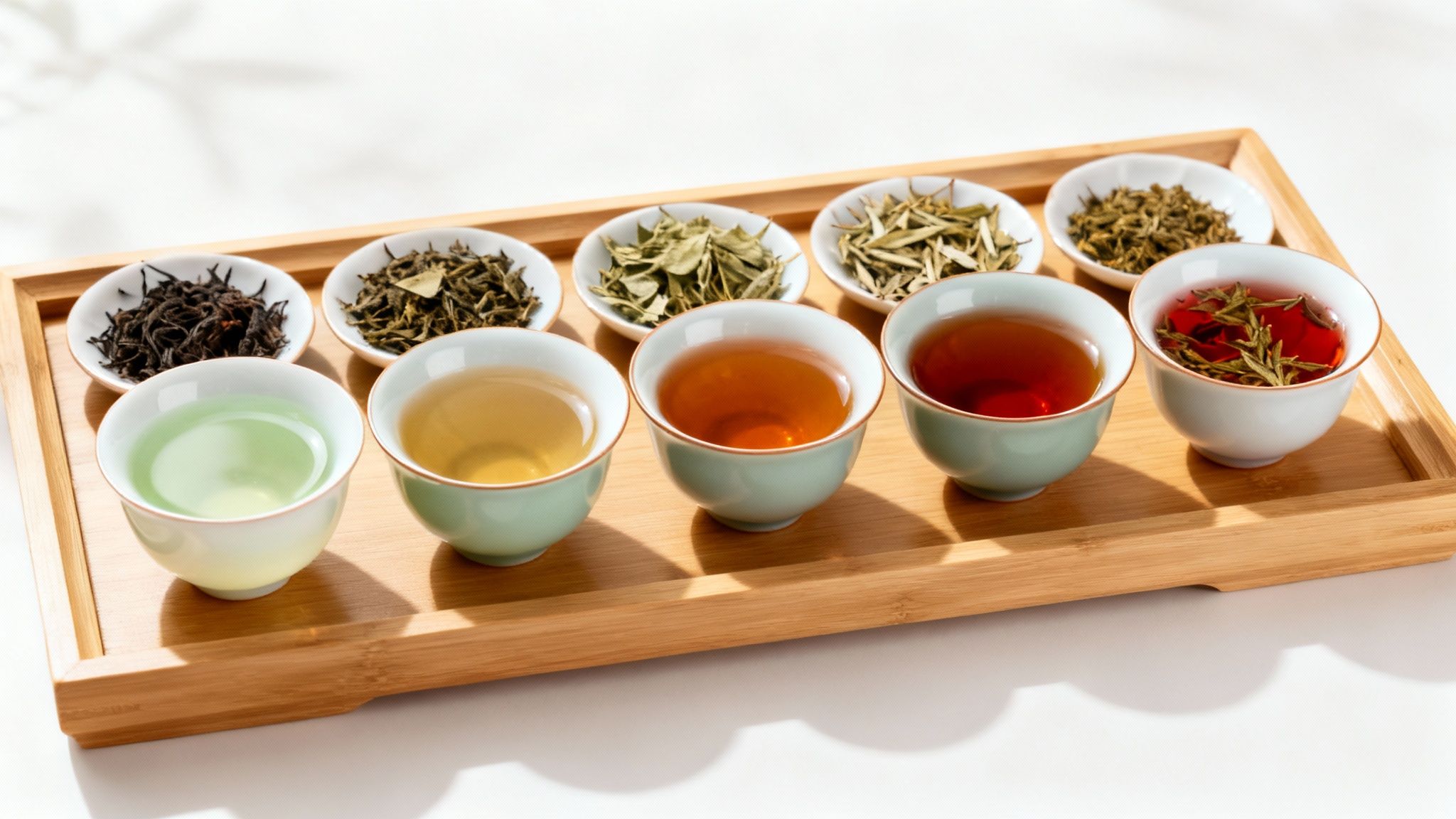
It’s a simple truth in the tea world: not all leaves are created equal, and they certainly don’t appreciate the same treatment. Think of it like cooking – you wouldn't blast a delicate piece of fish with the same heat you'd use for a hearty stew. Brewing loose leaf tea is much the same.
Pouring fully boiling water over a fine green tea, for instance, is a recipe for disaster. It will scorch the delicate leaves, leaving you with a bitter, astringent brew. Yet that same roaring boil is precisely what a robust Spiced Bombay Chai craves to properly unfurl its warm, aromatic spice notes.
Getting to grips with these small but crucial differences is what turns a good cup of tea into a truly great one.
Mastering Black and Green Teas
Let's start with a couple of the most familiar faces. Black teas, like a classic English Breakfast, are fully oxidised. This process gives them that rich, malty character that can easily handle higher temperatures. They’re at their best when brewed with water just off the boil, around 95-100°C, for a good 3-5 minutes. This draws out all those deep, complex flavours we love.
Green teas, on the other hand, demand a much gentler approach. Their fresh, grassy notes are easily lost. To keep them vibrant and sweet, you’ll want to use much cooler water, somewhere between 70-80°C. A short steep of just 1-3 minutes is plenty; any longer and you risk tipping into bitterness.
The Delicate Touch for White and Oolong Teas
Of all the teas, white teas like our White Peony are the most minimally processed, which makes them incredibly delicate. They need the coolest water of all, typically around 70-80°C. Give them a bit more time to infuse, somewhere in the region of 4-6 minutes, to gently coax out their subtle, floral sweetness. Using water that's too hot will simply wash away their nuanced character.
Oolongs are fascinating, sitting somewhere on the spectrum between green and black teas. This variety means brewing guides can vary, but a solid starting point is water at 85-95°C for 2-4 minutes. One of the real joys of a quality oolong is its ability to be re-steeped multiple times. Each infusion brings new layers of flavour to the surface, making for a truly evolving experience.
Brewing Herbal Infusions and Matcha
Herbal infusions, often called tisanes, aren't technically 'tea' because they don't come from the Camellia sinensis plant. This family includes everything from peppermint and chamomile to rooibos. Because they’re generally more robust and lack the tannins that can make true teas bitter, they can take the heat. Use fully boiling water (100°C) and a longer steep of 5-7 minutes (or even more) to get the best out of their flavours and aromatic oils.
Then there's Matcha, which is in a category all its own. This isn't an infusion at all; it's a fine powder of specially grown green tea leaves that you whisk into water, consuming the entire leaf.
Here's how to prepare the perfect bowl:
- Sift the powder: Use a small sifter to get any clumps out of 1-2 grams (about half a teaspoon) of matcha. This is a crucial step for a smooth texture.
- Add the water: Gently pour in about 60-80ml of hot water. Make sure it’s not boiling – about 75°C is perfect.
- Whisk it up: Using a bamboo whisk (a chasen), whisk vigorously in a 'W' or 'M' pattern. Keep going until a lovely, fine froth appears on the surface.
This little ritual produces a creamy, intensely flavourful and vibrant green brew that’s unlike anything else.
Jeeves & Jericho Loose Leaf Brewing Guide
We get it – that's a lot of temperatures and times to remember! To make things easier, we’ve put together a handy quick-reference table. Just find your tea type and you'll have everything you need for the perfect cup.
| Tea Type | Leaf Amount (per 250ml) | Water Temperature | Steep Time | Re-steep Potential |
|---|---|---|---|---|
| Black Tea | 2-3g (1 tsp) | 95-100°C | 3-5 mins | 1-2 times |
| Green Tea | 2-3g (1 tsp) | 70-80°C | 1-3 mins | 2-3 times |
| Oolong Tea | 3-5g (1.5 tsp) | 85-95°C | 2-4 mins | 3-5 times |
| White Tea | 3-5g (2 tsp) | 70-80°C | 4-6 mins | 2-3 times |
| Herbal Infusion | 3-5g (1.5 tsp) | 100°C | 5-7 mins | 1-2 times |
| Matcha | 1-2g (0.5 tsp) | 75°C | Whisk | N/A |
Keep this guide handy, but don't be afraid to experiment. Your personal taste is the most important factor, so feel free to adjust the timings until you find what you love.
To get to know these amazing beverages even better, you can explore our full breakdown of the different types of tea.
Common Brewing Mistakes and How to Fix Them
We’ve all been there. You brew a cup of what should be a gorgeous tea, take a sip, and… disappointment. It’s bitter, or weak, or just plain wrong. Don't worry, it happens to the best of us, and the fix is usually surprisingly simple.
The number one complaint is almost always bitterness. That harsh, astringent taste is a dead giveaway that you’ve over-extracted the leaves, pulling out too many tannins. Think of it like overcooking a steak. This usually boils down to two things: your water was too hot, or you left the tea to steep for too long.
A small tweak can change everything. If your delicate green tea tastes scorched, try dropping the water temperature from a rolling boil to around 80°C. For a black tea, knocking the steep time down from five minutes to three can tame that aggressive edge and let the smoother, maltier notes come through. It’s all about finding that sweet spot.
Why Does My Tea Taste Weak?
At the other end of the scale is the dreaded watery brew. It looks the part, but the flavour is nowhere to be found. This is a classic case of under-extraction, where the water simply hasn't had enough time or oomph to draw out the tea's character.
Nine times out of ten, the culprit is either not using enough leaf, the water being too cool, or cutting the steep time short.
Grab a digital scale if you can—it’s a game-changer for consistency. We recommend a solid 2-3 grams of tea for every 250ml of water. If your ratio is spot on, then experiment with bumping up the water temperature a little or giving it an extra minute in the pot.
A robust black tea needs that near-boiling water to really open up and release its deep flavours. Use cooler, green-tea-temperature water, and you’ll end up with a thin, lacklustre cup every time.
The Little Things That Make a Big Difference
Beyond getting the time and temperature right, a couple of other details can subtly throw off your brew. Nailing these will take your tea-making from good to great.
- Water Quality: If you live in a hard water area, the high mineral content can react with the tea, leaving a dull, metallic taste or even a film on the surface. Try using filtered water instead. It provides a clean, neutral base that allows the true, nuanced flavours of your Jeeves & Jericho tea to shine.
- Stale Leaves: Tea doesn't go off like milk, but it does lose its aromatic punch over time. If your brew tastes flat and lifeless, the leaves might just be past their prime. Keep your tea tasting its best by storing it in an airtight, opaque caddy, well away from heat and light.
Mastering the art of the perfect brew is a journey of tiny adjustments. Once you learn to spot these common issues, you'll develop an intuition for what your tea needs, turning out a brilliant cup every single time.
Your Loose-Leaf Tea Questions Answered
Even when you have the steps down, there are always those little questions that crop up as you get into the swing of brewing loose-leaf tea. We hear some brilliant ones from the Jeeves & Jericho community, so we’ve put together a few of the most common queries to help you fine-tune your daily ritual.
Think of this as your trouble-shooting guide for those finer points that make all the difference. From re-using your leaves to getting the water temperature right without any fancy gadgets, we've got you covered.
Can I Re-Steep My Loose-Leaf Tea Leaves?
Absolutely! In fact, with many high-quality teas, it's not just possible – we actively encourage it. It's one of the real joys of brewing with whole leaves. You’ll often find that the flavour profile subtly shifts and evolves with each infusion, revealing new layers and nuances.
This works especially well for oolongs, green teas, and delicate white teas. A good tip for the second steep is to bump up the water temperature slightly or add an extra 30-60 seconds to the infusion time. This helps draw out the remaining flavour. While most robust black teas and many herbal infusions tend to give their all on the first go, it's always worth experimenting. You might be surprised.
Remember, re-steeping is a journey of taste. The second cup won't be a carbon copy of the first—it will be its own unique experience. This is how you really get to know the character of your tea.
What Is the Best Way to Store Loose-Leaf Tea?
To keep your Jeeves & Jericho tea tasting as fresh as the day it was packed, good storage is everything. Tea has four key enemies: air, light, moisture, and strong odours. Exposing your leaves to any of these will quickly dull their delicate flavour and aroma.
Luckily, the solution is simple: an airtight, opaque container. A proper tea caddy is a fantastic investment. Just be sure to store it in a cool, dark place like a cupboard, well away from the oven or a sunny windowsill.
One common mistake we see is people storing tea in the fridge. While it might seem logical, the condensation that forms when you take it out can ruin the leaves. Our resealable pouches are great for keeping your tea fresh in the short term, but for the long haul, a proper caddy is always your best bet.
Do I Really Need a Kettle with Temperature Control?
While a variable temperature kettle is a lovely bit of kit for precision, it’s by no means essential. You can get brilliant results without one. The trick is simply to let your boiled water cool down a bit first.
It’s a wonderfully low-tech way to hit the right temperature for more delicate teas. As a reliable rule of thumb:
- Letting fully boiled water sit for 2-3 minutes will bring it down to around 80°C – perfect for most green teas.
- Waiting for 4-5 minutes will get you closer to the 70°C mark, which is ideal for very delicate white teas.
That simple pause is all it takes to avoid scorching the leaves, ensuring you get a sweet, complex brew instead of a bitter one.
Ready to put your newfound knowledge into practice? Explore the full range of ethically sourced, whole-leaf teas at Jeeves & Jericho and find your next favourite brew. Visit our collection today.