


That comforting cup of tea might be hiding an unwelcome secret: plastic. It seems like a simple paper pouch filled with tea leaves, but many common tea bags are heat-sealed with polypropylene – a type of plastic that doesn't biodegrade. This means your daily brew could be contributing to plastic pollution and, quite possibly, releasing microplastics directly into your mug.
The Hidden Plastic In Your Daily Cup Of Tea
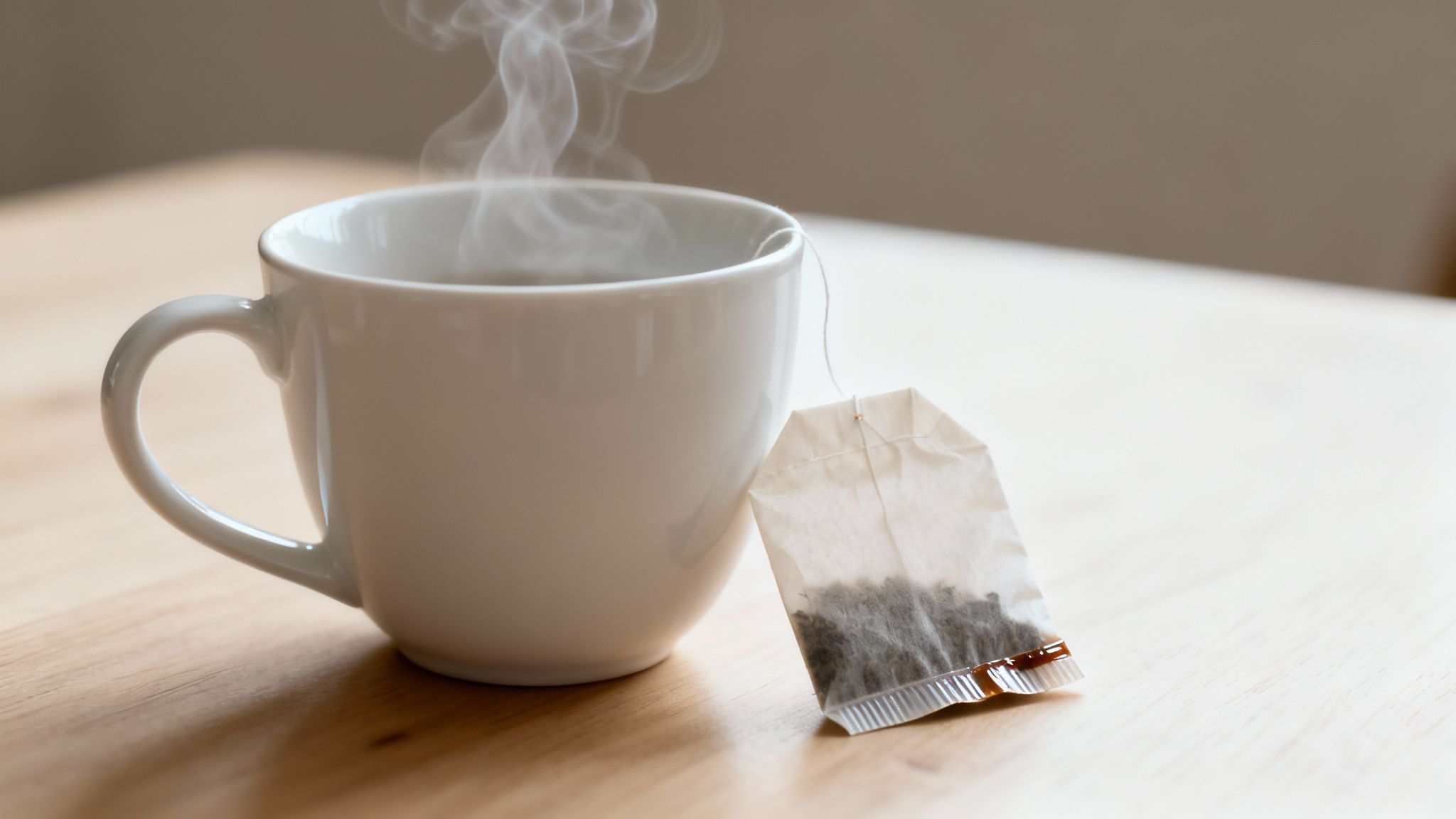
As awareness grows around the plastics in our daily lives, the humble tea bag has come under the microscope, revealing a rather uncomfortable truth for millions of us. It’s a classic case of what you can't see potentially causing harm.
Think of it like discovering a strange, artificial ingredient in your favourite loaf of bread. The plastic in question, polypropylene, is used as a glue to keep the paper bags from bursting open in hot water. It does the job, but this tiny amount of plastic creates big problems down the line, both for the planet and potentially for our health.
Why This Hidden Ingredient Matters
The presence of plastic, no matter how small, has ripples you can't ignore once you know about them. The main worries really fall into two camps:
- Environmental Contamination: Plastic-sealed tea bags just don't decompose properly. When you toss them in the compost, they leave behind tiny plastic fragments, contaminating the soil and disrupting the natural cycle.
- Health Concerns: Dunking plastic in boiling water naturally raises a few eyebrows. And for good reason. Studies have shown that some plastic-based tea bags can shed billions of microplastic and nanoplastic particles into a single cup – something most of us would rather avoid.
The discovery that a single plastic tea bag can release billions of microparticles into a cup has been a real wake-up call. It shows how everyday choices, like which brand of tea you buy, can have a direct impact on your exposure to plastics and environmental waste.
This guide is all about turning that concern into confident action. We’ll walk through the different materials used in tea bags, unpack the environmental and health issues, and give you clear, practical steps to find genuinely plastic-free tea bags. By the end, you'll know exactly how to choose a purer, more sustainable brew.
Why Is There Plastic In Tea Bags Anyway?
It feels a bit odd, doesn't it? Tea is one of the most natural products in the world, yet so often it comes packaged in plastic. From a tea producer’s point of view, though, plastic solves a few persistent problems—mainly durability, cost, and sealing millions of bags efficiently.
Think about what a tea bag actually has to do. It needs to hold together when dunked into boiling water. Without some kind of sealant, the paper would just disintegrate and you’d end up with a mug full of tea leaves. A bit like a crisp packet needing to be sealed to keep things fresh, a tea bag needs to be robust.
A Balancing Act Between Cost And Durability
For years, the quickest and cheapest way to seal a paper tea bag shut was with a fine mesh of polypropylene. It's a type of plastic that’s melted along the edges to heat-seal the bag, making sure the tea stays inside from the factory floor to your favourite mug. This process is fast, inexpensive, and perfect for mass production.
Then came the fancy "silken" pyramid bags, designed to give the tea leaves more room to unfurl and infuse. While they certainly look the part, these bags are often made from nylon or PET—both of which are 100% plastic. They’re great for brewing, but their petroleum-based origins are a real worry for the environment.
The big dilemma for tea companies is simple: traditional plastic sealants are cheap and they work. Genuinely sustainable options mean investing in new materials and different machinery. That’s precisely why your demand for tea bags without plastic is so important—it’s what pushes the whole industry to change for the better.
The Rise Of Confusing 'Bioplastics'
As more of us started asking questions, many brands switched to PLA (polylactic acid). Made from plant starches like corn, PLA is often sold as a "plant-based" or "biodegradable" alternative. The reality is a little more complicated. While it’s not derived from fossil fuels, PLA is still a bioplastic, not a natural fibre.
The problem is, PLA only breaks down under very specific conditions—namely, the high heat and humidity found in an industrial composter. It won't biodegrade in your garden compost bin, which just leads to plastic contamination and a lot of confusion. As recent UK reporting highlights, even as major brands ditch polypropylene after selling billions of plastic-sealed bags, their move to PLA still leaves us with a material that isn't truly home-compostable.
Getting to know these materials is the first step to making a better choice. Here’s a quick rundown of the most common options you’ll find on the supermarket shelf.
Common Tea Bag Materials Compared
This table gives a simple overview of what your tea bags are likely made from, whether they contain plastic, and what you should do with them when you're done.
| Material Type | Contains Plastic? | Best For | Disposal Method |
|---|---|---|---|
| Paper with Polypropylene Seal | Yes (fossil-fuel based) | Low-cost, mass production | General waste (cannot be composted) |
| Nylon or PET 'Silken' Bags | Yes (fossil-fuel based) | Whole-leaf infusion | General waste (cannot be composted) |
| PLA (Polylactic Acid) Bags | Yes (plant-based bioplastic) | A fossil-fuel free plastic | Industrial composting only |
| Stitched or Folded Paper | No | Truly plastic-free brewing | Home compostable |
As you can see, the only way to be certain you're avoiding plastic and can compost at home is to choose bags that are stitched, folded, or made from materials explicitly labelled as plastic-free and home-compostable.
The Environmental Cost Of A Plastic-Filled Brew
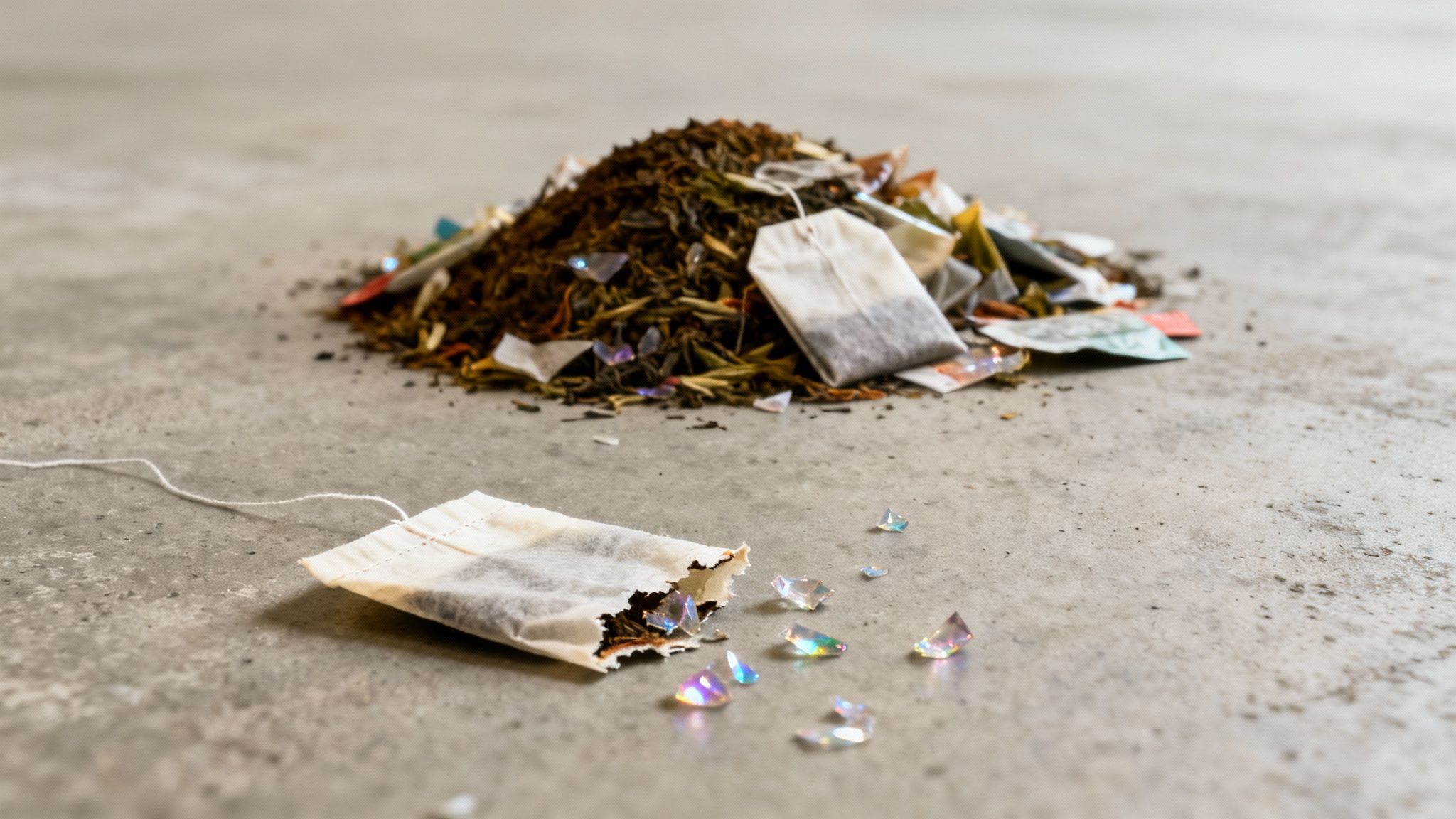
A single tea bag feels so small, doesn't it? Just a tiny part of a daily ritual. But when you think about the millions of us brewing a cuppa every morning, the collective impact of those containing plastic becomes staggering. It’s not just about one bag; it’s about connecting the dots between your brew and the planet’s much wider plastic pollution crisis.
Think of it like this: one slowly dripping tap in a single house is just a minor annoyance. But millions of dripping taps across the country would create a national water crisis. Tea bags sealed with plastic act in the exact same way—each one adds a tiny, persistent drop to an ocean of waste.
When a tea bag containing polypropylene is tossed into a compost bin, it doesn’t just disappear. The natural fibres break down, but the plastic skeleton is left behind. It just crumbles into smaller and smaller fragments, contaminating the soil and finding its way into our ecosystems. This is where a simple choice can make a real difference. If you're keen to dig deeper, you can read more about the importance of sustainability and conscious living.
From Your Bin To The Bigger Picture
The journey of a plastic-laced tea bag after it leaves your kitchen bin shines a light on a much larger problem. In the UK, households are thought to throw away an eye-watering 90 billion pieces of plastic packaging every year. Even worse, over half of our post-consumer plastic waste is incinerated, and around 20% still ends up in landfill, where it will sit for centuries.
Each one of those plastic-sealed tea bags is a direct contributor to this mountain of waste. Unlike fully compostable materials that break down and enrich the soil, these bags leave a permanent mark. Their plastic components stubbornly persist, leaching chemicals and adding to a landfill burden our planet simply can't sustain.
Opting for tea bags without plastic is more than a personal preference; it's a direct action to reduce your contribution to long-term pollution. By choosing truly compostable or reusable options, you help break the cycle of plastic waste from the ground up.
Making A Meaningful Change
Choosing plastic-free options isn't a small, insignificant gesture. It’s a powerful vote for a healthier planet. It signals to manufacturers that we, as consumers, are demanding better, more responsible products. This collective shift helps nudge the entire industry towards genuine environmental responsibility and encourages the adoption of truly sustainable packaging solutions.
Your choice sends a clear message: convenience should never come at the cost of our environment's long-term health. By embracing plastic-free tea, you actively become part of the solution, turning your daily ritual into a positive force for change. It's a simple switch with a lasting, beneficial impact.
The Unseen Problem: What's Really In Your Cuppa?
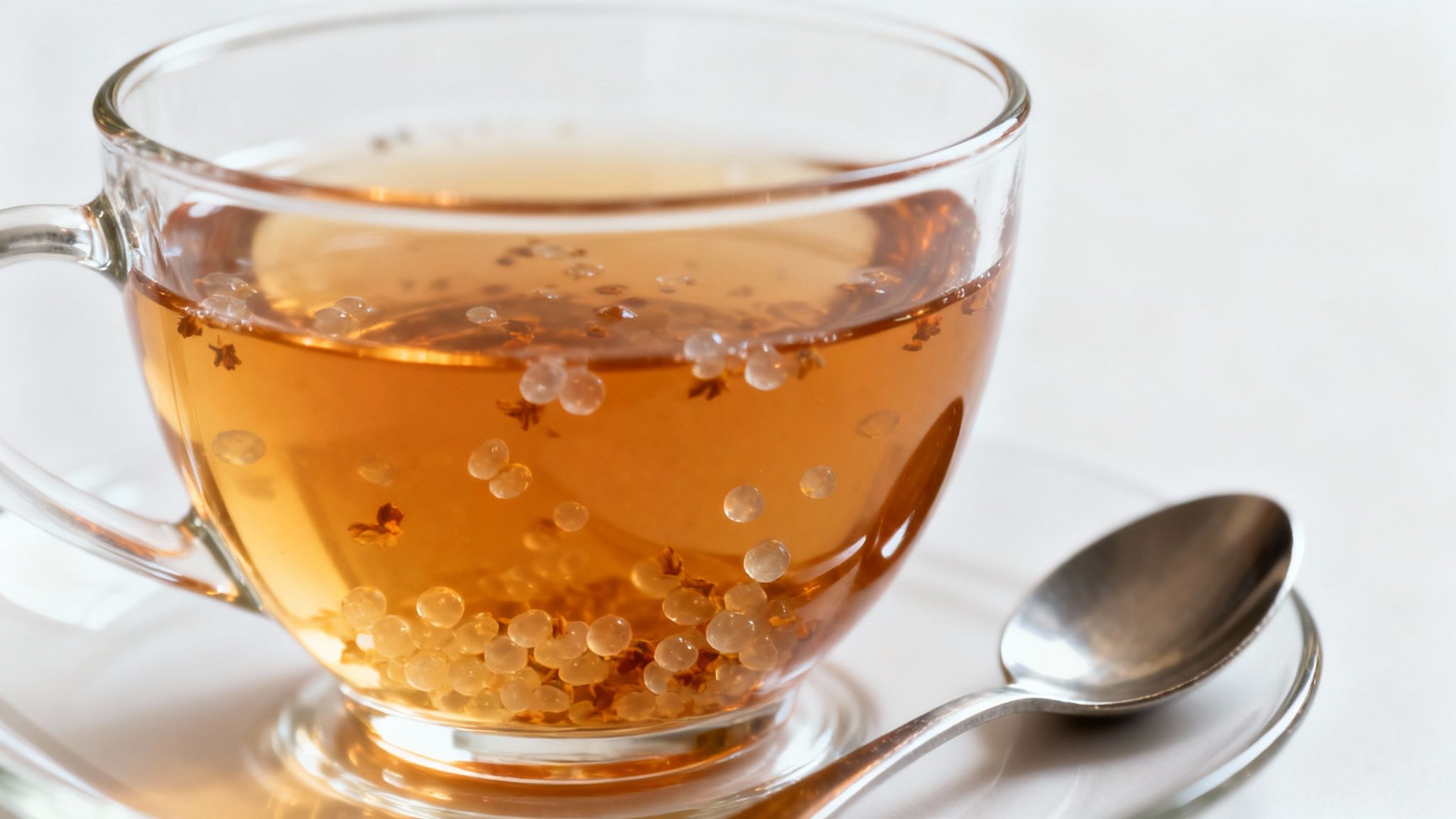
The trouble with plastic in tea bags goes far beyond the usual environmental worries. The problem lands squarely in your mug, centring on microplastics and even smaller nanoplastics—tiny particles, invisible to the naked eye, that are stirring up serious health discussions.
So, how do they get there? When a tea bag made from certain plastics like nylon or PET is dunked in hot water, the heat causes the material to break down and shed these minuscule fragments right into your brew.
Just How Big Is The Problem?
The numbers are genuinely staggering. Groundbreaking research found that steeping a single plastic tea bag at 95°C could release a shocking 11.6 billion microplastics and 3.1 billion nanoplastics.
It’s hard to wrap your head around a number that big. Picture a pinch of fine salt, but instead of salt, imagine it’s made of countless tiny plastic particles swirling invisibly in your tea. That’s the kind of volume we’re talking about from just one bag.
This isn't some distant scientific theory; it’s something people are waking up to. A recent survey showed that British shoppers are some of the most concerned in Europe about microplastics, especially in materials touching their food and drink. This growing awareness is fuelling a move towards whole-leaf teas and truly plastic-free bags. You can read the full research about these consumer insights to see how the tide is turning.
What Does This Mean For Our Health?
While the science is still evolving, early findings on the long-term effects of ingesting microplastics are raising red flags. Researchers are looking into everything from gut inflammation to other wider health issues. And it’s not just in tea; these particles are everywhere. If you want to go down the rabbit hole, you can explore the truth about microplastics in cosmetics and see how widespread the issue really is.
The good news? Choosing tea bags without plastic is a simple, direct way to reduce your exposure. It lets you sidestep the whole issue, so you can focus on what matters—enjoying the pure flavour and benefits of the tea itself. A truly clean and reassuring cuppa starts with a better bag.
How To Find Genuinely Plastic-Free Tea Bags
Trying to switch to plastic-free tea can feel like navigating a maze. You're met with a barrage of confusing labels and marketing jargon – terms like ‘biodegradable’ and ‘plant-based’ sound great, but often don't mean what you think. Let's cut through the noise so you can shop with confidence.
The first step is to become a bit of a packaging detective. Don’t just look at the front of the box; turn it over and scrutinise the materials list and disposal instructions. Brands that are genuinely plastic-free are usually proud of it and will say so loud and clear.
Decoding Common Packaging Clues
To find proper tea bags without plastic, you need to know what to look for and, more importantly, what to be wary of. Some clues are visual, while others are hidden in the terminology.
Keep an eye out for these tell-tale signs:
- Heat-Sealed Edges: You know those flat paper tea bags with a perfectly crimped, sealed edge? If there's no visible stitching, it’s almost certainly held together with polypropylene glue.
- Shiny Pyramid Bags: Those silky, translucent pyramid bags might look elegant, but they're typically made from nylon, PET, or PLA – all forms of plastic or bioplastic. A dead giveaway is that they won't tear easily.
- Vague Green Language: Be cautious of fluffy terms like ‘eco-friendly’ or ‘plant-derived’ that aren’t backed by specific certifications. This is often just 'greenwashing' used to describe PLA bags, which are bioplastics that need industrial composting facilities to break down.
The key takeaway? Look for explicit confirmation. The gold standard is a clear statement like "100% plastic-free" or "home compostable" right there on the packaging. That kind of transparency shows the brand has nothing to hide.
The Best Plastic-Free Alternatives
When you’re ready to choose, focus on materials that are natural and designed for simple, effective composting at home. These options guarantee you avoid both fossil-fuel plastics and those tricky bioplastics, ensuring a truly clean cup of tea.
Look for bags that are:
- Stitched or Folded: Many brands, like Pukka Herbs and Yogi Tea, have clever designs that use a simple folding technique and a single stitch of organic cotton thread. This completely eliminates the need for any plastic glue.
- Made from Certified Materials: Some pyramid bags are now made from Soilon, a woven mesh derived from corn starch. While this is a type of PLA, brands committed to transparency will specify that it is compostable. For a deeper dive into the different materials, you can explore our guide to compostable tea bags and what makes them genuinely eco-friendly.
- Unbleached Paper: Brands like Traditional Medicinals and The Republic of Tea use simple, unbleached paper for their bags, with no plastic coatings or sealants in sight.
Of course, the most reliable way to enjoy a completely plastic-free brew is with loose-leaf tea. Using a reusable infuser is a zero-waste dream and, frankly, delivers a far superior flavour from whole tea leaves. But for those moments when you need convenience, choosing a certified plastic-free, stitched, or folded bag is an excellent and responsible choice.
Embracing Your New Plastic-Free Tea Ritual
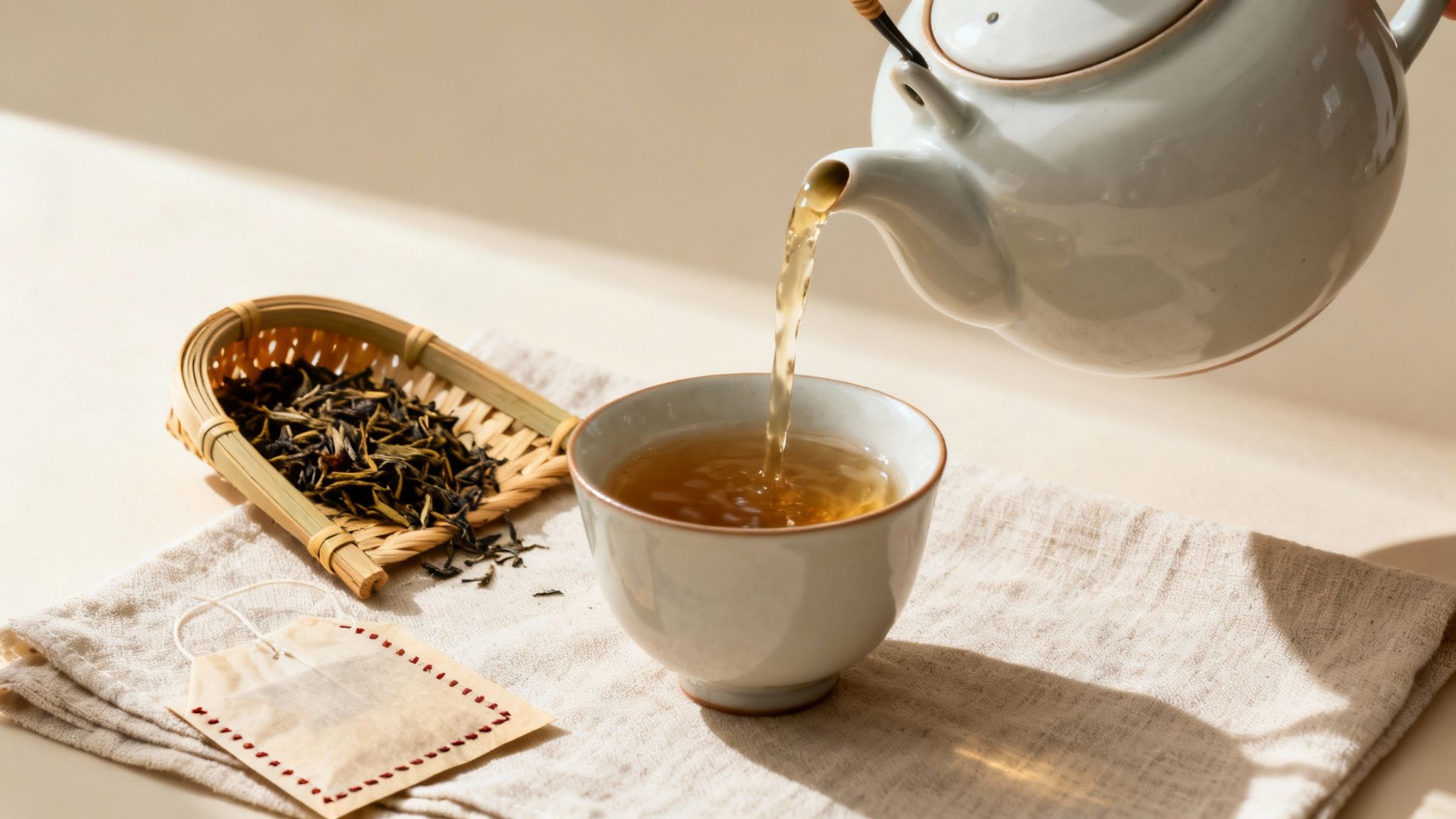
Making the move to tea bags without plastic isn't about giving anything up. Far from it. Think of it as upgrading your entire tea experience. When you reframe the process as a mindful daily ritual, rather than just another habit, the transition becomes a genuine pleasure.
Ditching conventional bags often means you’ll find yourself exploring loose-leaf tea or higher-quality, truly plastic-free bags. This simple change unlocks a whole new world of flavour. Instead of the fine ‘dust’ packed into many mass-produced bags, you get to appreciate the complex, delicate notes of whole tea leaves as they unfurl and release their full character.
Brewing Your Perfect Plastic-Free Cup
Getting started with loose-leaf tea is much easier than you might think. You just need a simple tool to keep the leaves contained while they work their magic.
- Tea Infusers: These little reusable metal or silicone baskets are perfect for a single mug. Just add a spoonful of your chosen tea, pop it in your cup, and pour over hot water.
- Teapots with built-in strainers: If you're brewing for more than one, these teapots are ideal, keeping the leaves separate as you pour.
- The French Press: It’s not just for coffee! A French press does a brilliant job of brewing a clean, full-bodied pot of tea.
Switching to a plastic-free brew is a conscious choice for better flavour and a healthier planet. It transforms a simple habit into a moment of intention, connecting you more deeply with the tea itself and its origins.
Closing The Loop With Composting
One of the best things about using certified plastic-free tea bags is that many can be composted right at home, returning valuable nutrients to the soil. But it’s vital to get the disposal right.
First, make sure your bags are genuinely home compostable. For a complete guide on how to handle the different materials and what to look out for, you can learn more about how to properly compost your tea bags. Taking this final step completes the sustainable cycle, turning your daily ritual into a positive action for the environment.
A Few Common Questions About Plastic-Free Tea
Dipping your toes into the world of plastic-free tea can feel a bit confusing at first. With so many different terms and materials being thrown around, it's easy to feel a little lost.
We get it. So, let's clear things up with some straightforward answers to the questions we hear most often.
Are 'Biodegradable' or 'PLA' Tea Bags Really Plastic-Free?
This is probably the biggest point of confusion, and the short answer is no, not really. While PLA (polylactic acid) comes from plant starches like corn, it’s still what’s known as a bioplastic. It looks, feels, and acts like plastic, and here's the kicker: it needs a special industrial composting facility to break down.
It definitely won't disappear in your garden compost heap. Genuinely plastic-free bags are made from things like unbleached paper or plant fibres, which are simply folded, crimped, or stitched with cotton. If you want something you can pop in the home compost, that's what you should be looking for.
How Can I Tell If My Tea Bags Contain Plastic At Home?
You can usually spot the culprits with a quick eye test. Those shiny, silky pyramid bags? Almost always nylon or PET plastic. Try giving one a little tear—if it puts up a fight and doesn't rip easily, you’ve got plastic on your hands.
For the more traditional flat paper bags, have a look at the seal. If you see a perfectly straight, heat-sealed edge, that’s a dead giveaway that polypropylene glue was used. In contrast, truly plastic-free bags are often folded and stitched (you might even see the thread!), or they'll just have a simple string and tag with no seal at all. When in doubt, the packaging should tell you what you need to know—look for a clear "plastic-free" statement.
Of course, the only way to be absolutely certain you're avoiding plastic is to switch to loose-leaf tea. It guarantees a pure brew every single time and, let's be honest, the flavour from whole leaves is just in a different league. A reusable infuser makes it a simple, zero-waste ritual.
That said, a well-made, genuinely plastic-free tea bag offers brilliant convenience without any of the worries, making it a fantastic choice for a quick, clean cuppa.
At Jeeves & Jericho, we believe in a purer tea experience from leaf to cup. Explore our range of exceptional loose-leaf teas and plastic-free pyramid bags, all crafted for incredible flavour and complete peace of mind. Shop our sustainable tea collection today.