


Welcome to our definitive guide to the world of tea. Whether you’re just starting your journey or you’re a seasoned tea lover, this is your go-to reference for exploring everything from the boldest black tea to the most delicate white tea. We'll be diving into the core categories: black, green, white, oolong, pu-erh, and the wonderful world of herbal infusions.
Your Essential Guide to Tea Varieties
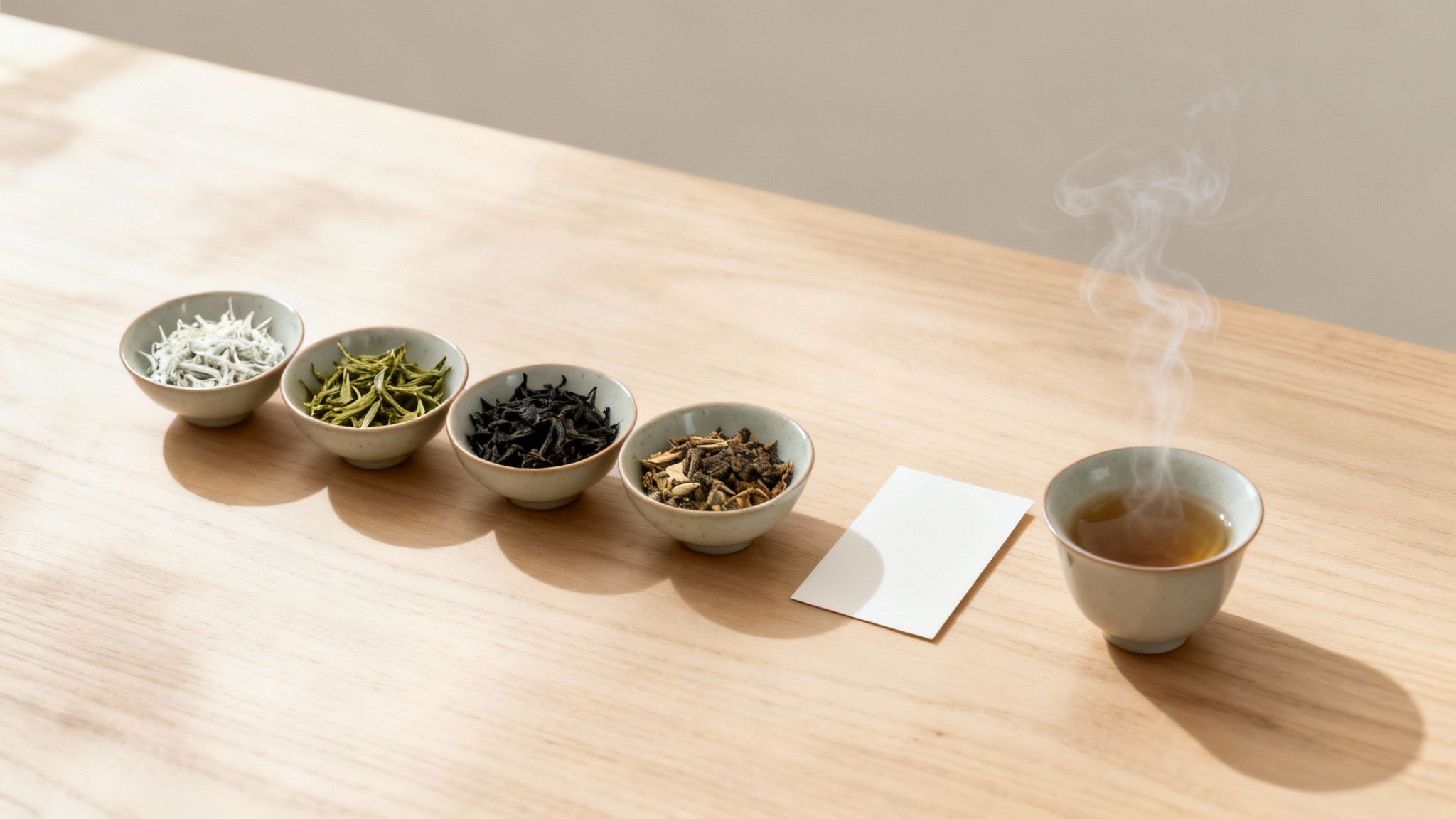
Let's start with a simple, but often surprising, fact. Every single type of tea—from a dark, malty Assam to a light, grassy Sencha—begins its life as a leaf from the very same plant: Camellia sinensis. It’s a bit mind-boggling, isn't it?
The incredible diversity we find in our cups comes down to how the leaves are treated after they’re picked. The most crucial part of this process is oxidation. This is a natural reaction that begins the moment a leaf is plucked, changing its flavour, colour, and aroma. How much or how little the tea maker allows the leaves to oxidise is what defines its final character.
We’ve structured this guide to be as useful as possible, whether you’re simply curious or looking to refine your palate. Let’s get into it.
Understanding the Tea Spectrum
Think of tea types existing on a spectrum, defined by their level of oxidation.
- Minimal Oxidation: At one end, you have white tea. Here, the young leaves and buds are simply withered and dried, which preserves their incredibly subtle and delicate nature.
- No Oxidation: Next up are green teas. To make these, the leaves are quickly heated after picking—either by steaming or pan-firing—which stops the oxidation process in its tracks. This is what locks in that fresh, vibrant, and often grassy character.
- Partial Oxidation: Oolong teas are the fascinating middle ground. Their oxidation can range anywhere from 10% to 80%, creating an astonishingly wide array of flavours, from light and floral to dark and roasty.
- Full Oxidation: Finally, we have black tea. The leaves are allowed to oxidise completely, which develops those deep, rich, and robust flavours we know and love.
To make this a little easier to digest, here's a quick reference table summarising the main categories.
Quick Reference Tea Variety Chart
| Tea Category | Oxidation Level | Common Flavour Notes | Ideal Water Temperature |
|---|---|---|---|
| White Tea | 0-5% | Delicate, floral, sweet, melon | 75-80°C |
| Green Tea | 0% | Grassy, vegetal, nutty, marine | 70-80°C |
| Oolong Tea | 10-80% | Floral, fruity, creamy, toasty | 85-95°C |
| Black Tea | 100% | Malty, robust, fruity, brisk | 90-100°C |
This chart is a great starting point, but remember that within each category lies a world of unique flavours waiting to be discovered.
A British Love Affair with Tea
Here in the UK, tea is so much more than a drink; it’s a ritual, a comfort, a cornerstone of our culture. It’s hard to overstate our national passion for a good brew—as a nation, we get through over 100 million cups every single day. That staggering figure shows just how woven into our daily lives it is, from that first cup in the morning to a comforting pot in the afternoon. If you're curious, you can find out more about just how much tea British people drink.
At Jeeves & Jericho, we take this tradition seriously. We’re committed to sourcing only the finest whole-leaf teas from growers we trust. Our belief in ethical partnerships means every cup we sell tells a story of its origin, offering a truly exceptional experience from leaf to cup. We hope this guide helps you find your next perfect brew among our curated selections.
Black Tea: The Quintessential British Classic
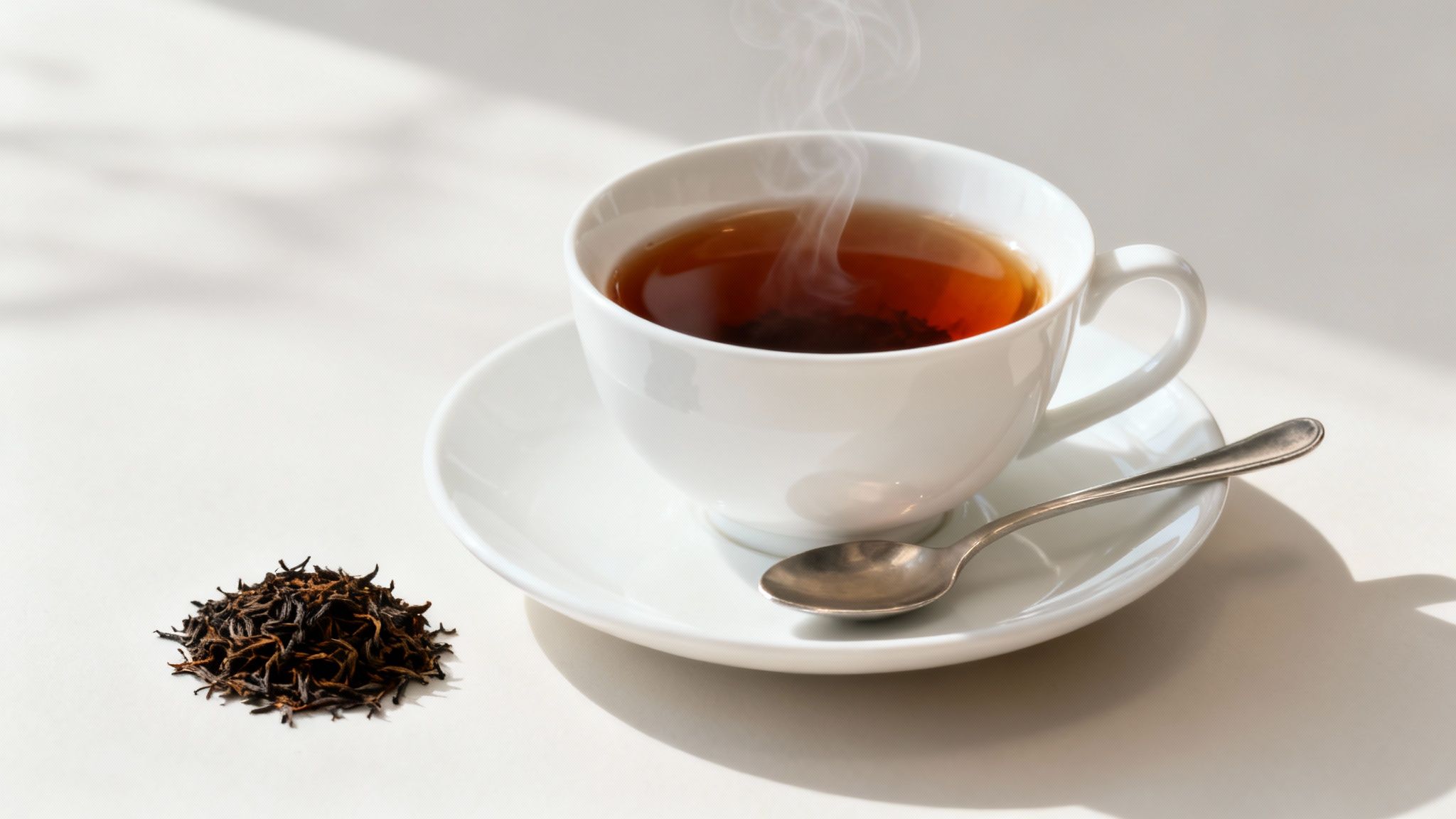
For most of us in the UK, if you say "tea," you mean black tea. It’s the brew that fuels the nation, and its distinctive character comes from a process called full oxidation. Once harvested, the leaves are withered, rolled, and then left to mingle with the air. This step is where the magic happens, transforming the leaves to a deep, coppery-brown and developing those wonderfully robust, malty, and sometimes fruity notes we know and love.
This process also gives black tea its satisfying caffeine kick, making it the go-to morning cuppa for so many. It’s hardly surprising that it remains the heart of British tea culture, with a recent census showing 71% of Brits name it as their brew of choice. You can dive into the full census study on UK tea habits to see just how deep our love for it runs.
Iconic Single-Origin Black Teas
While blends are brilliant, exploring single-origin black teas opens up a whole world of flavour, each shaped by the unique soil and climate of its home.
- Assam: From the eponymous region in India, Assam is the definition of a strong, full-bodied brew. Its powerful and distinctively malty profile makes it the backbone of many a breakfast blend.
- Darjeeling: Often called the "champagne of teas," Darjeeling is grown in the foothills of the Himalayas. Its flavour shifts with each harvest (or "flush"), but it’s generally lighter, more delicate, and famous for its unique muscatel grape notes.
- Ceylon: Hailing from Sri Lanka, Ceylon tea is wonderfully crisp and brisk, often with hints of citrus and spice. Its bright, clean character makes it fantastic for iced tea but equally refreshing as a hot brew.
Classic Black Tea Blends
Blends are all about balance. They're thoughtfully crafted combinations of different teas, designed to deliver a consistently delicious and familiar flavour that millions adore.
For so many, these blends are more than just a drink; they're a daily ritual. They promise a comforting, reliable start to the day or a welcome pause in the afternoon, woven into the very fabric of British life.
English Breakfast is probably the most famous of them all. A traditional English Breakfast is a rich, hearty mix of Assam, Ceylon, and sometimes Kenyan teas. It's blended specifically to be strong enough to stand up to milk and sugar, making it the perfect partner for a full English.
Earl Grey is another timeless classic, set apart by the addition of oil from the rind of the bergamot orange. This citrus infusion gives the tea its signature floral, aromatic scent for a uniquely sophisticated and refreshing experience. If you're curious to learn more, you can explore the diverse world of black teas in our guide.
Brewing and Pairing Recommendations
Getting the best from your black tea really comes down to the brew. You'll want to use freshly boiled water, ideally between 95-100°C, and let the leaves steep for 3-5 minutes. You can play with the timing to get it just right for you – a shorter steep gives a lighter cup, while a longer one delivers a more powerful brew.
And when it comes to pairing with food, the possibilities are a delight:
| Tea Variety | Best Paired With |
|---|---|
| English Breakfast | A proper cooked breakfast, scones with clotted cream and jam, or rich cakes. |
| Earl Grey | Lemon tarts, shortbread biscuits, or light and airy sponge cakes. |
| Darjeeling | Delicate pastries, mild cheeses, or a simple cucumber sandwich. |
At Jeeves & Jericho, we're passionate about the rich heritage of black tea. That's why we source exceptional leaves from the world's finest estates. Each of our black teas tells the story of its origin—a commitment to quality you can taste in every ethically sourced cup.
Green Tea: Freshness in a Cup
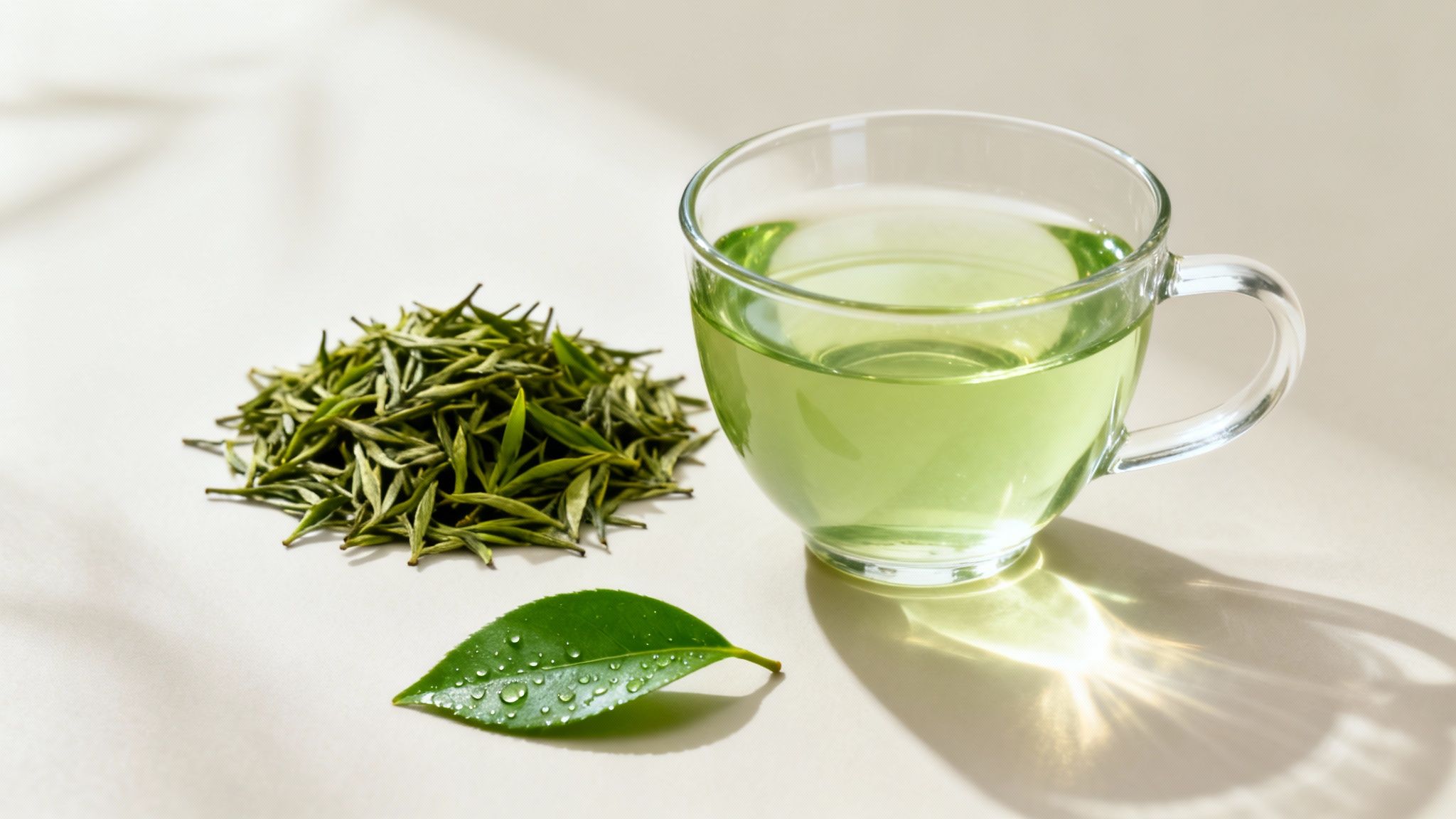
While black teas are all about embracing oxidation, green tea is defined by its complete absence. This is what gives it that classic vibrant green hue and those wonderfully fresh, vegetal notes. The moment the leaves are plucked, they’re quickly heated to stop any oxidation in its tracks.
This crucial step, either by steaming in the Japanese style or pan-firing as they do in China, locks in all the good stuff. It preserves the natural enzymes and polyphenols, creating a brew celebrated for its clean taste and health benefits. The world of green tea is incredibly varied, with flavours ranging from sweet and nutty to savoury and even oceanic, depending on where and how it was grown and processed.
Getting to Know the Key Green Tea Varieties
The landscape of green tea is vast, with each type telling a story of its origin. Chinese and Japanese green teas are arguably the most well-known, and their distinct processing methods create entirely different drinking experiences.
- Sencha (Japan): This is the everyday tea of Japan for a reason. The leaves are steamed, rolled, and dried, resulting in a brew with a refreshing, grassy flavour and a subtle, savoury umami character reminiscent of seaweed.
- Genmaicha (Japan): A wonderfully comforting blend of Sencha leaves and toasted brown rice. The rice gives it a nutty, almost savoury profile that perfectly balances the crispness of the green tea.
- Dragon Well / Longjing (China): One of China's most famous and revered teas. Dragon Well is painstakingly pan-fired in a wok, which imparts a beautifully smooth body with notes of toasted chestnut and a lingering sweet finish.
- Gunpowder (China): Named for its appearance, these tea leaves are tightly rolled into tiny pellets. They unfurl dramatically in hot water, releasing a bold, slightly smoky flavour with a brisk, clean finish.
Figuring out the difference is the first step to finding the one you love. If you want to go deeper, we've put together a whole guide on what is the best green tea.
How to Brew Green Tea Perfectly
If you remember one thing about brewing green tea, make it this: don't scorch the leaves! Using water that’s too hot is the single biggest mistake people make, and it’s the fast track to a bitter, unpleasant cup.
The real secret to a beautiful cup of green tea is all about temperature control. Dialing back the heat lets all the sweet, complex, and vegetal notes come forward, turning what could be a harsh brew into something wonderfully smooth and satisfying.
For a great cup every time, just follow these simple tips:
- Heat Your Water: Aim for a temperature somewhere between 70-80°C. If you don’t have a fancy temperature-controlled kettle, no problem. Just boil the water and let it sit for a couple of minutes to cool down before you pour.
- Measure Your Leaves: A good rule of thumb is about one teaspoon of loose-leaf tea for every 200ml of water.
- Steep with Care: Green tea doesn't need long at all. Let it infuse for just 1-3 minutes. It steeps much faster than black tea, and leaving it for too long is what brings out that bitterness.
Pairing Food with Green Tea
The fresh, often savoury character of green tea makes it an incredible partner for food. It can cut through richness or complement delicate flavours without ever stealing the show.
| Green Tea Type | Try It With |
|---|---|
| Sencha | A perfect match for seafood, sushi, and steamed vegetables. |
| Genmaicha | Its toasty notes are brilliant with chicken, rice bowls, and noodle salads. |
| Dragon Well | Excellent alongside pan-fried fish, simple stir-fries, and mild cheeses. |
Here at Jeeves & Jericho, we go to great lengths to source our green teas, ensuring every cup is full of character and integrity. We invite you to explore our collection and taste the vibrant freshness that makes this tea a perennial favourite.
Oolong Tea: The Complex Middle Ground
Sitting in that fascinating space between the fresh, unoxidised greens and the deep, fully oxidised blacks, oolong is without a doubt the most diverse and complex character in the world of tea. Its secret lies in partial oxidation, a process where tea masters show their true skill by halting the reaction anywhere from 10% to 80%.
This huge range is what gives oolong its magic. One cup can be light, floral, and grassy, almost like a green tea. The next can be dark, toasty, and rich with fruit, verging on a black tea. Even the leaves are a spectacle – some are rolled into tight little pearls that dance and unfurl in the water, while others are twisted into long, elegant strands.
Exploring the Oolong Spectrum
To really get your head around oolong, it’s best to try a couple from opposite ends of the spectrum. Doing so really shines a light on the incredible craftsmanship that goes into every batch.
- Tie Guan Yin (Iron Goddess of Mercy): A classic example of a greener, lightly oxidised oolong, usually sitting around 15-30%. Hailing from Anxi in China, it’s famous for its intoxicating floral fragrance, often compared to orchids. The taste is wonderfully buttery and smooth, with a sweet, lasting finish.
- Da Hong Pao (Big Red Robe): A legendary name from the Wuyi Mountains, this is a much darker, more heavily oxidised oolong. The leaves go through a traditional charcoal roasting, which builds up a deep, complex flavour profile. Expect notes of toasted nuts, cacao, and stone fruit, all sitting on a unique mineral backbone.
One of the true joys of a good oolong is watching it evolve in your cup. These teas are famous for giving you multiple infusions from one set of leaves, with each steep revealing new, subtle layers of flavour and aroma.
How to Brew Oolong Tea
Getting the brew right is everything when it comes to unlocking oolong's complexity. Your usual teapot will do the job, but if you really want to get the most out of it, a smaller pot or a traditional lidded bowl called a gaiwan is perfect for enjoying those multiple infusions.
- Water Temperature: Use water that’s just off the boil, somewhere between 85-95°C. Go for the cooler end of the scale for greener oolongs, while the darker, roasted types can take a bit more heat.
- Steep Time: Oolongs are made for short, sharp infusions. It’s a good idea to give the leaves a quick rinse first (just 10 seconds or so), pour that water away, and then go in for your first proper steep of 30-60 seconds.
- Multiple Infusions: With each new steep, just add another 15-30 seconds to the infusion time. A quality oolong can easily give you 5-8 beautiful, flavourful rounds.
Perfect Pairings for Oolong Tea
Because oolong is so varied, it’s a brilliant tea to have on hand for pairing with food.
| Oolong Type | Food Pairing Suggestions |
|---|---|
| Light & Floral (e.g., Tie Guan Yin) | Works beautifully with delicate flavours like scallops, light pastries, and melon. |
| Dark & Roasted (e.g., Da Hong Pao) | Stands up well to richer dishes like roasted duck, smoked meats, and caramel-based desserts. |
White Tea: The Essence of Delicacy
If you’re after the purest expression of the tea leaf, look no further than white tea. Of all the teas that come from the Camellia sinensis plant, this one is handled the least, letting its natural, delicate character shine through.
White tea is all about the youngest, freshest growth. Harvested in early spring, sometimes for only a few days a year, it consists of tiny, unopened buds and the most tender new leaves. There's no rolling or firing here; the leaves are simply withered and gently dried. This minimalist approach stops oxidation in its tracks, preserving the fine, silvery-white hairs on the buds that give the tea its name. The result? A brew with the lowest caffeine content of all true teas and a beautifully subtle flavour.
Notable White Tea Varieties
While there are a few different types, two really steal the show in the world of white tea. Each one offers a uniquely delicate experience.
- Silver Needle (Bai Hao Yinzhen): This is the top-tier stuff. Silver Needle is made purely from plump, unopened tea buds, nothing else. It brews into a pale, almost clear liquor with a remarkably smooth, sweet profile. You’ll find notes of melon and honey with a soft, floral finish. It’s pure elegance in a cup.
- White Peony (Bai Mudan): A little more robust, this variety includes both the bud and the top two youngest leaves. Those extra leaves add a bit more body and colour, creating a lovely golden brew with a slightly fuller flavour. Think delicate floral notes balanced with a hint of orchard fruitiness.
The beauty of white tea lies in its subtlety. It doesn't shout for your attention; it whispers. Its delicate nature calls for a mindful brewing process to gently coax out its nuanced flavours.
Brewing and Pairing Your White Tea
You have to be gentle with white tea. Its delicate character demands cooler water and a bit more patience than its darker cousins. If the water's too hot, you'll just scald the leaves and end up with a disappointingly bland cup.
For the perfect brew, use water heated to around 75-80°C. Give the leaves a bit longer to steep, somewhere between 3-5 minutes, so their subtle flavours have time to infuse the water properly. When it comes to food, think light. White tea’s gentle sweetness is a brilliant match for mild cheeses, simple salads, or delicate white fish. Anything too powerful will just overwhelm it.
Explore the subtle elegance of this tea by discovering Jeeves & Jericho’s exquisite white tea collection, sourced with the same ethical commitment as all our teas.
Pu-erh Tea: The Aged and Fermented Wonder
Now for something completely different. A journey into the world of Pu-erh (pronounced 'poo-air') takes us to a truly unique corner of the tea map, exclusively in the Yunnan province of China. This is a tea that doesn't just age—it evolves.
Unlike pretty much every other tea where freshness is paramount, Pu-erh is fermented. It undergoes a special process involving microbial activity that completely transforms its character over time, much like a fine wine or a good cheese. This post-fermentation is what gives Pu-erh its signature deep, earthy, and incredibly smooth profile. It’s a living tea, with a story that deepens with every passing year.
Often, you'll find Pu-erh pressed into dense cakes, bricks, or little bird's nest shapes called 'tuocha'. A really good one can develop fascinating complexity over decades of careful ageing.
The Two Faces of Pu-erh
Pu-erh is broadly split into two distinct categories, and they offer a completely different experience in the cup. Getting your head around the difference is the first step to really appreciating this remarkable tea.
- Sheng Pu-erh (Raw): This is the traditional, naturally aged variety. When it's young, Sheng Pu-erh is actually quite vibrant and astringent, with vegetal or floral notes not unlike a green tea. But give it time—years, even decades—and it slowly mellows and ferments, developing incredible depth with notes of camphor, aged wood, and dried fruit.
- Shou Pu-erh (Ripe): This is a more modern invention, developed back in the 1970s to speed things up. It goes through an accelerated fermentation process where the tea leaves are piled, dampened, and covered. This clever technique speeds up the microbial activity, creating a dark, rich, and incredibly smooth brew in just a matter of months. Straight away, you get those deep notes of damp earth, dark chocolate, and even mushroom.
How to Brew Pu-erh Tea
Brewing Pu-erh, especially if you have a compressed cake, is a rewarding little ritual. It’s a bit different from your average loose-leaf, but simple once you know how.
- Break Off the Leaves: You'll need a small pick or even a dull knife to gently pry off about a teaspoon's worth of tea from the cake. The trick is to try and keep the leaves as whole as you can.
- Rinse the Tea: Don't skip this step, it's crucial. Pop the leaves in your pot or cup and cover them with hot water (95-100°C) for just 10-15 seconds. Immediately pour that water away. This "wakes up" the compressed leaves and washes away any dust from storage.
- The First Infusion: Now you're ready. Refill your pot with hot water and go for a really short steep, only 20-30 seconds.
- Enjoy Multiple Steeps: This is where the magic happens. A high-quality Pu-erh is made for multiple infusions. For each round after the first, just add 5-10 seconds to the steeping time. You'll be amazed at how the flavour develops with each cup.
That bold, earthy character means Pu-erh pairs beautifully with rich, savoury foods. Think roasted meats, hearty stews, and strong cheeses.
Herbal Teas: A World of Caffeine-Free Infusions
Once you step away from the classic tea plant, Camellia sinensis, you find yourself in the wonderfully varied world of herbal infusions. While we often call them 'herbal teas', they're technically tisanes (pronounced ti-zahn), as they aren't made from tea leaves at all. Instead, they're a brilliant concoction of flowers, herbs, spices, and fruits.
This crucial difference means they are all naturally caffeine-free, which makes them a fantastic choice for any time of day, but especially as a soothing evening ritual. Brewing them is usually a more relaxed affair, too. Most of these infusions sing when steeped with fully boiling water (100°C) for a good 5-7 minutes, giving all those lovely flavours time to come out and play.
Floral and Calming Infusions
Floral tisanes are loved for their delicate aromas and gentle, calming nature. There’s nothing quite like one to help you unwind after a long day.
- Chamomile: A true bedtime classic. Known for its mild, almost apple-like sweetness, chamomile has a reputation for being deeply relaxing and is often enjoyed to help ease into a restful night’s sleep.
- Hibiscus: This infusion is a feast for the eyes, brewing up a stunning, deep ruby-red colour. The flavour is just as vibrant—a tart, fruity profile often compared to cranberry. It's fantastic hot or cold and packed with antioxidants.
If you're curious to learn more, you can find a wealth of information about different herbs for infusions on specialised blogs. It's a massive category with endless possibilities for creating your own unique blends.
Minty and Refreshing Varieties
The mint family gives us some of the most invigorating infusions you can find. Their crisp, clean character is perfect for waking up the senses or settling your stomach after a meal.
A cup of mint tea is the perfect palate cleanser. Its bright, aromatic quality cuts through rich food and leaves you feeling clear-headed and refreshed, making it a brilliant digestif.
- Peppermint: Bold, cooling, and powerfully aromatic. Peppermint gets its classic sharp, minty punch from a high menthol content, which can help clear your head and soothe digestion.
- Spearmint: If you're after something a bit softer, spearmint is a great choice. It has a sweeter, more subtle minty flavour than its punchy cousin, offering a gentle refreshment without the intense cooling sensation.
Spicy and Warming Blends
Spicy tisanes are pure comfort in a cup. Their warming properties and zesty flavours can give you a gentle, caffeine-free lift and are often turned to for their wellness benefits.
These infusions are fantastic for digestion and creating a feeling of internal warmth, which makes them especially popular during the colder months or when you're feeling a bit under the weather. They’re the foundation for many wellness-focused blends.
Popular Spicy Infusions:
- Ginger: Pungent, spicy, and warming. Ginger root is famous for its fiery kick that's both invigorating and comforting, often used to soothe nausea and help with digestion.
- Lemongrass: Don't let the name fool you—lemongrass has a distinctly bright, citrusy flavour but without the sharp acidity of a lemon. It’s light, fragrant, and wonderfully uplifting.
From delicate floral notes to zesty fruit blends, the possibilities are virtually endless. At Jeeves & Jericho, our curated collection of herbal infusions celebrates this incredible diversity. We've brought together a perfect caffeine-free option for every mood and moment, all sourced with our unwavering commitment to ethical partnerships.
A Closer Look at Speciality Teas: Chai and Matcha
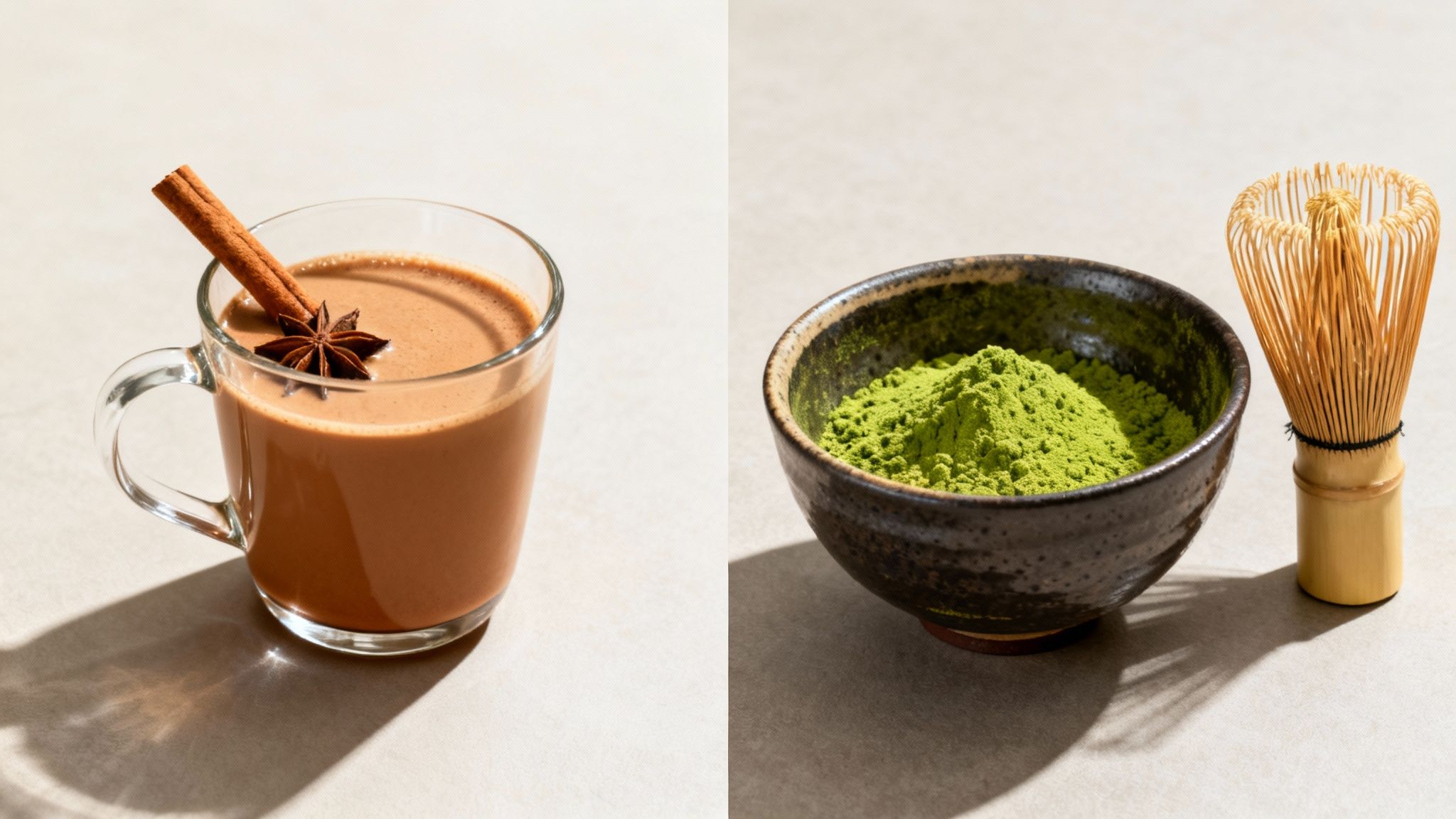
Now, let's venture beyond the classic tea categories. No exploration of tea would be complete without paying respects to two global superstars: Chai and Matcha. These aren't just drinks; they're cultural experiences, each steeped in a rich history and defined by a preparation method that makes them utterly unique.
Chai and Matcha sit at opposite ends of the tea spectrum. One is a bold, social, and spicy brew designed to be shared and savoured. The other is a focused, ceremonial, and deeply savoury ritual. Let's get to know them a little better.
Chai: A Hug in a Mug
Hailing from India, Masala Chai (literally 'spiced tea') is less a specific flavour and more a whole method of preparation. It's that wonderfully comforting blend of strong black tea, milk, sweetener, and a heady mix of aromatic spices, all simmered together to create something that’s warming, sweet, and spicy all at once.
- The Base: It all starts with a robust black tea, usually a strong Assam that can hold its own against the spices and milk.
- The Spices: The classic quintet includes cinnamon, cardamom, cloves, ginger, and a kick of black peppercorns.
- The Flavour: Expect a bold, fragrant, and invigorating taste where sweet and spicy find a perfect harmony.
The traditional way to make it involves gently simmering the tea and whole spices in a mixture of water and milk before straining and sweetening to taste. We've gone deep into its fascinating history in our complete guide to Chai tea from India. To get a real taste of this tradition, try our authentic Jeeves & Jericho Spiced Bombay Chai.
Matcha: The Art of Japanese Green Tea
Matcha is a truly special powdered green tea from Japan, celebrated for its electrifying colour and profound, savoury umami flavour. With most teas, you steep the leaves and then remove them. With matcha, you’re actually whisking the entire, stone-ground leaf into the water and drinking it all.
The preparation of Matcha is a mindful practice. The traditional whisking with a 'chasen' creates a smooth, frothy layer, transforming the tea into a rich, velvety beverage that engages all the senses.
The magic begins weeks before the harvest when tea bushes are covered to shade them from the sun. This forces the plant to produce more chlorophyll and L-theanine, giving matcha its brilliant green hue and the feeling of calm, focused energy it imparts. To prepare it, you sift the fine powder into a bowl (chawan), add hot (but never boiling) water, and use a bamboo whisk (chasen) to whip it into a beautiful froth.
This rise in popularity has even inspired all sorts of creative merchandise, like these Boba Tea themed accessories. To experience the real thing, discover our premium Uji Matcha.
Your Tea Questions, Answered
Diving into the world of tea can bring up all sorts of questions. We get it. Here are a few of the things we’re often asked, with some straightforward answers to help you get the very best from your brew.
Loose Leaf vs. Tea Bags – What’s Really the Difference?
It all comes down to the size and quality of the leaf. At Jeeves & Jericho, we're all about loose leaf tea, which means you’re getting whole or large pieces of tea leaves. This gives them the space they need to properly unfurl and release all their complex, nuanced flavours into the water.
Your standard tea bag, on the other hand, is usually filled with much smaller leaf fragments, often called 'fannings' or 'dust'. While they brew quickly, they can sometimes lead to a harsher, more bitter cup. Pyramid bags are a decent compromise, offering a bit more room for larger leaves to move around.
How Should I Store My Tea to Keep It Fresh?
Keeping your tea fresh is all about protecting it from its four biggest enemies: light, heat, moisture, and strong odours. Think of it like a delicate spice.
The best way to do this is to keep it in an airtight container, tucked away in a cool, dark cupboard. We’d steer clear of the fridge or freezer – the condensation can introduce moisture that will ruin the leaves. Stored this way, most teas will keep their beautiful flavour and aroma for one to two years.
Properly storing your tea isn't just about freshness; it's about respecting the journey the leaves have taken. From the grower's hands to your cup, good storage ensures you experience the tea exactly as the tea maker intended.
Does Tea Go Off? Is It Safe to Drink Old Tea?
Tea doesn't really 'expire' in the way milk does, so it won't become unsafe to drink, even after a long time. It’s not going to make you ill.
That said, tea definitely loses its magic over time. An old tea will taste flat, weak, and a bit dusty, having lost all the vibrant aroma and delicate notes that made it special in the first place. So while you can drink it, we always recommend enjoying your tea within a year or two of buying it. It’s the only way to ensure every cup is as fresh and full of character as it should be.
At Jeeves & Jericho, our mission is to bring you an incredible tea experience, from ethically sourcing the finest leaves across the globe to helping you brew the perfect cup at home. Why not explore our collections and find a new favourite today?