


If you’re wondering how long to brew tea, you’re asking the most important question for getting a delicious cup. But there’s no single, simple answer. The perfect steep time hinges entirely on the type of tea you’re brewing, with delicate white teas needing as little as 1 minute, while a robust black tea might need over 5 minutes.
Get it wrong, and you’ll know it. Too short, and the flavour is disappointingly weak. A moment too long, and bitterness takes over.
Your Quick Guide to Perfect Tea Brewing
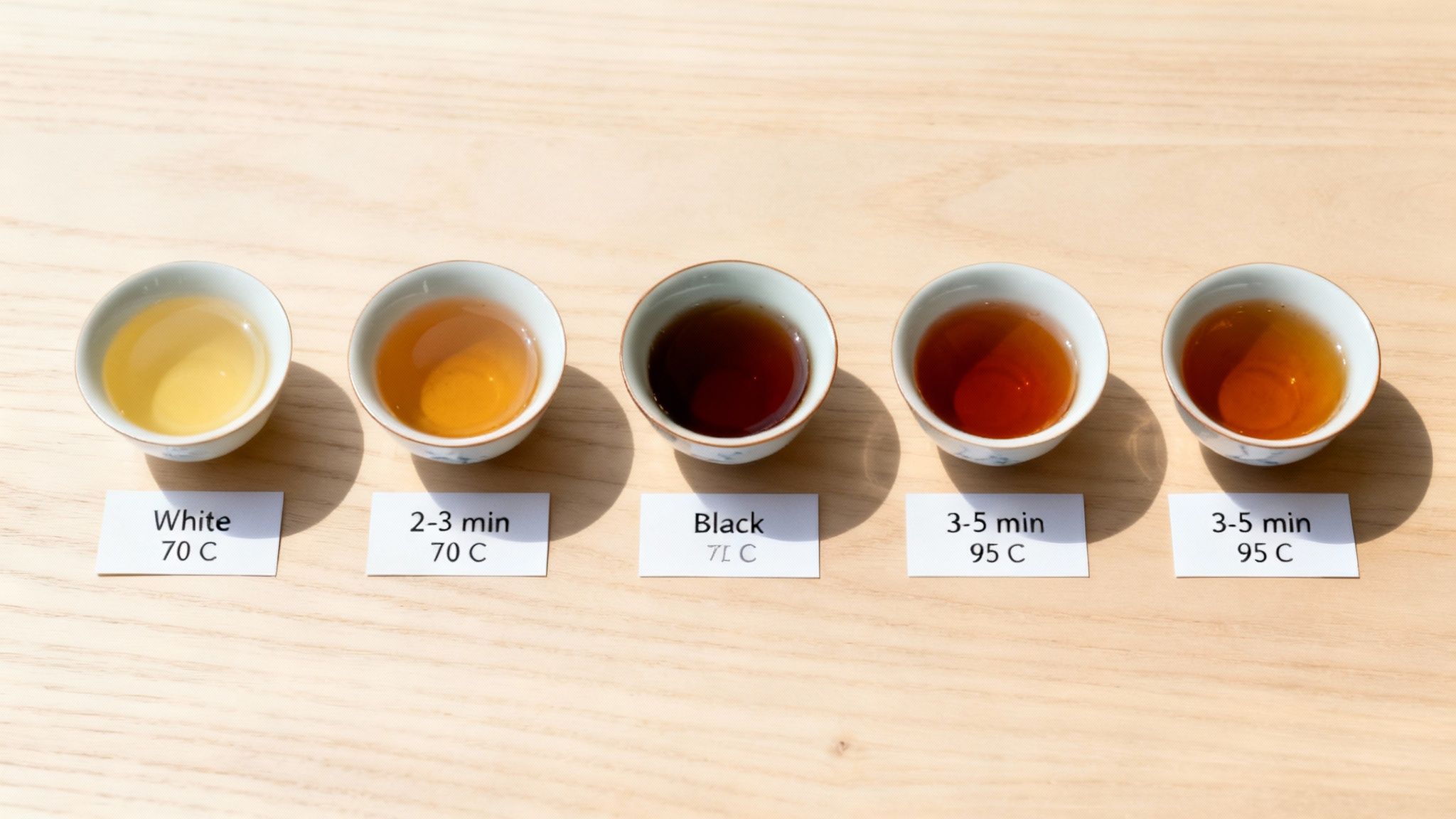
Think of it a bit like baking. You wouldn’t bake a delicate sponge and a dense fruitcake at the same temperature for the same amount of time, would you? It’s exactly the same with tea. Every variety has its own unique makeup, and that dictates the ideal brewing conditions.
A fine green tea, for example, is full of sweet, grassy notes that are easily coaxed out with cooler water and a short steep. If you hit it with boiling water or let it sit for five minutes, you’ll over-extract bitter compounds called tannins, and that lovely flavour will be gone.
On the other hand, a hearty black tea like an English Breakfast needs that higher temperature and longer steep to unlock its deep, malty character. This is precisely why a one-size-fits-all approach to brewing just doesn’t cut it. Getting to know the fundamentals of each tea type is the real secret to a consistently brilliant brew.
Tea Brewing Times and Temperatures at a Glance
To get you started, we’ve put together a handy cheat sheet. Think of this as your starting point – a reliable guide you can tweak to find what works perfectly for you. Mastering these basics is central to learning how to brew loose leaf tea and unlocking a world of flavour.
Use this chart as a starting point for the most common types of tea to achieve a balanced and flavourful cup.
| Tea Type | Water Temperature | Recommended Steep Time |
|---|---|---|
| Black Tea | 90-100°C | 3-5 minutes |
| Green Tea | 75-85°C | 1-3 minutes |
| White Tea | 70-80°C | 1-3 minutes |
| Oolong Tea | 85-95°C | 2-4 minutes |
| Pu-erh Tea | 95-100°C | 2-4 minutes |
| Herbal Tisanes | 95-100°C | 5-7 minutes |
Keep this table in mind for your next brew. It takes the guesswork out of the process, setting you on the right path to a beautifully balanced cup, every single time.
The Science Behind the Perfect Steep
Making a proper cup of tea is so much more than dunking a bag in hot water. It’s a bit of kitchen chemistry, a delicate dance that unfolds right there in your mug. If you've ever wondered why steep times matter so much, it all comes down to what the hot water is pulling out of the leaf, and when.
Think of it like searing a steak. Too little time and it's underdone; a moment too long and all the tenderness is gone. Tea is much the same. Different compounds dissolve at different rates, and getting the timing right is your ticket to a truly masterful brew.
When hot water first hits the leaves, the extraction process kicks off immediately. In that first minute or so, the most delicate and easily dissolved compounds are released. These are the aromatics that create that wonderful scent, along with the bright, lively notes that first hit your tongue. If you stop here, you’ll get a pleasant but thin cup – just the opening act.
Unlocking Deeper Flavours
Stick with it, though, and this is where things get interesting. As the tea infuses, larger, more complex molecules begin to emerge from the leaves, building the character and body of the tea.
- Catechins: Found in abundance in green tea, these powerful antioxidants are extracted fairly quickly. They give the tea its fresh, slightly sharp character.
- Theaflavins and Thearubigins: These are the compounds that give black tea its signature brisk, malty body and deep reddish hue. They take a little more time to dissolve fully.
- Tannins: Last to arrive are the tannins. These polyphenols are what give tea its structure and that familiar, slightly mouth-puckering quality known as astringency.
A proper steep allows all these elements to come together in perfect harmony. You're letting the full story of the leaf unfold, creating a balanced, full-bodied flavour profile that’s simply not possible with a rushed brew.
The Bitterness Balance
So, why not just leave the bag in forever? Well, that's where the tannins can turn on you. While a little astringency adds a pleasant complexity, over-steeping floods the cup with too many tannins. This is what causes that overpowering, unpleasant bitterness that masks all the lovely, delicate flavours that were released earlier.
Mastering your brew time is all about finding that "sweet spot"—the perfect moment where you've extracted all the good stuff without inviting in too much bitterness. It’s what elevates brewing from a routine to a real craft.
Ultimately, controlling your steep time gives you direct control over the final taste in your cup. It’s your chance to be a bit of a chemist in your own kitchen, crafting a brew that is a perfectly balanced, delicious experience.
Brewing Guides for Every Type of Tea
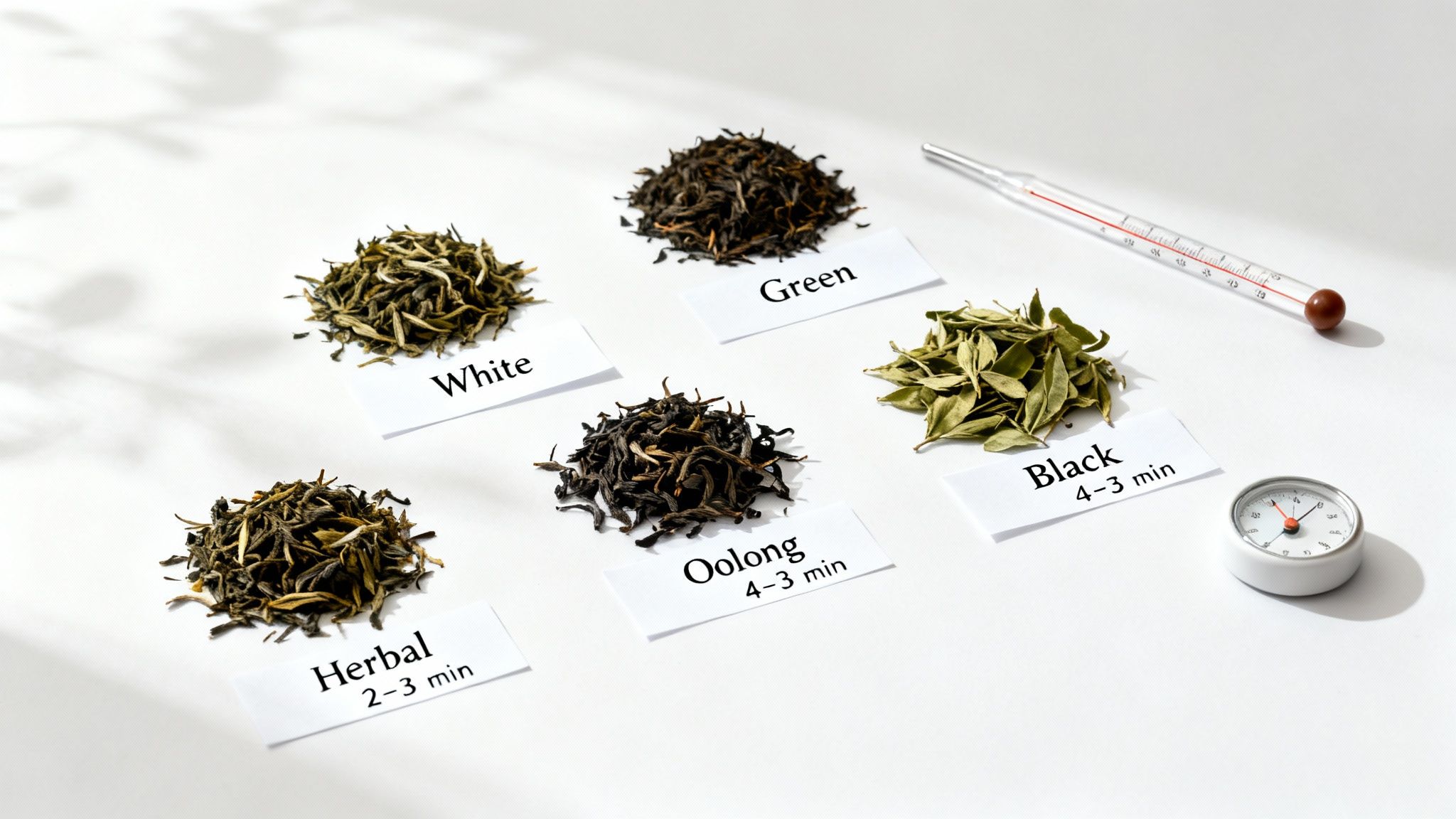
Every tea has its own unique character, and getting the best out of it means understanding what makes it tick. Think of it like cooking – you wouldn't use the same heat and time for a delicate fish as you would for a hearty stew. The same principle applies here; each tea needs a specific temperature and steep time to unlock its most incredible flavours.
This guide is your roadmap to brewing any tea in your collection to perfection. We’ll walk through the ideal conditions for each major type, explaining not just what to do, but why. After all, understanding the 'why' is what turns good brewing into great brewing.
If you're curious to learn more about what sets these teas apart before they even hit the water, you can dive into our comprehensive guide on the many different types of tea and their unique characteristics.
The Best Way to Brew Black Tea
Black tea is fully oxidised, a process that develops its deep colour and wonderfully robust, complex character. This robustness means it can stand up to higher temperatures and longer brew times far better than its more delicate cousins.
- Water Temperature: 90–100°C. Using water just off the boil is perfect for pulling out those rich, malty notes that black tea is famous for.
- Brew Time: 3–5 minutes. A shorter steep of around three minutes will give you a brighter, brisker cup. Pushing it to five minutes will draw out more strength and body, creating the perfect base for a splash of milk.
Just be careful not to overdo it. Go much beyond five minutes, and you risk extracting too many tannins, which can leave your tea with a bitter, astringent kick.
The Delicate Art of Green Tea
Green tea is unoxidised; the leaves are gently steamed or pan-fired soon after picking to preserve their fresh, grassy vibrancy. This process makes them incredibly sensitive to heat. Using water that’s too hot is the single biggest mistake people make, resulting in a bitter, almost ‘stewed’ taste that completely masks the tea's natural sweetness.
To get the best from your green tea, a gentle touch is non-negotiable. Cooler water protects the delicate flavour compounds and stops bitterness from taking over the cup.
Start with a lower temperature and a shorter steep time, and then feel free to experiment. Many high-quality green teas, like our own Japanese Sencha, are fantastic for multiple short infusions, with each steep revealing new layers of flavour.
How to Brew White and Oolong Teas
White tea is the least processed of them all, often made from just the young, unopened buds of the tea plant. This minimal intervention preserves its subtle, sweet, and often floral notes. Oolong teas are fascinating because they sit somewhere between green and black teas, with an oxidation level that can range from light and floral to dark and roasty.
- White Tea: Brew at 70–80°C for 1–3 minutes. It’s a delicate one, so it needs a gentle hand to coax out its nuanced flavour without scorching the leaves.
- Oolong Tea: This really depends on the style. For greener oolongs, aim for 85–95°C for 2–4 minutes. For darker, more oxidised oolongs, you can push the temperature closer to 95°C.
Unwinding with Herbal Tisanes
Technically not ‘tea’ at all, herbal infusions (or tisanes) don't come from the Camellia sinensis plant. Instead, they’re crafted from a blend of herbs, fruits, spices, and flowers. Because they contain no actual tea leaves, they are much more forgiving when it comes to brewing and are almost always caffeine-free.
Most herbal blends love a good, long steep in very hot water to fully release their essential oils and deep flavours. A brewing time of 5–7 minutes at 95–100°C is a brilliant starting point for classics like peppermint, camomile, or our vibrant fruit infusions.
Exploring Advanced Brewing Techniques
Once you’ve got the hang of temperature and time, a whole new world of brewing opens up. Stepping away from the standard teapot lets you play with techniques that bring out completely different sides of a tea's character, turning your daily cuppa into a much richer experience. These methods are for anyone ready to discover new layers of flavour.
Think of it this way: your usual brew is like a lovely photograph of a landscape. But trying an advanced technique is like actually walking through that landscape yourself—noticing the small changes in light, scent, and texture as you go. It’s a far more interactive way to enjoy tea.
Two fantastic methods that really show this off are Gongfu Cha and Cold Brewing. They couldn’t be more different in their approach, yet they both pull remarkably distinct flavours from the very same leaves.
The Art of Gongfu Cha
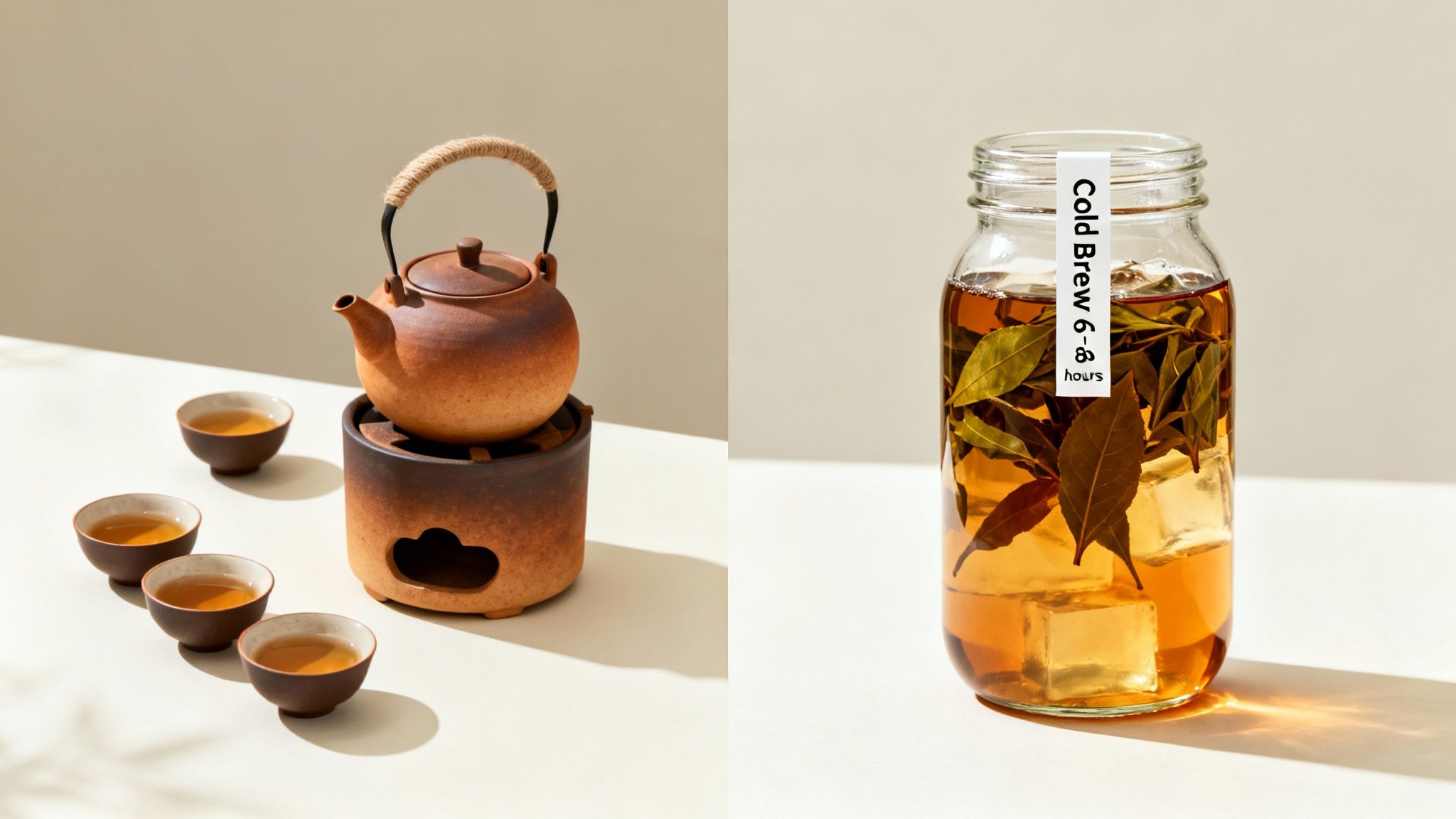
Gongfu Cha, which means "making tea with skill," is a traditional Chinese tea ceremony all about watching a tea’s flavour evolve over lots of small infusions. Instead of making one big pot, Gongfu uses a lot of leaf in a tiny vessel—often a small clay teapot or a gaiwan—and very little water.
The process is a series of very quick steeps:
- The Rinse: First, a quick 5–10 second wash of the leaves to "wake them up." This water is always thrown away.
- First Infusion: The first proper steep might only last 15–20 seconds.
- Subsequent Infusions: Each steep after that gets a little longer, by about 5–10 seconds each time.
This rapid-fire approach stops the bitter tannins from being released, bringing the tea’s aromatic oils and deep sweetness to the forefront instead. You’ll notice the flavour profile gently shifting with each round, making for a truly dynamic tasting journey. Oolongs and Pu-erh teas really shine with this method.
The Patience of Cold Brewing
At the complete opposite end of the spectrum is cold brewing. While Gongfu uses short, intense bursts of heat, cold brew gets rid of heat altogether and swaps it for time. This gentle, slow extraction completely changes the chemical makeup of your drink.
Cold brewing massively reduces the extraction of catechins and tannins—the compounds that make tea bitter and astringent. The result is a brew that is exceptionally smooth, naturally sweet, and far less acidic than its hot-brewed cousin.
This method is beautifully simple. Just combine tea leaves with cold, filtered water in a jar or bottle and let it steep in the fridge. So, how long to brew tea this way? It’s all about patience.
- Green & White Teas: Give them 6–8 hours.
- Black & Oolong Teas: These need a bit longer, around 8–12 hours.
- Herbal Tisanes: Can take up to 12 hours or even more.
The final brew is crisp, refreshing, and incredibly smooth—perfect for a warm day. If you fancy giving this a go, you can learn exactly how to make cold brew tea with our step-by-step guide. It’s a brilliant way to unlock a completely different side to your favourite Jeeves & Jericho blends.
Going Off-Piste: Adjusting Your Brew
Think of our brewing guides as a fantastic starting point—a reliable map for your tea journey. But the real magic happens when you start to trust your own taste buds and venture off the beaten path. This is where you go from tea drinker to tea master.
Learning how long to brew tea is one part science, two parts intuition. It’s not just about the leaves; everything from the water you use to the pot you brew in plays a part in what ends up in your cup.
How Water Shapes Your Tea
You can have the best tea in the world, but if your water isn’t right, you’ll never unlock its full potential. The mineral content in your water (often called 'hardness' or 'softness') dramatically changes how flavours are pulled from the leaf.
-
Hard Water: This water is high in minerals like calcium and magnesium. These can react with the delicate compounds in tea, often resulting in a dull, flat-tasting brew.
-
Soft Water: With far fewer minerals, soft water lets the tea do the talking. It allows all the bright, aromatic, and nuanced notes to come through loud and clear.
If your tap water is on the hard side, try using a simple filter or even bottled spring water. You might be shocked at the difference it makes, bringing a new level of clarity and depth to your favourite Jeeves & Jericho blends.
Finding Your Perfect Strength
Fancy a more robust black tea or a more delicate green? Your first instinct might be to just brew it for longer, but that's a risky game. A longer steep doesn't just make tea stronger; it fundamentally changes the flavour, often introducing bitterness as more tannins are released.
Instead of messing with time, try adjusting your tea-to-water ratio. For a stronger brew without the bitterness, simply add a few more leaves. For a lighter cup, use a little less. Keep the steep time the same.
This simple tweak gives you much more control. You can ramp up the body and flavour without accidentally dragging out those less desirable, astringent notes. In a country that gets through around 100 million cups a day, perfecting this little ritual is a national pastime. You can find more facts about Britain's love for a cuppa over on Tasting Table.
Don’t forget your brewing kit, either. A roomy infuser that lets the leaves properly unfurl will always give you a more complex brew than a cramped tea ball. Even the material of your pot matters; unglazed clay, for instance, can absorb flavours over time and add its own subtle character to future brews. Every little detail is part of the craft.
Troubleshooting Common Tea Brewing Problems
We’ve all been there. You follow the steps, you’re excited for that first sip, and… it’s just not right. It’s frustrating when a brew doesn’t live up to expectations, but the good news is that it’s almost always down to a couple of simple, fixable things. Think of this as your guide to diagnosing what went wrong.
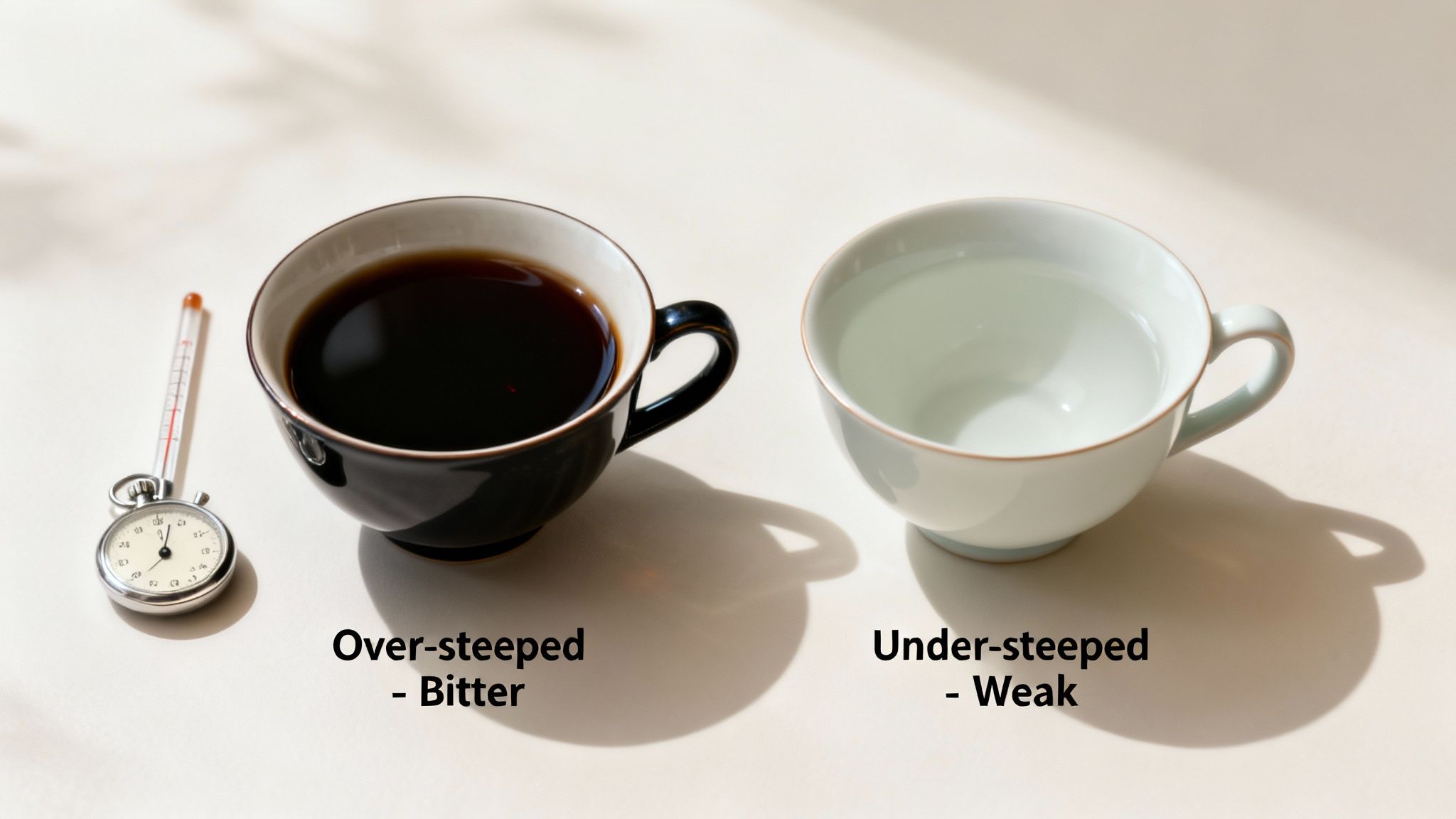
Most brewing mishaps fall into two camps: the tea is either harsh and bitter, or it’s disappointingly weak. Once you know which problem you have, you can easily trace it back to the cause and get it right next time.
Why Does My Tea Taste Bitter?
A bitter, astringent cup is the most common complaint we hear. It’s a sure sign of over-extraction. This simply means you've pulled too much of the tannic compounds out of the leaves, which then go on to bully all the other more delicate, sweeter flavours. It’s a bit like overcooking a beautiful piece of fish – all the nuance is lost, leaving just a harsh, one-note taste.
So, what causes this? It’s usually one of two things:
- You've brewed it for too long. Letting your tea steep past its prime is the number one offender. Your kitchen timer is your best mate here.
- Your water was scorching hot. This is a particularly easy mistake to make with delicate green and white teas. Water that’s at a rolling boil will scald the leaves, shocking them into releasing all their bitter compounds at once.
Luckily, the fix is straightforward. First, try reducing your brew time. If your black tea was bitter after five minutes, pull it back to three next time. If that doesn't sort it, check your water temperature. For more delicate teas, just let the kettle sit for a minute or two after it clicks off before you pour.
Why Does My Tea Taste Weak?
At the other end of the scale is that sad, watery cup that tastes of, well, not much at all. This is what happens when the water hasn't had enough time or contact with the leaves to extract all those lovely flavour compounds.
A weak brew is a sign of under-extraction. All the good stuff is still locked away inside the leaves, waiting for the right conditions to come out and play.
This problem usually comes down to a couple of key culprits:
- You haven't brewed it for long enough. If your cup is bland, the most likely reason is you were a bit too hasty and cut the steep time short.
- You haven't used enough tea. A good rule of thumb is about one teaspoon of loose-leaf tea for every 200ml of water. Skimping on the leaves will always result in a diluted, uninspiring drink.
To fix a weak brew, start by making sure you're using the right amount of tea for your mug or pot. If your ratio is spot on, then the answer is simply to extend the brew time. Try adding 30–60 seconds at a time until you find that perfect sweet spot of flavour and strength.
A Few Final Questions About Brewing Tea
We’ve covered the fundamentals of a great brew, but a few questions always pop up. Here are some quick answers to the most common queries we get, helping you iron out the final details of your tea-making ritual.
Can I Reuse My Tea Leaves?
You absolutely can! In fact, with high-quality, whole-leaf teas, you’re meant to. Teas like Oolong and Pu-erh are famous for their staying power, often revealing new layers of flavour and aroma with each new infusion.
When you go for a second steep, just add an extra 30-60 seconds to the brew time. You’ll notice the character of the tea shifting slightly, offering a new perspective on the same leaves. It’s a wonderful way to explore the full depth of a really good tea and get more out of every spoonful.
Does Brewing Time Change for Tea Bags vs Loose Leaf?
It certainly does, and the difference is all down to the size of the leaf. Our pyramid-style tea bags at Jeeves & Jericho are filled with whole leaves, giving them plenty of space to unfurl. This means you can follow the same brewing guides as you would for our loose-leaf teas.
Traditional, flat paper tea bags are a different story. They’re usually filled with very small, broken bits of tea called "fannings." Because the surface area is so large, they release their flavour almost instantly. You’ll need a much shorter brewing time with these to avoid that classic, bitter taste that comes from over-steeping.
It all comes down to a simple principle: the bigger the leaf, the longer the infusion. Smaller particles infuse in a flash, while larger, whole leaves need more time to release their wonderful flavours.
What Happens if I Steep Green Tea for Too Long?
Ah, the classic green tea mistake. Leaving it steeping for too long, or using water that’s too hot, is the fastest way to ruin what should be a delicate, refreshing cup. It causes the leaves to release too many tannins, which are the compounds responsible for that bitter, mouth-puckering astringency.
You’re essentially ‘cooking’ the leaves, which completely overwhelms their naturally sweet, grassy notes. When it comes to green tea, your timer and thermometer are your best friends. A few seconds either way can be the difference between a sublime brew and a bitter disappointment.
At Jeeves & Jericho, we believe the little details make all the difference. Explore our collection of carefully sourced loose-leaf teas and taste just how exceptional a proper cup of tea can be. Discover your next favourite blend today.