


Making matcha is more than just brewing a cup of tea; it’s a small, mindful ritual that can genuinely set the tone for your day. The process itself is wonderfully simple: sift a little high-quality matcha powder, add hot (but never boiling) water, and whisk until a beautiful, delicate foam appears. This simple act unlocks the vibrant, umami-rich flavour of this incredible Japanese tea.
Your Introduction to the Art of Making Matcha
Welcome to the world of matcha. It’s far more than just a trendy café drink; preparing matcha is an accessible practice steeped in centuries of Japanese tradition. This guide is here to demystify the process and make it approachable for everyone, whether you’re a curious first-timer or a seasoned café owner looking to hone your craft.
The journey to an incredible cup starts with the powder itself. Choosing a high-quality, ethically sourced ceremonial grade matcha, like the ones we offer at Jeeves & Jericho, is the single most important step. It’s the foundation for everything that follows, directly influencing the final taste, colour, and texture. If you're curious about what makes a great matcha, we've gone into detail here: learn more about what matcha is made of.
Why Master Matcha at Home?
As matcha’s popularity continues to grow, there's something incredibly rewarding about mastering your own technique. It isn't just about making a drink; it's about carving out a moment of calm and focus for yourself. And it’s clear the UK has fallen in love with it.
Just look at the numbers. In June and July 2025 alone, matcha drinks were sold a staggering 1,606,627 times across the UK, bringing in over £5.5 million. This incredible demand shows why perfecting your skills at home is such a brilliant way to enjoy a premium experience without the café queues. You can find more fascinating insights into Britain's growing love for matcha on Squareup.com.
This guide will walk you through the essentials, covering key details like:
- The real difference between ceremonial and culinary grade matcha.
- The ideal water temperature to avoid any hint of bitterness.
- The proper whisking motion for creating that signature rich foam.
My goal is to give you the knowledge and confidence to start your journey. By understanding these fundamentals, you can transform a simple powder and water into an elegant, invigorating experience that both calms the mind and energises the body. Right, let's get started.
Gathering Your Essential Matcha Toolkit
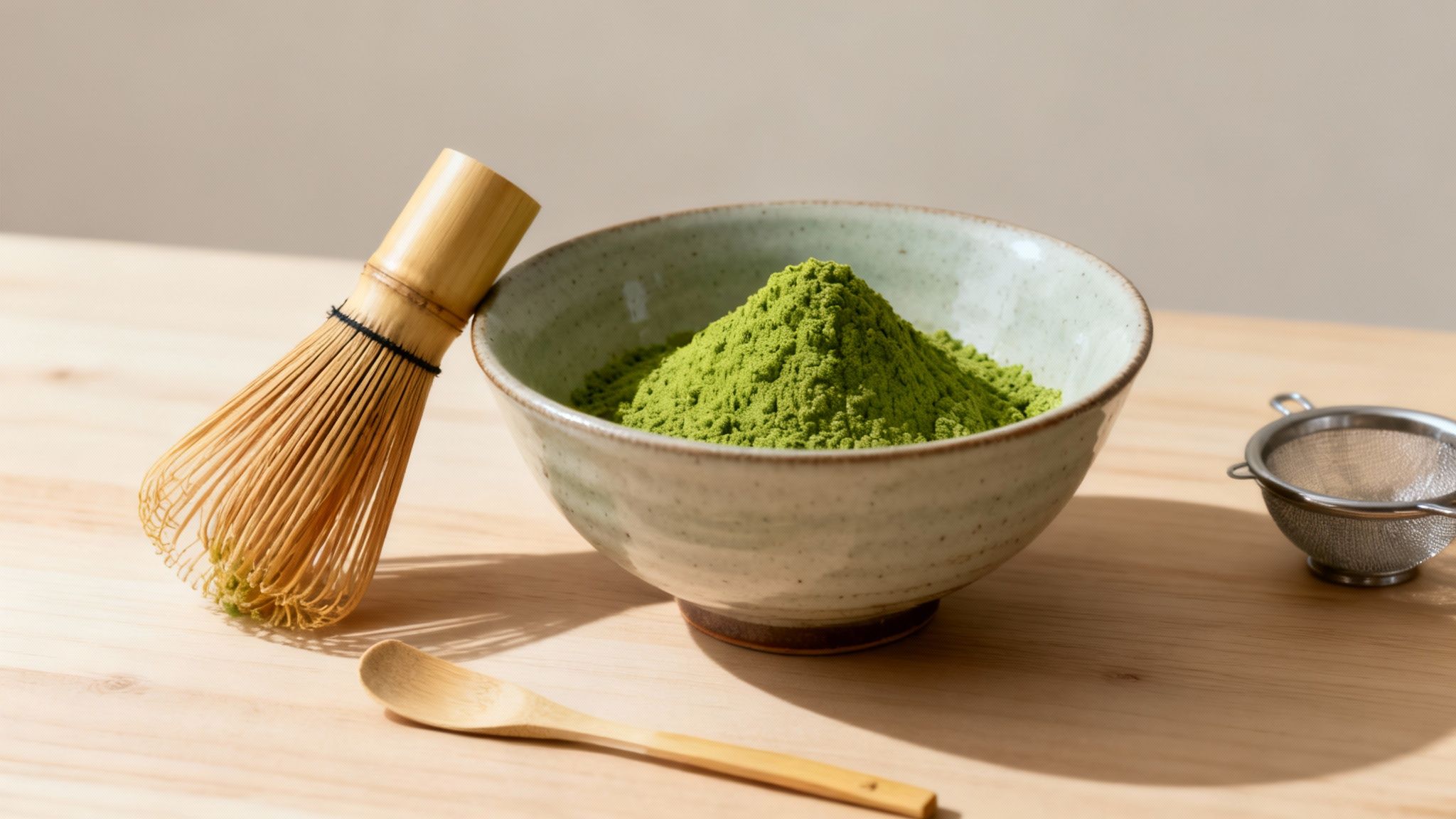
To really get to grips with making matcha, having the right equipment makes all the difference. While you don't need a full ceremonial setup to start, using tools designed for the job makes achieving that signature smooth, frothy texture so much easier. The traditional Japanese toolkit isn’t just for show; each piece has a purpose, a specific function that helps create the perfect bowl of tea.
Of course, the most vital part of any kit is the matcha itself. Starting with a high-grade powder is non-negotiable for an authentic flavour. To begin your matcha journey, you'll need high-quality ingredients. Explore options for premium quality matcha powder to ensure a vibrant and rich taste from your very first cup.
The Traditional Trio
At the heart of any traditional matcha set, you'll find three key items. Once you understand what they do, you'll appreciate the ritual that much more and find your own technique improves immensely.
- The Chawan (Matcha Bowl): This isn’t just any old bowl. A proper chawan has a wide, flat bottom and high sides, creating the perfect arena for whisking. This design gives the whisk plenty of room to move, aerating the tea properly to build that lovely rich foam.
- The Chasen (Bamboo Whisk): Arguably the most crucial tool of all. The chasen is a delicate whisk carved from a single piece of bamboo. Its fine, flexible prongs are specially designed to suspend the matcha particles in the water and whip air into the mixture—something a standard metal whisk just can't do.
- The Chashaku (Bamboo Scoop): This elegant bamboo scoop is used to measure the perfect amount of matcha. One to two scoops will give you the standard 1-2 grams needed for a bowl of usucha (thin tea).
If you invest in one thing, make it a quality chasen. The 100-120 fine prongs are what create the tiny, consistent bubbles that form the creamy foam, and that directly impacts the mouthfeel and flavour of your tea.
Modern Alternatives for Beginners
Not quite ready to commit to the full set? Don't worry. You can still make a respectable bowl of matcha with things you probably already have in your kitchen, though it's good to be aware of the trade-offs.
A small, wide soup or cereal bowl can stand in for a chawan—just make sure it’s big enough to let you whisk vigorously without splashing. A regular teaspoon can measure your powder, though it’s less precise than a chashaku.
The biggest challenge is finding a replacement for the chasen. The best modern substitute is a small, handheld electric milk frother. It can whip the matcha into a decent foam, but the texture will be a bit bubblier and less delicate than what a bamboo whisk produces. You can learn more about why this tool is so special in our detailed guide on the importance of the matcha bamboo whisk.
For iced matcha, another great hack is a simple jam jar with a tight lid. Add your powder and cold water, seal it, and shake it like you mean it for about 30 seconds. This method works surprisingly well for a quick cold brew, but it isn't suitable for preparing traditional hot matcha. These alternatives are a great way to start exploring the world of matcha at home.
Preparing Traditional Usucha and Koicha
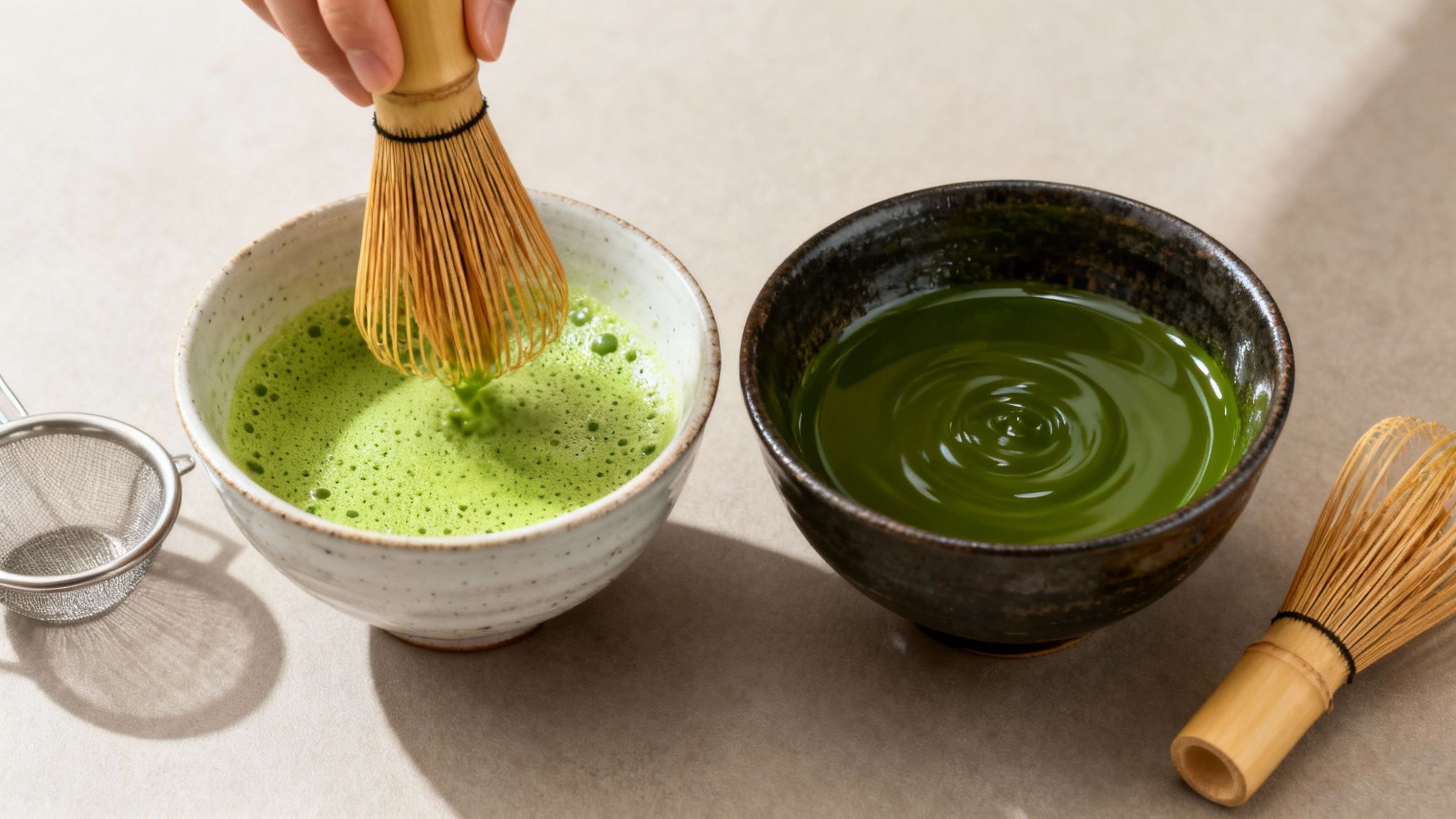
Now for the heart of the matter. Preparing matcha traditionally introduces you to two distinct styles: Usucha (薄茶), a thin, frothy brew perfect for everyday enjoyment, and Koicha (濃茶), a thick, potent tea reserved for more formal tea ceremonies.
Getting to grips with both will give you a real appreciation for the sheer versatility of high-quality ceremonial matcha. Think of Usucha as your vibrant daily ritual, and Koicha as a more meditative, intense experience.
Crafting the Perfect Bowl of Usucha
Usucha is what most people picture when they think of matcha – light, invigorating, and crowned with that signature creamy foam. The secret to a brilliant bowl comes down to just three things: sifting the powder, getting the water temperature right, and mastering the whisking motion.
First things first, always sift your matcha. Using a fine-mesh sieve, gently press the powder through into your chawan (tea bowl). It might seem like a fussy step, but it breaks up any tiny clumps from static or humidity, which is the key to a silky-smooth brew and avoiding a gritty last sip.
You’ll want to use about 2 grams of matcha – that’s roughly two bamboo scoops (chashaku) or one slightly rounded teaspoon. This gets whisked into about 70ml of water.
Water temperature is non-negotiable. If it’s too hot, it will scald the delicate tea, leaving you with a bitter, astringent flavour. Aim for around 80°C (175°F). A handy trick if you don't have a variable temperature kettle is to simply boil the water and let it stand for a few minutes to cool down.
For Usucha, the whisking needs to be energetic. You aren't just stirring; you're aerating the tea to build that foam. Go for a rapid, zigzag "M" or "W" pattern, keeping the tines of your chasen (bamboo whisk) just off the bottom of the bowl. Do this for 20-30 seconds, and you’ll be rewarded with a beautiful layer of fine, jade-coloured foam.
The Art of Preparing Koicha
Koicha is another beast entirely. It’s thick and viscous, with a consistency more like warm honey or paint. Because it's so concentrated, Koicha is only ever made with the highest quality ceremonial grade matcha, as any hint of bitterness would be completely overpowering. It’s a powerful, deeply umami experience.
The preparation itself is much slower and more methodical, focused on creating a perfectly smooth blend rather than a froth.
Here, the ratios are flipped. You’ll use a much greater amount of matcha—typically 4 grams (four scoops)—to just 30-40ml of water. It’s this high powder-to-water ratio that gives Koicha its famous thick body. And just like with Usucha, sifting is essential.
The whisking technique is also completely different. Instead of a fast zigzag, you’ll use a slow, gentle, almost kneading motion. Add a tiny splash of your 80°C water to the sifted matcha to form a paste. Then, slowly pour in the rest while gently moving the chasen in circular and up-and-down strokes, carefully folding the matcha into the water.
The goal isn't foam but a perfectly smooth, glossy brew with a deep, rich colour. A well-made Koicha should be thick enough to coat the whisk and leave a trail as you lift it from the bowl.
Usucha vs Koicha Preparation at a Glance
To help you choose your brew, here’s a quick comparison of the two styles. Seeing the differences side-by-side makes it easier to understand what you're aiming for.
| Attribute | Usucha (Thin Tea) | Koicha (Thick Tea) |
|---|---|---|
| Occasion | Daily, informal enjoyment | Formal ceremonies, special occasions |
| Matcha Amount | Approx. 2 grams | Approx. 4 grams |
| Water Amount | Approx. 70ml | Approx. 30-40ml |
| Whisking Motion | Fast, energetic M or W shape | Slow, deliberate kneading motion |
| Desired Result | Rich, delicate foam | Thick, smooth, glossy consistency |
| Flavour Profile | Light, fresh, invigorating | Intense, deep umami, rich |
Whether you prefer the light, airy froth of Usucha or the profound richness of Koicha, both offer a unique way to connect with a centuries-old tradition. We highly recommend experimenting with both to develop your skills and truly appreciate the incredible character of great matcha.
Crafting Cafe-Quality Matcha Lattes and Iced Drinks
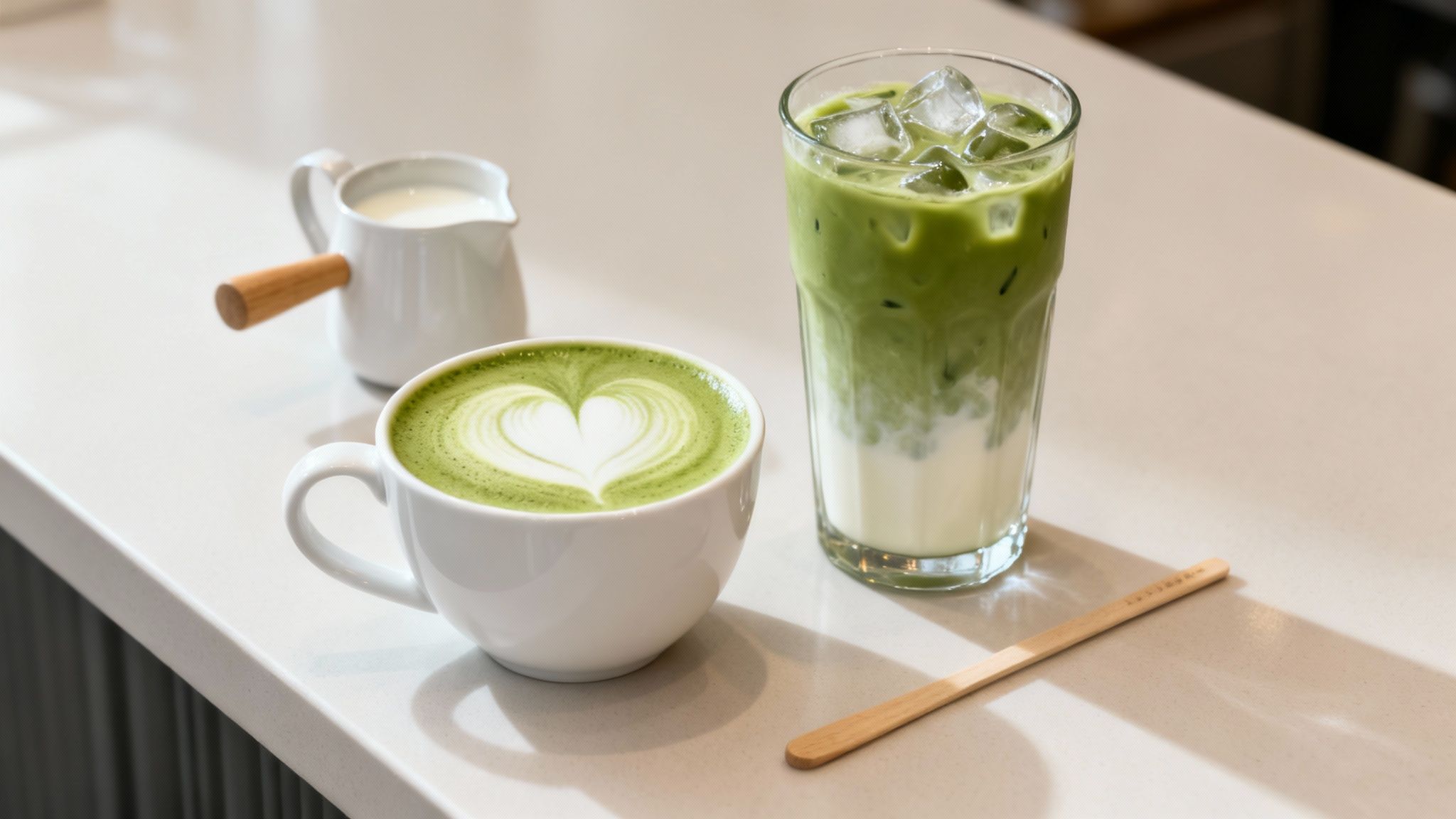
While savouring Usucha and Koicha in their traditional forms is a beautiful way to appreciate matcha’s pure character, sometimes you just want something creamy, rich, or refreshingly cold. Learning to make cafe-style matcha drinks at home means you can have that high-street experience right in your own kitchen.
The secret to any great matcha latte—hot or cold—is starting with a concentrated base. Think of it as a matcha 'shot', much like the espresso shot in a coffee latte. This ensures the vibrant, earthy flavour of the matcha is bold enough to cut through the milk and any sweeteners, preventing a weak or diluted drink.
The Perfect Hot Matcha Latte
A truly great hot matcha latte hangs on a delicate balance: the earthy depth of the tea, the subtle sweetness of the milk, and a velvety smooth texture. Thankfully, getting this right is much easier than you might think.
It all starts with that matcha shot. Whisk 2 grams (about one teaspoon) of sifted ceremonial grade matcha with 30ml of hot water, heated to our usual 80°C. Whisk it like you mean it until it’s completely smooth and has a nice bit of foam. This little concentrate is the heart of your latte.
Next up, your milk. The type you choose will make a huge difference to the final flavour and texture.
- Oat Milk: There's a reason this is a barista favourite. It steams beautifully, creating a silky, stable microfoam that’s perfect for latte art. Its naturally sweet, creamy taste is a perfect partner for matcha.
- Almond Milk: A good low-calorie choice, but be picky. Look for barista-style almond milks, as they’re designed to froth much better than standard versions, which can be thin and watery.
- Dairy Milk: For the richest, creamiest foam, nothing beats whole milk, thanks to its fat and protein content. Semi-skimmed also works well for a lighter texture.
A quick tip on temperature: when heating your milk, aim for around 65-70°C. If it gets any hotter, you risk scalding it, which completely changes the flavour and kills that delicate microfoam you’re working so hard to create. A milk thermometer is a cheap and cheerful investment that pays off.
Once your milk is steamed and frothy, pour it slowly into the matcha shot. To get that classic layered look, you can hold back the foam with a spoon at first, then spoon it over the top to finish.
Refreshing Iced Matcha Variations
When the sun comes out, a chilled matcha drink is hard to beat. The idea is the same as the hot latte, but the method needs a little tweak to make sure the powder dissolves perfectly.
For a smooth, clump-free iced latte, you absolutely must start by making your matcha shot with hot water, just as we did above. Don't be tempted to whisk matcha powder directly into cold milk—it’s a recipe for a gritty, lumpy disaster.
Once you have your smooth matcha concentrate, fill a tall glass with plenty of ice. Pour in your favourite cold milk, leaving a bit of room at the top. Finally, pour the matcha shot over the milk and ice. The way it swirls into the milk is half the fun.
Feel free to sweeten it up. Liquid sweeteners are your best friend here, as they’ll dissolve easily in the cold liquid.
- Honey or Maple Syrup: Both add a lovely, natural sweetness and their own depth of flavour.
- Agave Nectar: A more neutral option that blends in seamlessly without altering the taste.
- Sugar-Free Syrups: Ideal if you're after sweetness without the sugar.
For something even simpler and more invigorating, try an iced matcha tea. Just make your matcha shot, pour it over a glass full of ice, and top it up with cold, filtered water. A squeeze of lemon or a sprig of mint adds a brilliant zesty twist. You can find a detailed recipe and a few more pointers in our guide to the perfect iced matcha latte.
And for our cafe and wholesale partners looking to make smooth matcha lattes in large volumes, looking into commercial immersion blenders can be a real game-changer.
Insider Tips for Flawless Matcha Every Time
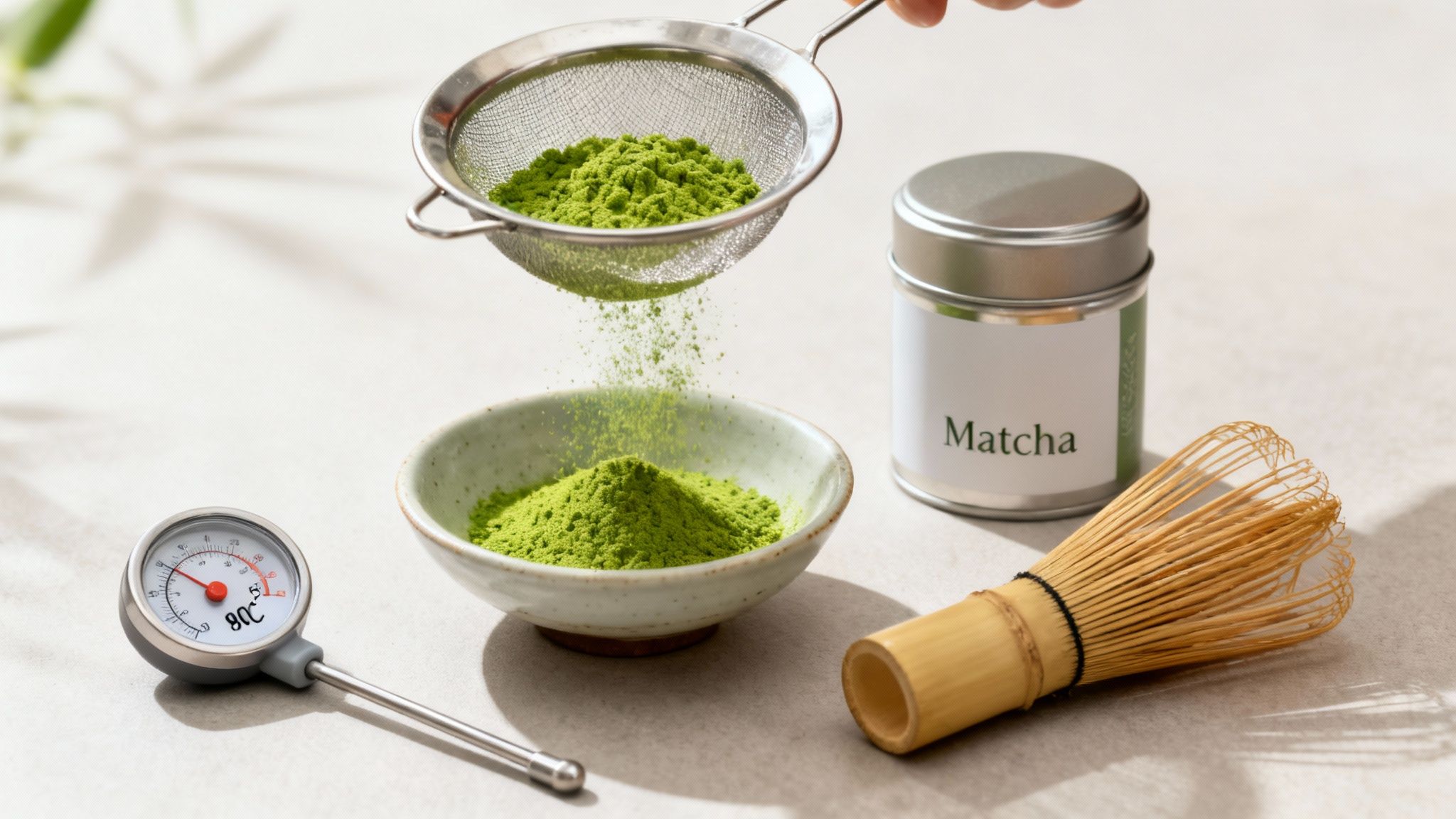
Getting from a good bowl of matcha to a truly exceptional one is all about the little details. It's the small tweaks and bits of know-how, picked up over time, that transform the daily ritual. Once you nail a few fundamentals, you’ll find yourself whisking up a consistently smooth, flavourful, and beautiful brew every single time.
Let’s get into the practical tips that will help you troubleshoot those common frustrations and elevate your matcha game for good.
Sifting Is Not an Optional Step
If you take just one piece of advice from this guide, let it be this: always sift your matcha. I can't stress this enough. Because matcha powder is so incredibly fine, it’s prone to clumping from even the slightest bit of static or humidity. Pushing it through a small, fine-mesh sieve is the single best thing you can do to guarantee a velvety, lump-free texture.
This simple act aerates the powder, helping it suspend beautifully in the water. Skip this, and you’ll almost certainly be left chasing stubborn little clumps around the bowl. It adds maybe 20 seconds to your prep time, but the payoff is enormous.
Master Your Water Temperature
The temperature of your water is absolutely critical for protecting the delicate, nuanced flavours of ceremonial grade matcha. If your water is too hot—anything above 80°C (175°F)—it will scorch the tea, unleashing a bitter, astringent taste that completely bulldozes the matcha’s natural sweetness and umami.
Don’t have a variable-temp kettle? No problem. Simply bring your water to a boil, then pour it into a separate cup or your chawan to pre-warm the bowl. Let it sit for a minute or two. This little trick naturally cools it down to the perfect brewing temperature.
Using water at the right temperature isn’t just about avoiding bitterness. It also allows the complex amino acids, like L-theanine, to release properly. That’s what gives you that signature feeling of calm, focused alertness that matcha is so famous for.
Troubleshooting Common Matcha Frustrations
Even when you do everything right, things can occasionally go sideways. Here’s how to fix a few of the most common issues.
- My matcha is too bitter! The number one culprit is usually water temperature. Check it isn't creeping over 80°C. The other possibility is you’re simply using too much powder for the amount of water, creating an overly potent brew.
- I can’t get a good foam. This is almost always down to whisking technique. Make sure you’re using a quick, energetic ‘M’ or ‘W’ motion from the wrist, not the arm. You also need a proper chasen (bamboo whisk); a kitchen whisk or fork just won’t cut it for creating that fine microfoam.
- The powder won’t dissolve completely. This one nearly always comes back to sifting. If you’ve sifted and still find a bit of sediment, try this: add just a tiny splash of your hot water to the sifted powder and mix it into a smooth paste before adding the rest of the water and whisking.
Caring for Your Tools and Tea
A little bit of care goes a long way in keeping your tools in good shape and your matcha vibrant. After each use, rinse your bamboo whisk thoroughly under warm water and let it air dry completely on a whisk holder (kusenaoshi) to help it maintain its shape.
Matcha itself is very sensitive to light, heat, and air, all of which will quickly degrade its colour, flavour, and antioxidant content. Once you’ve opened a tin, always store it in an airtight container in the fridge. This simple step preserves its freshness for so much longer, ensuring every bowl is as delicious as the first.
Your Matcha Questions, Answered
As you start making matcha at home, it’s only natural for a few questions to pop up. We get them all the time. Whether you're new to the game and puzzled by the different grades, or you've been at it for a while and are still chasing that perfect foam, we’ve got you covered.
Think of this as your go-to guide for troubleshooting the little things that stand between you and a perfect bowl of tea. From clumpy powder to keeping it fresh, here are our answers to your most common queries.
What's the Difference Between Ceremonial and Culinary Grade Matcha?
This is probably the question we hear most often, and for good reason. Getting it right is key to a great experience. The difference boils down to the age of the tea leaves and how they're handled.
Ceremonial grade matcha comes from the youngest, most delicate leaves, picked right from the top of the plant during the first harvest of the year. These prized leaves are then stone-ground into an impossibly fine powder, which gives it that vibrant, almost electric green colour. The flavour is subtle, naturally sweet, and packed with complex umami notes—perfect for the traditional preparation with just water (usucha or koicha).
Culinary grade, on the other hand, is made from older, more mature leaves picked later in the season. This results in a bolder, slightly more bitter flavour and a less vibrant green. It’s specifically milled to hold its own when mixed with other ingredients, so its robust taste won't get lost in lattes, smoothies, or baking. For that authentic, pure tea experience we champion here at Jeeves & Jericho, ceremonial grade is always the way to go.
Why Is My Matcha Clumpy? And How Do I Fix It?
Finding clumps in your beautiful green powder is a common frustration, but don't worry, it's not a sign of poor quality. It's usually just down to a bit of static and humidity, which makes the ultra-fine particles want to stick together.
The single best thing you can do is to sift your matcha powder through a fine-mesh sieve before adding water. This tiny step takes just a few seconds but makes a world of difference. It breaks up any stubborn clumps and aerates the powder, helping it dissolve smoothly and creating a much richer, more stable foam.
No sieve to hand? You can try pressing the clumps against the side of the bowl with your bamboo scoop (chashaku). Another little trick is to add a tiny drop of hot water to the powder first, mixing it into a thick paste to dissolve the clumps before adding the rest of the water and whisking as normal.
Can I Make Matcha Without a Bamboo Whisk?
While the traditional bamboo whisk, or chasen, is absolutely the best tool for the job, you’re not completely stuck if you don’t have one. The trick is to find an alternative that can aerate the mixture properly.
Your best modern substitute is a small, handheld electric milk frother. It will whip the matcha and water together in no time and create a decent amount of foam. The texture won't be quite the same—you'll get bigger, airier bubbles rather than the creamy microfoam from a chasen—but it's a great shortcut for lattes.
Another surprisingly effective hack, especially for iced matcha, is a simple jar with a tight-fitting lid.
- Pop your matcha powder and water in the jar.
- Seal it tightly.
- Shake it like you mean it for about 30 seconds.
This works remarkably well for a smooth, blended cold drink. For the authentic texture and full flavour release of a traditional hot matcha, though, we’d always recommend investing in a proper bamboo whisk. It really is part of the ritual.
How Should I Store Matcha to Keep It Fresh?
Matcha is incredibly delicate. Its three greatest enemies are light, heat, and air, all of which will quickly diminish its vibrant colour, fresh aroma, and health benefits.
Once you’ve opened a tin of matcha, proper storage is crucial. We always recommend keeping it in its original airtight container and popping it in the refrigerator. The cool, dark environment is the best way to preserve its freshness.
When you take it out, it's a good idea to let the container rest at room temperature for a few minutes before opening it. This stops condensation from forming inside, which could introduce moisture and cause clumping. To enjoy it at its absolute best, try to use your matcha within a few months of opening.
At Jeeves & Jericho, we believe that a truly exceptional cup of tea starts with the finest ingredients. Explore our collection of premium, ethically sourced ceremonial grade matcha to elevate your daily ritual.
Discover Our Matcha Selection