


Believe it or not, making a cafe-quality iced matcha latte is much simpler than it looks. It really just comes down to three things: good quality matcha powder, your milk of choice, and a little bit of sweetener. The real secret, though, is in the technique. Get that right, and you'll have a smooth, vibrant, and completely clump-free drink every single time.
This guide will walk you through everything you need to know to nail it.
Your Guide to Cafe-Quality Iced Matcha Lattes
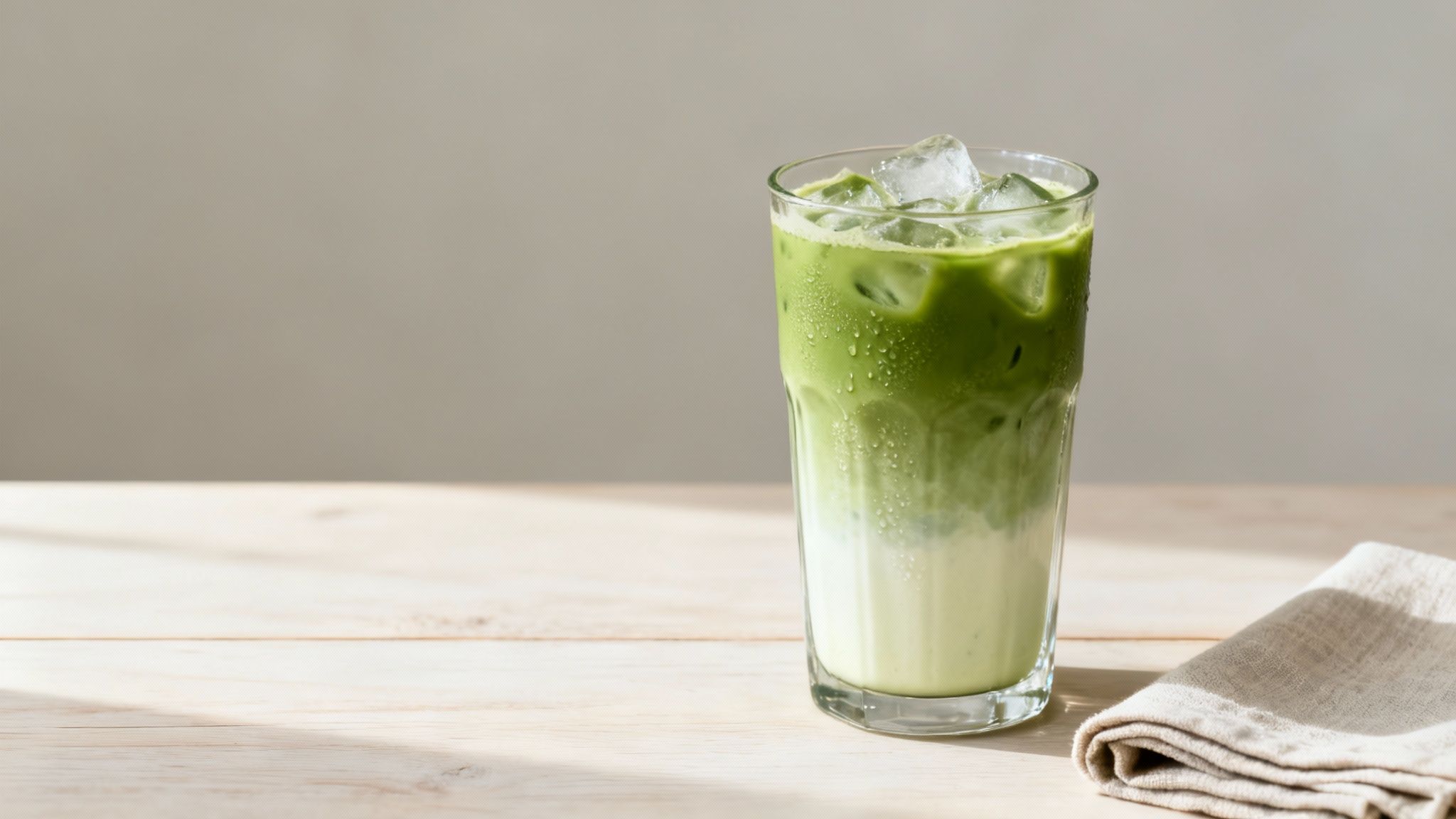
Welcome to the wonderful world of homemade iced matcha lattes. Forget those expensive cafe trips; we’re here to show you how to master this refreshing drink right in your own kitchen. We’ll explore why this bright green beverage has become a staple across the UK for anyone after a flavourful, healthier alternative to their usual coffee.
It’s easy to see the appeal. A perfectly made iced matcha latte has a unique flavour profile – earthy, slightly sweet notes that give way to a creamy finish. It's both invigorating and incredibly soothing, giving you a gentle lift without the jitters you can get from a strong espresso.
Why Make Matcha at Home?
Making your own latte means you're in complete control. You can dial the sweetness up or down, pick your favourite milk (oat is a winner!), and most importantly, use a brilliant, high-quality matcha for a taste that a high-street chain just can't match. This is often where the journey begins for most people – trying to recreate, and then perfect, their favourite coffee shop order.
The trend is definitely catching on. The UK matcha tea market was valued at $219.6 million USD and is expected to more than double by 2035, thanks to an ever-growing crowd of health-conscious consumers. This surge is directly tied to drinks like the iced matcha latte becoming so mainstream. You can find more detail on this growth in the UK market over at Market Research Future.
The best part of making your own iced matcha latte is tailoring it to your exact preferences. From the boldness of the matcha to the creaminess of the milk, every element is in your hands.
This guide is designed to put you in the driver's seat. We'll cover everything you need for success, making sure your homemade creation isn't just a pretty picture, but a perfectly balanced drink you'll want to make again and again.
Here’s a glimpse of what you'll learn:
- Selecting the Right Matcha: Getting to grips with the difference between ceremonial and culinary grades.
- Perfecting Your Technique: Three foolproof methods for a smooth, clump-free blend.
- Customising Your Drink: A look at milk and sweetener options to find your perfect taste.
- Troubleshooting Common Issues: How to fix problems like bitterness or a watery finish.
By the end of this, you'll be whipping up impressive iced matcha lattes whenever the craving strikes.
Choosing the Right Matcha for Your Latte
Before you even think about ice or milk, the single most critical decision for a truly exceptional iced matcha latte rests with the powder itself. It’s no exaggeration to say that your choice of matcha is what separates a vibrant, smooth, and delicious drink from one that’s just bitter and murky. It all starts here.
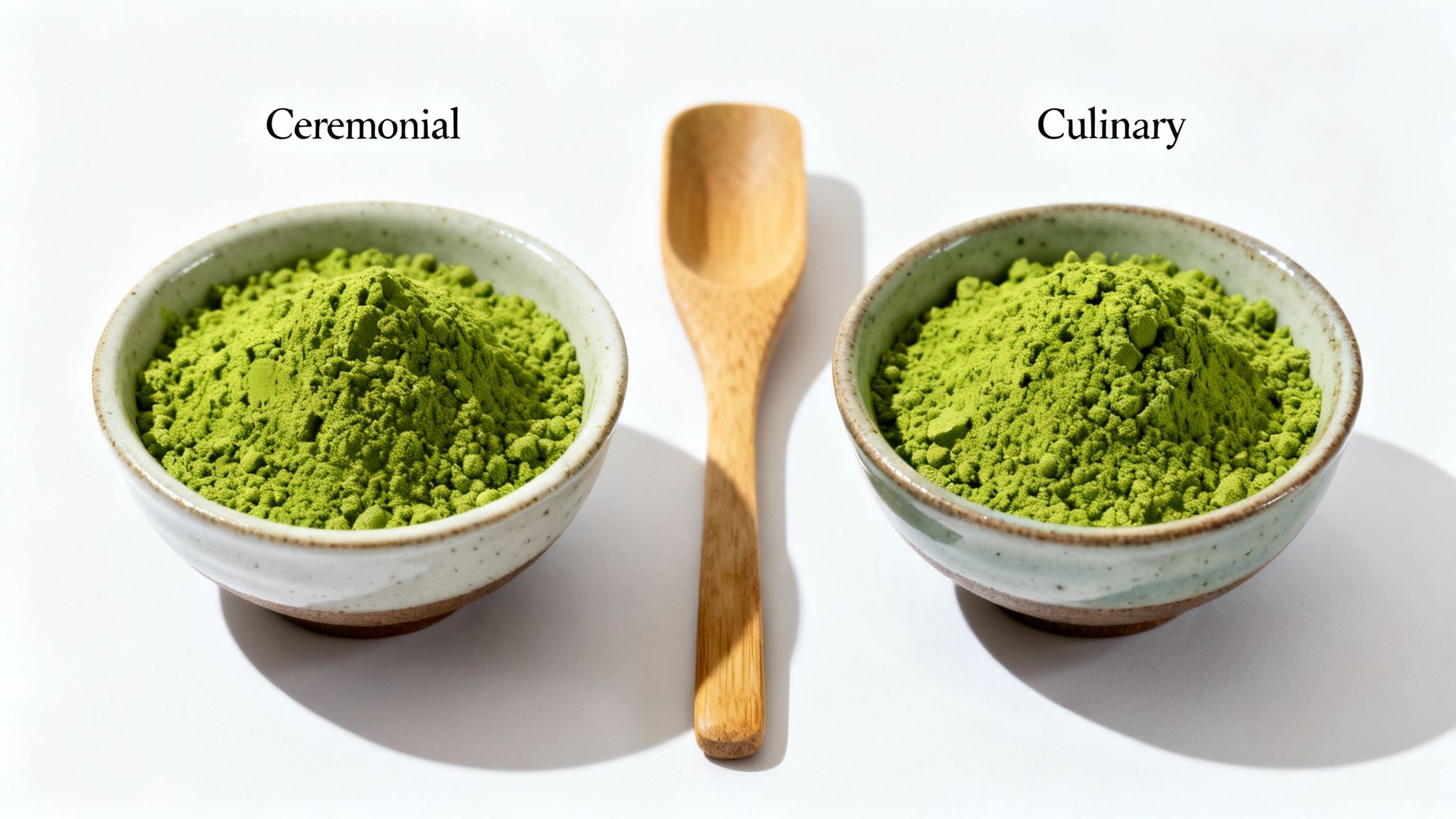
When you’re looking at matcha, you'll generally find two main types: Ceremonial and Culinary. Getting to know the difference is key to making a cafe-quality latte at home. It’s not a simple case of one being ‘good’ and the other ‘bad’; it’s about choosing the right tool for the job.
Ceremonial Grade: The Top Tier
As the name suggests, this is the highest quality matcha you can get. It’s made from the youngest, most tender tea leaves found at the very top of the plant, which are carefully hand-picked during the first harvest in spring. This is when the leaves are packed with the most flavour and nutrients.
This meticulous process gives the powder some very distinct qualities:
- Vibrant Colour: Think brilliant, almost electric green. This incredible colour comes from the high chlorophyll content in the young, shade-grown leaves.
- Delicate Flavour: It's naturally sweet, smooth, and full of that lovely umami character, with almost no bitterness. This is the grade designed to be savoured with just hot water.
- Silky Texture: The powder is stone-ground to an unbelievably fine consistency, which helps it dissolve beautifully without clumping.
Some might say using it in a latte is a ‘waste,’ but we disagree. If you want the smoothest, most refined flavour in your iced latte, this is absolutely the one to go for.
Culinary Grade: Built for Blending
Culinary grade matcha comes from leaves harvested later in the season. Being a little more mature, they give the powder a stronger, more assertive flavour that can lean towards bitter. But this isn't a flaw—it's a feature. Its robust character is specifically meant to hold its own against other ingredients like milk, sweeteners, and flour in baking.
Don’t think of Culinary as "lower quality" but rather as "different purpose". A high-quality culinary matcha is perfect for baking and cooking, but its bolder, more astringent flavour can sometimes be overpowering in a delicate iced latte.
So, why does this matter for your drink? If you want that signature smoothness, using culinary matcha might leave you with a latte that tastes a bit grassy or harsh. You'll likely find yourself reaching for extra sweetener to balance it out, which ends up masking the subtle, delicious notes you wanted in the first place. If you're keen to learn more, you can explore the different types of matcha tea and their unique profiles.
Comparing Matcha Grades for Your Iced Latte
To put it all in one place, here’s a quick comparison to help you decide.
| Feature | Ceremonial Grade Matcha | Culinary Grade Matcha |
|---|---|---|
| Source | Youngest tea leaves from the first harvest. | More mature leaves from later harvests. |
| Colour | Vibrant, brilliant green. | Dull, often yellowish or brownish-green. |
| Flavour | Smooth, naturally sweet, with umami notes and minimal bitterness. | Strong, robust, and often astringent or bitter. |
| Best For | Drinking with water or in lattes where its delicate flavour can shine. | Baking, smoothies, and cooking where a strong flavour is needed to cut through. |
| Texture | Ultra-fine, silky powder that dissolves easily. | Coarser texture that can be more prone to clumping. |
For the best possible iced matcha latte, investing in a quality ceremonial grade powder really does pay off. It guarantees that naturally sweet, non-bitter taste and the beautiful green colour that makes the drink so special. You’ll taste the difference from the very first sip.
Three Proven Methods for a Flawless Blend
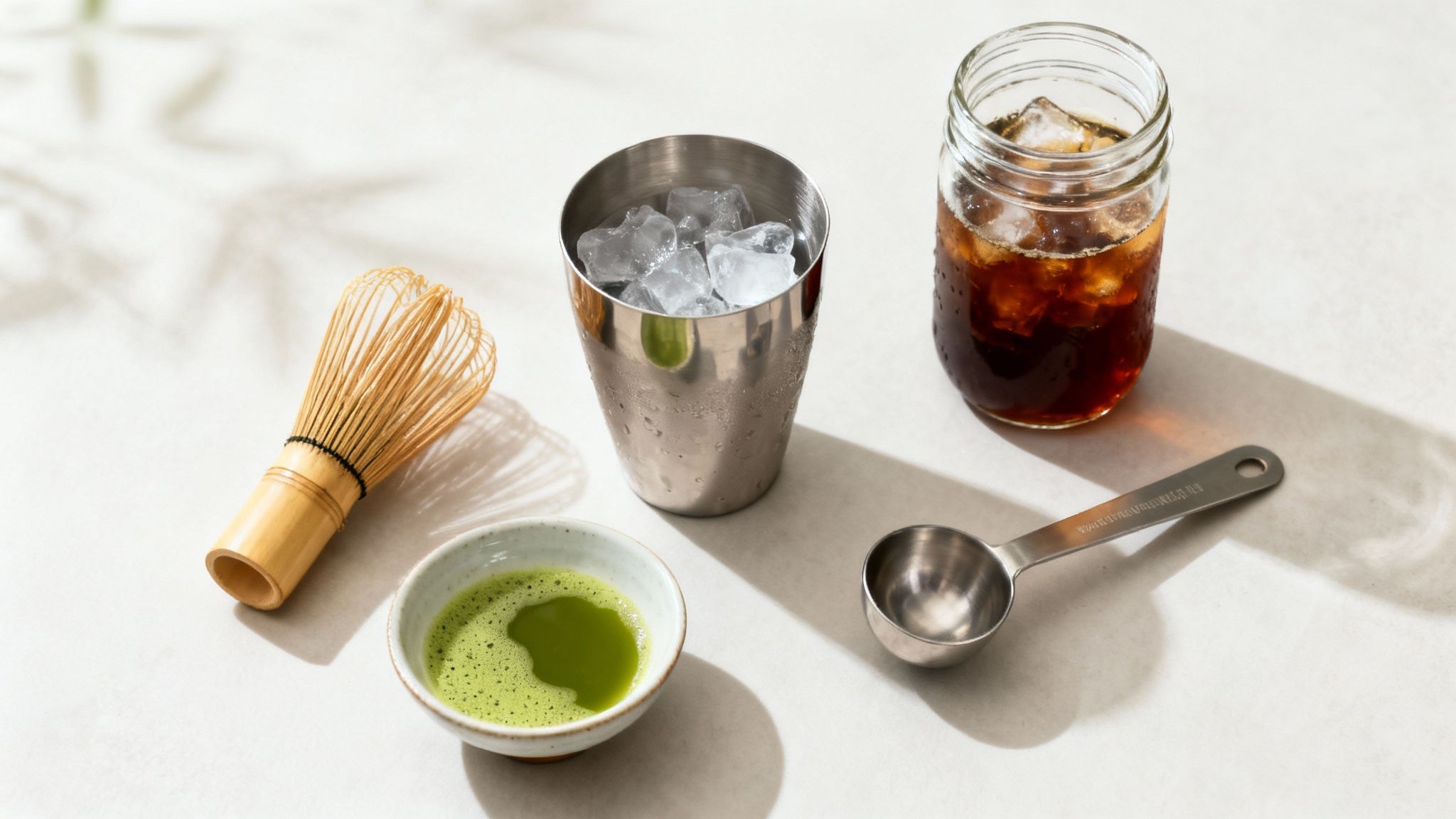
There’s more than one way to get that perfectly smooth, clump-free iced matcha latte at home. The best technique really just depends on what tools you have to hand and the kind of texture you're after.
We’ll walk you through three different methods, from the time-honoured whisking ritual to a quick-and-easy shaker fix. Each one gets you to a brilliant result, so you can find a process that slots right into your day.
The Traditional Whisk Method
For that authentic, beautifully frothy result, you can't beat the traditional bamboo whisk, or chasen. Its 80-or-so delicate prongs are designed specifically to suspend the fine matcha powder in water, whipping up a light, airy foam that a normal kitchen whisk just can't touch.
You'll want a wide, shallow bowl for this (a chawan is the traditional choice). First things first, always sift your matcha – it’s the number one trick to avoiding lumps. Add a splash of warm water (not boiling!) to your sifted powder and start whisking. A quick 'W' or 'M' motion is what you’re aiming for, until a fine froth covers the surface.
Pro Tip: It's all in the wrist. Keep your arm still and let your wrist do the work. The goal is to aerate the matcha, not just stir it around. When you see that lovely froth, you know it's fully mixed and ready for the next step.
Once you’ve got your vibrant matcha shot, simply pour it over ice and your choice of milk for that classic, layered look. If you want to dive deeper into the traditional technique, our full guide on how to make matcha has all the details.
The Quick Shaker Method
No chasen? No problem. If you're short on time, the shaker method is a lifesaver. It’s incredibly fast, practically foolproof, and you don’t need any special kit. A jam jar, a protein shaker, or any bottle with a tight-fitting lid will do the job perfectly.
Just pop your matcha powder, a bit of cold water, and any sweetener you're using into your shaker. Screw the lid on tight and give it a really good shake for about 15-20 seconds. You're looking for a smooth, dissolved liquid with a nice bit of foam on top.
- So convenient: Perfect for making a latte at the office or when you're out and about.
- Super efficient: Your matcha is ready in under a minute.
- Easy clean-up: Just a quick rinse and you're done.
Pour your shaken matcha into a glass of ice, top it up with milk, and it’s ready to go. It’s a fantastic hack for a consistently smooth drink every time.
The Smooth Cold Brew Method
If you sometimes find matcha has a slightly bitter finish, you have to try the cold brew method. It’s a complete game-changer. By steeping the matcha powder in cold water over a longer period, you get a much smoother, naturally sweeter flavour. The cold water extracts the compounds differently, softening any sharpness.
To give it a go, just combine your matcha and cold water in a bottle, shake it well, and pop it in the fridge to steep.
The timing is flexible, depending on how much of a hurry you're in:
- For a quick version, let it rest for at least 15-30 minutes.
- For a deeper, richer flavour, you can leave it to steep overnight (up to 8 hours).
This technique produces a silky, clean concentrate that's less about the froth and all about a pure, nuanced taste. It’s also brilliant for batch-prepping your matcha, so you can pour an iced latte in seconds whenever the mood strikes.
Making It Your Own: A Guide to Milks and Sweeteners
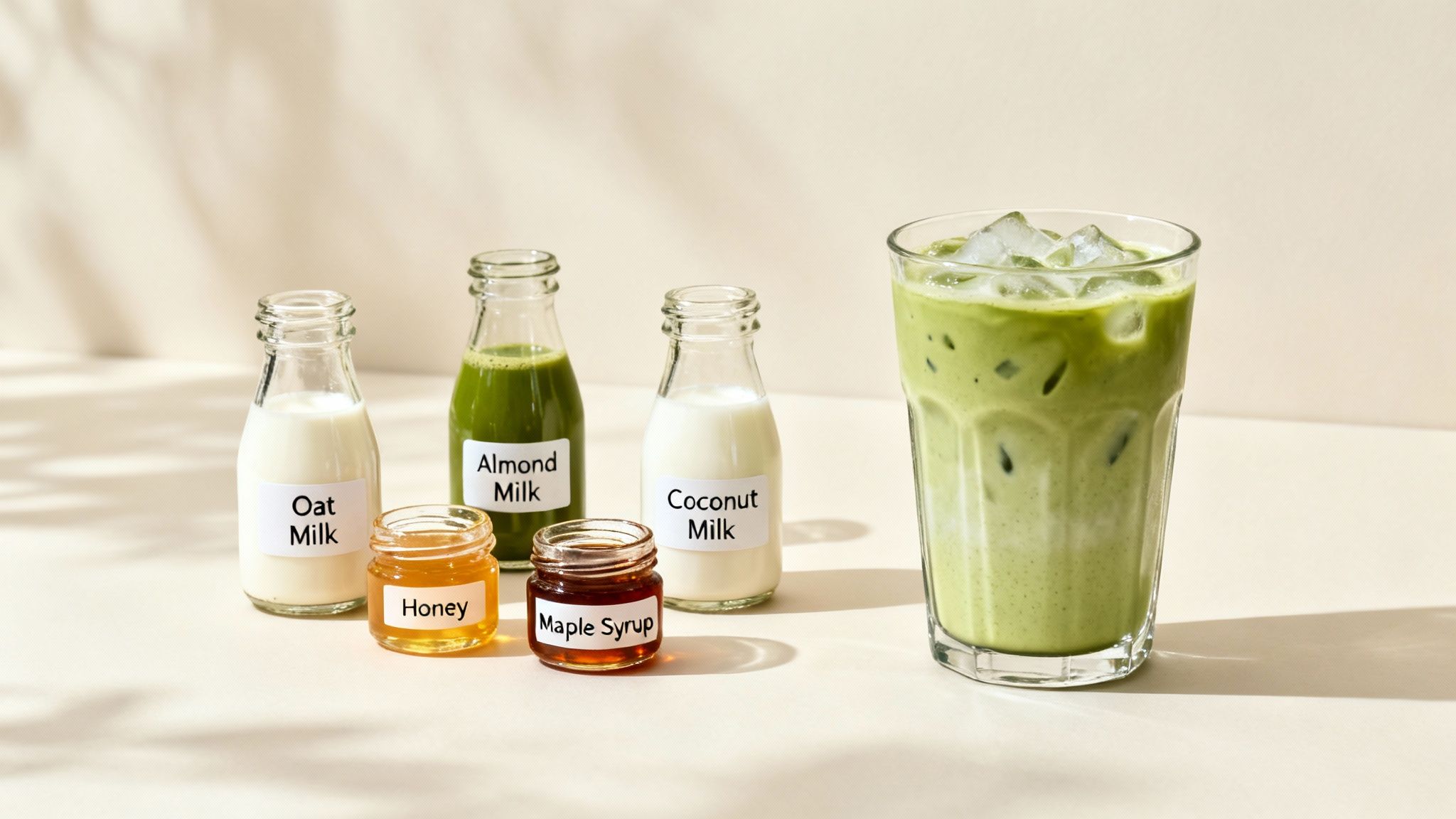
The real fun of making an iced matcha latte at home begins when you start to experiment. Once you've got your whisking or shaking technique down, it's time to play with the supporting cast: the milk and the sweetener. This is where you can really let your personal taste take over, turning a great recipe into your signature drink.
And it seems we’re not the only ones obsessed with customising our matcha. Recent figures show that last summer, matcha drinks were sold over 1.6 million times across the UK, with Londoners alone accounting for about 1.2 million of those. That’s a massive 114.5% jump, proving just how many of us are falling for this vibrant green tea. You can read more about Britain's matcha moment on Squareup.com.
Finding Your Perfect Milk Partner
The milk you pick does far more than just add volume—it completely changes the drink's flavour and texture. Each one interacts differently with matcha’s earthy, umami notes.
- Oat Milk: It's a favourite for a reason. Oat milk’s natural creaminess and subtle sweetness are a perfect match for the tea, creating a velvety, luxurious latte without stealing the show.
- Almond Milk: A lighter choice that brings a delicate, nutty background note. I’d recommend an unsweetened, barista-style version to avoid a watery drink and get a smoother blend.
- Coconut Milk: If you fancy a tropical twist and a much thicker, creamier texture, coconut milk is a brilliant option. Its distinct flavour works surprisingly well with matcha for a really satisfying treat.
- Dairy Milk: For a classic, rich latte, you can't go wrong with whole milk. Its creaminess perfectly balances matcha's earthiness. If you prefer something a touch lighter, semi-skimmed works just as well.
My best advice? Just have a play around. What your local café uses might not be what you love. Grab a few different types and see which one makes your ceremonial grade matcha sing.
The Sweet Spot: Balancing Flavour
When it comes to sweetening your latte, it’s a delicate dance. You want to enhance the matcha's natural character, not drown it in sugar. Looking beyond a simple syrup can also introduce fantastic new layers of flavour.
Why not try one of these natural alternatives?
- Honey: This adds a lovely floral sweetness that can complement the grassy notes of matcha. A lighter honey, like acacia, is often best as its flavour is more subtle.
- Maple Syrup: This brings a warm, almost caramel-like depth that pairs beautifully with the earthiness of matcha, especially in a cold drink.
- Agave Nectar: A great neutral option that dissolves easily in cold drinks. Agave is perfect if you just want a touch of sweetness without changing the flavour profile.
Whatever you choose, start small. Try one teaspoon, taste it, and then add more if you need to. It’s much easier to add more sweetness than it is to take it away. A perfectly balanced latte should still taste, first and foremost, of matcha.
Common Mistakes and How to Fix Them
Even with the best intentions, your first few iced matcha lattes might not hit the mark. It happens. You might be staring down at a drink with frustrating little green specks, or perhaps it has an unexpectedly bitter kick. The good news is these common hiccups are all easily fixed with a few little tweaks to your technique.
The biggest hurdle for most people is getting that perfectly smooth, silky texture. If you’re seeing clumps floating about, it’s almost always because the fine powder wasn’t fully dissolved in the water before you added the milk and ice.
Tackling Clumps and Bitterness
The single most effective way to guarantee a smooth blend is to sift your matcha powder through a small, fine-mesh sieve before adding any liquid. Honestly, don't skip this bit. It breaks up any tiny clumps that have formed in the tin and makes the powder infinitely easier to whisk. I also find that starting with a tiny splash of room-temperature water to form a thick paste, before adding the rest, really helps everything come together.
A latte that tastes too bitter or grassy is another frequent complaint. This can be down to a few things:
- Water Temperature: Using boiling water is a cardinal sin! It scorches the delicate tea, drawing out bitter compounds called catechins. Always aim for water that’s around 70-80°C. If you don’t have a fancy kettle, just let it cool for a minute or two after boiling.
- Matcha Quality: As we’ve mentioned, a lower-grade culinary matcha will naturally have a sharper, more astringent flavour. Choosing a quality ceremonial grade matcha really does ensure a smoother, sweeter result.
- Over-whisking: It's tempting to go wild with the whisk, but too much of a good thing can also lead to bitterness. You only need about 20-30 seconds of vigorous whisking until a light froth appears on top.
What about a watery or separated latte? This usually happens when you’ve used too much ice which then melts too quickly, diluting the drink. Or perhaps you’ve let it sit for a bit too long. For a stronger, more robust flavour, try using one or two large ice cubes instead of a handful of smaller ones.
There’s no denying the popularity of iced drinks, with sales soaring right across the UK. Iced matcha lattes are a huge part of this trend; one major chain, Caffè Nero, reported selling a staggering 1.3 million of them during a recent boom in iced beverage sales.
It just goes to show how many of us are searching for that perfectly balanced cold drink, making it well worth the effort to get your method just right at home. You can read more about the UK's iced drink boom and its impact on the market.
A Few Final Pointers
Even with the best recipe, a few questions always seem to pop up when you're aiming for that perfect iced matcha latte. Getting these little details right is what separates a decent drink from a truly fantastic one. Let's run through a few of the most common queries we hear.
How Much Caffeine Is in an Iced Matcha Latte?
This is probably the question we get asked most. An iced matcha latte made with a teaspoon of matcha (that’s about 2 grams) will have somewhere between 30-70mg of caffeine. This is quite a bit less than your average cup of coffee, which usually packs 95mg or more.
But it’s not just about the numbers; it’s about how it makes you feel. Matcha gives you a different kind of buzz thanks to an amino acid called L-theanine. It works in harmony with the caffeine to create a sense of calm focus, giving you a smooth, sustained lift without the jitters or the dreaded afternoon crash coffee can bring. If you want to get really precise, we've got a whole guide on how much matcha to use per cup.
Can I Make My Iced Matcha Latte Ahead of Time?
You certainly can, and it’s a brilliant shortcut for busy mornings. The trick is to prepare a matcha concentrate. Just whisk up your matcha powder with water as you normally would, then pop it into an airtight container in the fridge. It’ll keep beautifully for up to two days.
When you’re ready for your latte, give the container a quick shake, pour the matcha shot over ice, and add your milk. We'd always suggest waiting to add the milk until you’re about to drink it. This keeps the flavour at its freshest and stops any separation.
Our Top Tip: Making the matcha concentrate in advance is a game-changer. Just hold off on the milk until serving to get the best taste and texture.
Why Isn't My Latte as Green as the One From My Favourite Cafe?
That stunning, vibrant green you see in a great cafe latte? That’s the sign of seriously good matcha. If your homemade version is looking a bit dull, yellowish, or murky, the powder itself is almost certainly the reason.
There are a few things that give top-tier matcha its incredible colour:
- Shade-Growing: The best matcha comes from tea bushes that have been carefully shaded from the sun for weeks before the harvest. This ramps up chlorophyll production, which is what gives the leaves that electric green hue.
- The First Harvest: True ceremonial grade matcha is made only from the youngest, most tender leaves picked in the spring. These first-flush leaves are naturally the most vibrant.
- Freshness: Just like any good produce, matcha is best when it's fresh. Powder that is old or hasn't been stored properly will lose its brilliant colour and delicate flavour.
Ultimately, investing in a high-quality ceremonial grade matcha will transform your drink. You won't just get that gorgeous colour, but also the smooth, sweet, and complex flavour that makes a good iced matcha latte so special.
Ready to make an iced matcha latte that's a cut above the rest? It all starts with the right ingredients. Experience the smooth, vibrant flavour of our premium ceremonial grade matcha at Jeeves & Jericho. Shop our matcha selection now.