


Preparing matcha is so much more than just dunking a teabag in hot water; it’s a ritual. The secret lies in sifting 1-2 grams (about ½ tsp) of ceremonial grade matcha into a bowl, adding 60-80 ml of water (heated to around 80°C), and whisking vigorously in a 'W' or 'M' motion until you see a beautiful, fine foam. This simple act transforms the powder into a smooth, vibrant, and utterly delicious brew.
Your Journey Into Matcha Preparation Begins Here
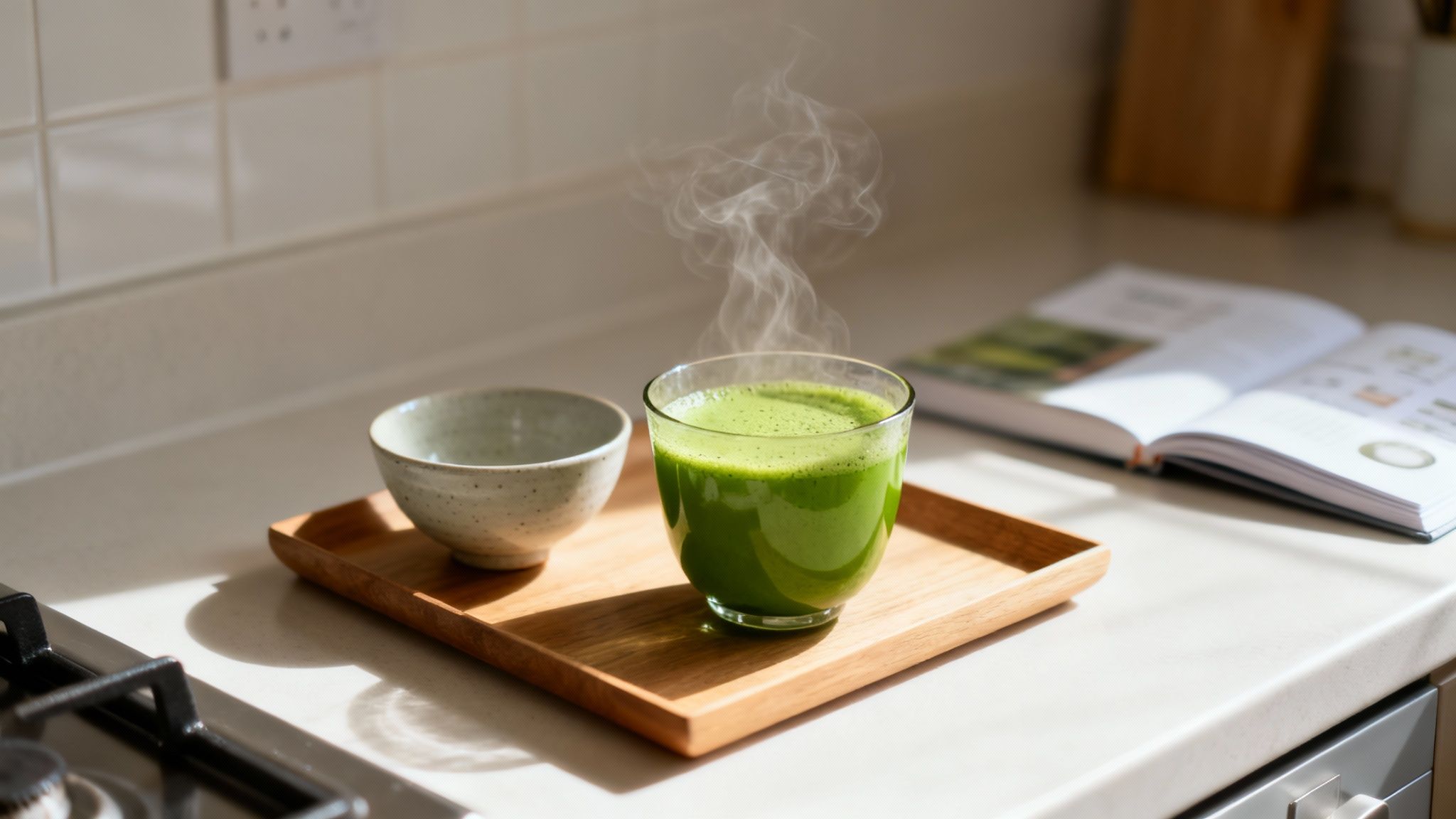
Welcome to the captivating world of matcha. This finely milled green tea powder has won over tea lovers across the UK, and for good reason. When you move beyond a quick stir-and-sip, you discover a calming ritual that turns a simple drink into a moment of pure focus. Let this guide be your first step into mastering this beautiful art form.
Making an exceptional cup of matcha is all about the details. It's not just the ingredients, but the entire process—from the quality of your powder to the precise temperature of the water. Each element plays a part in the final taste, texture, and overall experience. It’s a practice that truly encourages mindfulness.
Understanding the Fundamentals
At its core, a brilliant cup of matcha relies on just a few key principles. This is often where things go wrong at home, resulting in a clumpy, bitter drink instead of the smooth, umami-rich brew you'd get in a speciality tea house. Before we even get to whisking, it’s vital to grasp what sets a great cup apart.
These are the main factors that will shape your brew:
- Matcha Grade: The difference between ceremonial and culinary grades is huge. Ceremonial comes from the youngest tea leaves, giving it a delicate, naturally sweet flavour that's perfect for drinking traditionally.
- Water Temperature: Boiling water will scorch your delicate matcha, leaving it harsh and bitter. The sweet spot is between 70-80°C—hot enough to dissolve the powder but gentle enough to preserve its complex flavours.
- Whisking Technique: A proper bamboo whisk, or chasen, is non-negotiable. The specific whisking motion is what creates that signature frothy top and ensures a silky-smooth consistency.
By focusing on these three elements—quality powder, correct temperature, and proper technique—you’re setting the stage for a perfect cup every time. It’s less about just following steps and more about developing a real feel for the process.
To get started, it helps to explore the different types of matcha tea to understand their unique characteristics. With that knowledge in hand, you’ll feel much more confident as you assemble your tools and get ready to perfect your whisking.
Assembling Your Authentic Matcha Toolkit
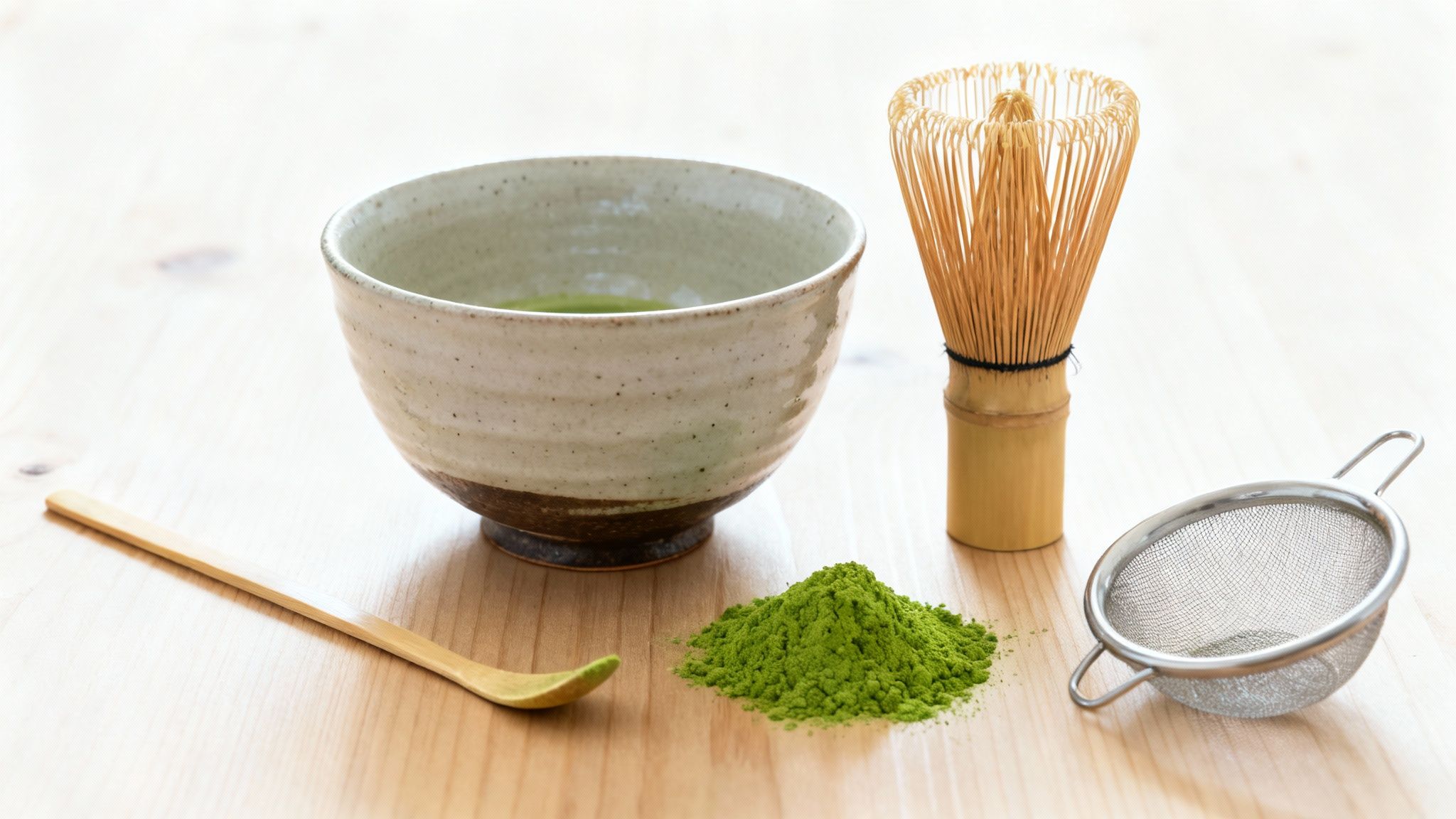
To really get the best from your matcha, the right tools are key. It’s less about strict tradition and more about getting the details right to create that perfect, frothy brew. While you can make do with what you have in the kitchen, using the proper implements transforms the whole experience.
Each piece in a classic matcha set has been designed for a very specific job, all working together to give you a smooth, flavourful, and perfectly aerated tea. Let’s look at what you’ll need.
The Essential Trio: Chawan, Chasen, and Chashaku
At the core of it all are three iconic items. The Chawan (matcha bowl) is much more than just a cup. Its wide, flat base is crucial for giving you enough room to whisk properly, helping to build that signature foam without splashing tea all over your countertop. A normal mug is just too narrow to get the vigorous action you need.
Then there’s the Chasen (bamboo whisk) – this is probably the single most important tool for getting a smooth, clump-free bowl. It’s made from a single piece of bamboo, and its fine tines are uniquely designed to aerate the tea and break up any lumps. A metal whisk or milk frother just can't create the same delicate, creamy foam. You can learn more about what makes a great matcha green tea bamboo whisk and why it’s such a game-changer.
Finally, the Chashaku (bamboo scoop) is the traditional tool for measuring out your powder. A single heaping scoop gives you about one gram of matcha (roughly half a teaspoon), the ideal amount for a standard serving of usucha, or ‘thin tea’.
Sifting: The Secret to a Silky Texture
If I could give just one piece of advice, it would be this: always sift your matcha. It’s an incredibly fine powder, so it’s prone to clumping from static and any hint of moisture in the air.
No amount of frantic whisking will save a lumpy brew. A quick sift is your best defence.
Simply pushing the powder through a small, fine-mesh sieve right before you add the water makes a dramatic difference. It only takes a few seconds but guarantees a silky-smooth texture and helps you whip up a much richer, more stable foam.
Toolkit Checklist: Traditional vs. Modern
| Traditional Tool | Purpose | Modern Alternative |
|---|---|---|
| Chawan (Bowl) | Provides space for vigorous whisking. | A wide, shallow soup or cereal bowl. |
| Chasen (Whisk) | Creates a fine, creamy froth and dissolves powder. | An electric milk frother (less effective for texture). |
| Chashaku (Scoop) | Measures approximately one gram of matcha. | A standard half-teaspoon measuring spoon. |
| Fine-mesh Sieve | Removes clumps for a smooth texture. | No effective alternative—this is a must-have. |
While you can get by with modern stand-ins, they are a compromise. An electric frother, for example, makes big, airy bubbles rather than the velvety microfoam a chasen creates, which completely changes the mouthfeel. If you’re planning to enjoy matcha regularly, investing in an authentic set from a trusted UK supplier will make every cup better.
Perfecting Usucha: The Everyday Thin Tea
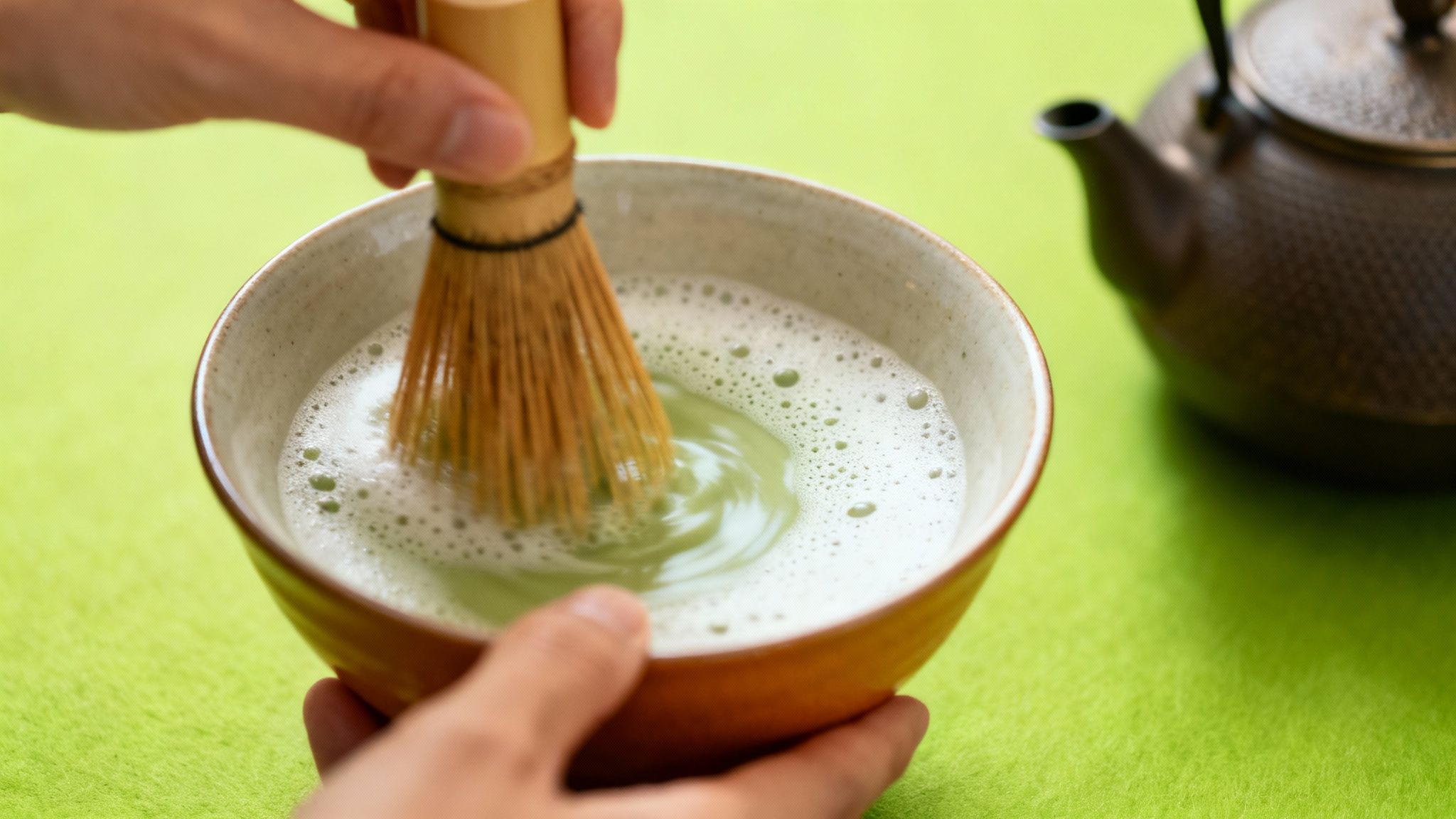
This is where your daily matcha ritual really comes to life. Usucha, or "thin tea," is the most common way to enjoy matcha—it’s that frothy, vibrant, and invigorating drink you’ll find in homes and cafés across the UK. Forget rigid instructions; making a great usucha is all about getting a feel for the process and enjoying the quiet focus it brings.
What we’re after is a smooth, light-bodied tea with a beautiful layer of creamy foam on top. This isn't just for show. The foam, or crema, is crucial to the flavour and texture, softening any bitterness and giving it that wonderful velvety mouthfeel.
The Crucial First Moves
Before you even think about the matcha powder, two simple preparations make all the difference. First, warm your chawan (bowl). Just fill it with hot water for a minute or so. This stops the matcha from cooling down too quickly as you whisk.
Once the bowl is nice and warm, tip out the water and dry it completely. Now for the chasen (whisk). Pop it into the bowl and pour some fresh hot water over its tines, letting it soak for about 30-60 seconds. This little trick "blooms" the bamboo, making the tines soft and flexible. It helps you whip up a much better froth and protects the delicate whisk from snapping.
A warm bowl and a softened whisk are the foundations of a great usucha. This initial step ensures your tea stays at the optimal temperature and that your primary tool is primed for creating that perfect, delicate foam.
With your tools ready, it's time for the powder. Use your chashaku (bamboo scoop) or a half-teaspoon to measure out 1-2 grams—that's one or two scoops—of ceremonial grade matcha. Sift it straight into your warm, dry bowl. As we've said before, sifting is non-negotiable. It’s the only way to get that perfectly smooth, lump-free finish.
Getting the Water Just Right
This is where many people trip up. The temperature of your water is absolutely critical. Boiling water (100°C) will completely ruin a high-quality matcha. It scalds the delicate powder, unleashing a torrent of tannins that makes the tea taste harsh and bitter.
For usucha, the sweet spot is between 70-80°C (158-176°F). This is hot enough to dissolve the powder and bring out all its complex, sweet, and umami notes without burning it.
If you don't have a variable temperature kettle, no problem. Just boil the water and let it sit for a few minutes. A good trick is to pour the boiled water into a separate cup, which instantly drops the temperature by about 10 degrees. Add around 60-80 ml (2-3 ounces) of this perfectly heated water to your sifted matcha.
Mastering the Whisking Motion
Now for the fun part: whisking. The technique for usucha is all about creating air. You’re not stirring in circles like you would with a spoon. Instead, you need a rapid, energetic movement.
Hold the chawan steady with one hand and grip the chasen with the other, keeping your wrist loose and relaxed. All the action should come from your wrist, not your whole arm.
Whisk briskly back and forth in a 'W' or 'M' shape across the bottom of the bowl. The key is to move quickly and consistently, letting the fine tines of the chasen whip air into the tea. Try to keep the whisk just off the bottom of the bowl to avoid damaging it.
Keep this zigzag motion going for about 15-20 seconds. You’ll see a lovely layer of tiny bubbles starting to form. As the froth builds, slowly raise the whisk towards the surface and gently slow down to pop any larger bubbles, leaving you with a uniform, velvety foam. For a final flourish, trace a slow circle on the surface and lift the chasen from the centre of the bowl.
Troubleshooting Your Usucha
Even with the best of intentions, sometimes a bowl of matcha doesn't turn out quite right. If you’re having trouble, here are a few common issues and how to fix them.
- Gritty or Clumpy Texture: Nine times out of ten, this is because the powder wasn't sifted. No amount of whisking can break up those stubborn clumps. Always, always sift.
- Lack of Foam: Struggling to get a good froth? It could be a few things. The water might be too cool, your whisking might not be fast enough, or you might have too much water for your matcha. Double-check your ratios and really focus on that quick 'W' motion from the wrist.
- Bitter Taste: This is almost always a sign of water that’s too hot. Let your water cool down a bit longer next time. Using a lower-quality, culinary-grade matcha for usucha can also be a source of bitterness.
Perfecting usucha is a satisfying little ritual. By paying attention to these details—from warming your tools to mastering the whisk—you’ll be making a flawless, delicious, and deeply calming bowl of matcha in no time.
Embracing Koicha: A Guide to Thick Tea
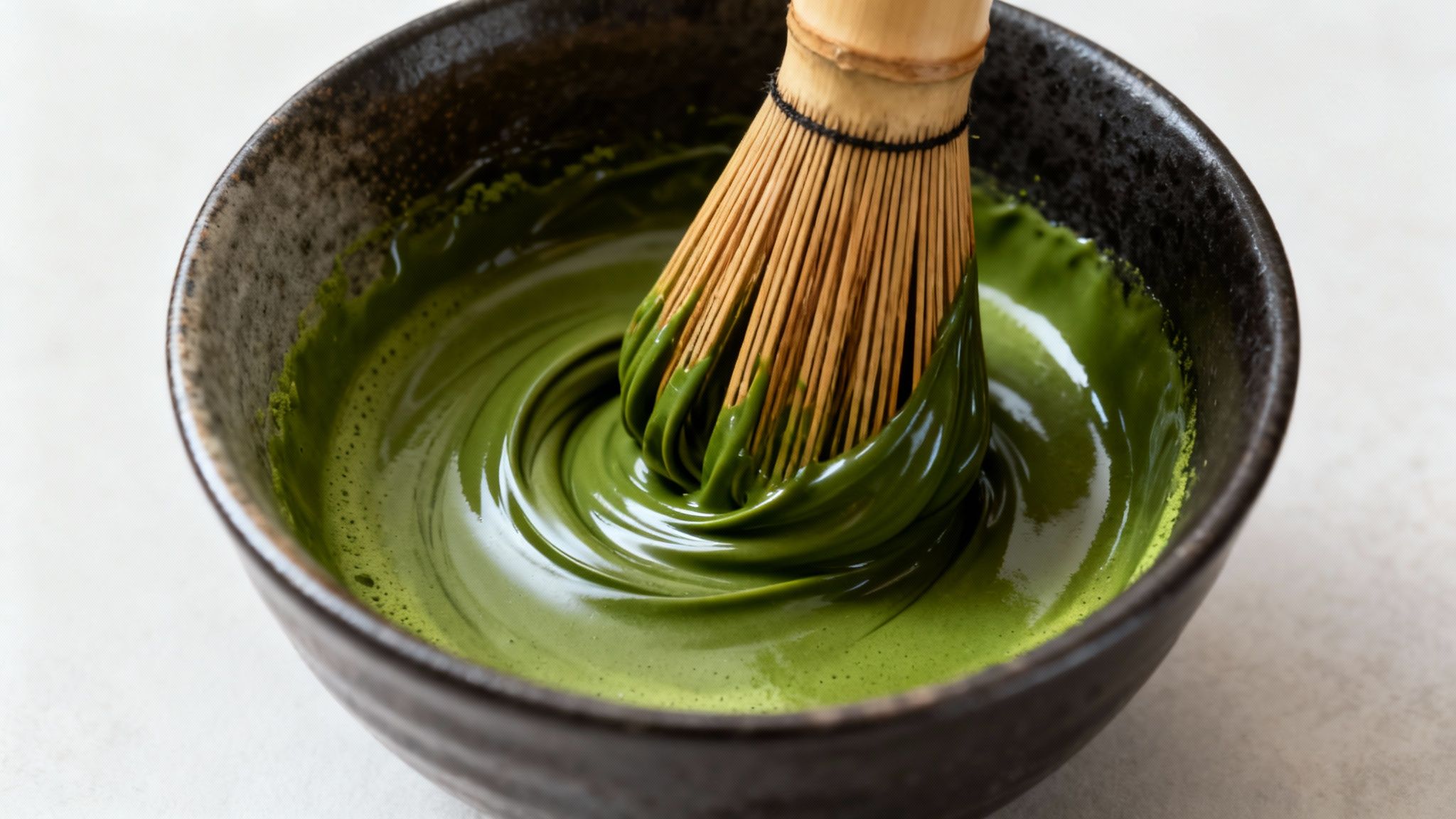
While the light, frothy usucha is the matcha many of us drink daily, koicha represents a much deeper, more meditative side of tea preparation. It translates to "thick tea," and that's exactly what it is: a luxurious, intense brew traditionally reserved for formal Japanese tea ceremonies. The experience is worlds away from its thinner counterpart.
Making koicha is less about vigorous whisking and more of a slow, deliberate kneading. You're not aiming for foam, but for a smooth, viscous liquid with a consistency almost like melted chocolate or warm honey. This method is designed to showcase the very best qualities of an exceptional matcha, delivering a flavour that’s incredibly rich and complex.
Why Koicha Demands the Highest Quality Matcha
With koicha, there's nowhere to hide. Its sheer concentration means that only the finest ceremonial grade matcha will do. Honestly, using anything less will result in an overwhelmingly bitter and astringent cup. The best ceremonial matcha is made from the youngest, most tender tea leaves from the first harvest, which are naturally sweeter and packed with that all-important umami.
The standard koicha ratio is a bold move:
- Matcha: Approximately 4 grams (four chashaku scoops or one full teaspoon).
- Water: Just 30-40 ml (around one ounce).
This potent mix—basically double the powder and half the water of usucha—amplifies every single nuance of the tea's flavour. A high-grade matcha will reveal deep, savoury umami notes, a subtle sweetness, and a complete absence of bitterness. Lower grades just can’t pull it off.
The Art of Kneading Koicha
The technique for koicha is completely different from the rapid ‘M’ or ‘W’ motion used for usucha. Here, the goal isn't aeration; it's integration. You’re gently combining the powder and water into a perfectly smooth, glossy paste. It's a quiet, focused process that's almost hypnotic.
Start by sifting your 4 grams of premium ceremonial matcha into a pre-warmed chawan. Add your 30-40 ml of water, heated to the usual 70-80°C. Now, instead of whisking, use the tines of your chasen to slowly "knead" the matcha.
Use gentle, circular, and up-and-down motions, pressing the powder against the sides and bottom of the bowl. The idea is to methodically work all the matcha into the water, ensuring no clumps or dry spots remain. Keep this slow kneading going for about a minute. You'll see the mixture start to thicken and develop a beautiful, deep green lustre.
Koicha preparation is a true practice in patience. The slow, deliberate kneading is designed to create a perfectly homogenous blend, releasing the matcha's deepest umami flavours without introducing any harshness. The result is a testament to the quality of the tea itself.
Once the koicha is completely smooth and has a thick, paint-like consistency, it’s ready. In a formal tea ceremony, a single bowl of koicha is often shared among guests. Each person takes a sip before wiping the rim and passing it on, a communal act that highlights its special significance.
Understanding the Koicha Flavour Profile
Drinking koicha for the first time is an experience you won't forget. The initial taste is an intense wave of pure umami—that deeply satisfying, savoury flavour you find in things like mushrooms and parmesan. This is followed by a lingering, natural sweetness and a rich, creamy mouthfeel that coats the palate.
Unlike usucha, which is light and refreshing, koicha is dense and contemplative. It’s a sip to be savoured slowly, allowing its complex layers of flavour to unfold. And because you’re consuming such a high concentration of the entire tea leaf, you’re also getting a potent dose of its nutrients and antioxidants.
For any matcha enthusiast, exploring this advanced preparation is a truly rewarding step. By investing in the highest quality matcha and embracing a more mindful technique, you unlock an entirely new dimension of flavour and tradition.
Beyond the Bowl: Modern Matcha Lattes, Iced Teas and More
The quiet ritual of preparing traditional matcha is something special, but the fun doesn't stop there. Pop into any modern café and you’ll see just how far this vibrant green powder can go. From creamy lattes to zesty iced teas, it’s easy to bring these contemporary twists into your own kitchen.
The real trick is understanding how matcha plays with other ingredients. Its delicate, grassy notes can easily get lost, so getting the balance right is everything. This is where a good quality culinary grade matcha really comes into its own, with a bolder flavour profile that stands up to milk, sweeteners, and citrus.
Crafting the Perfect Matcha Latte
A truly great matcha latte is a work of art—smooth, creamy, and with that perfect balance of sweet and earthy. The secret that every barista knows? Make a concentrated matcha 'shot' first, just like you would with an espresso machine. This simple step ensures the powder dissolves completely, banishing that dreaded gritty texture from your final drink.
Get started by sifting 1 teaspoon (about 2 grams) of culinary grade matcha into a mug or small bowl. Pour in about 60 ml of hot water (around 80°C) and get whisking until it’s perfectly smooth and frothy. That’s it. Your concentrated base is ready for milk.
Now for the milk, which can completely change the character of your latte. Here’s a quick rundown of my go-to options:
- Oat Milk: My personal favourite. It’s naturally creamy with a subtle sweetness that complements matcha without stealing the show. It also steams like a dream, creating a beautiful microfoam.
- Cow's Milk: For a rich, classic latte, you can’t beat whole milk. Its natural dairy sweetness is brilliant for balancing any of matcha's lingering bitterness.
- Almond Milk: A very popular choice, but just be aware that its nutty notes can sometimes clash with the matcha. I find an unsweetened, barista-style version gives the best results.
- Soya Milk: Soya has a distinct flavour that people tend to love or hate, so it’s all down to personal taste. It does, however, steam exceptionally well.
Always make your matcha shot separately before adding steamed or cold milk. Simply pouring milk onto the powder is a surefire way to get a clumpy, uneven drink. Nailing this step is what separates a café-quality latte from a disappointing home attempt.
Iced Matcha and Vibrant Lemonades
On a warm day, an iced matcha is hard to beat. The prep is much the same as for a latte, just with a couple of little adjustments. Make your concentrated matcha shot as usual, but if you're adding a sweetener like honey or maple syrup, stir it in now while the liquid is hot so it dissolves properly.
Grab a tall glass, fill it with ice, and pour over your matcha shot. Top it up with cold water or your milk of choice, and you're done. For something with a bit more zing, try making a matcha lemonade by topping the iced shot with a good-quality cloudy lemonade. The sweet-tart citrus is a fantastic partner for matcha's earthy flavour.
This kind of adaptability is exactly why matcha's popularity has soared. In fact, the UK Matcha Tea Market is growing at an incredible pace, with forecasts suggesting it will reach around USD 356 million by 2033. This boom is all down to people like us embracing matcha not just as a traditional tea, but as a brilliant, versatile ingredient. You can dive deeper into these trends on Deep Market Insights.
Taking Matcha into the Kitchen
Don't just keep your matcha for drinks! A good culinary grade matcha is a fantastic ingredient for baking, smoothies, and even savoury dishes, lending its unique flavour and stunning green colour.
When you start cooking with matcha, just remember that a little goes a very long way. Its flavour can intensify with heat, so it’s always wise to start with less than you think you need. It pairs beautifully with white chocolate in cakes and biscuits, gives a morning smoothie an antioxidant kick, and can even be used to make a unique matcha salt for seasoning fish or tempura. This is where the real fun begins.
Common Questions About Matcha Preparation
Once you start preparing your own matcha, you’ll naturally run into a few questions. It’s a beautifully nuanced process, and it's those little details that really elevate a good cup into a great one. We get asked a lot of the same things, so we’ve put together some straightforward answers to help you perfect your technique.
Getting these fundamentals right is about more than just flavour; it’s about deepening your appreciation for the whole ritual. Sometimes, a tiny tweak—like the water temperature or how you store the tin—makes all the difference.
Why Is My Matcha Bitter And How Can I Fix It?
This is easily the most common issue we see, and nine times out of ten, the answer is the same: your water is too hot. If you use water above 80°C (176°F), you’ll scald the delicate tea powder. This releases a rush of tannins, which is what creates that harsh, bitter taste.
The fix is simple. Just let your boiled water cool down for a few minutes before you even think about pouring it. Another culprit could be your ratios. Using too much powder for the amount of water will throw the balance off. If you’re not sure, have a look at our guide on how much matcha to use per cup for some precise measurements.
Finally, make sure you're using high-quality ceremonial grade matcha. Lower-quality powders are just naturally more astringent.
What Is The Real Difference Between Ceremonial And Culinary Grade?
It all comes down to when the tea leaves are harvested and how they're processed. This difference is what dictates how you should use each type.
- Ceremonial Grade: This is the good stuff. It’s made from the youngest, most tender leaves plucked during the year's very first harvest. They're painstakingly stone-ground into an ultrafine powder, giving it that vibrant green colour and a naturally sweet, deeply umami flavour. It’s meant to be whisked with water and savoured on its own.
- Culinary Grade: This grade uses leaves from later harvests. The flavour is stronger and a bit more bitter, but that’s by design. It’s built to stand up to other powerful ingredients in things like lattes, smoothies, and baking.
Think of it like cooking with wine. You wouldn't pour your finest vintage into a stew, and you wouldn't serve a basic cooking wine to guests at a dinner party. The same principle applies here—use the right grade for the right job.
How Should I Store Matcha To Keep It Fresh?
Matcha is quite sensitive stuff. Its three biggest enemies are air, light, and heat. Storing it properly is non-negotiable if you want to preserve that beautiful colour and delicate flavour.
Once you’ve opened a tin, your best bet is to keep the matcha in its original airtight, opaque container and pop it straight in the fridge. This dramatically slows down the oxidation process. Just be sure the lid is sealed very tightly to keep out moisture and any stray fridge smells.
A good tip is to let the tin sit at room temperature for a few minutes before opening it. This stops condensation from forming inside on the powder. For the best possible flavour, try to use it up within two months of opening.
It’s also worth noting that water quality can have a surprising impact on the final taste. For anyone curious about the specific properties of different water types and how they interact with tea, there are some fascinating resources out there.
At Jeeves & Jericho, we source only the finest ceremonial and culinary grade matcha directly from artisans in Uji, Japan. Explore our collection and elevate your daily ritual today. https://www.jeevesandjericho.com