


A great tea infuser for your cup is the secret to unlocking the full, rich flavour of loose leaf tea. Unlike a teabag that constrains the leaves, a quality infuser gives them the space they need to expand, releasing their complex aromas and nuanced tastes for a far superior brew.
Why a Great Tea Infuser Changes Everything
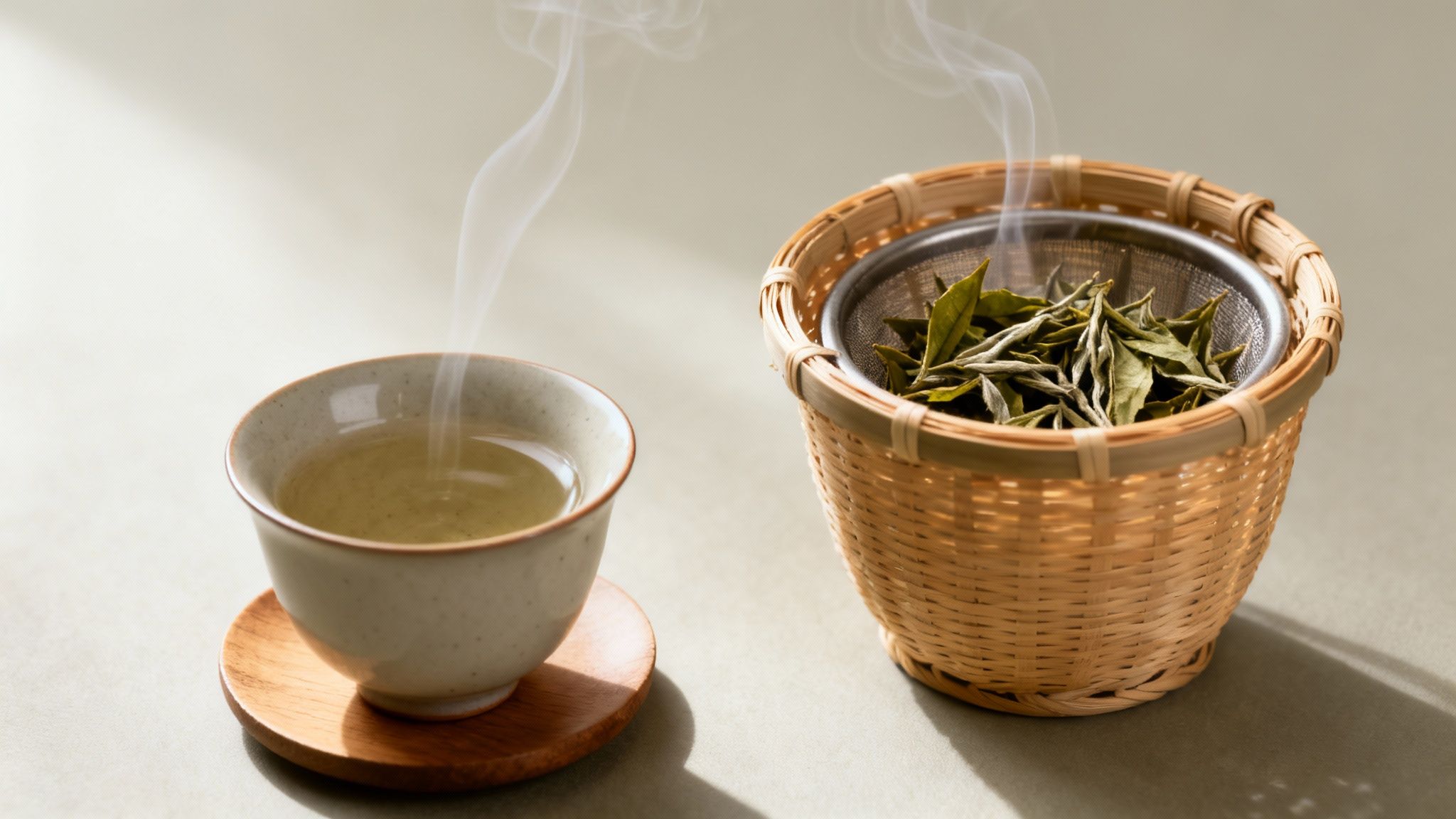
Think of your tea infuser not just as a tool, but as a miniature brewing chamber designed for your favourite mug. If you're moving from standard teabags, the difference you'll notice is immediate and profound. It’s the single most important step towards elevating your daily ritual from a simple drink to a genuine sensory experience.
Most teabags are filled with tiny, broken leaf fragments known as "fannings" or "dust." These brew quickly, but the result is often a one-dimensional, sometimes bitter, flavour. A proper infuser, on the other hand, is made to hold whole-leaf teas, giving them the freedom to properly unfurl and breathe.
Unlocking True Flavour and Aroma
When high-quality tea leaves have room to expand, they release their essential oils and intricate flavour compounds much more effectively. It’s a bit like a chef giving premium ingredients the right conditions to develop their full potential. The result is a cup brimming with character, depth, and aroma that teabags simply can’t match.
This shift towards more mindful brewing is something we're seeing everywhere. The global market for these devices is significant, underscoring a collective move towards better tea. The tea infuser market was valued at around USD 5.7 billion, with the UK being a key player thanks to our love of a good cuppa and a growing demand for premium accessories. You can discover more insights about the tea infuser market on Future Market Insights.
More Than Just a Better Brew
Choosing to use tea infusers for cups is about more than just taste. It’s a commitment to a more sustainable, conscious way of living. By opting for a reusable device, you significantly cut down on the waste that comes from single-use, often non-compostable, teabags.
A quality tea infuser does more than just hold leaves; it creates the ideal environment for them to perform. It transforms your cup into a stage where the true character of the tea can fully express itself.
Embracing this simple change connects your daily routine to a wider movement. It’s about appreciating the craftsmanship of tea artisans and honouring the natural integrity of the leaves. This small adjustment allows you to:
- Experience richer flavour profiles: From the floral notes in a Darjeeling to the malty depth of an Assam, you taste the tea as it was truly meant to be.
- Reduce daily waste: A durable infuser can last for years, completely eliminating the need for disposable bags.
- Control your brew strength: You decide exactly how many leaves to use, tailoring each and every cup to your personal preference.
Ultimately, the right infuser is an investment in your daily enjoyment and a nod towards a more thoughtful, sustainable lifestyle.
Finding Your Perfect Infuser Type
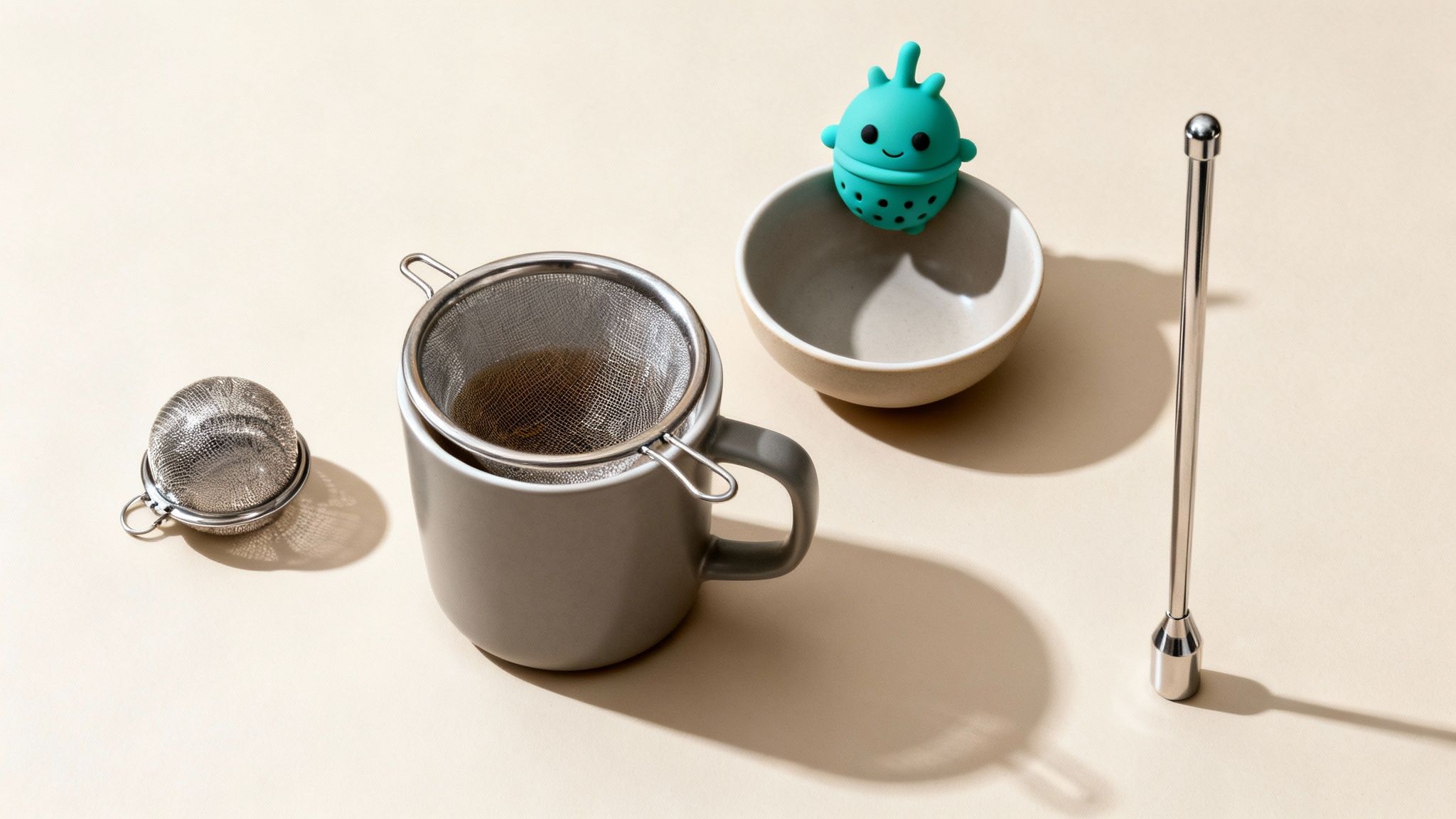
It’s tempting to think all tea infusers are much the same, but that couldn’t be further from the truth. Just as every tea has its own character, the tools we use to brew them come in countless shapes and sizes, each with its own strengths.
Finding the right one isn't about a single "best" option. It's about finding the perfect partner for your daily ritual, your favourite teas, and your lifestyle. Think of it like cooking – you wouldn't use a tiny frying pan to make a stew. The infuser you choose has a direct impact on how well your leaves can unfurl and release their full, glorious flavour.
The Classic Ball Infuser
This is the one most people picture: a small, spherical mesh cage that splits in two, held together by a clasp. It usually dangles from a little chain that you can hook over the side of your mug, making it easy to fish out when your brew is ready.
They’re brilliant for a quick, no-fuss cuppa, especially with finely cut black teas like an English Breakfast. Their pocket-friendly size makes them great for travel or stashing in your desk drawer.
But that small size is also their biggest weakness. Whole-leaf teas, like oolongs or white teas, need plenty of room to stretch out and dance in the water. A cramped ball infuser stifles them, resulting in a thin, disappointing brew. They can also be a bit of a pain to clean, as tiny leaves love getting stuck in the hinge.
- Best For: Finely ground black teas, herbal infusions with small bits, and a quick single serving on the go.
- Keep in Mind: They seriously limit leaf expansion, which can mute the flavour of larger, whole-leaf teas.
The Spacious Basket Infuser
Basket infusers are the undisputed champions for any serious tea lover. These are deep, wide cylinders of fine mesh that sit perfectly inside your mug, with a rim or little handles that rest on the edge.
Their generous size is their superpower. They give even the largest leaves all the space they need to fully expand, allowing hot water to circulate freely and extract every last drop of flavour. This makes them the ultimate choice for bringing out the best in premium oolongs, delicate white teas, and complex greens. Most are made from stainless steel mesh, which is fine enough to keep even tiny rooibos particles from escaping into your cup.
The whole point of an infuser is to let water flow freely while keeping the leaves contained. A basket infuser nails this, acting less like a cage and more like a personal brewing chamber right in your mug.
The only slight drawback is that they’re not as portable as a tiny ball infuser. But for the quality of brew you get at home or the office, they are simply unbeatable. If this sounds like your cup of tea, you might want to explore our guide on infuser tea cups, which often come with this brilliant design built-in.
The Sleek Stick Infuser
A more modern take, the stick infuser is a slim wand with a perforated chamber that slides open for you to add your tea. Once it's shut, you pop it in your cup and give it a stir, much like a spoon.
The appeal here is the minimalist, elegant design. They're tidy, incredibly easy to use, and make almost no mess, which makes them a popular choice for the workplace.
However, just like the ball infuser, they're held back by their tiny capacity. The narrow chamber is far too restrictive for whole-leaf teas, leading to a weak and underdeveloped brew. They're really only suitable for teas with very small, broken leaves, like CTC (Cut, Tear, Curl) black teas.
The Fun Novelty Infuser
You’ve seen these everywhere – charming infusers shaped like sloths, submarines, or manatees hanging from the side of a mug. They are almost always made from silicone and are designed to bring a bit of fun to your tea break.
They can be a wonderful gift to get someone started on loose-leaf tea, or just a way to add a bit of personality to your own routine. They’re generally easy to use and a doddle to clean.
But that playful design often comes at the cost of performance. The holes can be too big, letting small leaves escape, or too small, hindering the water flow. While they’re perfectly fine for a casual cup of a robust herbal blend, they won't do justice to the nuanced flavour of a high-quality, whole-leaf tea.
How Infuser Materials Affect Your Tea
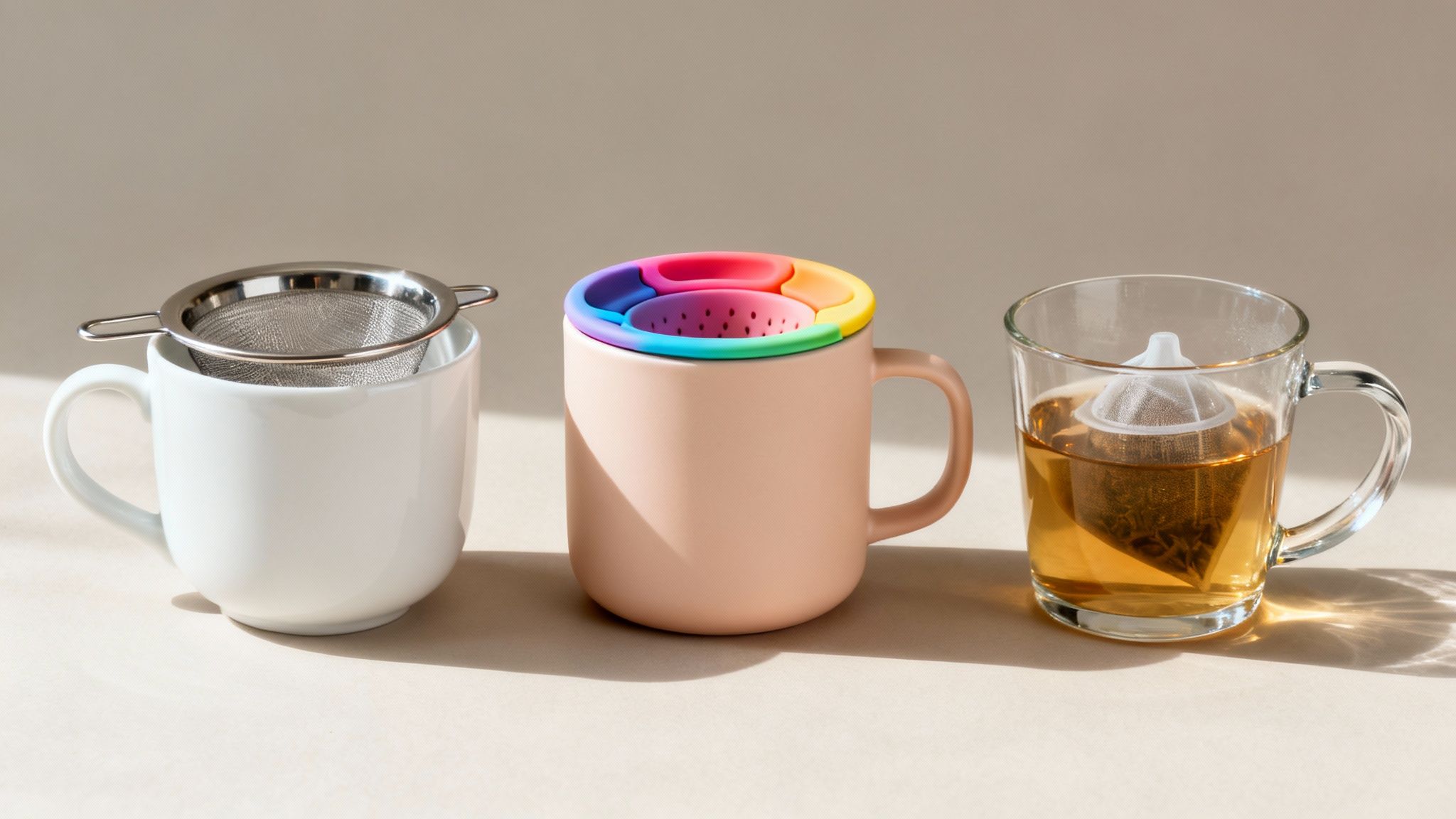
Does the material of your tea infuser really make a difference? Absolutely. Think of it as the go-between for your precious tea leaves and the hot water. Just as a top chef wouldn't dream of making a delicate sauce in a reactive pan, the material of your infuser can subtly influence, or even spoil, the final flavour in your cup.
The best materials are both non-porous and non-reactive. This simply means they won’t hang onto flavours from old brews or add any unwanted metallic or chemical tastes of their own. A neutral material guarantees that the only thing you taste is the tea itself, exactly as the growers and tea masters intended.
The Professional Choice: Stainless Steel
When it comes down to pure performance, food-grade stainless steel is the undisputed king of tea infusers for cups. It’s completely inert, so it won't react with the delicate compounds in your tea, ensuring the flavour stays clean, bright, and true to the leaf.
Its durability is another huge plus. A well-made stainless steel infuser can handle daily use for years without a hint of rust or staining. This longevity makes it a smart, sustainable investment for any serious tea drinker. Looking into the properties of titanium and stainless steel drinkware materials gives a great insight into why these metals are so valued for their non-reactive and tough qualities.
- Pros: Flavour-neutral, incredibly durable, easy to clean, and resists stains and odours.
- Cons: Can get quite hot, and cheaper versions might carry a slight metallic taste.
- Best For: All tea types, but especially for preserving the subtle notes of delicate white, green, and oolong teas.
The Flexible Alternative: Silicone
Food-grade silicone infusers have popped up everywhere, often in fun, colourful shapes. Their biggest appeal lies in their flexibility and heat resistance. They won't scratch your favourite mug and stay cool enough to handle straight out of a steaming cup.
High-quality, BPA-free silicone should be completely tasteless and odourless. But be warned: cheaper, lower-grade silicone can sometimes hold onto the strong aromas of spiced teas like chai or scented blends like Earl Grey, which can ghost your next brew.
When you're picking out a silicone infuser, always check that it’s certified food-grade. This is your guarantee it’s safe for contact with food and much less likely to pass on any unwanted flavours to your delicate tea.
To be safe, you might want to keep a separate silicone infuser just for your more powerful teas to avoid any flavour crossover. Their playful designs also make them a fantastic gateway for anyone just starting their loose-leaf journey.
The Elegant Option: Glass and Ceramic
There's something special about watching tea leaves unfurl and dance as they steep, and that's the experience glass and ceramic infusers offer. Like stainless steel, these materials are non-porous and non-reactive, promising a pure, untainted brew.
Their main drawback, however, is their fragility. One clumsy moment can lead to a chip or a crack, making them less practical for a busy kitchen or for taking on your travels. They can also be more prone to staining from strong black teas, so they need a bit more care to keep them looking their best.
- Pros: Beautiful to look at, completely flavour-neutral, and offers a visual brewing experience.
- Cons: Very fragile and can be trickier to clean thoroughly compared to simple mesh infusers.
- Best For: Turning your tea-making into a quiet ritual at home, especially when brewing stunning whole-leaf teas.
Brewing the Perfect Cup Every Time
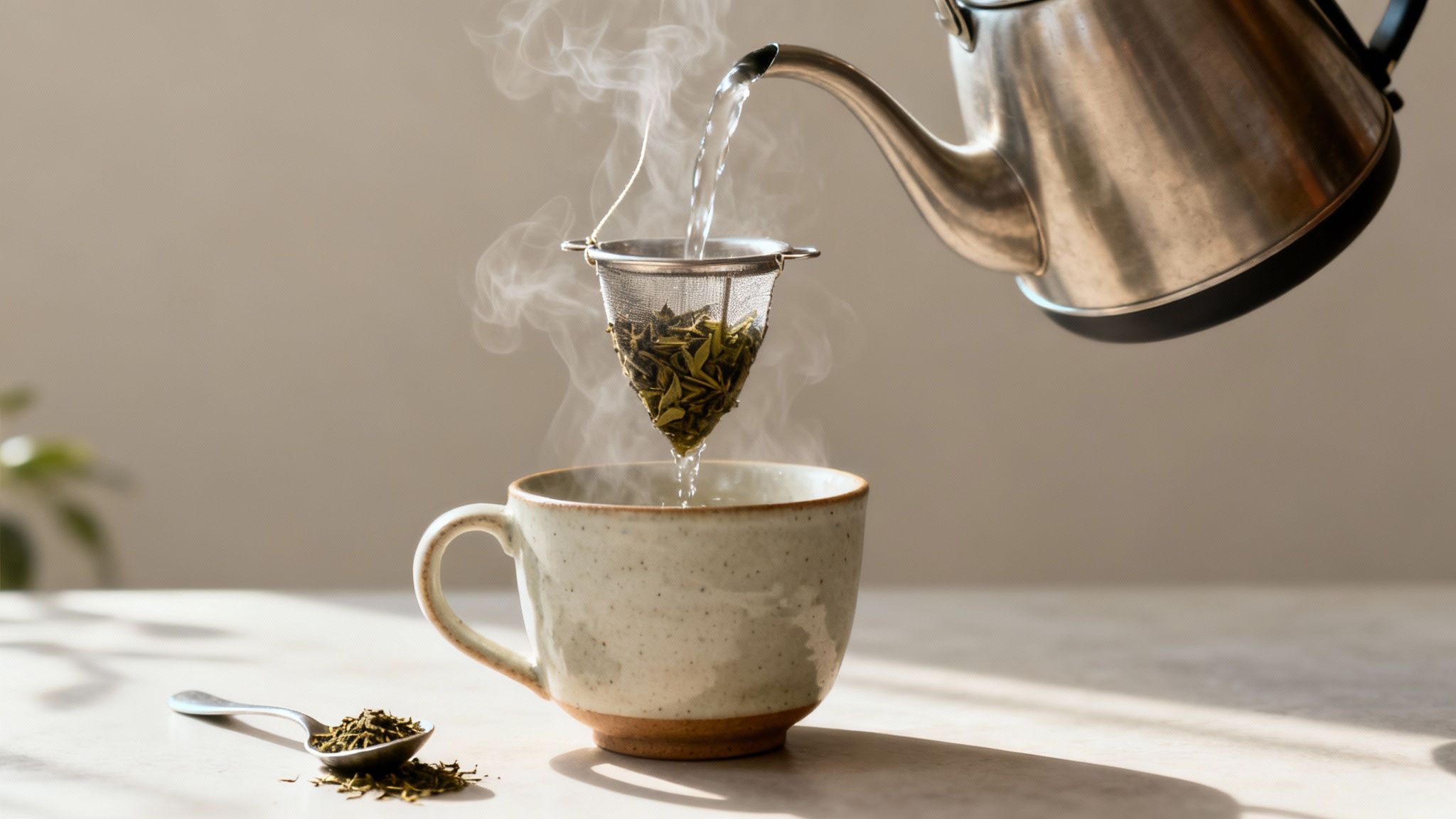
Alright, you've got the gear. Now for the fun part: mastering the art of the brew. Switching from teabags to tea infusers for cups is a game-changer. It puts you in complete control of the final flavour, turning a simple routine into a truly rewarding ritual.
The secret to a consistently brilliant cup isn't some ancient mystery. It simply comes down to a fine balance between three things: the amount of tea, the water temperature, and how long you let it steep. Get these right, and you'll unlock the full spectrum of flavour your loose leaves have to offer, sidestepping common mistakes like a bitter finish or a weak, watery brew.
And we're not the only ones who think so. This growing appreciation for a proper cuppa is making waves. The global tea infusion market is on track to hit USD 786.8 million, while here in the UK, the tea scene is set to grow by 5.8% each year. This isn't just about our national tea habit; it’s about a real, growing interest in functional well-being. You can dig into the full research on the tea infusion market over at Fact.MR.
Getting the Leaf-to-Water Ratio Just Right
You've probably heard the classic rule: "one teaspoon per cup." For a standard 8-ounce (around 230ml) mug, starting with one level teaspoon of most black or green teas is a great benchmark.
But think of it as a friendly suggestion, not a strict law. Loose leaf teas vary wildly in size and density. A fluffy white tea or a bulky herbal blend like chamomile might need a heaped tablespoon to deliver the same punch as a small teaspoon of tightly rolled oolong.
The golden rule? Only fill your infuser about halfway. This is non-negotiable. Tea leaves need room to unfurl and dance in the hot water, which is how they release their full, complex flavour profile.
A cramped infuser is the number one cause of a disappointing brew. If the leaves can't expand, the water can't circulate properly, and all those beautiful, subtle notes stay locked away.
Mastering Temperature and Time
Water temperature is one of the most crucial—and most often ignored—parts of brewing tea. Water that’s too hot will scorch delicate leaves, leaving you with a bitter, astringent taste. Too cool, and you'll never extract the full depth of flavour.
Here’s a simple guide to get you started:
- Black Teas & Most Herbal Teas: These are tough characters. They need near-boiling water (95-100°C) to draw out their deep, malty flavours. Let them brew for 3-5 minutes.
- Green Teas: Much more delicate. Green teas prefer cooler water (75-85°C), so let your kettle cool for a minute after it boils. A quick steep of 1-3 minutes is all they need.
- White Teas: The most fragile of the lot. Brew these with water around 70-80°C for 2-4 minutes to protect their subtle, sweet notes.
- Oolong Teas: This is a big category, but a good starting point is water between 85-95°C for 3-5 minutes.
And please, set a timer! An extra 30 seconds can take a perfect cup of green tea from sublime to bitter. You'll soon develop a feel for your favourite teas, but a timer is your best friend when you're starting out. For a more detailed walkthrough, have a look at our guide on how to brew loose leaf tea.
Special Cases: Chai and Matcha
Not all teas play by the same rules. A couple of our most popular brews require a completely different approach, and knowing the difference is key to getting that authentic experience.
Brewing a Hearty Chai
A proper spiced chai is packed with chunky ingredients like cinnamon bark, star anise, and cardamom pods alongside the black tea. These dense spices need a bit more encouragement to release their fragrant oils.
- Give It Space: A big basket infuser is a must. You need plenty of room for those bulky spices to do their thing.
- Go Hot: Don't hold back. Use freshly boiled water (100°C) to really wake up the spices.
- Be Patient: A good chai needs to steep for at least 5-7 minutes for all those wonderful flavours to come together. Some even prefer to gently simmer it on the stove.
Why Infusers Don't Work for Matcha
Matcha is the odd one out because it’s not really an infusion. It's a fine powder of specially grown green tea leaves that you whisk into a suspension. You’re consuming the entire leaf, not just water that’s passed through it.
If you try to put matcha powder into any kind of tea infuser for cups, you’ll just end up with a gritty mess as the powder slips right through the holes. For a true matcha, you need a traditional bamboo whisk (a chasen) to froth the powder into hot water, creating that signature creamy texture and vibrant taste.
Keeping Your Infuser Clean and Pristine
A clean infuser is the secret weapon for a truly exceptional cup of tea. You wouldn’t dream of cooking in a dirty pan, and the same principle applies here. Brewing tea in a stained or neglected infuser can introduce old, bitter flavours that completely ruin the experience. Luckily, proper care is quick, simple, and ensures every single brew is as pure as the last.
Over time, tea leaves leave behind tannins and natural oils, which can create a stubborn film, especially on fine mesh. If you let this residue build up, it can go off, imparting a stale or slightly metallic taste to your next brew. A little bit of consistent cleaning protects the integrity of your tea and helps your trusted brewing tool last for years.
Your Quick Daily Rinse Routine
The best habit you can get into is giving your infuser a quick rinse right after you've finished brewing. Don't let it sit on the side with wet leaves for hours.
- Empty the Leaves: Tap the used leaves straight into your compost bin or rubbish.
- Rinse Thoroughly: A quick run under hot water is usually all it takes. You can use your fingers to gently rub away any stubborn particles.
- Air Dry Completely: Pop it on a tea towel or draining board and let it dry properly. This is key to stopping any musty smells from developing.
This little two-minute ritual prevents the vast majority of buildup and keeps your tea infusers for cups ready for their next brew at a moment's notice.
Tackling Stubborn Stains and Buildup
Even with a daily rinse, you might eventually spot some discolouration, particularly if you’re partial to a strong black tea. A deep clean once a month or so will bring back its original sparkle and get rid of any "flavour-ghosting".
A brilliant, natural way to do this is with a common kitchen cupboard staple: bicarbonate of soda. Just mix a tablespoon of bicarb with a little water to form a paste. Gently scrub the infuser with a soft brush or cloth, then give it a good rinse with hot water.
Think of a deep clean as hitting the reset button for your infuser. It removes any lingering oils and tannins, ensuring that the delicate floral notes of your next white tea aren't haunted by the memory of this morning's robust Assam.
For really tough stains or the kind of mineral buildup that washing just won't shift, you might need to try something stronger. For example, some tea lovers have great success using citric acid for cleaning, as it's a natural and effective way to break down residue without resorting to harsh chemicals.
Finally, how you store your infuser matters just as much as how you clean it. Keep it in a dry place where air can get to it. Try to avoid just chucking it in a crowded cutlery drawer where it could get bent out of shape. Look after it, and it will remain your reliable partner for a proper cup of tea for years to come.
Making a Sustainable Choice with Your Tea Ritual
That daily cup of tea is more than just a comforting ritual. It’s a chance to make a small but meaningful choice for the planet. Every time you reach for a reusable infuser instead of a single-use teabag, you’re making a quiet statement – one that cuts down on waste and brings a little more mindfulness into your day. It's such a simple switch, but the impact really does add up.
The unfortunate truth is that many ordinary teabags are sealed with plastic. Not only does this mean they can't fully decompose, but it can also release microplastics into your brew. By shifting to a loose-leaf ritual with a good infuser, you neatly sidestep the whole problem. You're left with just the tea leaves, ready for the compost heap.
Investing in Longevity and Purity
Picking a high-quality, reusable tea infuser for cups isn’t just about being green; it’s an investment. Materials like stainless steel are built to last for years, if not a lifetime, completely doing away with the need for disposable stuff. This move away from the throwaway culture is what sustainable living is all about.
This conscious approach is gathering steam right across the UK's tea scene. With a market valued at £1.0 billion, UK tea companies are thinking more about the entire journey of their products, from ethically grown leaves to eco-friendly packaging. As noted by IBISWorld, this has spurred the creation of better brewing tools, including reusable infusers.
By choosing loose-leaf tea and a permanent infuser, you're not just a customer; you're part of this positive shift, supporting a system that values quality and looks after our world.
It's More Than Just Reducing Waste
The benefits go far beyond what ends up in the bin. It’s about a more deliberate, thoughtful way of making tea. That simple act of scooping the leaves and watching them unfurl as they steep connects you to your drink on a deeper level. It turns a rushed habit into a moment of genuine appreciation.
Your infuser isn't just a tool; it's a symbol of a conscious choice. It represents a commitment to better flavour, less waste, and a more mindful connection to what we consume.
This mindful practice comes with some clear perks:
- Zero-Waste Brewing: A reusable infuser plus compostable leaves equals a completely waste-free cuppa.
- Purer Flavour: You dodge the potential plastics and glues that can be found in some teabags, letting the true taste of the tea shine through.
- Long-Term Savings: A one-off purchase of a quality infuser saves you money over countless boxes of teabags.
Ultimately, making this sustainable choice isn’t about sacrifice at all – it’s an upgrade. It elevates your daily tea from a disposable commodity to a cherished experience that’s better for you and kinder to the planet. While moving away from teabags is a great step, it's also worth seeing how far they have come; you can learn more in our guide to compostable tea bags.
A Few Common Questions
Even the most dedicated tea lovers have questions when it comes to getting that perfect brew. To take the guesswork out of your daily ritual, we’ve put together a few pointers to help you use your tea infusers for cups with absolute confidence.
Getting the amount right is always the first challenge. So, how much loose-leaf tea do you really need for one cup?
How Much Tea Should I Use?
The classic rule of thumb is one teaspoon per 8-ounce cup, and it’s a brilliant place to start. But think of it more as a friendly guideline than a hard-and-fast rule. Some teas, like fluffy white teas or chamomile flowers, are much lighter and less dense, so you might need a good tablespoon to get a full-bodied flavour.
Here’s the most important tip: only fill your infuser about halfway. The leaves need plenty of room to unfurl and dance in the water, which is how they release all their complex, wonderful character.
Can I Use Infusers for Finer Teas?
Absolutely, but this is where your choice of infuser really matters. If you’re brewing something very fine like rooibos, a standard ball infuser with larger holes will likely let tiny bits escape, leaving you with a gritty cuppa.
To get around this, go for a basket-style infuser made with an ultra-fine stainless steel mesh. They’re designed specifically to hold back even the smallest particles while still letting the water flow freely. The result? A beautifully clean, smooth brew every single time.
How Do I Stop Flavours From Mixing?
A good clean is the secret to a pure-tasting cup. The easiest and most effective habit is to simply rinse your infuser with hot water right after you’ve finished brewing. That quick rinse stops the natural oils from the tea leaves from building up and tainting your next cup.
For a more thorough clean, especially if you're switching from a punchy black tea to a delicate green tea, just soak the infuser for 30 minutes in a bit of hot water and bicarbonate of soda. It’s a completely natural way to neutralise any lingering flavours, giving you a fresh start.
Ready to take your tea ritual to the next level? Discover the perfect brewing tools in the Jeeves & Jericho collection. Explore our premium tea infusers and whole-leaf teas at https://www.jeevesandjericho.com.