


So, what does matcha actually taste like? It’s a question I get asked all the time, and the answer is never simple. High-quality matcha is a world away from your standard green tea bag. It’s a complex and beautifully balanced experience, weaving together a rich, savoury depth known as ‘umami’, a whisper of natural sweetness, and fresh, vegetal notes that bring to mind young spinach or sweet peas. Forget the harsh bitterness you might associate with green tea; this is smooth, creamy, and finishes clean.
Your First Taste of Matcha's True Flavour
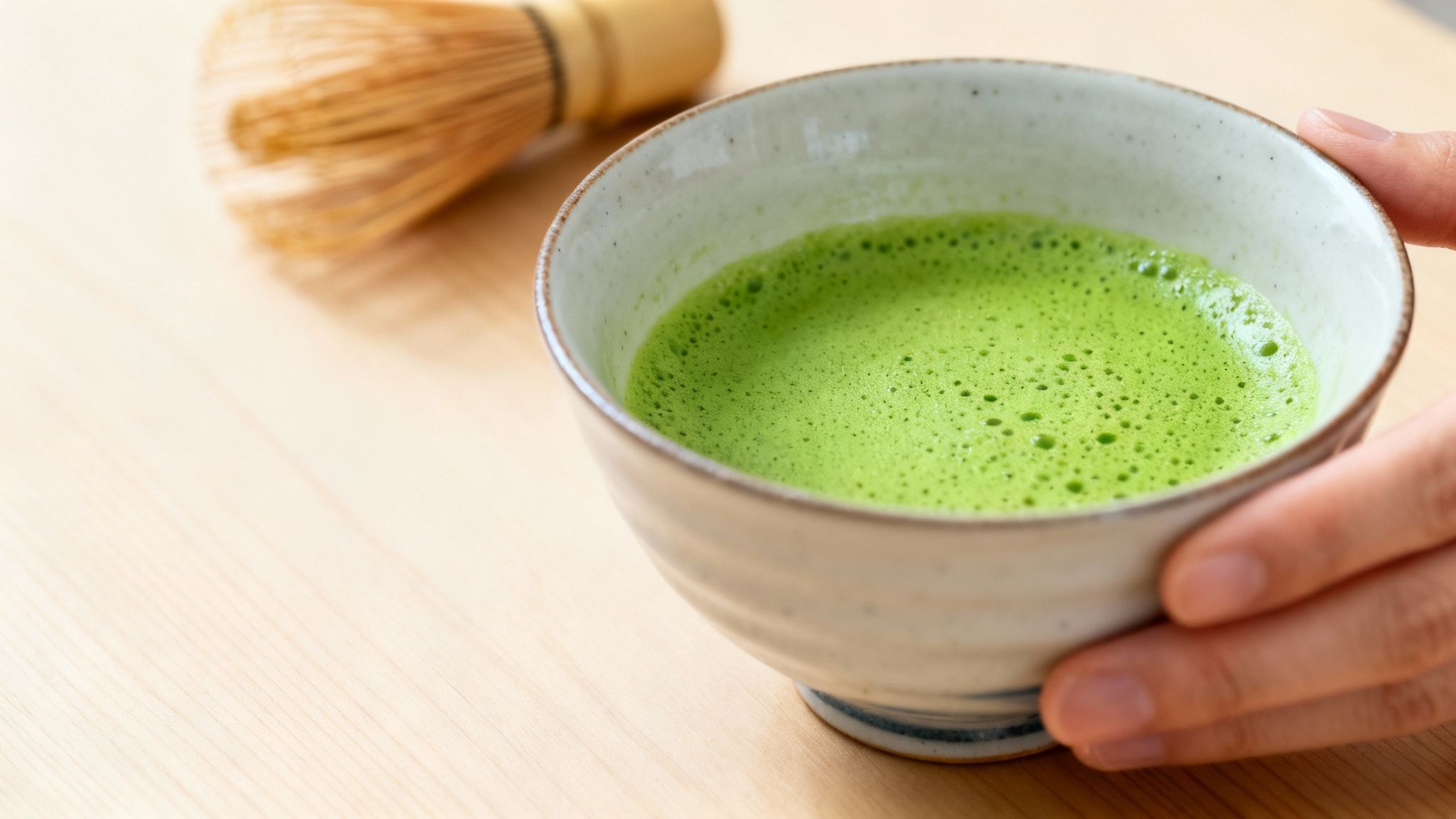
Taking that first sip of authentic matcha can be a real eye-opener. It’s an experience that’s somehow both invigorating and deeply calming, and a far cry from a regular cup of tea. To really get what’s going on, it helps to have a handle on the five basic tastes in food, because matcha plays with several of them.
The star of the show is undoubtedly its profound umami flavour. This is that fifth taste, often described as the "essence of deliciousness" in Japanese. It's the satisfying, savoury depth you get from things like mushrooms, parmesan, or miso soup. In matcha, this translates into a full-bodied, almost brothy richness that coats your tongue and gives it substance.
But it’s not just savoury. This umami note is beautifully balanced by a gentle, natural sweetness. This comes from L-theanine, an amino acid that concentrates in the tea leaves during the all-important shading process. It’s not a sugary hit, but a delicate sweetness that rounds out the flavour and keeps it from ever feeling harsh.
Unpacking the Flavour Notes
Beyond that umami-sweet core, you'll start to pick up on bright, vegetal notes. Think of it like a walk through a vibrant green landscape. People often describe these notes as:
- Grassy: A clean scent reminiscent of freshly cut spring grass.
- Earthy: A grounding flavour, almost like the smell of a damp forest floor after rain.
- Nutty: Faint hints of almonds or even toasted sesame can come through.
- Marine: A very subtle, pleasant echo of seaweed or fresh sea air, a nod to its Japanese island origins.
This perception of a vegetal, savoury drink isn't just anecdotal. A recent UK survey found that 65% of matcha drinkers described its flavour as 'earthy' or 'grassy,' while only 10% found it 'sweet.' Even so, its popularity is booming, with sales of matcha-based drinks having grown by an incredible 202% in the UK in recent years. It’s clear this unique profile has found a loyal following.
The Role of Quality in Taste
I can't stress this enough: the difference in taste between high-grade and low-grade matcha is night and day. The quality of the powder will make or break your entire experience.
High-quality, ceremonial grade matcha offers a smooth, mellow, and complex flavour profile. In contrast, lower-quality culinary matcha, intended for baking or lattes, will often taste flat, chalky, and overwhelmingly bitter when consumed on its own.
To make it clearer, here’s a quick rundown of what to expect from different qualities of matcha.
A Quick Guide to Matcha's Flavor Profile
This table breaks down the key flavour differences you can expect to find.
| Taste Note | High-Quality Matcha | Low-Quality Matcha |
|---|---|---|
| Umami | Rich, deep, and savoury | Weak or non-existent |
| Bitterness | Minimal, with a clean finish | Overpowering and harsh |
| Sweetness | Naturally present and subtle | Absent, often tastes flat |
| Texture | Creamy, smooth, and velvety | Gritty, chalky, and thin |
| Aftertaste | Pleasant, sweet, and lingering | Astringent and unpleasantly bitter |
As you can see, investing in a high-grade matcha really pays off in the final taste. It's the difference between a truly special ritual and a disappointing, bitter brew.
Why Not All Matcha Tastes the Same
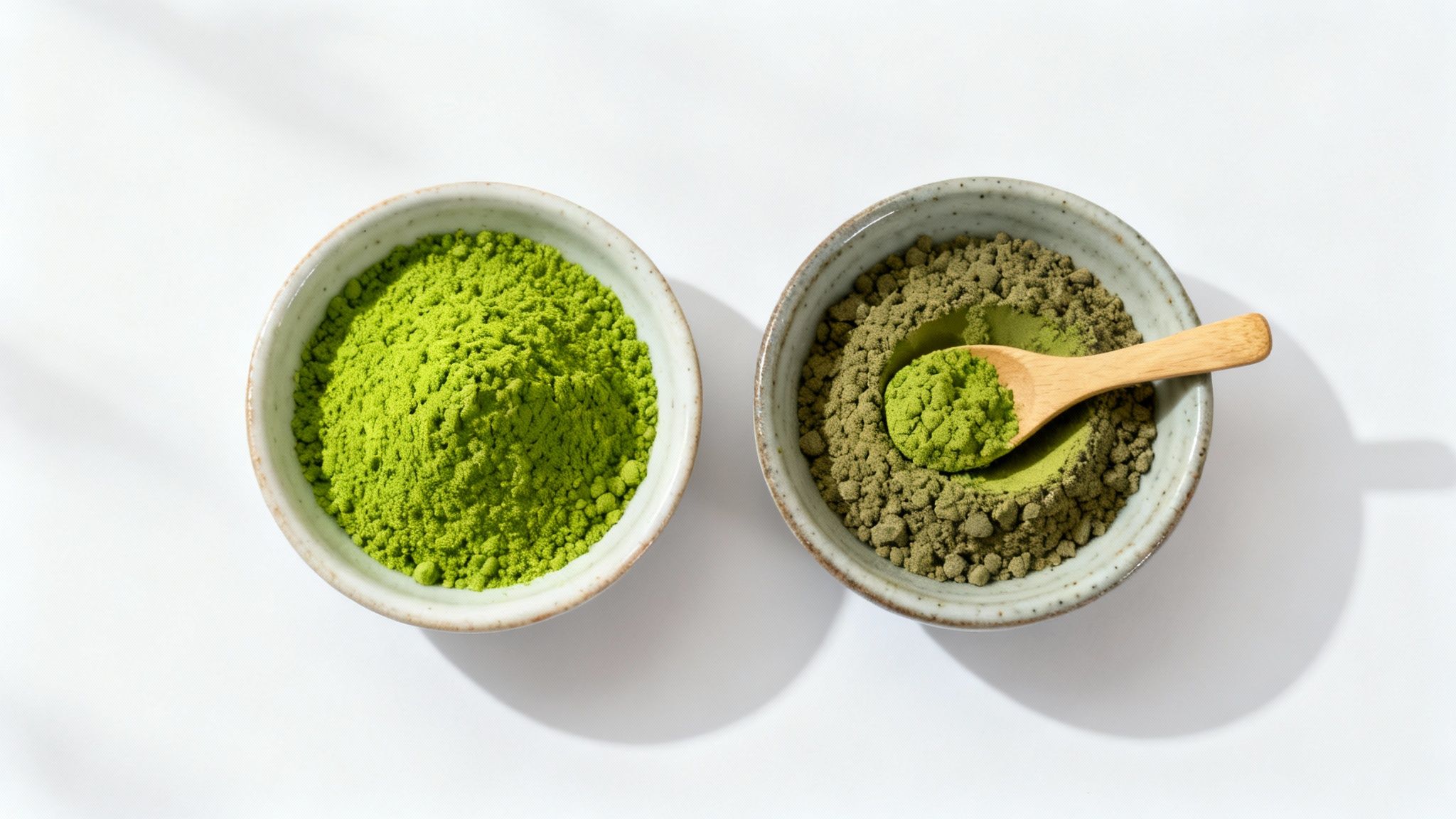
Ever wondered why one cup of matcha can be a blissfully smooth experience, while the next is harsh and bitter? It’s not a mystery. The answer almost always comes down to one crucial factor: the matcha’s grade.
Think of it like comparing a fine sipping wine to a robust cooking wine. Both come from grapes, but they serve entirely different purposes and you certainly wouldn't use them interchangeably.
Getting to grips with the different grades is the single most important step you can take to control how your matcha tastes. It ensures you pick the right powder for the right job, turning a potential disappointment into a delightful daily ritual. The two main categories you'll come across are Ceremonial and Culinary grade.
The grade is determined by which leaves are picked from the tea plant and when they are harvested. This decision fundamentally shapes the final colour, texture, and, most importantly, the flavour profile of the powder in your bowl.
Ceremonial Grade: The Sipping Matcha
Ceremonial grade is the absolute pinnacle of matcha quality. It’s crafted from only the youngest, most tender tea leaves found at the very top of the Camellia sinensis plant. These prized leaves are harvested by hand just once a year during the first flush of spring.
Because these leaves are so young and have been meticulously shade-grown for several weeks, they’re packed with chlorophyll and the calming amino acid L-theanine. This process creates a powder with a brilliant, almost electric green colour and a flavour that is exceptionally smooth, naturally sweet, and rich with that deep, savoury umami.
The true hallmark of a high-quality ceremonial grade matcha is its complete lack of bitterness. It’s designed to be whisked with hot water and savoured on its own, allowing its complex and delicate notes to take centre stage. This is precisely why it's the matcha used in traditional Japanese tea ceremonies.
Choosing a ceremonial grade means you're investing in a pure, nuanced flavour experience. It's the perfect choice for anyone who wants to enjoy matcha in its most authentic form.
Culinary Grade: The Versatile Ingredient
Culinary grade matcha, on the other hand, is made from older, more mature leaves harvested later in the season. These leaves are typically found lower down on the tea plant and have had more sun exposure, which alters their chemical makeup.
The result is a powder that’s less vibrant in colour—often a duller, more yellowish-green. More importantly, the flavour is bolder, stronger, and more astringent. It carries a noticeable bitterness that makes it a poor choice for drinking plain with just water.
However, that robust flavour is exactly what makes culinary grade such a fantastic ingredient. Its powerful profile is designed to hold its own against other components in a recipe, ensuring the distinct matcha taste isn't lost.
- Lattes and Smoothies: It has the strength to cut through the creaminess of milk or the sweetness of fruit.
- Baking: Its assertive character shines through beautifully in cakes, biscuits, and ice cream.
- Cooking: It can add a wonderfully savoury, earthy depth to sauces and seasonings.
Using culinary grade this way is perfect, but attempting to drink it like ceremonial matcha will almost always lead to a bitter, unpleasant experience. Understanding the difference between the various types of matcha tea is the key to brewing a perfect cup every time.
This distinction in taste clearly drives how people buy matcha. In the UK, for instance, sales data shows a strong preference for classic and ceremonial grades among those who drink their matcha straight. This reflects a desire for that smoother, less bitter profile ideal for sipping, while culinary grades are specifically chosen for cooking and baking.
How Preparation Shapes Your Matcha's Flavour
Holding a tin of high-quality matcha is only half the story. How you prepare it can completely transform the experience in your cup, turning a potentially bitter, lumpy brew into something brilliantly smooth and flavourful. You really are in the driver's seat here.
Mastering a few simple techniques is all it takes to unlock the perfect flavour at home. It’s not about following rigid rules, but understanding why each step matters. Think of it as a dialogue with the delicate tea leaves; from water temperature to whisking motion, you're guiding them to reveal their best character.
This process is your chance to fine-tune the taste to exactly what you're in the mood for. Whether you crave the pure, unadorned notes of a traditional bowl or the creamy comfort of a modern latte, the power is in your hands.
The Traditional Method for Pure Flavour
The Japanese tea ceremony is a beautiful practice of mindfulness, where every detail is considered to produce the best possible taste. You don’t need the full ceremony at home, but adopting its core principles will drastically improve your matcha.
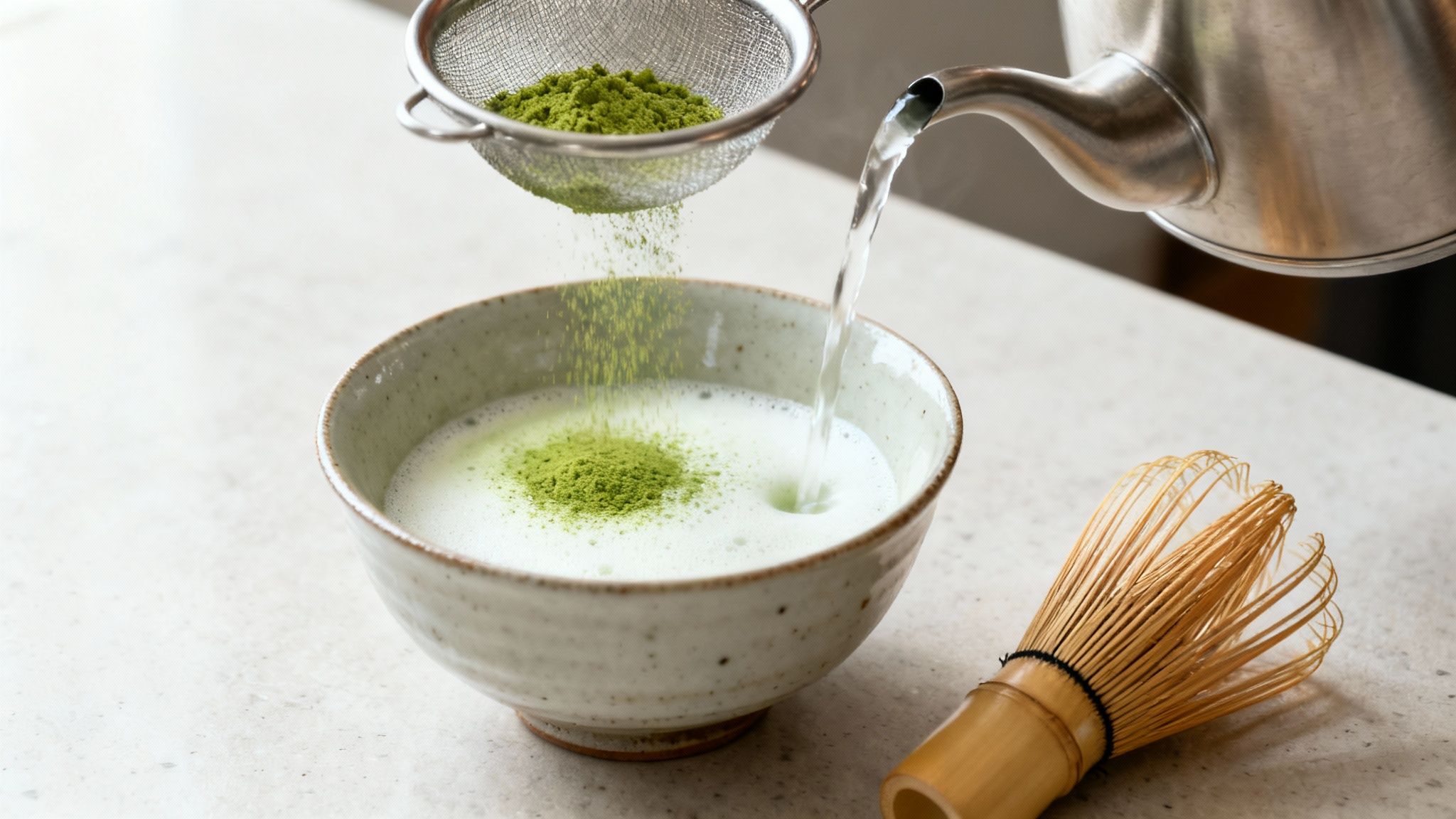
The first, and arguably most crucial, step is to sift your matcha powder. This might seem a bit fussy, but matcha is so fine that it’s prone to clumping from static electricity. Pushing it through a small sieve breaks up these clumps, guaranteeing a silky-smooth texture with no gritty surprises.
Next, pay close attention to your water. This is where so many people go wrong and end up with a bitter cup. Using boiling water will literally scorch the delicate tea, releasing a harsh, unpleasant taste.
The sweet spot for matcha is water around 80°C (175°F). It’s hot enough to dissolve the powder and unlock its complex flavours, but not so hot that it burns them. No temperature-controlled kettle? Just let boiling water sit for a couple of minutes before you pour.
Unlocking Creaminess with the Right Whisk
Once you've added the warm water to your sifted powder, it’s time to whisk. The goal here isn't just mixing; it's to aerate the tea, creating that signature frothy layer known as the 'crema'. This foam is vital—it softens the flavour and gives matcha its wonderfully creamy mouthfeel.
Using a traditional bamboo whisk, or chasen, makes a world of difference. Its hundred-or-so fine tines are perfectly designed to break up any remaining powder and whip air into the liquid like nothing else can.
Follow these simple steps for a perfect froth:
- Form a Paste: Start by adding just a splash of your hot water and gently mixing it into a smooth, lump-free paste.
- Add More Water: Pour in the rest of your water, usually around 60-70ml.
- Whisk Vigorously: Using a rapid 'W' or zigzag motion, whisk back and forth until a thick layer of fine foam covers the surface. A circular stirring motion just won't cut it.
If you're looking to really nail your technique, our guide on preparing matcha tea offers a detailed walkthrough of these essential steps.
The Modern Take with Lattes and Sweeteners
While the traditional method highlights matcha's pure, vegetal character, the modern café scene has introduced it to a whole new audience through lattes. Adding steamed milk and a touch of sweetener completely changes the game, softening those earthy notes and creating a more approachable, dessert-like drink.
Milk—especially oat or almond—lends a creaminess and subtle sweetness that beautifully balances matcha's inherent qualities. This modern take has dramatically shifted how matcha is perceived and enjoyed. In fact, in the UK, a huge percentage of sales are now for ready-to-drink and latte-style products, showing a growing preference for a sweeter profile over the traditional brew.
So, whether you choose the path of tradition or the comfort of a creamy latte, how you prepare your matcha is the final, crucial step in defining its taste. The best way to learn is to experiment with both—it will help you discover the full spectrum of flavour this incredible green powder has to offer.
Learning to Taste Matcha Like an Expert
So, you're ready to go beyond just calling matcha ‘grassy’ and really get to grips with what’s happening in your cup? Tasting matcha is a full sensory journey, not just a quick sip. Once you learn to pick out its more subtle character, you'll deepen your appreciation and be able to pinpoint exactly what you love in a top-quality brew.
Think of it like learning a new language. At first, you only catch the big, obvious words. But with a bit of practice, you start picking up on nuance, tone, and the complex ideas being shared. It's the same with matcha. You can train your palate to detect a whole spectrum of notes far beyond that initial green hit.
And it’s about more than just your taste buds. The experience starts the moment you see that vibrant powder. I'll walk you through a simple tasting method, the same kind professionals use, to help you build a vocabulary and truly understand the story your matcha is telling you.
A Four-Step Sensory Tasting Method
To really taste matcha properly, you need to bring all your senses to the party. This simple four-step process helps you slow down and notice the details that are easy to miss, turning your daily ritual into a mindful tasting session.
1. Observe the Colour (The Look): Before you even think about adding water, take a good look at the dry powder. High-quality matcha should be a brilliant, almost electric green. That vibrancy comes directly from the high chlorophyll levels developed during the crucial shade-growing process. A dull, yellowish, or brownish colour? That's usually a red flag for oxidation, old stock, or just lower quality.
2. Inhale the Aroma (The Smell): Once you’ve whisked your matcha, bring the bowl right up to your nose and take a deep breath. What do you smell? Great matcha has a fresh, inviting aroma that pulls you in. You might pick up notes of sweet spring peas, freshly mown grass, or even a gentle nutty sweetness, like toasted almonds.
3. Evaluate the Mouthfeel (The Feel): Now for the first sip. Let the liquid coat your entire tongue and pay close attention to its texture. Does it feel smooth and creamy, or is it a bit thin and gritty? A well-prepared ceremonial grade matcha should have a rich, velvety mouthfeel. That's the sign of incredibly fine stone-grinding and a good whisking technique.
4. Savour the Flavour (The Taste): Finally, focus on the taste itself. Notice the flavours that first appear, how they change and develop across your palate, and what kind of finish they leave behind. Is there a beautiful balance between savoury umami, a whisper of sweetness, and those fresh vegetal notes? A truly superior matcha will have a long, pleasant, and often slightly sweet aftertaste, with absolutely no harsh bitterness left hanging around.
By consciously moving through these four steps—look, smell, feel, and taste—you start to build a mental library of what makes an exceptional matcha. This practice makes it so much easier to spot quality and figure out what your personal preferences really are.
Building Your Tasting Vocabulary
Finding the right words is half the battle when it comes to describing the complex world inside your matcha bowl. As you start tasting more intentionally, try to pinpoint which of these notes you can detect. Some are the hallmarks of a fantastic brew, while others can be a sign that something’s not quite right.
This table breaks down some of the most common terms you'll hear, separating the good from the not-so-good.
Matcha Tasting Vocabulary and Notes
A detailed table to help you identify and describe the complex flavours and aromas in your matcha.
| Sensory Category | Positive Descriptors (High-Quality) | Negative Descriptors (Low-Quality) |
|---|---|---|
| Flavour |
Umami: A deep, savoury, brothy richness that’s deeply satisfying. Sweetness: A natural, gentle sweetness, sometimes like sweet pea or corn. |
Bitter: An overpowering, harsh flavour that lingers unpleasantly. Sour: A sharp, acidic tang. |
| Aroma |
Vegetal: Fresh and clean, like steamed greens or young leaves. Nutty: Subtle hints of almonds, chestnuts, or toasted seeds. |
Hay-like: A dry, dusty smell, indicating old or poorly stored tea. Fishy: A stale marine smell. |
| Mouthfeel |
Creamy: A smooth, velvety texture that coats the palate. Rich: A full-bodied, substantial feeling. |
Astringent: A drying, puckering sensation, like over-brewed tea. Chalky: A gritty, powdery texture. |
| Finish |
Clean: The taste disappears smoothly, leaving the palate refreshed. Long: Pleasant notes that linger gently for a while. |
Harsh: An unpleasant aftertaste that sticks around. Thin: The flavour vanishes instantly. |
Using this vocabulary helps you move from "I like this" to "I like this because of its creamy mouthfeel and deep umami notes." It’s a game-changer.
For instance, our premium matcha from Uji, Japan, is celebrated for its profound umami core, a beautifully creamy texture, and a clean finish with distinct notes of sweet pea and macadamia nut. Being able to recognise these specific characteristics is the first real step toward becoming a true matcha connoisseur.
How to Pair Matcha with Foods and Drinks
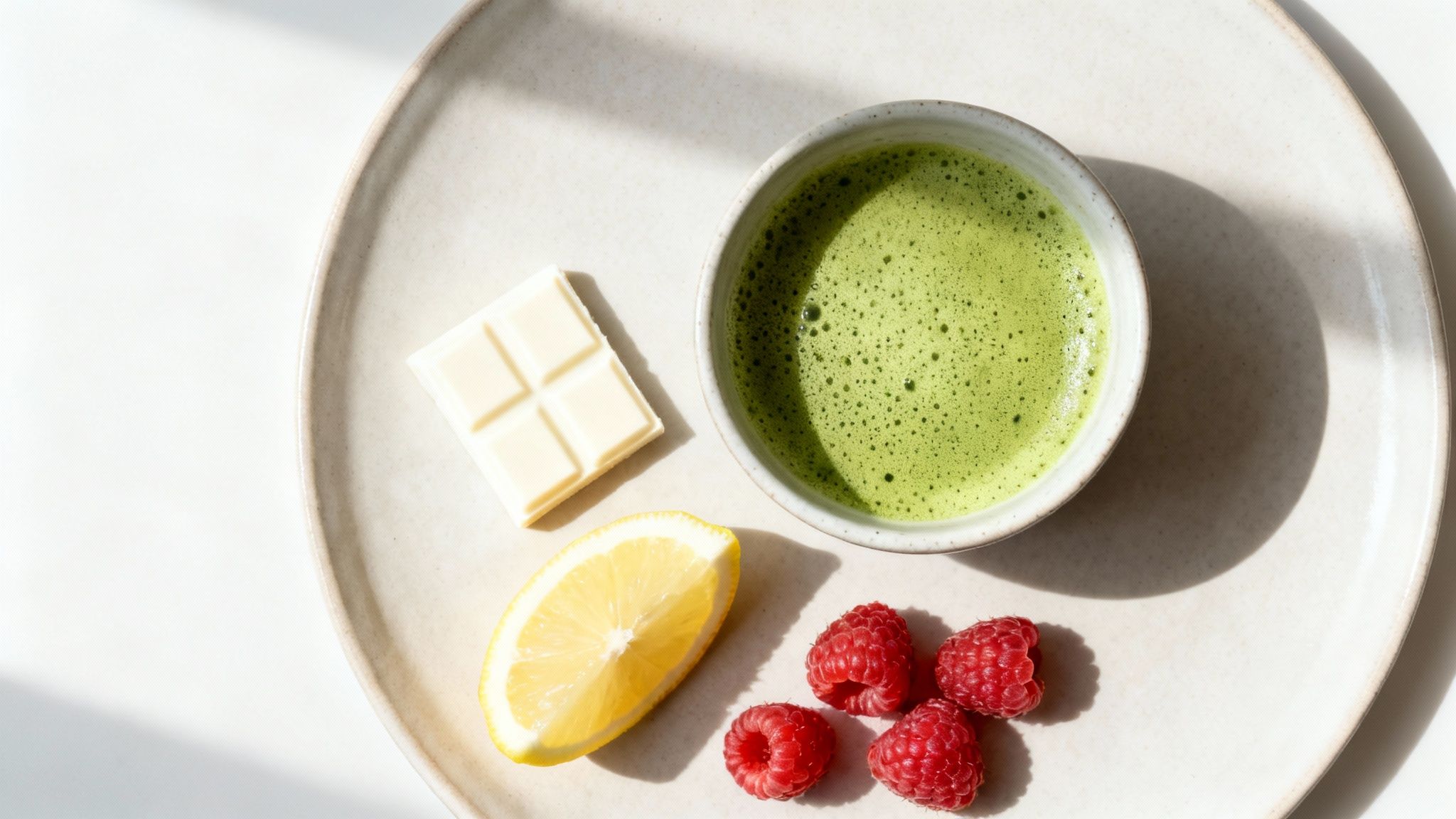
Matcha's complex profile is what makes it such a brilliant partner in the kitchen. With its unique blend of earthy, umami, and subtly sweet notes, it can either be amplified by similar flavours or balanced by contrasting ones. This versatility opens up a whole world of culinary creativity.
Getting to grips with matcha pairings is the key to unlocking its full potential beyond the tea bowl. By choosing ingredients thoughtfully, you can draw out its delicate sweetness or use its robust character to slice through richness. The result? Truly memorable flavour combinations in everything from desserts to even savoury dishes.
Complementary Pairings to Enhance Sweetness
If you want to harmonise with matcha's natural character, think about ingredients that share its creamy, sweet, or nutty side. These pairings don't steamroll the matcha; they gently lift its inherent flavours, making them pop. This is a great way to introduce someone to matcha for the first time.
These complementary flavours are your best bet for creating smooth, cohesive desserts and drinks. They work with the matcha, not against it, giving you a beautifully integrated taste.
Some classic complementary pairings include:
- White Chocolate: The buttery sweetness of white chocolate is a dream match for matcha’s slight bitterness. It’s a luxurious, balanced flavour you’ll find in countless patisserie creations for good reason.
- Coconut: Whether it’s coconut milk or flakes, its tropical sweetness and rich texture blend seamlessly with matcha’s vegetal notes, adding depth and a creamy finish.
- Vanilla and Almond: Both the warm, aromatic notes of vanilla and the nutty sweetness of almond echo the subtle sweet undertones you find in high-quality matcha.
Think of a simple matcha and white chocolate ganache. The chocolate's sweetness mellows matcha's earthy edge, while the matcha's complexity stops the ganache from being just one-note sweet. It's a perfect symbiotic relationship of flavour.
Contrasting Pairings for a Dynamic Taste
Sometimes, the most exciting food pairings come from a clash of personalities. Putting matcha up against bold, acidic, or rich ingredients can create a surprisingly dynamic taste experience. The secret here is balance. Matcha’s robust, earthy profile can hold its own against strong flavours, cutting through richness and offering a refreshing counterpoint.
These are the pairings you turn to when you want to create something with a bit more complexity and spark. It’s like how a squeeze of lime can brighten a rich dish—matcha can do the same job.
Here are a few powerful contrasting ideas:
- Citrus Fruits: The bright, zesty acidity of lemon, yuzu, or lime is a fantastic foil for matcha’s deep, umami notes. A matcha-lemon tart is a classic example of this perfect balance.
- Tart Berries: Fruits like raspberries, strawberries, and blackcurrants deliver a sweet-tart burst that slices through matcha’s earthiness, adding a fresh, fruity dimension.
- Rich Dairy: The dense, creamy tang of cheesecake or the richness of mascarpone is beautifully cut by matcha’s clean, slightly astringent finish. It stops the dessert from ever feeling too heavy.
Ultimately, exploring what matcha tastes like through food pairings is a delicious journey of discovery. Whether you choose to complement its sweetness or contrast its earthiness, you’ll find that matcha is an incredibly adaptable and inspiring ingredient for any creative kitchen.
Keeping Your Matcha Fresh for the Best Taste
Your matcha’s vibrant flavour is delicate, and protecting it is the secret to ensuring every sip is a great one. Before we even talk about storage, it all starts with the quality of the matcha you buy. The first clue is always the colour—look for a brilliant, vivid green that practically jumps out of the tin. This isn't just for show; it's a clear sign of freshness and high chlorophyll content.
If the powder looks dull, yellowish, or brownish, it's a red flag. That matcha is likely old or wasn't grown with care, and it’s going to taste flat and bitter. The texture should be just as impressive: incredibly fine and silky, almost like talcum powder. Finally, pay attention to the packaging. It absolutely must be airtight and opaque to shield the precious powder from its enemies.
What to Look For When Buying
When you're choosing your matcha, the origin tells you a lot about its potential quality. Regions like Uji in Japan are legendary for a reason—they've spent centuries perfecting the art of matcha cultivation. Buying from a renowned region often means you're getting a far superior and more complex flavour profile.
To make sure you’re getting the good stuff, keep these three things in mind:
- Vibrant Colour: A bright, electric green is non-negotiable.
- Fine Texture: It should feel smooth and silky between your fingers, not gritty.
- Airtight Packaging: Light and air are the enemies of fresh matcha, so a good tin is essential.
Simple Storage for Maximum Flavour
Once you bring your matcha home, you need to protect it from its four greatest foes: light, air, heat, and moisture. Exposure to any of these will quickly oxidise the delicate powder, turning its bright, sweet, and umami-rich notes into something dull and bitter.
Think of matcha powder like a delicate spice or freshly ground coffee beans. You wouldn't leave them sitting open on a sunny countertop, and your matcha deserves the same level of care to keep it at its best.
After you've opened it, the best place for your matcha is in the refrigerator. Keeping it cool slows down the degradation process significantly. Just be sure the container is sealed as tightly as possible; you don't want it absorbing moisture or, worse, the lingering aroma of last night's dinner. For a deeper dive into protecting your tea, have a look at our complete guide on the proper storage for tea.
For the absolute best flavour, try to use your matcha within a few weeks of opening it. While it won't "go off" in the traditional sense, its wonderful, complex character will slowly begin to fade. By following these simple buying and storage tips, you can guarantee every single bowl you whisk up is as fresh, vibrant, and delicious as it was meant to be.
Common Questions About How Matcha Tastes
Even after getting to grips with grades and preparation methods, a few questions about matcha's unique taste tend to linger. Let's tackle some of the most common ones so you know exactly what to expect from that first sip and can make it a brilliant experience.
Getting these details right can be the difference between discovering a new daily ritual and a disappointing one-off experiment.
Why Does My Matcha Taste Bitter or Fishy?
This is the number one complaint from people new to matcha, and it almost always points to one of three things. First, it could simply be a low-quality culinary grade matcha, which is ground to be more astringent for cooking. Second, the culprit might be water that's too hot—anything over 80°C will scorch the delicate powder, drawing out bitterness. Finally, you might just be using a bit too much powder for the amount of water.
As for a 'fishy' or overly marine taste? While a hint of this can be part of the complex umami note in very high-end matcha, an overpowering fishiness usually means the powder is stale or poor quality. The fix for all of this is to start with a good ceremonial grade matcha and keep a close eye on your water temperature and measurements.
Is Matcha Supposed to Taste Sweet?
A great matcha has a natural, subtle sweetness, but it's certainly not a sugary drink. This delicate sweet note comes from L-theanine, an amino acid that becomes highly concentrated in the tea leaves while they're shaded from the sun. It's a true hallmark of well-cultivated tea, and it’s what gives matcha that smooth, mellow finish that beautifully balances out the fresh, vegetal notes.
The idea that matcha is a sweet drink often comes from the heavily sweetened lattes you find in coffee shops or in commercial, ready-to-drink products. Traditionally prepared matcha has no added sugar, which allows its gentle, natural sweetness to come through.
How Is Matcha's Taste Different From Green Tea?
The difference is night and day. When you brew a cup of regular green tea, you're drinking the water that the leaves have been steeped in, after which you throw the leaves away. This gives you a much lighter, thinner-bodied drink that can often be quite astringent.
With matcha, you’re consuming the entire, finely ground tea leaf suspended in the water. This makes for a far richer, creamier, and more intense flavour experience. Matcha has a much more pronounced umami (savoury) character and a full, velvety mouthfeel that you just don't get from steeped green tea. It really is a completely different world in both texture and complexity.
Ready to experience the smooth, umami-rich flavour of authentic, high-quality matcha? Jeeves & Jericho sources premium ceremonial grade matcha directly from Uji, Japan, ensuring every cup is vibrant and delicious. Explore our matcha collection and start your journey today.