


There’s little point in buying beautiful, high-quality tea only to have it taste flat and lifeless a few weeks later. Proper storage for tea is all about protecting your precious leaves from four key elements: light, air, moisture, and heat.
Getting this right is simple. The secret is a cool, dark, dry place and a truly airtight container. That’s it. Do that, and you’ll ensure every single cup tastes as fresh and vibrant as the day you bought it.
The Four Enemies of Fresh Tea
To really master tea storage, you need to know what you’re up against. Think of your delicate tea leaves as being under constant siege from their environment. There are four main culprits working around the clock to degrade the quality, aroma, and flavour of your brew.
When you invest in a special blend from Jeeves & Jericho, you’re not just buying tea; you're buying an experience. Protecting that experience means creating a fortress against these elements.
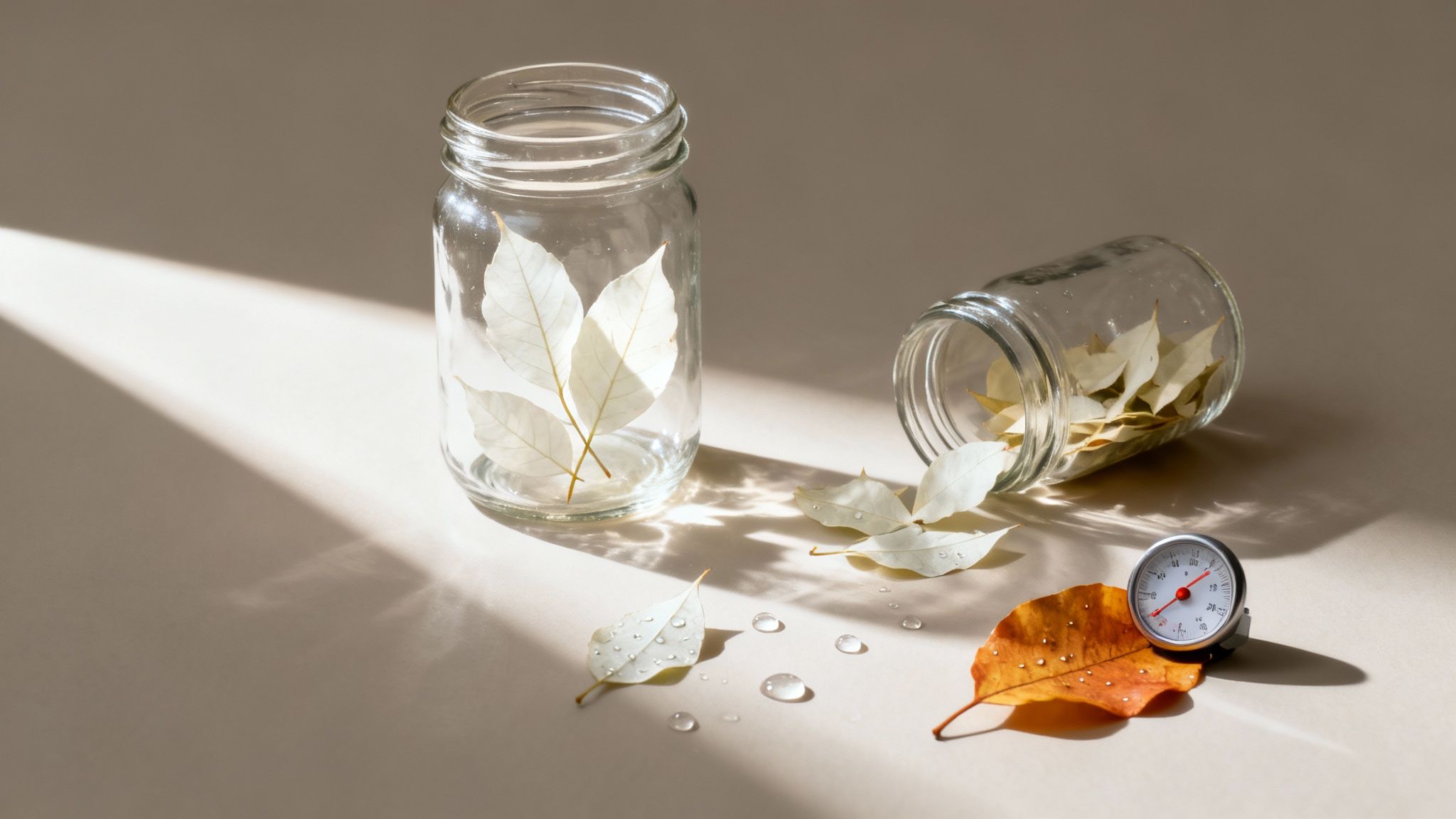
Light's Fading Effect
Direct sunlight is tea’s nemesis. Even strong artificial light can do a lot of damage. The UV rays kickstart a process called photodegradation, which breaks down the very compounds that give tea its complex, captivating flavour profile.
In just a few weeks, this can turn a bright, aromatic green tea into something dull and disappointing. It’s precisely why storing your tea in a clear glass jar on the kitchen counter is one of the most common mistakes we see.
Oxygen's Staling Power
Oxygen is another relentless enemy. When tea leaves are exposed to air, they begin to oxidise. While oxidation is a crucial, controlled step in making black and oolong teas, uncontrolled and prolonged exposure just makes your tea stale.
An airtight seal is completely non-negotiable for keeping tea fresh.
A great tip is to minimise the "headspace," or the amount of empty air, in your container. If you buy in bulk, try decanting a smaller amount into a caddy for daily use and keeping the rest sealed up tight. This limits how often the bulk of your tea is exposed to fresh oxygen.
Moisture and Odour Invasion
Tea leaves are hygroscopic, meaning they're brilliant at absorbing moisture and odours from the air around them. Think of them as little natural sponges.
Storing your tea near a steaming kettle, a cooker, or in a damp cupboard is asking for trouble. It introduces moisture that can lead to mould and a nasty, musty taste. It’s also why you should never store tea next to strong-smelling things like coffee or spices—your delicate Darjeeling will start tasting like your Bombay Chai before you know it.
Heat's Degrading Touch
Finally, heat acts as an accelerator for all these negative reactions. Warm temperatures speed up oxidation and cause the wonderful, volatile aromatic oils in the tea leaves to evaporate.
A cool, stable environment is vital. Think of a pantry or a cupboard well away from the oven, radiator, or any other heat source. Storing your tea anywhere above 21°C (70°F) will dramatically shorten its lifespan, robbing it of the very character that makes it so special.
To make it easier to remember, here's a quick rundown of the main threats and how to combat them.
Tea's Enemies at a Glance
| Threat | Impact on Tea | Ideal Storage Condition |
|---|---|---|
| Light | Causes photodegradation, making flavour dull and flat. | An opaque, light-proof container in a dark cupboard. |
| Oxygen | Leads to oxidation, creating a stale, lifeless taste. | A truly airtight container with minimal empty space. |
| Moisture | Can cause mould and a musty, unpleasant taste. | A dry location away from kettles, cookers, and sinks. |
| Heat | Speeds up degradation and evaporates aromatic oils. | A cool, stable spot below 21°C (70°F). |
By keeping these four enemies at bay, you ensure that the time, care, and craftsmanship that went into producing your tea are preserved right up until the moment you brew.
Choosing the Right Tea Storage Containers
Now that we know what we’re up against, picking the right vessel for your tea becomes a lot easier. Your container is the first line of defence against the elements, and when it comes to storage for tea, not all materials are up to the job. It really can make or break the flavour of your favourite blend.
Think of it like this: you wouldn't wear a flimsy raincoat in a downpour. The same logic applies here. Storing a delicate silver needle tea in a container that lets in light and air is a recipe for disappointment.
Materials That Matter
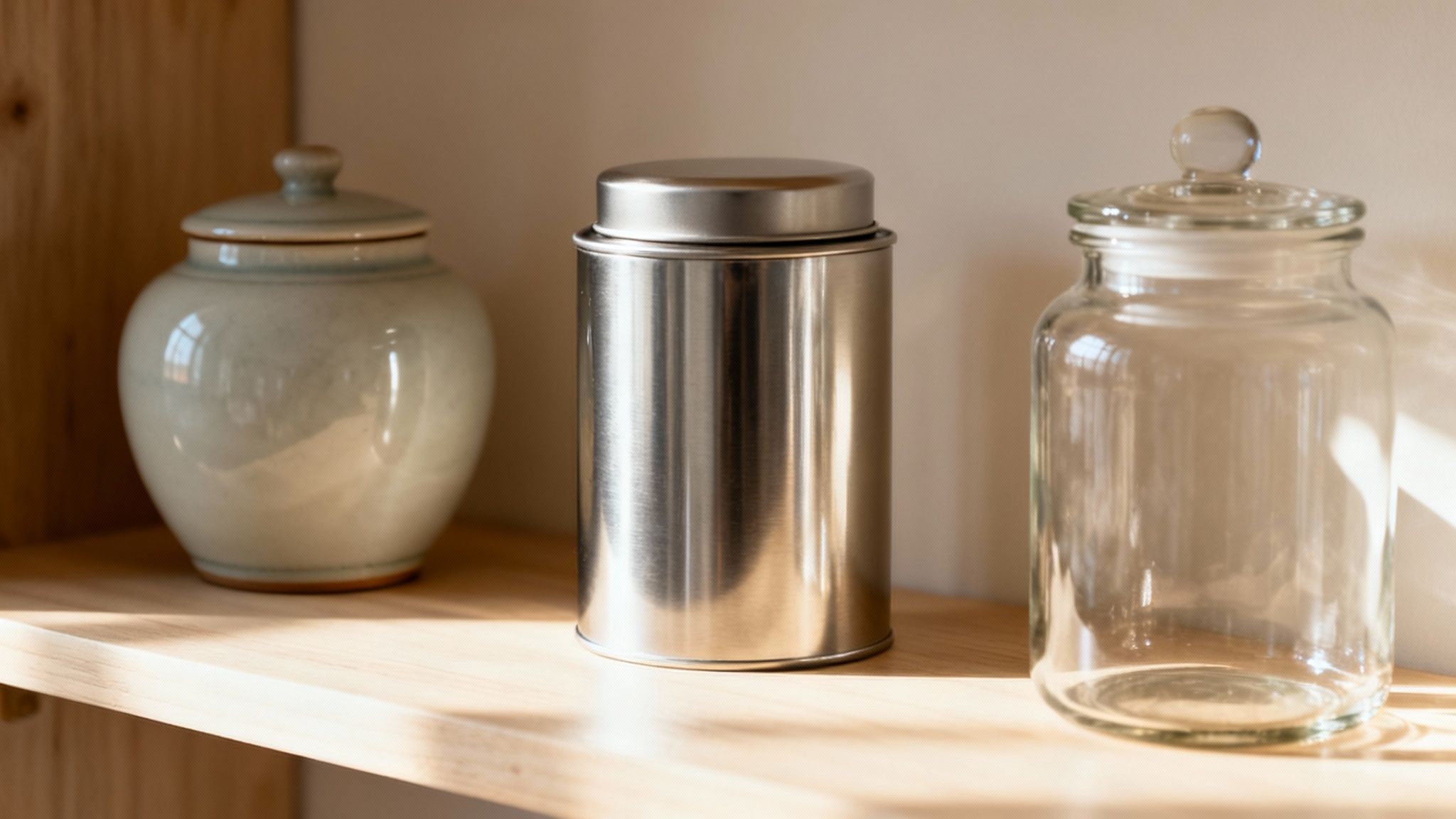
The material your container is made from is probably the single most important factor. Each one offers a different level of protection.
- Stainless Steel or Tin: These are the undisputed champions of tea storage. They’re completely opaque, so they block out every bit of harmful light. They’re also non-porous, which means they won’t hang onto old aromas or impart new ones, keeping your tea’s flavour profile exactly as it should be.
- Ceramic: A well-made ceramic jar with a proper lid can be a fantastic choice. The crucial detail here is that lid – it absolutely must have a silicone or rubber gasket to create a truly airtight seal. Without one, it’s little more than a pretty ornament.
- Opaque or Coloured Glass: While we’d steer you away from clear glass, dark amber or cobalt glass jars can work, provided they live inside a dark cupboard. They offer some light protection, but they’re not as foolproof as solid materials. And, you guessed it, a quality airtight seal is non-negotiable.
Here in the UK, using metal tins for tea is a tradition that goes all the way back to the 17th century, when tea was a precious commodity. These early caddies were designed to protect the expensive leaves, and by the mid-18th century, decorative tins were a fixture in homes, a real symbol of tea's cultural significance.
The Problem with Clear Glass and Plastic
It’s so tempting to show off your beautiful loose-leaf teas in clear glass jars, but it’s one of the quickest ways to ruin them. Constant exposure to light will zap the flavour in just a few weeks. A pretty jar might be fine for something you’ll use up quickly, like this square glass storage jar, but it’s not for long-term keeping.
Plastic containers are also best avoided. Many plastics are notorious for absorbing and then leaching odours, which can permanently contaminate your tea. What’s more, many aren't truly airtight, allowing for that slow, creeping oxidation.
Your container's seal is just as crucial as its material. Test the seal by closing the empty container and holding it underwater. If you see any air bubbles escape, it’s not airtight enough for your tea.
Size and Seal: A Perfect Fit
The perfect container is one that your tea almost completely fills. Why does this matter? Any extra room, or "headspace," is filled with oxygen. The less empty space you have, the less oxygen there is to turn your tea stale.
This is where buying in bulk can get a bit tricky. A great approach is to store the main stash in a large, well-sealed bag or container, tucked away in a dark cupboard. Then, decant a smaller amount for your daily or weekly brews into a smaller caddy. This keeps the bulk of your tea from being exposed to fresh air every time you want a cup, preserving its freshness for much, much longer.
How to Store Different Types of Tea
It’s a simple truth in the world of tea: not all leaves are created equal. Just as their flavours and aromas vary wildly, so do their storage needs. A hardy, robust black tea can put up with a lot more than a delicate, whisper-light Japanese green tea. If you want to get the best out of every single cup, learning to tailor your storage to the specific tea is an absolute must.
It all starts with knowing what you’re working with. Before you can master storage, you have to appreciate the fundamental differences between the various tea families. For a deeper dive, this guide to different tea types and flavours is a great resource. This knowledge is what helps you understand why some teas demand a little extra TLC.
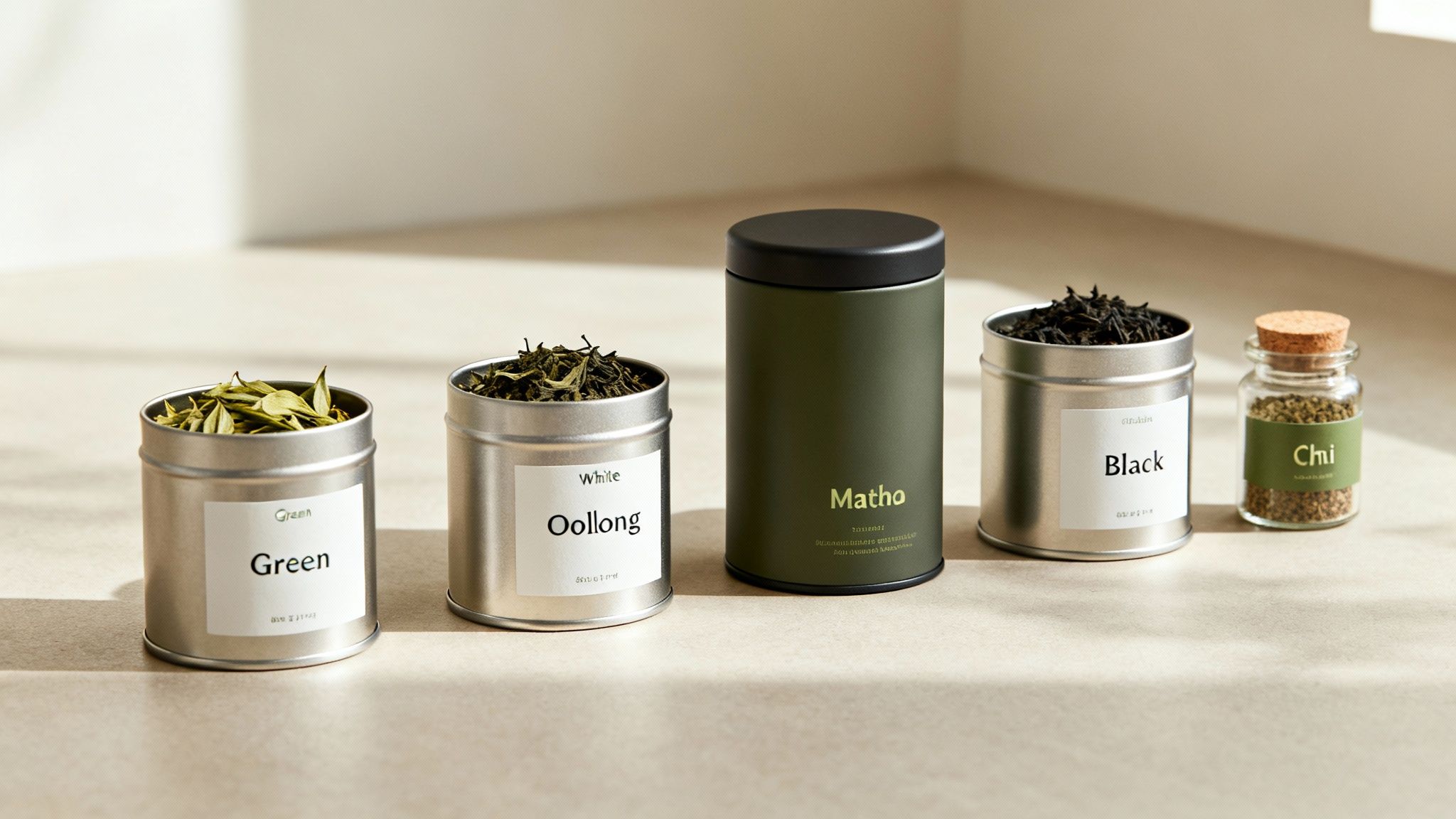
Delicate Green and White Teas
Think of green and white teas as the most fragile members of the family. Because they are unoxidised (or just barely), they are incredibly sensitive to heat and light. These elements are the enemy, quickly zapping their subtle, grassy notes and leaving you with a brew that’s just dull and bitter.
For these teas, you really can’t afford to be careless.
- Go Opaque and Airtight: This is non-negotiable. A high-quality stainless steel or tin caddy is your best bet for blocking out every bit of light and air.
- Location, Location, Location: Find the coolest, darkest spot in your home. A low kitchen cupboard, well away from the oven or hob, is perfect.
- Fresh is Best: These teas lose their vibrancy faster than any other type. It’s far better to buy small amounts frequently than to let a large, expensive bag go stale in the cupboard.
Sturdy Black and Oolong Teas
On the other end of the spectrum, you have black and oolong teas. They’re a much more forgiving bunch. The oxidation process they go through makes them far more stable and less prone to going off quickly. This doesn't mean you can leave them in a paper bag on the counter, but they can certainly handle minor environmental shifts better than their greener cousins.
An airtight container is still crucial to fend off moisture and any stray odours from your spice rack, but they aren't nearly as fussy about a bit of light or a slight change in temperature. A good ceramic jar with a silicone seal or a classic tea tin will keep them tasting great for 1-2 years. You can explore the main types of tea in more detail over in our dedicated guide.
Aromatic and Scented Blends
Now, what about teas like a classic Earl Grey, with its distinctive bergamot oil, or a fragrant jasmine green? These aromatic blends throw a whole new challenge into the mix. Their powerful scents can easily escape and, even worse, cross-contaminate your other, more subtle teas.
When it comes to scented teas, the rule is simple: put them in quarantine. Always store these teas in their own dedicated, airtight containers, far away from your single-origin treasures. It’s the only way to prevent flavour "bleeding."
Remember, the volatile oils that create these beautiful aromas will vanish into thin air if not sealed properly. A tight-fitting lid is essential for keeping that gorgeous bergamot or jasmine scent locked in until you’re ready to brew.
Special Cases: Matcha and Chai
Finally, we have the outliers—powdered teas and spiced blends, which need their own specific game plan.
Matcha: As a finely ground powder, matcha has a massive surface area. This makes it incredibly vulnerable to its enemies: light, air, and humidity. Once you open a tin, the clock starts ticking. You should aim to use it up within 2-3 months for the best flavour. Always store it in its original small, airtight tin and keep it somewhere cool and dark. Some enthusiasts refrigerate it, but if you do, be sure to let the tin come back to room temperature before opening it to avoid condensation.
Chai: A blend like our Spiced Bombay Chai is a mix of tea and a whole host of aromatic spices. To keep those spices punchy and vibrant, an airtight container is absolutely paramount. The whole point is to lock in those wonderful volatile oils from the cinnamon, cardamom, and cloves that can so easily fade away.
For a quick reference, we've put together a simple cheat sheet to help you keep track of the essentials for each tea type.
Tea Type Storage Cheat Sheet
| Tea Type | Key Storage Priority | Typical Shelf Life (Properly Stored) |
|---|---|---|
| Green & White Tea | Darkness & Coolness | 6-12 months |
| Black & Oolong Tea | Airtight Seal (Less Light Sensitive) | 1-2 years |
| Scented & Aromatic Tea | Isolated Airtight Container | 12-18 months |
| Pu-erh Tea | Breathable Container (for ageing) | Years, even decades |
| Matcha | Airtight, Cool, & Dark (Use Quickly) | 2-3 months after opening |
| Spiced Chai | Airtight Seal (to preserve spice oils) | 12-18 months |
This table should give you a good at-a-glance guide, but always trust your nose. If a tea has lost its aroma, it has likely lost most of its flavour too.
The UK Shift from Tea Caddies to Teabags
The way we store tea in the UK tells a rich story about our long-running love affair with a good brew. For centuries, the tea caddy was a fixture in British homes—an ornate, often lockable chest designed to protect what was then an incredibly expensive commodity.
These caddies weren't just for show; they were a status symbol and a fortress, guarding precious loose leaves from light, moisture, and even a few wandering hands.
But then came the teabag, and everything changed. The sheer ease of a pre-measured portion completely captured the nation's imagination. What was once a formal ritual became a quick, comforting daily habit. The humble cardboard box, built for convenience rather than preservation, took over the kitchen cupboard.
The Rise of Convenience
This shift toward teabags completely reshaped how we thought about storage. The priority moved from protecting a valuable asset to simply keeping the pantry tidy. It was a revolution in how we drink tea.
Today, an estimated 96% of tea drunk in the UK comes from teabags, with a much smaller number of us reaching for loose-leaf. You can see just how much our tea kit has evolved over on the UK Tea & Infusions Association website.
Of course, this convenience comes at a cost to flavour. Standard teabag packaging does very little to protect against the four enemies of freshness: air, light, moisture, and heat. That’s why even if you're a devoted teabag drinker, popping them into a proper airtight container makes a world of difference. It's also worth thinking about the environmental side of things; thankfully, many modern teabags are much greener now, which you can learn about in our guide to compostable tea bags.
The legacy of the tea caddy is still very much alive, especially in the world of speciality tea. You’ll find that premium, artisan blends are almost always sold in metal tins—a nod to a tradition that truly understands how vital it is to protect delicate aromas and flavours.
Ultimately, looking back at this history highlights one crucial point. Whether you’re a lifelong teabag user or a loose-leaf connoisseur, the rules of good storage are exactly the same. Protecting your tea is all about respecting the incredible journey it has taken to get to your cup, ensuring every brew is as fresh and flavourful as it was meant to be.
Organising Your Tea Collection for Freshness
Finding the perfect container is a great start, but getting your collection organised is what really takes your tea game to the next level. This isn't just about making your cupboard look neat; it’s about making sure that every cup you brew is as fresh and flavourful as it can possibly be.
A little bit of organisation turns the chore of storage into a simple pleasure. You’re creating a system that makes grabbing your daily brew an easy, joyful moment, rather than a rummage through a pile of mystery tins.
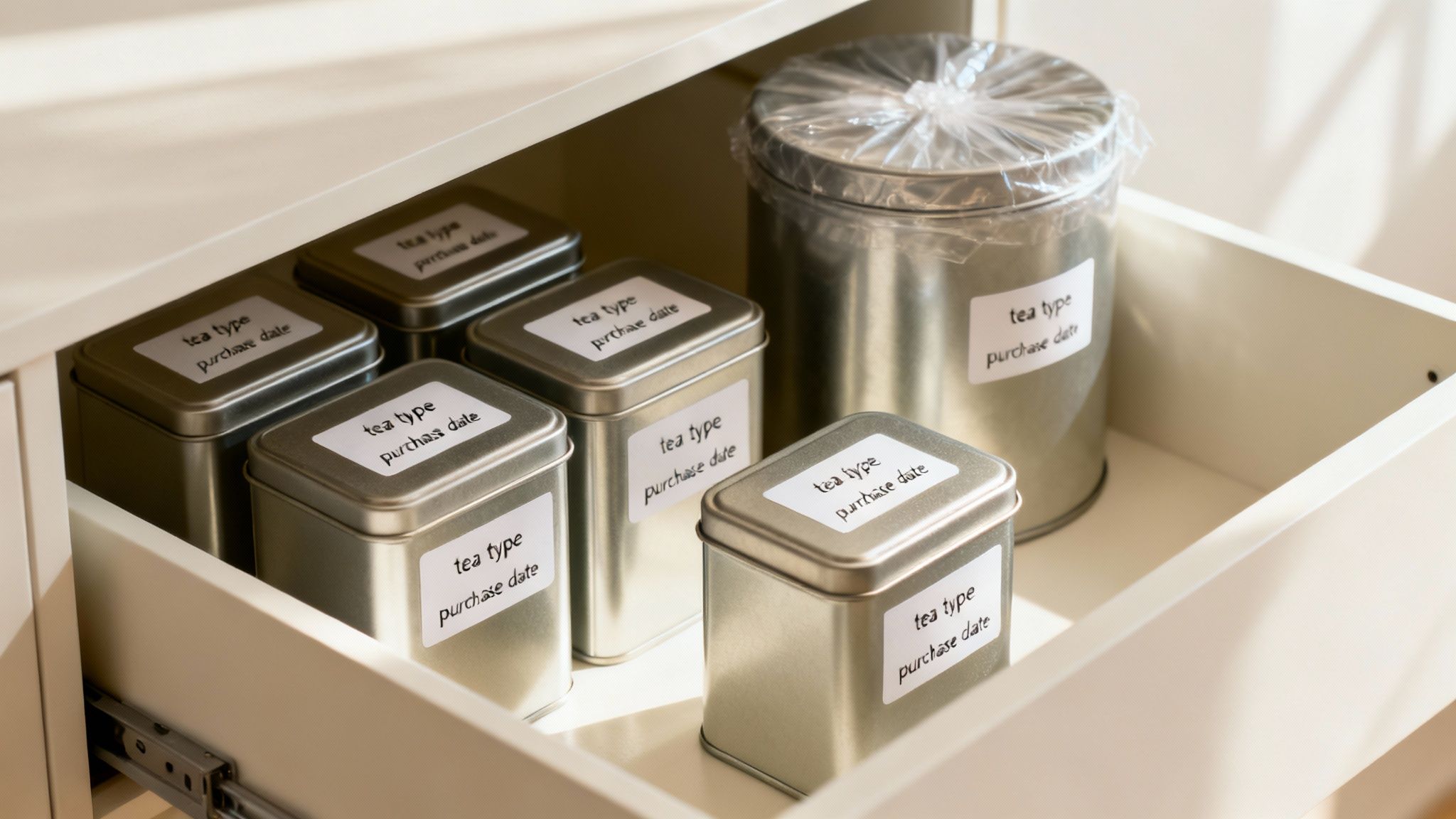
Smart Labelling and Dating
Honestly, the most useful tool you have is a simple label. Without one, that beautiful tin is just a lucky dip. To do it properly, your labels need two key bits of information:
- Tea Type: Be specific! "Jasmine Pearls" or "Assam Breakfast" is much more helpful than just "Green Tea."
- Purchase Date: This is your secret weapon for tracking freshness.
Jotting these down takes seconds but saves you from the guesswork later. You’ll know exactly what you’re reaching for and how long it’s been on the shelf.
The First In, First Out Method
To stop your tea from going stale, try the "First In, First Out" (or FIFO) principle. It's a dead-simple rotation system used in professional kitchens everywhere. When you get a new bag of a tea you already have, just put the new stuff at the back and bring the older tin to the front.
This little habit ensures you’re always using up the oldest tea first, cutting down on waste and making sure every brew is a fresh one. It’s not just about what you store, but how you store it. Looking into effective preservation and space-saving storage methods used for other precious items can give you some great ideas for your tea.
A dedicated tea drawer or a particular shelf in your pantry works wonders. Keeping all your teas together lets you see your whole collection at a glance, making it easy to rotate your stock and see what’s running low.
Managing Bulk Tea Purchases
Buying in bulk is a smart way to save money, but opening and closing a big bag over and over again lets in air and light, which are the enemies of good tea. The fix is a simple two-container system.
Keep the bulk of your tea in a large, tightly sealed container, tucked away in a dark cupboard. Then, just pour a week’s worth into a smaller, daily-use caddy that can sit on your counter. This "working tin" is handy, while the main stash stays perfectly preserved. It’s a small step that makes a huge difference to the life and flavour of your tea.
A Few Common Tea Storage Questions
Even after you've found the perfect tins and a cool, dark cupboard, a few nagging questions often remain. That’s perfectly normal. Let's run through some of the queries we get all the time, clearing up the myths so you can keep your tea tasting its absolute best.
The big one: should you ever put tea in the fridge or freezer? The simple answer is almost always a firm no. While it might seem like a good idea to keep things extra fresh, the risk of condensation is just too high. Every time you pull the container out of the cold, moisture forms on the leaves, leading to mould and a dreadful musty flavour.
The only time you might consider it is for a large, unopened, completely vacuum-sealed bag of a very delicate green tea or matcha. But once you break that seal, it should never go back in.
How Can You Tell If Tea Has Gone Off?
So, how do you spot a tea that’s past its prime? Your senses are your most reliable tools here.
When you open the tin, you should be greeted by a lovely, distinct aroma. If you have to practically stick your nose inside just to catch a faint, dusty scent, it’s a sure sign its best days are over.
Have a look at the leaves, too. A vibrant green tea that’s faded to a dull brown, or a black tea that looks washed out and grey, has likely oxidised and lost its character. The final verdict, of course, is in the taste. If your brew is flat, weak, and just plain lifeless, it’s time for a restock.
Shelf Life and Storing Flavoured Teas
We’re often asked how long tea actually lasts. If you’ve followed our tips on proper storage for tea, a good quality loose-leaf black tea will easily stay brilliant for 1-2 years. The more delicate green and white teas have a shorter lifespan, usually around 6-12 months, before their nuanced flavours start to fade.
What about storing different teas together? This is a definite no-go. Never, ever store a powerfully aromatic tea like a smoky Lapsang Souchong or a bergamot-heavy Earl Grey next to your delicate single-origin teas. Those strong scents will absolutely "bleed" into their neighbours, tainting their flavour. Scented and flavoured teas always need their own dedicated, airtight homes.
By keeping these simple pointers in mind, you can troubleshoot any issues and make sure every cup from your collection is a truly delightful one, right down to the very last leaf.
Ready to give your tea the home it deserves? Explore the full collection of exquisite, ethically sourced teas from Jeeves & Jericho and find the perfect airtight storage solutions to match. Visit https://www.jeevesandjericho.com to shop now.