


The good news is that finding plastic-free tea bags in the UK is easier than ever. Most major brands and supermarkets are now ditching traditional plastic sealants in favour of plant-based materials like PLA (polylactic acid). This means you can finally enjoy your daily brew without worrying about microplastic pollution, as long as you pop the bag in the right bin afterwards.
Your Guide to a Truly Plastic-Free Cuppa
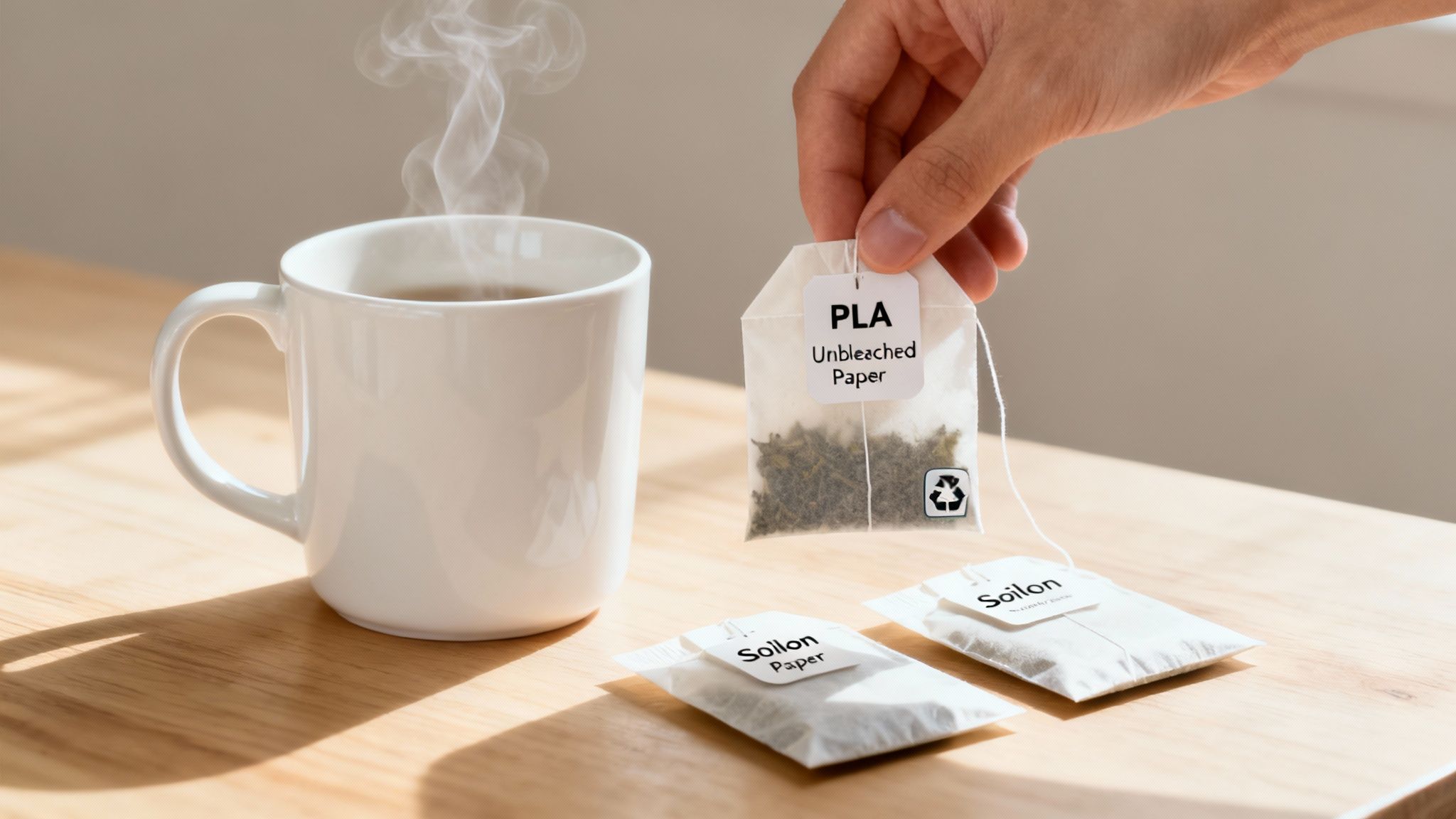
That comforting cup of tea is a cornerstone of British life, a simple ritual we turn to billions of times a year. But what if this daily pleasure came with a hidden, unwelcome ingredient? For decades, many of our tea bags were sealed with a type of plastic called polypropylene—a detail that’s only recently started making headlines.
This isn’t just some distant environmental problem. When you dunk a tea bag sealed with plastic into hot water, it can shed millions of microscopic plastic particles straight into your mug. This guide is here to help you sidestep that, making your tea break both relaxing and genuinely sustainable.
Why This Matters in the UK
The sheer scale of our tea habit here is staggering. As a nation, we get through an estimated 60 billion cups annually, and about 96% of those are made with tea bags. For years, the plastic sealants in these bags were quietly contributing to microplastic pollution, turning a beloved national pastime into an environmental headache.
Thankfully, people started asking questions. The growing demand for better options has pushed the industry to change its ways. Many brands have now made the switch to genuinely plastic-free materials, giving you the power to make a difference every time you do the weekly shop. Knowing what to look for is the first step.
Key Materials to Know
When you’re on the hunt for plastic-free tea bags in the UK, you'll start noticing a few key terms on the packaging. Getting to grips with these will help you choose with confidence.
To make it a bit easier, here’s a quick rundown of what you’re likely to find on the supermarket shelves.
Quick Guide to Plastic-Free Tea Bag Materials
| Material | Plastic Content | Compostability | Commonly Used For |
|---|---|---|---|
| PLA (Polylactic Acid) | None. Made from corn starch. | Industrially Compostable (food waste bin) | Sealing paper tea bags, pyramid bags |
| Soilon | None. Also corn starch-based. | Industrially Compostable (food waste bin) | Premium pyramid-style tea bags |
| Paper & Cotton Thread | None. | Home Compostable (your garden compost) | Fold-and-stitch style bags |
| Polypropylene (PP) | Yes. A fossil fuel-based plastic. | Not compostable. | The old-style bags to avoid |
As you can see, the main players in the plastic-free game are PLA and Soilon.
-
PLA (Polylactic Acid): This is the most common plastic alternative you’ll come across. It’s derived from plant sources like corn starch and is often called a 'bioplastic'. These bags are designed for industrial composting, so they need to go in your food waste or garden waste bin provided by the council, not your home compost heap.
-
Soilon: Very similar to PLA, Soilon is another plant-based material often used for those fancy pyramid-style tea bags that give the leaves more room to unfurl. Just like PLA, it’s commercially compostable.
-
Paper, Cotton, and Stitches: Some brands sidestep heat-sealing altogether. They simply use unbleached paper, neatly folded and stitched with a strand of organic cotton thread. These are brilliant because they can go straight into your home compost bin.
Once you can recognise these materials, you can instantly tell if a box of tea lines up with your plastic-free goals. And while you're at it, why not think about the cup you're drinking from? If you’re looking to go all-in, there are some great sustainable tea cup options out there to complete your truly guilt-free brew.
The Hidden Plastic in Your Daily Brew
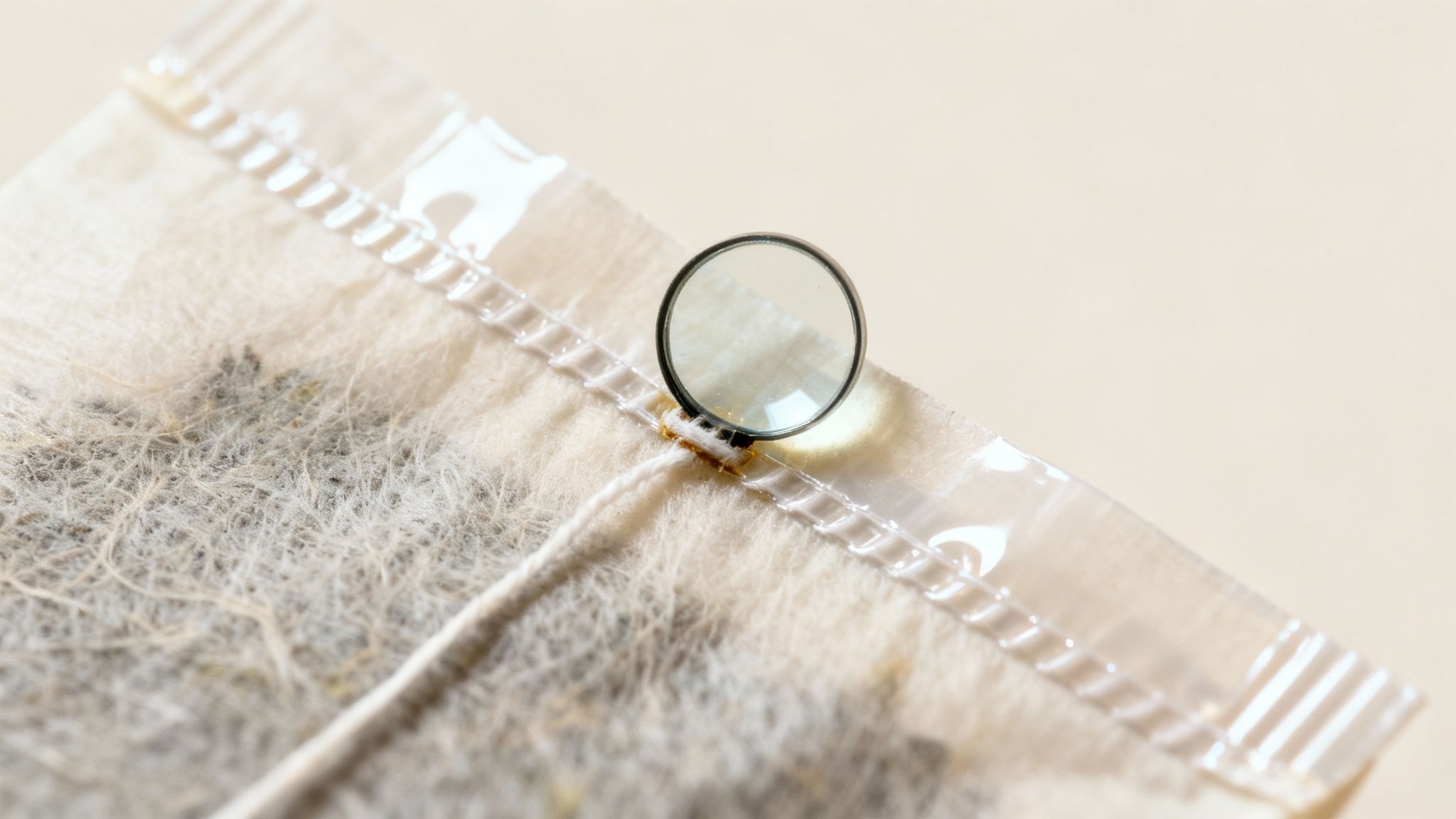
Putting the kettle on is a comforting ritual loved across the UK. For years, we’ve obsessed over the perfect tea leaves, the right water temperature, and that ideal brewing time. But most of us have completely missed a crucial detail about the humble tea bag: the very thing holding it all together.
Think about how a normal tea bag is made. To get that neat, strong seal that can survive a dunk in boiling water, manufacturers have long relied on a plastic called polypropylene. It acts like a heat-activated glue, quickly and efficiently melting the edges of the paper bag together on a massive production line.
This tiny bit of plastic, which can make up as much as 25% of some tea bags, has gone unnoticed by most of us. It’s a choice made for manufacturing ease, but it carries a hefty, unseen cost for both our health and the environment. The problem isn’t just about where the bag ends up after your brew; it starts the second you add hot water.
From Your Mug to the Environment
When you pour boiling water over a tea bag sealed with polypropylene, something quite alarming happens. The heat causes the plastic sealant to break down, releasing billions of microscopic plastic particles straight into your drink. We're not talking about a small amount, either. Research has shown that a single plastic tea bag steeped at 95°C can shed a shocking number of these fragments.
These particles come in two main sizes:
- Microplastics: Tiny bits of plastic measuring less than 5 millimetres.
- Nanoplastics: Even smaller, invisible-to-the-naked-eye fragments measuring less than 100 nanometres.
To put that into context, the amount of plastic found in one cuppa made with a plastic-sealed bag can be thousands of times greater than what’s found in other contaminated sources, like table salt. You are, quite literally, drinking a brew infused with plastic.
"Steeping a single plastic tea bag at brewing temperature (95 °C) releases approximately 11.6 billion microplastics and 3.1 billion smaller nanoplastics into a single cup."
This discovery has completely changed the conversation. The issue with plastic in tea bags is no longer just about what ends up in our compost or landfill. It’s about what we are consuming with every single sip, making the search for plastic free tea bags uk a matter of personal well-being as well as environmental concern.
A Journey Through Our Bodies and Waterways
Once those microplastics are in your cup, their journey is far from over. Studies have found that common tea bags made from nylon and PET release millions of tiny plastic particles into hot water, which we then swallow. These particles are so minuscule they can pass through human intestinal cells and enter the bloodstream, with potential long-term health risks that are still not fully understood. You can read more about these startling plastic tea bag findings and their implications.
This turns a simple daily pleasure into a direct delivery system for microplastic ingestion. And when you think about the billions of cups of tea we drink in the UK every year, the scale of the issue is immense.
After you've finished, any remaining particles are washed down the drain and into our water systems. They're far too small for standard wastewater treatment plants to filter out, so they flow into our rivers and, eventually, our oceans. There, they join the ever-growing global problem of microplastic pollution, accumulating in marine life and finding their way back into the human food chain. It’s a cycle where the hidden plastic from our tea break contributes to a much larger environmental crisis, impacting ecosystems far from our kitchens.
A Closer Look at Sustainable Tea Bag Materials
Trying to navigate the world of sustainable tea can feel a bit like learning a new language. You see terms like 'bioplastic' and 'PLA' on the packaging and it’s easy to feel a little lost. But don't worry, it's simpler than it sounds. Think of this as your quick guide to decoding the labels and confidently picking the good stuff.
The move away from old-school, plastic-sealed bags has led to some really clever innovations. Tea brands are now using plant-based alternatives to hold those precious leaves, ensuring nothing nasty leaches into your cup or the planet. Let’s get to know the main players you’ll find on the shelves here in the UK.
PLA: The Plant-Based Hero
One of the most common materials you'll spot is Polylactic Acid, or PLA. Now, the term 'bioplastic' can be a bit confusing, but this isn't the fossil-fuel plastic we’re all trying to avoid. PLA actually comes from renewable plant sources like corn starch or sugar cane.
It’s a neat bit of science. They take the natural starches from corn and spin them into a fine, mesh-like fibre. This can then be used to seal paper tea bags or woven into those silky pyramid bags that give whole leaves plenty of room to brew. It's a fantastic switch from the old polypropylene sealant because it starts its life on a farm, not in an oil field.
There is one important detail to keep in mind with PLA, though. It's a bit particular about how it breaks down.
PLA is designed for industrial composting. This means it needs the consistently high temperatures of a council food waste facility to properly decompose. It's not going to disappear in your garden compost heap.
This is exactly why you’ll see "industrially compostable" on the box. It’s a simple instruction: pop your used tea bag into the food waste caddy, not the garden bin. For anyone searching for plastic free tea bags uk, knowing this little detail is the key to making a properly sustainable choice.
Soilon: Another Corn Starch Champion
You might also come across the name Soilon, which is very similar to PLA. It’s another material spun from corn starch, and you'll often find it used for those premium, pyramid-style tea bags. It works in pretty much the same way as PLA, giving you a strong, plant-based mesh that’s ideal for holding high-quality whole leaf teas.
Just like its cousin, Soilon is also commercially compostable. It needs the heat and microbial action of an industrial facility to break down into organic matter. So, the rule is the same here—when you're done, it belongs in your council-collected food waste.
The Good Old Paper and Stitch Method
Of course, for those who prefer to keep things as simple and traditional as possible, some brands have dodged plant-based plastics entirely. This method is wonderfully straightforward and has been used for years by pioneers in the organic tea world.
- Unbleached Paper: The bag itself is made from natural wood pulp or abaca (a fibre from a type of banana plant), without using any chlorine bleach.
- Organic Cotton Thread: Instead of a heat-sealed edge, the bag is simply folded and stitched closed with a single strand of organic cotton.
- No Glues or Staples: This technique avoids any synthetic glues or metal staples, keeping the whole thing natural and ready for the compost heap.
The real beauty of this design is what happens after you’ve enjoyed your brew. Because every single part of it is natural, these tea bags are home compostable. You can throw them straight onto your garden compost pile with your veg peelings, and they'll break down beautifully. It doesn't get much more straightforward than that.
So there you have it. By getting to know these three materials—PLA, Soilon, and stitched paper—you're ready to read tea packaging like a pro. You can now tell the difference between bags that need to go to the council and those you can compost at home, making sure your daily cuppa is as good for the planet as it is for you.
How to Choose Plastic-Free Tea Bags in the UK
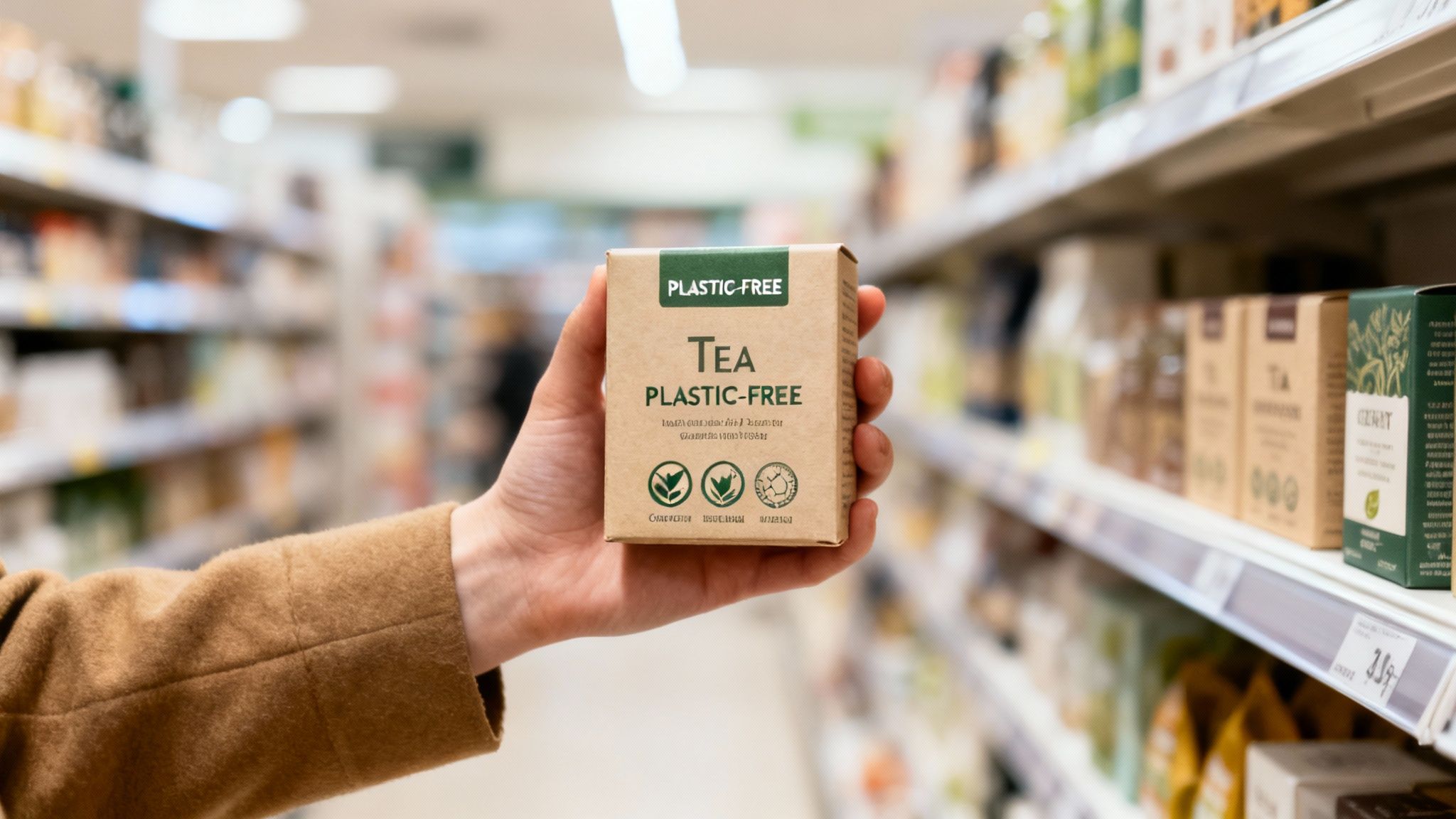
Alright, you've got the lowdown on the different materials. Now, it's time to put that knowledge to work in the supermarket aisle.
Turning your good intentions into a genuinely plastic-free purchase is all about knowing where to look. Think of yourself as a tea detective. Your mission? To ignore the flashy marketing on the front and uncover the real clues on the back of the box. These details reveal what a tea bag is truly made of and, crucially, how to get rid of it responsibly.
It's actually much easier than it sounds once you know the tell-tale signs.
What to Look for on the Packaging
When you've got a box of tea in your hand, flip it over. Brands that have gone to the trouble of ditching plastic are usually quite proud of it and will make the information easy to find. Just be wary of vague, fuzzy terms like "eco-friendly" or "natural," which don't really mean anything. You're looking for specifics.
Here are the key things to hunt for on the label:
- Honest Materials: Look for clear phrases like "plant-based tea bags," "made from PLA," or "bioplastic." These are solid clues that the brand has moved away from old-school, oil-based plastics.
- Official Logos: Keep an eye out for proper certification marks. The "Seedling" logo, for example, is a common one that confirms the tea bags meet the EN 13432 standard for industrial composting.
- Clear Instructions: The packaging should tell you exactly what to do. If it says "dispose of in your food waste bin," you can be confident it's made from something like PLA or Soilon. If you spot "home compostable," you've likely found a simple paper-and-stitch bag.
These quick checks will help you instantly separate the genuinely sustainable teas from those hiding behind greenwashing.
Navigating UK Supermarket Brands
The brilliant news for UK tea lovers is that most major supermarkets have listened to what we want. In the last few years, there’s been a massive shift, and finding affordable, plastic-free tea bags is no longer a challenge. Many have switched their entire own-brand ranges to plant-based bags that are industrially compostable.
Choosing a sustainable cuppa shouldn't feel like hard work. Thanks to the big UK supermarkets, a plastic-free brew is now the norm in many stores, making it simple for millions of us to do our bit with every shop.
To help you out, we’ve put together a quick snapshot of where the major UK supermarkets stand with their own-brand tea bags.
UK Supermarket Own-Brand Tea Bag Status
This table provides a quick comparison to help you make an informed choice next time you're doing the weekly shop.
| Supermarket | Own-Brand Tea Bag Status | Material Used | Key Information |
|---|---|---|---|
| Tesco | Mostly Plastic-Free | PLA (Plant-Based) | Place in your food waste bin for industrial composting. |
| Sainsbury's | Plastic-Free | PLA (Plant-Based) | Suitable for your local council's food waste collection. |
| Asda | Plastic-Free | PLA (Plant-Based) | Designed for industrial composting via your food caddy. |
| Aldi | Plastic-Free | PLA (Plant-Based) | Dispose of in your food waste bin for proper breakdown. |
| Co-op | Plastic-Free (99 Tea) | PLA (Plant-Based) | Their standard tea bags go in the food waste collection. |
| M&S | Plastic-Free | PLA (Plant-Based) | Pop them in the food waste caddy for council collection. |
As you can see, the widespread move to PLA means your used tea bags should go straight into your council-provided food waste caddy. From there, they head to an industrial composting facility where the high temperatures get to work breaking them down properly. If you want to get into the nitty-gritty of how this works, our guide on why compostable tea bags are such a great sustainable option is the perfect next read.
By keeping these packaging clues and supermarket brands in mind, you can shop for your next box of tea with complete confidence. That simple, informed choice you make in the aisle is a powerful vote for a cleaner, greener future.
The Real Impact of Your Plastic-Free Choice
Choosing your daily tea might feel like a small, routine decision, but it has a far bigger impact than you might think. When you reach for a plastic-free brew, you're not just picking up another box from the shelf. You're casting a powerful vote for a healthier planet and sending a clear message to the whole tea industry.
Every time you choose plastic-free tea bags in the UK, you’re directly cutting down on the amount of stubborn waste that ends up in landfill. It’s a simple switch in your kitchen, but when millions of us do it, it creates a powerful ripple effect that leads to cleaner soil and healthier waterways.
Your Wallet Is Your Voice
It’s often called ‘voting with your wallet’, and honestly, it’s one of the most effective ways we as consumers can bring about real change. When enough of us start demanding sustainable options, businesses have no choice but to sit up, listen, and adapt. Just look at the UK tea market. A few years back, plastic-free tea was a niche find; now, it’s becoming the standard.
This didn't happen by magic. It was driven by people like you who started asking questions, checking labels, and choosing brands that shared their values. This growing demand pushed companies to innovate, investing in new materials like PLA and completely rethinking their packaging.
The Scale of the Problem and the Power of Change
To really get your head around the impact of this collective shift, just think about the sheer volume of tea we drink here in the UK. We get through a staggering 36 billion cups of tea each year, and almost 96% of that comes from a tea bag. Before the recent move towards plastic-free alternatives, that simple habit was generating an estimated 6.5 million kilograms of plastic waste every single year. Frighteningly, that plastic can take up to 1,000 years to break down. You can read more in this in-depth analysis of the tea industry's plastic problem.
By choosing plastic-free, you become part of a movement that's actively turning this tide. You’re supporting a more circular system where products are designed to be reused or returned safely to the earth, not just thrown away.
Your simple choice to buy a box of plastic-free tea is a direct investment in a more sustainable future. It’s a quiet but powerful statement that you expect better from the brands you support.
This positive change doesn't stop with the tea bags, either. As brands commit to sustainability, they often start looking at their entire operation, which leads to improvements across the board. For more on this, you can explore our guide to sustainable packaging solutions, which digs into how companies are making their products greener from the inside out. Your small choice is a meaningful part of a much larger, positive transformation.
Exploring Sustainable Alternatives to Tea Bags
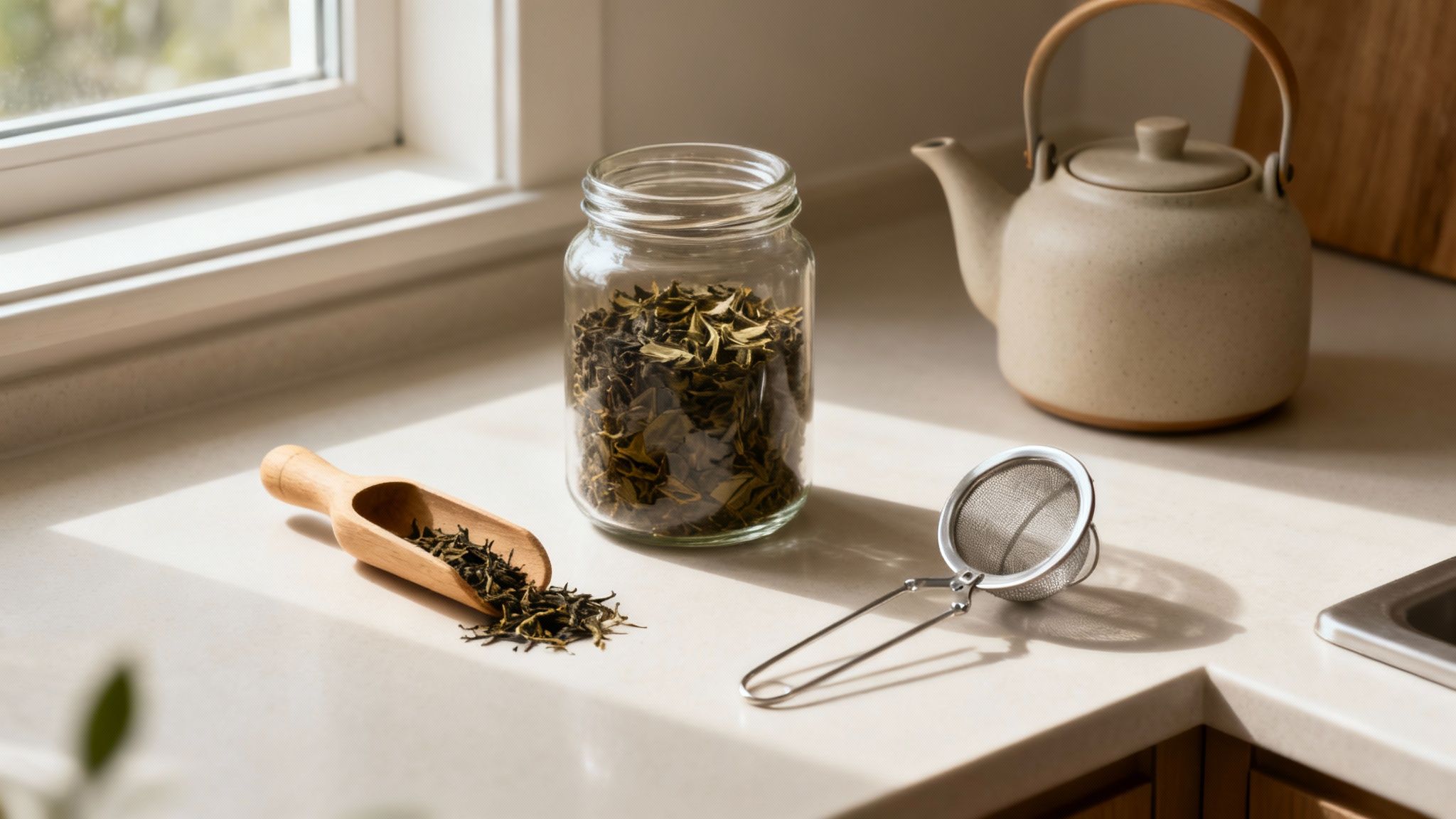
Switching to a plant-based tea bag is a brilliant first step. But if you’re looking to go even further on your sustainable tea journey, a whole world of flavour is waiting for you just beyond the bag.
We’re talking about rediscovering the timeless art of loose-leaf tea. This is the ultimate zero-waste option, and frankly, it offers a far better cuppa. Loose-leaf tea completely sidesteps the need for any kind of bag, glue, or industrial composting. It’s just pure, unadulterated tea leaves, the way they’ve been enjoyed for centuries.
Going bagless doesn’t just cut out waste; it elevates your entire tea ritual. It turns a simple daily habit into a more mindful, hands-on moment of pleasure.
The Unmatched Quality of Loose-Leaf Tea
The biggest, most compelling reason to give loose-leaf a go is the incredible difference in flavour. Tea bags—even the fancy pyramid ones—are often filled with the small, broken bits of tea known as "fannings" or "dust." These tiny particles lose their essential oils quickly, which can lead to a brew that’s more harsh and astringent than nuanced.
Loose-leaf, on the other hand, is all about the whole leaf. When these larger, carefully preserved leaves hit the hot water, they have room to unfurl and properly infuse, releasing their full spectrum of complex aromas and flavours. The result is a cup of tea that’s richer, smoother, and just so much more vibrant.
It’s like listening to music on a tiny radio versus hearing it in full stereo. You suddenly discover a depth and clarity of flavour that pre-packaged bags simply can’t deliver.
And getting started is incredibly simple. All you really need is a way to separate the leaves from the water when it’s done brewing. For more tips on making that perfect cup, you can dive into the art and benefits of loose-leaf tea in our detailed guide.
Your Toolkit for a Perfect Brew
You don't need a cupboard full of complicated gear to embrace the world of loose-leaf tea. A few simple tools are all it takes to master the art of the perfect pot.
Here are a few of the most popular options to get you going:
- Tea Strainer: The classic. It’s a small, fine-mesh sieve you hold over your cup to catch the leaves as you pour from the pot. Simple and effective.
- Ball Infuser: This is a little metal mesh ball, usually on a chain, that you fill with leaves and pop straight into your mug. It’s ideal for making a single serving.
- Basket Infuser: A roomier, basket-shaped infuser that sits right inside your mug or teapot. This gives the leaves loads of space to expand, which is fantastic for flavour.
Choosing loose-leaf is about more than just being eco-friendly; it's an invitation to slow down and truly savour a higher quality experience. You get a real connection to the tea itself, turning a daily habit into a delightful ritual.
A Few Final Questions About Plastic-Free Tea
Making the switch to a more sustainable brew is a brilliant move, but it's only natural to have a few questions before you dive in. Think of this as a quick chat over a cuppa to clear up any last little uncertainties, so you can feel completely happy with your choice.
Let's run through some of the most common things people ask when they start searching for plastic free tea bags uk. From what they're made of to how to get rid of them, getting these details straight makes the whole thing a lot simpler.
Are Bioplastics Like PLA Actually Safe?
This is a big one. The moment we hear 'plastic', even 'bioplastic', alarm bells can start to ring. So, is PLA safe to be steeping in your daily brew? The short answer is yes. It's widely considered safe for food contact and doesn't leach the nasty chemicals associated with old-school, oil-based plastics.
That said, there has been some recent research looking into whether materials like PLA release nanoparticles into hot water. The science is still young and the jury is out on the full implications, but the general view remains that these plant-based plastics are a world away from the polypropylene they replaced. If you’d rather sidestep the question entirely, loose-leaf tea is your perfect, uncomplicated answer.
Home vs. Industrial Composting
This often catches people out, but it's actually pretty straightforward. The real difference is all about heat.
- Home Composting: Your garden compost bin is a wonderful thing, but it just doesn't get hot enough to break down tougher plant-based materials like PLA. It’s a gentle, slow process.
- Industrial Composting: These are the large-scale facilities your local council uses. They are carefully managed to reach and maintain much higher temperatures (often over 60°C), creating the perfect hot-house environment to break down PLA and Soilon properly.
Here's the golden rule: If the packaging says "industrially compostable" or you know the bags are made from PLA, pop them in your council food waste caddy. If it’s certified "home compostable," it can go straight onto your compost heap in the garden.
Tea Bags or Loose-Leaf: Which Is Better?
Honestly, there's no right or wrong answer here. It’s less about one being "good" and the other "bad," and more about what suits you, your routine, and what you want from your cup of tea.
Plastic-free tea bags are all about convenience. They’re a huge step forward environmentally and make it easy for everyone to make a better choice, even on the busiest of mornings.
Loose-leaf tea, on the other hand, is the purist's choice. It’s a completely zero-waste option that often delivers a richer, more nuanced flavour, as the whole leaves have space to dance around and release all their wonderful oils. It encourages you to slow down and turn your tea break into a small ritual. At the end of the day, both are fantastic, sustainable ways to enjoy a proper brew.
At Jeeves & Jericho, we believe a truly exceptional cup of tea should be kind to the planet. That's why our entire collection of premium whole leaf teas is available in both convenient plastic-free pyramid bags and as loose-leaf. Elevate your daily ritual and discover your new favourite brew at https://www.jeevesandjericho.com.