


So, what exactly is ceremonial grade matcha? Put simply, it’s the highest quality green tea powder you can get, the kind traditionally reserved for Japanese tea ceremonies.
This isn't just any green tea. It's crafted from the youngest, most tender tea leaves of the very first harvest of the year. These leaves are then painstakingly stone-ground into an ultra-fine, dazzlingly green powder. Think of it as the finest expression of green tea—a pure, unadulterated experience designed for mindful sipping.
Unveiling The Essence of Ceremonial Grade Matcha
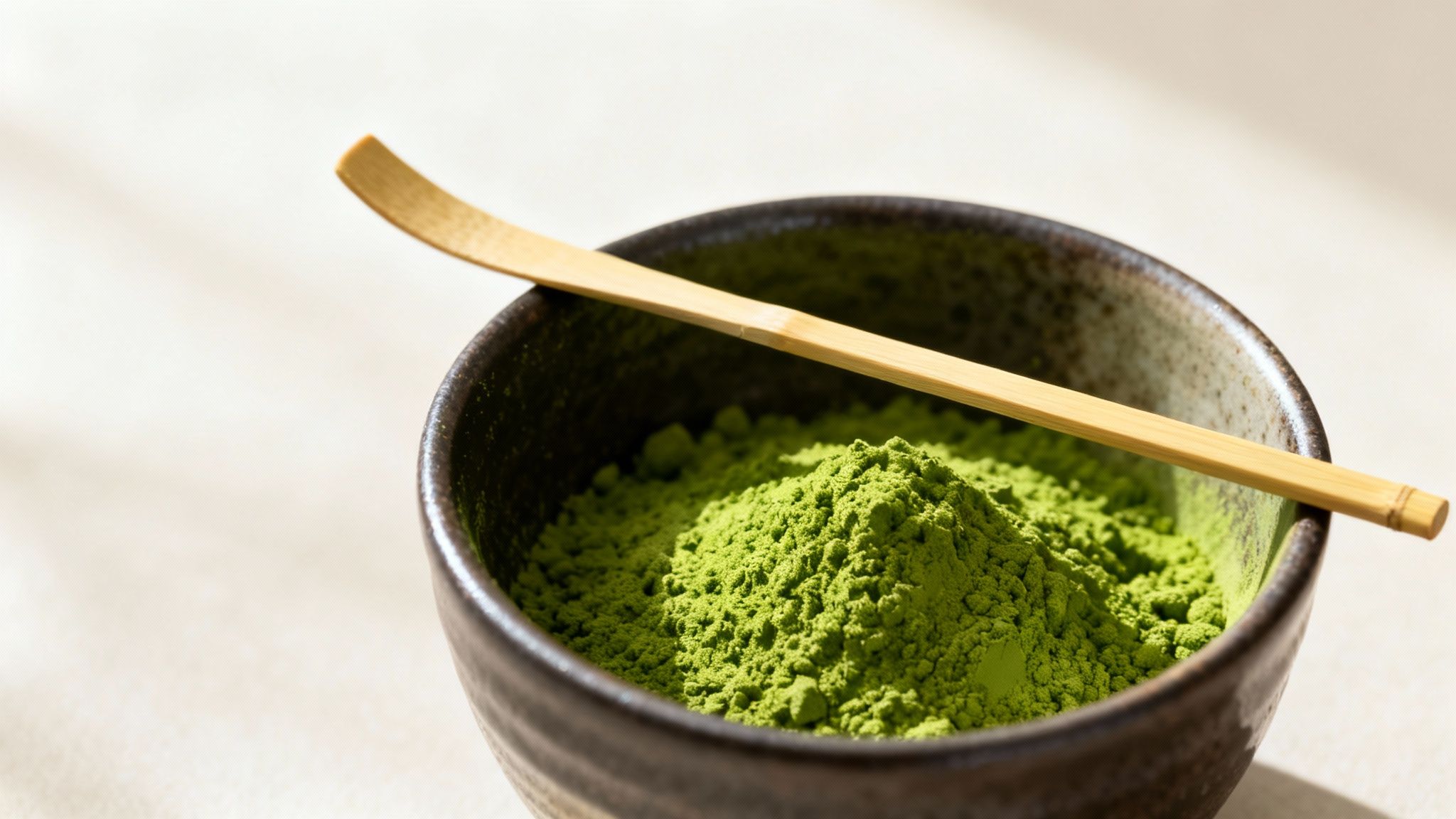
When you see the term "ceremonial grade," it’s important to know it's not just a fancy marketing phrase. It represents a centuries-old standard of excellence. This grade signals a powder so pure and delicate it's suited for usucha (thin tea) and koicha (thick tea) prepared in the traditional Japanese tea ceremony, known as chanoyu.
The journey of ceremonial matcha begins weeks before the leaves are even picked. Tea plants are carefully shaded from the sun, a process which coaxes them into producing far more chlorophyll and L-theanine. This is the secret behind matcha's brilliant, jewel-like green colour and its profound, savoury umami flavour, while keeping the bitterness you might find in other green teas at bay.
You could almost compare it to a fine vintage wine. Just as a winemaker obsesses over the terroir, grape, and harvest, matcha artisans are intensely focused on:
- Harvest Time: Using only leaves from the first flush (ichibancha), picked in early spring when they are at their peak.
- Leaf Selection: Plucking only the two youngest, most supple leaves from the very top of each plant.
- Processing: A meticulous routine of steaming, drying, and slow stone-grinding to preserve every nuance of flavour and create that signature silky texture.
A Clear Distinction from Culinary Matcha
One of the biggest points of confusion for anyone new to matcha is the difference between ceremonial and culinary grades. While they both start life as the same plant, their quality, purpose, and price point are worlds apart.
Culinary matcha is designed for mixing. Its bolder, more astringent profile is perfect for standing up to other ingredients in lattes, smoothies, and baking. Ceremonial grade, on the other hand, is meant to be the star of the show. It's prepared simply with hot water and savoured on its own. Its delicate sweetness and complex umami notes would be completely lost if you added milk or sugar. Getting to know the different types of matcha tea is the best way to appreciate each for its intended purpose.
The term 'ceremonial' is not just a label but a promise of quality. It assures you are getting a product crafted with the utmost care, honouring a tradition that values mindfulness, purity, and exceptional flavour.
This dedication to quality is clearly striking a chord here in the UK. We're seeing a huge surge in interest for ceremonial grade matcha, driven by a growing desire for authentic, high-quality wellness products. Projections show the UK matcha market, valued at around USD 340 million in 2025, is expected to climb to an impressive USD 790 million by 2031. It’s a clear sign that people are moving towards premium, plant-based drinks that offer both a unique sensory experience and genuine benefits.
Ceremonial Grade Matcha vs Culinary Grade Matcha
To make it crystal clear, let's break down the key differences in a simple table. This should help you spot the good stuff and choose the right matcha for what you have in mind.
| Attribute | Ceremonial Grade Matcha | Culinary Grade Matcha |
|---|---|---|
| Colour | Vibrant, electric green | Duller, often yellowish or brownish-green |
| Texture | Silky, ultra-fine (like talcum powder) | Coarser, slightly gritty |
| Flavour | Naturally sweet, rich umami, smooth finish | Bolder, more astringent, slightly bitter |
| Best Use | Whisked with hot water and enjoyed plain | Lattes, smoothies, baking, and cooking |
Ultimately, choosing between them comes down to how you plan to enjoy your matcha. For a quiet, meditative moment with a truly exceptional tea, ceremonial is the only way to go. For adding a healthy green tea kick to your recipes, culinary grade is your best friend.
The Journey From Leaf To Powder
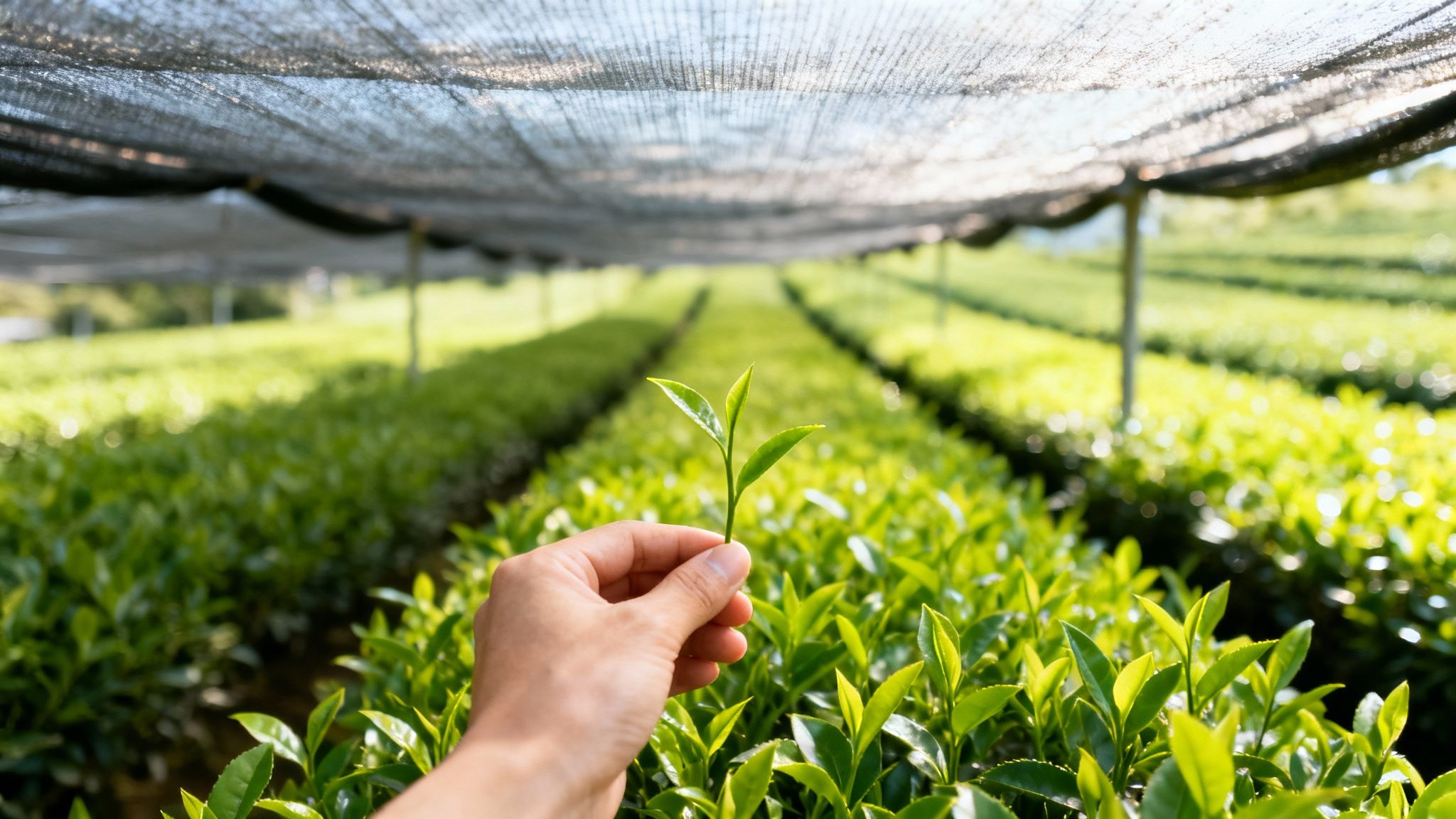
The path from a single tea leaf to the fine, emerald powder we call ceremonial matcha is a story of patience and artistry. It’s a process honed over centuries, and it all begins weeks before the harvest in the special covered gardens of Japan, known as oishitaen. This is where the magic really gets going.
For around 20 to 30 days before the first spring pluck, tea plants are carefully shaded with bamboo mats or tarps. This simple act drastically changes the leaf's chemistry. By limiting sunlight, the plant is coaxed into producing a flood of chlorophyll, giving it that impossibly vibrant green hue.
But the colour is only half the story. The shade also ramps up the production of L-theanine, the wonderful amino acid that gives matcha its deep, savoury umami flavour. It’s this crucial step that develops the smooth, naturally sweet profile of a true ceremonial grade, steering it away from the bitterness you might find in lesser green teas.
From Harvest to Tencha
Once the shading is complete, the harvest can begin. And for ceremonial grade, it's an incredibly discerning process. Only the youngest, most tender leaves from the very top of the plant are carefully hand-picked. These prized shoots—often called the 'two leaves and a bud'—are where the best nutrients and flavour compounds are concentrated.
The freshly plucked leaves are then rushed to be steamed, often within hours of being picked. This is a critical moment. The steam instantly halts oxidation, locking in the brilliant green colour, fresh aroma, and all those valuable nutrients. While other green teas might be pan-fired, steaming is the traditional Japanese method that preserves the unique character of what is to become matcha.
After steaming, the leaves are gently air-dried. At this point, they’re not yet matcha; they are called tencha. Before the final grind, the tencha leaves go through a painstaking de-stemming and de-veining process. It’s all about ensuring that only the purest, softest part of the leaf remains. Exploring what matcha is made of shows just how vital this purification step is for that silky-smooth texture.
The journey to creating tencha is meticulous. Each step, from shading and hand-picking to steaming and de-veining, is designed to isolate and preserve the very best qualities of the tea leaf, preparing it for its final transformation.
The Final Stone Grinding
The last step is perhaps the most iconic: the slow, methodical stone grinding. The dried tencha is carefully ground between large, grooved granite stone mills. This is no quick job—it can take a full hour to produce just 30-40 grams of matcha powder.
This unhurried pace is absolutely essential. Any faster, and the friction would create heat, scorching the delicate leaves and destroying their complex flavour and aroma. The cool granite stones, however, gently pulverise the tencha into an ultra-fine powder with particles measuring just 5-10 microns. That’s finer than talcum powder. It's this silky fineness that allows the matcha to suspend beautifully in water, creating that smooth, creamy bowl topped with a perfect foam.
This labour-intensive process is a key reason why authentic ceremonial matcha is becoming so appreciated here in the UK. Globally, matcha production almost tripled between 2010 and 2023, and UK sales of matcha drinks shot up by an incredible 202% in 2023 alone. People are clearly developing a taste for artisanal products with a real story, something you can read more about in this market analysis. The entire journey, from a shaded leaf to a stone-ground powder, is what makes every sip a truly special experience.
How To Identify High Quality Matcha
Stepping into the world of matcha can feel a little daunting, but spotting a high-quality powder is simpler than you might think. You don't need to be a tea master to do it—you just need to trust your senses. By paying close attention to four key signs—colour, aroma, texture, and taste—you can learn to confidently pick out a truly exceptional ceremonial grade matcha from a lesser one.
Getting this right isn't just about value for money; it's about making sure you get the authentic, nuanced experience that makes ceremonial matcha so special. Think of it like learning to appreciate fine wine or artisan chocolate. Once you know what you’re looking for, quality becomes instantly recognisable. Let's get your senses trained up.
The Visual Test: Colour
The very first clue is in the colour. Pop open the tin and have a good look. A proper ceremonial grade matcha should have a vibrant, almost electric green hue.
This brilliant shade comes directly from the meticulous shading process the tea leaves go through before being harvested. By blocking out the sun, the farmers encourage the plants to produce a huge amount of chlorophyll, flooding the leaves with that deep green pigment. A dazzling colour is a great sign of freshness and a high concentration of nutrients.
If the powder looks dull, olive-toned, or has a yellowish or brownish tint, that’s a red flag. It usually means the matcha is old, was made from leaves picked later in the season, or was stored improperly, allowing it to oxidise and degrade.
The Aromatic Experience: Aroma
Next, bring the matcha up to your nose and take a deep breath. The aroma should be fresh, complex, and inviting. A high-quality ceremonial matcha has a distinctive scent that is both sweet and vegetal.
You might pick up notes of fresh-cut grass, sweet peas, or even a subtle, creamy nuttiness. This complex bouquet is a testament to the amino acids, especially L-theanine, that build up during the shading process. It should smell alive.
On the flip side, be wary of any powder that smells flat, dusty, or a bit like hay. A lack of scent suggests it's gone stale, while any musty smells point to poor processing or storage. The aroma should draw you in, not put you off.
The sensory evaluation of matcha is an art form in itself. A vibrant colour and a fresh, sweet aroma are the first promises of a superior tea, signalling that the journey from leaf to powder was one of care and precision.
The Feel of Quality: Texture
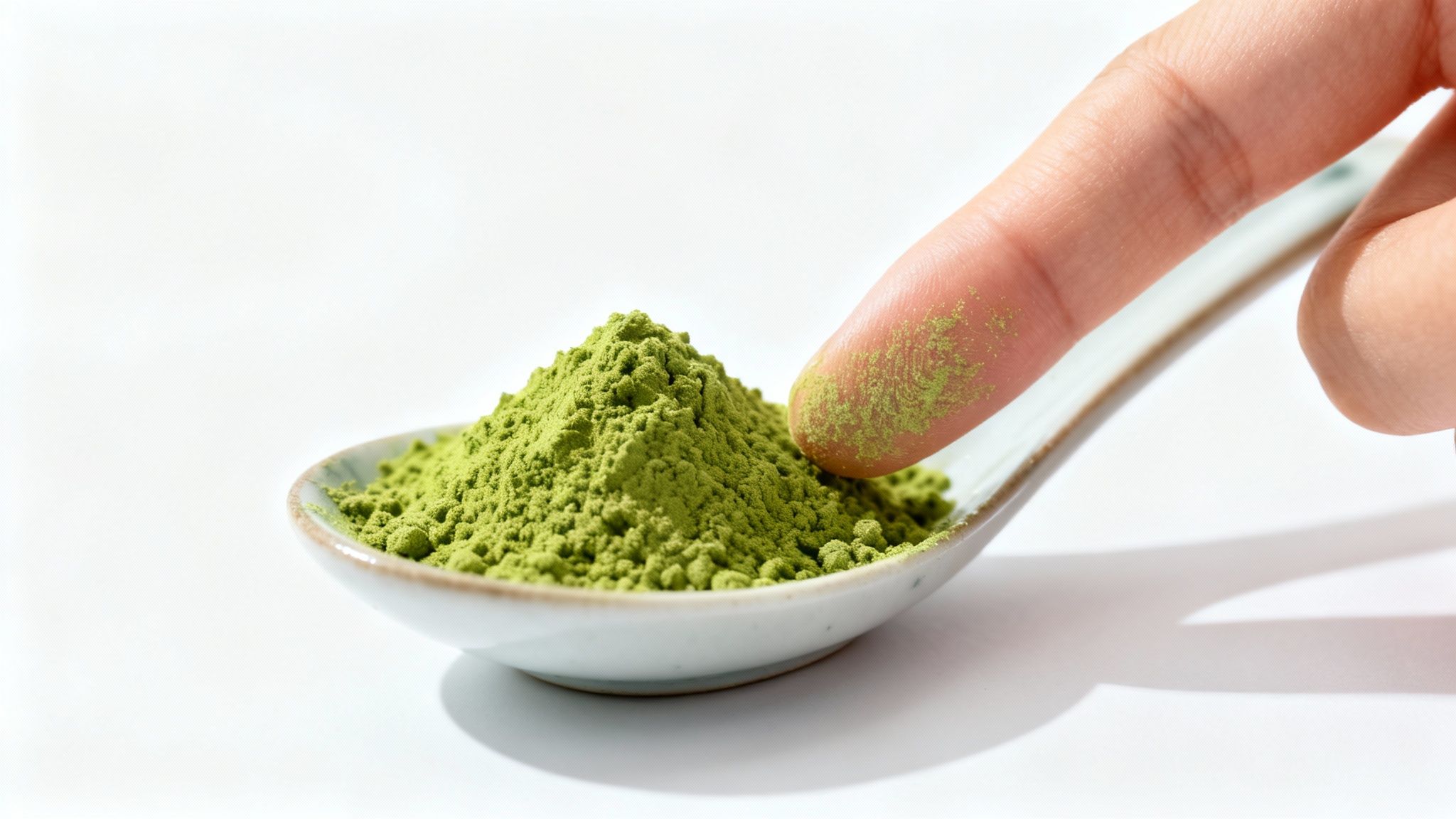
Texture is a crucial, but often overlooked, sign of quality. Take a tiny pinch of the powder and rub it between your fingers. A premium ceremonial grade matcha should feel incredibly fine and silky, almost like talcum powder or cornflour.
This super-fine consistency is the hallmark of traditional stone-grinding. The slow, gentle friction of the granite mills pulverises the tencha leaves into particles as small as 5-10 microns. This fineness is what allows the matcha to suspend smoothly in water, creating that creamy, froth-topped bowl without a hint of grit.
If the powder feels coarse or sandy, it was probably ground using industrial machines. This process can generate heat and damage the matcha's delicate flavour, and a gritty texture will only lead to a clumpy, unpleasant drink.
The Ultimate Proof: Taste and Origin
Of course, the real test is in the tasting. A superb ceremonial grade matcha has a wonderful balance of flavours. The most prized quality is umami—that deep, savoury richness that coats your palate. This should be followed by a natural, gentle sweetness and a smooth, creamy finish.
While a touch of astringency is normal, it should be light and pleasant, never overwhelmingly bitter. A harsh, bitter taste is a dead giveaway of a lower-grade product.
Finally, always check the origin. Authentic, high-quality matcha comes exclusively from Japan. Look for products that name their source, especially from one of the renowned tea-growing regions where centuries of expertise have been perfected.
- Uji (Kyoto): The most famous and historically significant region, often considered the birthplace of matcha.
- Nishio (Aichi): A major producer known for its rich soil and ideal climate, yielding a deep green, flavourful matcha.
- Fukuoka: A region on the island of Kyushu, celebrated for producing a wide variety of high-quality teas.
When you're looking for great matcha, it's wise to seek out reputable sources and certifications, much like you would for any third-party tested supplements to ensure purity and transparency. Choosing matcha from these respected regions gives you confidence in its authenticity and the traditional methods used to produce it.
How To Prepare The Perfect Bowl of Matcha
Making a bowl of ceremonial grade matcha is so much more than just mixing powder and water. It’s a quiet ritual, a moment of focus that truly unlocks the tea’s potential. And while it might look complicated, the process is surprisingly straightforward once you know the basics.
With a little practice, you can transform a simple green powder into a rich, frothy elixir that tastes like it was prepared in a Kyoto teahouse. The aim is to create a beautifully smooth suspension, free of lumps and bitterness. It all comes down to the right kit, the right water temperature, and a flick of the wrist.
Assembling Your Essential Tools
To do it properly, you'll want a few key items. These traditional tools have been perfected over centuries to bring out the very best in the tea.
- Chawan (Matcha Bowl): A wide, fairly flat-bottomed bowl gives you the space you need to whisk properly. A simple ceramic cereal bowl will do the job when you're starting out.
- Chasen (Bamboo Whisk): This is non-negotiable. Its dozens of fine, flexible tines are designed to break up clumps and whip air into the tea, creating that signature layer of foam.
- Chashaku (Bamboo Scoop): This elegant scoop helps you measure the perfect amount of matcha. If you don't have one, a regular teaspoon is a perfectly good substitute.
One extra, non-traditional tool we swear by is a small kitchen sieve. Pushing the matcha through a sieve before you add water is the secret to a perfectly smooth, velvety bowl every single time.
Don't be put off by the special equipment. The real heart of the ritual is in the mindful actions of sifting, measuring, and whisking, which you can easily adapt with what you already have in your kitchen.
Step-By-Step Matcha Preparation
Once you have your tools, you’re just a few moments away from a perfect bowl. Following these steps will help you achieve that creamy texture and unlock the delicate, savoury umami flavour of high-quality matcha.
-
Sift Your Matcha: Measure 1-2 chashaku scoops (that’s about ½ to 1 teaspoon) into your chawan, passing it through a fine-mesh sieve. This is the most important step for preventing clumps and getting a silky-smooth finish.
-
Warm Your Bowl and Whisk: Pour a little hot water into the bowl and swirl it around to warm the ceramic. Dip the tines of your chasen into the water for about 30 seconds to soften the bamboo, making it more flexible and less likely to snap. Tip out the water and dry the bowl.
-
Add Hot Water: Heat fresh, soft water to around 70-80°C (160-175°F). This is crucial—using boiling water will scorch the delicate tea, leaving you with a bitter brew. Pour about 60-70ml of the hot water over your sifted matcha.
-
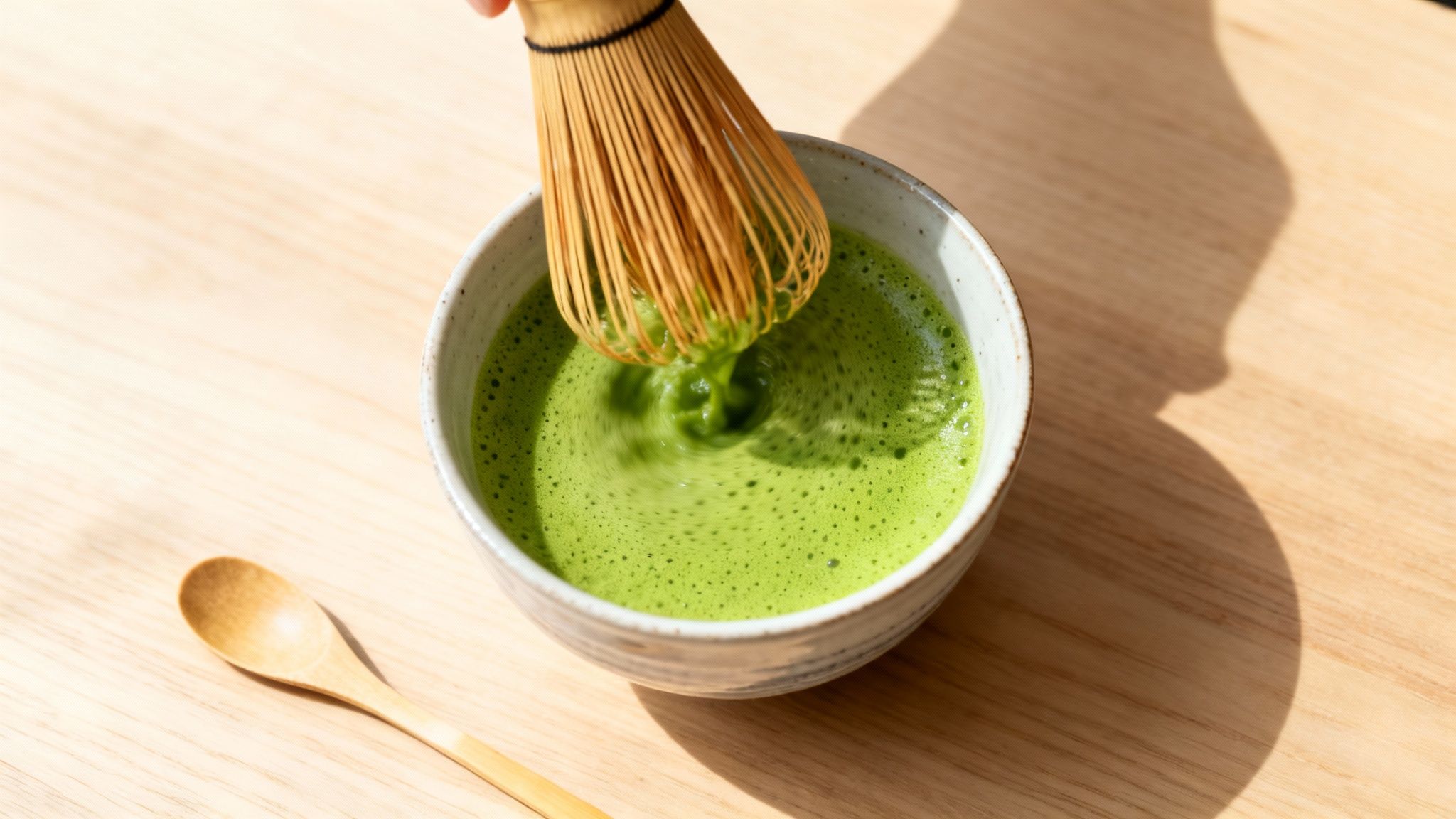
Whisk with Purpose: Now for the fun bit. Hold the bowl steady with one hand and, keeping your wrist loose, whisk the matcha vigorously in a quick ‘W’ or ‘M’ pattern. You’re trying to froth the tea, not just stir it in circles.
-
Create the Foam: Keep whisking for 20-30 seconds until all the powder is dissolved and a thick blanket of fine foam covers the surface. A sea of tiny, uniform bubbles is the sign of a job well done.
For even more tips and tricks, you can take a look at our detailed guide on preparing matcha tea. Enjoy it straight away, taking a moment to savour the calm energy and rich flavour you’ve just created.
What to Expect: Flavour and Benefits
A bowl of high-quality ceremonial matcha is a world away from your average green tea. It’s an experience that engages all the senses, offering a complex and satisfying journey for the palate—one defined by a beautiful harmony of flavour, aroma, and mouthfeel that tells the story of its careful cultivation.
At the heart of this experience is a deep, savoury flavour known as umami. Think of that rich, almost brothy satisfaction you get from foods like parmesan or mushrooms. In matcha, this umami provides a smooth, profound base, a direct result of the high L-theanine content developed while the tea plants are shaded from the sun.
But it’s not just savoury. This is balanced by a natural, subtle sweetness that means you won't need to reach for the sugar bowl. A clean, gentle vegetal note rounds out the profile, leaving a pleasant aftertaste with none of the harsh bitterness or astringency you might find in lower-grade teas. When you get the whisking right, the texture is just as important—it should feel creamy, full-bodied, and velvety smooth.
The Source of Calm Focus
One of the most cherished effects of ceremonial matcha is the unique state of mind it brings on: a calm, focused alertness. This isn't the jittery, anxious buzz you get from a strong coffee. Instead, it’s a serene, sustained energy that Japanese monks have relied on for centuries to deepen their meditation.
This feeling comes down to a clever partnership between two compounds: caffeine and the amino acid L-theanine. While matcha certainly contains caffeine, the L-theanine slows down its absorption, giving you a steady release of energy over 4-6 hours without the usual spike and crash.
L-theanine also encourages the production of alpha brain waves, which are linked to a state of relaxed awareness. This makes ceremonial matcha the perfect companion for productive mornings, creative work, or any time you need a clear and tranquil mind.
The combination of caffeine and L-theanine offers the best of both worlds. You get the mental clarity and energy from caffeine, beautifully tempered by the calming, anti-anxiety effects of L-theanine, creating a state of mindful productivity.
An Antioxidant Powerhouse
Beyond its incredible taste and mental benefits, ceremonial matcha is a true nutritional heavyweight. Unlike regular tea, where you infuse the leaves and then throw them away, with matcha you consume the entire leaf. This means you’re getting 100% of the nutrients, including a concentrated dose of vitamins, minerals, and fibre.
Matcha is particularly famous for being packed with a class of powerful antioxidants called catechins. One of these, epigallocatechin gallate (EGCG), is found in abundance and has been widely studied for its potential to support cellular health and protect the body from oxidative stress.
Because you’re consuming the whole leaf, you get a significantly higher antioxidant hit—some studies suggest it could be up to 137 times more than in other green teas. This potent nutritional profile is a huge part of why it's become so popular with people looking for genuine wellness in their daily rituals.
This growing appreciation for its quality and benefits has turned ceremonial grade matcha into a major player in the European tea market. Here in the UK, we’re leading the charge, with more and more people seeking out authentic, high-quality wellness products. Europe’s matcha market was worth USD 513.2 million in 2023 and is expected to climb to USD 954.3 million by 2030, with the ceremonial grade at the forefront. The UK's influence is clear, making up 21.3% of Europe's market share in 2024 and showing a strong preference for the superior experience this grade offers. You can dig into more market data on Europe's growing demand for premium matcha from Grand View Research.
Your Top Ceremonial Grade Matcha Questions Answered
As you get to know the world of ceremonial grade matcha, a few questions are bound to come up. It's completely normal. To help you feel confident in your matcha journey, we've put together answers to some of the most common queries we hear.
Can I Use Ceremonial Grade Matcha for Lattes or Baking?
Technically, you can, but honestly, we wouldn’t recommend it. Ceremonial grade matcha has such a delicate and complex flavour—all subtle sweetness and rich umami—that’s best appreciated when you simply prepare it with water.
Once you start adding milk, sugar, or other strong flavours, all those beautiful, nuanced notes get lost. Considering the care and cost that go into producing it, using it for lattes or cakes isn't the best use of a beautiful tea. For those recipes, culinary grade matcha is your friend; its bolder, more robust character is specifically designed to shine through other ingredients.
How Should I Store Matcha to Keep It Fresh?
This is a big one. Proper storage is absolutely crucial for keeping your matcha at its best. It has three main enemies: light, heat, and air. Exposure to any of them will quickly dull its vibrant green colour, flatten its flavour, and degrade all those wonderful nutrients.
The best thing you can do is keep your matcha sealed in its original airtight container and pop it in the refrigerator. This keeps it cool, dark, and away from oxygen. One pro tip: to avoid condensation, let the tin sit at room temperature for a few minutes before you open it. And try to use it within a few weeks of opening to enjoy it at its absolute peak.
Think of matcha like a fresh vegetable. Once opened, its quality begins to diminish. Proper, cool, airtight storage is your best tool for slowing down this natural process and extending its vibrant life.
Why Is Ceremonial Grade Matcha So Expensive?
The price tag on ceremonial grade matcha directly reflects the incredible amount of skilled, hands-on work that goes into producing it. It’s not just about the powder in the tin; it’s about the whole meticulous journey from the tea fields to your cup.
Several key things make it a premium product:
- Leaf Selection: It's made using only the youngest, most tender leaves from the very first harvest of the year (ichibancha), which are prized for their superior quality.
- Shade-Growing: For about three weeks before harvest, the tea plants are carefully covered to shade them from the sun. This difficult step boosts the chlorophyll and L-theanine levels, which give matcha its distinct colour and flavour.
- Intensive Processing: The leaves are hand-picked, quickly steamed, dried, and then painstakingly de-stemmed and de-veined by hand to create the pure leaf material known as tencha.
- Traditional Stone-Grinding: The tencha is then slowly, patiently ground on traditional granite stone mills. It can take a full hour just to produce a mere 30-40 grams of matcha.
When you add it all up—the finest leaves, the special farming methods, and the time-honoured craftsmanship—you begin to see where the value comes from.
Is Japanese Matcha Different from Chinese Green Tea Powder?
Yes, they are worlds apart. Understanding this difference is key to having a truly authentic matcha experience. Real ceremonial grade matcha is a uniquely Japanese product, born from centuries of tradition and a very precise production method.
The Japanese process involves shade-growing, steaming the leaves to halt oxidation (locking in that fresh, green character), and then stone-grinding the prepared tencha. This is what creates that signature vibrant green colour, silky-fine texture, and smooth, umami-forward flavour.
In contrast, green tea powders from other places, like China, are often made differently. The tea plants might not be shade-grown, and the leaves are sometimes pan-fired rather than steamed, which changes the flavour profile entirely. They’re also typically ground with industrial machines instead of slow stone mills. The result is a powder that's often a duller, yellowish-green, feels grittier, and tastes much more bitter. For the genuine article, always look for matcha that comes from Japan.
Here at Jeeves & Jericho, we’re passionate about bringing you the finest, most authentic tea experiences possible. Our Ceremonial Grade Matcha is sourced directly from the celebrated tea fields of Uji, Japan, ensuring every single scoop meets the highest standards of quality and tradition. Discover the true taste of matcha for yourself.