


There’s something wonderfully ritualistic about making matcha. The simple act of sifting that vibrant green powder, adding hot water, and whisking until a beautiful, frothy layer appears is both an art and a science. It’s a mindful process that transforms a fine powder into a rich, energising drink, whether you like it as a traditional bowl or a creamy latte.
Why Matcha Is More Than Just a Green Drink
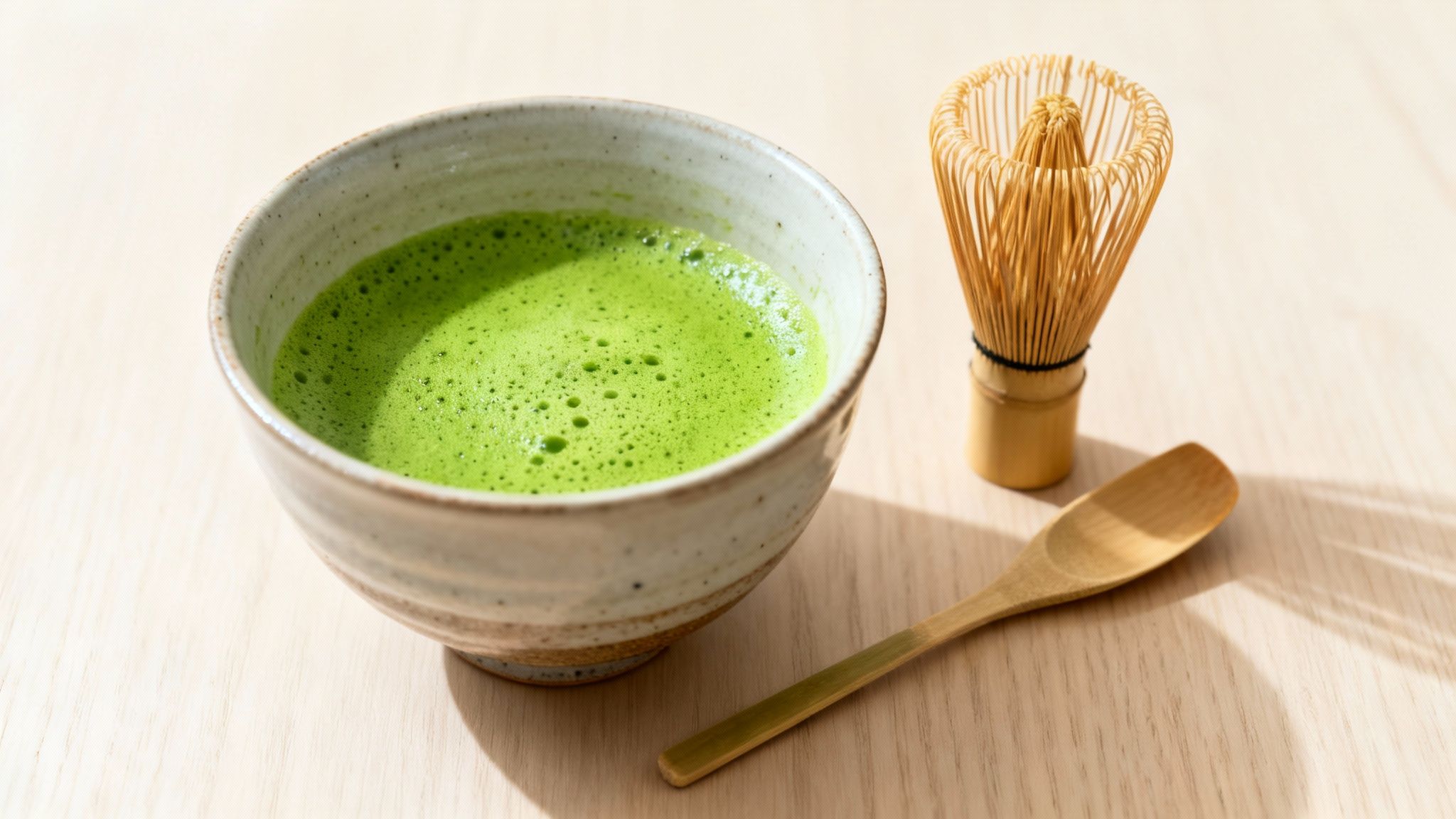
Welcome to the vibrant world of matcha. If you've ever felt intimidated by the process, this guide is for you. We're here to demystify the art of preparing this powerful green tea, moving beyond its trendy status to show you why it's such a cherished ritual for so many.
We’ll explore the two most popular ways to enjoy it: a traditional ceremonial bowl and a creamy, modern latte. Forget complicated steps and fancy tools. By the end, you’ll feel confident making a matcha that’s smooth, frothy, and delicious every single time.
A Ritual of Calm and Focus
Preparing matcha is, at its heart, a practice in mindfulness. Every step, from measuring the powder to the final whisk, invites a moment of calm. This ancient Japanese tradition offers more than just a drink; it’s a structured pause in your day. Many find this focus-enhancing ritual the perfect start to a morning or a welcome reset in the afternoon.
It seems we’re not the only ones who think so. The United Kingdom’s matcha tea market has blossomed into a multi-million-pound industry, valued at USD 203.88 million. It’s projected to expand to an estimated USD 356.12 million by 2033, with ceremonial-grade matcha leading the way as people seek out more authentic experiences. For a closer look at these trends, check out this insightful report on the UK matcha tea market.
This meditative practice isn't just about making tea; it’s about creating a small pocket of peace. The focus required for whisking can help quiet a busy mind, offering a gentle yet effective boost of mental clarity.
More Than Just Caffeine
Beyond the calming ritual, matcha delivers a unique kind of energy. Unlike the sharp jolt and inevitable crash from coffee, matcha provides a sustained, gentle lift. This is all down to an amino acid called L-theanine, which works in synergy with caffeine to promote a state of relaxed alertness.
This unique combination offers a few brilliant benefits:
- Sustained Energy: Enjoy hours of focus without the jittery side effects.
- Enhanced Mood: L-theanine can help reduce stress and improve your overall sense of well-being.
- Rich in Antioxidants: Matcha is packed with catechins, which support overall health.
If you’re curious to learn more about what this incredible green powder can do for you, have a read of our detailed guide to matcha powder health benefits.
Now, let's get into the good stuff: everything from picking the right powder to perfecting your whisking technique for that beautiful, frothy finish.
Choosing the Right Matcha and Tools
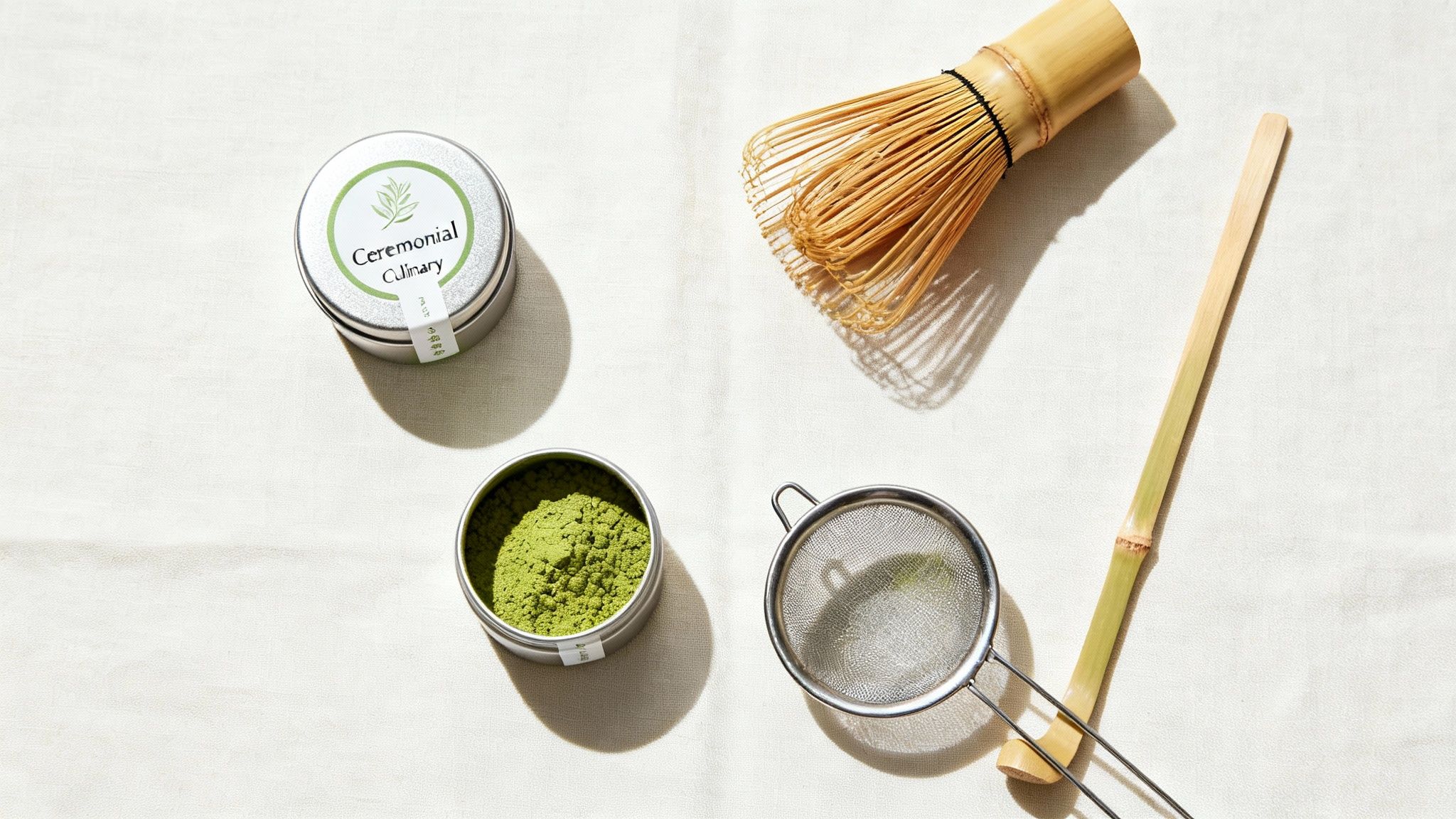
Before you can even think about whisking up that perfect cup, you need to get your supplies in order. The world of matcha grades and specialist tools can feel a bit daunting at first, but it’s actually far simpler than it seems. The trick is to match your powder and equipment to the kind of matcha experience you’re looking for.
Ceremonial vs Culinary Grade
Your first big decision is the powder itself. You'll generally find two main types on the market: Ceremonial Grade and Culinary Grade.
Ceremonial grade is crafted from the youngest, most tender tea leaves, giving it that famously vibrant green colour and a smooth, delicate, almost sweet flavour. This is the one you want for a traditional hot tea, where its subtle, grassy notes can really be appreciated on their own.
Culinary grade, on the other hand, comes from slightly older leaves. This results in a more robust and slightly bitter flavour profile that’s designed to hold its own against other ingredients. Think lattes, smoothies, and baking—it's perfect for those.
Choosing the wrong one is a common pitfall. A latte made with pricey ceremonial matcha will likely have its delicate taste completely overpowered by the milk, while a traditional tea made with culinary grade could taste unpleasantly harsh. To get a better handle on the nuances, we've put together an in-depth guide on the different types of matcha tea.
To make it even clearer, here’s a quick rundown of the main differences.
Ceremonial vs Culinary Matcha: A Quick Comparison
| Attribute | Ceremonial Grade | Culinary Grade |
|---|---|---|
| Best For | Traditional tea (usucha/koicha) | Lattes, smoothies, baking, cooking |
| Colour | Vibrant, electric green | Duller, yellowish-green |
| Flavour | Delicate, smooth, naturally sweet | Robust, bold, slightly bitter |
| Texture | Ultra-fine, silky powder | Fine, but slightly coarser |
| Source | Youngest, first-harvest leaves | Later-harvest leaves |
| Price | Higher | More affordable |
Ultimately, having both in your cupboard is a great idea if you plan on enjoying matcha in different ways.
Essential Matcha Equipment
To prepare matcha properly, a few key tools really do make all the difference. While you don’t need to break the bank, investing in the basics will seriously level up your results and make the whole ritual far more enjoyable.
Here are the three core items for your toolkit:
- Bamboo Whisk (Chasen): This is the one non-negotiable for achieving that signature smooth, frothy texture. Its fine tines are designed to suspend the powder perfectly in water, getting rid of any pesky clumps.
- Tea Bowl (Chawan): A wide, flat-bottomed bowl isn’t just for show; it gives you the space you need to whisk properly without splashing matcha all over your countertop.
- Bamboo Scoop (Chashaku): This elegant little scoop is crafted to measure out the ideal amount of matcha powder for a single serving.
It’s clear this appreciation for authentic preparation is catching on. The UK has seen a massive surge in matcha imports, with volume growing by an incredible 31.95% in just one year as more people seek out top-quality grades.
Smart Alternatives and Key Ingredients
Don't have all the traditional gear yet? Don’t let that stop you. An electric milk frother is a fantastic substitute for a bamboo whisk and works wonders for creating a smooth matcha shot, especially if you’re making lattes. In a real pinch, you can even just shake the matcha and water together vigorously in a sealed jar.
Remember, the quality of your water is just as important as the quality of your matcha. Heavily chlorinated or hard tap water can easily mask the tea's delicate flavours.
Simply switching to filtered water makes a world of difference. Your water quality is genuinely paramount for a delicious cup. If you're serious about your tea, you might even consider systems like faucet water filters to really purify the taste. It just ensures a clean, pure base that allows the true character of your chosen matcha to shine through.
Preparing a Traditional Bowl of Matcha
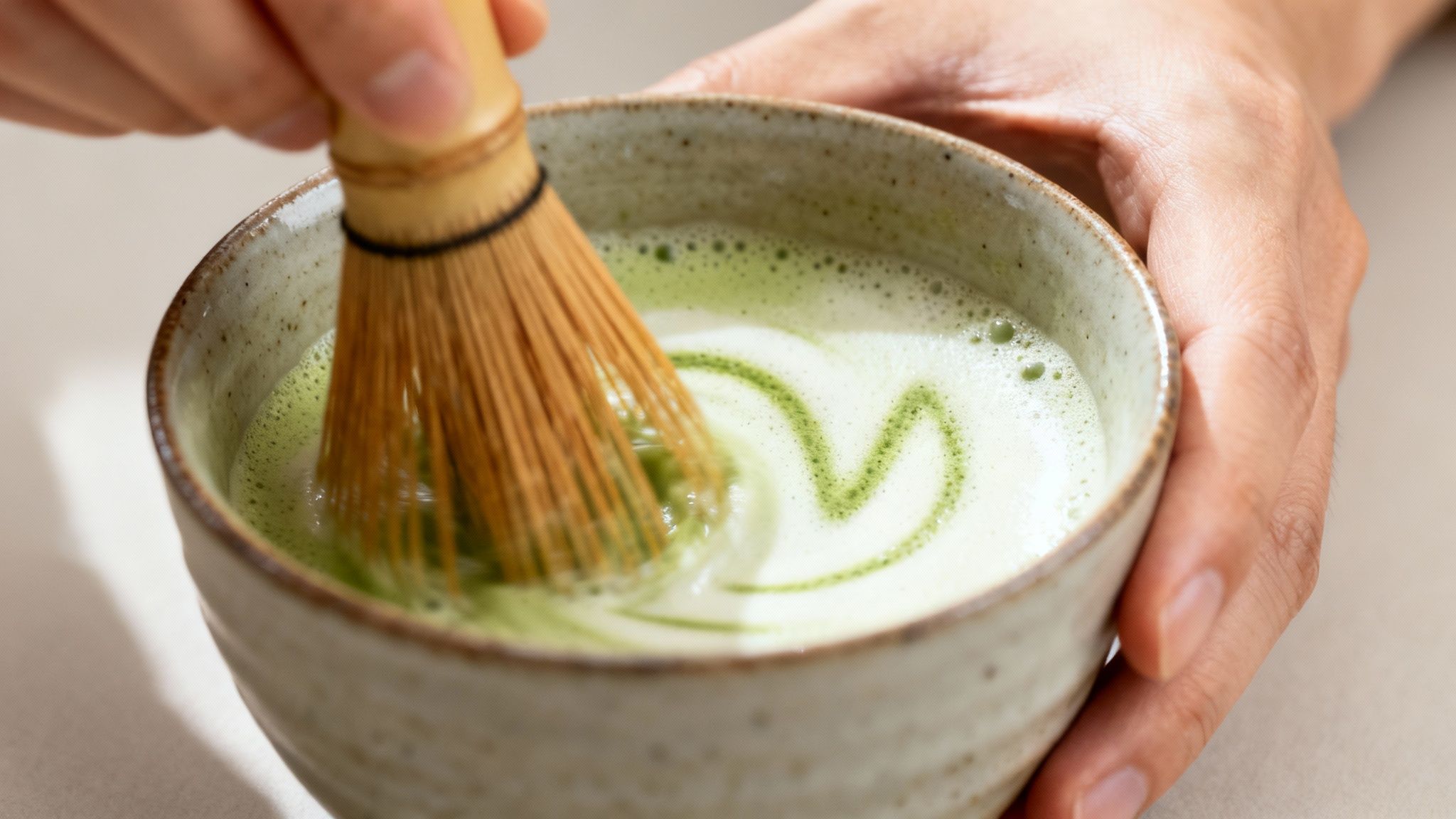
Making matcha the traditional way is far more than just brewing a cup of tea. It's a small, calming ritual that rewards you with a deeply satisfying bowl of vibrant green goodness. Think of it less as a rigid recipe and more as a mindful practice, where each gesture has a purpose.
Our goal here is to create usucha, which translates to "thin tea." This is the most common way to enjoy matcha, celebrated for its light body and a beautiful, frothy layer of fine foam on top. Let's walk through the essential elements, focusing not just on the 'how' but the crucial 'why' behind each step.
Start with Sifting
The first thing you must do—and I can't stress this enough—is sift your matcha. Ceremonial grade matcha is milled to an incredibly fine powder, which makes it prone to clumping due to static. If you skip this, you're almost guaranteed a lumpy, unpleasant drink.
Pushing the powder through a small, fine-mesh sieve directly into your chawan (tea bowl) breaks up all those tiny clumps. This one small action is the foundation for a smooth, silky texture and is absolutely essential for achieving that desirable frothy topping.
Get the Water Temperature Just Right
Using water that's too hot is probably the most common mistake we see. It will instantly ruin the delicate flavour of your matcha. Boiling water (100°C) will scorch the fine tea particles, leaving you with a bitter, astringent taste. You'll completely lose those subtle, sweet umami notes that make a good ceremonial grade so special.
The sweet spot for water temperature is around 80°C. You don't need a fancy thermometer for this. Just boil your kettle, then let it sit for a minute or two with the lid off before you pour. That's it. This brief cooling period is all it takes to protect the matcha's flavour.
Our Top Tip: Before you even sift your matcha, pour a little hot water into the empty chawan. Swirl it around to warm the bowl and gently soak the tines of your chasen (bamboo whisk). Tip out the water, dry the bowl, and then add your powder. This simple trick makes the whisk more pliable and helps keep your tea at the perfect temperature.
Master the Whisking Motion
Now for the magic. Once you've added about 60-70ml of your 80°C water to the sifted matcha, it's time to whisk. The secret is to use your wrist, not your whole arm. It’s all about creating a quick, light movement to properly aerate the tea.
You're aiming for a fine, stable foam, not unlike the head on a pint of Guinness. To get there, whisk vigorously in a rapid ‘W’ or ‘M’ pattern, moving from one side of the bowl to the other. Try not to press the whisk hard against the bottom; just let it float above the surface as you move back and forth.
Keep this up for about 20-30 seconds. You'll see tiny bubbles appear and then merge into a creamy, consistent froth. For a perfect finish, slow right down and gently move the whisk across the surface to pop any larger bubbles. You’ll be left with a smooth, jade-coloured foam and a beautifully harmonious bowl of tea, completely free of bitterness.
Creating the Perfect Matcha Latte at Home
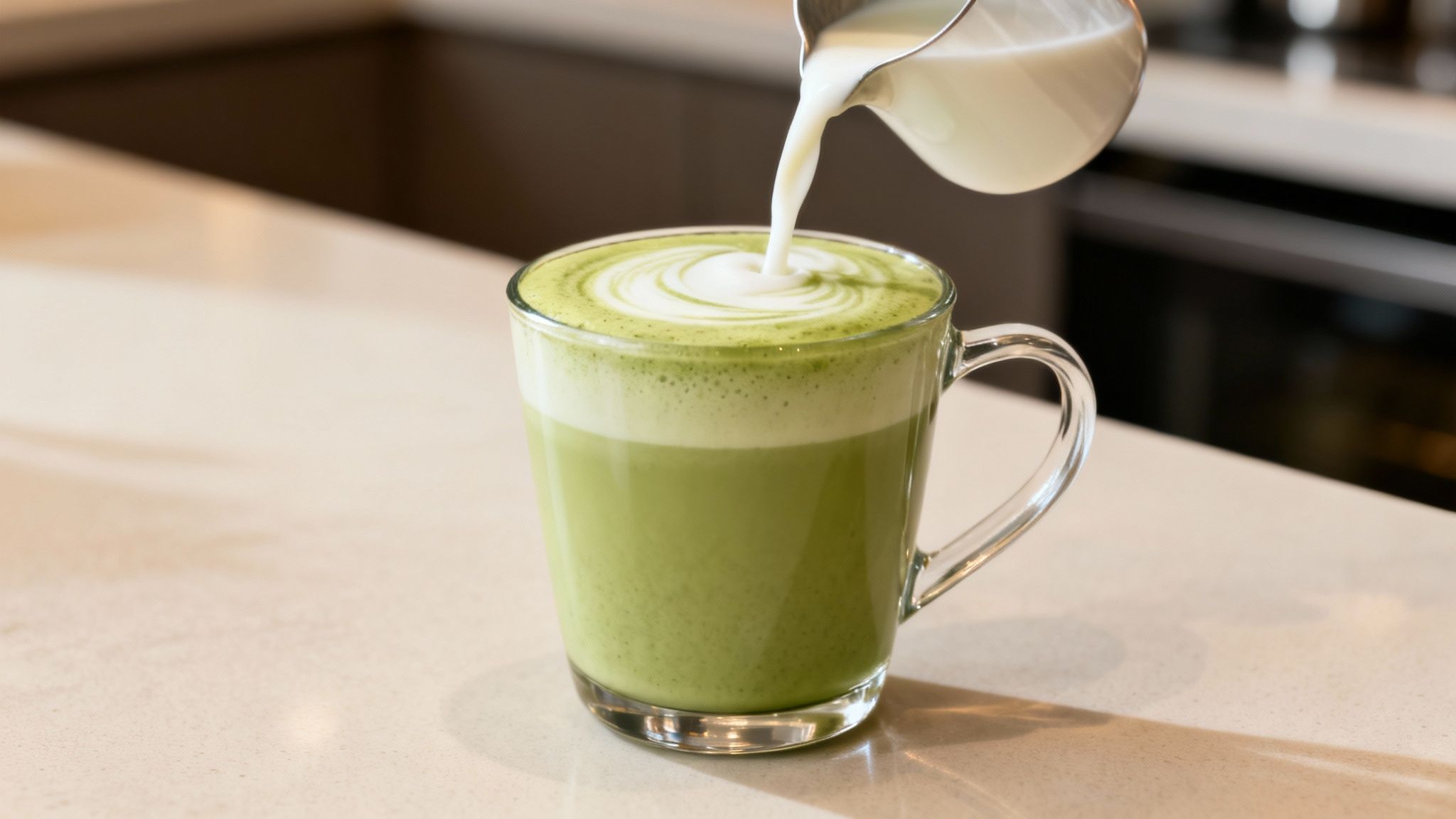
While there's a certain purity to a traditional bowl of matcha, sometimes you just want the creamy comfort of a latte. The good news is that making one at home that rivals your favourite coffee shop is surprisingly straightforward. The secret? It all starts with a perfectly prepared matcha base.
The foundation of any great latte is a smooth, concentrated "matcha shot." Think of it as a stronger, smaller version of the traditional tea we just made. For lattes, our culinary grade matcha is the perfect choice, as its robust flavour profile is designed to hold its own against milk and any sweeteners you might add.
To make your shot, the principles are the same: sift the powder, use water around 80°C, and whisk like you mean it. The main difference is the ratio. You'll want about 1 teaspoon (2g) of matcha to just 30-40ml of hot water. This gives you a potent, silky base that will blend beautifully into the milk later.
Choosing Your Milk
The milk you pick has a huge say in the final flavour and texture of your latte. There’s no single ‘best’ milk – it’s all down to personal taste and knowing how each one behaves.
- Dairy Milk: For a classic, rich and creamy latte, you can't beat whole milk. Its natural sweetness is a perfect partner for matcha's earthiness.
- Oat Milk: It's a barista favourite for a reason. Oat milk has a lovely creamy texture and a fairly neutral flavour that lets the matcha do the talking. It also froths like a dream.
- Almond Milk: This is a lighter choice that adds a subtle nutty note. If you want decent foam, make sure you grab a barista-style blend.
- Soya Milk: Soya creates a really stable, dense foam and has a distinct flavour that pairs surprisingly well with matcha’s vegetal character.
The best way to find your favourite is simply to experiment. You might be surprised which one wins you over.
Crafting a Hot Matcha Latte
For a cosy, frothy latte, start by preparing your concentrated matcha shot right in your mug. While you’re whisking, gently heat and froth about 200ml of your chosen milk. A steam wand is great, but a handheld electric frother works just as well. You can even just shake it hard in a sealed jar.
Once your milk is ready, pour it slowly over the matcha shot. If you want to get a bit fancy, try holding back the thickest foam with a spoon as you pour, then dollop it on top for that classic layered look.
When making a matcha latte, getting that initial shot perfectly smooth is non-negotiable. Any lumps left behind are impossible to fix once you’ve added the milk, and you’ll end up with a gritty drink. It's worth taking an extra 30 seconds to get it right.
Making a Perfect Iced Matcha Latte
On a warm day, an iced matcha latte is incredibly refreshing and couldn't be simpler to make. The trick is all in the layering.
Prepare your matcha shot as usual and give it a moment to cool down slightly. Grab a tall glass, fill it with ice, and pour in 200-250ml of cold milk. Now for the best part: slowly pour the cooled matcha shot over the milk. You'll see it cascade through the glass, creating beautiful green swirls.
This method looks fantastic and ensures your drink is perfectly chilled from the get-go. If you're looking for more tips, you can explore our complete guide to making the perfect iced matcha latte. We like to sweeten ours with a little honey or maple syrup – just give it a gentle stir before you take that first sip.
Getting Your Matcha Just Right
Even the most seasoned matcha drinkers had to start somewhere, and a bit of trial and error is all part of the process. If your matcha isn't turning out quite as you'd hoped, don't be discouraged. The most common issues are usually very simple to fix.
We often hear from people struggling with lumpy matcha, a bitter taste, or a disappointing lack of that beautiful, creamy foam. The good news is that each of these problems points to a small, easily corrected misstep in your preparation. Let's get you back on track to a perfect bowl.
Why is My Matcha Lumpy?
A gritty, clumpy bowl of matcha is almost always down to one simple thing: you’ve skipped the sifting. Matcha is an incredibly fine powder, but it loves to clump together thanks to static. When you add water, these little clumps become stubborn, dry pockets that even the best whisk can't break down.
The solution is non-negotiable, but wonderfully easy. Always, always push your matcha through a small, fine-mesh sieve directly into your bowl before you add a drop of water. This one simple step aerates the powder and guarantees it will dissolve into that silky-smooth consistency you're looking for.
How to Fix Bitter Matcha
If your matcha has a harsh, unpleasant bitterness, the culprit is almost certainly your water temperature. Using boiling or near-boiling water (anything over 80°C) essentially burns the delicate tea particles. This scorches the matcha, destroying its subtle sweetness and umami notes and replacing them with a sharp, bitter flavour.
To fix this, just let your kettle cool down a bit after it boils. Pop the lid off and give it a minute or two before you pour. This simple pause is all it takes to bring the water into that perfect, gentle temperature range, protecting the matcha’s refined character.
Our Top Tip: The link between heat and bitterness is a direct one. High-quality matcha needs gentle warmth, not scalding heat, to release its best flavours.
Where Has All the Froth Gone?
That beautiful, creamy layer of foam—known as awa—is the hallmark of a properly whisked bowl of matcha. If you're struggling to create it, the problem usually lies in your whisking technique or your proportions.
- Your Whisking Motion: Are you just stirring in circles? A gentle swirl won't create enough air. You need a quick, energetic zig-zag motion, like you're drawing a 'W' or 'M' with your wrist. Keep the whisk tines just off the bottom of the bowl.
- Your Water Ratio: Too much water will dilute the matcha and make it nearly impossible to build a good foam. For a classic bowl (usucha), a good starting point is around 60-70ml of water for every two scoops (about 1 tsp) of matcha.
This rapid whisking injects tiny air bubbles into the tea, building that stable, delicious micro-foam. It might take a bit of practice to get the wrist action right, but it's the final piece of the puzzle for a flawless cup.
Still running into trouble? We've put together a quick guide to help you pinpoint the issue and get it sorted.
Matcha Troubleshooting Guide
| Problem | Likely Cause | How to Fix It |
|---|---|---|
| It’s lumpy and gritty. | The matcha wasn't sifted. | Always pass the matcha powder through a fine-mesh sieve into the bowl before adding water. This is a crucial step! |
| The taste is sharp and bitter. | The water was too hot. | Let your boiled water cool for 1-2 minutes until it's around 70-80°C. Boiling water will scorch the delicate tea. |
| There's no foam on top. | Incorrect whisking motion or too much water. | Use a rapid 'W' or 'M' motion with your whisk. Reduce the water to around 60-70ml per 1 tsp of matcha. |
| It tastes weak or watery. | The matcha-to-water ratio is off. | You might be using too much water or not enough matcha. Try adding another scoop of matcha or using slightly less water. |
| The foam disappears quickly. | Low-quality matcha or not whisking long enough. | Make sure you're using fresh, high-grade matcha. Whisk vigorously for a full 15-20 seconds to create a stable foam. |
Think of these little adjustments not as mistakes, but as refinements to your ritual. A little practice is all it takes to master the art of making a truly exceptional bowl of matcha at home.
Your Matcha Questions, Answered
As you get to grips with making matcha, it's completely normal for a few questions to pop up. We get asked these all the time, so we've put together a few quick answers to help you perfect your brew.
Getting these little details right is what transforms a good cup of matcha into a great one.
How Much Caffeine Is In Matcha?
A standard serving of matcha, which is about one teaspoon of powder, typically contains around 70mg of caffeine. That’s a bit more than your average green tea but usually less than a cup of coffee.
But the story doesn't end there. What makes matcha so special is its unique interaction with an amino acid called L-theanine. This clever compound promotes a sense of calm focus, giving you a smooth, sustained energy lift without the jitters you might get from coffee.
L-theanine slows down how quickly your body absorbs the caffeine. The result is a gentle, steady release of energy that can last for hours, helping you feel alert and productive, not wired.
Can I Make Matcha Without A Whisk?
The traditional bamboo whisk, or chasen, is definitely the best tool for the job if you're after that perfect, frothy texture. But don't worry if you don't have one to hand. An electric milk frother is a fantastic alternative, and it works a treat for lattes.
If you’re really in a pinch, you can still get your matcha fix.
- Try a sealed jar: Just add your matcha and hot water, screw the lid on tight, and shake it like you mean it for about 30 seconds. You'll get a decent froth.
- Use a small blender: A quick blitz in a blender works too, especially for bigger batches or lattes, though it does take away from the ritual a bit.
Neither of these will dissolve the powder quite as perfectly as a chasen, but they’ll get you there when you need a quick cup.
What Is The Best Way To Store Matcha Powder?
Matcha is incredibly delicate. Its biggest enemies are light, air, and heat, which can all dull its vibrant colour and nuanced flavour surprisingly quickly.
To keep it at its best, always store your matcha in an airtight, opaque container. Popping it in the fridge is a great idea as it protects it from both warmth and light. Once opened, try to use it up within one to two months to enjoy it at its absolute peak.
Ready to start making your own? At Jeeves & Jericho, we source exceptional ceremonial and culinary grade matcha straight from the heart of Uji, Japan. Explore our collection and taste the difference that real quality makes.