


At its heart, making tea from loose leaves is a simple act: letting beautiful leaves dance in hot water for a few moments before you strain and sip. The real art, the thing that turns a good cup into a great one, comes down to mastering just three things: the amount of leaf, the temperature of your water, and how long you let them mingle. Get those right, and you're well on your way.
The Essentials for Your First Perfect Cup
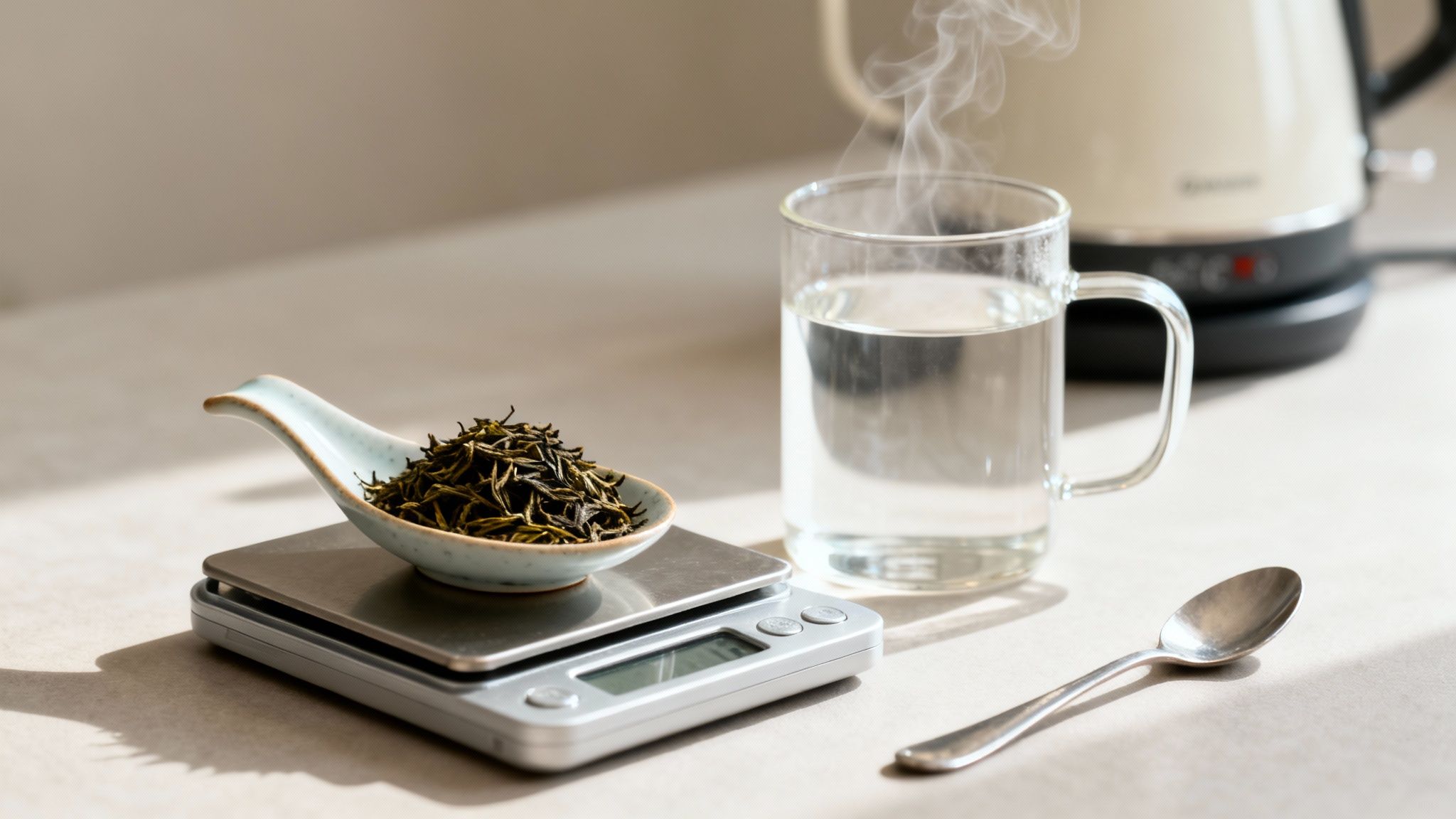
Making the leap from the convenience of a tea bag to the vibrant world of loose leaf is probably the single best thing you can do to get more from your daily brew. It might feel a bit intimidating at first, but the process is wonderfully straightforward. It’s not about complicated rituals; it’s simply about giving quality leaves the space and conditions they need to show you what they're made of.
Your journey starts with getting a handle on the three variables you have complete control over: how much tea you use, how hot your water is, and how long you steep it. Nailing these is the secret to unlocking all those nuanced flavours that tea bags just can't deliver.
Finding the Golden Ratio of Tea to Water
First things first, let's talk measurement. While you can always just guess, being consistent with your ratio is the quickest path to a perfectly balanced cup. A fantastic starting point, what many call the 'golden ratio' for a classic Western-style brew, is 2 to 3 grams of loose leaf tea for every 240ml of water. This is your safeguard against a brew that’s either disappointingly weak or far too punchy.
A small digital kitchen scale is invaluable here. You'll quickly see how different teas have completely different volumes—a fluffy, delicate white tea takes up so much more room than dense, tightly rolled oolong pellets. If you don't have a scale handy, a good rule of thumb is about one level teaspoon for smaller, broken-leaf teas and a heaped tablespoon for the big, bulky leaves.
The Critical Role of Water Temperature
Next up is water temperature. This isn't just about getting the kettle to boil; it's about hitting the right temperature for the specific tea you're brewing. If your water is too hot, you can easily scorch delicate leaves, leaving you with a bitter, astringent taste. It's a classic mistake, especially when you're new to the wonderful world of green and white teas.
Here’s a quick breakdown of why it matters so much:
- Delicate Teas (Green, White): These need cooler water, somewhere between 75-85°C, to protect their subtle, sweet character.
- Robust Teas (Black, Puerh): To pull out their deep, complex flavours and rich colour, they need much hotter water, right up around 95-100°C.
- Oolongs: These fascinating teas sit somewhere in the middle, typically happy between 85-95°C, depending on how oxidised they are.
A variable-temperature kettle is one of the best investments any serious tea drinker can make. It takes out all the guesswork and gives you precise control, making burnt leaves a thing of the past.
Patience and Proper Steeping Time
Finally, we come to timing. We're a nation of tea lovers, but we're often in a hurry. A 2025 census by the UK Tea and Infusions Association found that a staggering 93% of Brits still prefer tea bags, with 73% brewing their black tea for less than two minutes. This rush is the enemy of loose leaf tea, which needs a moment to properly unfurl and release its full personality. You can see the full census findings on UK tea habits for more on this.
Steeping for too long is just as bad as not steeping long enough. It causes the tea to release too many tannins, which is what creates that unpleasant bitterness. Following the recommended steep time for your chosen tea is your best bet for a balanced, delicious cup every time.
Choosing the Right Tools for Your Ritual
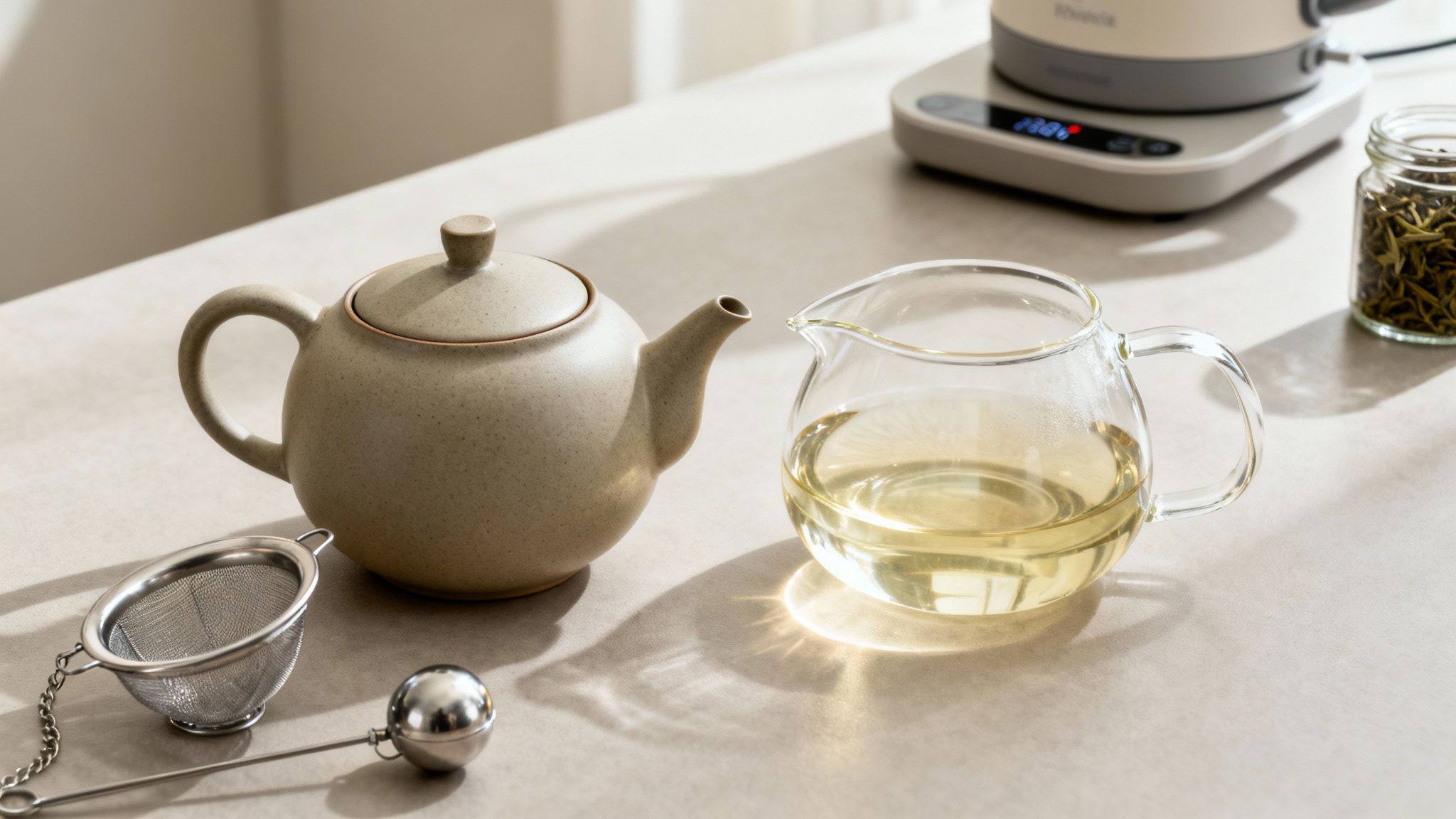
While you don't need a professional setup to make a fantastic cup of tea, having a few good pieces of equipment can turn a simple habit into a rewarding daily ritual. It’s less about owning the fanciest gear and more about choosing tools that suit the way you like to brew.
The good news? The essentials are wonderfully simple. All you really need is something to brew in, a way to separate the leaves from the water, and a kettle. With just those three things, you're ready to go.
Selecting Your Brewing Vessel
The teapot or mug you choose genuinely makes a difference. It affects how well the water holds its heat and, let's be honest, how much you enjoy the look and feel of the whole process.
- Ceramic and Porcelain: Your classic teapots. They're brilliant at holding onto heat, which is exactly what you want for robust black teas or darker oolongs that need that sustained warmth to open up fully.
- Glass: There's something magical about watching tea leaves unfurl in a glass pot. It's a bit of theatre for your tea break and a fantastic choice for visually beautiful teas like blooming jasmine pearls.
- Cast Iron (Tetsubin): These are the heavyweights. Known for being practically indestructible and keeping tea hot for ages, they’re perfect when you’re brewing a strong tea to share over a long chat.
If you fancy a more hands-on, traditional approach, look into getting a gaiwan. This simple lidded bowl gives you incredible control over your brew, which is why it's a favourite for exploring the delicate, shifting flavours of oolong and puerh teas through lots of short infusions.
Finding the Perfect Infuser
An infuser is the only thing standing between you and a gritty mouthful of tea leaves. The best ones give the leaves plenty of room to expand and release all their flavour – a crucial detail when you're getting to grips with loose leaf tea. Cramped leaves are a surefire way to get a weak, disappointing cup.
The whole point of an infuser is to let water flow freely around every single leaf. When they have room to breathe, you get a much richer, more complex taste in your cup.
Here are a few popular options:
- Basket Infusers: Honestly, these are one of the best choices out there for everyone. They sit right in your mug or teapot and are spacious enough for the leaves to properly swell and do their thing.
- Ball Infusers: Handy for a quick single cup, but they can be a bit too small for larger whole-leaf teas. They work best with finer, broken-leaf teas like some black tea grades or chopped herbal blends. If you want that single-cup convenience without the faff, our guide to the best infuser tea cups is a great place to start.
- Built-in Strainers: A lot of teapots have strainers integrated into the spout. They work perfectly well but can sometimes be a bit of a pain to clean compared to a simple removable basket.
The Game-Changing Kettle
And finally, the kettle. Any kettle will boil water, but a variable-temperature kettle is probably the single best investment you can make if you're serious about your tea.
Being able to heat water to a precise 80°C for a delicate green tea, or 95°C for an oolong, takes all the guesswork out of it. You'll never accidentally scorch your precious leaves again. It's the one piece of kit that guarantees you’re getting the intended flavour from every tea, every single time. It pays for itself in perfectly brewed cups.
Mastering the Brew for Every Type of Tea
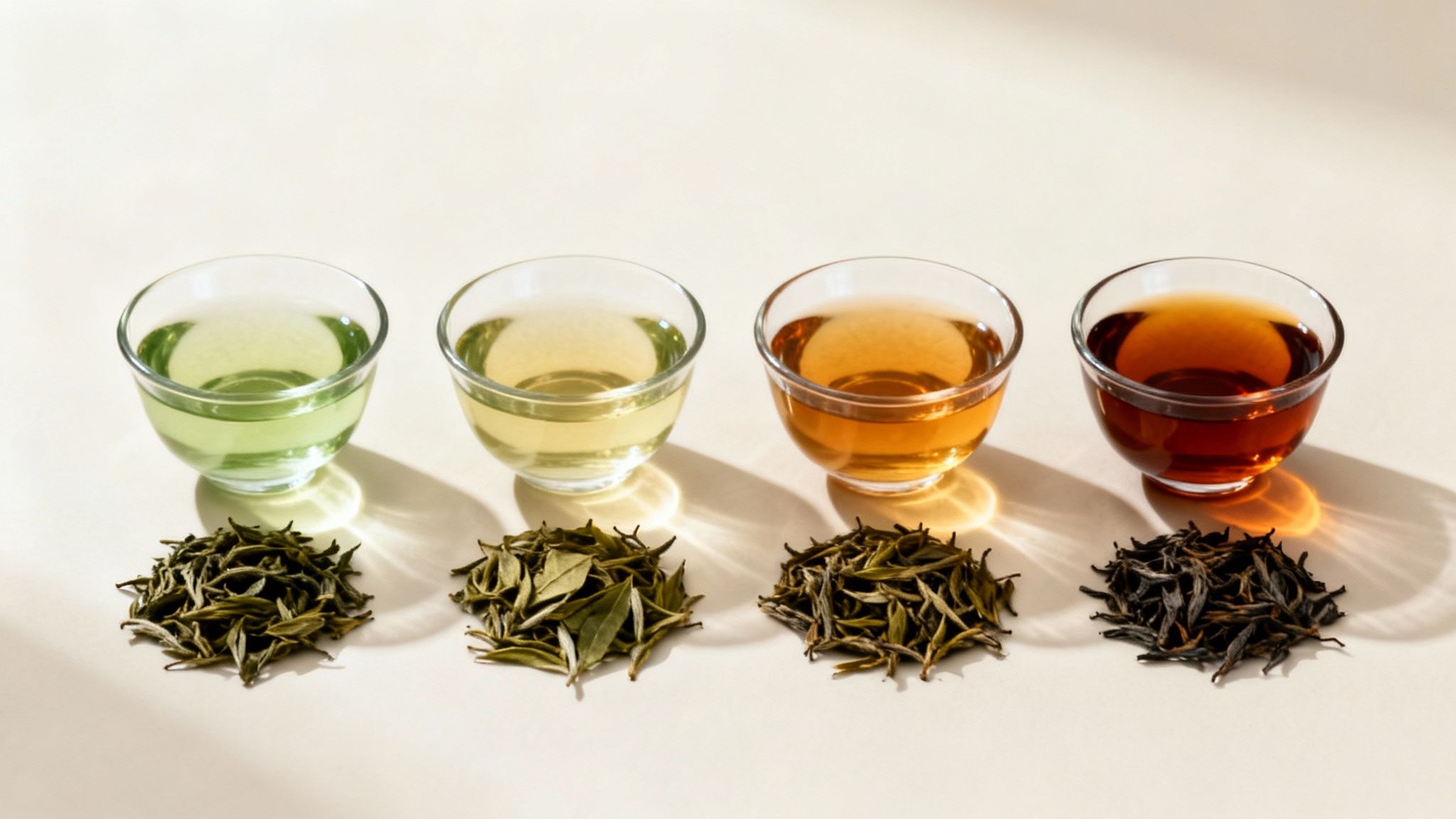
Every tea has its own personality. Learning its specific brewing needs is how you unlock its true character and flavour. The bold approach needed for a perfect cup of black tea will completely ruin a delicate white tea, leaving you with a bitter, astringent mess. This is where the real craft of tea making begins—fine-tuning your technique for each and every type.
Getting these small but crucial details right is what separates a decent cuppa from a brilliant one. It turns the simple act of making tea into a more mindful ritual. You start to understand what the leaves need, whether it’s the roaring heat for a robust Assam or just a gentle warmth for a prized Japanese Sencha.
Black Tea: For Richness and Depth
Black teas like English Breakfast, Earl Grey, and Darjeeling are fully oxidised, which is what gives them their deep colour and strong, complex flavours. To properly draw out these notes, they need very hot water.
For a classic, satisfying brew, you’ll want your water temperature between 95-100°C—that’s just off the boil. This high heat is essential for coaxing open the tightly rolled leaves and releasing their rich, malty character. Let it steep for 3 to 5 minutes. Any less and it will be weak; any more and you risk it becoming overly tannic and bitter.
Green Tea: For Freshness and Delicacy
Green tea is the polar opposite. It's unoxidised and far more fragile, making high temperatures its worst enemy. Pouring boiling water over green tea leaves will scorch them, creating a harsh, grassy taste that’s frankly unpleasant.
To protect its subtle, sweet nature, you need to use cooler water. A temperature range of 75-85°C is the sweet spot for most green teas. The steeping time is also much shorter—just 1 to 3 minutes will do it. Many high-quality greens, like our Dragon Well, can be re-steeped multiple times, with each infusion revealing a new layer of flavour.
Oolong Tea: The In-Between Art
Oolong is a fascinating world unto itself, sitting somewhere between green and black teas in its level of oxidation. Because this category is so diverse, the brewing instructions can vary quite a bit.
- Lightly Oxidised Oolongs: These are closer to green teas, with lovely floral and creamy notes. Use water around 85-90°C and steep for 2 to 3 minutes.
- Heavily Oxidised Oolongs: These lean towards black teas, offering roasted, fruity, or honey-like notes. They can handle hotter water, around 90-95°C, for a 3 to 5 minute steep.
Oolongs are especially brilliant for multiple infusions. It’s a joy to experience how their complex flavours evolve with each subsequent cup.
The real beauty of oolong tea is its incredible range. By experimenting with slightly different temperatures and steep times, you can unlock completely different aspects of its personality, from bright floral aromas to deep, toasty undertones.
White Tea: The Epitome of Subtlety
As the least processed of all teas, white tea is made from young, delicate leaves and buds. It has a subtle, sweet, and often fruity profile that can be easily destroyed by too much heat.
Much like green tea, it needs cooler water to protect its fragile character. The ideal temperature is between 80-85°C. You’ll need a bit of patience with the steep time; because the leaves are often large and fluffy, they need 3 to 5 minutes to fully infuse. A proper brew rewards you with a pale, beautiful liquor and a delicate, clean finish.
For a deeper dive into these categories, you can learn more about the different types of tea and their unique origins in our detailed guide.
Puerh, Herbals, and Chai: Unique Approaches
Of course, we couldn’t leave out a few other favourites, each with its own ritual for a perfect infusion.
Puerh Tea
This aged and fermented tea from Yunnan has a famously deep, earthy character. It needs boiling water (100°C) to awaken its complex flavours. Before your first proper steep, it's traditional to give the leaves a quick "rinse" by pouring hot water over them and immediately discarding it. This helps to open up the compressed leaves and wash away any dust. The first infusion can be as short as 15-30 seconds, with each one after that getting progressively longer.
Herbal Tisanes
While not technically "tea" (they don’t come from the Camellia sinensis plant), herbal infusions like chamomile, peppermint, and rooibos are incredibly forgiving. Most of them love boiling water (100°C) and a longer steep of 5 to 7 minutes to fully extract their flavours and aromatic oils.
Chai Blends
For a truly authentic Spiced Bombay Chai, nothing beats simmering it on the stovetop. Combine your chai blend with water and milk (a 50/50 ratio is a great place to start) in a saucepan. Bring it all to a gentle simmer for 5 to 10 minutes to allow the spices to properly infuse before you strain and serve.
To help you get brewing, we’ve put together this handy quick-reference table. It’s a great starting point, but don’t be afraid to experiment to find what you like best.
Loose Leaf Tea Brewing Quick Reference Guide
| Tea Type | Leaf Amount (per 240ml/8oz) | Water Temperature (°C) | Steep Time | Infusion Notes |
|---|---|---|---|---|
| Black Tea | 2-3g | 95-100°C | 3-5 minutes | Robust and forgiving; great with milk and sugar. |
| Green Tea | 2-3g | 75-85°C | 1-3 minutes | Avoid boiling water to prevent bitterness. Excellent for re-steeping. |
| Oolong Tea | 3-5g | 85-95°C | 2-5 minutes | Parameters vary by oxidation; ideal for multiple infusions. |
| White Tea | 3-5g | 80-85°C | 3-5 minutes | Delicate and subtle; use cooler water for a sweet flavour. |
| Puerh Tea | 4-6g | 100°C | 15s - 2 mins | Rinse leaves first. Designed for many short infusions. |
| Herbal Tisane | 3-5g | 100°C | 5-7 minutes | Use boiling water to extract full flavour and aroma. |
Think of these as guidelines, not strict rules. The best cup of tea is always the one that tastes best to you. Happy brewing
Going Beyond the Basics: Advanced Brewing Techniques
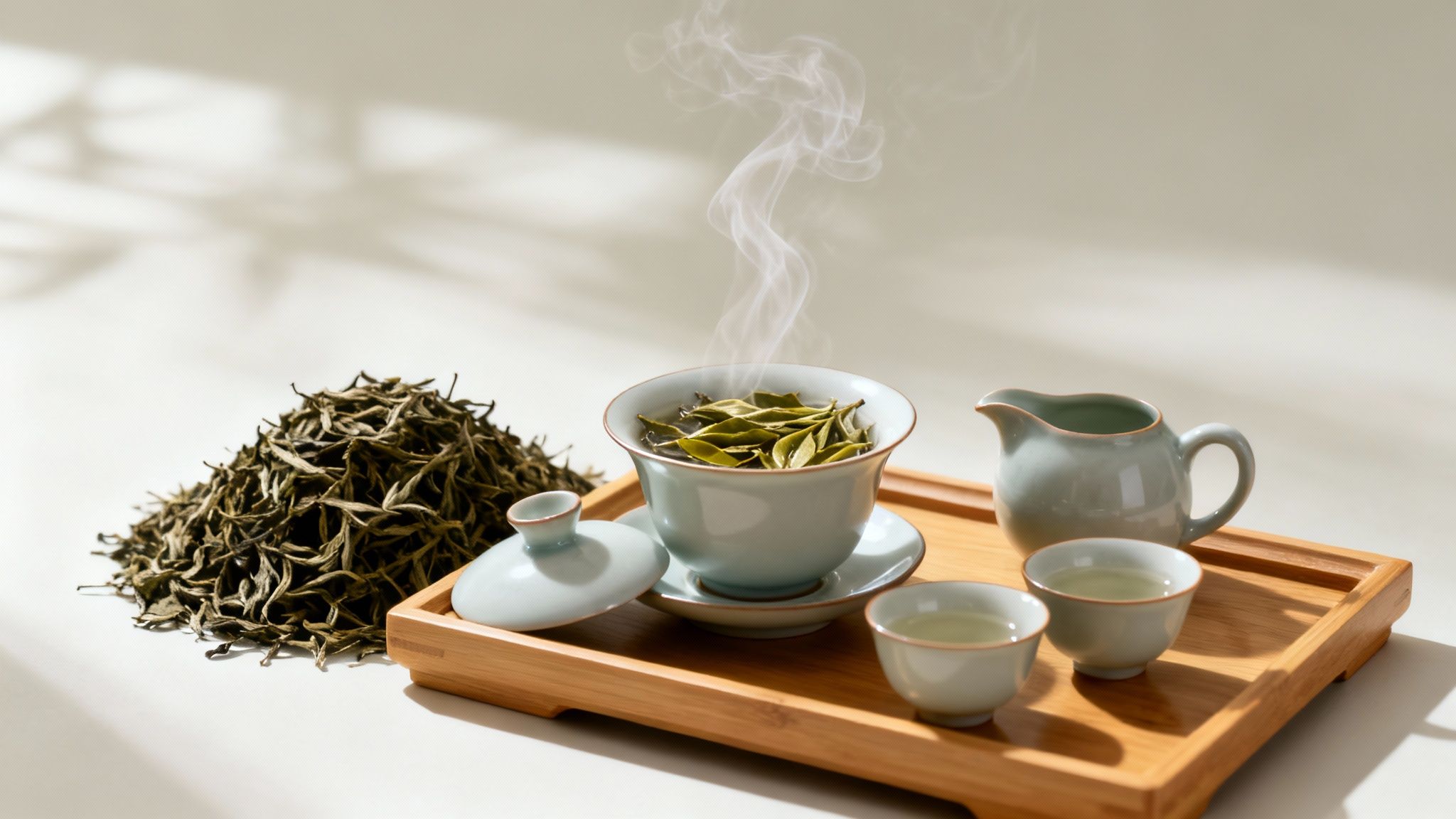
Once you’ve got the fundamentals down, a whole new world of tea appreciation is waiting for you. This is where we move beyond simply making tea and start truly interacting with it, discovering how a single leaf can reveal completely different sides of its personality.
Here, we’ll look at two very different ways to brew: the familiar Western method, designed for a single, generous mug, and the traditional Chinese practice of Gongfu Cha, a ceremony that uncovers a tea’s story over many small infusions.
The Classic Western Method
This is probably the way you already think about making tea. The Western style is all about convenience and volume, perfect for that big, comforting mug of breakfast tea that gets your day started.
The approach is simple: a relatively small amount of leaf, a large volume of water (using our "golden ratio"), and one single, longer steep. The idea is to extract the full flavour profile in one go, giving you a consistent and balanced brew from the first sip to the last. It’s a reliable, no-fuss method for enjoying your favourite loose leaf teas.
This method is fantastic for its simplicity and consistency. It’s the workhorse of the tea world, delivering a dependable and delicious cup time after time, especially for robust black teas or herbal blends.
Basically, you put your leaves in a big teapot, add hot water, wait three to five minutes, and pour. It’s straightforward, efficient, and gets the job done beautifully.
The Art of Gongfu Cha
Gongfu Cha, which translates to "making tea with skill," is a far more intimate and involved practice. It’s less about quenching your thirst and more about savouring an experience. This method is designed to highlight how a tea’s flavour and aroma can change, sometimes dramatically, from one pour to the next.
The principles behind Gongfu Cha are almost the complete opposite of the Western style:
- High Leaf-to-Water Ratio: You use a lot more tea in a much smaller pot, like a traditional gaiwan or a small Yixing clay pot.
- Flash Infusions: Instead of one long steep, you do lots of very short ones. Some are as quick as 10-20 seconds.
- A Focus on the Journey: The real goal is to taste how the tea evolves. The first cup might be light and floral, the third might be rich and fruity, and the fifth could settle into a sweet, lingering finish.
This technique is particularly rewarding for high-quality oolongs and puerh teas. Their complex, layered flavours are made for this kind of detailed exploration. It turns your tea break into a mindful ritual that asks for your full attention and rewards you with a deeper connection to the leaves.
Unlocking Value: The Joy of Multiple Infusions
One of the biggest perks of buying quality loose leaf tea is the ability to re-steep it. Unlike most tea bags, which are really only good for one cup, high-quality whole leaves have so much more to give. This isn't just about being thrifty; it’s about experiencing the full story the tea has to tell.
Learning how to make tea from loose leaves properly means understanding that the first cup is just chapter one. Teas like oolongs, puerhs, and many greens are famous for their staying power across multiple infusions. With each new steep, you’ll notice subtle shifts in flavour and aroma.
For example, a good oolong might give you 5 to 8 infusions when brewed Gongfu style. To get the most from your leaves:
- Add a Little Time: For each new infusion, just add about 15-30 seconds to the previous steep time to draw out the flavour.
- Keep the Water Hot: Stick with the correct water temperature for your tea type through all the infusions.
- Taste the Difference: Pay close attention to how the tea changes. This is where the magic happens, as new layers of complexity are revealed with each cup.
This practice not only makes your premium Jeeves & Jericho teas more economical but also deepens your appreciation for the craft behind them. You’re not just brewing a drink; you’re unlocking the full potential hidden inside every single leaf.
Tea Storage and Troubleshooting Common Problems
You’ve brought home some beautiful, high-quality loose leaf tea, and the last thing you want is for it to lose that incredible aroma and flavour. Getting the storage right is absolutely essential to protect your investment. Tea has four mortal enemies: light, heat, moisture, and air. Let any of them get to your leaves, and they’ll quickly destroy the delicate essential oils that give your tea its character.
This is exactly why the pouch it came in isn't always the best long-term home. To keep your tea in peak condition, you need to create a stable, protected environment. It’s a simple step, but one that makes all the difference to the quality of your cup.
Keeping Your Tea Fresh and Flavourful
The ideal home for your loose leaf tea is an opaque, airtight container. A classic tea caddy or tin is perfect because it blocks out all light. Ceramic jars with a snug-fitting lid also work wonders. The whole point is to stop oxygen and UV light from getting in and making your tea taste stale.
Once you have the right container, think about where you’ll keep it. You’re looking for a cool, dark place away from any heat sources or strong odours.
- Move it away from the cooker: Storing tea next to the oven is a common mistake that will essentially bake the flavour right out of the leaves.
- Steer clear of the spice rack: Tea is like a sponge; it will soak up the aromas of anything nearby. Keep it away from strong spices like curry powder or cinnamon, or you’ll end up with a very confused brew.
- Keep it dry: Never, ever store tea in the fridge or freezer. The constant changes in temperature create condensation, which introduces moisture—tea’s biggest enemy—and can even lead to mould.
Think of your tea leaves like you would a fine wine. You wouldn't leave a good bottle of red open on a sunny windowsill, and the same level of care should apply to your tea.
When stored properly, tea can last a surprisingly long time. Black teas and oolongs can stay fresh for up to a year, while more delicate green and white teas are best enjoyed within six months. For a deeper dive, you can explore our complete guide on the best storage for tea to ensure every cup is as vibrant as the first.
Solving Common Brewing Mishaps
Even with perfectly stored tea, things can go a bit awry during the brewing. If your cup doesn't taste quite right, don't worry—a small tweak is usually all it takes. Learning to brew loose leaf tea is a bit of a journey, but these quick fixes will get you back on track.
Is your tea too bitter?
This is by far the most common problem and almost always comes down to one of two things:
- Your water was too hot. This is a classic mistake, especially with delicate green and white teas. Simply let your kettle sit for a minute or two after it boils.
- You steeped it for too long. Over-steeping extracts too many tannins, which are responsible for that astringent, bitter taste. Try knocking 30 seconds off your steep time.
Is your tea too weak?
A watery, disappointing cup usually means you haven't extracted enough flavour from the leaves.
- You probably didn't use enough leaf. This is the most likely culprit. Try adding another half-teaspoon to your infuser.
- Your water wasn't hot enough. This is often the case with black teas, which need that near-boiling water to properly release their deep, robust flavours.
- Your steep time was too short. Give the leaves another minute to fully unfurl and work their magic.
Getting the hang of these simple adjustments will give you the confidence to perfect your technique and brew a brilliant cup, every single time. It's a skill that matters more and more as people move away from standard tea bags. In fact, while the UK tea market has seen an overall decline in sales—with a projected 13% decline over five years to around 65 million kilograms by 2022—it's the world of speciality loose leaf that continues to capture the imagination of true tea lovers. Taking the time to perfect your brew is what it's all about.
Your Loose Leaf Tea Questions Answered
Even with the best guide in hand, a few questions always pop up when you're getting to grips with loose leaf tea. Think of it as part of the adventure. We get asked all sorts of things, so let’s clear up a few of the most common queries.
Can I Reuse My Loose Tea Leaves?
Yes, absolutely! In fact, you should. This is one of the best things about switching to proper whole leaf tea. Unlike the fine, dusty tea found in most bags, whole leaves are complex and release their flavour in stages.
Many teas, particularly oolongs, puerhs, and a lot of greens, are practically made for multiple infusions. You'll find each steep reveals something new. The first cup might be punchy and bright, while the third or fourth softens into something sweeter and more delicate. Don't even think about throwing those leaves away after one go—you're literally pouring half the experience down the drain.
How Much Caffeine Is in Loose Leaf Tea?
This is a classic "it depends" situation. The caffeine in your cup is down to much more than just the type of tea. The old rule of thumb that black tea has the most and white tea the least simply isn't a hard-and-fast rule.
Here’s what really makes a difference:
- The Tea Plant: The specific varietal of the Camellia sinensis plant is a huge factor.
- Where It's Grown: Things like soil, climate, and even altitude all influence the final caffeine level.
- How You Brew It: This is the big one. Using hotter water or steeping for longer will always pull more caffeine out of the leaves.
Generally speaking, a cup of tea has about a third to half the caffeine of a similar-sized coffee. But it really does vary from one tea to the next.
What Is Grandpa Style Brewing?
You might hear this term floating around in tea circles. "Grandpa style" is just about the most laid-back way to make tea imaginable. There are no infusers, no teapots, just leaves in a mug. You simply pop a pinch of tea leaves into a big mug, pour hot water over them, and start sipping once they settle at the bottom.
The name was coined by tea blogger MarshalN, who named it after watching his own grandfather. It's a wonderfully relaxed approach, and it works especially well for delicate green and white teas that don’t get bitter easily. As you drink, you just top it up with more hot water, enjoying how the flavour gently changes over time.
Grandpa style brewing reminds us that enjoying tea doesn't have to be complicated. Sometimes, all you really need are great leaves, hot water, and your favourite mug.
How Can I Make Loose Leaf Tea Without an Infuser?
No infuser? No problem at all. There are a couple of dead-simple ways to brew your leaves without any special kit. My favourite is the "two-mug method."
Just let your tea leaves swim freely in one mug or a heatproof jug. Once they've steeped for the right amount of time, grab a second mug and pour the tea through a small kitchen sieve. The sieve catches the leaves, and you're left with a perfect, clear brew. A French press also does the job brilliantly—just make sure it’s been scrubbed clean of any coffee flavour first!
As you get into your tea ritual, it’s nice to have a few quality things around you. If you’re thinking about your kitchen setup, you might find some useful tips on choosing the best linen tea towels to keep everything looking smart.
Ready to dive into the rich, authentic flavours that only whole leaves can offer? The Jeeves & Jericho collection is full of ethically sourced, top-tier loose leaf teas from the world's best gardens. Discover your new favourite brew today.