


It all comes down to one crucial step: oxidation. At its heart, this is the one thing that separates black and green tea. Black tea is fully oxidised, a process that develops its deep, robust flavour and rich dark colour. Green tea, on the other hand, is unoxidised, which is why it keeps its delicate, fresh character.
Incredibly, both start their lives on the very same plant, Camellia sinensis.
Understanding the Core Differences
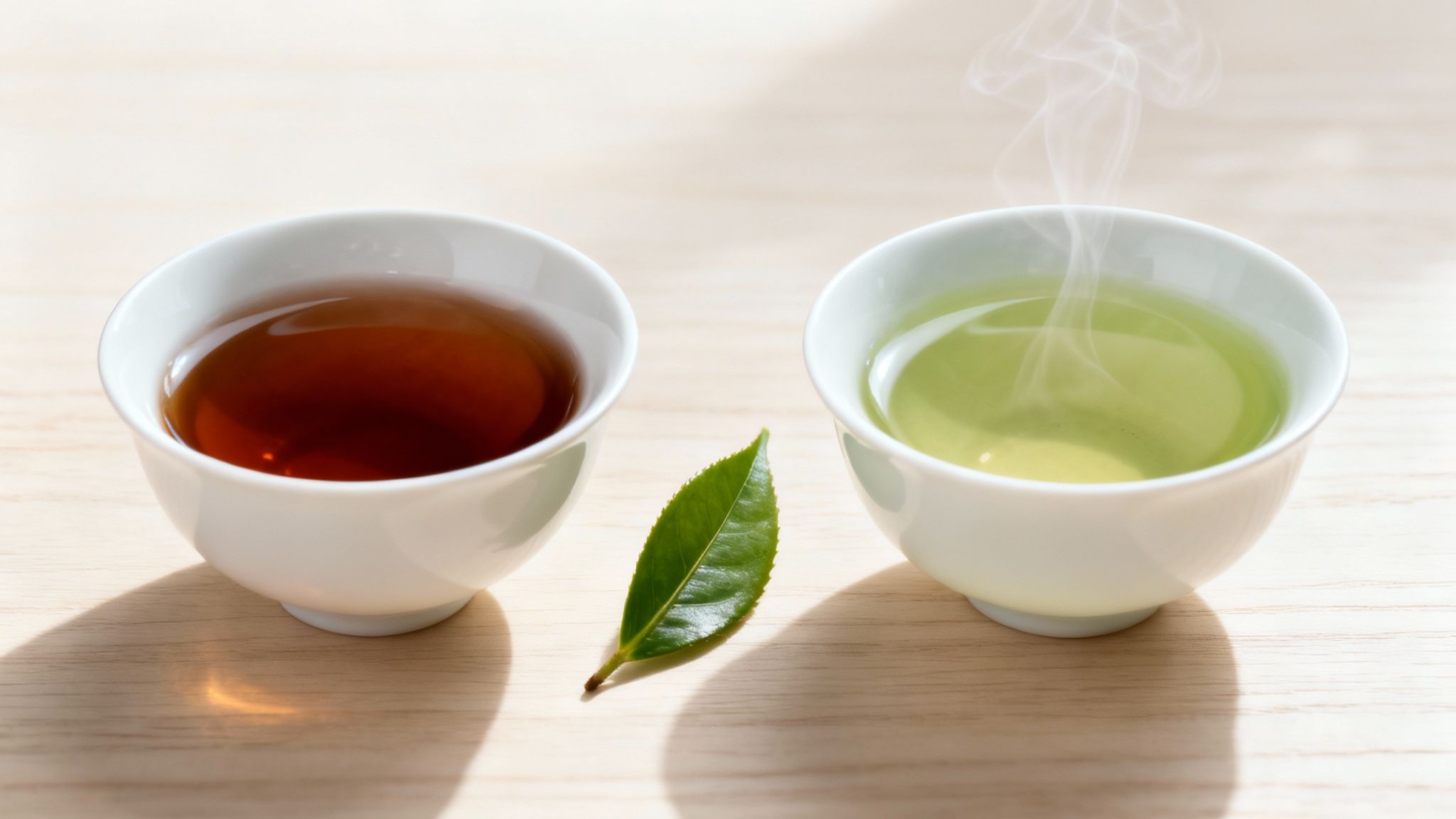
When you get right down to it, comparing black and green tea is really about exploring two different paths from the same starting point. The journey from a freshly plucked leaf to the brew in your cup is defined entirely by what happens in the tea garden just after the harvest.
Think of it like slicing an apple and leaving it on the counter; that browning process is oxidation. For black tea, this is exactly what the producer wants. The leaves are carefully rolled to break down their cell walls and then left in a warm, humid room to oxidise. This is where those deep, malty, and complex flavours come from—it’s what gives a classic English Breakfast its signature richness.
With green tea, the goal is the complete opposite. Producers work quickly to prevent any oxidation from taking place. Straight after harvesting, the leaves are heated to stop the enzymes responsible. This is usually done by steaming (the Japanese method) or pan-firing in a large wok (the Chinese method), which locks in the leaves' vibrant green colour and fresh, grassy notes.
Black Tea vs Green Tea At a Glance
To make things a bit clearer, here’s a simple side-by-side look at the main characteristics that distinguish these two fantastic teas. It’s a handy reference for the next time you’re pondering which to brew.
| Characteristic | Black Tea | Green Tea |
|---|---|---|
| Processing | Plucked, withered, rolled, fully oxidised, dried | Plucked, heated (steamed/pan-fired), rolled, dried |
| Flavour Profile | Bold, malty, robust, sometimes fruity or smoky | Delicate, grassy, vegetal, sometimes nutty or sweet |
| Colour | Dark amber to deep reddish-brown | Pale green to bright yellowish-green |
| Typical Caffeine | Higher (around 40-70 mg per cup) | Lower (around 20-45 mg per cup) |
| UK Consumption | Often enjoyed with milk and sugar | Typically enjoyed plain, without additions |
So, while they come from the same plant, the way they are handled results in two completely different tea experiences, from the way they taste to how we tend to drink them here in the UK.
How Processing Creates Two Distinct Teas
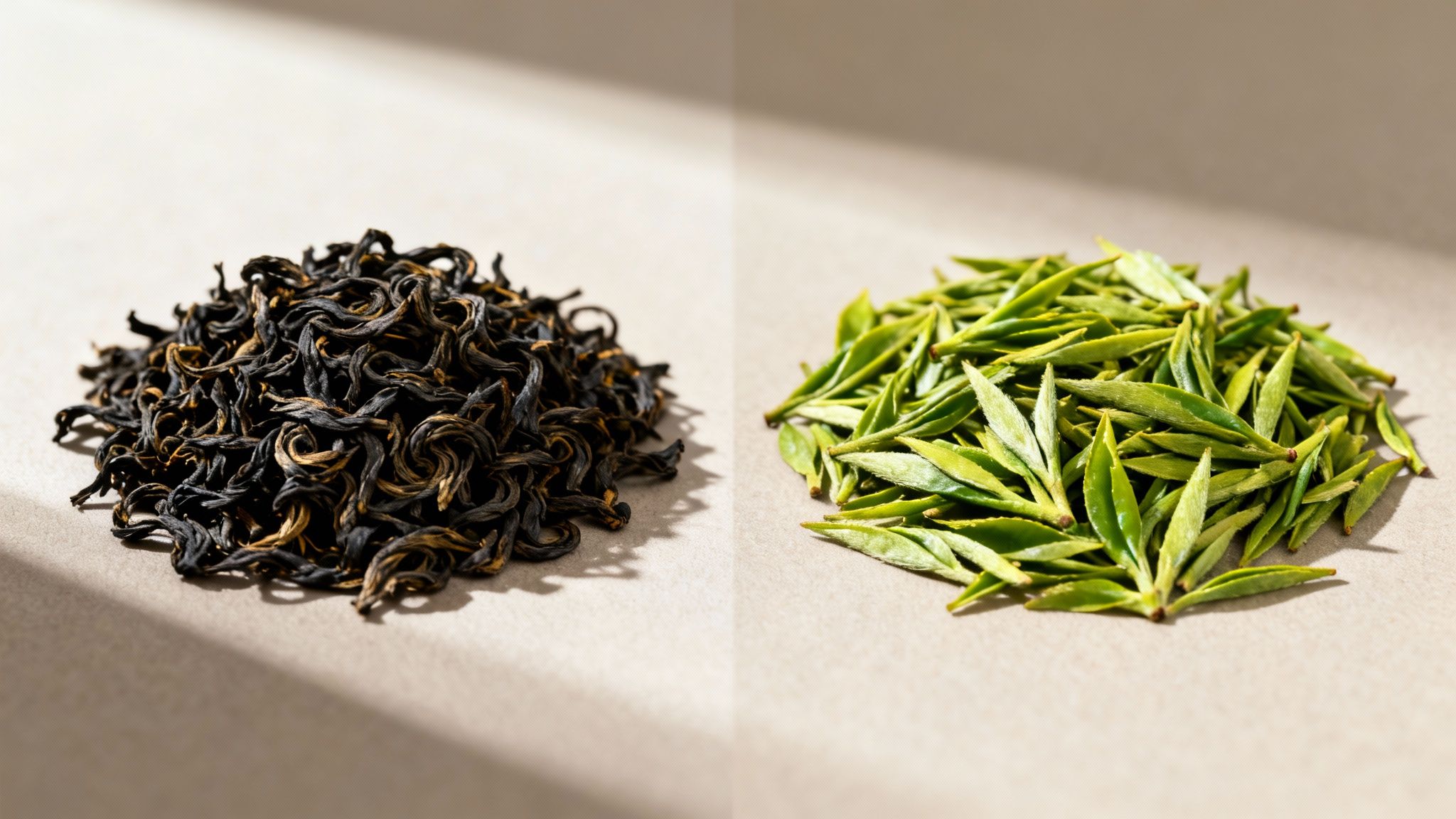
It’s amazing to think that a robust black tea and a delicate green tea start life as leaves from the very same plant. The magic happens in the processing—a journey of artistry and chemistry where one critical step changes everything: oxidation.
This controlled exposure to air fundamentally alters the leaf’s chemical makeup, dictating its final colour, flavour, and aroma. Think of it as two paths diverging from a single point. For black tea, the goal is to encourage full oxidation. For green tea, it's to prevent it entirely. This one decision shapes the character of the tea in your cup.
The Art of Crafting Black Tea
Making black tea is a deliberate, multi-stage affair designed to coax out deep, complex characteristics. The moment the Camellia sinensis leaves are plucked, the clock starts ticking.
Here’s a look at the journey for a classic black tea:
- Withering: First, the fresh leaves are laid out on racks to wilt for several hours. This reduces their moisture by around 30%, making them soft and pliable enough for the next step.
- Rolling: The withered leaves are then gently rolled, either by hand or machine. This bruises the leaf, breaking down the cell walls and releasing the natural enzymes that kickstart oxidation.
- Oxidation: Now for the crucial part. The rolled leaves rest in a warm, humid room where the exposed enzymes react with oxygen. This is where the leaves transform from green to a deep coppery-brown, developing those signature malty, fruity, or floral notes.
- Drying: Finally, the leaves are fired with hot air. This halts the oxidation process at the perfect moment and dries the tea to a stable 3% moisture content, locking in the flavour.
This meticulous process is what gives us the rich character in everything from a classic breakfast blend to a fragrant Earl Grey.
The Preservation of Green Tea
In complete contrast, green tea production is a race against time to preserve the leaf's natural, vibrant state. The whole point is to stop the enzymes from oxidising the leaf, locking in its fresh, verdant qualities.
This rapid heating process, known as "kill-green" or "fixing," is the defining moment for green tea. It preserves the natural polyphenols, or catechins, which are responsible for green tea's distinctive flavour and many of its acclaimed health benefits.
The heating method used often shapes the tea's regional character:
- Steaming: Common in Japan, this involves blasting the leaves with steam for a very short time. It produces a vibrant green tea with a distinctly savoury, umami, or even seaweed-like flavour.
- Pan-Firing: The preferred method in China, where leaves are tossed in a large, hot wok. This gives the final tea a gentler, sometimes nutty or toasty character.
After this critical heating stage, the leaves are simply rolled and dried, with their essential greenness perfectly intact. To get a better sense of all the different styles, you can explore the various types of tea in our comprehensive guide.
Comparing Flavour Profiles and Food Pairings
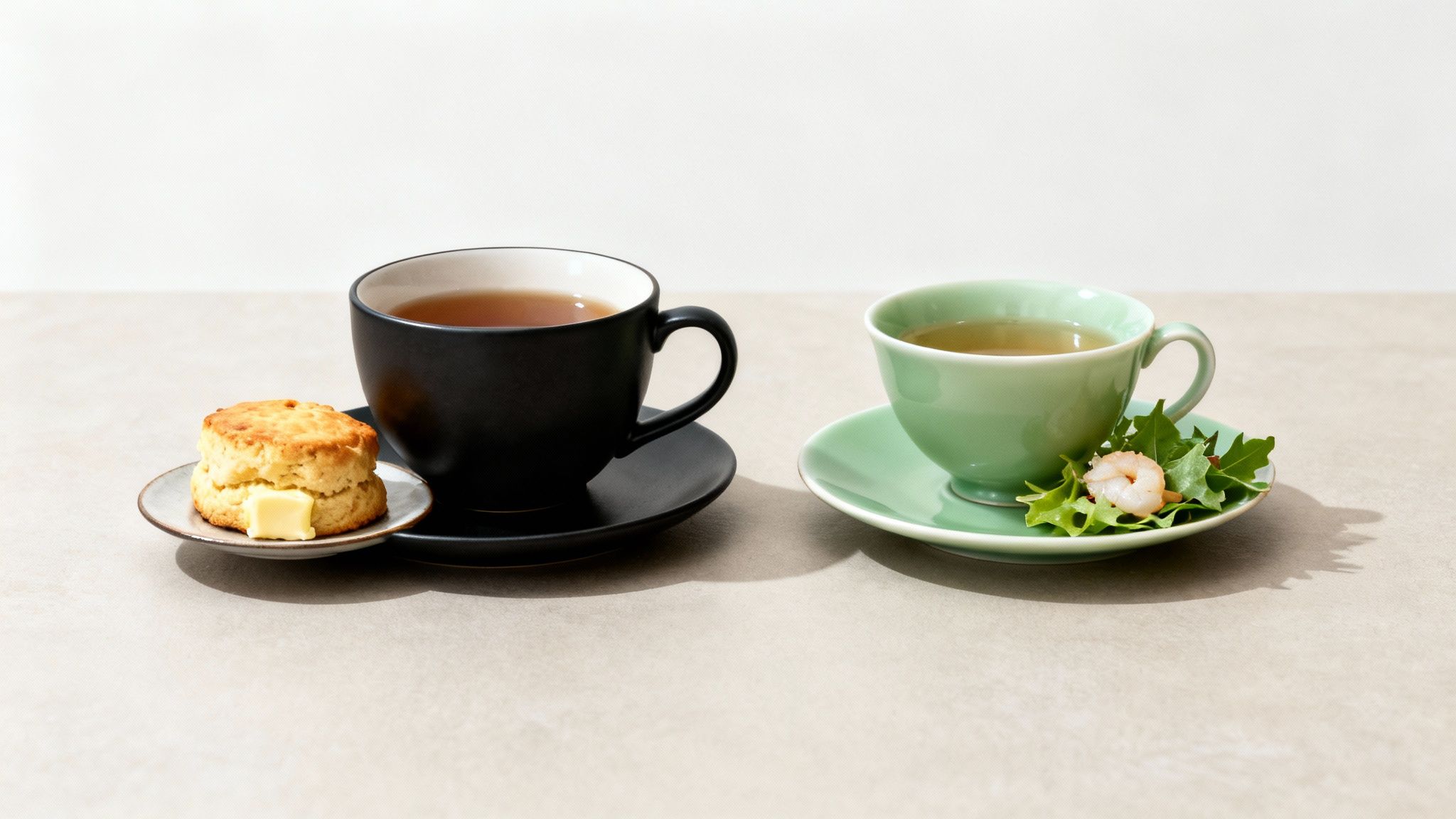
This is where the magic really happens. The fundamental split in how these teas are processed—full oxidation for black, gentle preservation for green—gives rise to two completely different sensory worlds. It’s in the flavour that their personalities truly emerge, guiding which one you’ll reach for and what you'll pair it with.
Black tea brings a bold, comforting character to the table. We’re talking deep, satisfying notes of malt, honey, and dark fruit, sometimes with a whisper of smoke or spice in the finish. That richness is the direct result of oxidation, a process that coaxes complexity and a full-bodied profile from the humble leaf.
Green tea, on the other hand, is a masterclass in freshness. Its flavour is defined by what’s been carefully preserved, not transformed. Expect bright, clean notes that can be grassy, vegetal, or even a little marine-like (especially in Japanese teas). The body is lighter, the finish crisp.
The Bold World of Black Tea Pairings
The assertive nature of black tea makes it a fantastic partner for foods that are equally rich and flavourful. Its natural tannins are brilliant at cutting through fat and sweetness, cleansing your palate between bites and lifting the entire experience. It's no accident that it's a staple alongside hearty meals and decadent puddings.
You simply can’t beat a classic British breakfast with a proper brew. A strong Assam or a classic English Breakfast blend has the muscle to stand up to fried eggs, sausages, and bacon. The malty depths of the tea beautifully complement the savoury richness of the food.
Here are a few ideas to get you started:
- Hearty Breakfasts: A robust brew like our English Breakfast Tea slices right through the richness of a full English.
- Rich Desserts: That strong, malty character of a good Assam is a perfect match for chocolate cake, sticky toffee pudding, or a dense cheesecake.
- Spiced Dishes: A fragrant Earl Grey, with its bright bergamot notes, is wonderful alongside spiced bakes like gingerbread or fruitcake.
- Aged Cheeses: The tannins in black tea create a beautiful balance with the fat and salt in hard cheeses like a sharp cheddar or a nutty Gruyère.
This knack for holding its own against strong flavours has made black tea an indispensable culinary companion, especially in Western kitchens.
The key to pairing is balance. Black tea’s robust structure and tannins are built to cut through richness, making it the ideal counterpart for foods that would overwhelm a more delicate drink. It’s a palate cleanser and a flavour enhancer, all in one cup.
The Delicate Dance of Green Tea and Food
Pairing food with green tea requires a much lighter touch. Its delicate, nuanced flavours are easily lost against anything too heavy or aggressive. The goal here is to find foods that complement its fresh, vegetal character without trampling all over it.
Green tea truly shines alongside lighter fare. Its clean, almost savoury profile makes it an exceptional match for seafood, salads, and vegetable-forward dishes. Think of it like a squeeze of lemon on fish—it brightens and elevates the natural flavours already there.
Consider these scenarios for your next green tea:
- Seafood: A delicate Japanese Sencha, with its grassy, umami notes, is a sublime match for sushi, steamed fish, or grilled prawns.
- Salads & Vegetables: The crisp character of a Chinese Dragon Well perfectly complements light salads with a vinaigrette dressing or steamed green vegetables like asparagus and edamame.
- Light Poultry: The subtle sweetness of a pan-fired green tea works beautifully with simple dishes like grilled chicken or turkey.
- Subtle Desserts: For something sweet, try a high-quality matcha with a light, not-too-sweet dessert like a fruit tart or a simple sponge cake.
Ultimately, choosing between black and green tea for a meal comes down to intensity. For bold, rich, and hearty food, reach for a black tea. For anything light, fresh, and subtle, green tea is almost always the better choice.
Analyzing Caffeine and Health Benefits
When we start to unpack the health side of the black vs. green tea debate, it’s easy to get caught up in which one is ‘healthier’. The reality is a lot more interesting than that. Both teas bring something unique to the table, and it all comes down to the different chemical profiles created during processing.
One of the first things people ask about is caffeine. As a general rule, black tea tends to have a bit more of a kick, typically packing 40-70 mg of caffeine per cup, whereas green tea is usually a gentler 20-45 mg. But this is far from a hard-and-fast rule. Everything from the specific tea plant, the size of the leaf, how hot your water is, and how long you let it steep can change the caffeine in your cup. Let your black tea brew for longer, and you'll get more caffeine; a quick, cooler infusion for your green tea keeps it on the lower end.
If you want to get really granular on how all these factors play out, our detailed guide on the caffeine content in teas is the perfect place to start.
The Real Story on Antioxidants
Beyond the morning pick-me-up, the most significant health differences are found in their antioxidant makeup. The oxidation that turns tea leaves black actually changes the structure of its polyphenols. Green tea, by skipping this step, keeps its original set of these compounds intact.
-
Green Tea's Powerhouse: EGCG: Green tea gets a lot of praise for its high concentration of catechins, especially one called epigallocatechin gallate (EGCG). This is a seriously potent antioxidant that researchers are incredibly interested in for its potential to support cellular health and metabolism. The minimal processing is what keeps these delicate goodies preserved.
-
Black Tea's Unique Flavonoids: During oxidation, the catechins in black tea transform into entirely new, more complex compounds called theaflavins and thearubigins. These are the polyphenols that give black tea its deep, dark colour and robust flavour profile. While they’re different from EGCG, they are powerful antioxidants in their own right, often linked to supporting cardiovascular health.
The crucial thing to remember is that one isn't simply "better" than the other. Black and green tea just offer different types of beneficial antioxidants. It’s less about picking a winner and more about appreciating the variety of good stuff you get from these amazing plants.
For a clearer picture, here’s a quick side-by-side look at their key health components.
Health & Caffeine Profile Black vs Green Tea
| Component | Black Tea | Green Tea |
|---|---|---|
| Caffeine | 40-70 mg per cup | 20-45 mg per cup |
| Primary Antioxidants | Theaflavins & Thearubigins | Catechins (especially EGCG) |
| Key Health Focus | Cardiovascular support | Cellular health & metabolism |
| Oxidation Level | Fully Oxidised | Unoxidised |
This table shows how their distinct processing paths create two different, but equally valuable, nutritional profiles.
The UK's Favourite Brew Vindicated
For years, green tea has hogged the health spotlight, leaving many of us who love a proper brew wondering if our daily cuppa was falling short. Well, some fantastic recent science has reassuring news for the majority of British tea drinkers.
A huge study from the UK Biobank has really challenged the idea that only green tea is the healthy option. It looked at over 56,000 people and found that a whopping 89% of them were regular black tea drinkers, with only 7% preferring green. The fascinating part? The research discovered that drinking more black tea was linked to a modestly lower risk of all-cause mortality. It's a wonderful validation for the nation's favourite brew.
This doesn't take anything away from the well-known benefits of green tea. Instead, it puts black tea right up there with it, confirming it as a brilliant part of a healthy lifestyle. It’s a powerful reminder that the familiar comfort of a traditional cuppa brings its own serious wellness perks.
Of course, making sense of health information can feel like a full-time job. Learning the basics of deciphering food labels is a great skill to have in your back pocket.
Ultimately, when it comes to health, the contest between black and green tea ends in a very satisfying draw. Both are fantastic choices, and the best strategy might just be to enjoy them both. A bold black tea to start the day and a soothing green tea in the afternoon means you get the distinct benefits of each, making for a well-rounded and thoroughly enjoyable tea habit.
Mastering the Perfect Brew for Each Tea

The difference between a decent cup of tea and a truly exceptional one often lies in the small details. While both black and green teas come from the same plant, their unique processing means they need a different touch when it comes to brewing. It takes a little know-how, but the reward is a far richer taste experience.
Think of it like cooking. You wouldn’t treat a tough cut of beef the same way as a delicate piece of fish; one needs a long, slow cook while the other requires just a few moments of gentle heat. Tea is no different. The robust, fully oxidised leaves of black tea need hotter water to coax out their deep, complex notes. In contrast, the delicate, unoxidised leaves of green tea will turn bitter and astringent if you scorch them.
Brewing Bold Black Tea
Black tea is wonderfully resilient, which is one reason it’s so well-loved. It stands up to high temperatures, which are essential for drawing out the rich, malty flavours developed during oxidation.
To get the most from your black tea, here’s what we recommend:
- Water Temperature: Use water that’s just off the boil, ideally between 95-100°C. Boiling water is key for a full-bodied extraction.
- Steep Time: Let the leaves infuse for 3-5 minutes. A shorter steep will give you a brighter, brisker cup, while a longer brew brings out a stronger, more tannic character.
- Leaf-to-Water Ratio: A great place to start is one teaspoon (about 2-3 grams) of loose-leaf tea for every 250ml of water.
This simple method will give you a satisfying, full-flavoured cup every time, whether you take it black or with a splash of milk.
The Gentle Art of Green Tea Brewing
Brewing green tea is a more delicate affair. The golden rule is to avoid bitterness by using cooler water and a much shorter infusion. This gentle approach preserves the fresh, grassy, and sometimes sweet notes that make green tea so special.
The most common mistake people make with green tea is using boiling water. It scalds the delicate leaves, releasing a rush of tannins and creating a harsh, unpleasantly bitter brew. A little patience and a cooler kettle make all the difference.
Follow these simple steps for a flawless cup of green tea:
- Water Temperature: Aim for a much cooler temperature, somewhere between 75-85°C. If you don’t have a variable-temperature kettle, just let boiled water cool for a couple of minutes before pouring.
- Steep Time: Keep it short and sweet, between 1-3 minutes. Many high-quality green teas can be re-steeped, with each infusion revealing new layers of flavour.
- Leaf-to-Water Ratio: Stick to the same ratio as black tea: one teaspoon per 250ml of water.
Once you get the hang of these techniques, it will completely transform your daily cuppa. For a more detailed walkthrough, our complete guide on how to brew loose-leaf tea is packed with more expert tips.
Essential Tips for a Superior Cup
Beyond temperature and time, a few other things can elevate your brew from good to great. Always start with fresh, filtered water if you can. Tap water, especially in hard water areas across the UK, contains minerals that can flatten the delicate nuances of your tea.
Your teaware plays a part too. To really get into the ritual, you might enjoy something like this adorable panda design ceramic tea infuser mug set for a convenient and fun brew. Ultimately, paying attention to these small details ensures that every cup reflects the tea's true character, leaving the generic taste of a standard teabag far behind.
How to Choose the Right Tea for You
So, you've got the basics down. But how do you pick the right brew when it comes down to it? Honestly, it’s less complicated than you might think. Forget the complex tasting notes for a moment and just think about what you want from your cup.
Are you after a robust, energising kick to get the day started? That’s where a bold black tea comes in. Its higher caffeine content and full-bodied, malty character are perfect for shaking off the morning grogginess, especially alongside a proper breakfast. It's also the quintessential choice for a classic afternoon tea, strong enough to hold its own against scones and clotted cream.
If you’re looking for something a bit more gentle—a calming, quiet lift—then green tea is your answer. With less caffeine, it offers a smoother, more sustained focus without the risk of jitters. Those fresh, vegetal notes make it an ideal partner for a quiet afternoon pause or as a soothing digestif after a meal.
Matching Tea to the Moment
The easiest way to decide is to simply think about the occasion. Your daily routine and what you fancy at that moment are the best guides in the tea black vs green debate.
- For a Morning Boost: It has to be black tea. A strong cup of English Breakfast or a rich, malty Assam delivers that get-up-and-go feeling.
- For an Afternoon Pick-Me-Up: Green tea really shines here. It gives you a gentle lift without messing with your sleep later on. A delicate Sencha or a quality matcha provides a clean, refreshing reset.
- For Relaxation and Digestion: A soothing green tea is wonderful after a meal. Its lighter body and beneficial compounds can help you unwind and feel settled.
- For Social Gatherings: Black tea is always a crowd-pleaser. A fragrant Earl Grey or a classic breakfast blend is versatile enough for any guest, and perfect with a slice of cake.
The best tea is simply the one that fits what you need, right now. There's no need to pick a side—having both a great black and a great green tea in your caddy means you’re ready for anything.
The UK Tea Landscape
Here in the UK, black tea is practically a national institution. It's the comforting ritual many of us grew up with, and that tradition is still going strong, even as our collective tastes get a bit more adventurous.
Black tea remains the top choice across all age groups. Recent data shows that around 74% of Brits aged 25-34 drink standard black tea, while about 52% in the same group drink green tea. But what's really interesting is that 37% of them enjoy 5-6 different types of tea. You can read more about these UK tea drinking trends and what they mean for the market.
This tells us that while the classic cuppa isn't going anywhere, people are getting more curious. Tea lovers are exploring the nuances of proper whole-leaf teas, from single-origin blacks to artisanal greens. At Jeeves & Jericho, we love both sides of the story, offering robust, ethically sourced black tea blends for your daily brew and exceptional Japanese matcha for those moments that call for something truly special. The choice, as always, is yours.
A Few Final Questions
When you start diving into the world of tea, a few questions always pop up. Let's tackle some of the most common ones comparing these two titans of the tea world.
Can I Drink Black and Green Tea Every Day?
Yes, absolutely. For most of us, enjoying a few cups of black or green tea daily is a fantastic ritual. Both are packed with compounds that do you a world of good.
The only real watch-out is caffeine. Listen to your body. A moderate intake of around 3-4 cups a day is generally fine, but if you're sensitive, you might find green tea a better fit, or even look for decaffeinated versions.
Which Is Better for Weight Loss: Black or Green Tea?
Neither tea is a magic wand for weight loss, but both can be brilliant partners to a healthy diet and an active life. Green tea usually grabs the headlines here, thanks to its high levels of EGCG (epigallocatechin gallate), a powerful catechin thought to give your metabolism a gentle nudge.
But don't write off black tea. The unique polyphenols it develops during oxidation, called theaflavins, can also lend a hand by supporting a healthy gut. The bottom line is that both are wonderful, low-calorie ways to stay hydrated.
The real secret is consistency. Pick the tea you genuinely love the most, because the one you drink regularly—instead of reaching for a sugary drink—is the one that will make the biggest difference to your long-term health.
Does Adding Milk to Black Tea Reduce Its Health Benefits?
This is a classic debate, especially for us here in the UK where milk and tea go hand-in-hand. For a while, the science was a bit back and forth. Some early studies hinted that casein, a protein in milk, might latch onto the tea's beneficial flavonoids, dampening their antioxidant punch.
However, more recent and thorough research suggests there's little to worry about. Considering that millions of us who drink black tea with milk are still reaping its health rewards, it's safe to say any potential reduction is likely tiny. The most important thing is to enjoy your brew exactly how you like it.
Ready to taste the difference that premium, whole-leaf tea makes? Jeeves & Jericho offers everything from hearty breakfast blends to exquisite Japanese matcha, all sourced with care. Find your new favourite at jeevesandjericho.com.