


When it comes to keeping your loose leaf tea fresh, there are four sworn enemies you need to defend against: air, light, moisture, and heat. The goal is simple: find an airtight, opaque container and tuck it away in a cool, dark, dry spot. A kitchen cupboard, far from the cooker or any pungent spices, is usually perfect. This basic setup is your best defence against stale, flavourless tea.
Protecting Your Tea from Its Four Biggest Threats
Before you even think about what container to use, it's worth getting to know the opposition. Your precious tea leaves have four key adversaries hell-bent on ruining their delicate flavour and aroma. Understanding how these elements work against you will help you make much smarter choices for your whole collection, ensuring every cup is as vibrant as the last.
Air and the Onset of Oxidation
Oxygen is enemy number one. As soon as tea leaves meet the air, they begin to oxidise—it’s the same chemical reaction that turns a sliced apple brown. This process attacks the essential oils and aromatic compounds that give your tea its unique personality.
A delicate green tea will lose its fresh, grassy notes almost immediately, tasting flat and uninspired. Even a robust black tea will find its complex profile dulled over time. Think of an airtight seal as your front-line defence against this invisible flavour thief.
The Damaging Effects of Light
Light, especially direct sunlight, is a powerful catalyst for flavour degradation. The UV rays essentially "cook" the leaves, breaking down their structure and causing the taste to fade with surprising speed. This is exactly why you should never, ever store tea in a clear glass jar on the kitchen counter, no matter how lovely it looks.
Opaque containers are non-negotiable. They shield the leaves from harmful light, preserving every intricate note.
The Dangers of Moisture and Humidity
Tea leaves are what we call hygroscopic, which is a fancy way of saying they love to suck up moisture from the air. Even a tiny bit of humidity can spell disaster, creating the perfect environment for mould and bacteria to thrive. A damp tea isn't just spoiled; it can be unsafe to drink.
Always keep your tea in a bone-dry location, well away from the sink, kettle, or dishwasher. A stable, low-humidity environment is the secret to long-term freshness.
The Impact of Heat and Unwanted Odours
Warmth is like a fast-forward button for all the chemical reactions that make tea go stale, including oxidation. Storing your collection anywhere near a cooker, radiator, or even a sunny windowsill will drastically shorten its life. A cool, stable temperature is what you're aiming for.
On top of that, tea leaves are like little sponges for smells. If you store them next to your coffee beans, spice rack, or inside a fragrant wooden box, they'll soak up those aromas and their original flavour will be lost forever.
For a quick summary of these key points, have a look at the table below.
Quick Guide to Perfect Tea Storage
Here's a simple breakdown of the essential rules for keeping your loose leaf tea tasting its best.
| Factor | Why It's a Threat | Best Practice |
|---|---|---|
| Air | Causes oxidation, which dulls the flavour and aroma. | Use an airtight container with a secure seal. |
| Light | UV rays break down the leaves, causing the taste to fade quickly. | Store in an opaque tin, caddy, or ceramic jar. |
| Moisture | Encourages mould and bacteria growth, spoiling the tea. | Keep in a dry place, far from sinks and kettles. |
| Heat | Speeds up chemical degradation and flavour loss. | Store in a cool, dark cupboard away from heat sources. |
While you're focused on these four main threats, don't forget about others. For instance, understanding what attracts roaches to your home is vital for protecting your entire pantry, not just your tea. Many people also find that exploring sustainable packaging solutions can lead to better long-term storage options.
Choosing the Right Container for Your Tea
Your storage container is the single most important piece of gear in the fight for freshness. I know how tempting it is to use that beautiful glass jar—it looks so chic on the countertop—but it’s actively working against your delicate tea leaves. Picking the right vessel is far less about aesthetics and much more about building a fortress against those four enemies we talked about earlier.
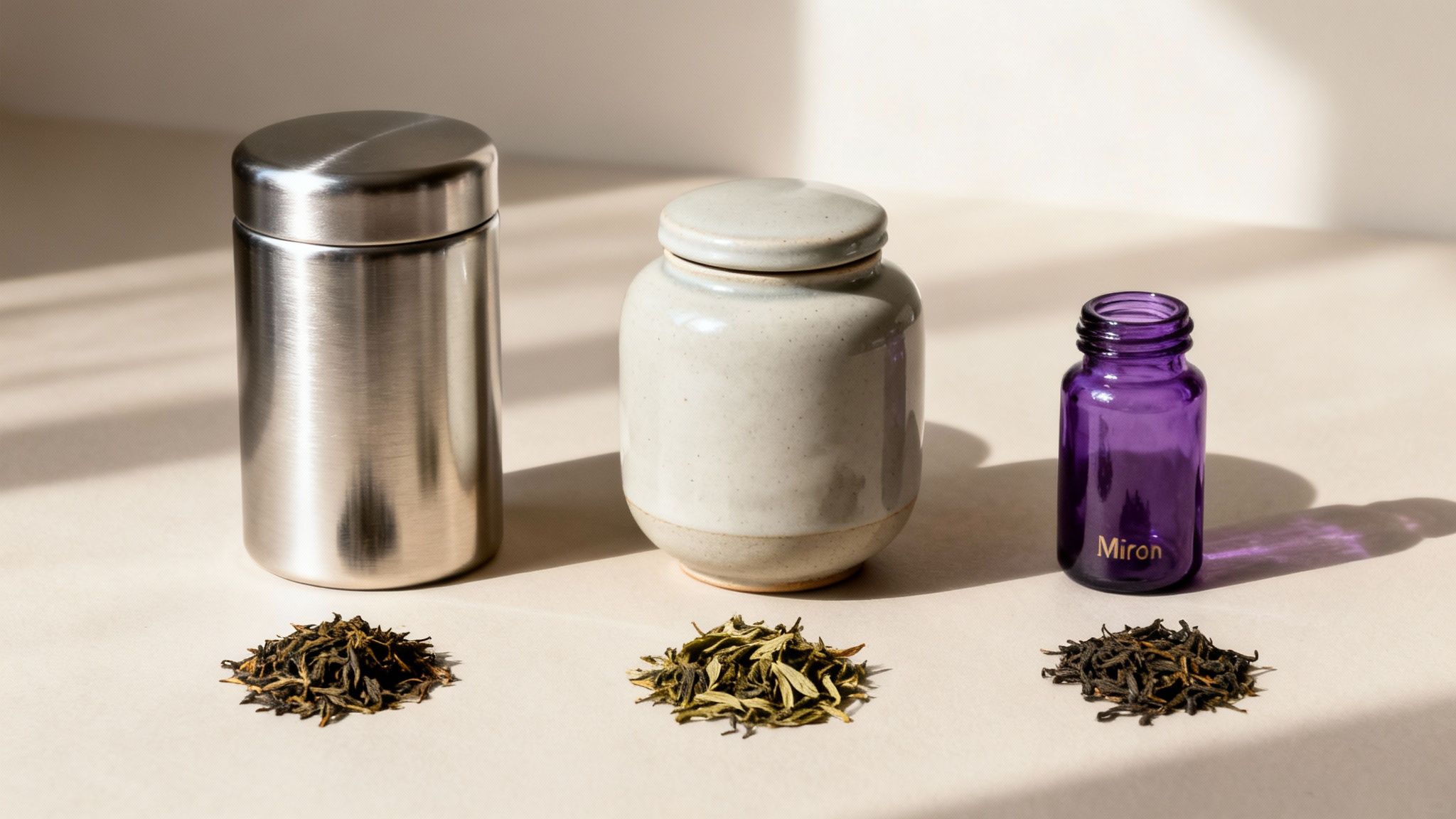
The ideal container has to be airtight, opaque, and made from a non-reactive material. This combination ensures it blocks out air and light without lending any strange flavours or smells to the leaves. Think of it as a personal vault for your tea.
Materials That Make a Difference
When you're figuring out how to store your loose leaf tea, the material of your container plays a starring role. Let's walk through the most common options and see how they stack up.
- Stainless Steel Tins: These are a brilliant, widely available choice. They're completely opaque, lightweight, and tough enough to survive a few knocks. Try to find tins with a snug-fitting inner lid or a double-lid system for a superior airtight seal.
- Opaque Ceramic Jars: A classic for a reason. Ceramic is inert, which means it won’t react with your tea or absorb aromas from its surroundings. Just make sure it has a tight-fitting lid, ideally with a silicone or cork seal to really lock out any air and moisture.
- Miron Violet Glass: This is a more specialised, premium option, but it’s quite remarkable. The glass looks black but is actually a deep violet, designed to block the entire spectrum of visible light except for violet and UV-A. Some believe this helps preserve the bio-energy of its contents. It’s an excellent—though pricier—choice for your most prized teas.
The golden rule is simple: if you can see your tea through the container, light can get in and damage it. Always prioritise opacity over appearance for long-term storage.
What to Avoid at All Costs
Knowing what to use is only half the story; knowing what to avoid is just as critical. Certain materials can do real harm to your tea.
- Clear Glass Jars: As I mentioned, these are the worst offenders. They offer absolutely no protection from light, which will rapidly degrade your tea's flavour and aroma. While some square glass storage jars might seem okay tucked away in a dark pantry, they should never be left out on an open shelf.
- Plastic Containers: Many plastics can absorb and leach odours, tainting your precious tea with a nasty chemical taste over time. They also tend to be less than completely airtight.
- Porous or Scented Wood Boxes: A beautiful wooden tea chest might look elegant, but unlined woods like pine or cedar will impart their strong aromas directly into your tea leaves. This will permanently alter their intended flavour, and not for the better.
The Importance of a Quality Seal
The material is only half the battle; the seal is the other. A container is only as good as its ability to keep the air out. When you're looking at a potential tin or jar, check the lid's fit. It should be snug and require a little bit of effort to open.
A double-lid system, often found in Japanese tea caddies (chazutsu), is the gold standard. The inner plug-style lid creates a fantastic airtight barrier, while the outer lid adds another layer of protection. When you’re hunting for the ideal container, exploring various suitable packaging products can give you an idea of what quality seals look like. Choose wisely, because this one decision really does make all the difference.
How to Store Different Types of Tea
It’s a common misconception that all teas can be treated the same. The reality is, the way you care for a delicate, unoxidised green tea is worlds apart from how you’d look after a robust, ageing Pu-erh. Getting to grips with the unique needs of each tea type is the secret to unlocking its true flavour potential, cup after cup.
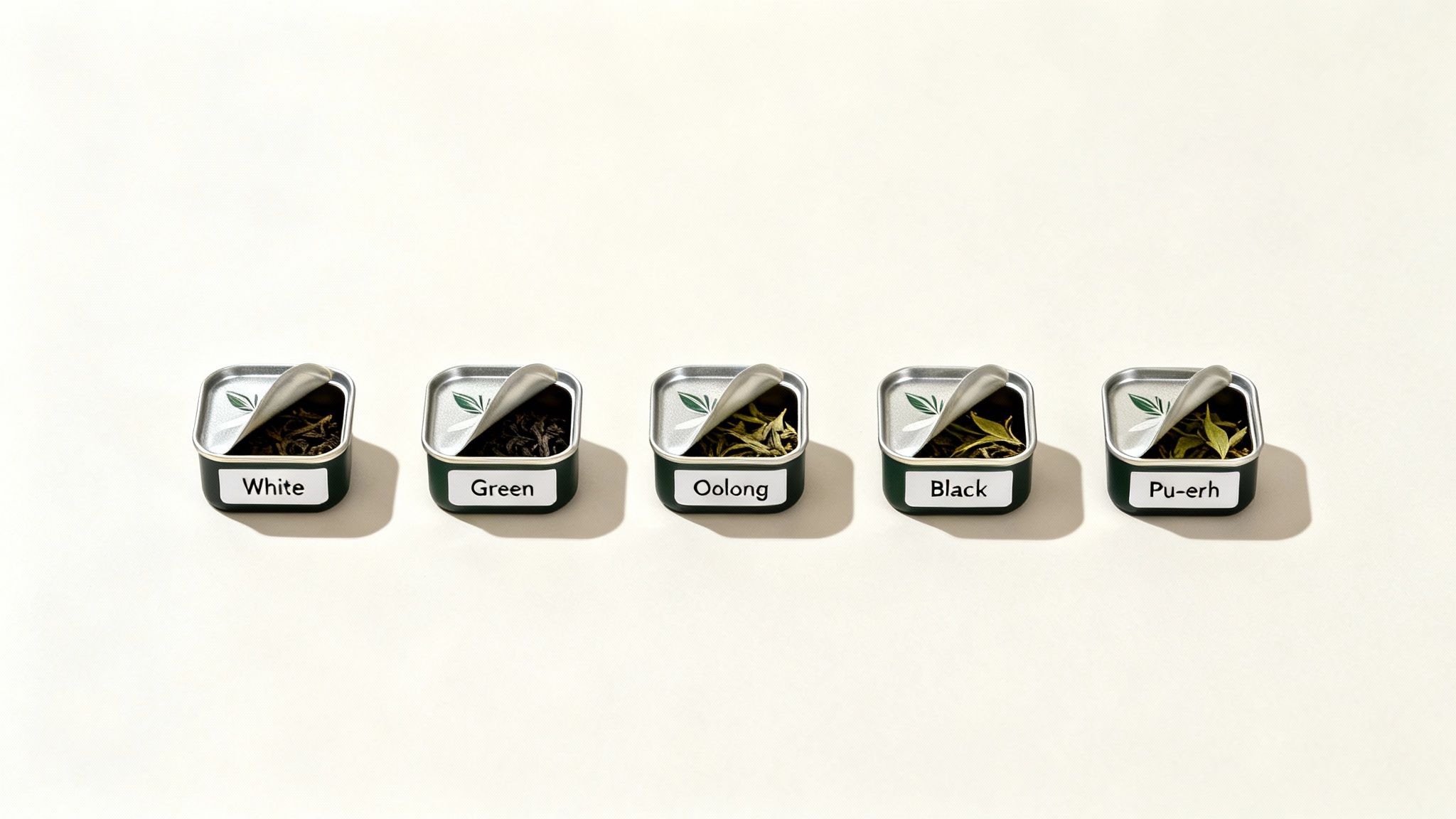
This has never been more true than it is today. In the UK, the average person enjoys around 532 cups of tea a year, but our tastes are expanding far beyond the classic builder's brew. Younger tea drinkers, especially those between 25 and 34, are now exploring five or six different tea types at any one time, making proper storage more crucial than ever. You can read more about these fascinating UK tea trends and their storage implications.
Green and White Teas: The Delicate Duo
Think of green and white teas as the most fragile members of the tea family. Because they undergo minimal oxidation, their fresh, grassy, and floral notes are incredibly vulnerable to light, heat, and air.
For these teas, an airtight, opaque container is an absolute must. Keep them tucked away in a cool, dark cupboard and try to drink them within six to twelve months of buying them. Some exceptionally delicate Japanese green teas, like a fine Gyokuro or a high-grade Sencha, can even be stored in the fridge—but only if the container is perfectly sealed to stop condensation or odours from getting in.
Oolong Teas: The In-Betweeners
Oolongs are a wonderfully diverse category, ranging from lightly oxidised, greener styles to heavily roasted, darker ones. How you store them really depends on which end of the spectrum they fall.
- Lightly Oxidised Oolongs: Treat these much like you would a green tea. An opaque, sealed container in a cool, dark spot is best. Aim to enjoy them within a year to really appreciate their bright, floral character.
- Heavily Roasted Oolongs: These are a bit tougher. The roasting process lends them more stability, and their rich, nutty flavours can easily last for up to two years with the right care.
Black Teas: The Resilient Classic
Fully oxidised black teas, like a good Assam or Earl Grey, are much more forgiving than their greener cousins. The process that gives them that deep colour and malty flavour also makes them more stable and less likely to go stale quickly.
An airtight tin in a kitchen cupboard will keep a quality black tea tasting fantastic for up to two years. They’re robust, but not invincible—they will still lose their aromatic complexity if left exposed, so don't get lazy!
Pu-erh Teas: The Exception to the Rule
Pu-erh is the wild card of the tea world. This is a fermented tea, and it’s unique because it’s often aged on purpose, with its flavour developing and improving over years, even decades. Unlike every other tea, Pu-erh actually needs to breathe a little.
Storing Pu-erh requires a different mindset. Instead of an airtight seal, you want to allow for slight air circulation while protecting it from strong odours and excess humidity.
A clay jar, a wooden box, or even a simple cardboard box kept in a clean, odour-free space works perfectly. The goal is to let the tea mature gracefully without it picking up any funky smells from the spice rack. Under the right conditions, a good Pu-erh can be stored pretty much indefinitely, becoming a true treasure over time. If you're curious about the different categories, you can explore our detailed guide on the different types of tea.
Tea Storage Cheat Sheet by Type
To make things a bit easier, here’s a quick-reference table summarising the best practices for each tea type.
| Tea Type | Ideal Container | Best Location | Typical Shelf Life |
|---|---|---|---|
| Green & White | Opaque, airtight tin | Cool, dark cupboard | 6-12 months |
| Light Oolong | Opaque, airtight tin | Cool, dark cupboard | ~1 year |
| Dark Oolong | Opaque, airtight tin | Cool, dark cupboard | ~2 years |
| Black Tea | Airtight tin | Cool, dark cupboard | Up to 2 years |
| Pu-erh Tea | Clay jar, wooden box | Odour-free, ventilated | Indefinite (Ages) |
Keep this handy, and you'll always know you're giving your leaves the care they deserve, ensuring every brew is as fresh and flavourful as possible.
Common Tea Storage Mistakes to Avoid
Knowing the rules of good tea storage is one thing, but seeing where things can go wrong often makes the lesson stick. We’ve all been there – even the most dedicated tea lover can fall into bad habits that slowly but surely ruin a wonderful collection. By sidestepping these common blunders, you can protect your investment and ensure every brew is a delight.
It’s estimated that tea leaf freshness declines significantly after just two to three months if not stored correctly, leading to diminished antioxidant benefits and sensory qualities. Given the humid climate in parts of the UK, this decline can happen even faster without the right precautions. Proper storage is absolutely essential to avoid disappointment, as you can learn more about in this guide to tea drinking habits and storage needs.
The Original Packaging Problem
One of the most frequent mistakes we see is people leaving their tea in its original paper or cellophane pouch. While that packaging looks lovely on the shop shelf, it’s not designed for long-term storage at home. It offers almost no protection from air, light, or moisture—the sworn enemies of fresh tea.
Think of that paper bag as temporary transit packaging. The first thing you should do when you get your new tea home is transfer it into a proper airtight, opaque container. Trust me, this single step is a complete game-changer for preserving its flavour.
Choosing the Wrong Location
Where you store your tea matters immensely. Many people make the intuitive but disastrous choice of placing their tea tins on a shelf right above the kettle or cooker. While it seems convenient, this spot is constantly bombarded with heat and steam, two things that will rapidly make your tea taste stale.
Another tempting but terrible spot is a sunny windowsill. It might look lovely, but the direct sunlight will effectively ‘cook’ your delicate leaves, destroying their complex aromatic compounds before you’ve even had a chance to brew them.
Your tea’s ideal home is a cool, dark, and dry cupboard, well away from any heat sources, moisture, or direct light. Consistency is key.
The Aromatic Contamination Trap
Tea leaves are incredibly porous and will act like a sponge for any strong smells around them. A very common error is storing tea next to aromatic powerhouses like coffee beans, pungent spices, or even strongly scented cleaning products under the sink.
This leads to a phenomenon known as aromatic contamination, where your delicate Darjeeling ends up tasting faintly of cumin or coffee. To avoid this, dedicate a specific cupboard or shelf exclusively for your tea collection. Creating a neutral, odour-free zone is a simple organisational habit that pays huge dividends in flavour and is a core principle of how to store loose leaf tea correctly.
Practical Tips for Managing Your Tea Collection
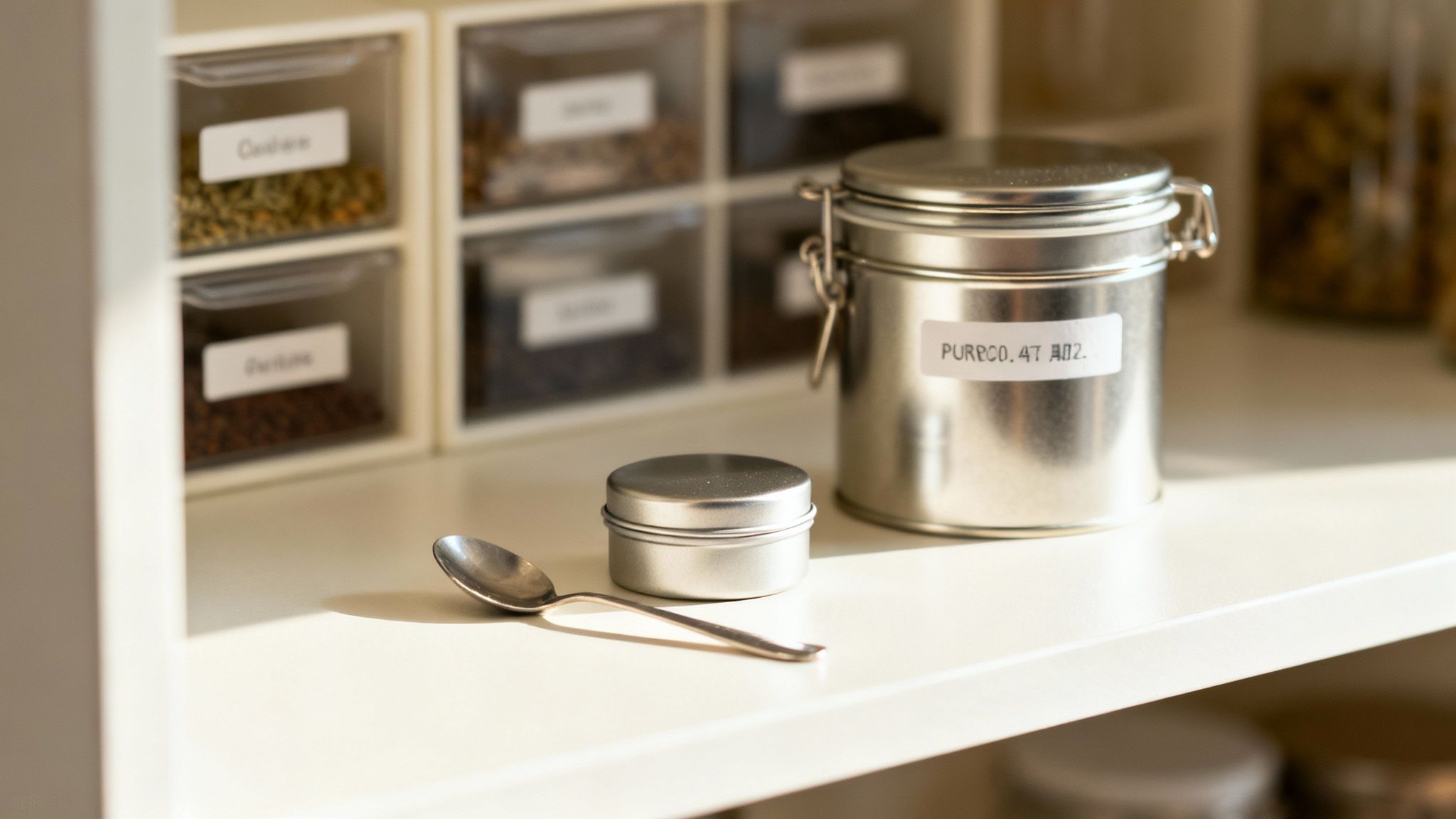
Keeping your tea in top condition goes beyond just having the right container. It's really about building a few smart, simple habits that protect your leaves from the moment you bring them home. A few small tweaks to your routine can make a world of difference, keeping your whole collection vibrant and full of flavour.
One of the best tricks I've learned is the 'daily caddy' system. Instead of opening your main storage tin every day, just decant about a week's worth of tea into a smaller tin. This one small action drastically cuts down on how often your bulk supply gets exposed to the air, which is a game-changer for preserving freshness. It's particularly brilliant for delicate green teas that can lose their character so quickly.
Smarter Shopping and Organisation
Good storage habits actually start before you even get your tea home. When you’re buying, always have a peek at the packaging or production date if you can. The fresher the tea is when you buy it, the longer its peak flavour is going to last in your cupboard.
Also, take a look at the packaging itself:
- Go for vacuum-sealed bags: These are fantastic. By removing most of the oxygen, they pretty much stop the oxidation process in its tracks.
- Steer clear of clear cellophane: Light is a huge enemy of tea, so opaque packaging is always a good sign that the seller knows what they're doing.
As soon as you get home, transfer the leaves into your chosen airtight container. And here's a step people often forget: labelling. A simple label with the tea’s name and the date you bought it is invaluable for keeping track of freshness. It helps you use your older teas first and stops anything from getting lost at the back of the cupboard.
Pro Tip: Try to organise your tins logically. You could group them by tea type—all the greens together, then the oolongs, then the blacks—or even by the date you bought them. It doesn't just look tidier; it makes finding exactly what you’re in the mood for so much easier.
Managing a Growing Collection
As your passion for tea grows, so does your collection, and with it, the challenge of keeping it all organised. If you find you've got more tea than you can possibly drink within its best-before window, why not share it? Making up little sample bags for friends is a lovely way to share your passion and make sure nothing precious goes to waste.
Ultimately, the goal is to create a system that works for you. It should make choosing and brewing your daily cup a simple pleasure, not a frantic rummage through the cupboards. These little tips will help ensure every leaf in your collection is enjoyed at its absolute best.
A Few Lingering Questions
Even after covering the basics, a few specific questions tend to pop up. Let's tackle some of the most common ones we hear, so you can feel completely confident about looking after your tea.
Should I Pop My Tea in the Fridge or Freezer?
This is a hot topic in the tea world, but for almost every tea you'll ever own, the answer is a hard no. Your fridge is a humid place, and condensation is the enemy of dry tea leaves.
Beyond that, tea is like a sponge for smells. That delicate White Peony you love? It could easily end up tasting of garlic bread or leftover curry. Not ideal.
The only real exception is for some very delicate, high-grade Japanese greens like Gyokuro. Even then, it should only be done if the tea is in its original, unopened, completely airtight, vacuum-sealed pack. Once you crack that seal, it belongs in a dark cupboard with the rest of your collection – never back in the cold.
What About Scented or Flavoured Teas?
Think of your punchy Earl Grey or a fragrant fruit blend as the loudest guests at a party. They need their own room. Those strong, beautiful aromas will happily leap over to your other teas, creating some seriously weird flavour combinations if they're stored too closely.
The golden rule here is simple: give your scented and flavoured teas their own dedicated, airtight containers. If you’ve got the space, giving them a separate shelf is even better. It’s a small step that keeps your entire tea library tasting exactly as it should.
How Do I Know If My Tea Has Gone Bad?
Tea doesn’t really ‘go off’ like a pint of milk, but it can definitely lose its magic and become stale. The best tools you have for checking are your own senses.
Open the caddy and give it a good sniff. Fresh tea will have a vibrant, distinct aroma that tells you exactly what it is. If you get a faint whiff of dust, or worse, a musty, damp smell, it’s past its best.
Also, have a quick look for any signs of mould – that’s a definite sign to chuck it. But most of the time, old tea is just dull and lifeless. It won’t hurt you, but it won’t give you that delicious, comforting cup you were hoping for.
At Jeeves & Jericho, we believe every cup should be an exceptional experience, starting with the freshest, ethically sourced leaves. Explore our full collection of premium whole leaf teas and discover your next favourite brew by visiting us at https://www.jeevesandjericho.com.