


Making proper, authentic chai means simmering black tea, whole spices, milk, and a sweetener together in one pot. The goal is a deeply aromatic and balanced brew that’s a world away from instant powders or those weakly-flavoured tea bags. It’s a comforting ritual in a cup.
The True Art of Brewing Authentic Chai
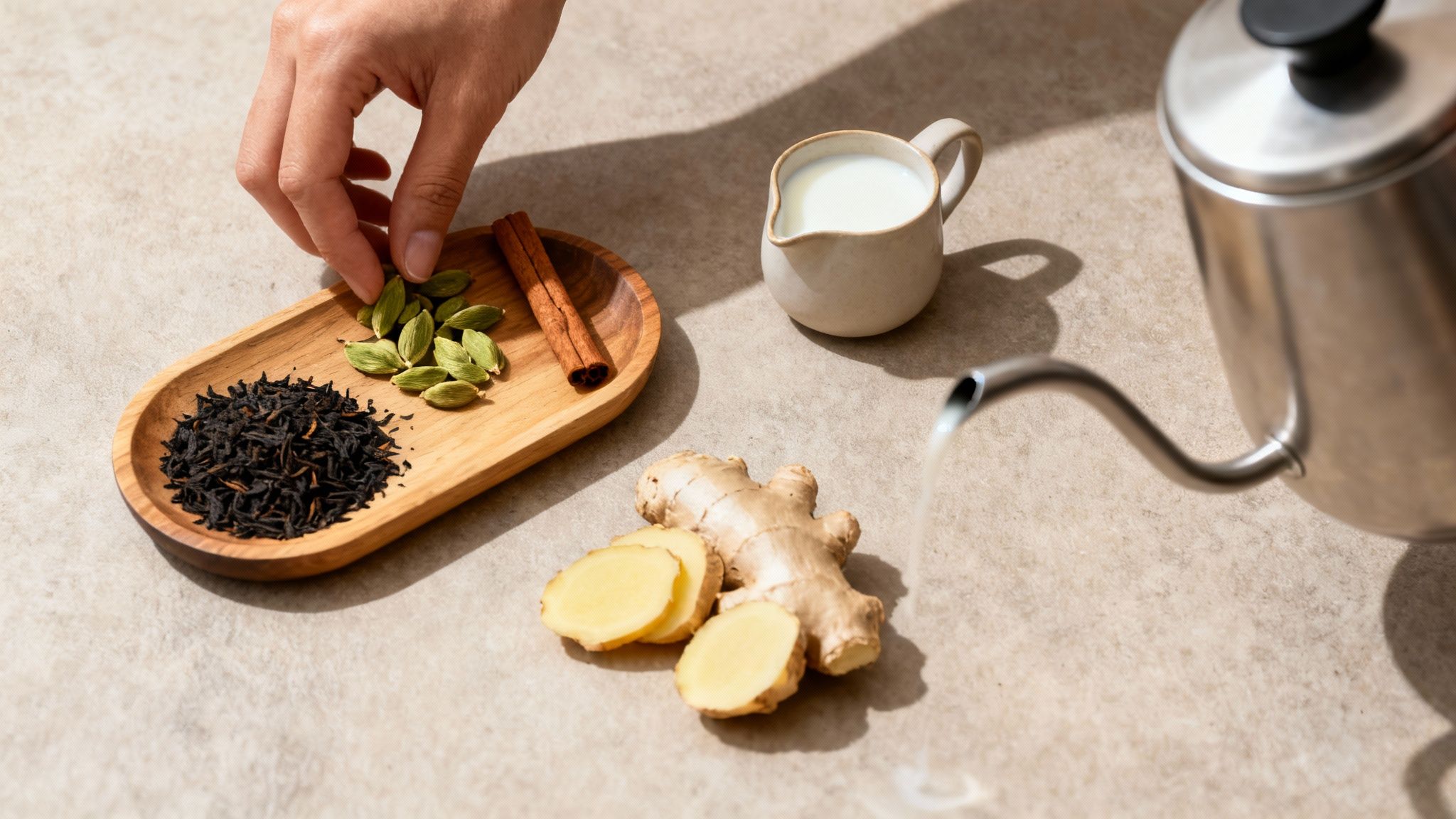
Before we even get the stove on, let’s be clear: learning how to make real chai is more than just following a recipe. It's about embracing a ritual. Forget the quick dunk of a supermarket tea bag; this is a mindful process where you layer flavours and let them properly meld into something complex and deeply satisfying.
This comforting brew has a rich history rooted in Indian culture, where it’s both a daily staple and a symbol of hospitality. From street-side chaiwallahs to family kitchens, the process is a cherished part of life. We've seen this tradition find a loving home right here in the UK, as more and more people discover the profound difference a few extra minutes of brewing can make.
The Core Components of Real Chai
At its heart, authentic chai is built on four essential pillars. Each one plays a critical part in the final flavour, and using high-quality, fresh ingredients is non-negotiable if you want to get that perfect, memorable cup.
| Component | Best Choice for Authenticity | Its Role in the Flavor |
|---|---|---|
| Tea Base | Strong, malty black tea (like Assam) | Provides the robust backbone needed to stand up to the spices and milk. |
| Spices | Whole spices (cardamom, cinnamon, ginger) | Release fragrant oils when simmered, adding layers of warmth and aroma. |
| Milk | Full-fat dairy milk | Gives chai its signature rich, creamy, and comforting texture. |
| Sweetener | Jaggery or unrefined sugar | Balances the bitterness of the tea and the heat of the spices. |
The real secret to exceptional chai lies in the balance. It’s a harmonious blend where no single ingredient overpowers the others, resulting in a brew that is simultaneously spicy, sweet, creamy, and robust.
While chai’s popularity is clearly growing here, specific UK consumption data is still hard to come by. Most market analysis tends to lump it in with general tea trends rather than tracking its unique, traditional preparation method.
The philosophy is simple: invest a little time in the process and respect the ingredients. To get a feel for its cultural significance, you can explore our guide on chai the way India drinks tea. This approach is what transforms a simple drink into a truly restorative experience.
The Classic Stovetop Masala Chai Method
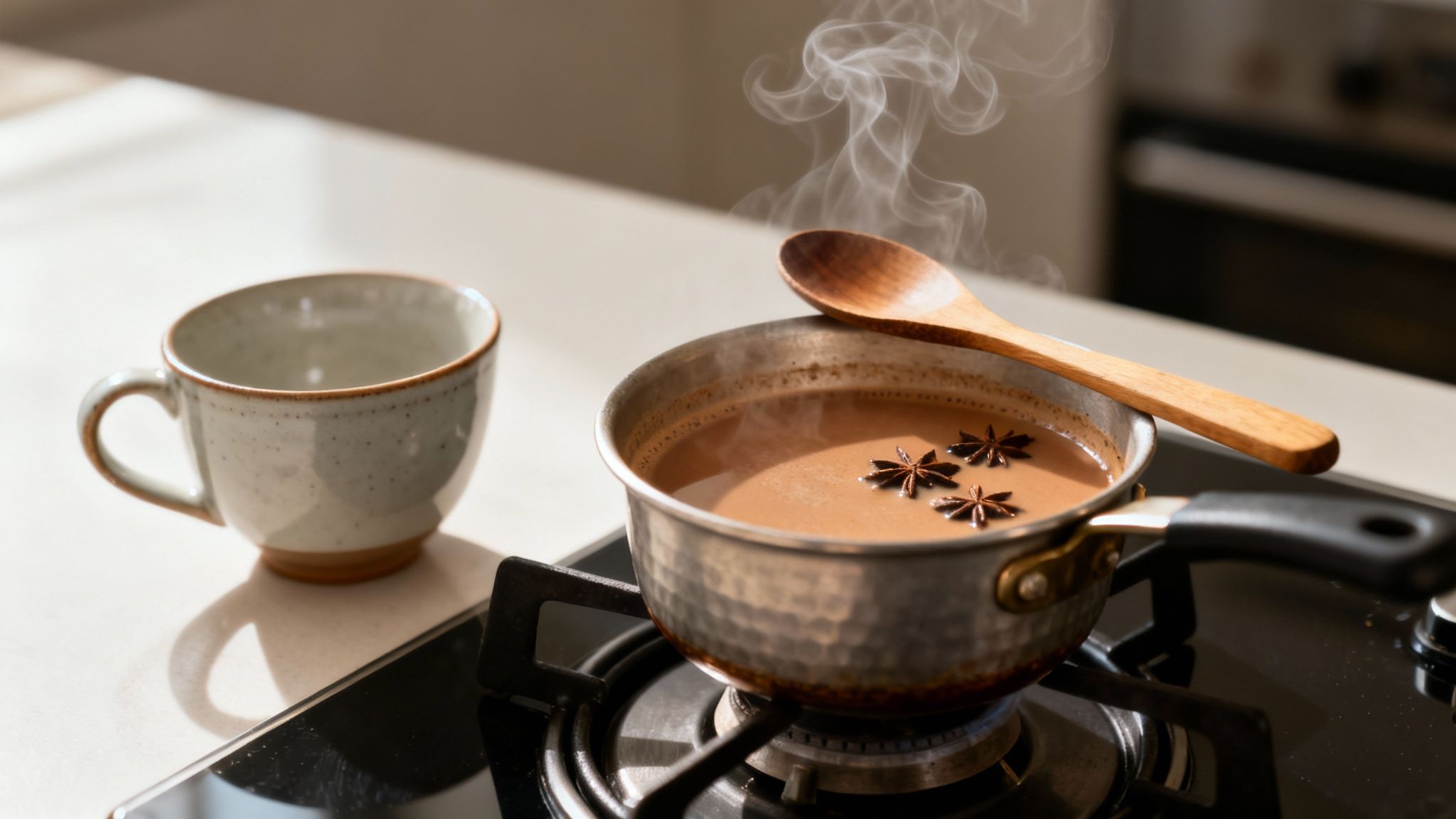
This is where the real magic happens. Learning how to make chai on the hob is a genuine rite of passage for any tea lover. It's a simple, rhythmic process that layers flavours together, creating a brew that is worlds apart from anything you can get from a powder or concentrate.
My goal here is to give you the confidence to brew a perfect cup every single time. Forget vague instructions; we’ll be using a precise, repeatable recipe for a single serving that you can easily scale up when friends pop over.
Starting With The Spice Foundation
The first and most important step is to awaken the whole spices. This isn't just a quaint tradition; gently toasting them in a dry saucepan over a low heat for about a minute releases their volatile oils. You’ll know they’re ready when your kitchen starts to fill with the most incredible fragrance.
For one perfect serving (250ml or about 8.5 oz), you’ll want to gather:
- 3 whole green cardamom pods
- 3 whole cloves
- 1 small piece of cinnamon stick
- 2 black peppercorns
- 1 thin slice of fresh ginger
Once toasted, give the cardamom, cloves, cinnamon, and peppercorns a light crush with the back of a spoon or a mortar and pestle. This gentle bruising is the key to unlocking the deepest flavour from within the spices.
This initial toasting and crushing stage is non-negotiable. It’s what creates the aromatic soul of your masala chai, ensuring the spices infuse fully rather than just bobbing on the surface. Skip this, and you’ll miss out on the rich, complex notes that define an authentic brew.
Brewing The Perfect Base
With your spices fragrant and ready, add 125ml (about ½ cup) of fresh, cold water to the saucepan along with your crushed spices and the slice of ginger. Bring this mixture to a lively simmer and let it bubble away for 4-5 minutes. This stage is crucial for pulling all that wonderful spicy flavour into the water, creating a potent infusion.
Now it's time for the tea. Add 2 teaspoons of a robust loose-leaf black tea, like a quality Assam. If you need some more detailed guidance on balancing these elements, our own spiced chai tea recipe is a great place to start. Reduce the heat slightly and let the tea simmer for another 2-3 minutes. The timing here is quite specific; it’s long enough to draw out the tea’s strength but short enough to keep any bitterness at bay.
Achieving Creamy Perfection
The final stage is all about the milk and sweetener. Pour 125ml (about ½ cup) of full-fat milk into the pot. You can also add 1-2 teaspoons of your preferred sweetener now, whether that’s unrefined sugar, honey, or jaggery.
Bring the whole mixture back to a gentle simmer, but be careful not to let it reach a rolling boil. You’re just looking for small bubbles to form around the edges of the pan. Let it gently simmer for another 2-3 minutes, giving the milk plenty of time to become fully infused with the tea and spice flavours.
Finally, pour the chai through a fine-mesh strainer into your favourite mug, leaving the spent spices and tea leaves behind. Take a moment to enjoy the aroma before your first sip. This process might be straightforward, but the craft of chai is surprisingly under-documented, making troubleshooting tips harder to come by than you might think.
How to Create Your Signature Chai Spice Blend
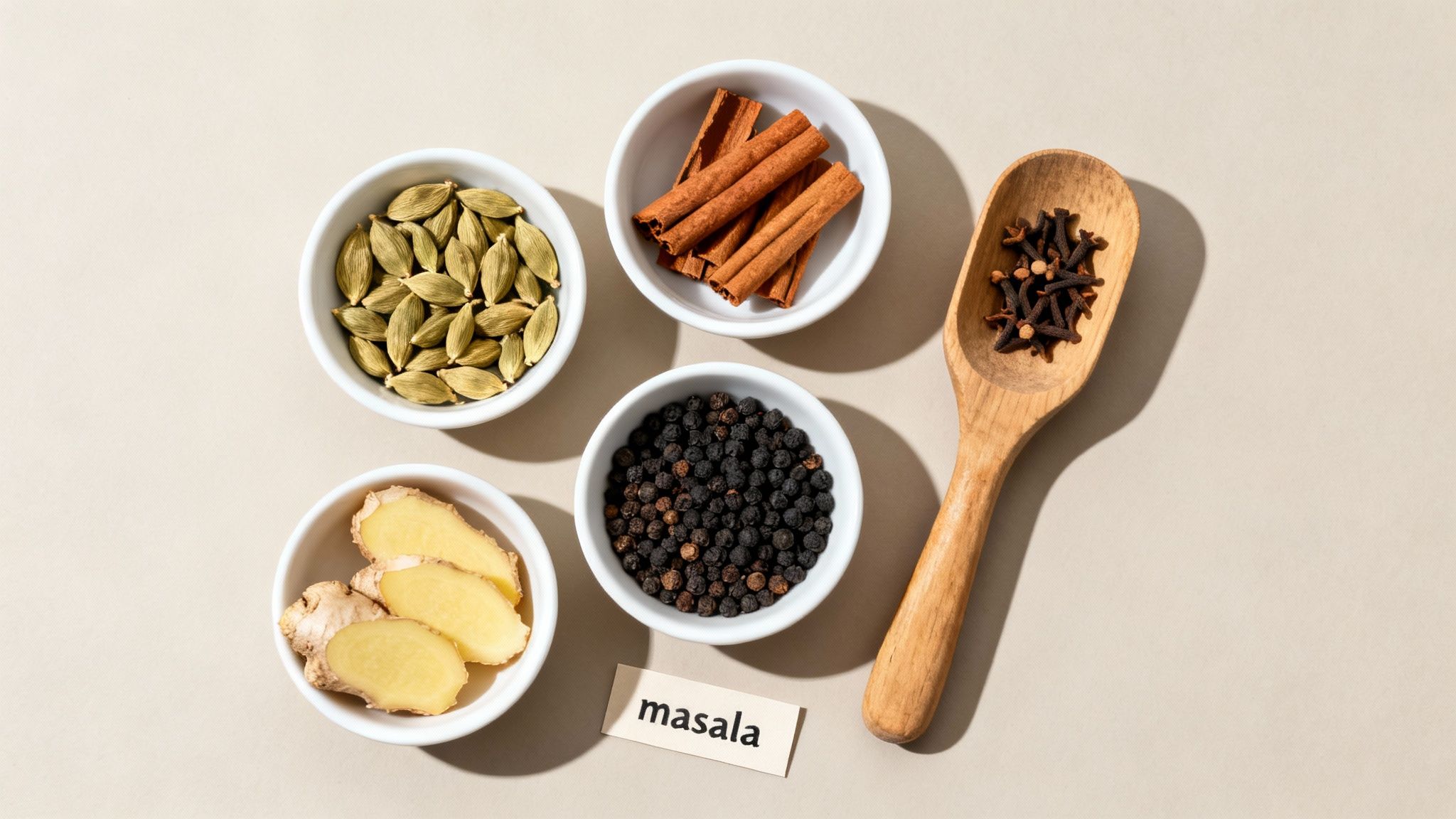
The real magic of masala chai isn’t just about the brewing process; it’s hidden in the unique blend of spices, the masala. This is where you get to step away from a standard recipe and become something of a chai artist, creating a blend that’s perfectly tuned to your own taste. Crafting your own mix transforms the simple act of making tea into a proper daily ritual.
We'll begin with a classic, balanced foundation. This go-to recipe is beautifully aromatic and warming, giving you the perfect starting point before you begin tinkering. Think of it as your blank canvas.
A Classic Masala Foundation
For a wonderfully balanced blend, get these whole spices together. They create that quintessential flavour profile that immediately comes to mind when you think of authentic chai.
- Green Cardamom: The bright, slightly sweet, and floral star of the show.
- Cinnamon: Lends a sweet, woody warmth.
- Cloves: Offer a pungent, slightly sharp kick.
- Fresh Ginger: Brings that fresh, zesty heat.
- Black Peppercorns: Deliver a dry, sharp spice that cuts through the sweetness.
This combination is a fantastic daily driver. But the real fun starts when you play with the ratios and invite a few new spices to the party. Craving more warmth on a chilly morning? Just add an extra slice of ginger or a few more peppercorns. If you're after a more fragrant, sweeter brew, an extra piece of cinnamon or a single star anise pod will do the trick nicely.
Your personal chai blend is an expression of taste. There is no single "correct" recipe. The goal is to find the combination of warmth, sweetness, and spice that brings you the most comfort and joy.
Exploring and Customising Your Blend
Getting to know the personality of each spice is the key to customising your blend with confidence. Each one brings its own unique note to the final cup. Below is a quick guide to help you start experimenting.
Your Guide to Crafting a Custom Chai Masala
Discover the flavour profiles of common chai spices and learn how to combine them to create a blend that's uniquely yours.
| Spice | Primary Flavour Profile | Creative Pairing Ideas | Pro Tip for Usage |
|---|---|---|---|
| Star Anise | Sweet, liquorice-like, aromatic | Pairs beautifully with cinnamon and fennel for a sweeter, more fragrant chai. | Use sparingly; one pod is often enough as its flavour is very potent. |
| Fennel Seeds | Mildly sweet, anise-like | Complements ginger and black pepper, adding a layer of sweet complexity. | Lightly toast with other spices to enhance their aromatic oils before brewing. |
| Nutmeg | Warm, nutty, and slightly sweet | A pinch of freshly grated nutmeg at the end adds a comforting, aromatic finish. | Add it after straining the chai to preserve its delicate fragrance. |
| White Pepper | Sharp, earthy heat | A good substitute for black pepper if you want a cleaner, less pungent spice. | Use slightly less than you would black peppercorns as the heat is more direct. |
A final thought: always, always go for whole spices over pre-ground powders. Whole spices hold onto their essential oils for much longer, which means a dramatically more fragrant and flavourful chai. Grinding them right before you brew releases a burst of aroma that powders just can't compete with.
Once you’ve perfected your signature mix, store it in an airtight container somewhere cool and dark. It’ll stay potent and delicious for months.
Twists on The Classic: Chai for Modern Life

The traditional stovetop method is a beautiful ritual, but the real magic of chai is how adaptable it is. Once you learn the basics, you'll discover how easily it can be tweaked for different diets, tastes, or even a hot summer’s day, all without losing that soulful, spicy character.
Whether you're dodging dairy, craving something cool and refreshing, or just strapped for time, there’s a version of chai waiting for you. These modern takes honour the authentic flavour while fitting neatly into a busy schedule.
Crafting a Creamy Vegan Chai
It’s entirely possible to make a rich, creamy, and deeply satisfying vegan chai. The secret, I’ve found, is all in the plant-based milk you choose, as not all of them take kindly to being simmered with spices and tea.
From my experience, oat milk is the clear winner. Its natural creaminess and subtly sweet flavour are a perfect match for the spice blend. Crucially, it holds up well at higher temperatures, so you don't have to worry about it splitting or curdling. A barista-style oat milk is even better, as they’re designed to withstand heat and create a lovely, stable froth.
Soy milk is another solid option, offering a richness that comes close to dairy. The trick is to warm it gently and add it right at the end of the brewing process to prevent it from separating.
Pro Tip: To guarantee a silky-smooth vegan chai every time, brew the tea, water, and spices together first. Then, strain the liquid into your mug and top it up with your plant-based milk, which you’ve heated and frothed separately. This gives you total control and a perfect finish.
The Perfect Iced Masala Chai
A common pitfall with iced chai is simply pouring a hot brew over ice. The result? A weak, watery disappointment. The key to a bold, flavourful iced chai is to first create a potent concentrate that won’t get lost when the ice starts to melt.
To make your concentrate, you'll want to:
- Start with the same amount of spices and tea as our classic recipe.
- Halve the amount of water you use for the initial brew (so, just 60ml instead of 125ml).
- Let it simmer for the full time to pull out all that incredible flavour.
- Strain the hot, spicy tea concentrate into a heatproof glass or jug.
- Stir in your sweetener while it's still hot – the sugar will dissolve much more easily.
Let the concentrate cool down completely. When you’re ready to serve, just fill a tall glass with ice, pour over the cooled concentrate, and top with your choice of cold milk (dairy or otherwise). A quick stir, and you’ve got a perfectly balanced and incredibly refreshing iced masala chai.
A Quick Brew for Busy Days
Let's be realistic – we don’t always have twenty minutes to spare for the full stovetop ritual. For those days when you need a quick but proper fix, a high-quality tea bag and a pre-made spice blend are your best friends.
A great shortcut is to use a dedicated kit, like our Home Chai Latte Kit, which takes all the guesswork out of measuring spices. Simply heat your milk, pop in a strong black tea bag with the spice mix, and let it all steep for five minutes. You’ll get that aromatic warmth you’re craving in a fraction of the time.
Solving Common Chai Brewing Problems
Even the most seasoned chai maker has an off day. Don't worry if your brew doesn't turn out perfectly the first time; most issues are simple to spot and even easier to fix. Getting your head around these common hiccups is a key part of learning to make chai like a pro.
One of the most frequent complaints I hear is about weak or watery chai. This almost always comes down to one of two things: not simmering the spices and tea for long enough, or using the wrong water-to-milk ratio. Your goal is to create a potent, flavourful base before you even think about adding the milk.
Pinpointing Flavour Issues
If your chai lacks that spicy punch, let's revisit that initial spice infusion. Did you let the spices simmer in the water for a good 4-5 minutes before adding the tea? This step is absolutely crucial for coaxing out their aromatic oils.
And if the spice flavour is there but tastes a bit raw or harsh, it probably means you skipped toasting them. Gently warming whole spices in a dry pan for just a minute awakens their deeper, warmer notes. It's a small step that makes a huge difference.
On the other hand, an unpleasantly bitter brew is a classic sign of over-steeped tea. When brewed for too long or at too high a temperature, black tea leaves release tannins, leading to that harsh, astringent taste.
The Golden Rule for Bitterness: Never boil your tea leaves aggressively. Once you add them to the simmering spiced water, knock the heat right down and let them infuse gently for no more than 2-3 minutes. That's all you need to get their robust flavour without any of the bitterness.
Tackling Texture Troubles
Achieving that signature creamy, velvety texture can also be a challenge. If your chai feels thin, the fix is often as simple as using the right kind of milk. Full-fat milk provides the richness and body that defines a traditional masala chai. Skimmed or semi-skimmed milk just doesn't have the fat content to produce the same luxurious result.
Another common texture problem is curdled milk. This usually happens for one of two reasons:
- Sudden High Heat: Bringing the milk to a rapid, rolling boil is a surefire way to make the proteins separate and curdle. Always heat the milk gently, aiming for a slow, lazy simmer.
- Too Much Acidity: While not a frequent issue, a very large amount of fresh ginger (or lemon, if you're experimenting) can sometimes cause milk to curdle. Make sure your ginger is fresh and add your milk towards the end of the process, heating it slowly.
By keeping these simple diagnostics in mind, you can troubleshoot your way to a perfect cup every time. The process is a forgiving one, and a small adjustment here and there is often all it takes to get your brew back on track.
A Few Common Chai Questions Answered
As you get into the rhythm of making your own chai, a few questions are bound to pop up. It’s often the small details that take a brew from simply good to truly great. Here are some of the things I get asked most often by fellow tea lovers.
What’s the Best Black Tea for Masala Chai?
To get that authentic, robust flavour, you need a black tea with enough backbone to stand up to the spices and milk. A weak tea will just get lost.
Assam is the classic choice for a reason. Its distinct malty character provides the perfect canvas for everything else to shine. Strong Ceylon or even a good English Breakfast blend also work beautifully. I’ll always lean towards loose-leaf for its depth of flavour, but high-quality CTC (Crush, Tear, Curl) tea bags are a perfectly good shortcut when you're pressed for time.
Can I Make a Big Batch of Chai Concentrate to Keep in the Fridge?
Absolutely. It’s a brilliant time-saver for busy mornings when you don’t have time for the full ritual.
Simply follow the stovetop method, simmering the water, tea, and spices together, but don’t add any milk or sweetener just yet. Once it’s brewed to a strength you like, strain the liquid into a clean, airtight glass bottle.
Your homemade chai concentrate will keep nicely in the fridge for up to 4-5 days. When you fancy a cup, just warm it through with a 1:1 ratio of concentrate to your milk of choice.
Why Did My Milk Curdle?
This is a common frustration, but it’s nearly always down to one of two things: sudden high heat or a bit too much acidity. Fresh ginger, especially if you’re heavy-handed with it, can sometimes be the culprit.
To avoid this, always add your milk towards the end and bring it up to a gentle simmer—never a rolling boil. It's also worth noting that full-fat milk is far more stable and less likely to curdle than its low-fat counterparts.
What’s the Real Difference Between Chai and a Chai Latte?
It all comes down to how it’s made. A proper masala chai is an all-in-one brew. The water, tea, spices, milk, and sugar all simmer away in one pot together, allowing the flavours to meld into something truly special.
A chai latte, on the other hand, is more of an assembly job you’d find in a coffee shop. It usually starts with a pre-made, often very sweet, chai syrup that’s just mixed with steamed, frothy milk. The result is a much milkier, sweeter drink that often lacks the deep, spicy soul of a traditionally brewed chai.
Ready to brew a proper cup? Explore the full range of whole-leaf teas and authentic chai blends at Jeeves & Jericho and discover the difference quality makes.