


At its heart, the answer is wonderfully simple. Matcha is a fine powder ground from the entire leaf of a specially grown green tea plant, Camellia sinensis.
But here’s the crucial difference: with most teas, you steep the leaves in hot water and then throw them away. With matcha, you’re actually whisking the powdered leaf directly into the water and drinking the whole thing. This is the secret behind its electric green colour, its uniquely savoury flavour, and its powerful nutritional punch.
The Plant and Process Behind Matcha Powder
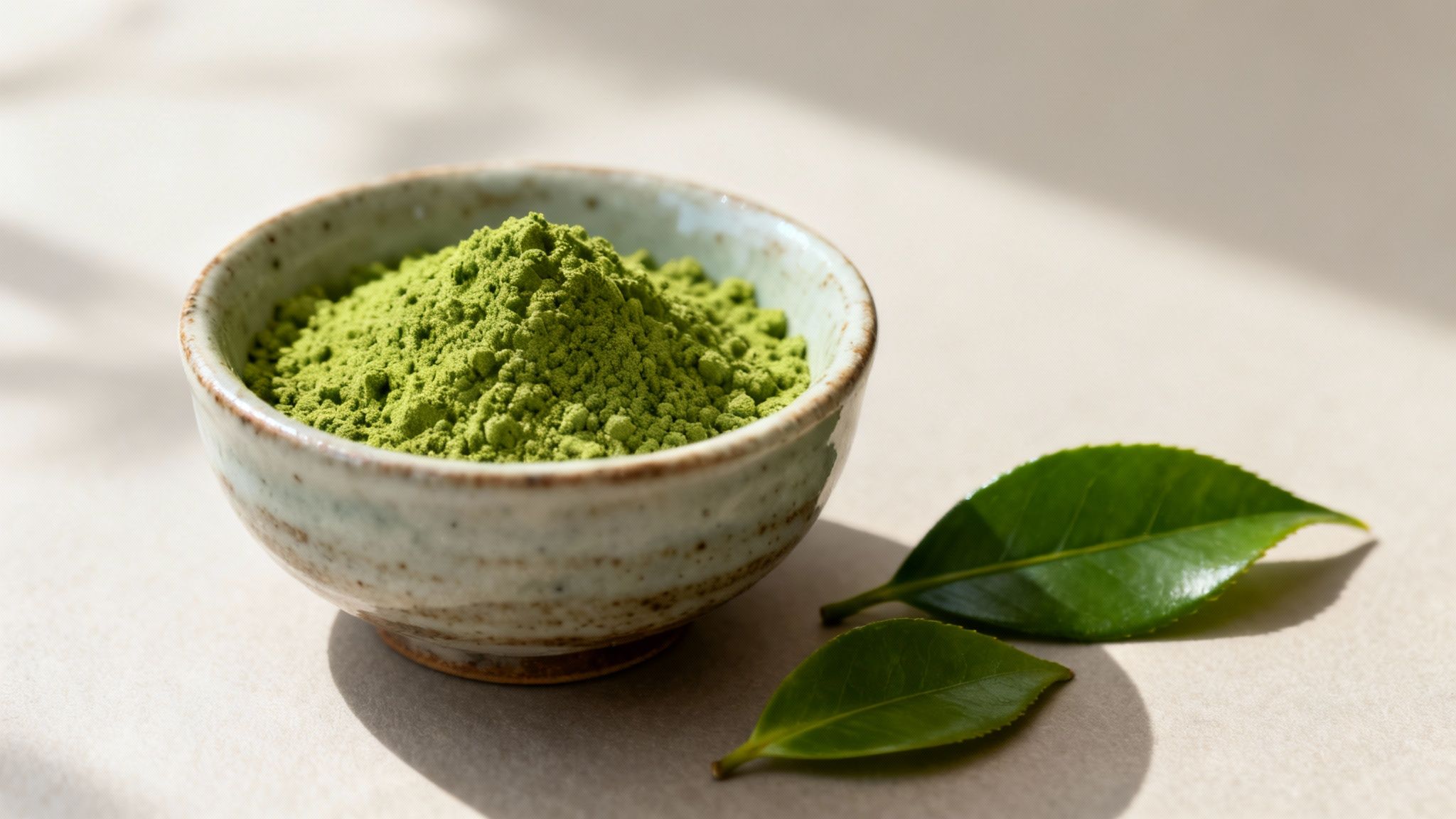
While all true teas start life as Camellia sinensis, the journey to becoming matcha is a very specific one, steeped in Japanese tradition. It all begins in the fields, weeks before the tea is even picked.
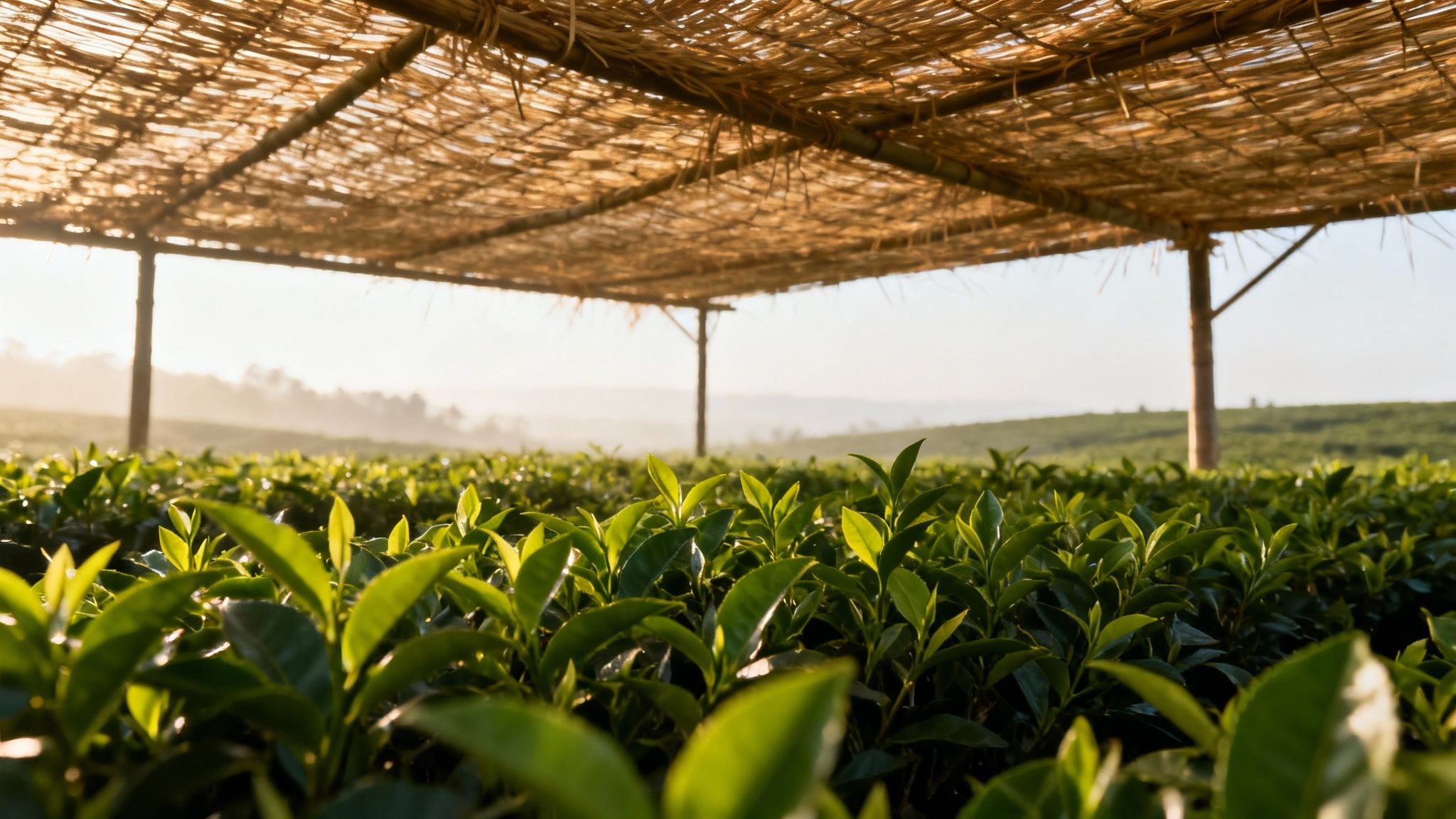
Farmers carefully cover the tea bushes, shielding them from direct sunlight for about 20-30 days. This isn’t just for show; this shade-growing process forces the plant to go into overdrive, producing huge amounts of chlorophyll and amino acids. This single step is what gives matcha its signature vibrant green hue and its deep, complex umami flavour.
From Leaf to Tencha
Once harvested—often by hand—the best leaves are rushed to be steamed. This quick blast of heat stops the oxidation process in its tracks, locking in that brilliant colour and preserving all the delicate nutrients.
Then comes the really meticulous part. The leaves are carefully dried before being stripped of every stem and vein, leaving only the most tender, nutrient-rich part of the leaf. This pure leaf flesh is known as tencha, and it’s the raw material for all true, high-quality matcha.
The Final Grind
The last step is a slow and gentle transformation. The tencha is painstakingly ground into a powder so fine it feels like silk. Traditionally, this is done between large, grooved granite stones that turn very slowly to avoid generating heat, which would scorch the delicate leaves and ruin the flavour. It’s a craft where different grinding techniques are key to creating the perfect texture and taste.
Key Takeaway: Matcha isn’t just any old green tea ground into a powder. It comes from shade-grown leaves that have been steamed, de-veined, and de-stemmed to create tencha—which is then stone-ground into an incredibly fine powder.
This detailed, labour-intensive process is what makes matcha so distinct from other teas. For a closer look at how it stacks up against its leafy cousins, you can read our guide on what is the best green tea and explore the wider world of tea.
The Journey From Tea Leaf to Tencha
Turning a simple tea leaf into the fine green powder we know as matcha is a story of incredible care and craftsmanship, an art form that has been refined over hundreds of years. This isn't a quick dash from the field to your cup; it’s a patient, deliberate process where every single step is designed to bring out the absolute best from the Camellia sinensis plant. It all starts in the fields, long before a single leaf is picked.
The whole process kicks off with a period of intentional darkness. Around three to four weeks before the harvest, farmers carefully cover the tea plants, shielding them from the sun with large cloths or traditional bamboo screens. This crucial step, known as shading, fundamentally changes the chemistry of the leaf and is the first defining moment in creating matcha.
The Art of Shading and Harvesting
By blocking out most of the sunlight, the plant has to work much harder to photosynthesise. This gentle stress response sends chlorophyll production into overdrive, which is exactly why high-quality matcha has such a stunning, jewel-green colour. Even more importantly, the lack of sun encourages the plant to produce more amino acids, especially L-theanine—the very compound that gives matcha its signature umami savouriness and that feeling of calm, focused energy.
Once the shading period is over, the harvest can begin. Only the youngest, most tender leaves from the very top of the plant are chosen. These "first flush" leaves are plucked with incredible care, often by hand, because they pack the highest concentration of nutrients and the most delicate flavour. This selective harvesting is all about ensuring that only the finest raw material makes it to the next stage.
Locking in the Goodness: Steaming and Drying
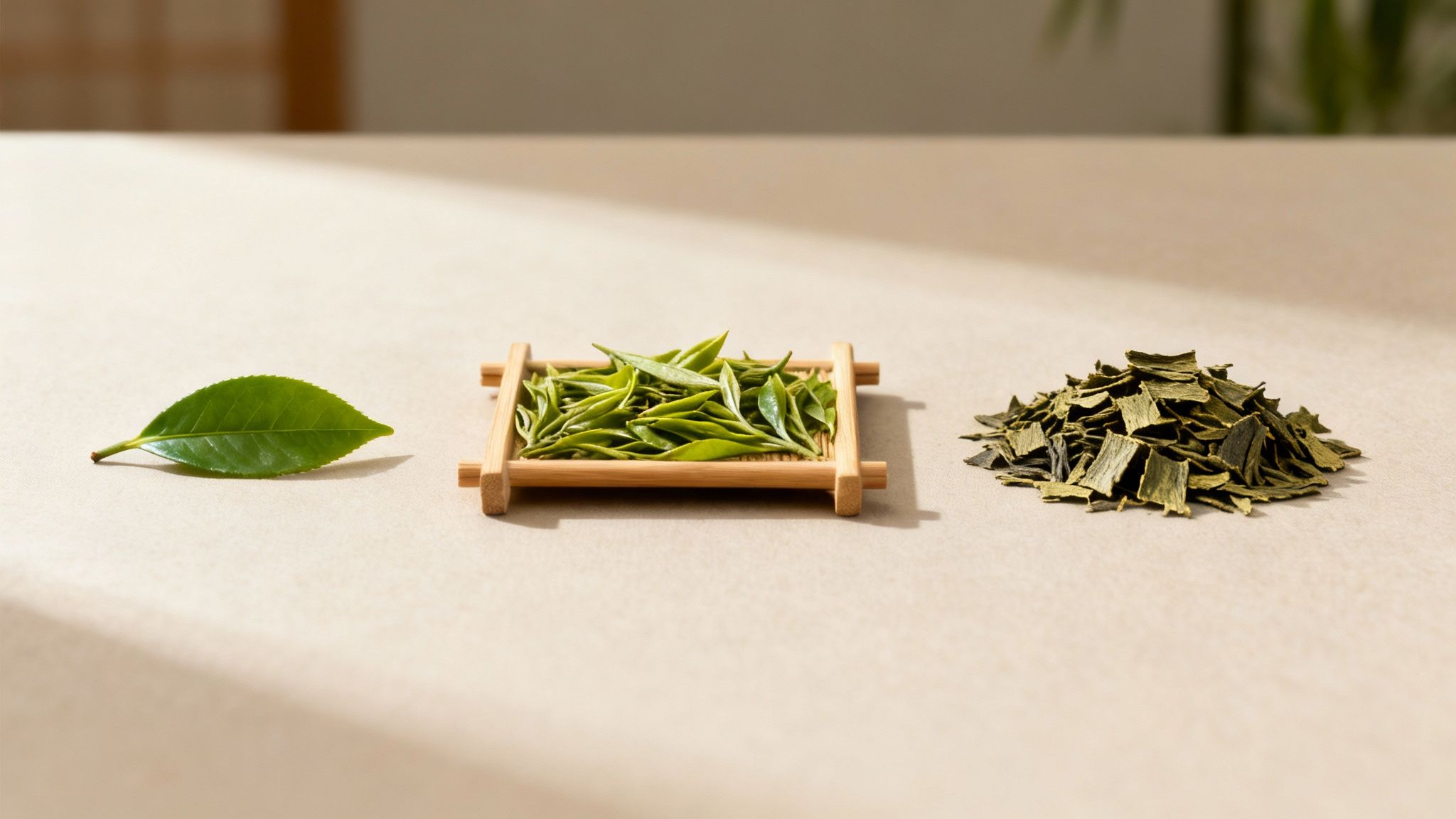
Immediately after being picked—often within just a few hours—the fresh leaves are given a short burst of steam. This is a vital step. It instantly stops the enzymes that cause oxidation. Unlike black teas, which are deliberately oxidised to develop their dark colour and malty notes, matcha needs to stay brilliantly green. Steaming essentially locks the leaf in its most vibrant, nutrient-dense state.
After their steam bath, the leaves are gently air-dried in large, multi-chambered ovens. This slow and steady drying process lowers their moisture content, getting them ready for what is probably the most painstaking step of all.
Creating Pure Tencha
The final stage before grinding is what truly sets matcha apart from every other tea. The dried leaves are passed through a series of machines that meticulously remove every last bit of stem and vein, leaving behind only the soft, pure flesh of the leaf.
This precious, de-stemmed and de-veined leaf is called tencha. It is the one and only true ingredient for authentic matcha, a real testament to the dedication that goes into producing this exceptional tea.
Only this pure tencha is considered good enough to be stone-ground into the fine powder we recognise as matcha. Every step that comes before it—from the careful shading and selective harvesting to the precise steaming and meticulous refining—is essential for building the foundation of a truly superior cup.
Why Shade-Growing Makes All the Difference
That incredible, vibrant green colour and uniquely savoury flavour of proper matcha don't just happen by chance. They're the direct result of a painstaking, centuries-old growing technique known as shade-growing, or oishita saibai. Honestly, this single step is what makes matcha, well, matcha.
For about three to four weeks before the spring harvest, dedicated farmers carefully cover the Camellia sinensis tea plants with dark cloths or traditional reed screens. This deliberate light deprivation puts the plant under a bit of gentle, productive stress. Imagine the plant trying to reach for the sun, but instead of just growing taller, it completely shifts its internal chemistry.
Triggering a Chemical Transformation
This struggle for sunlight forces the leaves to ramp up production of chlorophyll, the pigment that fuels photosynthesis. This chlorophyll surge is what gives high-quality matcha its iconic, almost electric green colour. If you ever see a dull, yellowish powder, you know it simply hasn’t gone through this vital shading process.
But the real magic happens on a deeper level. The shade encourages the plant to produce and hang onto more amino acids, most importantly L-theanine. This is the compound that gives matcha its smooth, deeply savoury flavour profile—what the Japanese call umami. That rich, almost brothy taste is a dead giveaway of a superior, ceremonial-grade matcha.
The science behind this is pretty amazing. Shading can cause an up to 50-60% jump in L-theanine compared to leaves basking in full sun. This amino acid is prized in wellness circles across the UK for the way it promotes a sense of relaxation without making you drowsy. At the same time, chlorophyll levels can be boosted by over 30%, creating that signature bright green we all look for. You can get a sense of the bigger picture by exploring insights on the matcha market and its composition.
Crafting a Unique Feeling
This chemical shift doesn’t just change the tea's colour and taste; it completely changes the experience of drinking it. The real secret to matcha’s celebrated effect is the beautiful synergy between L-theanine and caffeine.
The Matcha Effect: Instead of the sharp jolt and potential crash you get from coffee, the L-theanine in matcha smooths out the natural caffeine, promoting a state of calm, sustained alertness. It’s exactly why Buddhist monks have used it for centuries to aid meditation—it focuses the mind while keeping the body relaxed.
This special process is what elevates matcha from being just another green tea to something far more complex and refined. It’s an agricultural art form, one that directly shapes the flavour, colour, and that unique feeling of focused energy you get in every single cup. Without the shade, you simply don’t have matcha.
Understanding Ceremonial and Culinary Grades
When you start exploring the world of matcha, you’ll quickly notice terms like 'ceremonial' and 'culinary' popping up. These aren’t just fancy marketing words; they signal two very different grades of matcha, each with its own specific purpose. Knowing the difference is the key to having the best possible matcha experience.
I like to think of it in terms of olive oil. You have that expensive, delicate extra virgin olive oil you’d drizzle on a salad, and then you have a more robust oil for everyday cooking. You wouldn’t use the fancy stuff for frying, and the cooking oil wouldn't do justice to a fresh Caprese. It's exactly the same with matcha.
Ceremonial Grade The Pinnacle of Matcha
Ceremonial grade is, quite simply, the best of the best. It’s crafted from the youngest, most tender tea leaves picked from the very top of the plant during the first harvest of the year.
These prized leaves are packed with the highest concentration of chlorophyll and L-theanine, which gives the powder its defining features:
- Colour: A stunning, almost electric, vibrant green.
- Taste: A beautifully smooth, naturally sweet, and deeply savoury (umami) flavour with absolutely no bitterness.
- Texture: An incredibly fine, silky powder that feels almost like talcum powder.
With such a delicate and complex flavour profile, ceremonial grade is meant to be savoured in its purest form—just whisked with hot water. This traditional preparation lets all its subtle notes shine, without being overshadowed by other ingredients.
Intended Use: This is the matcha you'll find at the heart of traditional Japanese tea ceremonies (chanoyu). It’s for mindful sipping, a moment to yourself to appreciate its full depth of flavour and calming energy. Using it in a latte would be a bit like adding lemonade to a vintage champagne.
Culinary Grade The Versatile Powerhouse
Culinary grade matcha is by no means a low-quality product, but it’s made from leaves harvested a bit later in the season. These leaves are slightly more mature, which gives the powder a different character entirely.
Compared to its ceremonial sibling, culinary matcha is much more robust:
- Colour: Still a lovely, vibrant green, but often a shade less brilliant.
- Taste: A stronger, bolder green tea flavour that carries a pleasant touch of bitterness.
- Texture: It's still a fine powder, but not quite as impossibly silky as ceremonial grade.
That bolder flavour is exactly what makes it so perfect for mixing. Its taste is strong enough to hold its own against milk, sweeteners, or flour without getting completely lost. To get a better sense of the full spectrum, you can explore the various types of matcha tea in our detailed guide.
Its fantastic versatility makes it the ideal choice for lattes, smoothies, baking cakes, making ice cream, or even adding an earthy kick to savoury sauces. It’s designed to be a brilliant team player, not the solo star of the show.
How to Spot High-Quality Matcha
Navigating the world of matcha can feel a little overwhelming at first, but figuring out what makes for a top-quality cup is easier than you might think. You don’t need to be a seasoned tea master; you just need to trust your senses.
The very best matcha gives itself away through its colour, feel, and even its smell. Once you know the signs, you can confidently pick out a matcha that delivers that authentic, flavourful experience you're after. Let's break down the key clues that separate the truly exceptional from the merely ordinary.
Judge by Colour: Look for a Vibrant Green
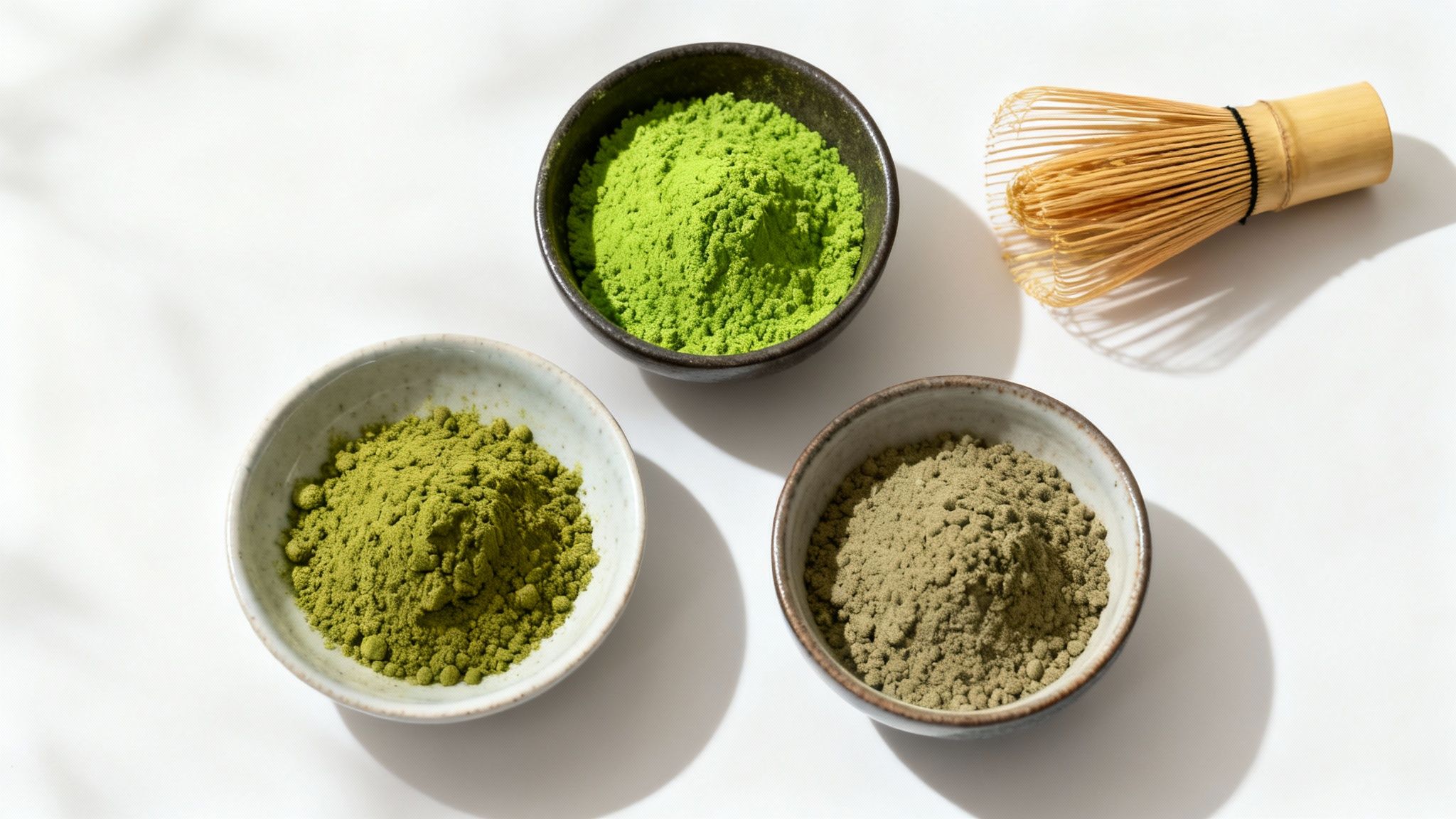
The first and most obvious sign of quality is the colour. Proper, ceremonial-grade matcha should have a vibrant, almost electric green hue. This brilliant colour is a direct result of the meticulous shade-growing process, which floods the leaves with chlorophyll.
A dull, swampy green or a yellowish-brown powder is a major red flag. This usually means the matcha was made from older, lower-grade leaves, wasn't shaded correctly, or has simply gone stale and oxidised, losing all its freshness and flavour.
Feel the Texture: It Should Be Fine and Silky
Next, pay close attention to how it feels. High-quality matcha is traditionally stone-ground into an incredibly fine powder. It should feel as light and silky as talcum powder when you rub a little between your fingers. This is essential for getting a smooth, clump-free bowl when you whisk it.
If the powder feels gritty, it was probably ground by a machine rather than traditional granite stones, or it might still contain bits of stem and vein that should have been removed. This will only lead to a grainy texture and a disappointing taste. Of course, the whisking technique is just as crucial, and you can learn all about the traditional matcha green tea bamboo whisk to perfect your preparation.
Check the Aroma and Origin
Finally, trust your nose. Open the tin and take a proper sniff. A good matcha will have a fresh, sweet, and grassy aroma with those lovely savoury notes coming through from all the amino acids. It should smell complex and inviting. If it smells dusty, flat, or just plain bitter, it’s a sure sign of poor quality.
Pro Tip: Always check where it comes from. The finest and most sought-after matcha traditionally comes from Japan, especially the Uji region near Kyoto. While matcha is made elsewhere, Japanese artisans have been perfecting their craft for centuries.
A Few Final Matcha Musings
To wrap things up, let's clear up some of the questions we hear most often. These are the little details that will help you truly get to grips with what makes matcha so special, from its unique energy boost to its unmistakable flavour.
So, Does Matcha Have Caffeine?
Yes, it certainly does. Because you’re consuming the entire tea leaf, you get a much bigger dose of caffeine than you would from a regular steeped green tea. It's generally a little less than a cup of coffee, but the effect is worlds apart.
The magic is in the L-theanine, an amino acid that works alongside the caffeine. This clever combination creates a feeling of calm, focused energy—none of the jitters or the dreaded post-coffee crash. Just a smooth, sustained lift.
Is Matcha Just… Green Tea Powder?
Absolutely not, and this is probably the most important distinction to make. While all matcha is technically a green tea powder, not all green tea powder comes close to being matcha. The difference is all in the craft.
- Real Matcha: Comes from shade-grown tencha leaves. The stems and veins are painstakingly removed before the leaf is slowly stone-ground into a fine, silky powder.
- Green Tea Powder: Is usually just regular, sun-grown green tea leaves (like sencha) that have been pulverised.
The shortcut process for generic green tea powder means it misses out on that electric green colour, the smooth umami depth, and the high L-theanine levels that define true matcha. It's often bitter, gritty, and a world away in taste.
What’s This Umami Flavour Everyone Mentions?
Umami is the fifth taste, that wonderfully savoury, brothy richness that makes things like mushrooms, parmesan, and slow-cooked stocks so satisfying. In matcha, it’s a deep, smooth, and mellow flavour that gives the tea its character.
This sought-after taste comes directly from the high concentration of amino acids—especially L-theanine—that build up in the leaves while they’re growing in the shade. A strong umami note is the tell-tale sign of a top-tier, ceremonial grade matcha.
It’s this savouriness that perfectly balances the tea's natural sweetness and the faintest hint of bitterness, creating a complex, satisfying profile you just don’t find anywhere else.
Why Does Good Matcha Cost So Much?
When you see the price tag on a high-quality matcha, you’re looking at the cost of time, tradition, and immense skill. It's an incredibly hands-on, labour-intensive process from start to finish.
Think about what goes into it:
- Shading: The delicate, manual work of covering entire fields of tea plants for weeks on end.
- Harvesting: Plucking only the youngest, most tender leaves by hand to capture the best flavour.
- Processing: All the careful steaming, drying, and meticulous de-stemming needed to produce pure tencha.
- Grinding: The ancient art of slowly grinding the tencha between granite stones. It can take an hour to produce just 30 grams of the finest ceremonial powder.
This dedication to doing things properly is what creates a matcha with such a vibrant colour, rich flavour, and incredible health benefits. For any tea lover, it's an investment you can taste.
At Jeeves & Jericho, we honour this incredible tradition by sourcing only the finest, authentic matcha from artisans in Uji, Japan. We invite you to explore our collection and experience for yourself what a difference true craftsmanship makes.