


Forget everything you think you know about iced tea. The secret to a truly smooth, flavourful glass isn't about brewing it hot and chucking it over ice. It's much simpler than that: just combine tea leaves and cold water, pop it in the fridge for a few hours, and strain. That’s it.
This gentle, no-heat method creates a brew that's naturally sweet and incredibly rich, without a trace of the bitterness you often get from a hot brew gone cold.
Your Guide to Effortlessly Smooth Cold Brew Tea
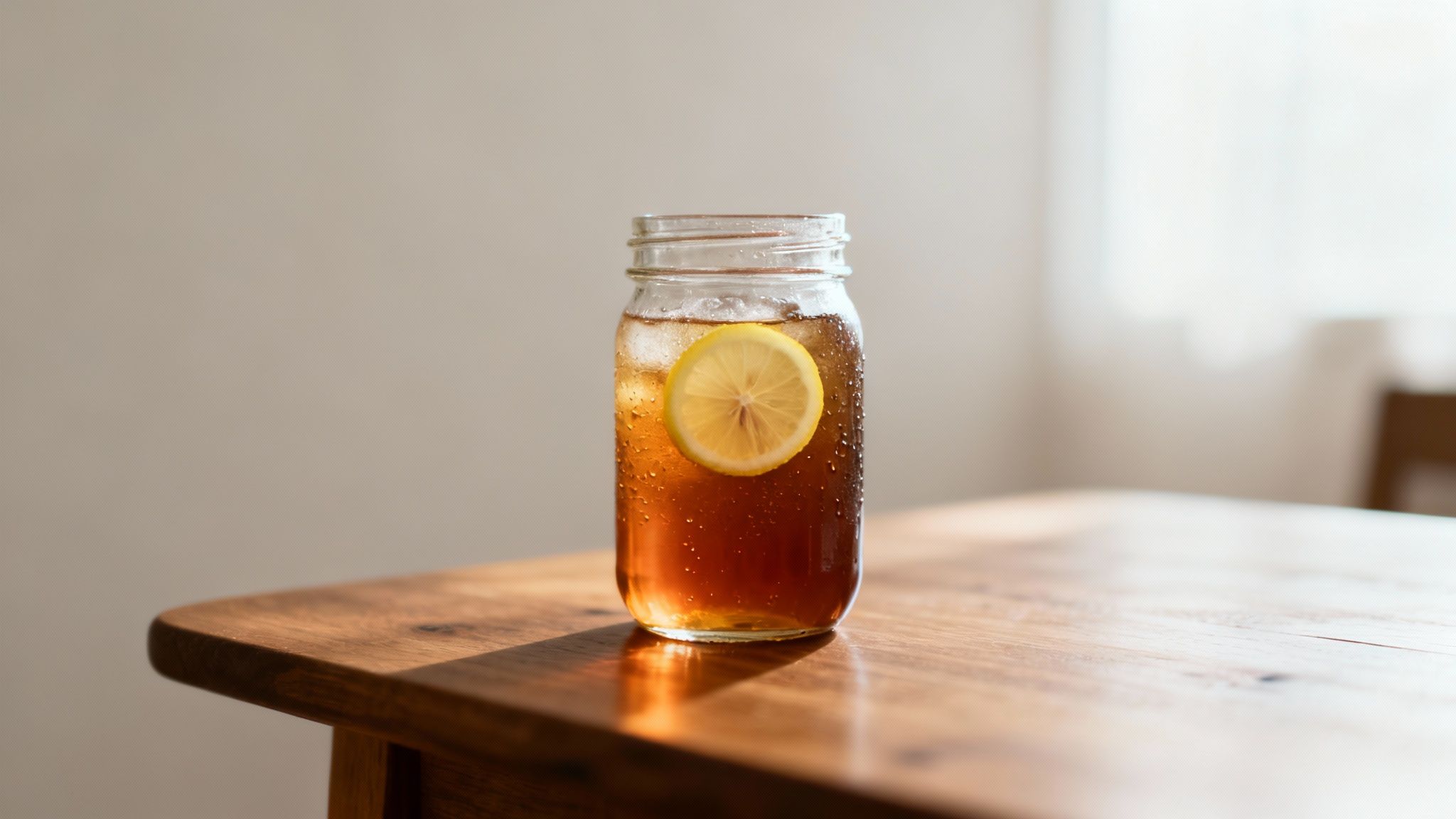
If you've ever been let down by a bitter, cloudy glass of iced tea, the cold brew method is about to become your new best friend. It’s a slow, patient infusion that completely changes the game.
When you use hot water, it yanks compounds out of the tea leaves in a flash. The trouble is, this includes tannins, the culprits behind that sharp, mouth-puckering taste. Cold water, on the other hand, works its magic slowly, gently drawing out all the delicate, sweet notes while leaving most of those bitter tannins behind. The result? A drink that’s exceptionally smooth and lets the tea's real character shine through.
It’s not just about superior taste; it's about pure simplicity. You can set up a big batch in minutes, leave it to do its thing overnight, and wake up to perfectly brewed, refreshing tea. It’s an effortless way to have a delicious, healthy drink on hand.
It seems we’re not the only ones who’ve caught on. The ready-to-drink tea market in the UK is booming, set to grow from US$580.57 million in 2024 to an incredible US$928.84 million by 2033. It’s clear we're all looking for more convenient and refreshing options.
And since cold brew tea is naturally sweet without any added sugar, you might also be keen to explore other refreshing sugar-free drink options.
At-a-Glance Cold Brew Tea Ratios and Times
To get you started, here's a quick reference table with some solid starting points for different teas. Think of these as a trusted guide, not a strict rulebook – feel free to tweak them to find what you love.
| Tea Type | Loose Leaf Ratio (per litre of water) | Recommended Steep Time (in fridge) | Resulting Flavour Profile |
|---|---|---|---|
| Black Tea | 12-15 grams (approx. 1.5 tbsp) | 8-12 hours | Rich, malty, and smooth with hints of natural sweetness. |
| Green Tea | 10-12 grams (approx. 1 tbsp) | 4-7 hours | Light, grassy, and clean with a delicate, sweet finish. |
| White Tea | 10-12 grams (approx. 2 tbsp) | 6-8 hours | Subtly floral, melon-like, and exceptionally smooth. |
| Herbal Tea | 15-20 grams (approx. 2 tbsp) | 10-14 hours | Vibrant, fruity, or floral, depending on the blend. |
These ratios and times are your launchpad. Once you've got the basics down, you can start experimenting with your favourite blends.
Now, let's get into the nitty-gritty. We'll walk you through the simple kit you'll need, the best methods for different teas, and some creative ideas to make every glass a real treat.
Gathering Your Cold Brew Equipment
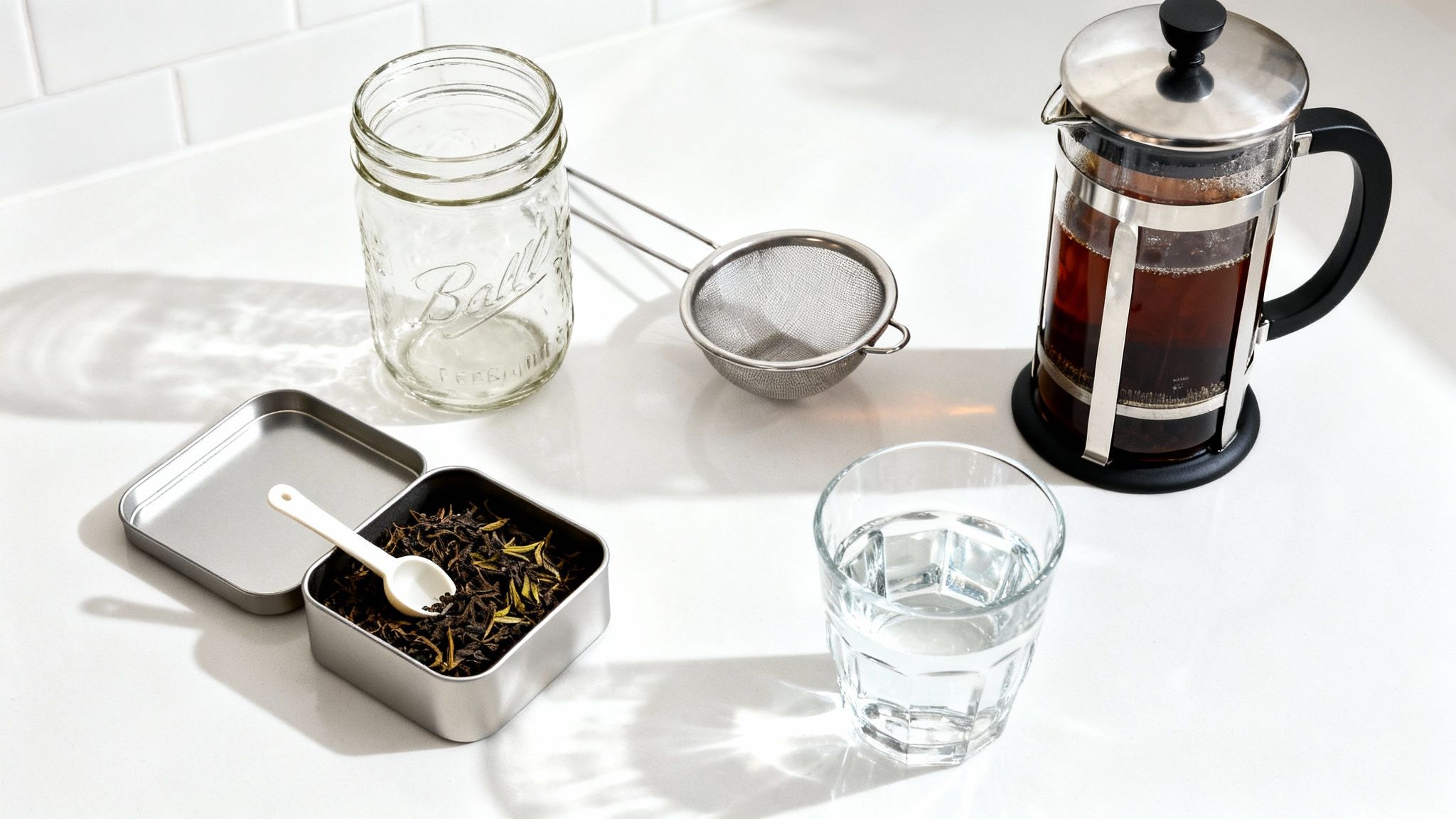
One of the best things about making cold brew tea is just how simple it is. You really don’t need a counter full of expensive gadgets; in fact, you probably already have everything you need tucked away in your kitchen cupboards.
Let's walk through the essentials.
Choosing Your Vessel
The most crucial piece of kit is your brewing vessel. This is where the magic happens, and thankfully, your options are wonderfully flexible. A simple large glass jar or pitcher works perfectly. Its non-porous surface won’t hang on to old flavours, ensuring a pure-tasting brew every time.
A French press is another brilliant choice, especially if you already have one for coffee. Just make sure to give it a thorough clean to get rid of any lingering coffee oils. The built-in plunger makes straining the tea leaves incredibly straightforward and mess-free.
You can, of course, find dedicated cold brew makers, which often come with a built-in infuser. They’re convenient and look sleek, but they aren't essential for a fantastic result. The key is simply having a container large enough for your batch.
- Glass Jar or Pitcher: A brilliant, cost-effective option you likely already own.
- French Press: Offers an easy, all-in-one brewing and straining solution.
- Cold Brew Maker: A specialised tool designed for convenience, often with a fine mesh filter.
Whatever you choose, make sure it has a lid or can be covered with cling film. This stops your tea from absorbing any stray odours from the fridge while it steeps. Nobody wants their delicate white tea tasting faintly of last night's curry.
The Tea: High-Quality Leaves vs Bags
Now for the star of the show: the tea itself. You have two main options here – loose-leaf tea or tea bags. While a high-quality pyramid tea bag can work in a pinch, using whole loose leaves is where you’ll unlock the most exceptional flavour.
Loose leaves have more room to unfurl and release their complex, nuanced flavours into the water. This freedom is key for the slow, gentle extraction that defines the cold brew process. Using a premium loose-leaf tea, like one from our Jeeves & Jericho collection, makes a world of difference.
The growing trend in the UK is a testament to this method's appeal. Cold brew tea is commonly made by steeping leaves in cold water for 8-12 hours, a technique now popular in homes and cafes alike for producing a superior, refreshing drink.
Essential Straining Tools
If you go for loose-leaf, you’ll need a way to strain the leaves out after brewing.
A simple fine-mesh sieve is all it takes. Just place it over your serving pitcher and pour the brew through. For teas with very fine particles, you can line the sieve with a bit of muslin for an even cleaner result.
Using a large basket infuser from the start also streamlines the process, giving leaves plenty of room to expand inside your pitcher. For smaller, single-serving brews, our guide on the best infuser tea cups has some great ideas.
Finally, don't overlook your water. Since your finished drink is about 99% water, its quality really matters. Using filtered water can massively improve the taste, allowing the tea's delicate notes to shine through without any interference from chlorine or other impurities. It’s a small step that pays off in a big way.
Perfecting Your Brew for Different Tea Types
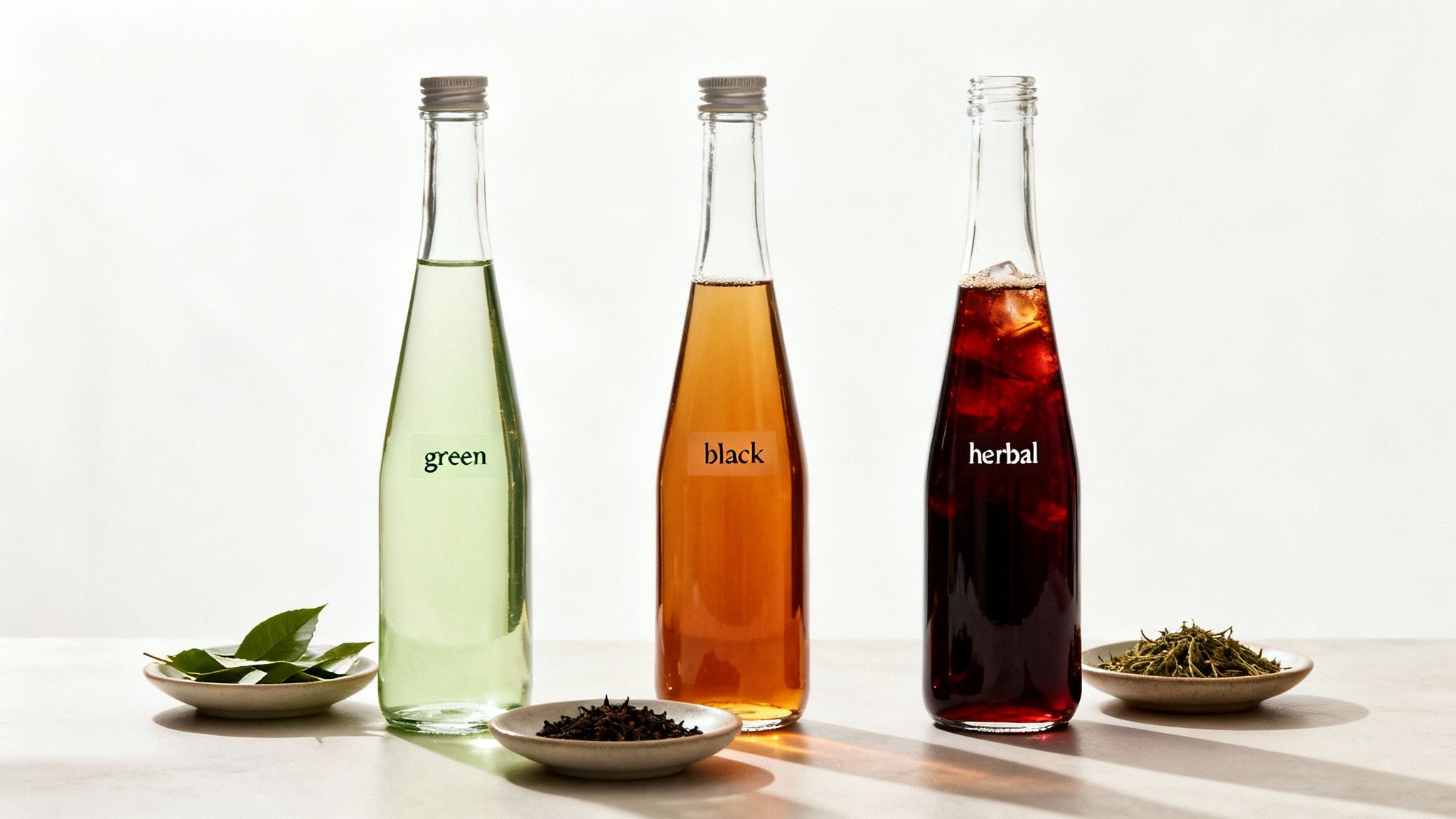
Learning how to make cold brew tea is an adventure in flavour, and a huge part of that journey is getting to know your leaves. The robust, malty profile of a black tea just won't behave the same way as the whisper-light notes of a white tea. Treating them all the same is a recipe for a disappointing brew.
The real secret is to adapt your technique—specifically your leaf-to-water ratio and steeping time—to suit the unique character of the tea. This is where you move from just making cold brew to truly perfecting it. By tailoring the process, you unlock the best possible version of each tea, guaranteeing a smooth, vibrant, and utterly delicious result every single time.
Black Tea: A Rich and Robust Brew
Black teas are wonderfully forgiving, making them a brilliant starting point for any cold brew enthusiast. Their sturdy, oxidised leaves are packed with deep, complex flavours that unfurl beautifully in cold water. Imagine the classic malty notes of an Assam or the bright, citrusy hints of an Earl Grey, but exceptionally smooth and naturally sweet.
For a consistently fantastic result, I aim for a ratio of about 12-15 grams of loose leaf tea per litre of water. This gives the brew enough body without ever feeling overwhelming.
Let it steep for 8 to 12 hours in the fridge. That’s the sweet spot. Less than eight hours, and you might find the flavour a little thin; much more than twelve, and you can risk a hint of astringency creeping in, even with the cold water method.
- Jeeves & Jericho Recommendation: Our Earl Grey is a stunning choice for cold brewing. The slow infusion gently coaxes out the bergamot, resulting in a brew that's crisp, refreshing, and beautifully aromatic without any sharpness.
Green Tea: Delicate and Refreshing
Cold brewing green tea is a true art form. When you get it right, it produces a brew that is unbelievably clean, grassy, and sweet, completely free of the bitterness that can sometimes plague hot-brewed green tea. The gentle cold water extraction is perfect for preserving its delicate vegetal notes.
The most common mistake? Over-steeping. Its leaves are far more sensitive, and even a long, cold soak can draw out unwanted astringency if you're not careful.
A shorter steeping window is crucial here. Aim for just 4 to 7 hours in the fridge. This is usually plenty of time to extract all those lovely sweet, umami flavours without tipping into bitter territory. For your ratio, a slightly lighter touch of 10-12 grams per litre of water often works best.
A great little tip for green tea is to taste it as it brews. I start checking the flavour at the 4-hour mark. This way, you can strain it at the perfect moment for your palate, capturing its peak sweetness.
White Tea: Subtly Sweet and Floral
White tea is the most delicate of them all, and cold brewing is arguably the best way to experience its subtle complexity. This method protects its nuanced, floral, and often fruity notes, creating a drink that is exceptionally smooth and refined.
Because white tea leaves are often light and fluffy, you might need to use a bit more by volume to get the right weight. Stick to a ratio of 10-12 grams per litre of water.
Give it 6 to 8 hours in the fridge to let its gentle character infuse fully. Much like green tea, it’s a good idea to start tasting it towards the end of its brew time to catch it at its most elegant. The final brew should have beautiful hints of melon, apricot, and honey, with a silky mouthfeel.
To dive deeper into the distinctions between these leaves, our guide on the different types of tea offers a fantastic overview.
Herbal Infusions: Bold and Vibrant
Herbal infusions, or tisanes, are where you can really get creative. Since they don't contain any actual tea leaves (Camellia sinensis), they are naturally caffeine-free and don't have the tannins that can cause bitterness. This means you can be much more liberal with your steeping times.
For most fruit and floral blends, a longer infusion of 10 to 14 hours really helps to draw out every last bit of their vibrant character.
The ideal ratio depends entirely on the blend. A good starting point is 15-20 grams per litre, but you’ll want to adjust this based on the ingredients. A fluffy chamomile blend will require more volume than a dense one packed with dried berries. Don't be afraid to experiment to find the perfect strength for your chosen infusion.
Cold Brewing Jeeves & Jericho Favourites
To help you get started, we've put together a specific guide for some of our most popular blends. Think of this as a cheat sheet for getting perfect results from your very first try.
| Jeeves & Jericho Tea | Tea Type | Grams per Litre | Steep Time | Tasting Notes |
|---|---|---|---|---|
| English Breakfast | Black | 12g | 10 hours | A beautifully smooth, malty, and full-bodied brew with a clean finish. |
| Japanese Sencha | Green | 10g | 6 hours | Crisp, grassy, and slightly sweet with delightful notes of umami. |
| Spiced Bombay Chai | Spiced Black | 15g | 12 hours | A refreshing take with gentle spice notes of cinnamon, cardamom, and ginger. |
| Turkish Apple | Herbal | 18g | 12 hours | Sweet, fragrant, and reminiscent of apple crumble in a glass. |
With these guidelines, you're well on your way to exploring the incredibly refreshing world of cold brew tea. Happy brewing
Creative Ways to Flavor Your Cold Brew

So, you've got the basic cold brew down. Now the real fun begins.
One of the best things about cold brew tea is that it’s the perfect canvas for all sorts of other flavours. With a few simple additions, you can take a straightforward pitcher of tea and turn it into something truly special.
The goal is always to complement the tea, not overwhelm it. Whether you're after a touch of sweetness, a citrusy burst, or an aromatic herbal note, it's all about creating a harmonious blend that's even more thirst-quenching than the original.
Adding a Touch of Sweetness
Because cold brewing is so gentle, it extracts almost none of the tea's bitterness. This means you need far less sweetener than you would for a traditionally brewed iced tea. If you do fancy sweetening things up, liquid options are your best bet as they dissolve easily without any grittiness.
A little runny honey brings a lovely floral note that works wonders with black or white teas. For something with a bit more depth and a caramel-like richness, maple syrup is a fantastic partner for herbal or chai blends.
- Agave Nectar: Very neutral, so it sweetens without really changing the tea’s original flavour.
- Simple Syrup: So easy to make yourself. Just dissolve equal parts sugar and hot water, then let it cool. You can even get creative and infuse it with vanilla pods or slices of fresh ginger.
Whatever you choose, start with a small amount. Give it a good stir, have a taste, and then add more if you need to. You can always add more, but you can’t take it away.
Infusing with Fresh Ingredients
This is where you can really let your creativity shine. Adding fresh ingredients either during or after the brewing process can introduce incredible flavour and vibrancy to your cold brew. The trick is knowing what works with the tea you’ve chosen.
A real crowd-pleaser is adding slices of fresh lemon or orange and a handful of bruised mint leaves to a black tea like an Earl Grey or English Breakfast. The citrus cuts through the malty notes and the mint adds that cooling finish we all crave on a hot day.
The magic of a cold infusion is how the flavours gently meld together. The slow, cold steep coaxes the essence out of the ingredients, creating a much more nuanced and integrated taste than just chucking some fruit juice in at the end.
Herbal teas are another brilliant base for fruit. Think of a hibiscus brew steeped with fresh raspberries and a few slices of lime, or a calming chamomile brightened up with slivers of ripe peach and a sprig of basil.
Perfect Pairings to Get You Started
To give you a bit of inspiration, here are a few of our favourite, tried-and-tested combinations. Feel free to mix and match to discover your own signature brew.
| Tea Type | Recommended Infusions | Flavour Profile |
|---|---|---|
| Black Tea | Lemon, Orange, Mint, Peach | Bright, zesty, and classically refreshing. |
| Green Tea | Cucumber, Lime, Lemongrass, Honeydew Melon | Cool, clean, and subtly invigorating. |
| White Tea | White Peach, Pear, Rose Petals, Elderflower | Delicate, floral, and elegantly sweet. |
| Herbal (Hibiscus) | Mixed Berries, Ginger, Lime, Watermelon | Vibrant, tart, and deeply fruity. |
| Chai Tea | Orange Peel, Vanilla Bean, A Splash of Oat Milk | Creamy, aromatic, and gently spiced. |
Finishing Touches
Don't forget that we drink with our eyes first. A little bit of effort on the presentation front can make a simple glass of cold brew feel like a proper occasion.
One of my favourite tricks is to make ice cubes with frozen fruit or herbs inside. A few raspberry or mint-laced ice cubes bobbing in the glass not only look stunning but add a subtle hint of flavour as they melt. You can even use edible flowers for a really elegant touch.
A simple citrus twist or a sprig of fresh rosemary as a garnish adds a professional finish and a lovely aroma just before that first sip. Serving your creations in a beautiful glass pitcher at a summer get-together is such a simple way to impress your guests and share the joy of a perfectly made cold brew.
Storing Your Brew and Solving Common Problems
Making a big batch of cold brew is a brilliant way to have a refreshing, healthy drink on hand. But after you’ve strained the leaves, how you store it makes all the difference. Get it right, and you’ll keep that just-brewed flavour for days.
We’ll also cover a few of the common snags you might hit along the way. Think of this as your quick-fix guide to making sure every glass is perfectly smooth, clear, and delicious.
Keeping Your Cold Brew Fresh
The golden rule here is simple: keep it airtight and keep it in the fridge. Oxygen is the enemy of fresh tea, causing it to oxidise and turning those beautiful, delicate notes flat and lifeless.
A sealed glass pitcher or bottle is your best bet. Glass is non-porous, so it won’t hang onto the flavours or smells of whatever was in it last, meaning your tea will taste exactly as it should. Just make sure the lid is on tight. If you’ve only got a pitcher without a perfect seal, a good layer of cling film pulled taut across the top works a treat.
Your cold brew should stay fresh in the fridge for around 3 to 5 days. After that, you’ll probably notice the flavour starting to fade. For the absolute best taste, I’d aim to drink it within the first 3 days.
Of course, great tea starts with great leaves. For tips on looking after your tea before you even start brewing, have a look at our guide on the correct storage for tea.
Troubleshooting Common Cold Brew Issues
Even a process as straightforward as cold brewing can throw up a few questions. Don’t worry—most problems are easily sorted with a little tweak here and there.
Why Is My Tea Cloudy?
A bit of a haze in your tea is usually down to the minerals in your water reacting with compounds in the leaves. If you live in a hard water area, that’s almost certainly the culprit.
Switching to filtered or spring water makes a world of difference. You’ll be amazed at how much clearer and brighter the final brew is.
Why Does My Tea Taste Weak or Watery?
If your cold brew is lacking a bit of oomph, it’s usually an easy fix. A few things to check:
- Tea-to-Water Ratio: You might just need to use more tea. Try adding a couple more grams of leaves per litre next time.
- Steeping Time: Perhaps it simply needs a bit longer to infuse. This is often the case with denser herbal blends. Don't be afraid to leave it for another 2-4 hours.
- Tea Quality: The standard flat teabags just don’t have the substance for a rich, complex cold brew. Using high-quality, whole-leaf tea gives you a far more satisfying flavour.
Why Does My Tea Taste Bitter?
It's rare for cold brew to turn bitter, but it can happen—especially with very delicate green teas. The number one reason is over-steeping.
If you find your green tea has an edge to it, try cutting the brew time right back. For some Japanese greens, as little as 2-3 hours is more than enough to extract all that sweet, grassy goodness without any of the bitterness.
Answering Your Cold Brew Tea Questions
As you start exploring the world of cold brew, you’re bound to have a few questions. It’s a beautifully simple process, but knowing the ‘why’ behind the method is what really lets you nail your technique and get creative with it. Let's get into some of the most common queries we hear from fellow tea lovers.
Can I Use Hot Water to Speed Things Up?
It’s tempting, I get it. But adding hot water completely defeats the purpose of cold brewing. The whole magic of this method lies in the slow, gentle extraction that only cool or room-temperature water can offer. This is precisely what stops the tea from releasing too many tannins – the compounds that cause bitterness.
If you use hot water, even just to give it a head start, you'll pull out those astringent notes and change the flavour profile entirely. You’d essentially just be making regular iced tea, not a true cold brew. For that signature, mellow smoothness, patience really is the most important ingredient.
Is It Possible to Cold Brew Chai Tea?
Oh, absolutely – and the result is nothing short of spectacular. Cold brewing chai is a brilliant way to enjoy its complex spice blend in a super refreshing format. The slow infusion gently coaxes out all those aromatic notes of cinnamon, cardamom, and clove without letting them steamroll the black tea base.
The method is exactly the same as for other black teas. We’d always suggest using a quality loose-leaf chai for the most vivid, authentic flavour.
- Steep your chai blend in cold, filtered water.
- Let it infuse in the fridge for around 10-12 hours.
- Strain the leaves and all those lovely spices out thoroughly.
For a creamy, café-style finish, pour your cold brew chai over ice and add a generous splash of milk or a plant-based alternative. Oat milk works particularly well.
What’s really special about a cold brewed chai is the balance. The spices are all there, but they’re softer and more integrated than in a hot brew. It’s invigorating and incredibly smooth all at once.
What Is the Difference Between Cold Brew and Iced Tea?
This is probably the question we get asked most often. The answer is all in the brew. Traditional iced tea starts life as hot tea – you brew the leaves in hot water before cooling it down quickly, usually by pouring it over a mountain of ice.
This shock of hot-to-cold can make the tea taste harsher and more astringent, as the heat pulls those tannins out very quickly. It’s also what can make iced tea look a bit cloudy, as the compounds clump together when they cool down so fast.
Cold brew tea, on the other hand, never sees any heat. By steeping the leaves in cold water over many hours, the flavours are extracted slowly and gently. This creates a brew that is noticeably:
- Smoother: Way less bitterness and that mouth-puckering astringency.
- Naturally Sweeter: The gentle process highlights the tea's own subtle sweetness.
- Clearer: The slow infusion helps keep the final drink crystal clear.
At its heart, iced tea is simply hot tea that’s been chilled. Cold brew is a completely different drink from the ground up.
How Do I Know the Right Amount of Tea to Use?
Finding your perfect tea-to-water ratio is always a bit of a personal journey, but you need a solid place to start. For loose-leaf tea, a good rule of thumb is about 10-15 grams of tea per 1 litre of water. That’s roughly 1 to 1.5 tablespoons, though it can depend on how fine or fluffy the leaves are.
Start there, see what you think, and then tweak your next batch. If the flavour was a bit too faint, add a couple more grams of tea. If it was a little too punchy for you, just dial it back a bit. It’s worth keeping a note of what works for your favourite Jeeves & Jericho teas – a delicate white tea will need a lighter touch than a robust breakfast blend.
Ready to start your cold brew journey with the finest leaves? Explore the exceptional collection at Jeeves & Jericho, where every tea is sourced with care to deliver unparalleled flavour, whether brewed hot or cold. Discover your new favourite blend today.