


If you've ever found yourself staring at the ceiling, counting sheep until they all start to look a bit blurry, you're not alone. The search for a peaceful night's sleep often leads us down a rabbit hole of solutions, but one of the most gentle and time-honoured remedies is a simple cup of tea. For centuries, people have relied on herbal infusions like chamomile, valerian, and lavender to quieten a busy mind and soothe the body into a state of rest.
Finding Your Perfect Nightly Tea for Sleep
It seems we're in the middle of a sleeplessness epidemic, with nearly one in three adults reporting they struggle to get enough rest. Many are now looking for a softer approach, stepping away from harsh fixes and rediscovering the power of natural remedies. While an evening cuppa is a classic British ritual, turning it into a genuine sleep aid is about more than just popping the kettle on—it’s about choosing the right ingredients and embracing the ritual.
This guide is here to take you beyond the usual advice. We'll delve into the world of herbal teas, exploring the science that makes certain botanicals so effective. You'll soon see how that simple cup can become a powerful and meaningful part of your wind-down routine.
Why Herbal Tea for Sleep?
First, a crucial distinction. Your typical black, green, and white teas all come from the Camellia sinensis plant, which contains caffeine. Herbal teas, or tisanes, are a different story altogether, made from a blend of fruits, flowers, and herbs, making them naturally caffeine-free.
This is non-negotiable when it comes to sleep. Caffeine can linger in your system for hours, and even a small amount can throw your natural sleep cycle out of sync.
Herbal infusions work with your body, not against it. Think of it this way: caffeine is like a blaring alarm clock demanding your brain stay alert, while a herbal tea for sleep is more like a gentle lullaby, quietly signalling that it’s time to switch off.
The magic isn't just in the ingredients, either. The ritual itself is a surprisingly powerful psychological cue.
The simple act of preparing and sipping a warm drink can become a potent signal to your mind and body that the day is ending and it's time to transition into a state of rest and relaxation.
What You Will Discover
We've put together a complete resource for anyone looking to improve their sleep the natural way. You’ll learn which herbs are best for calming a racing mind, which ones ease physical tension, and which can help you sink into a deeper, more restorative slumber. We'll also cover the practical side of things, like brewing times and the best moment to enjoy your tea for maximum effect.
Here’s a glimpse of what’s to come:
- The Science of Sleep Teas: We'll look at how specific compounds in herbs like chamomile and lavender actually interact with your brain to encourage drowsiness.
- A Guide to Key Ingredients: A deep dive into the most effective botanicals, from their flavour profiles to their unique sleep-promoting benefits.
- Creating a Bedtime Ritual: Actionable steps to transform your nightly cuppa into a powerful habit that tells your body it's time to wind down.
- High-Quality, Ethical Blends: An introduction to Jeeves & Jericho's curated selections that deliver both exceptional flavour and genuine relaxation.
Think of this as your complete guide to making your evening cuppa the very best part of your nightly routine.
How Herbal Teas Prepare Your Body for Rest
Ever wondered what’s really going on when a warm cup of herbal tea starts to make your eyelids feel heavy? It’s more than just a comforting ritual. There’s a fascinating bit of biochemistry at play, where nature’s finest ingredients have a quiet word with your nervous system. A good tea for sleep is essentially a gentle nudge, telling your body it’s time to power down.
Picture your mind as a busy city street at rush hour, with thoughts and worries zipping about like cars. Certain compounds in sleepy herbs act like traffic wardens, calmly slowing everything down. They don't just flick a switch to turn the lights off; they gradually dim them, guiding you into a natural, easy sleep.
One of the star players here is a compound in chamomile called apigenin. This clever antioxidant binds to specific receptors in your brain, effectively turning down the volume on all that mental chatter. It helps to quieten the inner noise that so often keeps us staring at the ceiling.
The Science of a Soothing Sip
The calming magic of sleep teas lies in how they influence our neurotransmitters—the tiny chemical messengers running the show in our brain, controlling everything from mood to our sleep-wake cycle. Many of the best botanicals for sleep work with a neurotransmitter called GABA (gamma-aminobutyric acid).
Put simply, GABA is your brain's brake pedal. Its main job is to put a lid on neuronal activity across your nervous system, preventing it from getting overexcited.
When your GABA levels are where they should be, you feel calm and centred. But when they're low, you can feel anxious, restless, and completely unable to switch off.
This is where ingredients like valerian root and lemon balm come in. They contain compounds that support your brain’s GABA activity, helping it to work more effectively. It's not about adding more GABA, but about enhancing your brain's own natural calming system. This is a huge part of why these teas feel so deeply relaxing. We go into this in more detail in our guide on tea that relaxes the mind and body.
Why Quality and Whole Leaves Matter
Not all herbal teas are created equal. The physical form of the botanicals you're brewing makes a world of difference, which is why we’re so particular about using whole leaves at Jeeves & Jericho.
Here’s why it matters:
- More Potent Goodness: Whole leaves and flower heads hold onto far more of their essential oils and active compounds, like that all-important apigenin in chamomile. The fine dust in many teabags has lost most of these volatile goodies during processing.
- A Proper Flavour Experience: The larger surface area of whole leaves allows for a much richer, more nuanced flavour to unfold in your cup. It turns a simple drink into a genuinely enjoyable part of your bedtime ritual.
- What You See Is What You Get: With whole-leaf teas, you can see exactly what you’re brewing—pure, unadulterated botanicals, not the dust and "fannings" that hide in lower-quality bags.
This focus on quality is what unlocks the full potential of your nightly cup. It ensures you're drinking a brew that’s genuinely rich in the compounds that help prepare your body for proper rest. It's a shift we're seeing across the UK, as more people turn to natural sleep aids. Recent surveys show that herbal infusions are a growing choice, especially among women (19% choose them compared to 12% of men), highlighting a real move towards wellness rituals. To see more about British tea drinking habits, you can explore the latest survey findings.
The Best Herbal Ingredients to Promote Sleep
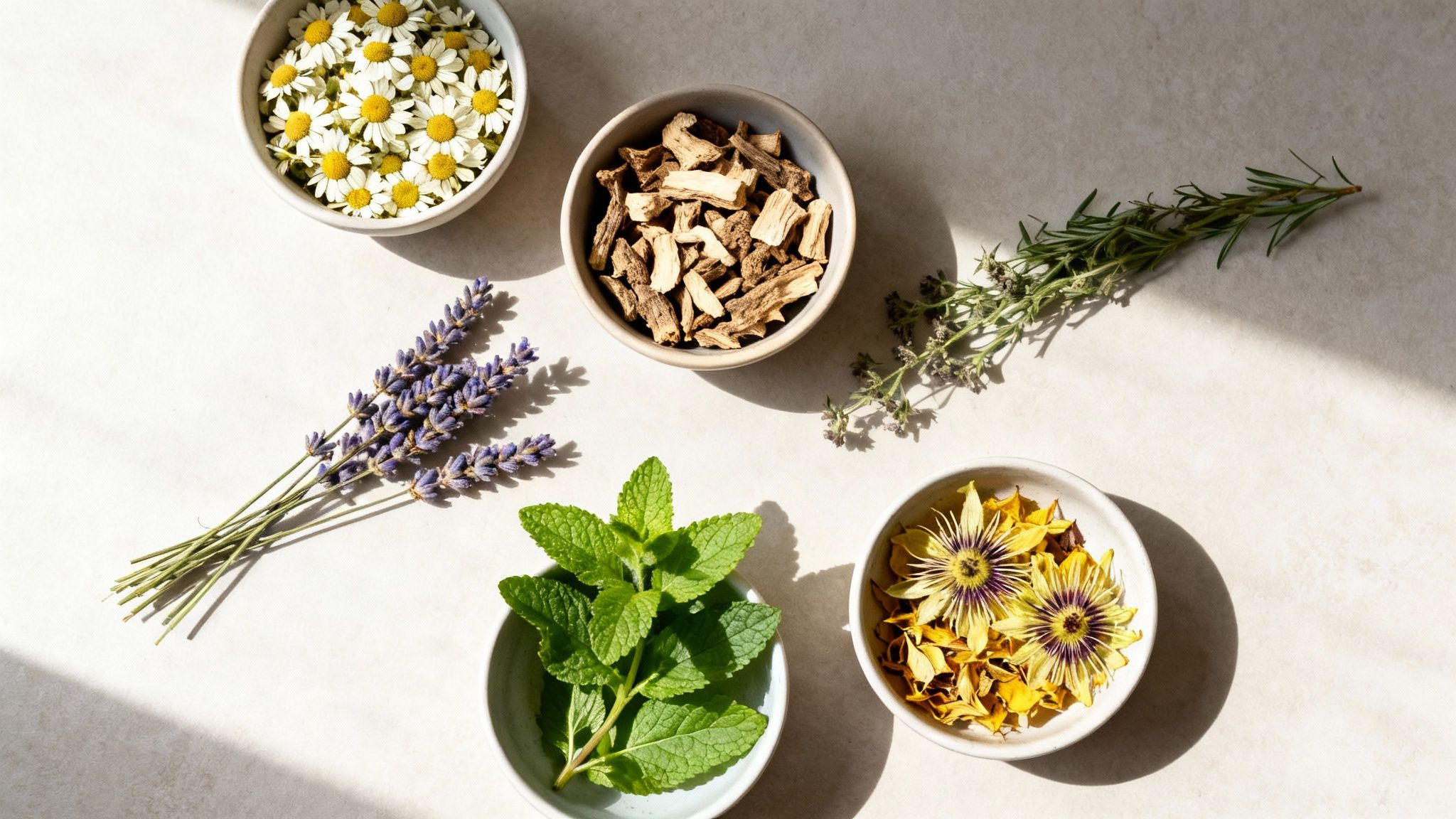
When you're faced with a whole world of botanicals promising a better night’s rest, picking the right tea for sleep can feel a bit overwhelming. Let's cut through the noise and get to know the most effective, time-tested herbs. Each one brings something unique to the cup, both in its benefits and its flavour, so you can find the perfect match for you.
We'll wander through the gentle, apple-like notes of chamomile and the potent, earthy depths of valerian root. There's an entire universe of natural sleep support out there just waiting to be explored. Once you understand the key players, you can confidently choose a blend that not only tastes beautiful but genuinely helps you to unwind and drift off.
This is especially true here in the UK, where herbal teas are becoming a firm favourite for finding better rest. In a nation that knocks back over 100 million cups of tea a day, there's a real shift happening. A recent UK Tea and Infusions Census Study found that 16% of Brits now prefer herbal infusions over anything else. This trend is particularly noticeable among women (19%) and younger adults—a full 20% of 18-24 year-olds are reaching for herbal or green teas to help them wind down. You can see how British tea habits are changing by exploring the full census study.
Chamomile: The Gentle Giant of Sleep
Ask anyone to name a sleepy tea, and chamomile is almost always the first one that springs to mind. It’s been used for centuries as a mild tranquilliser for a very good reason. Those delicate, daisy-like flowers contain an antioxidant called apigenin, which binds to certain receptors in the brain to help dial down anxiety and pave the way for sleep.
Its flavour is wonderfully comforting—soft, with hints of honey and apple. This makes it an incredibly approachable starting point if you're just dipping your toes into the world of herbal sleep aids.
Valerian Root: The Potent Relaxer
If you need something with a little more oomph, valerian root is your steadfast ally. People have been turning to this herb since the days of ancient Greece and Rome to tackle insomnia and anxiety. Its real power lies in its ability to increase the levels of GABA (gamma-aminobutyric acid) in your brain.
Think of GABA as your brain's natural brake pedal; it quietens down excessive neural activity, and valerian root gives it a helping hand. A word of warning though, its flavour is quite distinctive—earthy, woody, and a bit pungent. That's why you’ll often find it blended with other herbs like mint or lemon balm to create a more balanced brew.
Lavender: The Aromatic Soother
We all know that incredible, calming scent of lavender. Well, that aroma has a measurable effect on the nervous system. While it's a star in aromatherapy, lavender flowers also make a beautifully fragrant and effective sleep tea. Just breathing in the scent can help to lower your heart rate and blood pressure, getting your body ready for rest.
The flavour is exactly what you'd expect: floral, sweet, and slightly perfumed. It offers a proper sensory experience that helps to melt away the day's stresses, making it a brilliant choice if your sleeplessness is tied to a racing mind.
Lemon Balm: The Mood Lifter
Part of the mint family, lemon balm has a bright, citrusy scent and flavour that manages to be both uplifting and calming at the same time. Traditionally, it's been used to lift the spirits and reduce stress, which makes it perfect for those nights when anxiety is keeping you awake.
Much like valerian, lemon balm works by supporting GABA levels in the brain, but it does so more gently. Its lovely, lemony taste makes it a delightful cup on its own or when blended with friends like chamomile or lavender.
Passionflower: The Mind Quieter
Passionflower is another powerhouse herb for soothing an overactive mind. It's especially good for those of us who get stuck in a loop of worry the moment our head hits the pillow. Studies suggest it boosts GABA levels, effectively helping to turn down the volume on all that mental "chatter."
The flavour is quite mild—earthy and a little grassy. While it’s subtle on the palate, its effects can be profound, making it a valuable player in many sleep-focused tea blends. It works beautifully alongside other calming herbs, creating a brew with layers of soothing power.
Each of these botanicals offers a different path to the same destination: a peaceful night's sleep. The key is to find the ingredient or blend that best addresses your specific challenges, whether that's physical tension, mental anxiety, or simply the need for a calming ritual.
If you're looking for a wonderfully comforting, naturally caffeine-free evening drink that isn't a sedative, rooibos is another brilliant option. This red bush from South Africa is packed with antioxidants and has a smooth, slightly sweet flavour. If you're curious, you can learn more about what rooibos tea tastes like in our guide.
How to Create a Powerful Bedtime Tea Ritual

There’s more to a good night’s sleep than just the sleepy botanicals in your cup. The simple act of preparing and savouring a warm drink is a powerful cue to your brain that the day is done and it’s time to switch off. This conscious shift from the bustle of the day to the calm of the evening is the secret ingredient to great sleep hygiene.
Think of it this way: your morning alarm jolts you into action, right? A consistent bedtime ritual does the exact opposite, gently guiding you towards rest. By creating a sequence of calming actions, you’re training your body’s internal clock, making the journey into sleep feel smoother and more natural. A warm, aromatic cup of herbal tea is the perfect centrepiece for this nightly practice.
Setting the Stage for Slumber
The first step is to create a peaceful environment. About an hour before you want to be asleep, start dimming the lights. This simple action helps kickstart your body's natural production of melatonin, the hormone that tells you it's time for bed.
Next, put away the screens. Phones, tablets, televisions—they all emit a blue light that can mess with your melatonin levels, essentially tricking your brain into thinking it’s still daytime. Instead, find a quiet, comfortable spot where you can unwind without digital distractions.
For an even deeper sense of calm, try incorporating essential oils into your evening rituals. A few drops of lavender or bergamot in a diffuser can add another sensory layer to your wind-down, soothing your senses and helping you relax more deeply.
The Mindful Art of Brewing
This is where the ritual truly begins. Making your tea isn’t about just flicking the kettle on; it’s a moment of mindfulness. Pay attention to each little step.
-
Select Your Mug: Choose a cup that feels lovely and comforting in your hands. It’s a small detail, but it makes the routine feel more special.
-
Heat Your Water: While you wait for the kettle, take a few slow, deep breaths. Use this pause to consciously let go of whatever’s on your mind from the day.
-
Brew with Intention: Whether you’re using a pyramid bag or beautiful loose leaves, watch as the botanicals unfurl and infuse the water with their gentle colour and aroma. Breathe in the steam and let the scent of chamomile or lavender start to work its magic.
The UK is a nation of tea lovers, but we're often in a rush. One study found that a staggering 73% of Brits don’t leave their black tea to brew for the recommended time. Herbal infusions, though, invite a slower, more deliberate pace, and that’s a huge part of the relaxation benefit.
A proper brew is essential. Rushing it means you miss out on the very compounds that promote sleep, not to mention the full, nuanced flavour of the botanicals.
If you’re using whole botanicals, getting the technique right makes all the difference. We’ve put together a complete guide on how to brew loose leaf tea to ensure you get a perfect, restorative cup every single time.
Pairing Your Tea with Calm Activities
Once your tea is ready, the final piece of the puzzle is to enjoy it alongside another relaxing activity. This really reinforces the "it's time for bed" signal to your brain.
- Reading a Book: A real, physical book is best to avoid that pesky blue light.
- Journaling: Jot down any nagging thoughts or worries to help clear your head.
- Light Stretching: Gentle movements can help release any physical tension you're holding onto.
- Listening to Music: Stick to calm, instrumental music or even nature sounds.
By consistently combining these elements, your cup of tea for sleep becomes so much more than a drink. It transforms into the anchor of a powerful, restorative ritual that prepares your mind and body for a night of deep, peaceful rest.
Common Myths About Tea and Sleep Debunked
When you start exploring the world of tea for sleep, you quickly run into a lot of well-meaning but slightly off-the-mark advice. Let's clear the air a bit. Getting the facts straight will help you choose your nightly cuppa with confidence, making sure it’s actually helping you drift off, not keeping you awake.
A lot of people assume that any herbal tea is fair game for bedtime. This is probably the biggest misconception out there. While it's true that herbal infusions are caffeine-free, not all botanicals are designed to send you off to the land of nod.
Myth 1: All Herbal Teas Are Calming
It’s easy to lump all herbal teas into one big ‘relaxing’ basket, but their effects can be worlds apart. Think of it like a garden – you’ve got plants for every occasion. Some, like the gentle chamomile or earthy valerian root, are brilliant at soothing and quieting a busy mind.
Others, though, are there to give you a bit of a kick. Herbs like ginger, ginseng, and peppermint are wonderfully invigorating and often used to boost energy or fire up digestion. A spicy ginger tea might be delicious, but it's far more likely to wake you up than wind you down. Always have a peek at the ingredients to make sure the blend is actually designed for relaxation.
Myth 2: Green Tea Is Fine Before Bed
This one is a stubborn myth, probably because green tea has such a strong connection to wellness. And while it’s true that green tea contains L-theanine, an amino acid famous for creating a state of calm alertness, it also contains caffeine. For most of us, especially anyone sensitive to caffeine, that’s enough to throw your sleep cycle out of whack.
Even a small amount of caffeine can make it harder to fall asleep and can lessen the quality of your deep, restorative sleep. Unless you’re absolutely certain you can handle it, it’s best to steer clear of green tea in the hours before you turn in.
The half-life of caffeine is around five hours. That means half the caffeine from a 7 p.m. cuppa is still circulating in your system when the clock strikes midnight.
Myth 3: Decaf Means No Caffeine
The words ‘decaf’ and ‘caffeine-free’ get thrown around as if they’re the same thing, but they are critically different. Understanding this distinction is key when you're choosing a proper tea for sleep.
-
Decaffeinated Tea: This is tea that started out with caffeine (like black or green tea) and has gone through a process to wash most of it out. The key word is most. A small amount, usually around 2-5 milligrams per cup, always sticks around. For someone who is very sensitive, that tiny bit can be enough to cause a restless night.
-
Caffeine-Free Tea: This is the good stuff. It describes infusions made from ingredients that never had caffeine to begin with. We're talking about proper herbal teas made from flowers, fruits, and roots like chamomile, lavender, or rooibos. They are naturally, completely, 100% caffeine-free.
If a truly restorative night's sleep is what you're after, always go for a naturally caffeine-free herbal tea. It's the only way to guarantee there’s absolutely no caffeine to get in the way, letting those lovely, calming botanicals work their magic.
Start Your Journey to a Better Night's Sleep
So there you have it. You’re now armed with everything you need to know to transform your evenings and get back the rest you deserve. A simple cup of the right tea for sleep, brewed with a bit of care and intention, is so much more than just a warm drink—it’s a ritual that can genuinely change your nights for the better.
Whether it’s the gentle calm of chamomile to quiet a racing mind or the soothing scent of lavender to melt away the day's tension, choosing a tea that feels right for you is a powerful first step. Think of it as your personal invitation to a more peaceful night and a far more energised morning.
Taking the Next Step
Ready to start? We invite you to have a look through our collection of calming herbal blends here at Jeeves & Jericho. We've carefully chosen each one for its exceptional quality, ethical sourcing, and of course, its beautiful flavour. Find the one that catches your eye and start your new routine tonight.
Embrace this simple ritual and discover the difference a great cup of tea can make. You're now ready to start your journey to better rest.
While a good cuppa is a brilliant start, it works best as part of a wider approach. For more ideas, you can explore these five tips for going to sleep quicker to round out your nightly routine. By pairing a mindful tea ritual with other healthy sleep habits, you're building a strong foundation for truly restorative nights.
A Few Common Questions About Sleep Teas
Even after finding the perfect blend, you might still have a few questions floating around. It's completely normal. Let's clear up some of the most common queries we get, so you can settle into your bedtime routine with total confidence.
How Long Before Bed Should I Drink My Tea?
This is all about timing. We've found the sweet spot is around 30 to 60 minutes before you plan to turn in for the night.
This gives those wonderful active compounds, like the apigenin in chamomile, just enough time to get to work and begin gently calming your mind and body. Crucially, it also leaves you time for a final trip to the loo before you get properly tucked in, so you're not disturbed later.
Think of it as your own personal wind-down signal. That warm mug an hour before bed is the first cue that tells your body, "Right, it's time to start shutting down for the night."
Drink it too early, and you might feel those lovely calming effects peak before you're actually ready for sleep. Leave it too late, and the herbs won't have a proper chance to work their magic.
Will I Feel Groggy in the Morning?
A very fair question, especially if you've ever had a bad experience with other sleep aids. The beauty of these herbal teas is that they work with your body’s natural rhythm, rather than trying to overpower it.
Unlike stronger remedies that can feel like a sledgehammer, botanicals like chamomile, lavender, and lemon balm simply nudge you towards a state of natural rest. Because they aren't forcing you to sleep, you should wake up feeling clear and refreshed, not groggy or sluggish. It's about supporting your sleep cycle, not sedating you.
Can I Drink a Sleep Tea Every Night?
For most people, yes, absolutely. A cup of herbal tea each evening is a perfectly safe and often very beneficial part of a healthy routine. These plants are gentle by nature and aren't known to be habit-forming.
In fact, making it a consistent ritual is where the real power lies. The simple act of brewing and sipping a warm, fragrant drink every night becomes a powerful psychological cue that it’s time to unwind and prepare for rest.
Of course, it's always smart to listen to your body. If you have any ongoing health conditions, are pregnant or breastfeeding, or are on medication, it's always best to have a quick word with your doctor before making any new herb a daily habit.
Ready to create your own calming bedtime ritual? At Jeeves & Jericho, we’ve curated a collection of beautiful, ethically sourced herbal blends, all designed to help you relax deeply and find a peaceful night's sleep. Come and explore our calming collection to find your perfect nightly companion.