


Tea is more than just a beverage; it is a global tradition steeped in history, culture, and craftsmanship. From the misty mountains of Fujian to the lush estates of Assam, each leaf tells a unique story. This comprehensive list of tea types is your guide to navigating this diverse landscape, offering practical insights into the world’s most beloved drink. Whether you are a seasoned connoisseur or just beginning your tea adventure, understanding the nuances of each variety unlocks a deeper appreciation for your daily cup.
At Jeeves & Jericho, we believe in celebrating this diversity by sourcing exceptional whole leaf teas that honour their heritage. This guide is designed to be your definitive resource, moving beyond simple descriptions to provide actionable details. You will discover the distinct flavour profiles, ideal brewing parameters, caffeine levels, and perfect food pairings for ten essential categories of tea. From the delicate notes of White Silver Needle to the rich, malty character of Assam, we will equip you with the knowledge to select, prepare, and enjoy each one to its fullest potential.
Beyond their diverse flavours, many teas also offer specific health benefits; for instance, certain varieties are considered among the best teas to help curb sugar cravings. This article focuses on the complete sensory experience, helping you build a well-rounded understanding of what makes each tea special. Join us as we explore the foundational varieties that form the backbone of the tea world, providing the practical knowledge you need to elevate your brewing and tasting journey. Let’s begin.
1. Black Tea - Assam
Assam tea, hailing from the humid, low-lying plains of the Assam region in northeastern India, is a quintessential black tea celebrated for its robust, malty, and full-bodied character. Grown from the native Camellia sinensis assamica plant variety, this tea is known for its brisk, strong flavour and deep, reddish-brown liquor. It is the powerhouse behind many popular breakfast blends, including English Breakfast and Irish Breakfast, prized for its ability to stand up to milk and sugar.
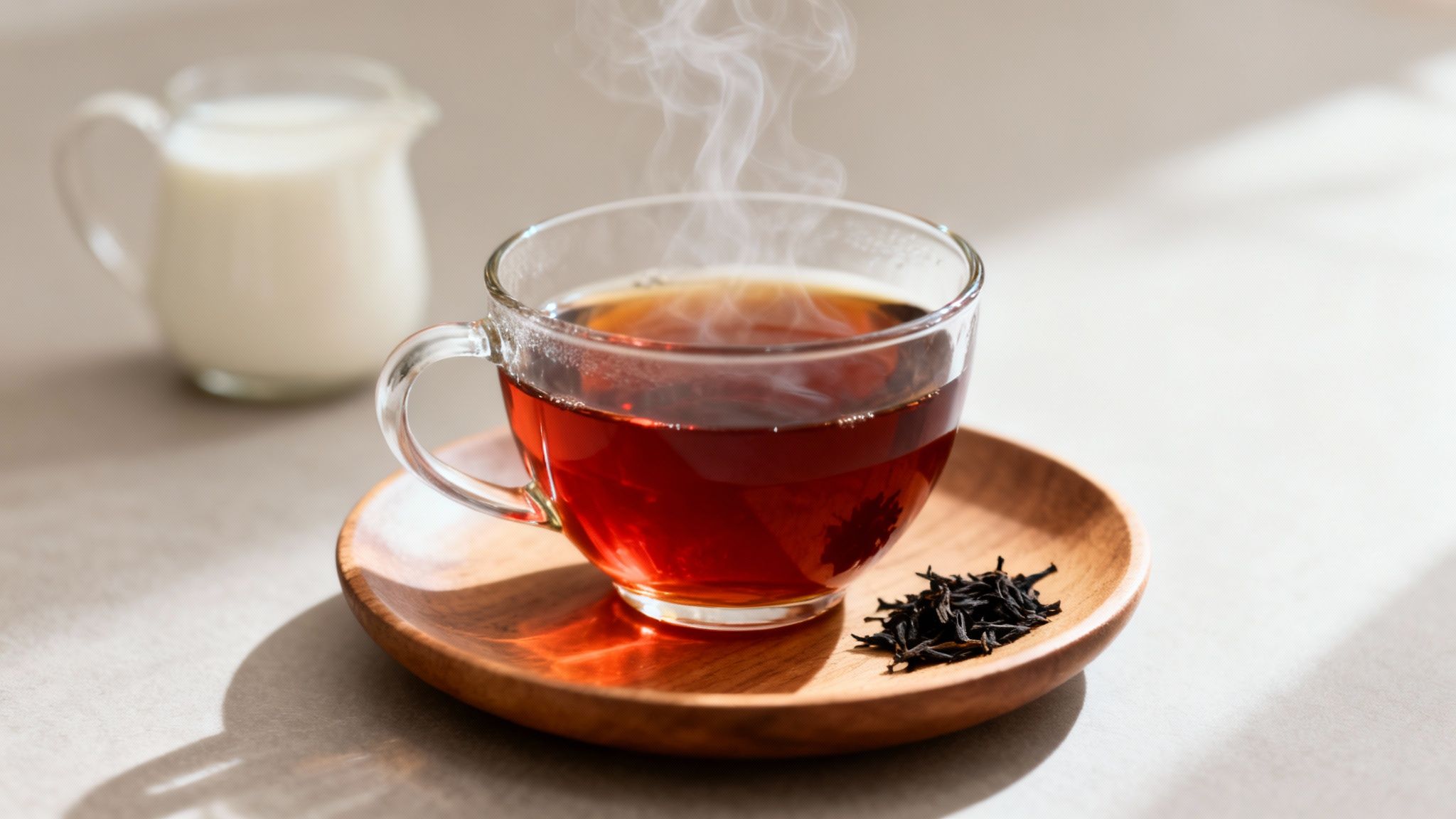
This tea's bold profile makes it a morning favourite for those seeking an energising start to their day. Unlike the more delicate notes found in other teas, Assam offers a rich, sometimes astringent, and deeply satisfying taste experience that has cemented its place in British tea culture. Understanding this variety is a key step for anyone building a comprehensive list of tea types.
Flavour Profile and Brewing
Assam is defined by its strong, malty sweetness, often with hints of caramel, spice, or even a subtle smokiness depending on the specific estate and flush (harvest season). The second flush, harvested in late spring, is particularly prized for producing a "tippy" tea, which has a smoother, more complex flavour.
- Ideal Brew Temperature: 95-100°C (203-212°F)
- Steep Time: 3-5 minutes
- Caffeine Level: High (approx. 60-90 mg per cup)
- Common Pairings: Full English breakfast, rich pastries, scones with clotted cream, and savoury sandwiches.
Actionable Tips for the Perfect Cup
To truly appreciate Assam, use fresh, filtered water brought to a rolling boil. For a traditional British-style cup, add a splash of milk to mellow the tea's natural astringency. For wholesale cafe use, its consistency and bold flavour make it an ideal base for house blends and lattes. For a deeper dive into the world of black teas, you can explore the many black tea varieties available.
2. Green Tea - Sencha
Sencha is the most widely enjoyed green tea in Japan, accounting for the vast majority of the country's tea production. Unlike black teas, which are oxidised, Sencha leaves are steamed shortly after harvesting to prevent oxidation. This process preserves the leaves' vibrant green colour and locks in the fresh, vegetal flavours, resulting in a tea celebrated for its refreshing and slightly sweet character.
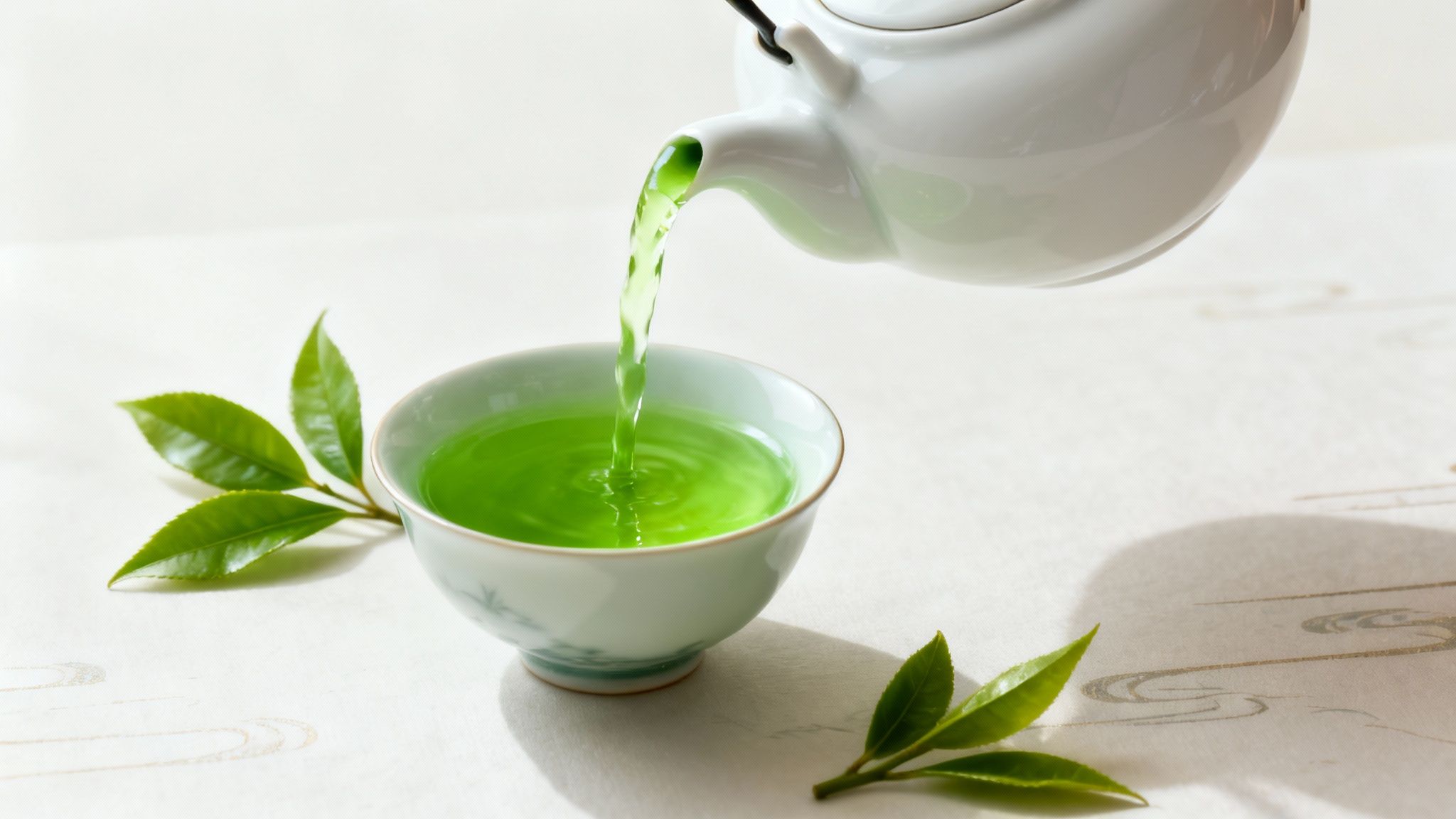
This delicate profile offers a stark contrast to robust black teas, making it a popular choice for an afternoon pick-me-up or a moment of calm. Driven by the modern wellness movement, Sencha's high antioxidant content has made it a staple for health-conscious consumers. Understanding this cornerstone of Japanese tea culture is essential for any comprehensive list of tea types.
Flavour Profile and Brewing
Sencha is prized for its balance of light sweetness, subtle umami, and a refreshing, grassy bitterness often described as vegetal or marine-like. The flavour can vary significantly based on its origin and harvest time, with first flush (shincha) from regions like Shizuoka being the most sought-after for its superior quality and nuanced taste.
- Ideal Brew Temperature: 70-80°C (158-176°F)
- Steep Time: 1-2 minutes (to avoid bitterness)
- Caffeine Level: Moderate (approx. 20-45 mg per cup)
- Common Pairings: Seafood, sushi, rice dishes, steamed vegetables, and light desserts like mochi.
Actionable Tips for the Perfect Cup
To brew the perfect cup, use water that is well below boiling to avoid scorching the delicate leaves, which would release excessive bitterness. Using whole leaf Sencha rather than fannings or dust will yield a much smoother and more complex flavour. For cafe owners, offering Sencha is a great way to appeal to afternoon customers and the wellness market, and its health benefits should be highlighted in your marketing.
3. Oolong Tea - Tie Guan Yin
Tie Guan Yin, translating to 'Iron Goddess of Mercy', is a legendary oolong tea from the Anxi county of Fujian province, China. This semi-oxidised tea is a masterful expression of oolong craftsmanship, renowned for its intricate floral aroma and complex flavour profile that gracefully evolves over multiple steepings. Sitting between green and black tea with an oxidation level typically between 30-50%, it offers a unique and sophisticated tasting experience.
This tea's hallmark is its tightly rolled, jade-green leaves that unfurl during brewing, releasing a captivating orchid-like fragrance and a smooth, buttery mouthfeel. Its ability to be infused multiple times, with each cup revealing a new layer of flavour, makes it a favourite among connoisseurs and practitioners of Gongfu tea ceremonies. Understanding Tie Guan Yin is essential for any comprehensive list of tea types.
Flavour Profile and Brewing
Tie Guan Yin is celebrated for its bright, floral notes, often likened to lilac or orchid, with a creamy texture and a lingering, sweet aftertaste. Depending on the level of roast, it can also present hints of toasted nuts or honey. The highest grades, like spring harvest 'qi zhong', are prized for their vibrant aromatics and complex character.
- Ideal Brew Temperature: 85-95°C (185-203°F)
- Steep Time: 1-3 minutes (shorter for initial infusions, longer for subsequent ones)
- Caffeine Level: Medium (approx. 30-50 mg per cup)
- Common Pairings: Light seafood dishes, salty snacks like melon seeds, and mildly sweet pastries.
Actionable Tips for the Perfect Cup
To fully experience Tie Guan Yin, use high-quality, filtered water just off the boil. Its complexity is best appreciated when brewed in a small teapot or gaiwan, allowing for multiple short infusions. For high-end cafes, presenting this tea in fine glassware alongside a description of its origin highlights its premium nature. When marketing, focus on its artisanal production, ethical farming, and investment-worthy status for tea collectors.
4. White Tea - Silver Needle
Silver Needle, or Bai Hao Yinzhen, is the most prestigious and revered white tea, originating from the Fujian province of China. Harvested for only a few days each spring, it consists purely of unopened, silver-white buds from the Da Bai tea plant cultivar. This minimal processing, which involves little more than careful withering and drying, preserves the tea’s natural sweetness and exceptionally delicate, nuanced character.
This ultra-premium tea appeals to discerning drinkers seeking purity, elegance, and what is often cited as the highest concentration of antioxidants among all teas. Its subtle complexity and clean finish make it a benchmark in any comprehensive list of tea types, representing the pinnacle of refined, unprocessed flavour. Silver Needle is often positioned as a luxury wellness product, valued for both its exquisite taste and health benefits.
Flavour Profile and Brewing
Silver Needle is renowned for its light, silky, and refreshingly clean profile. The flavour is subtly sweet and floral, often with notes of honeydew melon, apricot, and a hint of vanilla or hay. It has virtually no bitterness or astringency when brewed correctly, resulting in a smooth, elegant liquor.
- Ideal Brew Temperature: 75-80°C (167-176°F)
- Steep Time: 3-5 minutes (can be re-infused multiple times)
- Caffeine Level: Low (approx. 15-30 mg per cup)
- Common Pairings: Light salads, steamed fish, unsweetened desserts, and fresh fruit.
Actionable Tips for the Perfect Cup
To protect its delicate flavour, never use boiling water. Use fresh, filtered water heated to the correct lower temperature. The buds will float initially before sinking as they infuse. For an exceptional experience, consider offering our Organic Silver Needle White Tea, a premium selection that showcases the best of this variety. It’s perfect for customers seeking a pure and luxurious tea moment.
5. Matcha - Ceremonial Grade
Ceremonial grade matcha is the pinnacle of Japanese green tea, a vibrant, finely-milled powder made from the youngest, shade-grown tea leaves. Hailing from esteemed regions like Uji, Japan, this tea is central to the traditional Japanese tea ceremony, chanoyu. Unlike other teas that are steeped, matcha powder is whisked directly into hot water, creating a rich, frothy beverage where the entire leaf is consumed, delivering a concentrated dose of antioxidants and nutrients.
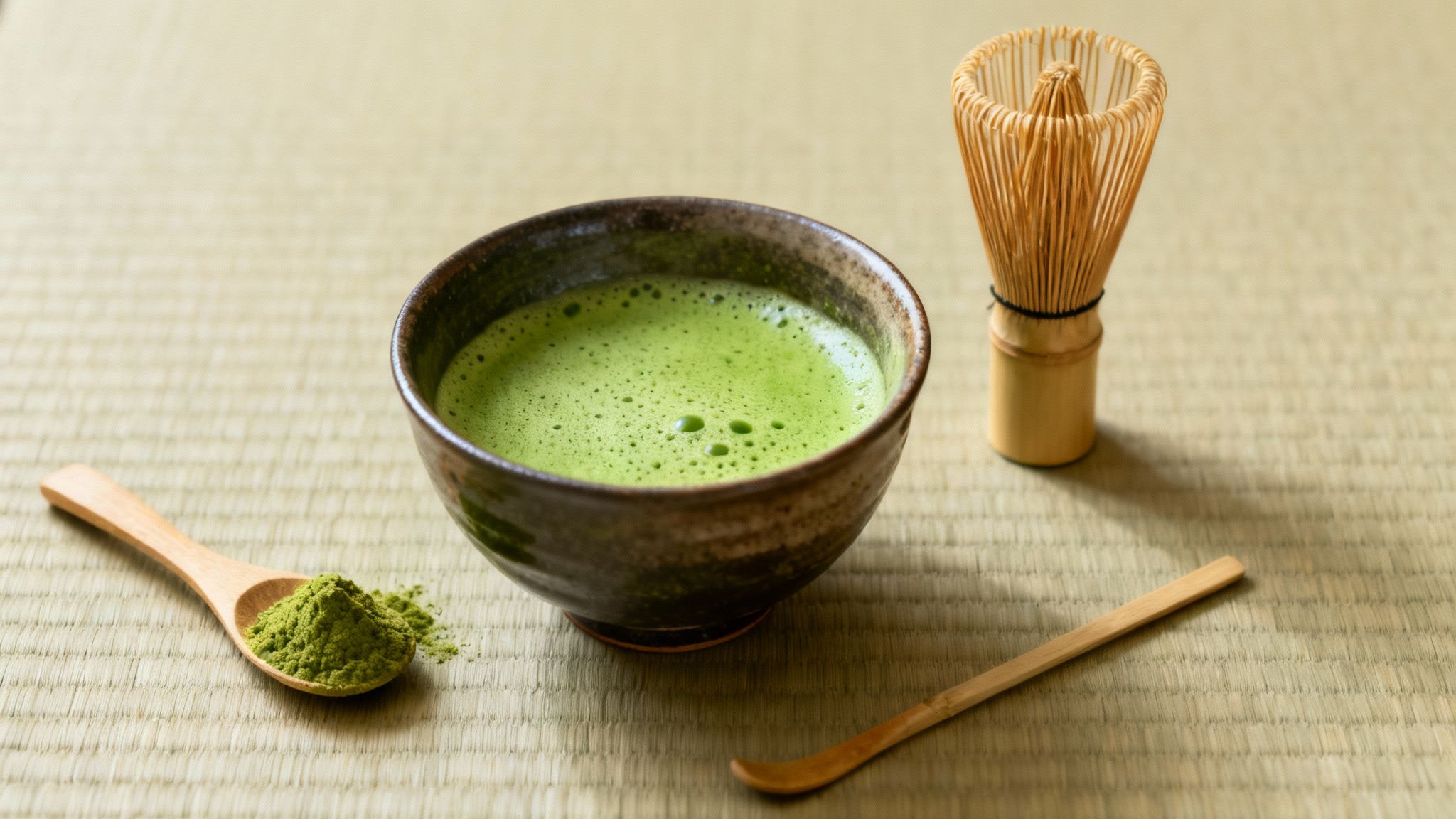
Its rise in the wellness world is due to its unique combination of L-theanine and caffeine, which provides a sustained, calm alertness without the jitters often associated with coffee. The distinction between ceremonial and culinary grades is crucial; ceremonial is reserved for drinking, while culinary grade is used for cooking and baking. For any comprehensive list of tea types, understanding this premium green tea is essential.
Flavour Profile and Brewing
Ceremonial grade matcha boasts a complex flavour profile that is smooth, umami-rich, and subtly sweet, with a creamy texture and no bitterness. The vibrant green colour is an indicator of its high quality and careful processing, which involves stone-grinding the tencha leaves to a superfine powder.
- Ideal Brew Temperature: 70-80°C (158-176°F) - using boiling water will scorch it.
- Preparation: Sift 1-2 teaspoons of matcha into a bowl, add 60ml of hot water, and whisk vigorously in a 'W' or 'M' pattern until a fine foam appears.
- Caffeine Level: Moderate to High (approx. 30-70 mg per serving)
- Common Pairings: Mochi, wagashi (Japanese sweets), light sponge cakes, and white chocolate.
Actionable Tips for the Perfect Cup
To prepare authentic matcha, use a bamboo whisk (chasen) and a matcha bowl (chawan) to create the ideal froth. For wholesale partners, educating staff on the correct whisking technique is key to delivering a premium customer experience. Offering only ceremonial-grade matcha maintains brand integrity and showcases its superior flavour as a functional wellness beverage. To discover more about its unique qualities, you can explore the world of ceremonial grade matcha.
6. Chai - Spiced Black Tea Blend
Chai, which simply means 'tea' in Hindi, is a fragrant and flavourful spiced tea beverage with deep roots in South Asian culture. It traditionally involves brewing a strong black tea, often an Assam variety, with a mixture of aromatic spices and herbs. This blend creates a complex, warming, and invigorating drink that has become a global phenomenon, cherished both in its traditional, sweet, milky form and as a modern cafe-style latte.
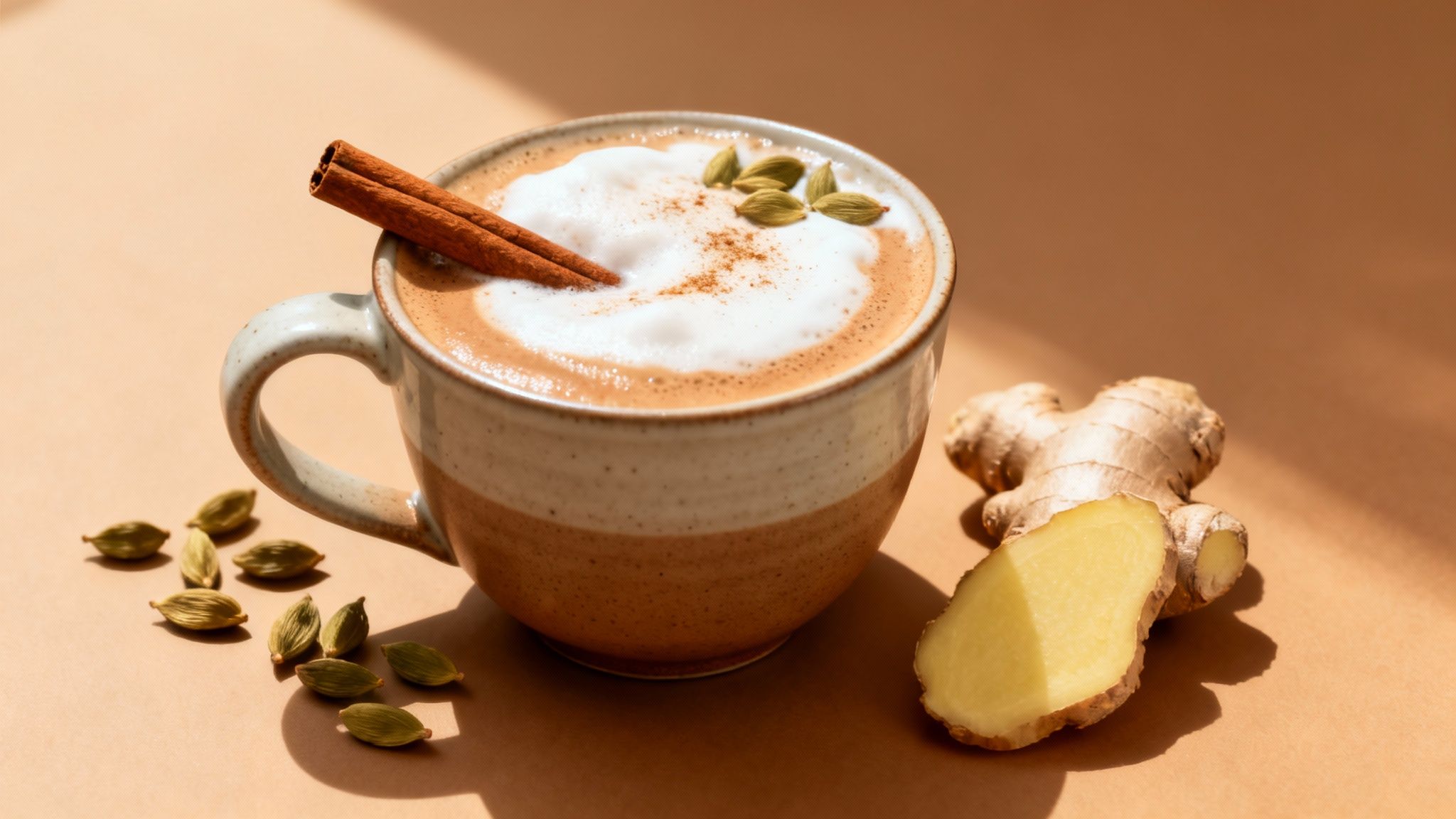
The combination of robust tea and warming spices like cardamom, cinnamon, clove, and ginger offers a uniquely satisfying experience that bridges cultural tradition with contemporary taste. From bustling street stalls in India to speciality coffee shops worldwide, chai’s comforting profile makes it a standout in any list of tea types. Its versatility allows it to be enjoyed as a simple brew or as the rich base for a creamy chai latte.
Flavour Profile and Brewing
Authentic chai delivers a harmonious balance of spice and strength. The flavour is bold and brisk from the black tea base, layered with the sweet warmth of cinnamon, the pungent kick of ginger, the peppery notes of clove, and the unique fragrance of cardamom. The final taste is often sweet, spicy, and milky all at once.
- Ideal Brew Temperature: 95-100°C (203-212°F)
- Steep Time: 4-6 minutes (longer if simmering with milk)
- Caffeine Level: Medium to High (approx. 40-70 mg per cup, depending on the tea base)
- Common Pairings: Samosas, pakoras, biscuits, shortbread, and spiced cakes.
Actionable Tips for the Perfect Cup
To create a genuine chai experience, simmer the tea and whole spices directly in a mixture of water and milk, then sweeten to taste. Our signature Spiced Bombay Chai is blended to provide the perfect balance for this method. For cafes, using a high-quality chai concentrate can ensure consistency and speed without sacrificing authentic flavour. For a more detailed look into its origins, you can learn more about the journey of chai tea from India.
7. Pu-erh Tea - Aged Dark Tea
Pu-erh tea, a unique fermented tea from China's Yunnan province, is prized for its deep, earthy character that develops and improves with age. Unlike other teas, pu-erh undergoes a microbial fermentation process after the leaves have been dried and rolled. Often compressed into cakes, bricks, or sold as loose leaf, its flavour profile evolves over years, making it a favourite among connoisseurs and collectors.
This tea is divided into two main categories: 'sheng' (raw) pu-erh, which ages naturally over time, and 'shou' (ripe) pu-erh, which undergoes an accelerated fermentation process to mimic the aged flavour. Its complex, smooth, and often medicinal-like qualities offer a distinctive experience, and it holds a special place in any comprehensive list of tea types for its unique production and ageing potential.
Flavour Profile and Brewing
Pu-erh offers a rich spectrum of flavours, from the bright, astringent, and floral notes of a young sheng to the deep, dark, and earthy tones of an aged shou, which often carries notes of damp earth, camphor, and dark chocolate. A preliminary quick rinse of the leaves with hot water is recommended to "awaken" them before the first infusion.
- Ideal Brew Temperature: 95-100°C (203-212°F)
- Steep Time: 15-30 seconds (for multiple short infusions) or 2-4 minutes for a single infusion.
- Caffeine Level: Moderate (approx. 30-70 mg per cup)
- Common Pairings: Rich, savoury foods like dim sum, cured meats, and hearty stews. It is also enjoyed on its own as a digestive aid after meals.
Actionable Tips for the Perfect Cup
To brew pu-erh traditionally, use a small teapot or gaiwan and perform multiple short infusions, noticing how the flavour evolves with each steep. For wholesale customers, educate them on the difference between sheng and shou to guide their purchase. Emphasise proper storage conditions (moderate humidity, good airflow, away from strong odours) as aged selections can be positioned as valuable investment opportunities for serious tea lovers.
8. Rooibos Tea - Caffeine-Free Red Bush
Rooibos, meaning "red bush," is a unique herbal infusion hailing from the Cederberg mountains of South Africa. Though often included in a list of tea types, it is not a true tea as it comes from the Aspalathus linearis plant rather than Camellia sinensis. Celebrated for being naturally caffeine-free, rooibos brews into a beautiful reddish-brown liquor with a smooth, gentle flavour profile, making it an incredibly popular alternative for tea lovers of all ages, including children.
This beloved South African staple has gained global recognition for its versatility and health-promoting properties. Its naturally sweet and low-tannin character means it never becomes bitter, even with prolonged steeping. This makes it a perfect base for a wide variety of blends, from creamy vanilla rooibos to spicy rooibos chai, and a fantastic choice for evening relaxation.
Flavour Profile and Brewing
Rooibos is defined by its inherent sweetness with notes of honey, vanilla, and a slightly earthy, woody character. It is incredibly smooth on the palate with a rich, full-bodied mouthfeel but none of the astringency found in traditional teas. There is also a less common "green" rooibos, which is unoxidised and offers a grassier, more mineral-like flavour.
- Ideal Brew Temperature: 100°C (212°F)
- Steep Time: 5-7 minutes (or longer, as it won't go bitter)
- Caffeine Level: None
- Common Pairings: Mild cheeses, shortbread biscuits, fruit tarts, and honey-drizzled pastries.
Actionable Tips for the Perfect Cup
To get the most from rooibos, use freshly boiled water and allow it to steep for at least five minutes to fully develop its rich flavour. For a creamy treat, it makes an excellent base for a caffeine-free latte, often called a "Red Cappuccino" in South Africa. For wholesale partners, rooibos is a must-have, appealing to health-conscious consumers and those seeking a soothing, family-friendly evening beverage. You can explore its potential with our award-winning Organic Rooibos.
9. Gyokuro - Shade-Grown Premium Japanese Green Tea
Gyokuro represents the pinnacle of Japanese green tea, a luxurious brew celebrated for its profound umami flavour and vibrant, deep green colour. Grown primarily in regions like Uji and Yame, its unique character comes from a specialised cultivation method. Tea plants are shaded from direct sunlight for approximately three weeks before harvest, which inhibits photosynthesis and significantly boosts the production of chlorophyll and amino acids, particularly L-theanine. This process results in a tea that is exceptionally sweet, smooth, and complex.
Often referred to as "jade dew," Gyokuro offers a thick, almost brothy mouthfeel that is unlike any other green tea. Its minimal astringency and intense, savoury-sweet notes make it a sought-after delicacy for connoisseurs. Understanding Gyokuro is essential for anyone exploring the more refined and premium entries on a comprehensive list of tea types.
Flavour Profile and Brewing
Gyokuro is defined by its deep, oceanic umami and a lasting, sweet aftertaste. Notes of seaweed (nori), fresh spring greens, and a hint of melon can be detected in high-quality harvests. The key to unlocking this flavour is precise, low-temperature brewing, which extracts the sweetness without releasing any bitterness.
- Ideal Brew Temperature: 50-60°C (122-140°F)
- Steep Time: 1-2 minutes
- Caffeine Level: Moderate to High (approx. 30-50 mg per cup, but concentrated)
- Common Pairings: Delicate seafood like sashimi, wagashi (Japanese sweets), or enjoyed on its own to appreciate its complexity.
Actionable Tips for the Perfect Cup
To experience Gyokuro's true potential, use a small teapot (kyusu) and pre-heat your cups. Use a higher leaf-to-water ratio than other green teas and brew with cool, filtered water to draw out the rich umami. For cafes, offering Gyokuro as a premium, mindful tasting experience can attract serious tea lovers. Consider marketing it as a limited, seasonal offering to highlight its exclusive nature and appeal to collectors.
10. Herbal Tisane Blends - Chamomile, Peppermint & Combinations
Unlike traditional teas from the Camellia sinensis plant, herbal tisanes are caffeine-free infusions made from a wide array of botanicals, including flowers, leaves, fruits, roots, and seeds. Chamomile and peppermint stand as two of the most popular foundational ingredients, celebrated for their distinct flavours and well-known wellness properties. Modern herbal blends often combine multiple ingredients to create complex taste profiles and targeted functional benefits, such as promoting relaxation or aiding digestion.
These versatile beverages have gained immense popularity within the wellness community and appeal to anyone seeking a flavourful, caffeine-free alternative. From a simple, calming cup of chamomile before bed to an invigorating peppermint infusion after a meal, herbal tisanes offer a world of flavour and are an essential part of any comprehensive list of tea types. Their natural profiles make them a comforting and healthy choice at any time of day.
Flavour Profile and Brewing
The flavour of herbal tisanes varies dramatically based on the ingredients. Chamomile offers gentle, apple-like floral notes, while peppermint provides a sharp, cool, and refreshing minty character. Blends can range from fruity and sweet to spicy and earthy.
- Ideal Brew Temperature: 95-100°C (203-212°F)
- Steep Time: 5-10 minutes (longer for roots and spices)
- Caffeine Level: None
- Common Pairings: Light biscuits (chamomile), dark chocolate (peppermint), fruit tarts, or simply enjoyed on their own.
Actionable Tips for the Perfect Cup
To extract the full flavour and benefits, use freshly boiled water and allow the tisane to steep for a longer duration than traditional teas. For wholesale cafe use, developing a signature "wellness" menu with clear messaging around benefits (e.g., 'Digestive Aid', 'Sleepy Time') can attract health-conscious customers. Offering sampler packs is an excellent way to introduce patrons to the diverse world of herbal infusions. Explore our popular blends, like the soothing Sweet Chamomile, to see how premium ingredients make a difference.
Top 10 Tea Types Comparison
| Tea Variety | Preparation complexity | Equipment & storage requirements | Expected outcomes (flavor & effects) | Ideal use cases | Key advantages |
|---|---|---|---|---|---|
| Black Tea - Assam | Low — standard steeping (3–5 min) | Basic kettle/teapot; airtight storage | Malty, full-bodied, high caffeine; energizing | Breakfast blends, milk teas, cafe bases | Bold flavor, consistent, holds up in blends |
| Green Tea - Sencha | Medium — precise temp (70–80°C) and short steeps | Temperature control kettle; keep airtight and odor-free | Grassy, vegetal, moderate caffeine; high antioxidants | Afternoon wellness, hot or iced green tea menus | High antioxidant content, refreshing, versatile |
| Oolong - Tie Guan Yin | High — gongfu/multiple infusions preferred | Gaiwan/small teapot; careful storage; small doses | Floral, creamy, evolving flavors across infusions | Tasting sessions, specialty retail, ceremonial service | Complex, multi-infusion value, premium appeal |
| White Tea - Silver Needle | Medium — low temp, gentle handling | Cool, dry airtight storage; filtered water recommended | Delicate sweetness, subtle florals; very high antioxidants | Luxury wellness, gifting, premium offerings | Pure flavor, highest antioxidants, luxury positioning |
| Matcha - Ceremonial Grade | High — whisking technique and sifting required | Chawan/chasen, airtight opaque tin; protect from light/heat | Umami, creamy, sustained caffeine + L‑theanine (calm focus) | Ceremonial service, wellness drinks, trendy cafe items | Whole-leaf nutrition, versatile culinary use, strong wellness story |
| Chai - Spiced Black Tea Blend | Low–Medium — simmering with milk and spices | Simmer pot; store whole spices airtight to retain aroma | Warm, spiced profile with malty black tea base; comforting | Cafe specialty drinks, cultural/traditional servings | Broad appeal, high-margin, highly customizable |
| Pu-erh - Aged Dark Tea | Medium–High — rinse and multiple infusions; aging knowledge | Proper aging/storage conditions for cakes; space for inventory | Earthy, smooth, mineral-rich; improves with age; digestive benefits | Collectors, evening servings, premium specialty shops | Aging/investment potential, unique profile, wellness claims |
| Rooibos - Caffeine-Free Red Bush | Low — forgiving, long steeps (5–10 min) | Basic equipment; shelf-stable; minimal storage needs | Naturally sweet, fruity, caffeine-free; mild and soothing | Evening drinks, family-friendly menus, caffeine-free blends | Naturally caffeine-free, sustainable, versatile for blends |
| Gyokuro - Shade-Grown Green Tea | Very high — strict low temp short steeps (50–60°C) | Precise temperature control; careful storage; limited inventory | Intense umami sweetness, creamy mouthfeel, low bitterness | Connoisseur tastings, luxury experiences, fine dining | Ultimate premium positioning, exceptional umami, exclusivity |
| Herbal Tisane Blends (Chamomile/Peppermint) | Low — boil water and steep 5–10 min | Basic kettle; herbs need airtight storage; organic options available | Varies by blend: calming, digestive, caffeine-free; functional benefits | Wellness programs, evening beverages, mass-market offerings | Functional benefits, customizable blends, low production cost |
Your Next Favourite Cup Awaits
Our journey through this extensive list of tea types has taken us from the sun-drenched plantations of Assam to the meticulously shaded fields of Uji, Japan. We've uncovered the ancient fermentation secrets of Pu-erh and celebrated the caffeine-free comfort of South African Rooibos. What this exploration reveals is that "tea" is not a single entity but a vast and vibrant universe of flavour, aroma, and tradition, all originating from the remarkable Camellia sinensis plant and its herbal counterparts.
You now have a foundational understanding of the six main categories of tea: the delicate, minimally processed White; the vibrant, vegetal Green; the rare and nuanced Yellow; the complex, semi-oxidised Oolong; the bold and robust Black; and the earthy, aged Pu-erh. Each type represents a different path of processing, a unique expression of terroir, and a distinct cultural heritage. We've seen how a simple adjustment in steeping time can transform a premium Gyokuro from sublime to bitter, and how the right water temperature is crucial for preserving the delicate notes of a Silver Needle.
From Knowledge to Practice: Your Tea Adventure
The true value of understanding this list of tea types lies not just in knowing the facts but in applying them to your own daily ritual. The next time you brew a cup, you can do so with greater intention and appreciation.
- Embrace Experimentation: Don't be afraid to adjust brewing parameters. Try steeping your favourite Sencha for 15 seconds shorter or 10°C cooler to see how the flavour profile shifts. This hands-on approach is the best way to train your palate and find your personal preference.
- Mindful Pairing: Think beyond the brew itself. Consider pairing the malty notes of an Assam with a hearty breakfast, or the floral elegance of a Tie Guan Yin with a light, afternoon pastry. The right combination can elevate both the food and the tea.
- Upgrade Your Equipment: The experience of a fine tea is heightened by the vessel it is served in. The shape, material, and heat retention of your cup or mug can subtly alter the aroma and taste. As you explore these diverse tea types, don't forget that the vessel can greatly impact your enjoyment; consider exploring suitable drinkware options to find a piece that complements your chosen brew.
The Broader Impact of a Perfect Brew
Mastering the art of tea is more than just a hobby; it’s an invitation to slow down, to be present, and to engage your senses in a world that often moves too fast. It's a connection to centuries of history, agriculture, and craftsmanship. Whether you are seeking the invigorating caffeine kick of a Ceremonial Grade Matcha to start your day or the calming embrace of a Chamomile tisane to unwind at night, there is a tea that can perfectly match your needs and mood.
This guide is designed to be your trusted companion, a reference point you can return to as you continue your exploration. The world of tea is wonderfully deep, and the journey of discovery is part of its profound charm. Your next favourite cup is out there, waiting to be discovered, brewed, and savoured.
Ready to put your newfound knowledge into practice? The curated collection at Jeeves & Jericho is the perfect place to start your adventure, offering ethically sourced, exceptional examples from this very list of tea types. Explore our range and discover the unparalleled quality that can transform your daily cup into a truly memorable experience.