


Learning to prepare matcha green tea is less about following a recipe and more about embracing a quiet, mindful ritual. It’s a simple process: sift a high-quality powder, whisk it with hot (but never boiling) water, and enjoy it straight away. The secret lies in using the right tools and knowing when to reach for a ceremonial grade versus a culinary one.
Discovering the Art of Real Matcha
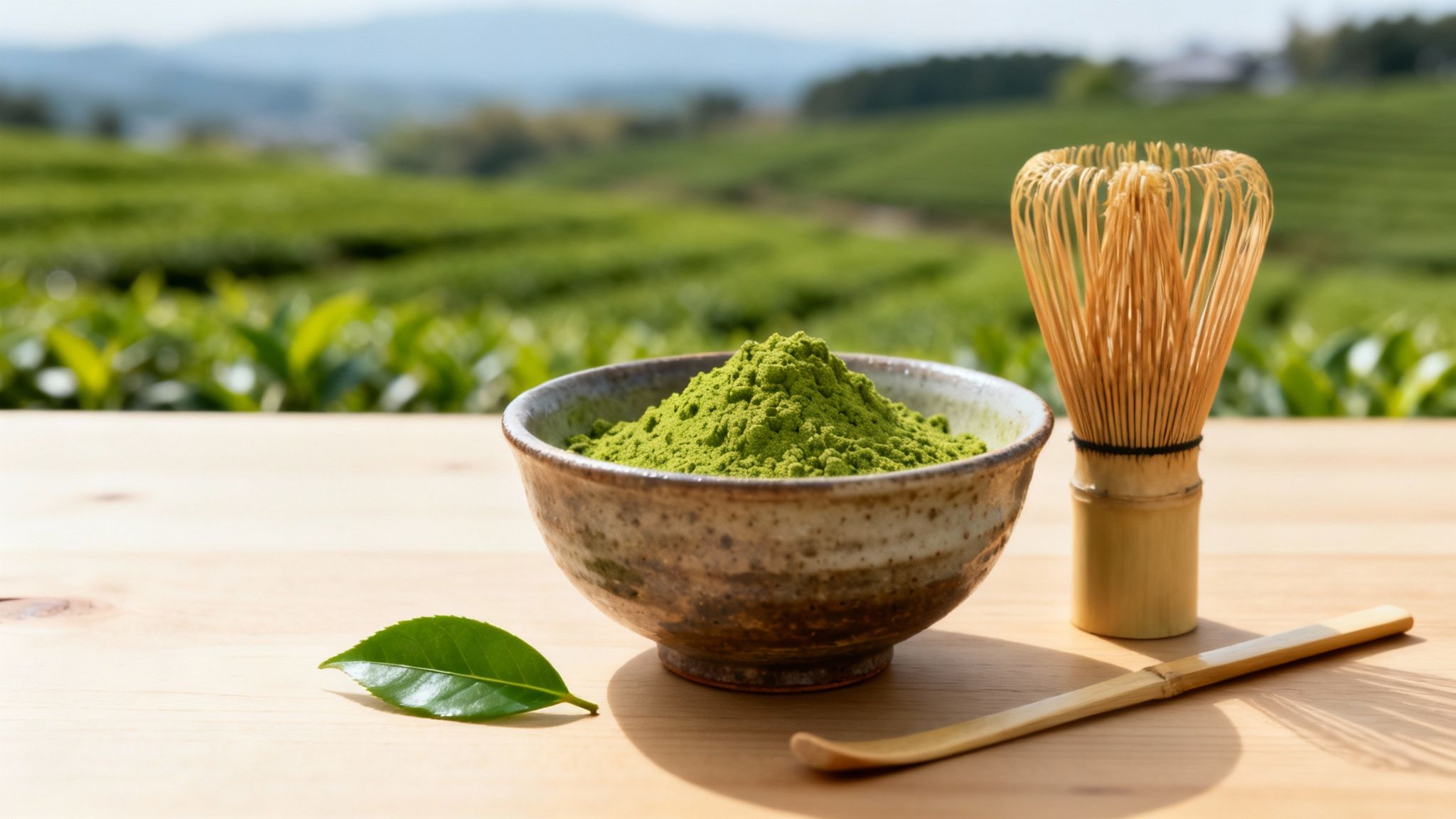
Matcha is so much more than just the trendy green powder taking over UK cafes. It's a cornerstone of Japanese tea culture, a journey that starts with shade-grown tea leaves in places like Uji, Japan, and ends with the vibrant, finely milled powder in your kitchen. This isn't just about making a drink; it's about carving out a moment of calm and focus in your day.
And it seems we're not the only ones who’ve fallen for it. The UK matcha market is booming, recently valued at around £219.6 million and expected to more than double by 2035. In the last year alone, drink sales shot up by an incredible 202 percent.
Why Quality Matters
The first thing to get your head around is quality. A high-quality ceremonial grade matcha, made from the youngest, most tender tea leaves, will give you a smooth, naturally sweet flavour with almost no bitterness. It’s the perfect choice for preparing traditionally with just water.
Culinary grade, on the other hand, is made from slightly older leaves. This gives it a bolder, more astringent profile that’s strong enough to hold its own in lattes, smoothies, or baking. Knowing which one to use is the key to getting the experience you’re after.
To really understand what all the fuss is about, we always suggest starting with a good ceremonial grade. Its delicate character is the benchmark for quality and will help you appreciate the nuances as you explore other varieties.
Moving Beyond the Cafe
This guide is here to give you the confidence to step away from the cafe counter and create that perfect, vibrant bowl of matcha for yourself. It’s about taking control—of the ingredients, the method, and the final flavour.
When you learn the craft, you can:
- Get the flavour just right: Fancy it stronger? Sweeter? You’re in charge of the matcha-to-water ratio and any extras.
- Guarantee freshness: There's nothing like the colour and aroma of a freshly opened tin of matcha. It's when the flavour and health benefits are at their peak.
- Become a connoisseur: Learning about the different types of matcha tea will seriously elevate your game, letting you pick the perfect powder for any occasion.
By mastering a few fundamentals, you unlock a rewarding daily practice. It's a delicious drink and a moment of mindfulness, all in one. We'll give you everything you need to make every bowl a success.
Assembling Your Essential Matcha Toolkit
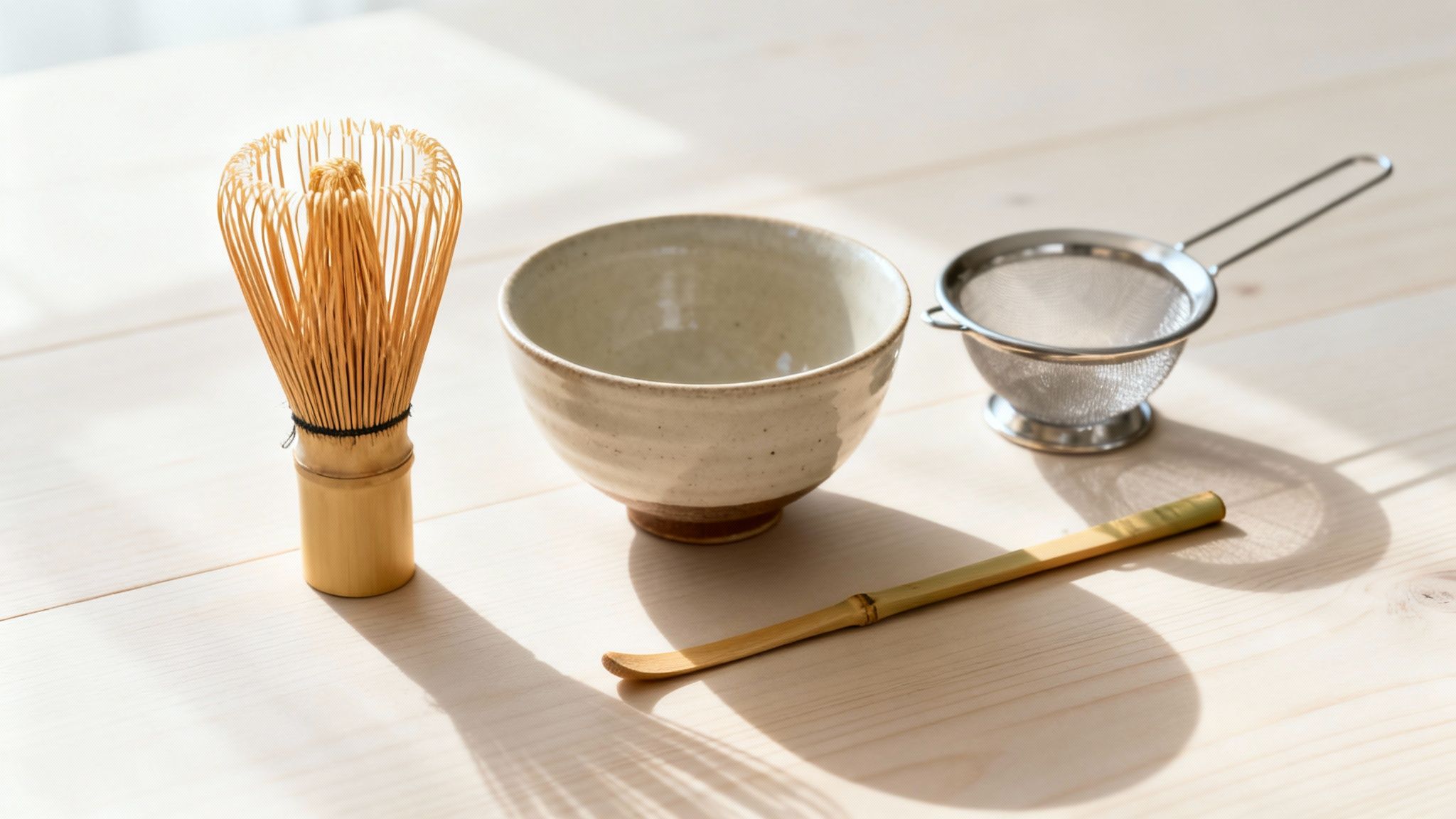
Before you can whisk up a perfect, frothy bowl of matcha, you need the right gear. The list isn't long, but each piece plays a vital role in turning that fine green powder into a smooth, vibrant drink. Think of it less as a strict requirement and more as setting yourself up for success from the get-go.
After all, the goal isn't just mixing powder and water. It's about coaxing out the full, nuanced flavour and creating a very specific texture. The proper equipment makes this whole process not just easier, but a genuinely enjoyable ritual.
The Core Instruments of Matcha
At the heart of a traditional matcha practice are a few key items. While you can find clever workarounds (we’ll get to those), understanding why each tool exists helps you appreciate the craft. It's the synergy between them that produces that café-quality result right in your own kitchen.
To give you a clearer picture, here’s a quick breakdown of the essentials.
Essential Matcha Toolkit Breakdown
| Tool | Japanese Name | Primary Function | Selection Tip |
|---|---|---|---|
| Matcha Bowl | Chawan | Provides the ideal shape and space for whisking. | Look for a wide, flat bottom and high sides to prevent splashes and allow for a proper "W" or "M" motion. |
| Bamboo Whisk | Chasen | Aerates the tea to create a fine, creamy froth and dissolves the powder. | A whisk with 80-120 prongs is ideal for usucha (thin tea). More prongs usually mean a finer foam. |
| Bamboo Scoop | Chashaku | Measures the correct amount of matcha powder. | One to two scoops is the standard for a single serving. It’s elegant, but a teaspoon can work in a pinch. |
| Sieve | Furui | Breaks up clumps in the powder before adding water. | An absolute must-have. A small, fine-mesh tea strainer works perfectly for a silky-smooth finish. |
These four items form the foundation of your matcha-making ritual, each contributing to that final, perfect bowl.
Getting Started: Practical Advice
You don't need to break the bank to start your matcha journey. If you're just dipping your toes in, focus on the essentials that will make the biggest difference to your brew.
The bamboo whisk is your most important purchase. Its unique design, carved from a single piece of bamboo, is incredibly difficult to replicate. A metal whisk or a milk frother just won't create the same delicate froth and can even damage a traditional ceramic bowl. To get the most from it, learning how to properly care for a matcha whisk is key to making it last.
Our Top Tip: Don't skip the sieve. Seriously. Sifting your matcha powder into the bowl before adding water is the single best thing you can do to avoid lumps. It’s a non-negotiable step for a velvety texture.
For the bowl, a wide-bottomed latte mug or a small soup bowl can work if you don't have a chawan. The key is having enough flat space at the bottom for the whisk to move freely. As for the scoop, a simple 1/2 teaspoon is a perfectly functional substitute.
You can always upgrade your kit over time as your passion for matcha grows, turning a daily drink into a cherished practice.
Mastering Traditional Matcha Usucha and Koicha
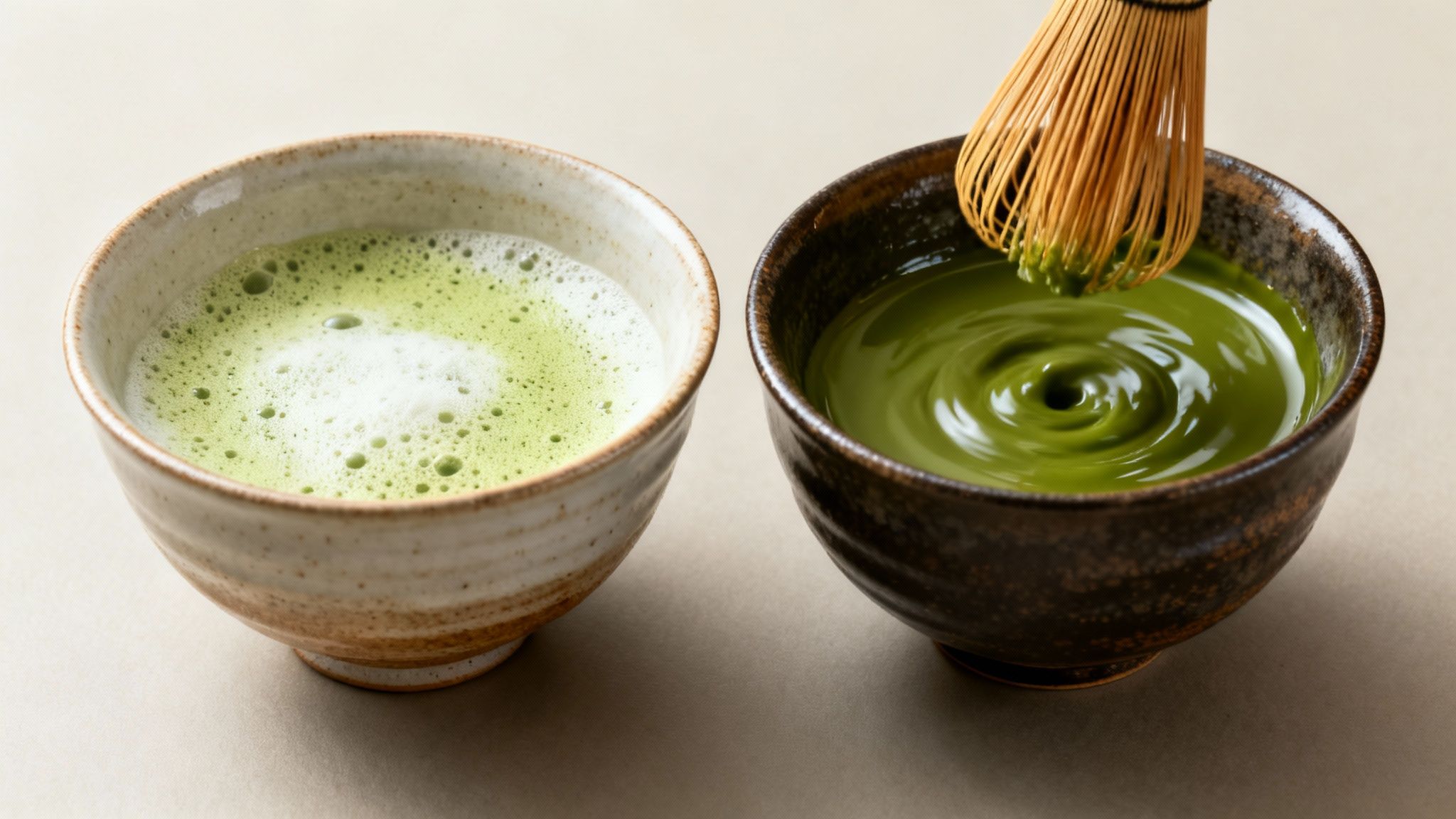
With your toolkit ready, it's time to get hands-on with the two classic styles of matcha preparation: usucha (thin tea) and koicha (thick tea).
Though both start with the same premium ceremonial grade matcha, the end results are worlds apart, each offering its own unique character.
Usucha is likely the version you know best. It's light, airy, and crowned with a delicate froth. Think of it as your everyday matcha—a moment of invigorating calm to kick off your morning or reset in the afternoon.
Koicha, on the other hand, is a different beast entirely. Thick, intense, and with a texture like warm honey, it's reserved for more special, ceremonial moments. It demands the very best ceremonial powder to deliver its signature smooth, sweet, and umami-rich flavour without a hint of bitterness. Getting a feel for both is the best way to appreciate just how versatile matcha can be.
The Foundation of a Perfect Bowl
No matter if you’re making a light usucha or a decadent koicha, there are a couple of non-negotiable first steps. Getting these right will make a world of difference to every bowl you prepare.
Always, always pre-warm your bowl (chawan). Just pour in a little hot water, give it a swirl for 20 seconds or so, then tip it out and dry the bowl thoroughly. This simple act stops the water temperature from dropping too fast when you brew, helping you get the best possible flavour from the tea.
A warm bowl also helps to soften the bamboo prongs of your whisk (chasen). Letting the whisk soak in this hot water makes it more pliable and less prone to breaking during the vigorous whisking process.
Next up, and just as crucial, is sifting. Matcha powder is incredibly fine and loves to clump together. Pushing your matcha through a fine-mesh sieve directly into your warm bowl is the secret to a silky-smooth, lump-free drink. It’s a quick step that pays huge dividends.
Preparing Usucha The Light, Frothy Classic
For anyone new to the ritual of matcha making, usucha is the perfect place to start. Its lighter character is more forgiving, and the whisking technique is a real joy to master. The goal is a vibrant green suspension with a creamy, delicate froth on top.
- Measure Your Matcha: Take your bamboo scoop (chashaku) and measure two scoops (about 2g or 1 teaspoon) of sifted ceremonial grade matcha into your warmed bowl.
- Add Your Water: Pour over roughly 70-80ml of hot water. The temperature is key here—you're aiming for 70-80°C. Any hotter and you risk scalding the tea, which is what makes it taste bitter.
- Whisk with Purpose: Now for the fun part. Hold the bowl steady with one hand and start whisking in a rapid 'M' or 'W' motion. It's all in the wrist, not the arm. Keep the whisk moving just above the bottom of the bowl to get plenty of air in. After about 20-30 seconds, you should have a lovely, fine foam covering the surface.
To finish, lift the whisk slowly from the centre of the bowl to help the foam settle. Your usucha is now ready. Enjoy it straight away to appreciate its fresh, grassy notes.
Embracing Koicha The Thick, Intense Ritual
Koicha is the pinnacle of the matcha experience—a profound, almost meditative practice. Because it’s so concentrated, using a top-tier ceremonial grade matcha is absolutely essential. Anything less would be unpalatably bitter.
The recent global boom in matcha has put a real squeeze on supply. Japan's production of tencha (the leaf used for matcha) nearly tripled between 2010 and 2023, but demand is still racing ahead. This is why sourcing from companies like Jeeves & Jericho, who have strong, direct relationships with Japanese artisans, is so important for consistent access to the quality needed for a true koicha. You can discover more insights about the global matcha market and its complexities.
The method for making koicha is quite different.
- The Right Ratio: You'll want to double the matcha for koicha. Use four scoops from your chashaku (about 4g or 2 teaspoons) for a much smaller amount of water—just 40-50ml.
- A Different Motion: Forget the rapid whisking. Here, you need a slow, deliberate kneading motion. Gently use the whisk to fold and stir the matcha and water together, moving in slow circles until you have a thick, glossy, and completely smooth paste.
- No Foam Required: The goal here isn't froth. A perfect koicha is dense and smooth, with a deep, vibrant green lustre.
Because of its intensity, koicha is served in smaller amounts and is often shared from a single bowl in formal tea ceremonies. The flavour is incredibly rich and packed with a deep umami sweetness that lingers. Trying it for the first time is a real eye-opener, revealing the true depth that high-grade matcha can offer.
Crafting Modern Matcha Lattes and Iced Drinks
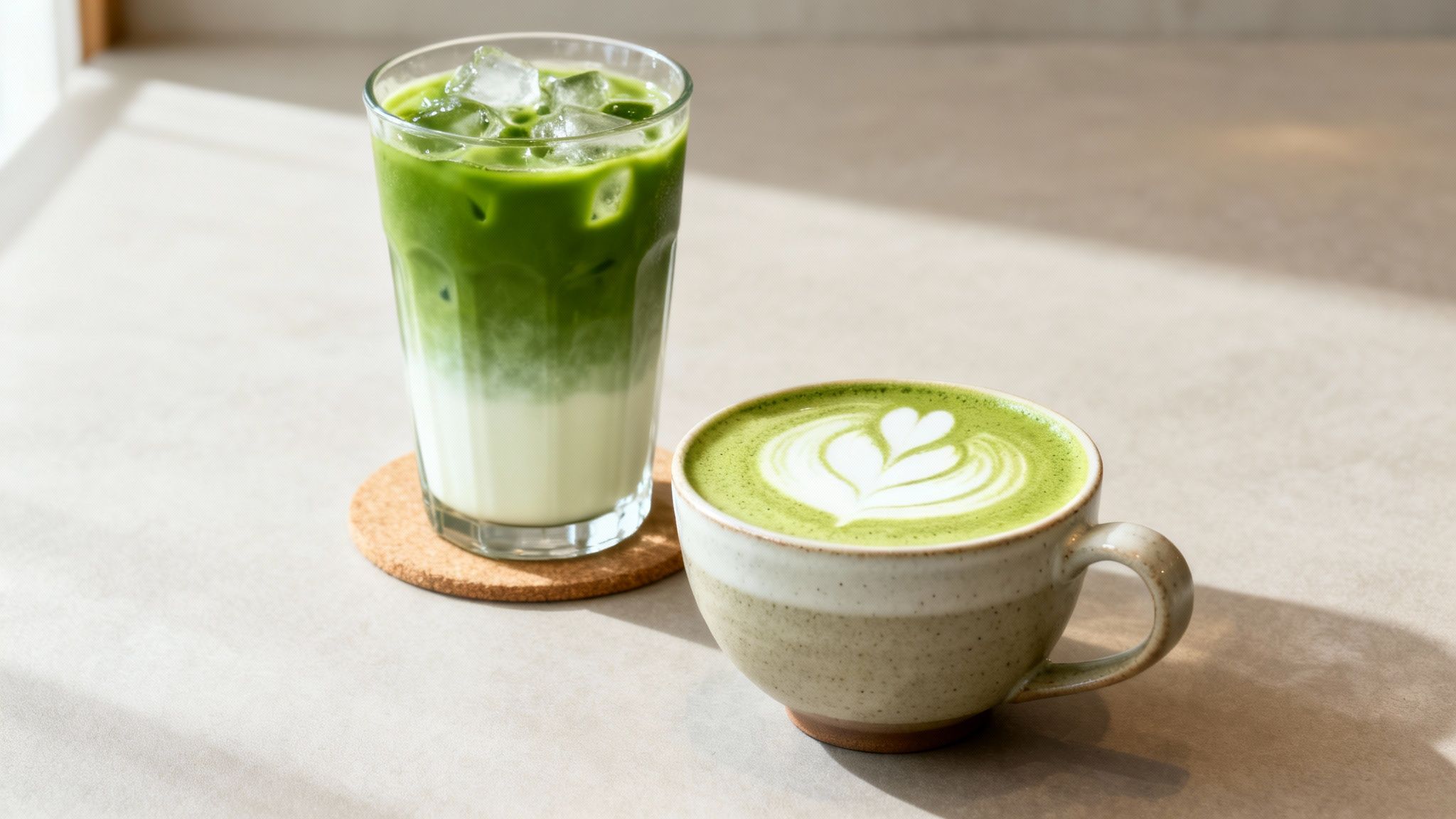
While the traditional matcha ceremony is something we deeply respect, the journey doesn't have to stop there. Matcha’s vibrant, umami-rich character makes it a fantastic canvas for modern, café-style creations like lattes and iced drinks. This is where the ancient art of matcha meets the craft of the home barista.
Playing with these contemporary recipes lets you explore matcha’s incredible versatility. It’s less about rigid tradition and more about flavour, texture, and creating something you genuinely love. With a few key techniques, you can easily replicate—and maybe even improve on—your favourite coffee shop drinks right in your own kitchen.
The Perfect Hot Matcha Latte
A well-made matcha latte is a creamy, comforting, and wonderfully energising alternative to coffee. The absolute key is to create a smooth, concentrated matcha ‘shot’ first, making sure the powder is fully dissolved before adding any frothed milk. This simple step is your best defence against lumps and guarantees a beautifully balanced flavour.
For lattes and other mixed drinks, we find a high-quality culinary or barista-grade matcha works best. Its flavour is a bit more robust, designed specifically to stand up to milk and sweeteners without getting lost.
Here’s our go-to method:
- Start by sifting 1 teaspoon (about 2g) of matcha into a small bowl or mug. Add around 60ml of hot water (aim for 80°C) and whisk vigorously in a ‘W’ motion until it's perfectly smooth and frothy.
- Next, heat and froth about 200ml of your milk of choice. Dairy, oat, and almond milk all work brilliantly, each bringing a slightly different character to the final drink.
- Finally, gently pour the steamed milk into your matcha shot. If you like it sweet, now is the time to stir in a dash of maple syrup, a little honey, or even a drop of vanilla extract.
A common mistake we see is people adding matcha powder directly to a big mug of milk. This almost always results in a clumpy, unevenly mixed drink. Taking a moment to create the concentrated shot first is the single most important step for that silky-smooth texture you're after.
While your home setup is all you need, those curious about how high-volume cafes operate might find it interesting to explore commercial beverage equipment and supplies to see the professional tools of the trade.
Creating a Refreshing Iced Matcha Latte
On a warm day, an iced matcha latte is hard to beat. The trick is getting that beautiful layered effect you see in good cafés, with the vibrant green matcha slowly swirling into the milk. It’s visually stunning and surprisingly easy to pull off at home.
The secret is all about density. By making the milk mixture heavier than the matcha shot, you can create distinct layers that combine as you sip.
Tips for Perfect Layers
- Sweeten the Milk First: Before adding ice, dissolve your sweetener (simple syrup works wonders) directly into the milk. This makes it denser than the matcha.
- Use Plenty of Ice: Fill your glass right up with ice cubes. They act as a physical barrier, slowing down the mixing process.
- Pour Slowly: This is crucial. Add your prepared matcha shot by pouring it very slowly over the back of a spoon or directly onto an ice cube. This gentle introduction keeps the layers separate.
For a full walkthrough, check out our simple guide on how to make a stunning iced matcha latte at home.
Flavour Pairings and Customisations
Once you've nailed the basics, the real fun begins. Matcha’s unique flavour profile works beautifully with all sorts of additions, opening up a world of possibilities.
A Few Favourite Combinations:
- Vanilla & Maple: A classic. It adds a gentle warmth and sweetness that complements matcha's grassy notes perfectly.
- Lavender & Honey: A more floral, aromatic twist that feels both calming and sophisticated.
- Ginger & Cinnamon: A pinch of spice creates a warming, almost chai-like latte that's perfect for cooler days.
- Strawberry or Raspberry: Adding a fruit purée to an iced latte makes for a sweet, summery, and colourful treat.
Don't be afraid to experiment. Play around with different plant-based milks, sweeteners, and spices. Once you master the core techniques, you have a solid foundation to craft unique drinks that are perfectly suited to your own taste.
Avoiding Common Matcha Making Mistakes
Look, we’ve all been there. Nobody masters making matcha on their first go. Those initial attempts that are a bit lumpy, a bit bitter? Think of them less as failures and more as your apprenticeship. We’re going to walk through the most common slip-ups so you can turn that frustrating bowl into a truly great one.
It almost always comes down to one of three things: the water temperature, the powder itself, or how you’re whisking. Once you know what to look for, the fix is usually surprisingly simple. A tiny tweak is often all it takes.
Getting consistently good matcha is a journey of small refinements, so let's get your technique sorted.
Is Your Matcha Bitter?
This is the number one complaint we hear, and nine times out of ten, the culprit is scorching hot water. Pouring boiling water directly onto the delicate tea powder scalds it, killing all those complex, sweet notes and releasing harsh, bitter tannins. It’s an instant flavour killer.
The sweet spot for your water is between 70-80°C. If you don't have a fancy temperature-controlled kettle, no worries. Just boil the water, then let it stand for a couple of minutes to cool down before you pour.
That bitter tang can also be a tell-tale sign of lower-grade matcha. If you've got your water temperature just right but the flavour is still harsh, it might be time to treat yourself to a higher-grade ceremonial powder. You'll find it's naturally much smoother and sweeter.
Dealing with Clumps
Finding a gritty sediment of green clumps at the bottom of your bowl is a real letdown. Matcha powder is so incredibly fine that it’s prone to static, causing it to clump together the second it hits water. Thankfully, the fix is non-negotiable and essential for that silky-smooth texture we're after.
-
Sift, always sift: Use a small, fine-mesh sieve (a furui if you want to be traditional) and sift the powder directly into your chawan (tea bowl). This simple step breaks up any clumps and aerates the powder, making it a dream to dissolve.
-
Make a paste first: Don't just dump all the water in at once. Start with a tiny splash and use your whisk to work the powder into a thick, smooth paste. Gently press any stubborn little lumps against the side of the bowl until they disappear, then add the rest of your water.
This two-step approach is your secret weapon for a velvety, lump-free matcha every single time.
Why Is My Matcha Not Frothing?
A beautiful, stable crema of tiny bubbles is the hallmark of a well-made usucha (thin tea), but getting it just right can feel like an art form. If you're whisking away with no froth to show for it, let's look at a couple of things.
Freshness is everything. Old matcha that's been hanging around for a while loses its vibrancy and simply won't foam up properly. Your whisking technique is just as crucial. A lazy, slow stir won't cut it; you need to inject air into the liquid with a rapid, energetic "M" or "W" shape motion, using your wrist, not your whole arm.
It's been amazing to watch matcha’s journey here in the UK, from a niche health food shop find to a high street staple. That shift really kicked off around 2015—the infamous 'Gwyneth Paltrow Goop effect' definitely played its part! Now, with about 30% of UK consumers giving it a go in lattes, bakes, and more, its place is firmly set. As you can read in matcha's journey into British food culture, this popularity is great news for us. It means getting your hands on properly fresh, high-quality matcha is easier than ever, giving you a much better shot at that perfect foam at home.
Your Matcha Questions Answered
Even with the best guide, a few questions always pop up when you're getting started with matcha. It's completely natural. We've been there, too. Think of this as a quick chat to clear up those final little queries, helping you get that perfect bowl every time.
We've gathered some of the most common questions we hear from fellow tea lovers. From choosing the right grade to getting that elusive froth just right, let’s dive in.
What's the Real Difference Between Ceremonial and Culinary Matcha?
This is probably the most important thing to get your head around. Ceremonial grade matcha is the best of the best, made from the youngest, most tender leaves from the very first harvest. These leaves are bursting with chlorophyll and L-theanine, which gives the powder that incredible, vivid green colour and a smooth, naturally sweet taste with virtually no bitterness. It’s meant to be enjoyed simply with hot water, letting its delicate character shine through.
Culinary grade, on the other hand, comes from leaves picked in later harvests. They're still fantastic quality, but they have a stronger, more robust flavour with a touch of astringency. This isn't a flaw – it's a feature. That bolder profile is designed to stand up to other ingredients, which is why it's perfect for lattes, smoothies, or baking, where a subtler flavour would just get lost.
To really understand what matcha is all about, you have to start with ceremonial grade for your usucha or koicha. Its quality is the benchmark for everything else.
Why Won't My Matcha Froth Properly?
Ah, the foam. It’s a common frustration when that beautiful, creamy froth just doesn’t appear, but the fix is usually quite simple. Getting a few key details right is the secret to a perfect usucha.
Let's look at the usual suspects:
- Your water is too hot. The sweet spot is 70-80°C (160-175°F). Boiling water will scald the delicate tea, killing the froth and making it taste bitter.
- It's all in the wrist. A gentle stir isn't going to cut it. You need a fast, sharp 'M' or 'W' shaped motion with your wrist, not your whole arm. That rapid movement is what whips air into the tea and builds that lovely foam.
- How fresh is your matcha? Old matcha is flat matcha. It's a delicate powder that loses its vitality over time. For the best froth, always use fresh, high-quality ceremonial grade.
Of course, using a proper bamboo whisk (a chasen) is non-negotiable here. Its hundred-or-so prongs are specially designed to aerate the tea in a way an ordinary kitchen whisk just can't manage.
How Should I Store Matcha to Keep It Fresh?
Think of matcha's three biggest enemies: air, light, and heat. Proper storage is absolutely vital to protect its vibrant colour, delicate aroma, and incredible flavour. Always keep it in a truly airtight container.
Once you've opened it, pop that container in the refrigerator. The cool, dark environment slows down oxidation dramatically. For the best flavour and health benefits, try to finish a tin within a month or two of opening it. Here's a little pro tip: let the tin sit at room temperature for a few minutes before you open it. This stops condensation from forming inside and introducing moisture, which is the last thing your powder needs.
Can I Make Matcha Without a Bamboo Whisk?
While we'll always champion the traditional bamboo whisk (chasen) for the best results, you're not completely out of luck without one. The next best thing, especially for home use, is a good electric milk frother.
A handheld frother can do a pretty decent job of mixing the powder and creating some foam, particularly if you’re making a latte. But, it will never be as good at breaking down those tiny clumps as the fine tines of a chasen. If you are going down the frother route, sifting your matcha beforehand is an absolute must to avoid a gritty drink.
At Jeeves & Jericho, we believe an exceptional cup of tea begins with ethically sourced, premium ingredients. We invite you to explore our carefully curated range of ceremonial and culinary matcha, brought directly from the finest artisans in Uji, Japan, and start your own mindful tea ritual. Discover the difference at https://www.jeevesandjericho.com.