


Brewing loose leaf tea is a simple ritual that can turn a daily habit into a genuinely mindful experience. All it really takes is some whole tea leaves, hot water at the right temperature, and a good infuser that gives the leaves room to unfurl. This simple process unlocks a world of flavour and aroma that you just don't get from a standard teabag.
Why Brewing Loose Leaf Tea Changes Everything
If your entire tea experience has come from a teabag, you're missing out on what tea is truly supposed to taste like. Making the switch from the crushed, dusty remnants in a bag to whole, aromatic leaves is the single biggest upgrade you can make to your daily cup.
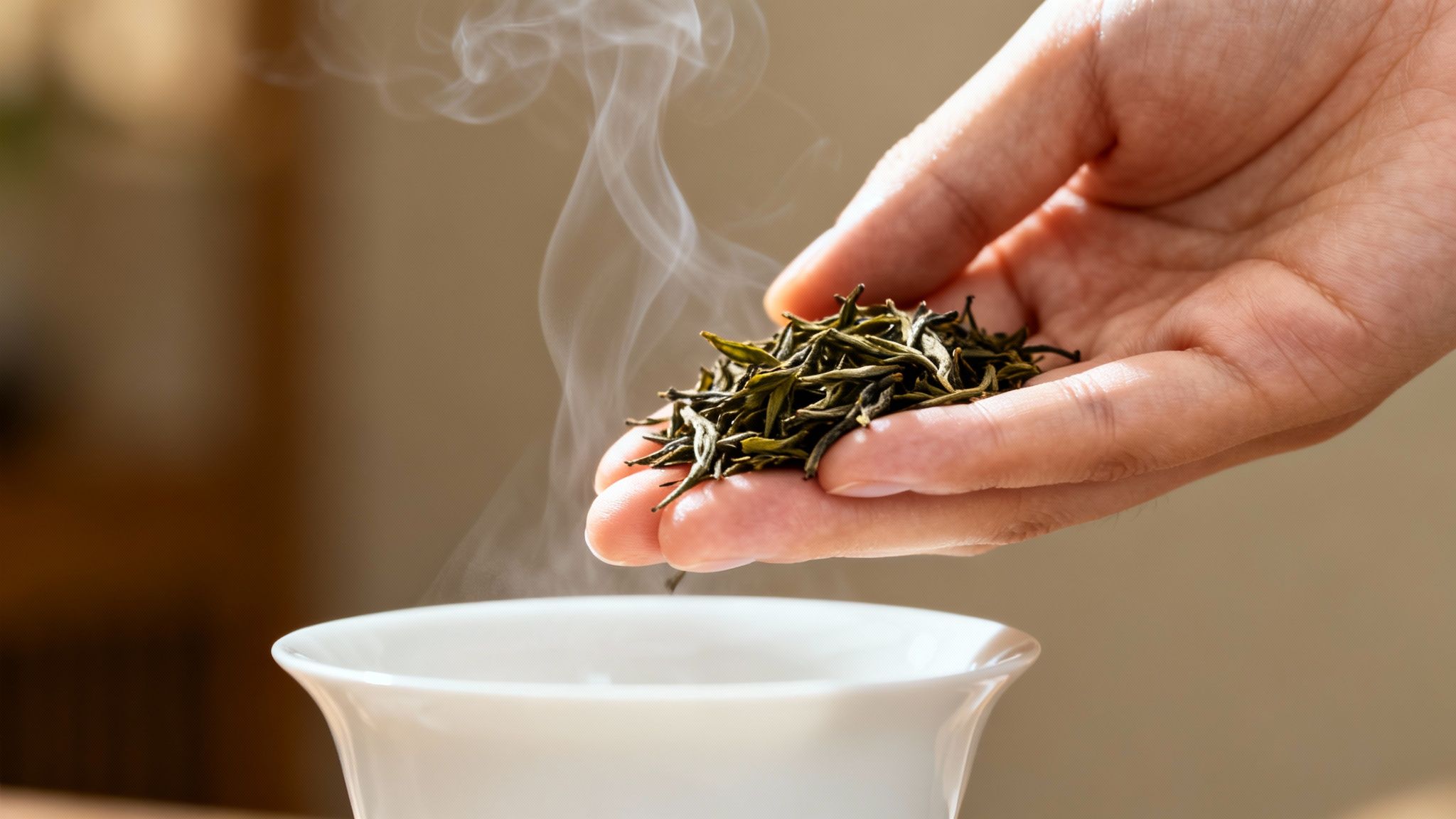
Unlike the fannings and dust packed into most commercial bags, loose leaf tea consists of whole, unbroken leaves. This integrity is everything. When you steep them, these leaves have the space they need to expand and dance in the water, releasing their complex essential oils and subtle flavour notes right into your cup.
The difference is immediate and profound. Instead of a one-dimensional, often bitter brew, you discover a cup with depth, character, and a smooth finish. It’s like the difference between a faded photograph and a high-definition image.
More Than Just Taste
But learning how to brew loose tea leaves properly is about more than just a better flavour. The ritual itself forces you to take a moment—a small pause in your day. The simple act of measuring leaves and timing your steep connects you more deeply to what you're about to enjoy.
On top of that, the quality of the tea itself makes a huge difference. Ethically sourced blends, like the ones we've created at Jeeves & Jericho, ensure that every cup not only tastes exceptional but also supports sustainable farming practices. It's a conscious choice that elevates the whole experience, turning a simple pleasure into something more meaningful.
This guide will show you just how easy it is, proving that anyone can master the perfect brew. By exploring the numerous loose leaf tea benefits, you'll quickly see why making the switch is one of the best decisions a tea lover can make. Forget any notion that it’s complicated; it's a simple path to a much, much better cup of tea.
The Simple Tools for a Superior Brew
You really don’t need a counter overflowing with expensive gadgets to make a brilliant cup of loose leaf tea. In fact, a few simple, well-chosen tools are all it takes to elevate your daily brew from just okay to genuinely magnificent. Let's walk through the essentials that actually make a difference.
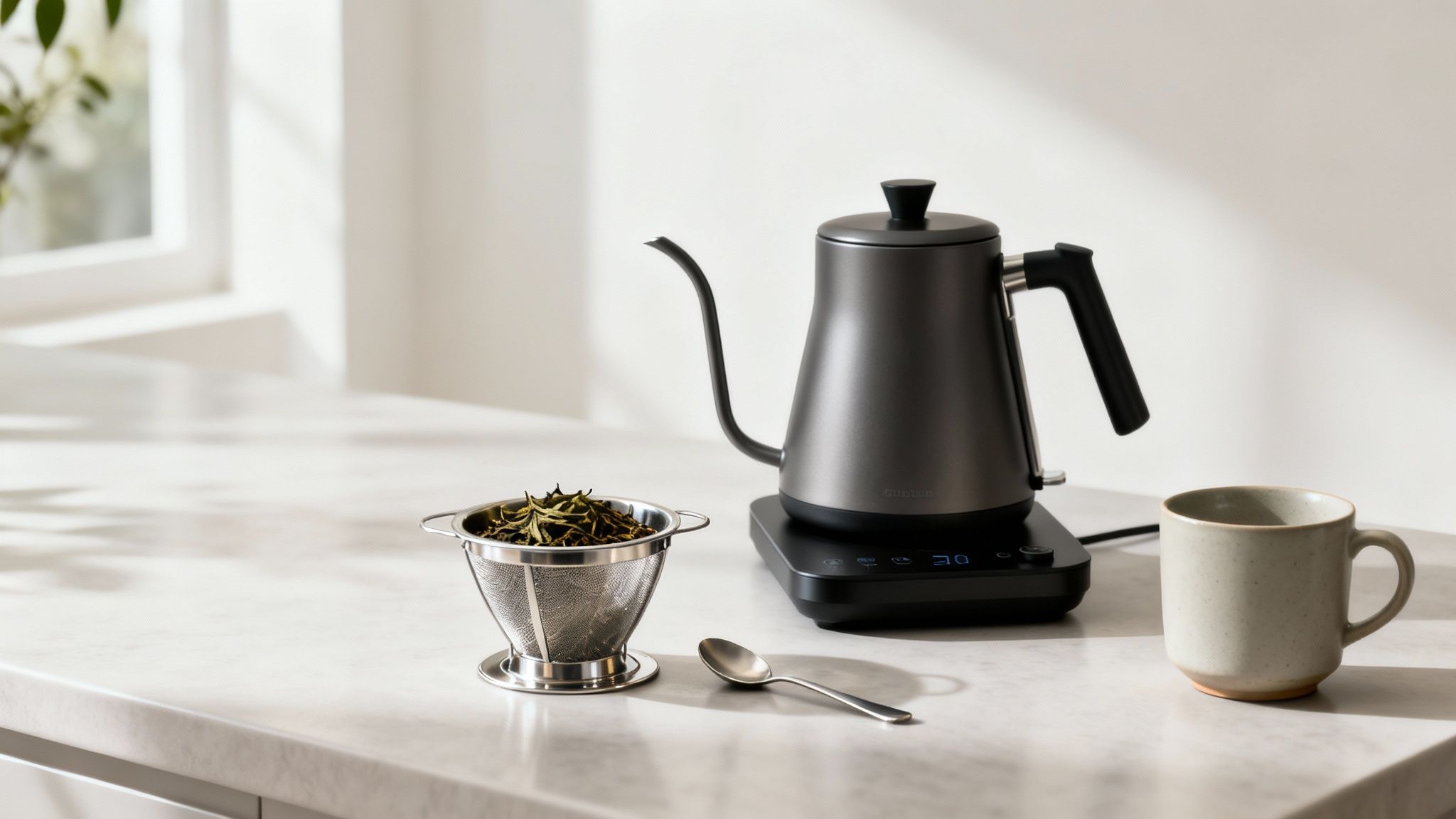
A great cup of tea always starts with the water, and getting the temperature right is key. While your standard kitchen kettle will do the job just fine, a variable temperature kettle is a true game-changer, especially if you’re fond of delicate green and white teas. It lets you heat the water to the exact degree needed, which means you can say goodbye to the bitterness that comes from scorching the leaves.
Don't have one? No problem at all. Just boil the water as usual and let it sit for a minute or two to cool before pouring it over your tea. For more robust black teas or herbal infusions, though, water straight off the boil is perfect.
Choosing Your Infuser Wisely
If there’s one piece of kit to get right, it’s the infuser. This is where so many people trip up when they first switch to loose leaf, and it's often the culprit behind a weak, disappointing brew. The secret is to give the leaves as much space as you possibly can to unfurl and release all their wonderful flavour.
- Basket Infusers: These are your absolute best bet. They sit neatly inside your mug or teapot, giving the leaves plenty of room to expand and swim around. This ensures a full, even extraction every single time.
- Tea Ball Infusers: We’ve all seen them, but these little spherical infusers aren’t ideal. They tend to cram the leaves together, which restricts water flow and leads to a seriously underdeveloped flavour.
- Teapots with Built-in Infusers: A brilliant choice for making a few cups at once. You get the space of a basket infuser combined with the heat retention of a teapot—perfect for sharing.
A common mistake is packing a small infuser too tightly. Remember, the leaves need room to at least double in size as they soak. If they're squashed in, you're only really brewing with the outer layer.
Finding the right device is crucial for getting the most from your tea. You can explore a variety of tea infusers for cups to find one that fits your routine and guarantees a perfect brew.
The Supporting Cast: Your Teaspoon and Vessel
Finally, let’s not forget the smaller details. A bit of precision with your measurements helps you brew a consistently delicious cup, day in and day out.
While digital scales offer pinpoint accuracy, they’re hardly a necessity. A simple teaspoon is often all you need to get started. As a rule of thumb, one rounded teaspoon (about 2-3 grams) per 200ml cup is a great starting point. From there, you can easily adjust based on the tea’s fluffiness and your own personal taste.
The vessel you brew in—whether it’s a sturdy mug or a classic teapot—also plays a part. Brewing directly in your favourite mug with a basket infuser is wonderfully efficient for a single serving. For larger batches, or for teas that need a longer steep like a rich Spiced Bombay Chai, a pre-warmed teapot is far better at holding its heat.
With these basics sorted, you’re perfectly equipped for success.
Getting to Grips with the Brewing Basics
The secret to a consistently brilliant cup of tea isn't some dark art; it all comes down to three simple variables. The amount of tea, the water temperature, and how long you let it steep are the pillars of a perfect brew. Get these right, and you'll go from guessing to brewing with real intention.
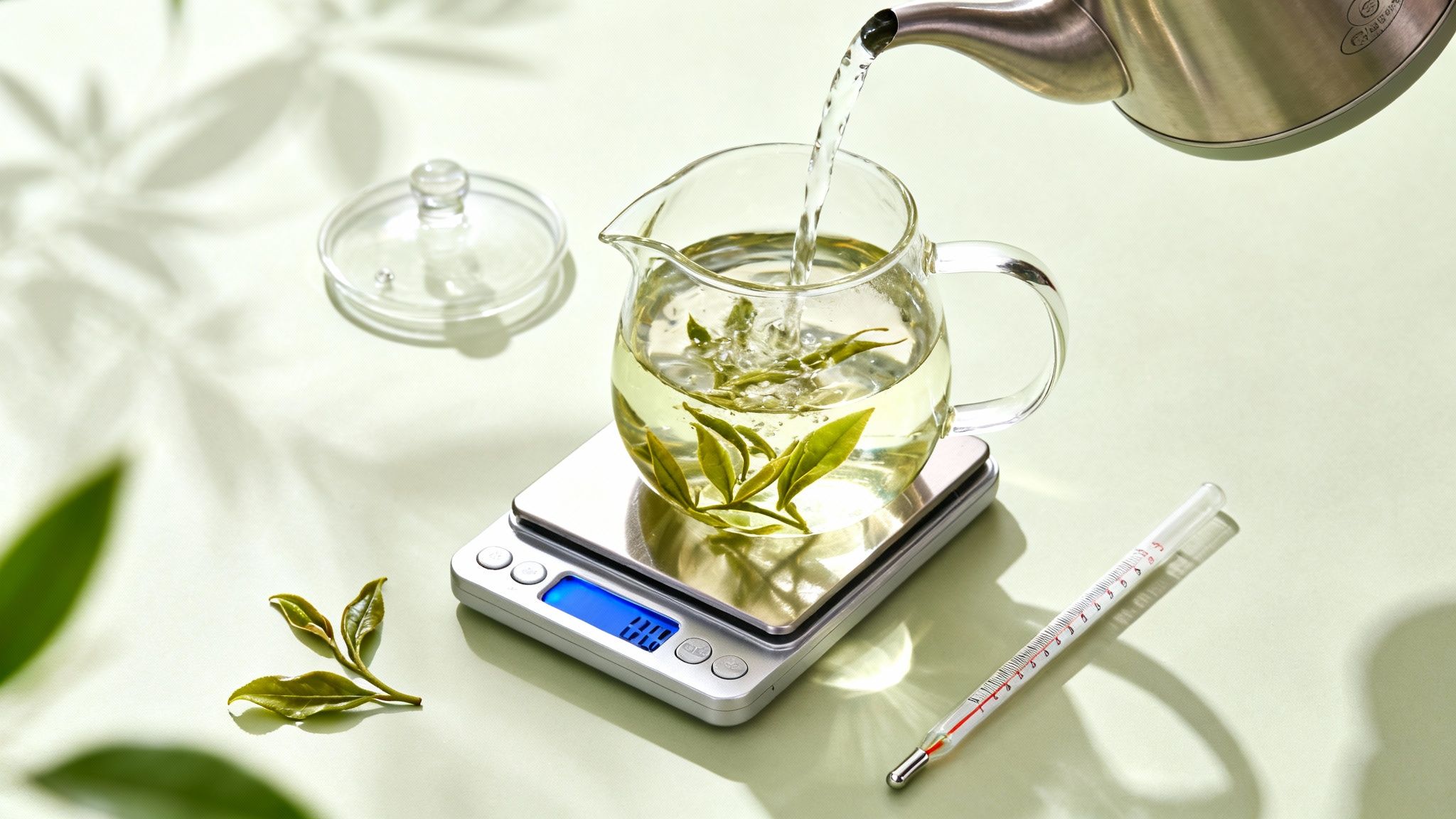
This section gets down to the foundational principles you need to know, starting with the all-important ratio of tea to water. Think of it as the bedrock of a balanced, flavourful cup—nailing this is your first step towards brewing perfection.
The Golden Ratio: Tea to Water
Consider the leaf-to-water ratio as the core measurement in your recipe. Too little tea, and you end up with a weak, watery brew that’s utterly forgettable. Too much, and you risk an overwhelmingly strong or bitter cup that masks all the tea’s subtle notes.
A great starting point, what many in the industry call the "golden ratio," is 2 to 3 grams of loose tea for every 200ml of water. If you don't have a scale, that's roughly one rounded teaspoon. This simple measure provides a fantastic balance, allowing the leaves to properly unfurl and release their flavour without overpowering the water.
Of course, this is just a guide. A fluffy white tea like Silver Needle might need a more generous scoop than a dense, tightly rolled oolong. The real joy of learning how to brew loose leaf tea is the freedom to tweak this ratio until it’s perfect for you.
Why Water Quality and Temperature are Critical
Once you've measured your leaves, the next thing to think about is your water. Since a cup of tea is over 98% water, its quality has a massive impact on the final taste. Honestly, using fresh, filtered water is one of the easiest upgrades you can make to your whole routine.
Tap water, especially in hard water areas, can contain minerals and chlorine that completely flatten the delicate flavours of your tea. Filtered or spring water gives you a clean, neutral canvas, letting the tea’s true character shine through without any unwanted off-notes.
Beyond quality, temperature is arguably the most crucial factor in brewing. It’s also the variable that most often goes wrong, leading to bitterness and disappointment. This is where understanding what’s happening in the cup makes all the difference.
The temperature of your water acts like a key, unlocking specific compounds within the tea leaves. Different temperatures unlock different flavours. The wrong key won't just fail to open the door—it can damage the lock entirely.
Take black tea, for example. Its robust, complex compounds need boiling water (95-100°C) to be fully extracted. Anything less will result in a flat, underdeveloped flavour.
On the other hand, pouring that same boiling water over delicate Japanese green tea leaves will scorch them. This releases an excess of tannins—the compounds that cause bitterness and a dry, astringent feeling in your mouth. For these teas, a much cooler temperature of around 70-80°C is essential to gently coax out their sweet, grassy notes.
In the UK, where we get through over 100 million cups a day, getting this right is key. While loose leaf tea holds a respectable 30% share of the total tea market, many of us are still in a rush. A staggering 73% of Brits admit to steeping black tea for less than the recommended time. For a truly exceptional brew, using fresh, filtered water at the right temperature—and for the full duration—allows the antioxidants and full-bodied flavours from ethical blends, like those from Jeeves & Jericho, to develop in a way teabags simply can't match. You can explore UK tea industry statistics to learn more about our national habits.
Perfecting Your Steeping Time
The final variable in our trio is steeping time—how long you let the tea leaves infuse in the hot water. Just like temperature, the ideal steeping time varies dramatically between tea types.
- Longer Steeps: Bolder teas like black and herbal infusions need more time, typically 3-5 minutes, to extract their deep, rich flavours.
- Shorter Steeps: More delicate teas like green and white varieties need much shorter infusions, often just 1-3 minutes, to keep bitterness at bay.
A timer is your best friend here. It’s no exaggeration to say that an extra 30 seconds can take a perfect cup of green tea into bitter territory. When trying a new tea, I always suggest starting with the lower end of the recommended time; you can always have a quick taste and decide to steep it a little longer if you fancy a stronger flavour.
Quick Brewing Guide by Tea Type
Use this quick-reference table as your starting point for brewing the most common types of loose leaf tea.
| Tea Type | Leaf Quantity (per 200ml) | Water Temperature | Steeping Time |
|---|---|---|---|
| Black | 2-3g (1 tsp) | 95-100°C | 3-5 minutes |
| Green | 2-3g (1 tsp) | 70-80°C | 1-3 minutes |
| White | 3-4g (1-2 tsp) | 80-85°C | 2-4 minutes |
| Oolong | 3-5g (1-2 tsp) | 85-95°C | 2-5 minutes (multiple steeps) |
| Pu-erh | 3-5g (1-2 tsp) | 95-100°C | 30s - 4 mins (multiple steeps) |
| Herbal | 3-4g (1-2 tsp) | 100°C | 5-7 minutes |
| Chai | 3-4g (1-2 tsp) | 100°C | 5-7 minutes |
Remember, these are guidelines, not rigid rules. The best way to find your perfect cup is to experiment and see what tastes best to you.
Your Guide to Brewing Different Tea Types
Right, let's put all that theory into practice. Think of this section as your brewing companion, helping you turn those beautiful loose leaves into a delicious reality. We'll get into the specifics of each major tea type, with clear, actionable advice to help you get the best flavour from every single leaf.
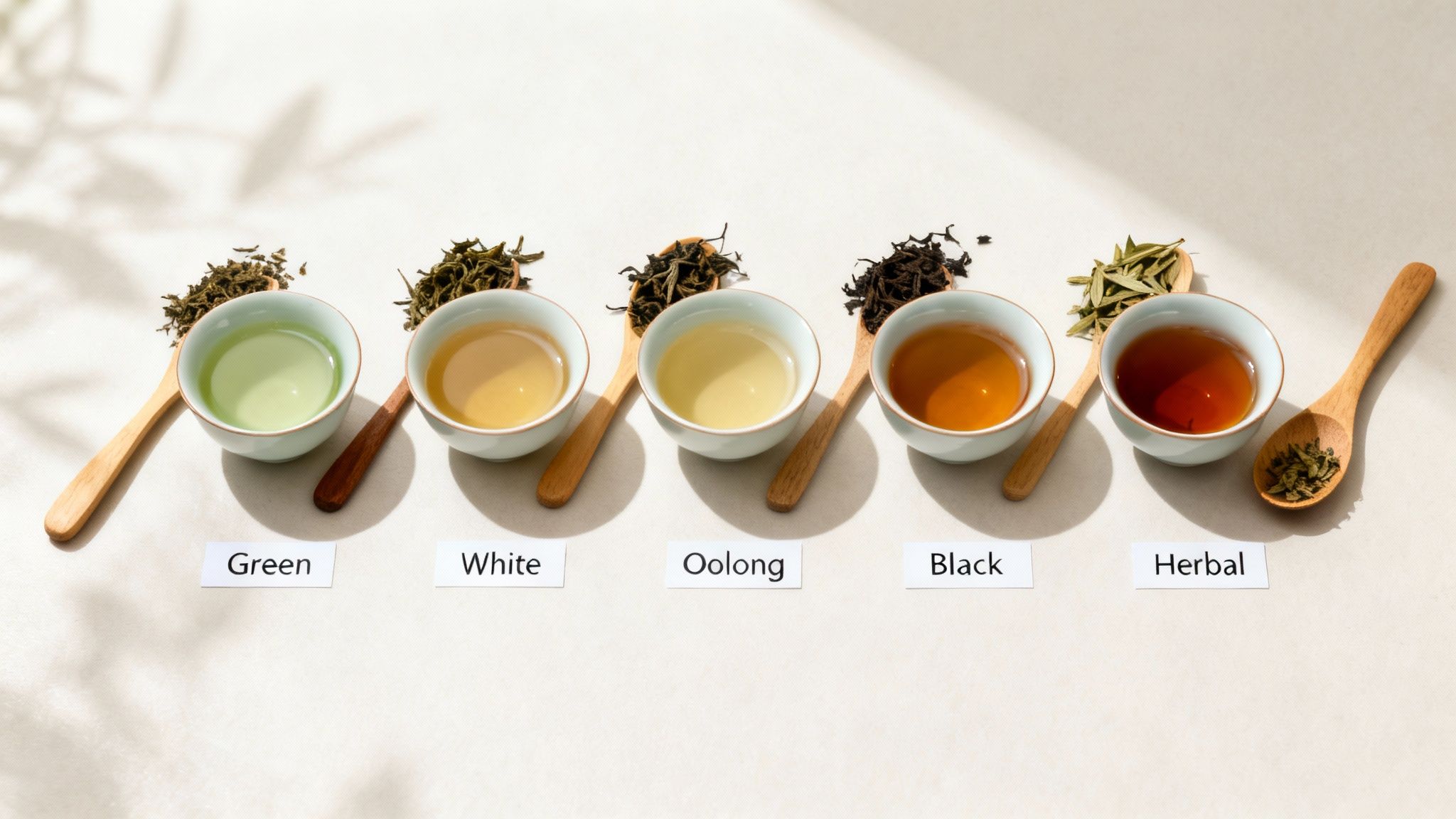
From a punchy Spiced Bombay Chai to a whisper-light Silver Needle, you'll soon get the hang of the right leaf quantities, water temperatures, and steeping times. This is where you gain the confidence to brew any tea like you’ve been doing it for years.
Brewing Bold Black Teas
Black teas are fully oxidised, which is what gives them that deep colour and robust flavour. They can be malty, earthy, sweet, or fruity. The good news is they're the hardiest of the true teas, so they can handle high temperatures without turning bitter. This makes them a brilliant starting point if you're new to loose leaf.
For most black teas, like a classic English Breakfast or a fragrant Earl Grey, use water just off the boil, somewhere around 95-100°C. Aim for a steeping time of 3 to 5 minutes. This is the sweet spot for extracting all those rich, complex flavours without pulling out too many tannins.
A common mistake is being too timid with the steep time, which can leave you with a weak, flat-tasting brew. Don't be afraid to let it infuse for the full five minutes to really experience its depth.
Brewing Delicate Green Teas
This is where temperature control really starts to matter. Green tea leaves are unoxidised and far more delicate than their black tea cousins. If your water is too hot, you'll scorch them, and they'll release a flood of tannins. The result? A bitter, astringent taste that completely masks the sweet, grassy notes you're after.
The ideal water temperature for most green teas is between 70-80°C. No variable temp kettle? No problem. Just boil the water, then let it sit for a couple of minutes to cool down before you pour. Steeping times are much shorter, too—usually between 1 and 3 minutes.
- Japanese Greens: Varieties like Sencha and Gyokuro are particularly sensitive. Stick to the lower end of the temperature range, around 70°C.
- Chinese Greens: Teas such as Dragon Well or Gunpowder are a bit more forgiving and can often handle water closer to 80°C.
My advice is to start with a shorter steep, have a taste, and then you can always pop the infuser back in for another 30 seconds if you want a bit more oomph.
Brewing Subtle White Teas
White tea is the least processed of all, often just the young, unopened buds of the tea plant. This minimal handling results in an incredibly delicate, subtle, and naturally sweet flavour with lovely floral and fruity notes. To keep those nuances intact, a gentle touch is key.
Use water that’s well below boiling, around 80-85°C. Your steeping time can range from 2 to 4 minutes. Because white tea leaves like Silver Needle are so light and fluffy, you’ll probably need to use a more generous scoop—sometimes up to two teaspoons per cup—to get a full-bodied brew.
Brewing Complex Oolong Teas
Oolong is fascinating because it sits somewhere between green and black tea. Its oxidation level can be anywhere from a light 10% to a deep 80%. This massive spectrum gives you an incredible diversity of flavours, from light, floral, and creamy to dark, roasted, and fruity.
Water temperature for oolongs generally falls between 85-95°C. What makes a good oolong truly special is its ability to be re-steeped. Your first infusion might be very short—sometimes under a minute—and you can gradually increase the time with each subsequent steep. Every infusion reveals new layers of flavour and aroma, making it a wonderfully rewarding tea to explore.
Brewing Herbal Infusions and Chai
While not technically "tea" from the Camellia sinensis plant, herbal infusions (or tisanes) are brewed in much the same way. These blends of herbs, spices, fruits, and flowers are generally very robust and caffeine-free.
For most herbal infusions, you'll want to use boiling water (100°C) to properly extract their flavours and beneficial compounds. They also need a longer steep, usually somewhere between 5 and 7 minutes. Some, like peppermint, can be ready a bit sooner.
Chai, that gorgeous blend of black tea and aromatic spices, also loves boiling water and a longer steep of 5-7 minutes. This gives the spices enough time to release all their warm, fragrant oils. For an even richer, creamier treat, try brewing your chai directly in simmering milk on the hob.
By getting a feel for these fundamentals, you can confidently brew just about anything. For a deeper dive into what makes each category unique, you might enjoy our guide on the different types of tea.
Caring for Your Tea After the Brew
Getting the brew right is a beautiful thing, but the ritual doesn't stop once the infuser is out. What comes next—from how you actually taste the tea to how you look after those precious leaves—is just as important. It’s what turns a good cup into a great one, time after time.
This is where we complete the picture. We'll get into the simple techniques for tasting like a pro, keeping your tea vibrant and fresh, and even making your daily cuppa a little kinder to the planet.
How to Taste Tea Like an Expert
Ever read a tasting note describing a tea as having hints of apricot, honey, or a touch of smoke and thought, "What on earth are they on about?" Trust me, learning to pick up on those subtle characteristics is much easier than it sounds. It’s really just about paying a bit more attention.
Next time you brew, pause before you take a sip. Bring the cup to your nose and breathe in deeply. What do you get? Is it floral, earthy, fruity, malty? Our sense of smell is so closely tied to taste that this first step is a game-changer.
Now for the sip. Take a small amount and let it wash over your entire tongue. Try drawing a little air in over the liquid—a gentle slurp, if you will. It might feel a bit strange at first, but this aerates the tea, unlocking its full range of flavours and aromas.
As you hold it in your mouth, think about a few things:
- Body: How does it feel? Is it light and delicate, or is it full, rich, and almost creamy on the palate?
- Flavour Notes: Can you pinpoint any specific tastes beyond just "tea"? Maybe there's a sweetness like caramel, a brightness like citrus, or even a vegetal note like fresh-cut grass.
- Finish: What’s the aftertaste like once you’ve swallowed? Does it disappear cleanly, or does it leave a lingering sweetness or a pleasant dryness?
There are no right or wrong answers here. It’s all about becoming more familiar with the complex character hiding in your cup.
Storing Loose Leaf Tea for Lasting Freshness
If you've invested in beautiful, high-quality loose leaf tea, proper storage is non-negotiable. Those delicate leaves have three mortal enemies that will zap their flavour and aroma in no time: light, heat, and moisture. Get any of those wrong, and your vibrant blend will become a dull, stale shadow of its former self.
To keep your tea at its best, always store it in an airtight container. Oxygen is the fourth enemy, causing tea to go stale, so a good seal is a must.
Treat your tea leaves like you would good coffee beans or delicate spices. You wouldn't leave them sitting on the worktop in a glass jar, and the same rules apply here.
The location is just as crucial as the container. Find a cool, dark, and dry spot—a kitchen cupboard or pantry, well away from the oven or a sunny windowsill, is perfect. And be mindful of strong smells! Tea is incredibly absorbent and will happily soak up the aromas of nearby spices or coffee, so give it its own space. With a bit of care, tea from brilliant producers like Jeeves & Jericho will stay wonderfully fresh for months on end.
A Sustainable Sip: Composting Used Tea Leaves
Your daily tea ritual can easily be a sustainable one, too. Instead of tossing your used tea leaves in the bin, why not add them to your compost? Tea leaves are rich in nitrogen, which makes them a fantastic "green" material for any compost pile. They help to balance out the carbon-heavy "browns" (like dried leaves or cardboard) and speed up the whole decomposition process.
By composting your spent leaves, you’re not just cutting down on household waste; you’re creating nutrient-rich food for your garden. It’s a simple, satisfying way to close the loop, turning the remnants of a daily pleasure into something that nourishes the earth. It’s a small act that connects the simple joy of a good brew with a more conscious way of living.
Your Brewing Questions, Answered
Even with the best instructions, a few questions always pop up when you're getting to grips with loose leaf tea. Think of this as your friendly troubleshooting guide, here to solve those little brewing mysteries before they even start.
The world of tea is wonderfully deep, but it doesn't need to be complicated. Let's tackle some of the most common queries to make sure every cup you brew is a brilliant one.
Why Does My Tea Taste Bitter?
This is, without a doubt, the number one problem we hear about. If your brew is tasting bitter or sharp, it’s almost always down to one of two things: your water is too hot, or you’ve steeped the leaves for too long.
Delicate green and white teas in particular are easily scorched by boiling water. This heat shock makes them release too many tannins – the natural compounds responsible for that astringent, bitter flavour. The fix is simple: just let your kettle cool for a minute or two before pouring. Also, set a timer! An extra 30 seconds can truly be the difference between a sweet, delicate brew and a bitter disappointment.
I always recommend starting with the shortest suggested steeping time for any new tea. You can always taste it and let it infuse a little longer, but you can’t take the bitterness out once it’s there.
Can I Re-Steep My Tea Leaves?
Absolutely! In fact, you should. Many high-quality loose leaf teas are designed to be infused multiple times, especially Oolongs, Pu-erhs, and many Chinese green teas.
The first infusion is often said to just ‘awaken’ the leaves. With each new steep, you’ll discover different layers of flavour and aroma that were hiding the first time around. Try adding 30-60 seconds to your second infusion to draw out more character. It's a wonderful way to appreciate the complexity of the tea and get more value from every spoonful.
How Much Tea Should I Use Without a Scale?
While a scale is brilliant for precision, it’s far from essential. A reliable rule of thumb is one rounded teaspoon of tea leaves per 240ml (8oz) cup.
But remember, not all teas are created equal. A fluffy white tea like Silver Needle takes up much more space than a dense, tightly rolled oolong. You’ll need to use your eyes a bit.
- For light, fluffy teas (like white teas or chamomile): Use a generous, heaped teaspoon.
- For dense, rolled teas (like oolongs or gunpowder green): A level, or even slightly scant, teaspoon is a better place to start.
- For standard black teas (like English Breakfast): A nicely rounded teaspoon is usually perfect.
Start with that as your guide, have a taste, and tweak it next time. You’ll quickly get a feel for what works for you.
Teapot vs. Mug: Does It Matter?
This really just boils down to convenience and how many cups you're making.
Brewing straight into a mug is fantastic for a single serving. The trick is to use a large, basket-style infuser that gives the leaves plenty of room to unfurl and release all their flavour. I’d steer clear of those little tea balls – they often cramp the leaves, leading to a weak, under-brewed cup.
A teapot is your best friend when making tea for two or more, or if you want to keep your brew warm for a second cup. But for a quick, excellent cuppa for one, a good mug and a quality basket infuser are all you really need.
Ready to put your new knowledge to the test with truly exceptional leaves? At Jeeves & Jericho, we ethically source the finest whole leaf teas from around the world, ensuring every cup is full of flavour and integrity. Explore our collection and discover your new favourite brew today at https://www.jeevesandjericho.com.