


Loose tea strainers are your secret weapon for a truly exceptional cup of tea. They are simple tools designed to hold loose leaf tea while it brews, letting the hot water flow through freely but keeping the leaves contained and out of your final cup. More than just a convenience, they are a massive step up from your average tea bag, giving the leaves room to properly expand and giving you complete control over your brew.
Why the Right Tea Strainer Unlocks a Better Brew
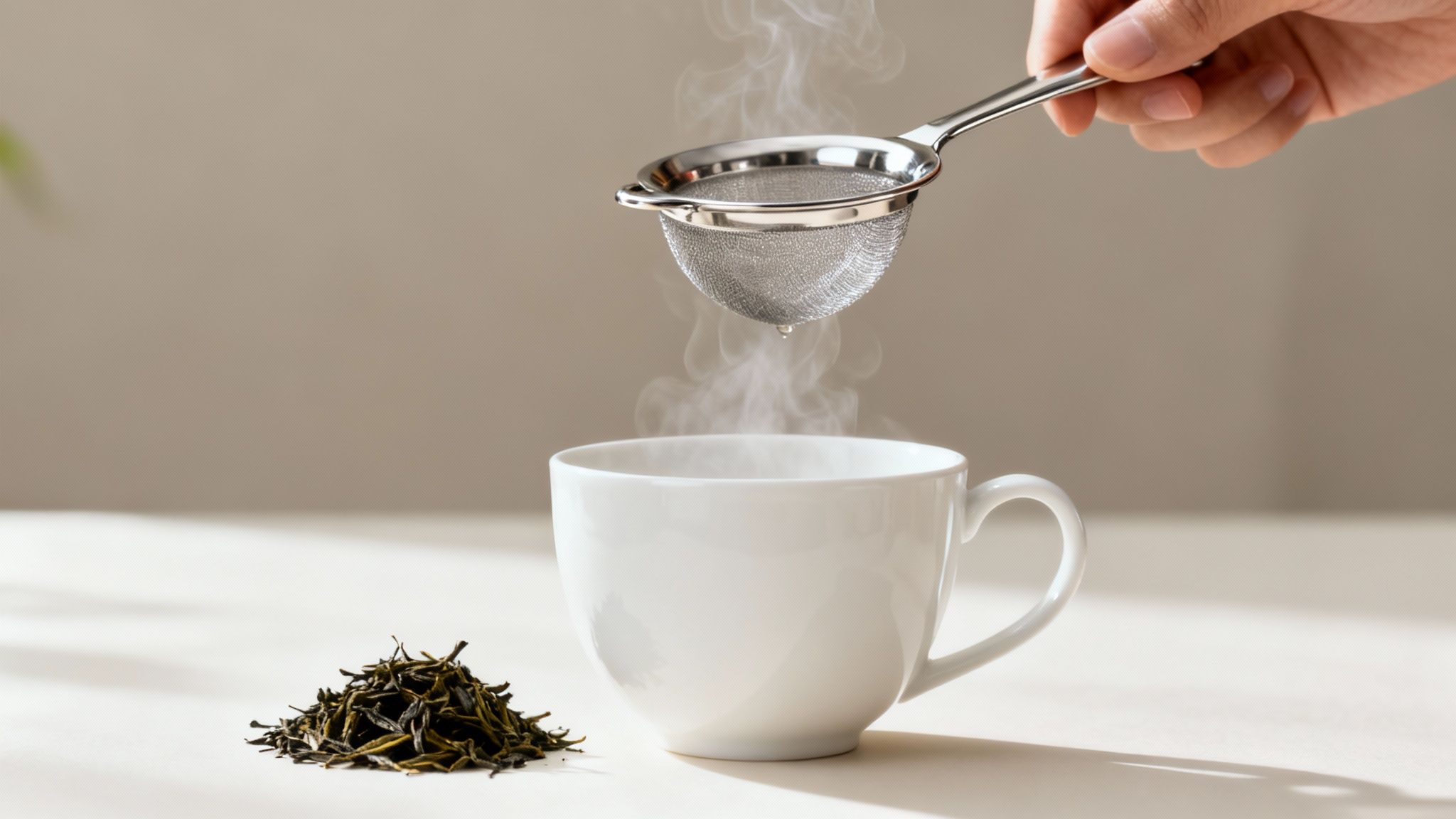
The difference between a bland, forgettable cup and a truly memorable one often boils down to your brewing gear. And when it comes to loose leaf tea, the strainer is perhaps the most important piece of kit you'll own. It’s the gateway between a spoonful of dry leaves and a perfectly steeped, fragrant infusion.
Think of it like choosing the right glass for a fine wine; the vessel really does matter. A cramped tea bag is the enemy of flavour, squashing the leaves and stopping them from unfurling to release all their complex oils and delicate notes. This is exactly why tea from a bag can taste so flat and one-dimensional.
The Science of a Superior Steep
A quality loose tea strainer cracks this problem by giving the leaves plenty of space to dance around and ‘breathe’. This process, known as infusion, is where the magic happens. As the leaves plump up in the hot water, they release their full spectrum of flavours, aromas, and all the good stuff.
A good strainer will always ensure:
- Optimal Leaf Expansion: Whole leaves have the space to stretch out completely, maximising the surface area and letting all that flavour escape.
- Consistent Water Flow: Water can swirl freely around every part of the leaf, promising an even and thorough brew.
- A Clean, Clear Cup: It does the simple but vital job of separating the steeped leaves from the liquid, so you don't end up with a gritty mouthful.
By allowing leaves to move and expand freely, a proper strainer enables a more nuanced and vibrant extraction of flavour compounds, transforming a simple drink into a full sensory experience.
Beyond the Brew Itself
Making the switch to loose tea strainers also opens up a whole new world of tea. To truly appreciate the subtle differences in an exceptional brew, it’s worth exploring a diverse range of loose teas and seeing for yourself how the right strainer can elevate each one. This guide will demystify the options, helping you select the perfect tool to turn your daily tea ritual into a moment of genuine craft.
Exploring the Main Types of Loose Tea Strainers
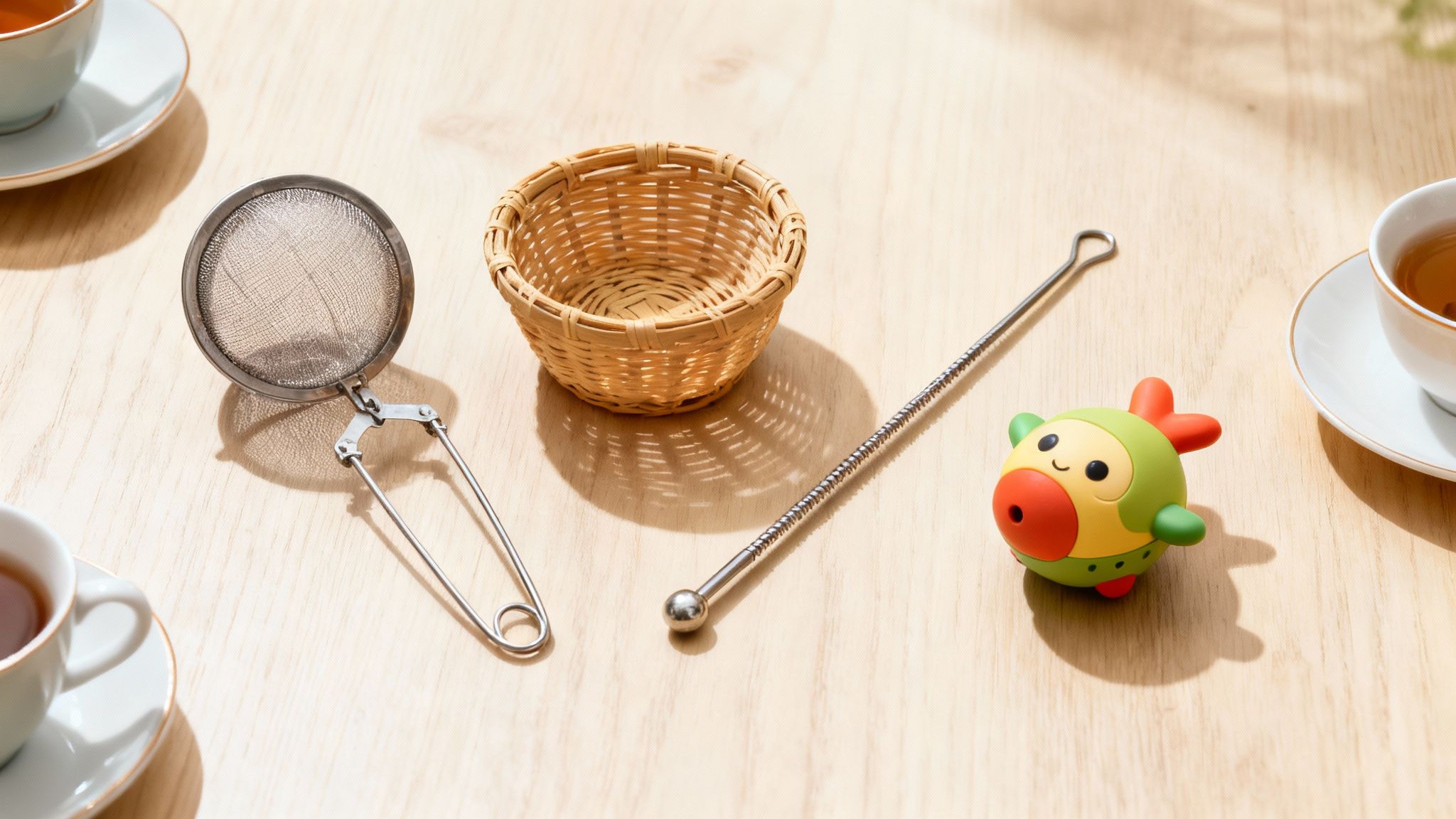
When you first dip your toes into the world of loose-leaf tea, the sheer variety of strainers can feel a bit much. But don't worry, it's actually pretty straightforward. Each style simply strikes a different balance between convenience, how much room it gives the leaves, and pure aesthetics.
Getting to know the main contenders is the best way to figure out which one will slot perfectly into your daily tea ritual. Let's walk through the most common types you’ll come across.
The Classic Tea Ball
You’ve definitely seen this one before. The tea ball is that little perforated metal sphere that snaps shut, usually dangling from a chain you can hook over the side of your mug. They're a doddle to use for a single cup.
The catch? That small size is also their biggest drawback. A tea ball can really cramp the style of larger, whole-leaf teas, stopping them from fully expanding and releasing all their flavour. They're much better suited to gutsy, broken-leaf black teas or finely chopped herbals where the leaves don't need much wiggle room.
The Versatile Basket Infuser
If there's one true all-rounder in the tea strainer family, it's the basket infuser. These are essentially deep, wide cylinders with fine mesh walls that rest neatly in the top of your mug or teapot. Their generous size is precisely what makes them so brilliant.
All that space lets the tea leaves properly unfurl and dance around in the water, ensuring you get a rich, even extraction of flavour. This makes them the go-to choice for delicate, large-leaf teas like oolongs, white teas, and top-tier green teas. They're also incredibly easy to fill, lift out, and rinse clean, which is why you’ll find them in the cupboards of most serious tea drinkers.
Think of a basket infuser as a spacious ballroom for your tea leaves, giving them plenty of room to mingle with the water. A tea ball, on the other hand, is more like a crowded lift – functional, but restrictive.
Modern and Minimalist Stick Infusers
For anyone who loves a clean, modern look, the stick infuser is a great shout. It's a sleek, slender wand with a small perforated chamber at one end that you slide open to fill with tea. Pop it in your cup, give it a stir, and you’re brewing.
They look fantastic and are certainly convenient, but much like tea balls, they don't hold a lot. This means they're really only practical for smaller-leaf teas. They're perfect for a quick, fuss-free cup of a strong brew but not the best partner for those special teas that need space to breathe.
Fun and Functional Novelty Infusers
And then we have the novelty infusers. These are the ones shaped like everything from tiny submarines to sloths hanging off your mug, usually crafted from food-grade silicone. They’re a brilliant way to add a bit of personality to your brew and make for wonderful gifts.
But while they’re full of charm, their brewing performance can be a bit hit-or-miss. The design often prioritises cuteness over function, so you might find the holes are poorly placed or the capacity is too small for a proper infusion. They're great fun, but a purist might find them a little lacking.
How Material and Mesh Size Affect Your Tea
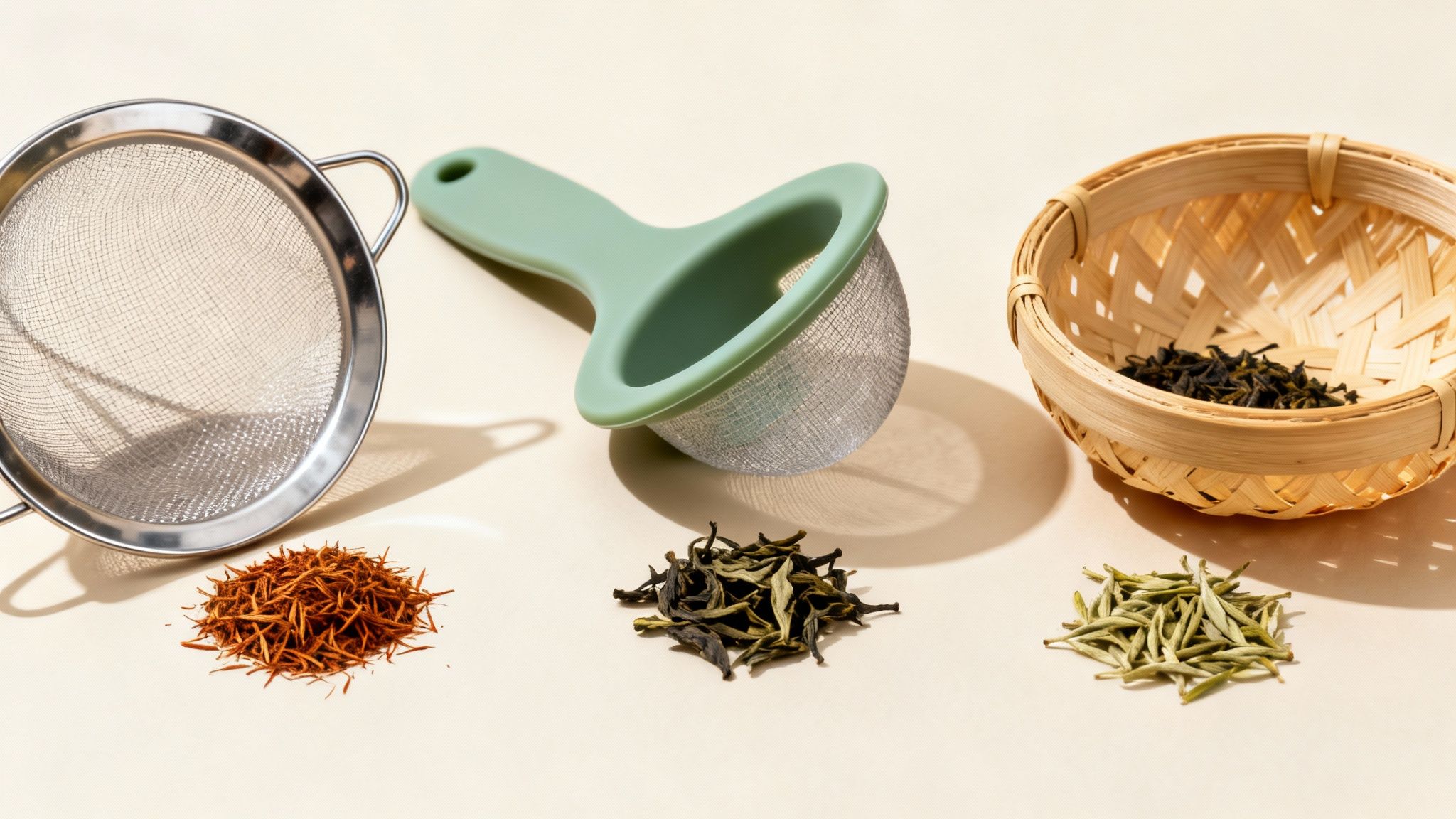
So you've chosen a style of strainer, but the rabbit hole goes a little deeper. Beyond the shape, the two details that really make the difference between a good cuppa and a great one are the material and the mesh size.
These are the unsung heroes of a perfect brew. They have a direct say in both the flavour of your tea and the clarity in your cup. Getting them right is the key to unlocking everything your loose leaf tea has to offer.
The material of your strainer is crucial because it’s going to be sitting in hot water along with your precious leaves. You need something that won’t react with the tea or impart any odd, metallic tastes. This is exactly why food-grade stainless steel is the gold standard – it’s durable, a breeze to clean, and completely neutral in flavour.
You'll also find silicone options, which are popular for their flexibility and heat resistance. They won't rust and can add a splash of colour to your routine. Traditional materials like bamboo look lovely, but just know they need a bit more TLC to stop them from holding onto old flavours.
Why Mesh Size Is So Important
Think of the mesh as the gatekeeper for your tea. Its one job is to keep the leaves contained while letting all that delicious, aromatic flavour flow out into your mug. The fineness of this mesh dictates which teas you can brew without getting a mouthful of grit.
A strainer with a standard or medium mesh is absolutely fine for large, whole-leaf teas. Picture those beautiful, unfurling oolongs or delicate white teas – the leaves are big enough that they have no chance of slipping through the holes.
On the other hand, a fine mesh is a must-have for smaller, broken-leaf teas or most herbal infusions. Without it, you’ll end up with a cloudy, unpleasant cup.
The rule of thumb is simple: the finer the tea leaf, the finer the mesh needs to be. A fine mesh strainer is your best defence against sediment from teas like rooibos, chamomile, or finely milled chai blends.
This focus on getting the brew just right is a huge part of the UK’s tea culture. In fact, the British tea processing industry, which champions the kind of whole leaf teas perfect for loose tea strainers, recently hit a market size of £1.0 billion. It just goes to show how much we value traditional methods that lead to a clean, flavourful cup. You can explore more data on the UK's tea industry to see the full picture.
Matching Mesh to Your Favourite Tea
To make things crystal clear, here’s a quick guide to pairing your mesh size with different teas:
- Large-Leaf Teas (Oolong, White, Silver Needle): A standard mesh will do the trick. These leaves need plenty of room to expand, but they're far too large to escape.
- Broken-Leaf Teas (English Breakfast, Assam): Go for a medium-to-fine mesh. This will catch the smaller particles while still letting the water circulate freely.
- Fine-Cut Teas (Rooibos, Honeybush, some Herbal Blends): A very fine mesh is non-negotiable here. Only the tightest weave can stop these tiny bits from ending up at the bottom of your mug.
Mastering the Art of Brewing and Cleaning
Using your loose tea strainer should be a simple pleasure, not a chore. After all, a well-looked-after strainer is the secret to a consistently brilliant cup of tea. Nailing a few basics will make the whole process feel effortless.
The most common pitfall we see is overpacking the strainer. It’s tempting to cram in just a few more leaves for a stronger flavour, but it actually has the opposite effect. Tea leaves need space to unfurl and expand as they steep – some can even double in size. Jamming them into a strainer restricts this movement, leaving you with a weak, underdeveloped brew.
As a rule of thumb, only fill your strainer about halfway. This gives the leaves plenty of room to dance around in the hot water, ensuring a full, even flavour extraction every single time.
A Simple Brewing Routine
Getting that perfect cup is pretty straightforward. If you want to dive deeper into the specifics of water temperatures and timings for different teas, have a look at our comprehensive guide on how to brew loose leaf tea.
But for now, here’s the basic routine:
- Measure Your Leaves: Start with one teaspoon of loose tea per cup (roughly 250ml) of water. You can always adjust this later to match your personal taste.
- Fill the Strainer: Add your measured leaves to the basket, ball, or stick infuser, remembering that less is more.
- Place and Pour: Pop the strainer into your mug or teapot and pour the hot water directly over the leaves.
- Steep Properly: Let the tea infuse for the recommended time. A robust black tea might need 3-5 minutes, while a delicate green tea could be perfect in just 1-2 minutes.
- Remove and Enjoy: Once the time is up, simply lift out the strainer. Your perfect, leaf-free brew is ready.
Keeping Your Strainer Spotless
The best habit you can get into is cleaning your strainer right after you’ve used it. Don't let wet leaves sit around for hours, as they can lead to stubborn stains, particularly on stainless steel mesh.
For daily cleaning, just tap the used leaves into your compost bin and give the strainer a good rinse under a hot tap. To tackle any tea residue that builds up over time, mix a bit of baking soda with water to make a paste. Gently scrub the strainer with a soft brush, rinse it thoroughly, and let it air dry completely. This simple trick will keep your strainer looking and working like new for years to come.
Pairing Your Strainer with the Right Tea
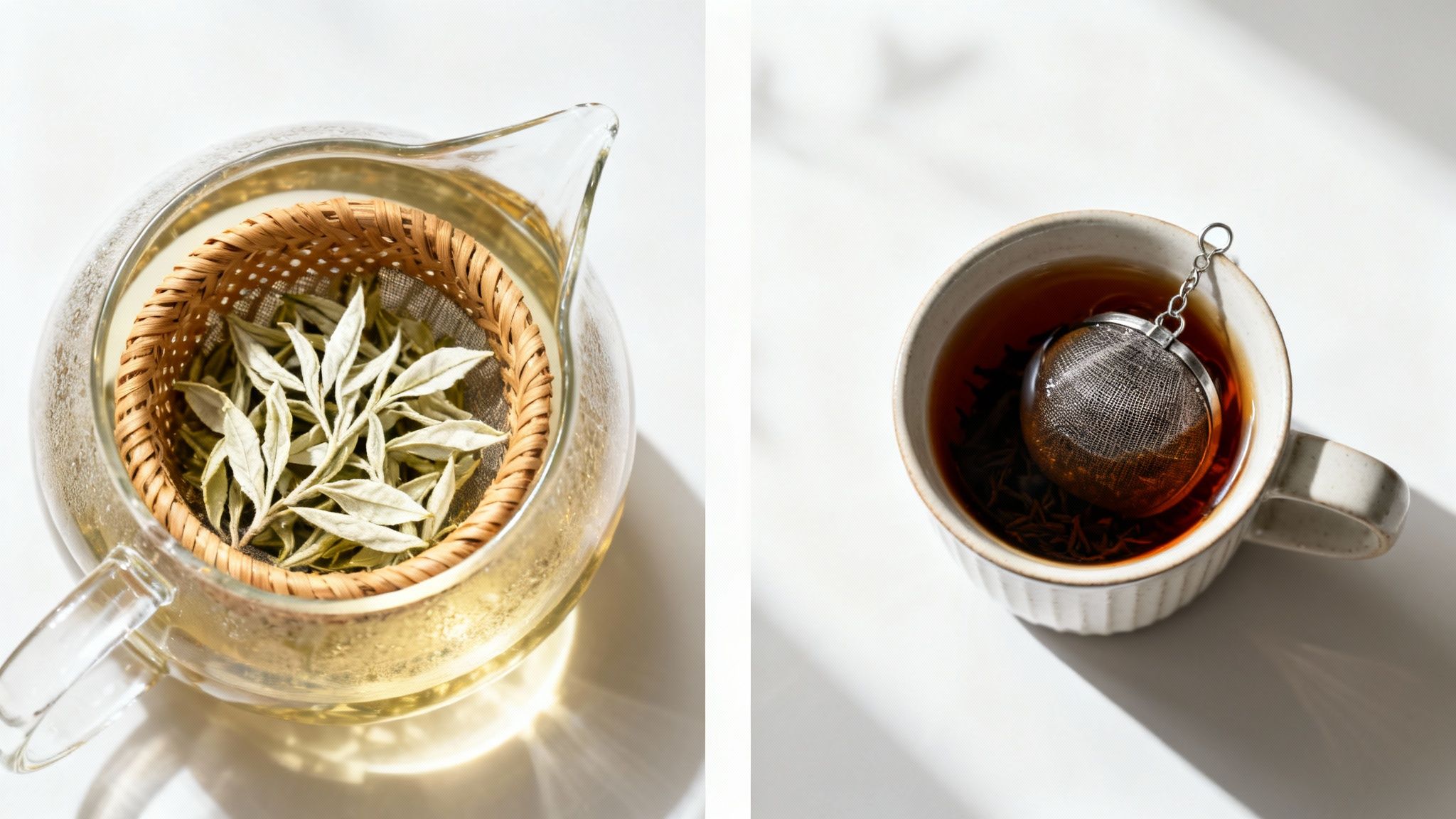
This is where it all comes together. Matching the right tool to the right tea is how you elevate your brewing from just ‘good’ to genuinely great. It’s not about overcomplicating things; it’s about understanding what your tea leaves need to give you their absolute best flavour.
Think of it this way: you wouldn't use a tiny espresso cup for a big, milky latte. The same principle applies here. Each type of loose-leaf tea has a unique size and shape, which really dictates the kind of strainer that will help it shine.
For Large, Delicate Leaves
Let's start with the prima donnas of the tea world: delicate, large-leaf teas like a White Peony, Silver Needle, or a beautifully rolled Oolong. These teas need room to breathe, unfurl, and release all their complex, subtle aromas. Cramp them into a small space, and you're guaranteed a weak, disappointing cup.
For these varieties, a spacious basket infuser is the undisputed champion. It gives the leaves all the freedom they need to fully expand, ensuring maximum contact with the water for a rich and nuanced infusion.
For Robust and Broken-Leaf Teas
Now, let's talk about the more robust, broken-leaf black teas – think of a classic English Breakfast or a hearty Assam. Because the leaves are already in smaller pieces, they don’t need nearly as much room to expand.
For these teas, a classic fine-mesh tea ball is often perfectly up to the task. Its compact size isn't a drawback here, and it does an excellent job of containing the smaller particles while allowing for a strong, brisk steep. It's an efficient tool for a powerful, everyday brew.
The secret to a perfect brew lies in giving your tea leaves exactly what they need. For large leaves, that means space. For fine particles, it means containment.
For Herbal Infusions and Fine-Cut Teas
Herbal infusions and finely milled teas present their own little challenge. Blends with rooibos, chamomile, or powdered spices like those in a chai mix are notorious for leaving that gritty sediment at the bottom of your mug if you're not careful.
For these, you'll need a strainer with an extra-fine mesh to trap those tiny particles. This is more relevant than ever, as the UK herbal tea market, which was worth $190.85 million, is set to climb to $310.0 million by 2035. This trend just goes to show the growing demand for strainers that can deliver a pure, full-flavour experience.
Understanding the different types of tea is the first step, ensuring every sip is as clean and flavourful as it was meant to be.
Why Reusable Strainers Are a Sustainable Choice
Picking up a reusable tea strainer is about more than just your daily brew—it's a small but powerful step towards a more sustainable ritual. This simple swap has a surprisingly big impact, helping to cut down on waste and look after our planet, one cup at a time.
The most obvious win is the huge reduction in single-use waste. Most commercial tea bags aren’t just paper; many are sealed with polypropylene, a plastic that never truly disappears. Instead, it breaks down into microplastics that end up polluting our soil and waterways for centuries. A good stainless steel or silicone strainer, on the other hand, can last you for years, saving potentially thousands of tea bags from landfill.
Beyond the Bin
This choice also cuts down on a surprising amount of packaging. Loose-leaf tea usually comes in a single tin or bag, while boxes of individually wrapped tea bags create a whole lot more cardboard and plastic waste. By switching to loose tea and a permanent strainer, you’re actively stepping away from that throwaway cycle.
For those wanting to make every part of their tea habit as eco-friendly as possible, it's worth knowing all the options. While reusable strainers are a fantastic solution, you can also learn more from this in-depth guide to compostable tea bags to see what else is out there.
By opting for loose leaf tea and a reusable infuser, you connect your daily ritual to a larger movement of conscious consumerism, where quality and sustainability go hand in hand.
This shift toward more mindful consumption is clearly showing in market trends. Just look at the UK green tea market, where full-leaf varieties brewed with loose tea strainers are a key format. It was valued at $1,150 million and is expected to hit $2,230 million by 2035. This growth shows just how much we're all starting to value the pure, high-quality experience that loose-leaf tea provides. You can discover more insights about the UK's growing green tea market and how it ties into healthier brewing.
Got a Question About Your Strainer?
Making the switch to loose leaf tea is a brilliant move, but it often brings up a few practical questions. Not to worry. We've gathered the most common queries right here, giving you clear, simple answers so you can get on with brewing the perfect cuppa.
How Do I Stop Those Annoying Little Bits of Tea Escaping?
We’ve all been there – a lovely cup of tea marred by a gritty mouthful of escaped tea dust. It’s a common frustration, but thankfully, an easy one to fix. The secret is to choose a strainer with a very fine mesh. Basket-style infusers are usually your best bet, as their large surface is made of a tightly woven mesh that’s a nightmare for tiny particles to get through.
If you're brewing a particularly fine tea, like a rooibos or certain herbal blends, you can even double down. First, brew the tea as normal in your infuser. Then, as you pour it into your mug, pass it through a second, handheld fine sieve. It’s a simple extra step that guarantees a beautifully clear brew every time.
What's the Best Strainer for a Big Teapot?
When you’re making tea for two or more, a large basket infuser is really the only way to go. A dinky little tea ball just won't cut it. It can't hold enough leaf for a full pot, and it cramps the tea's style, stopping the leaves from properly expanding. The result? A weak, disappointing brew for everyone.
A generously sized basket infuser, on the other hand, holds the right amount of tea and gives the leaves all the space they need to unfurl and release their full flavour. This ensures a rich, balanced infusion that’s just as good on the last pour as it was on the first.
The golden rule is to always give your tea leaves as much room as you can to dance in the water. For a teapot, a big basket strainer is the only tool that truly gets the job done.
Are Silicone Strainers Actually Safe?
Absolutely, as long as you buy from a decent brand. Good quality, food-grade silicone is perfectly safe to use with boiling water. Reputable makers ensure their products are BPA-free and can handle heat well beyond what your kettle can produce.
Just look for a "food-safe" or "BPA-free" label on the packaging. This tells you you're getting something that won’t leach nasty chemicals or add any weird flavours to your tea. They’re a safe, flexible, and often colourful alternative to classic stainless steel.
Ready to brew a proper cup? Explore the exceptional collection of whole leaf teas and brewing accessories at Jeeves & Jericho. Find your new favourite blend and the ideal strainer to match at https://www.jeevesandjericho.com.