


True matcha tea from Japan is something special. It's a powder, ground from green tea leaves that have been grown and processed in a very particular way. Its vibrant green colour and unique, savoury umami flavour are instantly recognisable.
The key difference? With regular green tea, you steep the leaves and then throw them away. With matcha, you’re consuming the entire leaf. This means you get a much more concentrated hit of nutrients and that signature, calm-yet-focused energy.
The Enduring Allure of Japanese Matcha
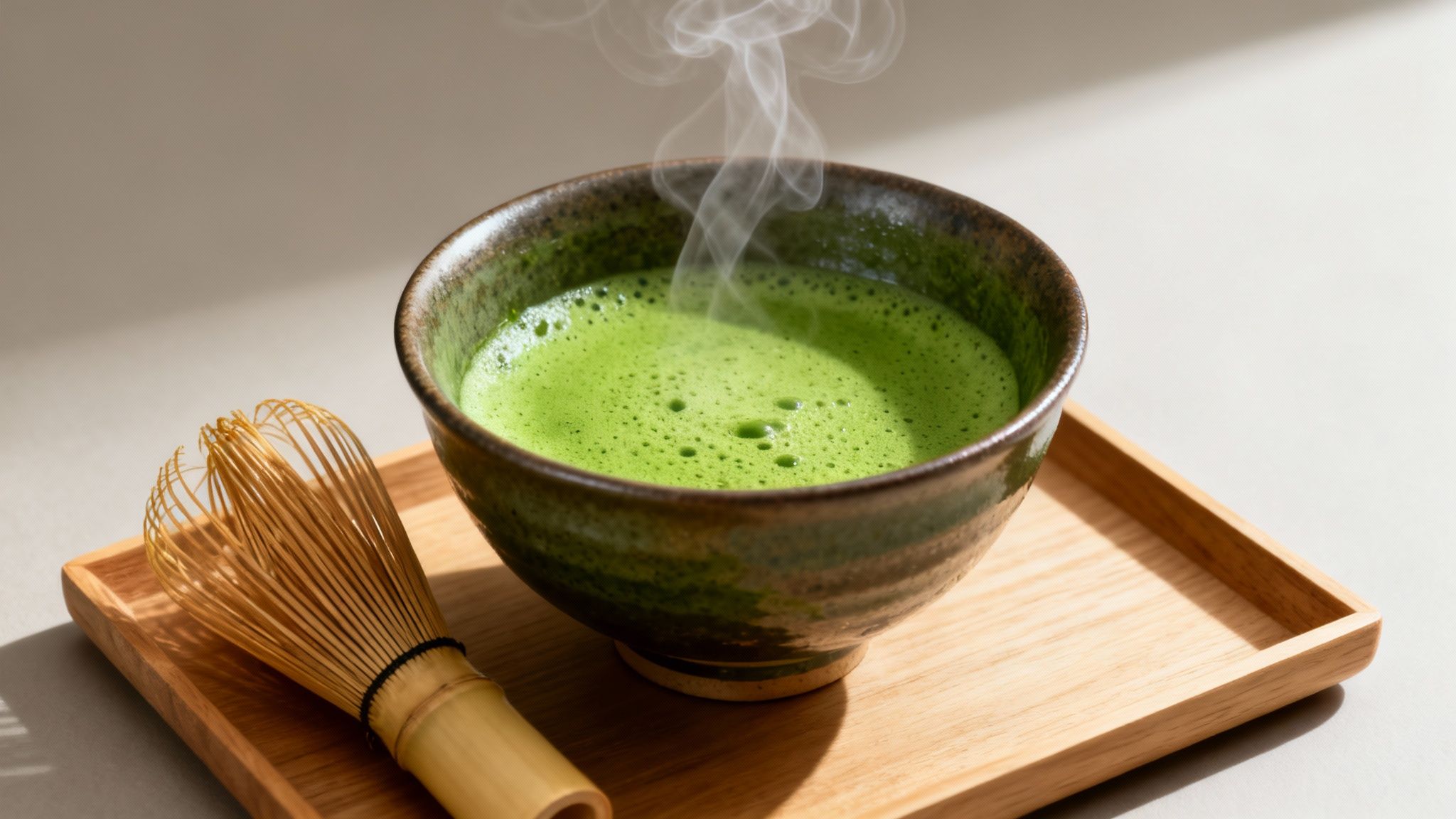
Let's dive into the incredible world of matcha, the powdered green tea that has travelled from ancient Japanese ceremonies right into the heart of today's global wellness scene. Consider this your complete guide to understanding authentic matcha tea from Japan – we’ll explore its deep cultural roots, its complex taste, and the meticulous craft that makes it so exceptional.
For centuries, matcha held a central role in the traditional Japanese tea ceremony, a practice deeply connected to Zen Buddhist principles of harmony and mindfulness. Today, its appeal has blossomed far beyond those quiet tearooms. You’ll find it beloved by everyone from health-conscious foodies to culinary masters, all drawn to its brilliant colour, creamy texture, and the unique sense of calm alertness it brings.
Why Matcha Captivates Modern Tastes
The modern fascination with matcha isn't just a trend; it comes from a powerful mix of flavour, health benefits, and cultural weight. It beautifully bridges the gap between ancient tradition and modern well-being, offering so much more than a simple cup of tea.
- A Unique Flavour Profile: Unlike any other tea, high-quality matcha offers a complex taste known as umami—a rich, savoury sweetness. This is balanced with delicate grassy notes and a wonderfully smooth, almost creamy finish.
- A Ritual of Mindfulness: The simple act of preparing matcha is a ritual in itself. From sifting the fine powder to whisking it into a frothy emerald liquid, it encourages you to pause and find a moment of focus in a hectic world.
- A Source of Potent Nutrients: Because you’re drinking the whole leaf, you get a powerful concentration of antioxidants, vitamins, and minerals that you’d otherwise miss out on.
This powdered green tea is not merely a drink; it is an experience. Its preparation is a form of meditation, and its consumption is a celebration of flavour and wellness that has been refined over centuries.
To really appreciate matcha, you have to understand where it comes from. For a fantastic overview of the nation where this tradition was born, take a look at our comprehensive guide to Japan for some helpful context. Armed with the right knowledge, you'll be able to select, prepare, and truly enjoy authentic, high-quality matcha, turning every bowl into a rewarding moment.
Exploring Uji: The Heart of Japanese Matcha
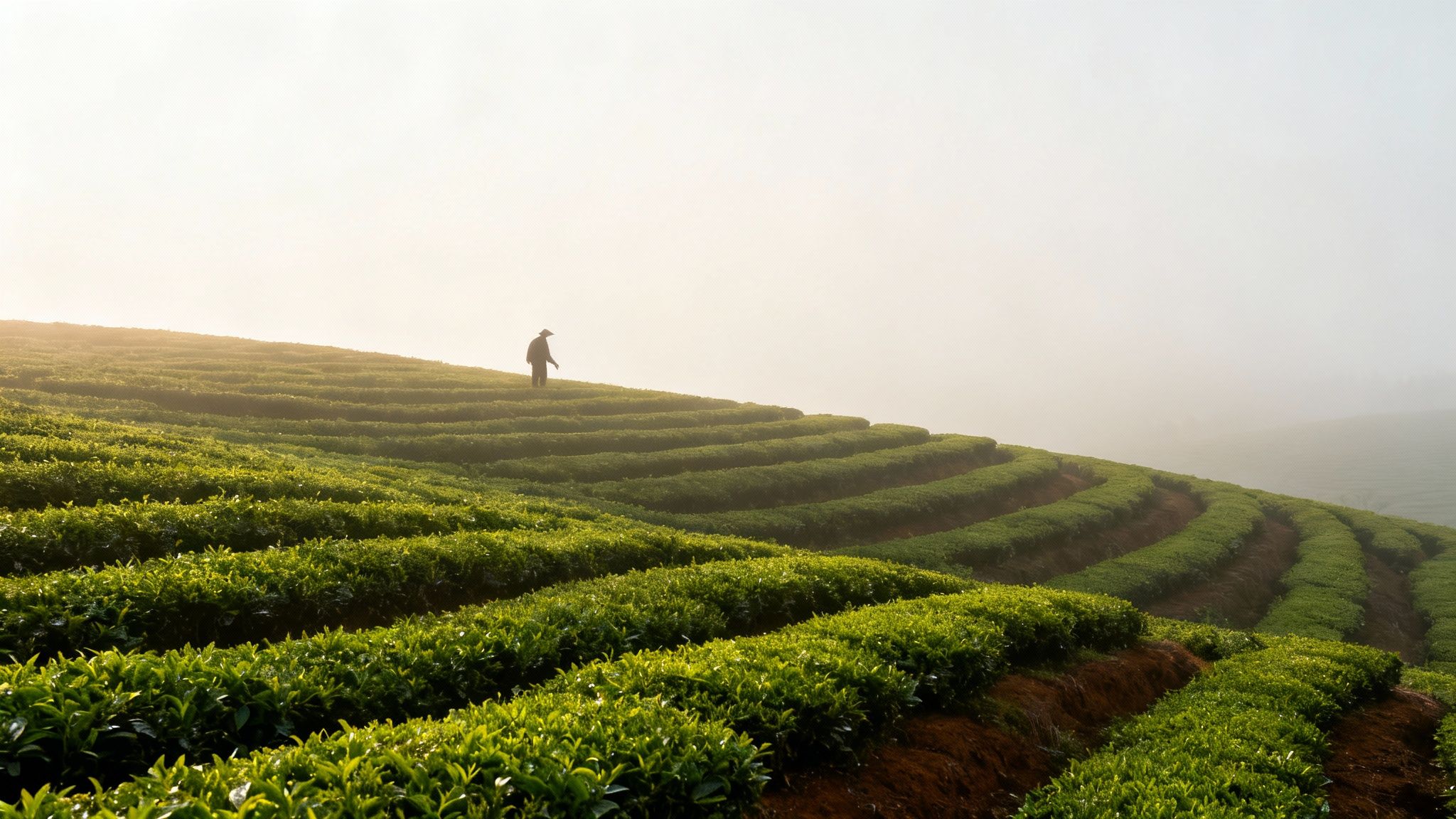
To really get to the heart of what makes the best matcha tea from Japan so special, you have to start in Uji. Tucked away in the rolling hills of Kyoto, this small city isn't just a point on a map—it's the spiritual home of matcha. For over 800 years, its name has been whispered with reverence, synonymous with the highest echelons of green tea.
The story of Uji matcha is one of perfect alchemy, a blend of ideal conditions and centuries of painstaking craft. The region's unique geography gifts it a microclimate perfectly suited for cultivating tea. It’s a bit like the Champagne region in France for sparkling wine; Uji has a magical combination of natural elements that simply can’t be copied.
This unique environment, what the experts call terroir, is the real secret behind Uji's celebrated flavour.
The Power of Uji's Terroir
The success of Uji's tea gardens is no accident. The Uji River provides a constant morning mist that drapes itself over the tea fields, acting as a natural parasol to shield the delicate leaves from harsh sunlight. This gentle protection encourages the plants to develop a much sweeter, more complex character.
On top of that, the soil here is naturally rich in nutrients and slightly acidic—the perfect growing medium for the Camellia sinensis tea plant. Generations of farmers have passed down an intimate, almost intuitive knowledge of this land, understanding exactly how to partner with nature to coax out leaves of exceptional quality. It’s this fusion of climate, soil, and human wisdom that elevates Uji matcha above all others.
The unparalleled quality of Uji matcha comes from a delicate dance between nature and nurture. The region's misty climate and fertile soil provide the perfect canvas, while centuries of artisanal farming techniques paint the masterpiece.
The Art of Shade-Growing Tencha
The most crucial step in creating that vibrant green powder we all recognise as matcha is the art of shade-growing. For about 20 to 30 days before the spring harvest, farmers cover the tea plants with special screens, traditionally made from reed or straw, to block out most of the direct sun. The leaves grown in these shaded conditions are called tencha, and they are the only ingredient used for true matcha.
This shading isn't just for show; it fundamentally changes the chemistry of the leaf. By restricting photosynthesis, the plant goes into overdrive producing chlorophyll to capture every last bit of available light. This chlorophyll surge is what gives top-tier matcha its signature, almost luminous, green colour.
At the same time, the lack of sunlight stops the amino acid L-theanine from converting into catechins (which cause bitterness). The result is a tea that’s noticeably sweeter, incredibly smooth, and brimming with the savoury umami depth that Uji matcha is famous for.
- Boosted Chlorophyll: This gives the matcha a more vibrant green colour and a fresh, almost grassy aroma.
- Elevated L-theanine: This creates that deep, savoury umami taste and helps promote a feeling of calm, focused alertness.
- Reduced Bitterness: The result is a smoother, sweeter, and more delicate flavour profile, free from any harsh astringency.
This commitment to shade-growing is a labour of love, a precise art form demanding immense skill. It's this final, pivotal step that transforms a simple green tea leaf into the foundation for the world's finest matcha tea from Japan. When you understand this dedication, you can taste the legacy in every single sip.
Decoding the Different Grades of Matcha
As you begin to explore the world of authentic matcha tea from Japan, you’ll soon come across two main labels: Ceremonial Grade and Culinary Grade. It’s easy to get hung up on this, but the difference isn’t about one being ‘good’ and the other ‘bad’. It’s simply that they have entirely different jobs.
Think of it like olive oil. You have your extra-virgin, cold-pressed oil for dressing a salad, and you have your everyday cooking oil. Both are brilliant, but for completely different reasons.
Ceremonial Grade is the pinnacle of matcha production, crafted from the youngest, most tender tea leaves (tencha) from the year's very first harvest. These leaves, shaded for weeks before being picked, are brimming with L-theanine and chlorophyll. This careful process gives the final tea its natural sweetness, deep savoury notes (umami), and an incredibly smooth finish.
Culinary Grade, on the other hand, is designed to be a robust, versatile ingredient. It's usually made from leaves picked in later harvests. These leaves get a bit more sun, developing a stronger, bolder, and slightly more bitter flavour that holds its own against other ingredients like milk, sugar, or flour.
Ceremonial Grade: The Sipping Matcha
Ceremonial Grade is all about the pure, unadulterated tea experience. This is the matcha you’ll find in a traditional Japanese tea ceremony, where it’s simply whisked with hot water and savoured for its own delicate character. Its nuanced flavour and silky mouthfeel would be completely lost in a latte or smoothie.
You can spot a good one with your senses:
- Colour: Look for a vibrant, almost electric, jade green. Anything dull or yellowish is a red flag for lower quality or oxidation.
- Texture: It should feel exceptionally fine and soft between your fingers, almost like talcum powder.
- Aroma: The smell is fresh, sweet, and lightly grassy, without any hint of bitterness.
- Taste: The flavour is complex and smooth, with a distinct umami depth and a sweet, lingering aftertaste.
Because it represents the absolute best of the harvest, it naturally comes with a higher price tag. It’s an investment in a mindful, nuanced moment.
Ceremonial Grade matcha is not just a drink; it's a ritual. Its purpose is to be the star of the show, appreciated for its delicate complexity and smooth character in a moment of calm reflection.
Culinary Grade: The Creative Ingredient
Don’t let the name fool you. A high-quality Culinary Grade matcha is still a fantastic product, it just has a different mission. Its more assertive flavour profile is specifically developed to shine through in recipes. Honestly, using your precious Ceremonial Grade for baking would be a waste of its subtlety and your money.
Culinary Grade is your go-to for a whole host of creations:
- Matcha Lattes: Its bold flavour pairs beautifully with steamed milk and a touch of sweetness.
- Smoothies: It adds that vibrant colour and a healthy antioxidant kick without getting lost among fruits and other ingredients.
- Baking: It infuses cakes, biscuits, and pastries with that signature green tea flavour and gorgeous colour.
- Savoury Dishes: You can even get creative with it in sauces, marinades, or as a seasoning for noodles and vegetables.
To help you choose, here's a simple breakdown of the key differences at a glance.
Ceremonial vs Culinary Matcha at a Glance
| Attribute | Ceremonial Grade Matcha | Culinary Grade Matcha |
|---|---|---|
| Best For | Sipping straight (whisked with water) | Lattes, smoothies, baking, cooking |
| Harvest | First harvest, youngest leaves | Later harvests, more mature leaves |
| Flavour | Delicate, smooth, naturally sweet, rich umami | Bold, strong, slightly bitter, robust tea flavour |
| Colour | Vibrant, electric jade green | Deeper, sometimes duller green |
| Texture | Ultra-fine, silky powder | Fine powder, but can be slightly coarser |
| Price | Higher | More affordable |
Ultimately, choosing the right grade of matcha depends entirely on what you plan to do with it. For a deeper dive into the nuances, you can explore the many different types of matcha tea.
Our advice? Keep both in your pantry. That way, you’re always ready for a quiet, traditional tea moment or a creative culinary adventure.
The Health Benefits of This Ancient Superfood
Beyond its incredible flavour and deep cultural roots, there’s a good reason why Japanese matcha is celebrated as a modern superfood. When you whisk up a bowl of matcha, you’re not just drinking an infusion—you’re consuming the entire tea leaf, ground to a silky-fine powder. This means you get a concentrated hit of nutrients far more powerful than what you'd find in a regular cup of green tea.
Think of it this way: it’s like the difference between drinking orange juice and eating the whole orange. The juice is lovely, but the fruit itself gives you all the fibre and a much broader spectrum of vitamins. In the same way, every sip of matcha delivers the complete nutritional powerhouse of the green tea leaf.
The Power of Calm Alertness
One of the most profound effects of matcha is the unique feeling of calm, focused energy it creates. This is a world away from your typical caffeine jolt. The secret is a rare amino acid called L-theanine, which is found in abundance in high-quality, shade-grown matcha.
L-theanine has a fascinating relationship with caffeine. While the caffeine provides a gentle lift, L-theanine gets to work promoting alpha waves in the brain—the very same brain waves associated with relaxed wakefulness, like the state you might reach during meditation.
This incredible synergy is what makes the matcha experience so different from a cup of coffee:
- No Jitters: L-theanine beautifully rounds off the sharp edges of caffeine, so you can sidestep the anxiety or jitters that coffee sometimes brings on.
- Sustained Energy: The energy release is slow and steady, lasting for hours without that dreaded caffeine crash later in the day.
- Enhanced Focus: It sharpens your mental clarity and helps you concentrate, making it the perfect partner for work, study, or any creative endeavour.
A Rich Source of Antioxidants
Matcha is absolutely packed with powerful antioxidants called catechins. These are naturally occurring compounds that help protect the body's cells from damage. The most potent and well-researched of these is Epigallocatechin gallate, or EGCG.
Because you’re consuming the whole leaf, a single serving of matcha contains a significantly higher concentration of EGCG than you’d get from simply steeping a green tea bag. These antioxidants are widely recognised for their role in supporting overall wellness.
By bringing matcha into your daily ritual, you’re not just enjoying a delicious drink. You’re nourishing your body with one of nature’s most concentrated sources of beneficial plant compounds.
This potent blend of nutrients is a huge part of its soaring popularity. Here in the UK, the matcha tea market has seen explosive growth as more of us look for health-conscious choices. The demand for antioxidant-rich drinks is booming, with some trends suggesting that over half of people under 35 will be drinking hot matcha by September 2025. As real incomes begin to recover, the market for premium grades is projected to grow from USD 203.88 million to USD 356.12 million by 2033. You can dig into more data on this trend in the UK matcha tea market report.
More Than Just a Tea
But the goodness in high-quality Japanese matcha doesn't stop there. It's also a natural source of vitamins and minerals, including Vitamin C, selenium, chromium, zinc, and magnesium. On top of that, the high concentration of chlorophyll—the very thing that gives matcha its vibrant green colour—is also thought to have cleansing properties. To learn more about how all these elements work together, you can read our detailed guide on matcha powder health benefits.
Swapping your morning coffee for a daily bowl of matcha can be a simple but powerful way to support your well-being. It offers a clean, sustained energy boost while delivering a wealth of nutrients to help you feel your best, making it a true cornerstone of a mindful, health-focused lifestyle.
How to Prepare the Perfect Bowl of Matcha
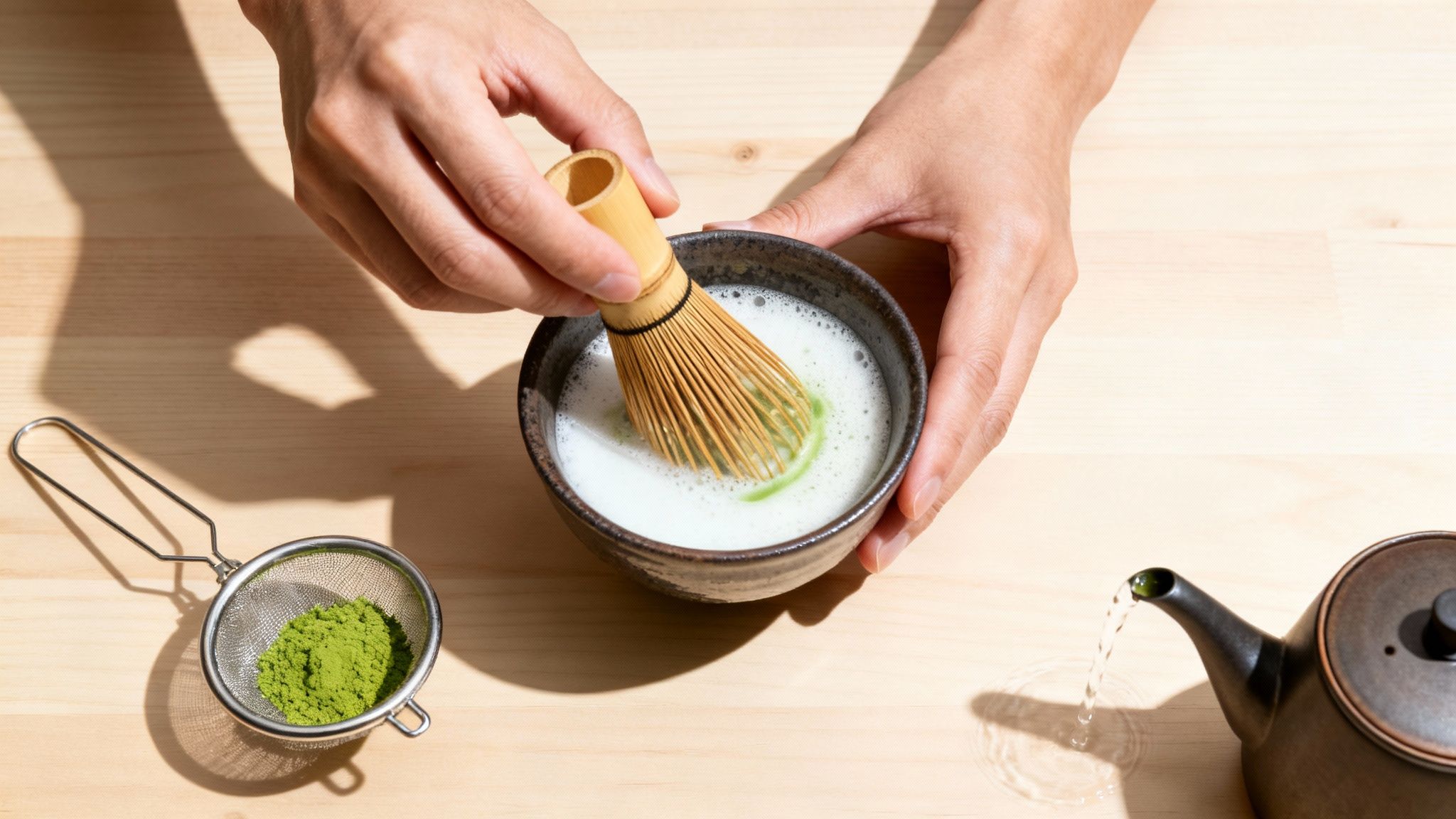
There’s something wonderfully satisfying about preparing a bowl of matcha tea from Japan. It’s more than just mixing a drink; it's a small ritual that grounds you in the moment. The good news is, mastering this mindful process is surprisingly simple once you get the hang of it. It all boils down to the right tools and a little bit of technique.
You don't need a huge amount of kit, but a few traditional pieces really do make all the difference. While you can improvise, understanding the classic tools helps you appreciate the craft behind it.
- Chawan (Tea Bowl): A wide, flat-bottomed bowl is best. It gives you the space you need to whisk properly and build up that signature froth.
- Chasen (Bamboo Whisk): This is your most important tool. Those delicate, flexible tines are designed to suspend the fine matcha powder in water and whip it into a creamy foam.
- Chashaku (Bamboo Scoop): A simple, elegant scoop for measuring out the matcha. If you don't have one, a teaspoon will do the trick.
Preparing a Traditional Bowl of Matcha
Making matcha is a rhythmic, rewarding process. Follow these steps, and you'll soon be creating smooth, frothy, and flavourful bowls that connect you to a tradition centuries in the making.
-
Warm Your Tools: Start by pouring a little hot water into your chawan to warm it up. Pop the chasen in, tines down, for about 30 seconds to soften the bamboo. This makes it more pliable and less prone to snapping. Tip the water out and give the bowl a quick dry.
-
Sift the Matcha: Using your chashaku or a teaspoon, measure 1-2 scoops (around 1.5 to 2 grams) of Ceremonial Grade matcha. Pass it through a small, fine-mesh sieve into the bowl. This is a crucial step for breaking up any clumps and guaranteeing a silky-smooth brew.
-
Add Hot Water: Gently pour in about 60-70ml of hot, but not boiling, water. The sweet spot is around 80°C (175°F). Water that's too hot will scorch the delicate tea, leaving you with a bitter taste.
-
Whisk with Purpose: Now for the fun part. Hold the chawan steady with one hand and the chasen in the other. Start whisking briskly in a zigzag pattern, like you’re writing the letter ‘W’ or ‘M’. The movement should come from your wrist, not your whole arm.
-
Create the Froth: Keep whisking for 15-20 seconds until the tea is completely smooth and a layer of velvety microfoam covers the surface. As a final flourish, slowly draw the whisk up from the centre of the bowl.
A perfect bowl of matcha should have a rich, creamy froth covering the entire surface. It's not just for show—this foam indicates the tea is well-aerated, which softens its flavour and gives it a wonderful, smooth mouthfeel.
Crafting a Modern Matcha Latte
While the traditional ceremony is a beautiful thing, sometimes you just want the creamy comfort of a latte. For this, Culinary Grade matcha is ideal, as its robust flavour won't get lost in the milk.
It's easy to make a cafe-quality latte at home. First, make a concentrated matcha "shot" by following the steps above but with less water—about 30-40ml is plenty for a potent base.
Next, heat and froth around 180-200ml of your milk of choice (dairy and plant-based options both work beautifully). Gently pour the frothed milk over your matcha shot. If you fancy a bit of sweetness, a drizzle of honey or maple syrup works a treat. For more tips and ideas, have a look at our guide to preparing matcha tea at home.
How to Identify Authentic High-Quality Matcha
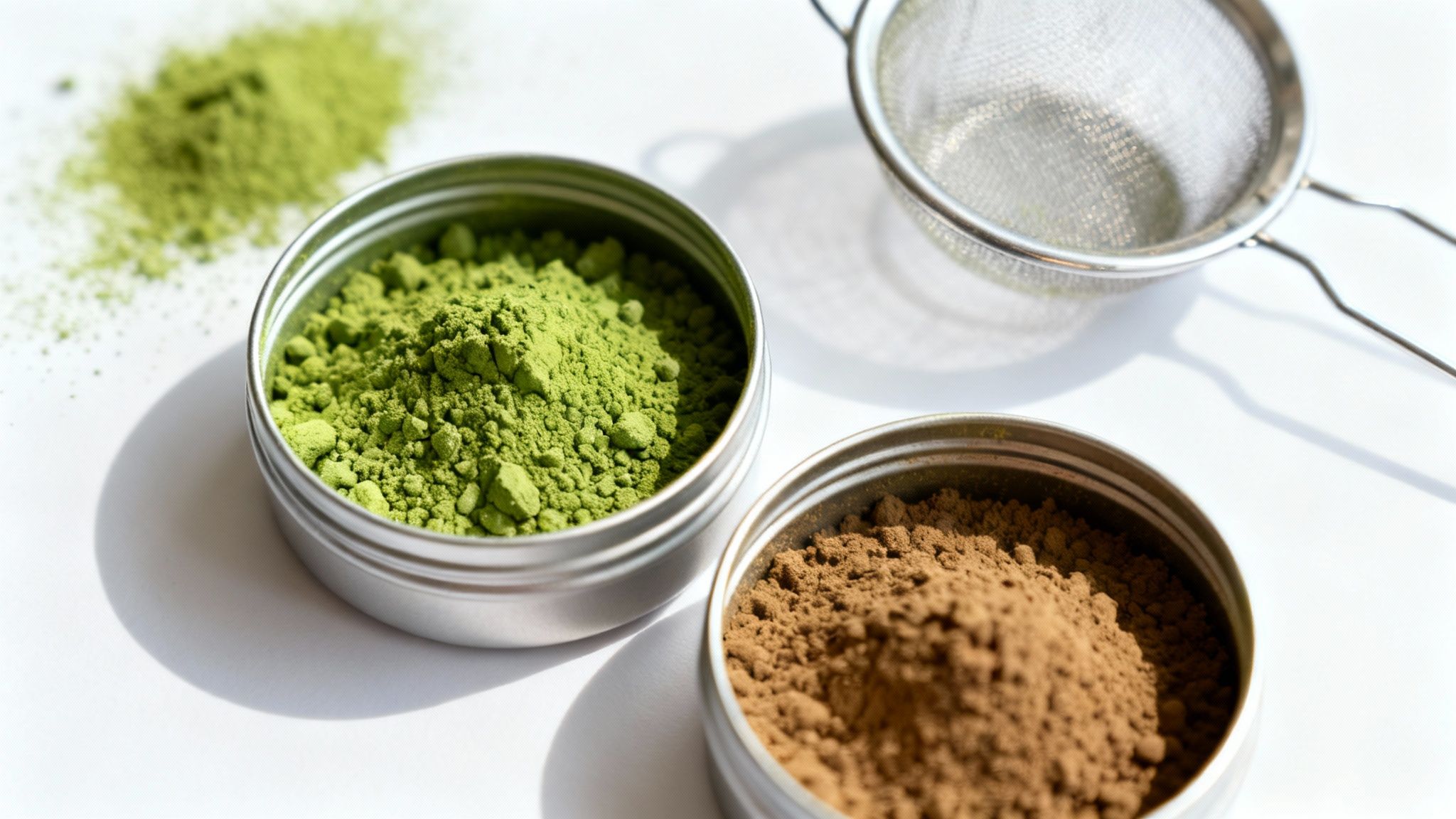
With a sea of green powders lining shop shelves, telling the real deal from a lacklustre imitation can feel a bit daunting. But once you know what you’re looking for, spotting genuine, high-quality matcha tea from Japan is actually quite straightforward.
Your senses are your best guide. Think of it like choosing fresh strawberries – you can instantly tell a ripe, flavourful one from a pale, watery one by its colour, scent, and even how it feels. The same principles apply here, helping you pick a matcha that delivers the rich, authentic experience you're after.
Trust Your Eyes: The Importance of Colour
The first, and most telling, sign of quality is the colour. True ceremonial grade matcha should have a vibrant, almost electric, jade-green hue. This brilliant colour is a direct result of the meticulous shade-growing process, which floods the tea leaves with chlorophyll.
A dull, swampy, or yellowish-brown colour is an immediate red flag. It’s a sign that something’s not right. It could mean the tea was made from older, tougher leaves, it wasn't properly shaded, or it has oxidised from being old or poorly stored.
High-quality matcha’s vivid green colour isn’t just for show; it's a visual promise of the rich flavour and high L-theanine content locked inside. Never settle for a dull-looking tea.
Feel and Smell: The Sensory Clues
Next, get a feel for the texture and take in the aroma. When you rub a small amount of premium matcha between your fingers, it should feel incredibly fine and silky, almost like cornflour. This superfine consistency comes from traditional stone grinding, a slow, careful process that keeps the powder delicate.
A gritty or coarse texture suggests it was ground with industrial machines, which can generate heat and damage the flavour.
Finally, give it a good sniff. It should have a fresh, sweet, and inviting aroma, with distinct vegetal or grassy notes that hint at the rich umami flavour to come. If you detect any bitterness, mustiness, or a hay-like smell, it’s best to steer clear.
Check the Origin and Packaging
Authenticity is tied to its roots. Look for packaging that clearly states the matcha is a "Product of Japan". Even better if it specifies a renowned region like Uji, Nishio, or Fukuoka. While other countries produce green tea powder, the expertise and specific tea plant cultivars used in Japan are what make it so special.
Proper packaging is also non-negotiable. Light and air are the enemies of fresh matcha. A high-quality product will always be sold in an airtight, opaque container, usually a tin. This protects the delicate powder from degrading, preserving its vibrant colour, complex flavour, and potent health benefits until it reaches your bowl.
Your Matcha Questions, Answered
As you get to know the world of authentic matcha tea from Japan, a few questions always pop up. We get it. Getting to grips with the details is the best way to deepen your appreciation and get the most out of every single bowl. Here are a few of the most common queries we hear.
How Does the Caffeine in Matcha Compare to Coffee?
A typical serving of matcha (that’s about one teaspoon) has around 70mg of caffeine, putting it just under an average cup of coffee, which sits closer to 95mg. But that’s where the comparison ends, because the way your body experiences that caffeine is worlds apart. The secret is an amino acid called L-theanine, which is found in abundance in high-quality matcha.
This amazing compound works with the caffeine, slowing its release into your system. What you get is a smooth, sustained feeling of calm alertness that lasts for 3-6 hours—no jitters, no sudden crash. Just pure, clean focus.
If coffee is a firework—a quick, bright burst of energy that fades fast—then matcha is a gently glowing ember, providing steady warmth and energy that lasts for hours.
What's the Best Way to Store Matcha?
Matcha is incredibly delicate. Its biggest enemies are light, air, and heat, so storing it properly is non-negotiable if you want to protect its vibrant colour, fresh flavour, and all those lovely health benefits.
To keep your matcha in perfect condition, just remember these golden rules:
- Keep it Airtight: Your matcha should always be sealed in an airtight, opaque container. The tin it arrives in is designed specifically for this, so it's your best bet.
- Keep it Cool and Dark: A pantry or cupboard is ideal, well away from direct sunlight or heat sources like your oven or hob.
- Consider the Fridge (But Be Careful): If you've got an unopened tin that you won't be using for a while, popping it in the fridge is a great way to preserve it. The crucial step here is to let the tin come back to room temperature before you open it. This stops any condensation from forming inside, which can make your precious powder clump.
Can I Drink Matcha Every Day?
Absolutely. In fact, we encourage it! For most people, enjoying a bowl or two of matcha each day is a brilliant way to support your well-being. That unique partnership of L-theanine and caffeine, combined with a huge concentration of antioxidants, makes it the perfect daily ritual.
Bringing a high-quality matcha into your daily routine is a simple, delicious way to access clean, focused energy and add a powerful boost to a balanced diet.
Ready to start your own mindful matcha ritual? Discover our authentic, Uji-sourced matcha and experience the finest Jeeves & Jericho has to offer at https://www.jeevesandjericho.com.