


At its heart, making matcha is a simple act: whisking sifted matcha powder with hot water until a lovely, frothy layer appears. But the magic is in the details—getting the ratio of powder to water just right and using a quick 'W' or 'M' shaped motion with a bamboo whisk (chasen) to coax out its delicate flavour.
Your Journey Into the World of Matcha
Welcome to the art of making matcha. This is so much more than just stirring green powder into water; it's a mindful ritual that has captivated tea lovers for centuries. We'll walk you through how this vibrant green tea has travelled from ancient Japanese ceremonies right to your kitchen counter, becoming a beloved staple for wellness and calm.
The first step is understanding what separates a truly great matcha from the rest. High-quality, ethically sourced powder, especially from renowned regions like Uji in Japan, offers a complex, savoury umami flavour and a wealth of health benefits. It's worlds away from the chalky, bitter taste of lower-grade alternatives. If you're curious to learn more, you can explore the various types of matcha tea in our detailed guide.
Why Matcha Has Captured Modern Attention
Matcha's rise in popularity is no fleeting trend. For many, it has become a cherished part of daily life, particularly as a mindful alternative to coffee. This shift is especially clear among younger generations here in the UK. In fact, recent data shows that over half of UK residents under 35 enjoyed hot matcha in a single month, cementing its place in the mainstream.
The market itself was valued at a staggering USD 203.88 Million in 2024 and is set to grow even more, proving its staying power.
In this guide, we'll get hands-on with three distinct styles, each offering a unique experience:
- Traditional Usucha: A light, thin tea that's perfect for daily enjoyment.
- Rich Koicha: A thick, intense preparation usually reserved for special occasions.
- The Beloved Matcha Latte: The creamy, comforting café favourite you can easily make at home.
Embracing the matcha ritual is about more than just the final drink. It’s about the process—the focus, the preparation, and the moment of calm it creates in your day. This hands-on approach connects you more deeply with what you consume.
For those truly passionate about their daily brew, finding unique gifts for coffee and tea lovers can make the experience even more special. We’ll give you a rundown of the essential tools and techniques you need to unlock matcha's signature umami taste and avoid any bitterness, setting you up for success from your very first cup.
Gathering Your Authentic Matcha Toolkit
Before you can whisk up that perfect, frothy cup of matcha, you need the right set of tools. Getting started with the proper equipment is the first step into the wider world of this beautiful tea ritual, but it doesn't have to be intimidating or expensive. Once you understand what each piece does, you'll be set up for a brilliant brew.
Matcha's popularity is certainly not just a fleeting trend. In the summer of 2025 alone, UK cafes and tea shops sold over 1.6 million matcha drinks, marking a huge 114.5% jump in growth compared to the previous year—even outpacing espresso. This surge shows just how many of us are embracing the ritual, and if you're curious, you can get the full story on Britain's matcha moment on Squareup.com.
With that kind of enthusiasm, it’s worth starting on the right foot.

The Chawan The Matcha Bowl
First on the list is the Chawan, the traditional matcha bowl. This isn't just any old bowl; its wide, flat bottom and high sides are perfectly shaped to give you plenty of room to whisk. This design allows the whisk’s delicate tines to move freely in that 'W' or 'M' motion, helping you build a rich, creamy foam without splashing it all over the countertop.
When picking out a Chawan, find one that feels right in your hands. The size and weight should feel balanced and comfortable. Even the texture inside the bowl can make a difference—a slightly rougher ceramic can actually help aerate the matcha even better.
The Chasen The Bamboo Whisk
Perhaps the most iconic tool of all is the Chasen, or bamboo whisk. Each one is handcrafted from a single piece of bamboo, with its fine tines—usually between 80 and 120—expertly cut to break up clumps and whip air into the tea. It’s this action that creates that gorgeous, velvety layer of micro-foam on top.
Looking after your Chasen is key. Always give the tines a quick soak in warm water before you start whisking to make them more pliable and prevent them from snapping. Afterwards, just rinse it well with clean water, give it a gentle shake, and let it air dry on a whisk holder (kusenaoshi) to help it keep its shape. To get started, you can find an excellent bamboo chasen matcha whisk right here at Jeeves & Jericho.
Pro Tip: Never use soap to clean your bamboo whisk. The soap can get trapped between the delicate tines and spoil the flavour of your next cup. A simple rinse is all it needs.
The Chashaku and Sieve Precision and Smoothness
Next up are two smaller, but no less essential, tools. The Chashaku is a slim bamboo scoop designed specifically for measuring matcha powder. One generous scoop is about one gram, so it's a wonderfully intuitive way to get your serving size just right.
Finally, the fine-mesh sieve is your secret to a clump-free brew. Matcha powder is incredibly fine and loves to static-cling, which causes lumps. Pushing the powder through a sieve before adding water is a non-negotiable step for a silky-smooth cup. It makes all the difference.
While the traditional tools are designed for the job, you don't need to go all-in straight away. Here’s a look at the essentials and some handy stand-ins you probably already have at home.
Essential Matcha Tools and Practical Alternatives
| Traditional Tool | Purpose | Everyday Alternative |
|---|---|---|
| Chawan (Bowl) | Provides a wide, flat surface for effective whisking and foam creation. | A wide, deep cereal bowl or a small soup bowl can work in a pinch. |
| Chasen (Whisk) | Aerates the matcha to create a smooth, frothy texture. | An electric milk frother is the best alternative for mixing. |
| Chashaku (Scoop) | Measures approximately 1 gram of matcha powder per scoop. | A standard ½ teaspoon measuring spoon. |
| Fine-Mesh Sieve | Removes clumps for a smooth, consistent brew. | A small tea strainer or any fine-mesh kitchen sieve. |
Having the right tools makes the experience more enjoyable and the results far better. For truly consistent flavour, precise measurements of both powder and water are crucial. You can easily integrate a set of stainless steel measuring cups and spoons into your routine as you start your matcha journey.
Mastering Traditional Matcha Preparation
With your authentic toolkit ready, it's time to get to the heart of the matcha ritual. This is where the real magic happens, transforming that vibrant green powder into an exceptional cup of tea. We’ll look at the two classic styles: Usucha, the light, frothy 'thin tea' that’s perfect for every day, and Koicha, the rich, intense 'thick tea' saved for more ceremonial moments.
Getting to know these two methods is the key to appreciating the full spectrum of matcha's character. While both start with the same high-quality Jeeves & Jericho ceremonial grade powder, the techniques and the final results are worlds apart. Let's start with the one you're probably most familiar with, Usucha.
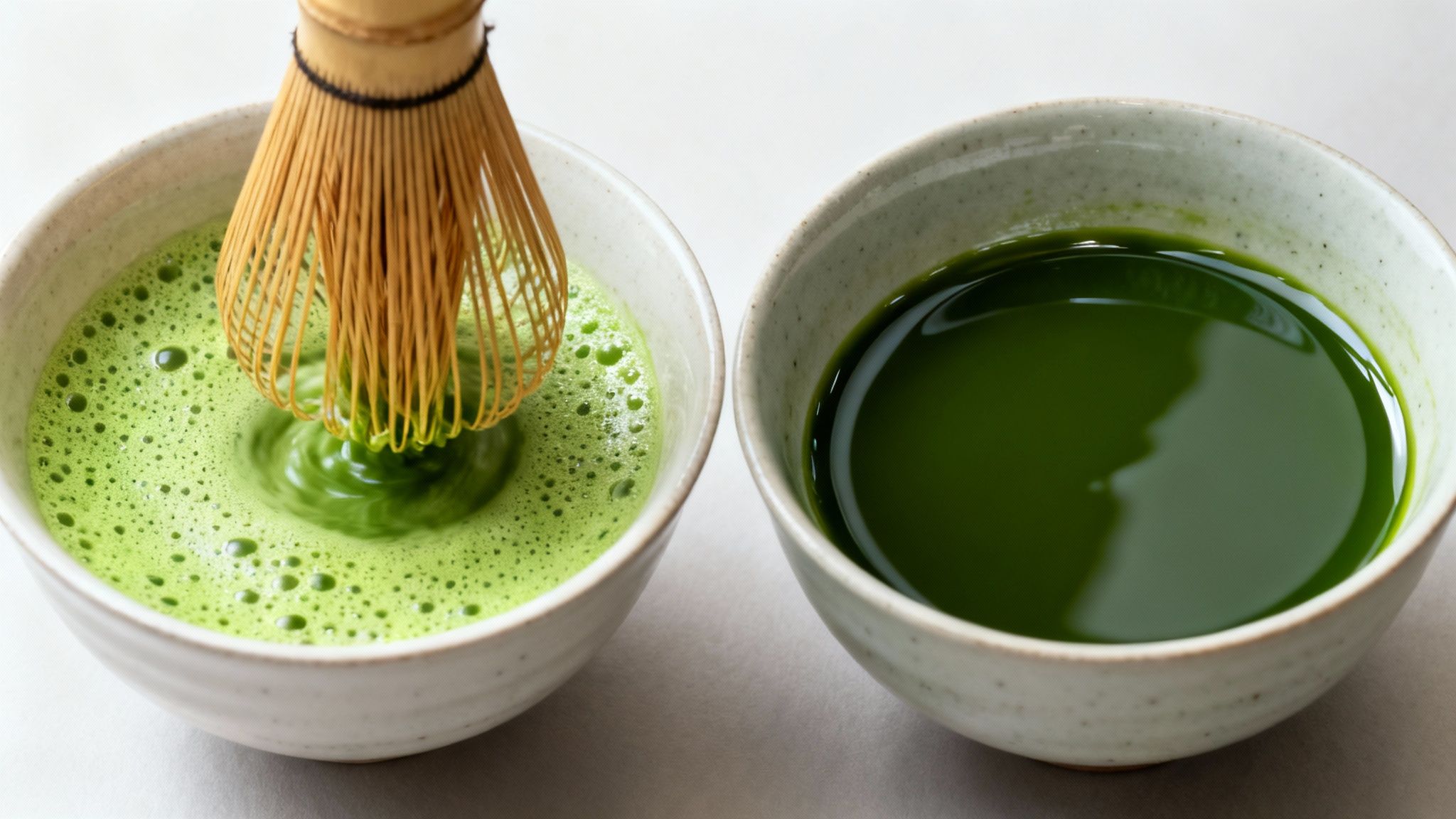
The Art of Whisking Usucha (Thin Tea)
Usucha is likely the matcha you picture in your mind—a bright, lively brew topped with a delicate layer of creamy foam. This preparation is a dance of precision and energy, all aimed at creating a smooth, invigorating cup without a whisper of bitterness. The secret is in the details.
Before you even think about whisking, give your Chawan a little warm-up. Fill it with hot water, let it sit for a moment, then pour it out and dry the bowl thoroughly. This simple step keeps your matcha at the perfect temperature for longer, letting its full flavour profile emerge.
Next up, sifting. I can't stress this enough—it's non-negotiable for a silky-smooth texture. For a perfect Usucha, sift 1-2 grams of matcha into your warmed bowl. This simple action prevents clumps and ensures a perfect brew. It’s this focus on quality that explains why ceremonial grade matcha holds a dominant 57.1% market revenue share in the UK.
Now, add 60-70ml of water heated to 80°C. It’s crucial not to use boiling water; anything hotter will scorch the delicate leaves and ruin the flavour. Whisk vigorously in a 'W' or 'M' shape for about 15-30 seconds until you see a beautiful froth of tiny, uniform bubbles. You can explore more about UK matcha market trends on MarketResearchFuture.com.
The goal of whisking Usucha isn't just about mixing; it's about aeration. You're whipping fine bubbles into the liquid to create a velvety mouthfeel that softens the matcha’s vegetal notes and enhances its natural sweetness.
The motion is everything. Keep your wrist loose and whisk rapidly, making sure the tines of the Chasen are just grazing the bottom of the bowl. As the foam builds, gently lift the whisk towards the surface to break up any larger bubbles. What you're left with is a uniform, jade-green liquid crowned with an exquisite micro-foam.
The Meditative Practice of Kneading Koicha (Thick Tea)
If Usucha is energetic and light, Koicha is its deep, meditative, and profound counterpart. This 'thick tea' is less of a drink and more of an experience, with a consistency like warm honey or melted chocolate. It demands the absolute highest quality ceremonial grade matcha, as its concentrated nature would make any bitterness from lesser grades totally overwhelming.
Preparing Koicha is a different beast altogether. Instead of a vigorous whisk, you'll use a slow, deliberate kneading technique.
The ratios are a world away from Usucha, calling for more powder and less water to get that signature syrupy texture.
- Powder: Use about 4 grams (roughly four Chashaku scoops) of the finest ceremonial grade matcha.
- Water: Add only 30ml of water, also heated to around 80°C.
Sift the larger amount of powder into your warmed bowl, add the hot water, and begin. Instead of whisking, slowly and gently move the Chasen in circular and back-and-forth motions. You're aiming to knead the powder and water together into a smooth, glossy paste. There's no froth in Koicha; just a lustrous, thick liquid with a deep, emerald sheen. It’s a slower, more mindful process that requires your full attention.
The flavour of Koicha is incredibly intense and complex, a pure expression of the tea's deepest umami notes. It’s a powerful experience, which is why it’s often shared among guests in a traditional tea ceremony, with each person taking a single sip from the same bowl.
Usucha vs Koicha A Quick Comparison
To help you decide which style to try first, here’s a quick breakdown of how they differ in preparation, texture, and flavour.
| Attribute | Usucha (Thin Tea) | Koicha (Thick Tea) |
|---|---|---|
| Matcha Ratio | 2 grams (2 scoops) | 4 grams (4 scoops) |
| Water Ratio | 70 ml | 30 ml |
| Texture | Light, frothy, and smooth | Thick, syrupy, and glossy |
| Whisking Technique | Fast 'W' or 'M' motion | Slow, kneading motion |
| Foam | A delicate layer of micro-foam | No foam, just a lustrous sheen |
| Flavour Profile | Bright, refreshing, slightly sweet | Intense, rich, deep umami |
| Occasion | Daily enjoyment, informal | Ceremonial, special occasions |
Mastering these traditional forms connects you to a rich history and allows you to appreciate just how versatile this incredible ingredient is. Start with Usucha to perfect your whisking skills, and when you feel ready for a deeper, more contemplative experience, try your hand at Koicha.
Crafting the Perfect Matcha Latte
After exploring the thoughtful rituals of traditional matcha, let's wander into the warm, comforting world of the modern café. The matcha latte has become a global favourite for a very good reason—its creamy texture and gentle sweetness are the perfect foil for the complex, umami-rich notes of high-quality matcha. And honestly, recreating this gorgeous drink at home is much easier than you might think.
The real secret to a café-quality latte isn't just about throwing powder and milk together. It’s all about creating a smooth, concentrated matcha base first. This "matcha shot," just like an espresso shot in a coffee latte, is what guarantees a vibrant flavour and a completely clump-free texture. Rushing this bit is where most homemade lattes go wrong.
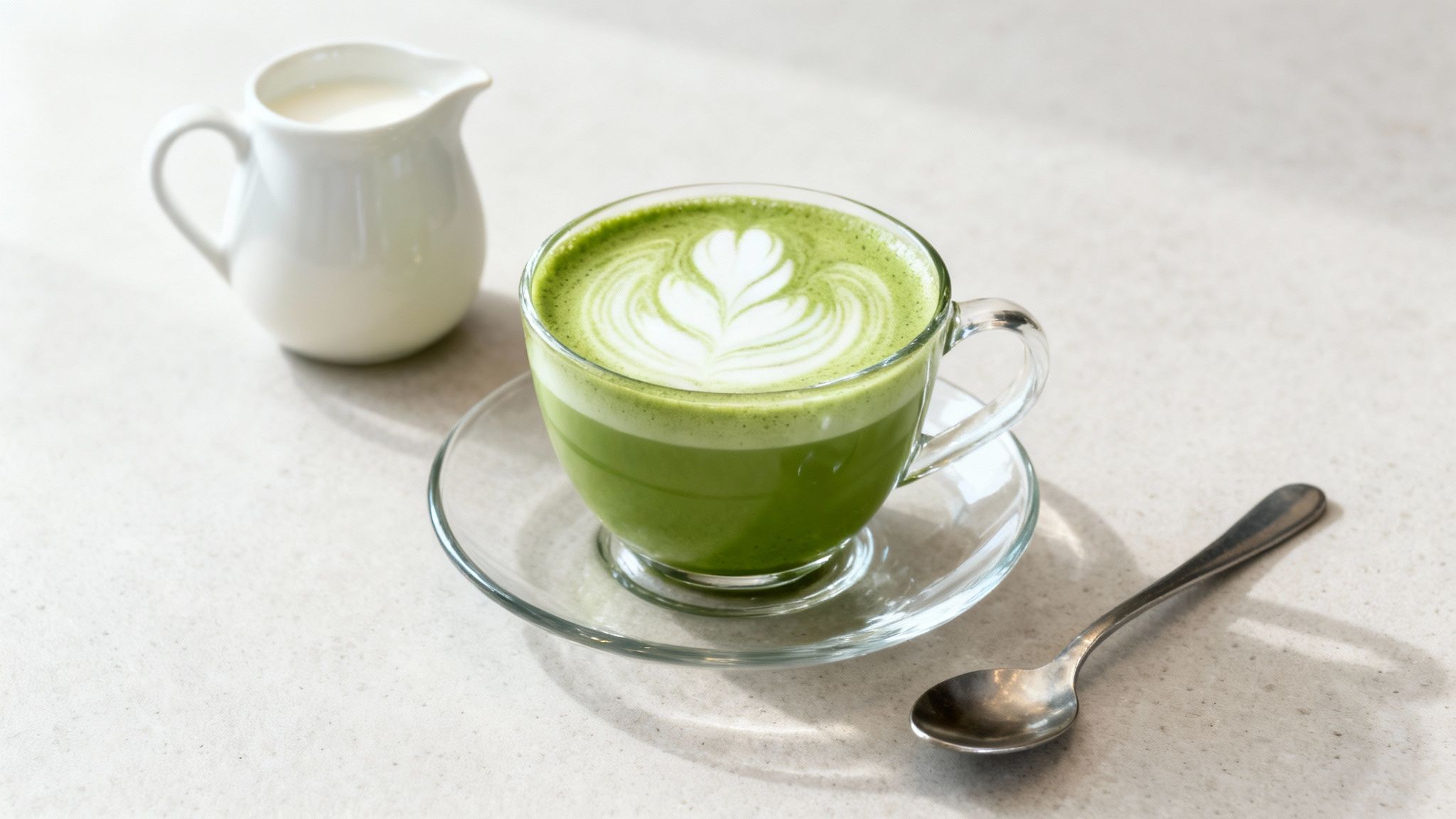
Building Your Flavour Base: The Perfect Matcha Shot
Think of this first step as making a tiny, potent Usucha. The whole point is to create a perfectly smooth, concentrated liquid that will blend seamlessly into your chosen milk. Without this base, you’ll be chasing lumps around your mug forever.
Here’s the ideal ratio for your matcha shot:
- Matcha Powder: 2 grams (about 1 level teaspoon or two Chashaku scoops) of ceremonial grade matcha.
- Hot Water: 30-40ml of water heated to 80°C.
Start by sifting your matcha powder directly into your Chawan or a small bowl. Pour over the small amount of hot water and whisk vigorously in a 'W' or 'M' motion, just as you would for Usucha. Keep going until every last bit of powder is dissolved and you’re left with a thick, glossy, and completely smooth paste. This is your foundation for a flawless latte.
Choosing Your Milk: Dairy and Plant-Based Options
The milk you choose has a huge impact on the final taste and texture of your latte. There’s no single "best" option—it all comes down to what you prefer. Experimenting is part of the fun.
Here are a few popular choices and how they perform:
- Whole Cow's Milk: The classic choice, and for good reason. Its higher fat content creates a rich, creamy foam and its natural sweetness balances matcha's vegetal notes beautifully.
- Oat Milk: A fantastic plant-based alternative. Barista-style oat milks are brilliant for frothing, creating a thick, stable foam that’s perfect for latte art. Its creamy, slightly oaty flavour is a wonderful match for matcha.
- Almond Milk: A lighter, nuttier option. It doesn't typically froth as thickly as oat or dairy milk, resulting in a less dense latte. Its subtle almond flavour can either complement or slightly overpower the matcha, depending on the brand.
- Soya Milk: A solid all-rounder. Soya milk froths quite well and has a fairly neutral flavour profile that lets the matcha shine, though some people find it has a distinct aftertaste.
My personal go-to for a luxurious latte is barista-grade oat milk. It steams into a beautiful micro-foam that holds its shape, and its inherent creaminess makes the drink feel incredibly indulgent without needing any extra sweeteners.
Once you’ve settled on a milk, you'll need about 180-200ml per latte. Gently heat it in a saucepan until it's steaming but not boiling, or use a steam wand or electric frother. You’re aiming for a temperature of around 65-70°C for the perfect warmth and foam.
Assembling Your Masterpiece: Hot and Iced Variations
With your smooth matcha shot ready and your milk perfectly steamed, it's time for the big finale.
For a classic hot latte, simply pour your frothed milk directly over the matcha shot in your favourite mug. If you fancy, you can hold back the thickest foam with a spoon, pour the steamed milk in first, then top it off with a dollop of foam. A touch of honey or maple syrup works well if you have a sweeter tooth.
But why stop there? One of matcha's greatest strengths is its versatility.
For a Refreshing Iced Matcha Latte
- Prepare your matcha shot as usual and let it cool for a moment.
- Fill a tall glass right up with ice cubes.
- Pour 180ml of cold milk of your choice over the ice.
- Gently pour the matcha shot over the milk for that beautiful, layered effect.
- Give it a good stir before you drink to combine all those lovely flavours.
This simple iced version is a perfect pick-me-up on a warm day, offering the same great taste in a cool, refreshing format. Learning how to make matcha tea at home truly opens up a world of creative possibilities.
Troubleshooting Your Matcha
We’ve all been there. You follow the steps, you’ve got the right kit, but the matcha in your bowl is just… wrong. It might be lumpy, unpleasantly bitter, or stubbornly flat without a bubble of foam in sight.
Don’t be discouraged. Think of these moments less as failures and more as your matcha apprenticeship. Learning to spot what went wrong is how you truly master the craft. With a few simple tweaks, you can turn a disappointing brew into a perfect one.
Why Is My Matcha Lumpy?
Nothing ruins the moment quite like a mouthful of gritty, clumpy matcha. If this is happening to you, the culprit is almost always the same: you skipped the sifting.
Matcha powder is incredibly fine, almost like talc, which means it’s prone to static and clumping together. Pushing it through a fine-mesh sieve is non-negotiable. This simple action breaks up any stubborn clusters and aerates the powder, preparing it to dissolve seamlessly into a silky liquid. No amount of frantic whisking can truly rescue an unsifted bowl.
How to Fix Bitter-Tasting Matcha
Does your matcha have a harsh, aggressive bitterness that makes you wince? This is probably the most common hurdle for beginners, and it almost always comes down to one thing: water temperature.
Using water that's too hot is the quickest way to ruin a beautiful bowl of matcha. Water straight from a boiling kettle will literally scorch the delicate tea particles. This destroys all the complex, sweet notes and releases a flood of tannins, which are responsible for that bracing, bitter taste.
Here’s how to get it right:
- Mind the Temperature: Always aim for water between 75-85°C. If you don’t have a variable-temperature kettle, just let your boiled water rest for a few minutes to cool.
- Check Your Ratios: Too much powder for the amount of water can also create an unpleasantly concentrated flavour. Stick to the classic 2 grams per 70ml for Usucha.
- Consider the Source: While your technique is vital, a persistently bitter taste can sometimes point to lower-grade or stale matcha. Always start with fresh, ceremonial-grade matcha from a trusted source like Jeeves & Jericho.
Here's a simple trick I use all the time: pour your boiled water into a separate cup first, then pour it from that cup into your matcha bowl. That one extra pour helps dissipate just enough heat to bring the temperature down to a much friendlier level.
Why Won’t My Matcha Froth?
That iconic, creamy layer of micro-foam is the crowning glory of a well-made Usucha. So, it can feel a bit deflating when all your whisking efforts fall flat. If you're struggling to build that froth, a few things could be at play.
First, let's look at your whisking technique. It needs to be quick and energetic. Think of a rapid ‘W’ or ‘M’ motion, keeping your wrist loose. You're not stirring in circles; you're whipping air into the tea. Make sure the tines of your bamboo chasen are just brushing the bottom of the bowl.
The freshness and quality of your matcha are also huge factors. Older, stale powder has lost its vibrancy and simply won’t froth up as well as a fresh batch. Lastly, double-check you're using enough powder. Too little matcha in too much water gives you a thin, watery liquid that just can't hold a foam.
Sourcing and Storing Your Matcha for Lasting Freshness
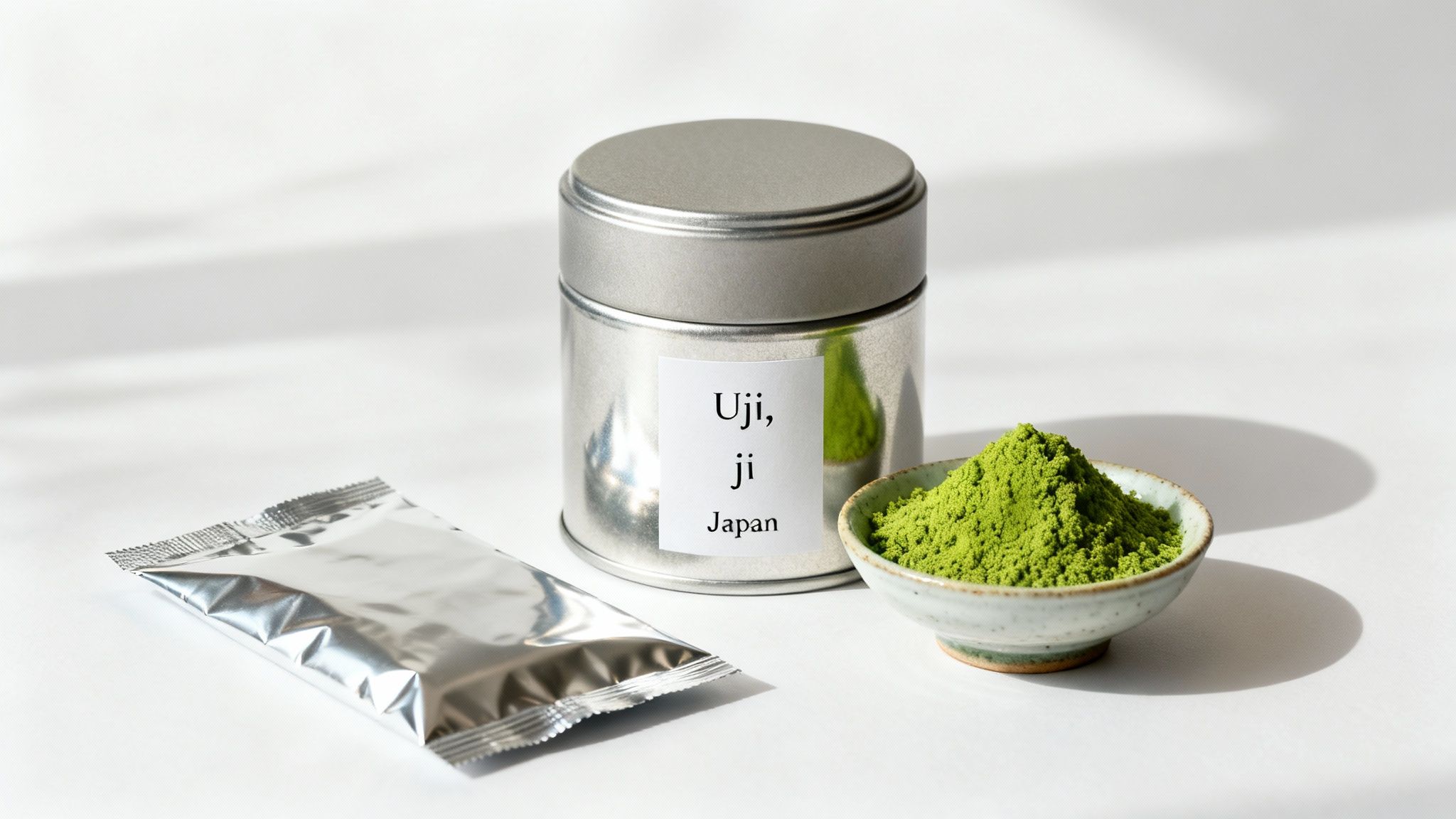
A truly exceptional bowl of matcha begins long before your whisk even gets wet. It all starts with the powder itself—the quality you choose and how you care for it lays the foundation for every sip. When you're looking for the good stuff, always go for ceremonial grade matcha from renowned regions like Uji, Japan, the spiritual home of premium tea.
Freshness is everything. You can tell a lot about matcha just by looking at it. High-quality, fresh powder should have a vibrant, electric-green colour, not a sad, yellowish-brown hue. The texture is another dead giveaway; it should feel incredibly fine and silky, almost like talc. That's the sign of a proper stone-ground tea.
Keeping Your Matcha Vibrant and Flavourful
Once you've got your hands on some beautiful matcha, you need to protect it. It’s incredibly delicate stuff, and its three greatest enemies are light, heat, and air. Exposure to any of these will quickly dull its brilliant colour, sap its complex flavour, and reduce its precious antioxidant content.
So, proper storage isn't just a suggestion—it's non-negotiable if you want to preserve its character. Think of it like a fine spice or artisan coffee beans. A little care goes a long way in making sure every bowl you whisk up is as fresh and lively as the first.
The moment you break the seal on your matcha, the clock starts ticking. For the absolute best flavour and potency, try to use the entire tin within four to six weeks.
To make that happen, just follow these simple but crucial rules:
- Airtight is Everything: Always keep your matcha in a sealed, airtight container. The tin it comes in is usually designed for exactly this purpose.
- Keep it Cool and Dark: Store your container somewhere cool and away from light. The back of a cupboard is fine, but the fridge is even better for preserving that just-opened freshness.
- Watch Out for Moisture: If you do store it in the fridge, let the tin come to room temperature before opening it. This little trick stops condensation from forming inside and creating pesky clumps.
Getting this right is a huge part of learning how to make matcha that genuinely tastes its best. For a deeper dive, have a look at our complete guide to proper storage for tea.
A Few Common Matcha Questions
As you get into the swing of making matcha at home, a few questions are bound to pop up. We get asked these all the time, so we've put together some quick answers to help you along.
What's the Difference Between Ceremonial and Culinary Grade Matcha?
It all comes down to the leaves. Ceremonial grade is made from the youngest, most delicate tea leaves, which gives it that incredible, vibrant green colour and a naturally sweet, smooth flavour. It’s the one you want for drinking straight, just with water.
Culinary grade, on the other hand, uses older, more mature leaves. This gives it a stronger, more robust flavour that can be a bit bitter on its own but is designed to hold its own against milk in a latte or other ingredients when you're baking.
Can I Make Matcha Without a Bamboo Whisk?
The traditional bamboo whisk, or chasen, is definitely the best tool for the job—it’s designed to break up every last clump and whip up a beautiful, frothy layer of foam.
But if you don't have one, you can still make a decent matcha. An electric milk frother is a great alternative and does a pretty good job of mixing everything together smoothly. If you're really in a pinch, you can even just add the matcha and water to a sealed jar and shake it for all you're worth.
Just be aware that these methods won't quite give you that same delicate, velvety foam. The chasen really is purpose-built, and its many tines are what create that signature texture.
How Much Caffeine Is in a Serving of Matcha?
A standard serving of matcha, which is about 1 teaspoon or 2 grams of powder, usually contains somewhere between 35-70mg of caffeine.
That’s a bit less than your average cup of coffee but a touch more than most regular green teas. The real magic, though, is the L-theanine, an amino acid in the tea that works with the caffeine to give you a feeling of ‘calm alertness’—a steady, focused energy without the jitters you can get from coffee.
Ready to start your own matcha ritual? Explore the exceptional quality of Uji-sourced ceremonial grade matcha from Jeeves & Jericho and taste the difference for yourself. Shop our full matcha collection today.