


Making the leap from teabags to loose leaf tea might feel like a big step, but it really boils down to three simple things: getting the amount of leaf right, using water at the correct temperature, and nailing the steep time. That’s it. Master these, and you’ll unlock a world of flavour you just can’t get from a bag.
Your Introduction to the Art of Brewing Loose Leaf Tea
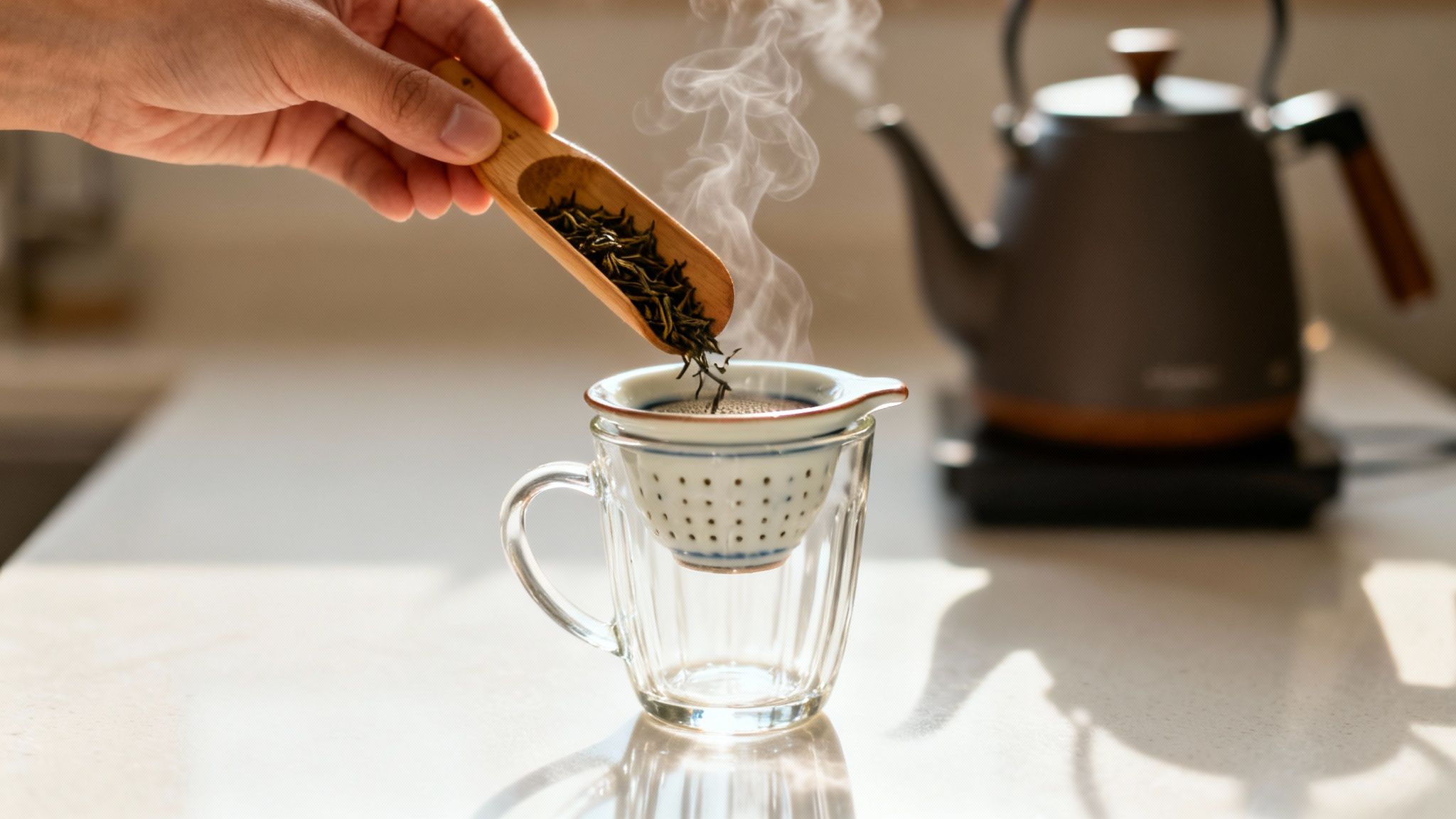
If you want to instantly elevate your daily cup, switching to whole leaves is the single best change you can make. This isn't about fancy rituals or expensive kit. It’s simply about giving beautiful, high-quality leaves the space and conditions they need to release their incredible aromas and flavours.
Unlike the dusty, broken bits you often find in bags, loose leaves properly unfurl as they steep. The result? A cleaner, more complex, and far less bitter taste. This guide will walk you through exactly how to do it, focusing on the practical bits that make all the difference.
The Three Pillars of a Perfect Brew
Think of brewing as a simple recipe. Get these three things right, and you've done 90% of the work, whether you’re making a bold English Breakfast or a delicate white tea.
Here’s a quick overview to get you started.
Quick Guide for Brewing Loose Leaf Tea
| Element | General Guideline | Why It Matters for Flavour |
|---|---|---|
| Leaf-to-Water Ratio | 2-3g of tea per 200ml cup | Controls the strength and body of your tea. Too little feels watery; too much can be overpowering. |
| Water Temperature | Varies by tea type (e.g., 80°C for green, 100°C for black) | This is crucial. Water that's too hot can scorch delicate leaves, creating a bitter, astringent taste. |
| Steep Time | Anywhere from 1-5 minutes | Dictates which flavour compounds are extracted. A shorter steep is often lighter, while a longer one brings out depth. |
We'll dive deeper into each of these, but this table gives you a solid foundation for every cup you make.
The goal isn't just to make a cup of tea; it's to consistently craft a cup that you absolutely love. Understanding these fundamentals gives you the power to tweak and experiment, turning a simple process into a truly rewarding daily practice.
There’s a reason this method has stood the test of time. Here in the UK, our love for a proper brew is as strong as ever, with the tea processing industry projected to hit a market size of £1.0 billion in 2025. This deep-rooted appreciation for quality is exactly why learning these simple skills is so worthwhile. You can explore more about the UK's love for loose leaf tea on market.us.
So, let's forget about the hit-or-miss results from teabags. By getting to grips with these simple but powerful techniques, you take full control over the final taste, brewing with confidence every single time.
Choosing Your Essential Tea Brewing Tools
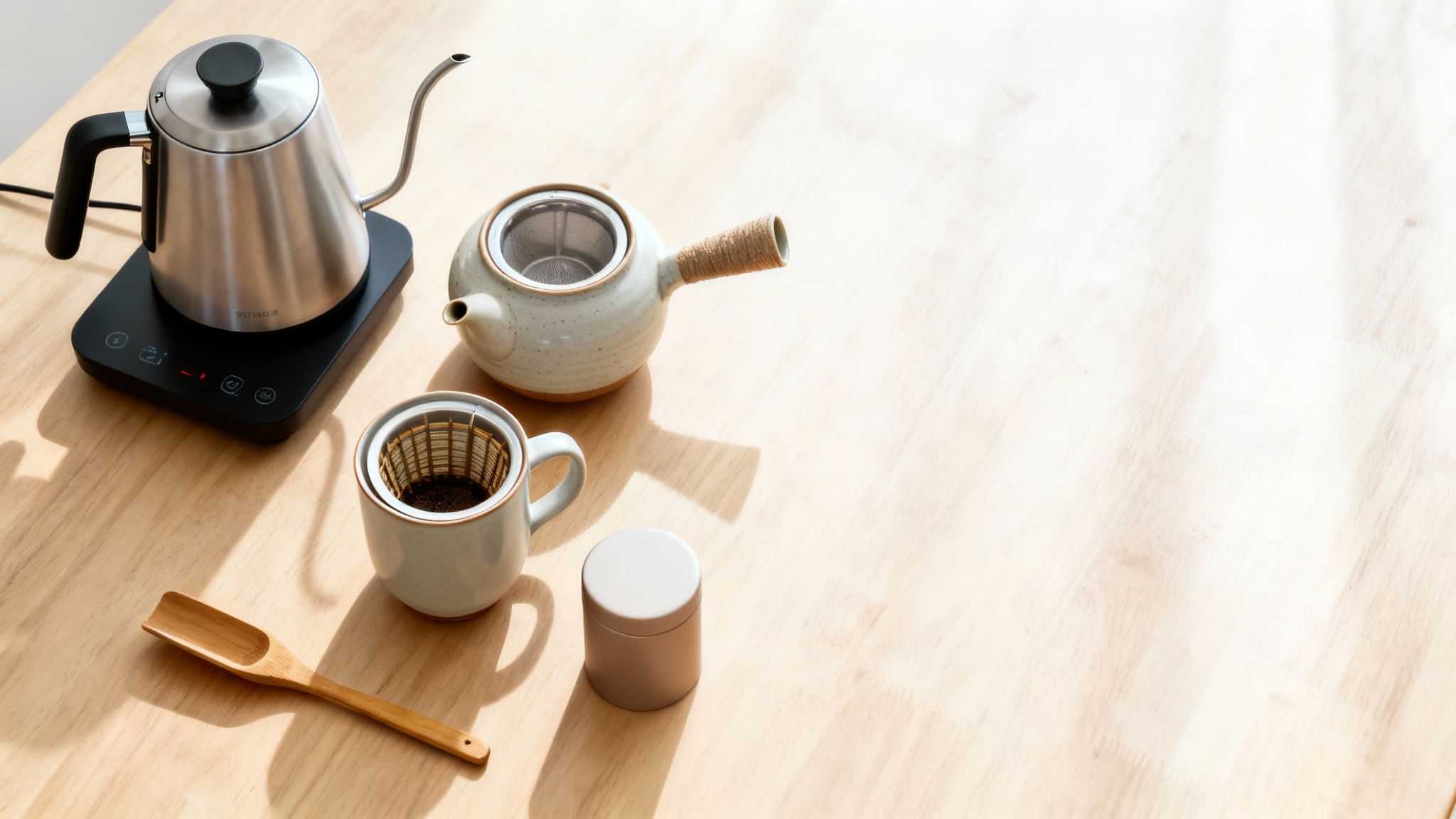
You don’t need to clutter your kitchen cupboards to get started with exceptional loose leaf tea. In fact, just a few thoughtfully chosen pieces of equipment can elevate your daily brew from a quick habit into a genuinely lovely ritual. Think of it as putting together a small, reliable toolkit that just works.
The absolute cornerstone of any tea setup is a good kettle. While any kettle can boil water, a variable temperature kettle is a complete game-changer. It gives you the power to heat water to the exact degree needed for more delicate teas like greens or whites, which means you can say goodbye to bitterness at the press of a button. For those exploring other ways to heat water, looking into the different types of hot water dispensers can offer a wider view of the options out there.
Selecting the Right Infuser
Next up, you'll need something to hold the leaves while they work their magic. This is where an infuser comes in, and the best one for you really boils down to your daily routine. The most important thing is choosing one that gives the leaves plenty of room to expand and release all their wonderful flavour.
- Basket Infusers: These are probably the most versatile option. They sit perfectly inside your mug, are a doddle to fill, and even easier to clean. Their generous size is just the ticket for letting large oolong or white tea leaves properly unfurl.
- Teapots with Built-in Strainers: Perfect for when you're brewing for two (or more!). A classic ceramic or glass teapot not only makes a beautiful brew but also adds a lovely touch of ceremony to the whole process.
- Ball Infusers: We’ve all seen them, but they’re often far too small. They tend to cramp the leaves, which restricts water flow and leads to a much weaker, less interesting cup. We’d always pick a basket infuser over a ball for a proper extraction.
Your goal is to create space. Think of the leaves needing room to dance in the hot water. A cramped infuser is like a crowded dance floor—no one can move, and the full potential is never realised.
For a single cup at your desk, you really can’t beat the convenience of a mug that comes with its own infuser. These all-in-one solutions are brilliantly practical and help you get a perfect brew every single time. If you want to keep things simple, have a look at our guide to the best infuser tea cups. At the end of the day, the best tool is always the one you look forward to using.
Mastering the Core Brewing Process
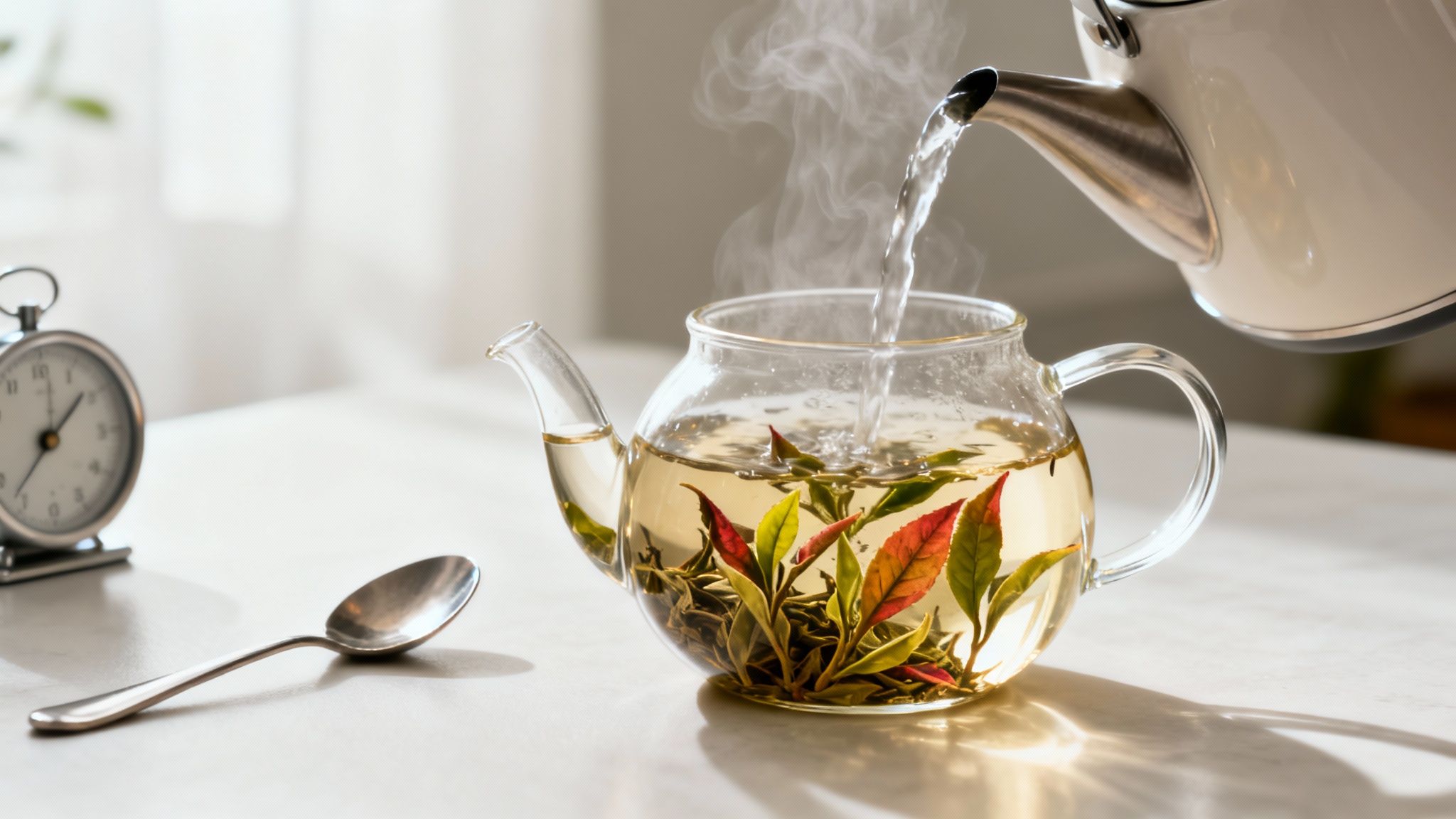
Here's where we get to the heart of it. Understanding the core brewing process is what separates a decent cup of tea from a truly exceptional one. It’s not about following rigid rules, but about getting a feel for the three key elements that shape the flavour in your mug.
We’re going to look at measuring your leaves, getting the water temperature just right, and timing the steep. Think of them as three dials you can tweak to tune your brew to perfection. Once you’ve got the hang of them, the whole process becomes wonderfully instinctive.
How to Measure Your Tea Leaves
First up, how much leaf should you use? A great rule of thumb for most teas is one teaspoon (about 2-3 grams) per cup of water, which is roughly 237ml. This ratio usually gives you a balanced, full-bodied brew that isn’t overpowering.
But of course, not all teas are created equal. A fluffy white tea like a Silver Needle takes up far more space than a tightly rolled oolong. Instead of sticking rigidly to a teaspoon, try to develop an eye for it. After a while, you’ll just know what the right amount looks like for your favourite teas.
If your tea comes out a little weak, it’s always better to add more leaf next time rather than steeping it for longer. This builds flavour without risking the bitterness that can creep in from over-extraction.
The Importance of Water Temperature
If there's one secret to unlocking the best possible taste from your tea, it’s using water at the right temperature. This is especially true for the more delicate leaves. Boiling water is the number one culprit behind a beautiful green tea turning out disappointingly bitter.
So, why does this happen? Water that's too hot essentially scalds the leaves, forcing out tannins too quickly and creating a harsh, astringent taste. Cooler water, on the other hand, coaxes out the sweeter, more complex notes much more gently.
Think of it like cooking. You wouldn’t blast every dish on the highest heat. A gentle simmer is perfect for some ingredients, while others need a rolling boil. Tea leaves are no different.
While a variable temperature kettle makes this a breeze, it’s by no means essential. You can simply boil the kettle, then let it sit for a minute or two to cool before pouring over your green or white tea. That simple pause makes all the difference.
Timing Your Steep Perfectly
The final piece of the puzzle is the steep time – how long you let the leaves infuse. This is where you really control which flavours are pulled from the leaf. A shorter steep often brings out the brighter, aromatic notes, while a longer one builds body and depth.
Ultimately, it’s down to personal taste, but starting with recommended times is a fantastic way to get to know a new tea. Some oolongs are perfect after just a quick 45-second dip, whereas a robust herbal blend might need a good five minutes to really open up.
The preference for proper loose leaf tea is growing, with around 55% of UK consumers now actively seeking out premium single-origin or certified varieties. Nailing this process is your key to enjoying them as they're meant to be. If you’re curious, you can find out more about UK loose leaf tea trends here.
Adapting Your Technique for Different Teas
It’s one of the real joys of brewing loose leaf tea: learning that not all teas are created equal. Just like a chef wouldn't dream of cooking every ingredient the same way, a tea lover gets the very best results by tailoring their technique. This isn't about getting bogged down in complex rules, but making simple adjustments that unlock the unique personality in every cup.
A bold, malty Assam, for instance, practically begs for water straight from the boil. That high temperature is absolutely crucial for coaxing out its deep, rich character. But treat a delicate Japanese Sencha the same way, and you’ll be left with a cup full of unpleasant bitterness. Every tea has its own story. You can explore the wonderful variety in our guide to the different types of tea.
Mastering Green and White Teas
The single most common mistake with green tea? Water that’s far too hot. This is where just a little bit of patience pays off massively. Using water around 80°C is the key to preserving those sweet, grassy flavours and avoiding a harsh, astringent finish.
The UK's love for green tea is clearly growing, with the market valued at $1,150 million in 2024 and expected to double by 2035. To get the best from these leaves, a bit of precision goes a long way. Brewing just 2g per cup with 80°C water for two minutes can preserve up to 50% more of the beneficial catechins compared to simply using boiling water.
Think of it as coaxing the flavour out, not forcing it. A cooler, shorter steep for green and white teas will always reward you with a smoother, sweeter, and more aromatic cup.
And then you have teas with truly unique preparations, like Ceremonial Grade Matcha, where understanding the specific tools and steps is everything. This powdered green tea demands a completely different approach, often involving a bamboo whisk and bowl, which just goes to show how wonderfully diverse the world of tea can be.
Oolongs and Herbal Infusions
Oolong teas are a fascinating world of their own, sitting somewhere on the spectrum between green and black teas. Many are crafted specifically for multiple, short infusions. A tightly rolled oolong might only need a 45-second steep for the first cup, but you'll watch the leaves unfurl and release evolving flavours over several more brews. It makes them both incredibly rewarding and great value.
Herbal infusions, on the other hand, are generally much more forgiving. Since they don't contain any Camellia sinensis leaves, there's no risk of that tannin-related bitterness.
- Robustness: Most herbal blends, like a classic peppermint or chamomile, can happily handle boiling water.
- Steep Time: They often benefit from a longer infusion, typically 5-7 minutes, to fully draw out their aromatic oils and character.
By making these small tweaks, you honour the unique nature of each leaf and ensure every brew is as delicious as it can possibly be.
How to Fix Common Brewing Mistakes
We’ve all been there. You follow your usual routine, but the tea in your cup just tastes… off. Don't worry, it happens to even the most experienced brewers. The good news is that most brewing problems are incredibly simple to diagnose and fix.
If your tea is unpleasantly bitter or astringent, it’s almost always down to one of two culprits: the water was too hot, or you left it to steep for too long. This is a particularly common pitfall with delicate green and white teas, which can be easily ‘scorched’ by boiling water. This over-extraction pulls out too many tannins, creating that harsh, mouth-puckering sensation.
Luckily, the solution is straightforward. Next time you brew, either turn down the temperature or shorten the steep time. No need to do both at once. First, try cutting the infusion time by 30 seconds. If that doesn't sort it, then focus on your water, letting it cool for an extra minute or so after boiling before you pour.
When Your Tea Tastes Weak
On the other side of the coin is a brew that’s disappointingly weak, watery, or just plain flat. It lacks the body and character you were hoping for, and the flavour profile falls short.
This usually points to an incorrect leaf-to-water ratio – in other words, you probably haven't used enough tea for the amount of water in your mug or pot.
It’s tempting to just steep a weak tea for longer, but that’s a common mistake. It often just makes the brew bitter without adding any real depth. The better approach is to simply use more tea leaves next time.
Start by adding an extra half-teaspoon. This small change can build a much richer, more robust flavour profile without introducing those unwanted bitter notes that come from stewing the leaves.
Another factor that can dull a tea’s flavour is your water. Hard tap water, often high in minerals and chlorine, can react with the delicate compounds in the leaves and flatten the taste.
- Try filtered water: A simple water filter can make a world of difference, stripping out impurities and allowing the tea’s true personality to come through.
- Use fresh water every time: Water that has been boiled and re-boiled loses dissolved oxygen, which can lead to a less vibrant-tasting cup.
By figuring out whether your tea is bitter or weak, you can confidently adjust one thing at a time. It’s this methodical, thoughtful approach that will help you fine-tune your technique and consistently get that perfect cup.
Storing and Reusing Your Loose Leaf Tea
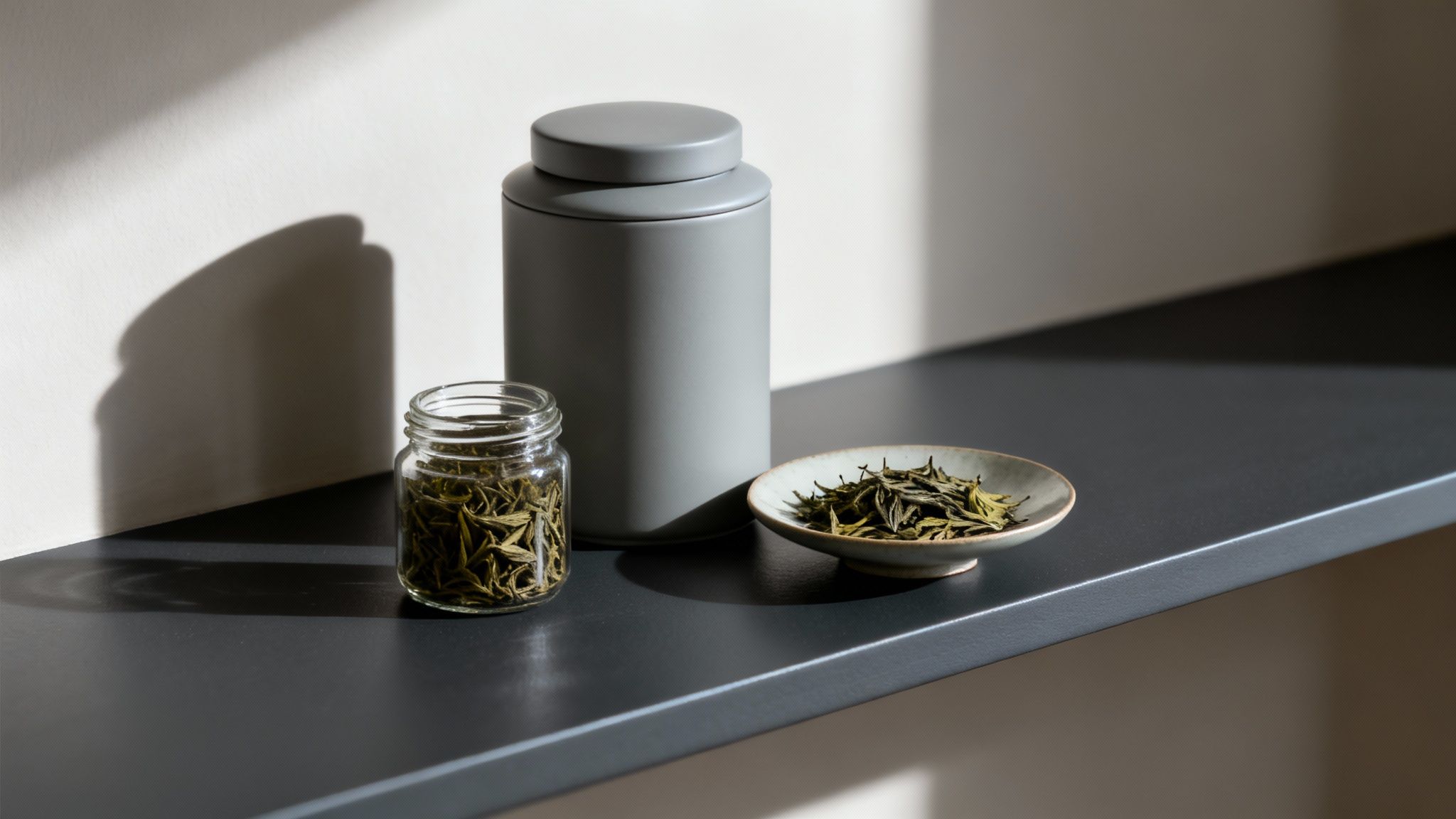
When you’ve found a tea you love, the last thing you want is for those beautiful leaves to go stale. Keeping your tea fresh is surprisingly simple, but it’s the secret to making sure every cup is just as aromatic and flavourful as the first.
Think of your tea leaves as having four enemies: air, light, moisture, and strong smells. If any of these get to your tea, they’ll start to break down the delicate essential oils that give it that unique character. It's why the pretty pouch it arrived in might not be the best place for it long-term.
The Best Way to Store Your Tea
Your best defence is an airtight, opaque canister. It’s a simple piece of kit, but it expertly shields your leaves from air and light. Just pop it in a cool, dark kitchen cupboard—away from the oven or your spice rack—and you're sorted.
If you want to go a bit deeper, we’ve got a whole guide on how to store loose leaf tea with plenty more tips.
Proper storage isn’t just about freshness; it’s about respect for the craft and journey the leaves have taken to reach your cup. A simple canister protects that journey and your investment.
The Joy of Multiple Infusions
Here’s where brewing with loose leaves gets really interesting: the second (and third, and fourth) cup. Many high-quality teas are meant to be re-steeped, and you'll often find their character changes and evolves with each brew. It’s a fantastic way to experience the full spectrum of a tea's flavour.
- Excellent Candidates: Oolong, green, and pu-erh teas are famous for this. They often reveal new, more nuanced notes on the second or third infusion that you might have missed the first time around.
- A Simple Adjustment: When you go for a second steep, just add an extra 30-60 seconds to your original brewing time. This little bit of extra time helps draw out the deeper flavours as the leaves unfurl further.
Not only is this a wonderful tasting experience, but it also makes your tea incredibly good value. And when you’re finally done, don’t just bin the leaves! They’re a brilliant addition to your garden compost, enriching the soil and bringing your tea ritual full circle.
Your Tea Brewing Questions, Answered
Even when you think you've got it down, there are always little questions that pop up on the path to a perfect brew. Here are a few of the most common queries we get, along with some practical advice to help you brew with more confidence.
Can I Reuse My Loose Tea Leaves?
Yes, you absolutely can! In fact, most high-quality loose leaf teas are made to be infused more than once. Oolongs, greens, and white teas are especially good for this, often revealing new, subtle layers of flavour in the second or third cup. It’s a brilliant way to get the most out of your leaves.
While you can sometimes re-steep black teas, they tend to lose their punch a bit more quickly. The best advice is simply to try it and see. If the second infusion still tastes wonderful to you, then you've got a winner.
Do I Really Need a Special Kettle?
A variable temperature kettle is a fantastic tool to have in your kit, but it’s by no means essential. You can get by just fine with a standard kettle and a little bit of patience, especially for those delicate green teas that need cooler water.
To hit that sweet spot of 80-85°C without a fancy kettle, simply bring the water to a boil, then let it stand with the lid off for two or three minutes. That little pause is all it takes to cool it down to the perfect temperature, saving your tea from any bitterness.
How Much Loose Leaf Tea Should I Be Using?
A good rule of thumb to start with is one teaspoon (about 2-3 grams) of tea for every 237ml (or 8 ounces) of water. But remember, this is just a starting point. Teas vary hugely in density—fluffy white teas take up much more space than tightly rolled oolongs, for instance.
It’s always better to adjust based on your own taste rather than sticking rigidly to a recipe. If you’d like a stronger brew, try adding a little more leaf next time instead of just steeping it for longer. That's the most common mistake and the quickest route to a bitter cup.
Why Does My Tea Taste So Bitter?
Bitterness is almost always down to one of two culprits: your water is too hot, or you've let the leaves steep for too long. This is a particularly common problem with green and white teas, as their leaves are much more delicate.
The fix is simple: try lowering your water temperature or shortening your steep time. For a green tea, make sure your water is well off the boil (around 80°C) and perhaps start with a steep of just one to two minutes. You'll be surprised at the difference it makes.
Ready to put your new skills to the test? Explore our curated collection at Jeeves & Jericho and find your next favourite brew. Pay us a visit at https://www.jeevesandjericho.com.