


Welcome to the wonderfully complex world of tea. Let's start with a simple, yet surprising, fact: every single ‘true tea’ you’ve ever tasted—whether black, green, white, oolong, or pu-erh—comes from the very same plant, Camellia sinensis.
Your Journey Into the World of Tea Begins Here

If they all start from one plant, what’s behind the incredible spectrum of flavours, from a delicate white tea to a robust black tea? The answer is all in the craft—specifically, how the leaves are handled after they’re picked. The key process is a natural chemical reaction called oxidation.
Think of what happens when you slice an apple and leave it on the side; that browning is oxidation. The same thing happens to tea leaves, transforming their colour, aroma, and chemical makeup. It's the tea maker's skill in controlling this process that gives each tea its unique character. This is the one concept you need to grasp to unlock the entire world of tea.
True Teas Versus Herbal Infusions
Before we dive into the different categories, we need to draw a line in the sand. This guide is all about the six ‘true teas’ from the Camellia sinensis plant, but it’s crucial to know how they differ from another popular brew.
- True Teas: These are the classics—black, green, oolong, and their siblings. They all contain naturally occurring caffeine and are defined by their level of oxidation. At Jeeves & Jericho, our passion lies in exploring the nuances of these teas through our ethically sourced, whole-leaf collections.
- Herbal Infusions (Tisanes): This is everything else. Think peppermint, chamomile, or rooibos. They're made from all sorts of botanicals, flowers, and fruits, but not the tea plant. Because of this, they’re naturally caffeine-free and offer an entirely different range of flavours.
Understanding the difference between a true tea and an herbal infusion is the first real step to becoming a more discerning tea drinker. One family comes from a single plant; the other draws from the entire botanical kingdom.
To help you get your bearings, here's a quick snapshot of the true teas we'll be exploring.
A Quick Guide to the Main Tea Types
This table gives you a high-level overview of the true teas, their oxidation levels, and general flavour profiles to orient you for the sections ahead.
| Tea Type | Oxidation Level | General Flavour Profile | Example |
|---|---|---|---|
| White Tea | 0-5% (Minimally processed) | Delicate, sweet, floral, light | Silver Needle |
| Green Tea | 0-5% (Heated to prevent oxidation) | Grassy, vegetal, nutty, marine, sometimes bittersweet | Sencha |
| Yellow Tea | 5-10% (Slightly oxidised and smothered) | Mellow, smooth, sweet, with a distinct roasted rice note | A rare and specialised category |
| Oolong Tea | 10-80% (Partially oxidised) | A huge range, from floral and creamy to roasty and dark | Tie Guan Yin |
| Black Tea | 80-100% (Fully oxidised) | Malty, robust, fruity, brisk, sometimes sweet or smoky | Assam Breakfast |
| Pu-erh Tea | Post-fermented (Aged and microbial action) | Earthy, rich, woody, smooth, complex | A unique category defined by ageing |
This is just the beginning, of course. True appreciation comes from tasting and exploring.
As we journey through each type, we'll connect these ideas back to real, tangible examples. You’ll learn not just what makes a green tea different from a black tea, but also what makes a high-quality cup so special. To truly elevate your experience, even the vessel matters, making understanding different tea cups a worthwhile part of your exploration.
Ultimately, appreciating tea is about recognising the immense craftsmanship that turns a simple leaf into such a complex and satisfying drink. For a deeper look into what sets premium leaves apart, explore the benefits of brewing loose leaf tea.
Understanding the True Teas from Camellia Sinensis
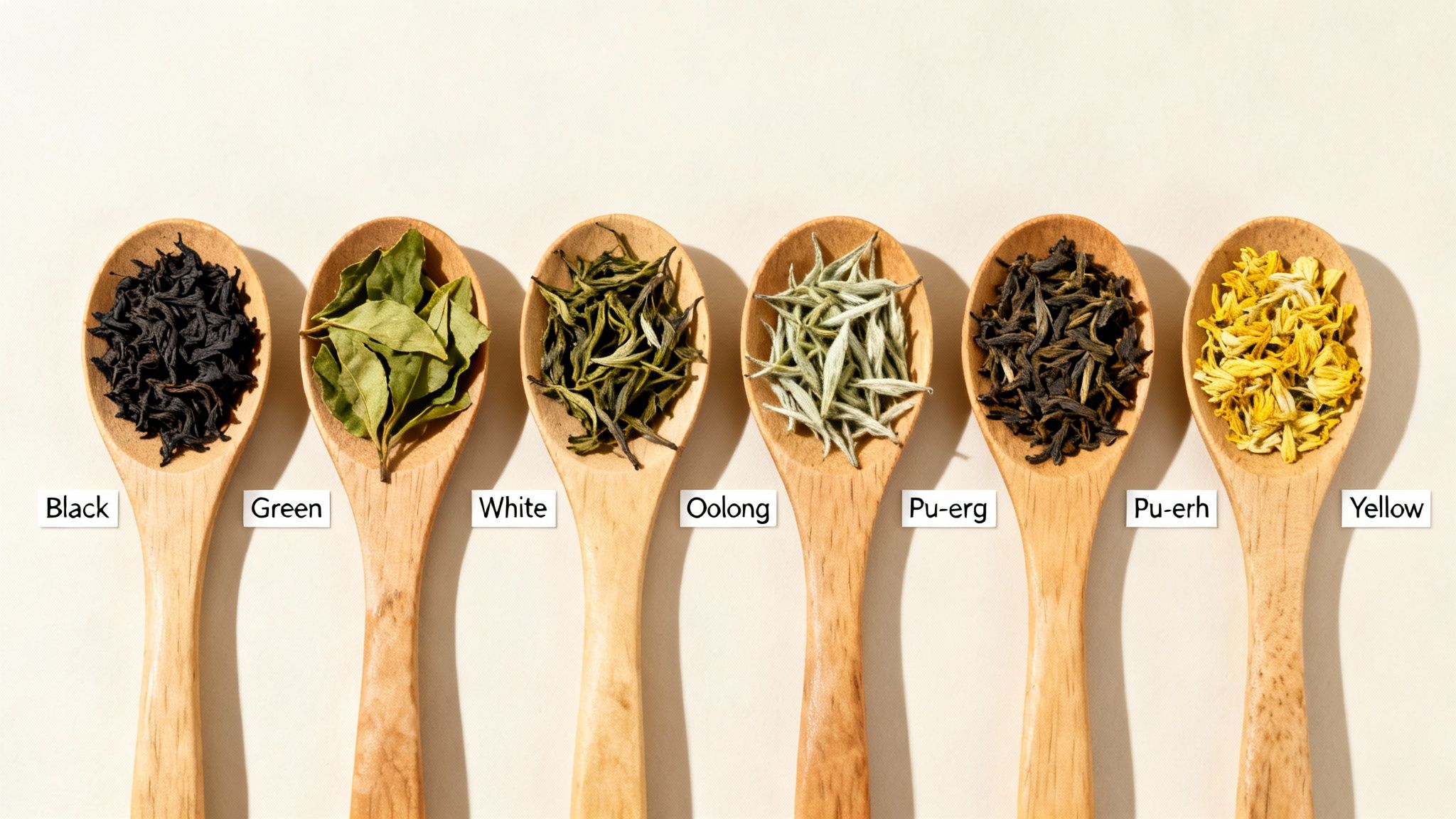
Right, let’s get to the heart of it. All ‘true’ teas—from the darkest black to the palest white—start their journey from a single remarkable plant: Camellia sinensis. It’s a common mix-up to think each tea has its own special bush. The truth is much more interesting. The incredible variety we see in our cups comes down to human hands and generations of skill.
Think of it like this: the tea plant provides the canvas, and the tea master is the artist who decides what kind of masterpiece to create. The journey from freshly plucked leaf to the finished tea in your caddy is where all the magic happens. It’s not so different from the world of coffee, where connoisseurs can tell their Arabica vs Robusta coffee beans. For us tea lovers, understanding the processing is what unlocks a whole new world of flavour.
White Tea: The Purest Expression
White tea is all about minimalism. It's the least processed of all the true teas, handled with incredible care to preserve its natural, delicate character. The tea maker typically uses only the youngest, unopened buds of the tea plant, which are often covered in fine, silvery-white hairs—that’s where it gets its name.
The process itself is beautifully simple: the buds are withered and then gently dried. There’s no rolling, no shaping, and crucially, no intentional oxidation. This gentle touch keeps the flavour profile incredibly light, sweet, and nuanced.
- Flavour Profile: Expect delicate whispers of honey, apricot, and soft florals. It’s unbelievably smooth and gentle on the palate, with a clean, refreshing finish.
- Caffeine Level: Generally the lowest of the true teas, at around 15-30 mg per cup. It’s perfect when you want just a gentle little lift.
- Brewing Tip: Keep your water temperature well below boiling, around 75-80°C. Steeping for just 1-3 minutes will draw out its subtle character without any risk of scorching the precious leaves.
Our Silver Needle is the perfect embodiment of this style. It’s made entirely of those prized, unopened buds, delivering a taste that is sublime and utterly pure.
Green Tea: Vibrant and Unoxidised
Green tea is beloved for its fresh, verdant, and sometimes grassy character. The secret to keeping it so vibrant lies in one crucial step: applying heat almost immediately after the leaves are picked. This process, often called ‘fixing’ or ‘kill-green,’ stops oxidation in its tracks, locking in the leaves’ natural green colour and all those lively flavour compounds.
How that heat is applied really defines the final taste. In Japan, the leaves are typically steamed, which creates a more savoury, almost marine-like flavour. Head over to China, and you'll find they are often pan-fired in large woks, resulting in a toastier, nuttier brew.
- Flavour Profile: It’s a wide spectrum! Think fresh-cut grass and toasted nuts from Chinese styles, or rich umami and oceanic notes from Japanese ones.
- Caffeine Level: A moderate pick-me-up, usually falling between 25-45 mg per cup.
- Brewing Tip: This is where many people go wrong. Boiling water will scald green tea leaves, making your brew bitter and harsh. Stick to a lower temperature of 70-85°C and keep the steep time short, just 1-2 minutes.
The Jeeves & Jericho collection, featuring our classic Japanese Sencha, showcases this wonderful diversity perfectly. If you're curious about how it stacks up against the nation's favourite, you can explore the key differences between green tea vs black tea in our comprehensive guide.
Yellow Tea: The Rare and Mellow Sibling
Yellow tea is a bit of an enigma. It's one of the rarest teas in the world and was historically produced just for the Chinese emperors. The process starts out a lot like green tea, but with an extra, very special step called men huan, or "sealing yellow."
After an initial pan-firing, the warm, damp leaves are carefully wrapped in cloth or paper. This gentle smothering causes a very slight, non-enzymatic oxidation that mellows out any sharp, grassy notes and coaxes out a remarkable sweetness.
Yellow tea is a masterclass in subtlety. Its unique 'men huan' step transforms the leaf, removing the sharpness of a typical green tea and replacing it with a remarkable smoothness and a sweet, lingering finish.
- Flavour Profile: Incredibly smooth and mellow with notes of sweet corn and toasted rice, rounded out by a hint of floral sweetness. It has none of the astringency you might sometimes find in green teas.
- Caffeine Level: Similar to green tea, around 25-45 mg per cup.
- Brewing Tip: Treat it as gently as you would a green tea. Use water at 75-80°C and steep for 1-3 minutes to coax out its soft, sweet soul.
Oolong Tea: The Art of Partial Oxidation
Oolong tea is where tea masters really get to show off their artistry. It sits in the fascinating space between green and black teas, representing a huge spectrum of partial oxidation—anywhere from 10% to 80%.
The leaves undergo a complex process of being repeatedly rolled or twisted and then left to oxidise in carefully controlled conditions. This intricate dance can take hours and is responsible for creating an astonishing range of flavours and aromas.
Exploring the Oolong Spectrum:
-
Lightly Oxidised Oolongs (10-30%): Closer to green teas, these are often rolled into tight little balls. When brewed, they unfurl to release bright, floral, and creamy notes of orchid, lilac, and even tropical fruits. Our Tie Guan Yin Superior is a stunning example of this style.
-
Heavily Oxidised Oolongs (50-80%): Leaning more towards black tea, these leaves are typically twisted into dark strips and may be roasted. They deliver deeper flavours of honey, dark fruit, roasted nuts, and warm wood.
-
Caffeine Level: This varies quite a bit depending on the style, but you can generally expect 30-50 mg per cup.
-
Brewing Tip: Oolongs are fantastic because they can be steeped over and over again. Use water between 85-95°C. Start with a short steep of 1-3 minutes, and simply add a little more time for each new infusion.
Black Tea: Bold and Fully Oxidised
Black tea is, without a doubt, the most popular tea here in the West. We love it for its deep, rich colour and wonderfully robust flavour. The secret to that character is full oxidation. This process completely changes the chemistry of the leaf, creating the complex, malty notes it’s so famous for.
After withering, the leaves are rolled to break their cell walls, which kicks off the oxidation process. They’re then left to rest in a humid, temperature-controlled room until they turn a deep reddish-brown, before finally being dried to lock in the flavour.
In the UK, black tea is still king. A 2025 census by the UK Tea & Infusions Association found a whopping 71% of British adults still pick a traditional black tea as their go-to brew. It seems old habits die hard, with 86% of those over 65 sticking with black tea, while a more adventurous 63% of 18-24-year-olds are trying other things. Convenience also plays a huge role; with 93% of us preferring tea bags, it’s no surprise that hearty blends like our Assam Breakfast continue to be a staple in kitchen cupboards across the country. You can dive into the full research on British tea consumption habits on World Tea News.
- Flavour Profile: Malty, fruity, smoky, and brisk. The notes can be anything from honey and chocolate to stone fruit and warm spice.
- Caffeine Level: The highest of the bunch, typically ranging from 40-70 mg per cup.
- Brewing Tip: Use water that’s just off the boil, around 95-100°C. Let it steep for 3-5 minutes to draw out its full, satisfying depth.
Pu-erh Tea: The Beauty of Ageing
Pu-erh (or Pu'er) is in a league of its own. Hailing from Yunnan province in China, it’s the only tea defined by post-fermentation. This means it’s aged, allowing microbial activity to transform its flavour over months, years, or even decades—much like a fine wine or a good cheese.
There are two main styles of Pu-erh to know:
- Sheng (Raw) Pu-erh: The leaves are minimally processed and then pressed into cakes or other shapes. This is the traditional style, designed to age naturally over many years, slowly developing complexity and smoothness. When it’s young, Sheng can be quite bold and even a little astringent.
- Shou (Ripe) Pu-erh: This is a more modern approach that cleverly speeds up the ageing process. The leaves are piled, dampened, and covered, which encourages a rapid microbial fermentation over several months. The result is a dark, rich, and earthy tea that’s smooth and ready to drink right away.
- Flavour Profile: Think deep, earthy, and woody. You’ll find notes of damp forest floor, mushrooms, dark chocolate, and even camphor.
- Caffeine Level: Broadly similar to black tea (30-70 mg), though this can change depending on how it was processed and for how long it has been aged.
- Brewing Tip: It’s a good idea to give Pu-erh a quick ‘rinse’ before you brew it properly. Just pour hot water over the leaves for a few seconds and then discard the liquid. After that, use boiling water (100°C) and start with very short infusions of just 10-20 seconds, adding more time with each subsequent steep.
Exploring Herbal Infusions and Tisanes
Let's clear up one of the most common mix-ups in the tea world. You’ve probably seen ‘herbal tea’ on countless menus, but here’s the thing: those colourful, aromatic brews aren’t technically teas at all. As we now know, true tea can only come from one plant: Camellia sinensis.
So, what are we drinking when we order a peppermint or chamomile? The proper name is tisane (pronounced ti-zahn). A tisane is simply an infusion of anything other than the tea plant. This distinction blows the doors wide open to a whole universe of flavour, drawing from every corner of the botanical kingdom.
Instead of tea leaves, tisanes are made by steeping all sorts of ingredients in hot water—fragrant flowers, zesty fruits, medicinal herbs, warming spices. You name it. It's a category defined by what it isn't, which gives it almost limitless possibilities.
A World of Caffeine-Free Flavour
The biggest draw for many is that tisanes are almost always naturally caffeine-free. This makes them the perfect choice for anyone looking to cut back on caffeine, or for a soothing cup in the evening that won't keep you up at night.
Their sheer versatility is another huge plus. While a true tea offers a spectrum of flavours based on how it's processed, a tisane’s profile is limited only by imagination. You can have a brew that’s bright and citrusy, one that’s calming and floral, or another that's spicy and invigorating.
Here’s a good way to think about it: Camellia sinensis gives us the ‘tea’ family, a single tree with many branches. Tisanes, on the other hand, represent the entire botanical garden, offering an endless variety of distinct plants to explore and enjoy.
At Jeeves & Jericho, our obsession with quality doesn't stop at the tea plant. We source our herbal and fruit infusions with the same dedication, looking for vibrant, whole ingredients that deliver a full-bodied and authentic flavour experience in every single cup.
Common Types of Herbal Tisanes
While the list is practically endless, a few botanicals have become beloved staples in the world of tisanes. Each brings its own unique character to the cup.
Here are a few of the most popular categories:
- Floral Infusions: Made from whole or partial flowers, these are known for their delicate, often calming aromas. Think chamomile, renowned for its gentle, apple-like sweetness and relaxing properties.
- Mint Infusions: Refreshing and invigorating. Peppermint delivers a bold, cooling menthol punch, while spearmint is a little sweeter and softer. Both are fantastic digestive aids.
- Fruity Infusions: A blend of dried fruits, herbs, and flowers that creates a vibrant, often tangy brew. These are blends built around ingredients like hibiscus, rosehip, and pieces of dried berries or citrus peel.
- Rooibos (Red Bush): Hailing from South Africa, rooibos is a unique character with a naturally sweet, earthy, and nutty flavour. It’s packed with antioxidants, completely caffeine-free, and tastes wonderful on its own or with a splash of milk.
Diving into the world of herbal infusions completely expands your definition of what a great brew can be. It’s a journey into a caffeine-free landscape bursting with flavour, offering a perfect cup for every mood, moment, and palate.
The Art of Blended and Speciality Teas

Once you venture beyond single-origin leaves, you step into a whole new world where tradition and creativity collide. This is the art of the blend, where tea makers become culinary artists, playing with different ingredients to craft entirely new flavour profiles.
It’s a craft that transforms a simple brew into a multi-layered experience. This can be as classic as mixing different black teas to get that perfect, robust English Breakfast, or it can mean adding aromatic spices, flowers, and fruits to create something completely unexpected. Blends are a brilliant testament to the sheer versatility of the Camellia sinensis plant.
The Aromatic World of Chai
Chai is so much more than just a drink; it's a cultural institution with deep roots in India. While the word 'chai' simply means 'tea' in Hindi, it’s now globally recognised as masala chai—a fragrant, milky, spiced tea that’s a beautiful example of blending at its best.
At its heart, masala chai is a combination of strong black tea, milk, a sweetener, and a signature mix of warming spices. The exact recipe often varies from one family to another, but a few key players give chai its characteristic warmth.
- Cardamom: Adds a sweet, floral, and slightly spicy note.
- Cinnamon: Brings that familiar sweet and woody warmth.
- Ginger: Lends a pungent, spicy kick.
- Cloves: Offer a deep, sweet, and almost medicinal aroma.
- Black Peppercorns: Contribute a balancing heat and pungency.
Our own Jeeves & Jericho Spiced Bombay Chai is a celebration of this tradition. We start with a robust black tea base and blend it with these classic spices to create a brew that is both authentic and incredibly soulful. It’s our tribute to one of the most iconic teas in the world.
Demystifying Matcha: The Powdered Green Tea
Then there's matcha, a completely different and fascinating take on speciality tea. With most teas, you infuse the leaves and then remove them. With matcha, you’re actually drinking the entire leaf. That's because matcha is a fine powder made from specially grown and processed green tea leaves.
The process is meticulous. Weeks before the harvest, the tea bushes are shaded from the sun. This forces the plant to produce more chlorophyll and L-theanine, which gives matcha its vibrant green colour and a uniquely smooth, sweet flavour. The leaves are then harvested, steamed, dried, and stone-ground into a powder as fine as talc.
Matcha is a unique experience. By consuming the whole leaf, you get a more concentrated dose of the tea's flavours, aromas, and health benefits, including a clean, focused energy that sets it apart from a standard cup of green tea.
The buzz around matcha, especially among younger drinkers here in the UK, signals a real shift in our tea habits. While black tea is still king, it’s clear that Gen Z and Millennials are drawn to green teas and more unique formats. For instance, 9% of Millennials and 7% of Gen Z have tried matcha, and with over half of under-35s saying they've had a hot matcha drink recently, this vibrant green powder has truly hit the mainstream. You can read more about how British tea preferences are changing on YouGov.
This growing interest highlights the demand for high-quality, ethically sourced options like our artisan-sourced Uji matcha. It just goes to show how both ancient traditions and modern tastes are shaping the exciting, ever-evolving landscape of tea.
How to Choose a High Quality and Ethically Sourced Tea
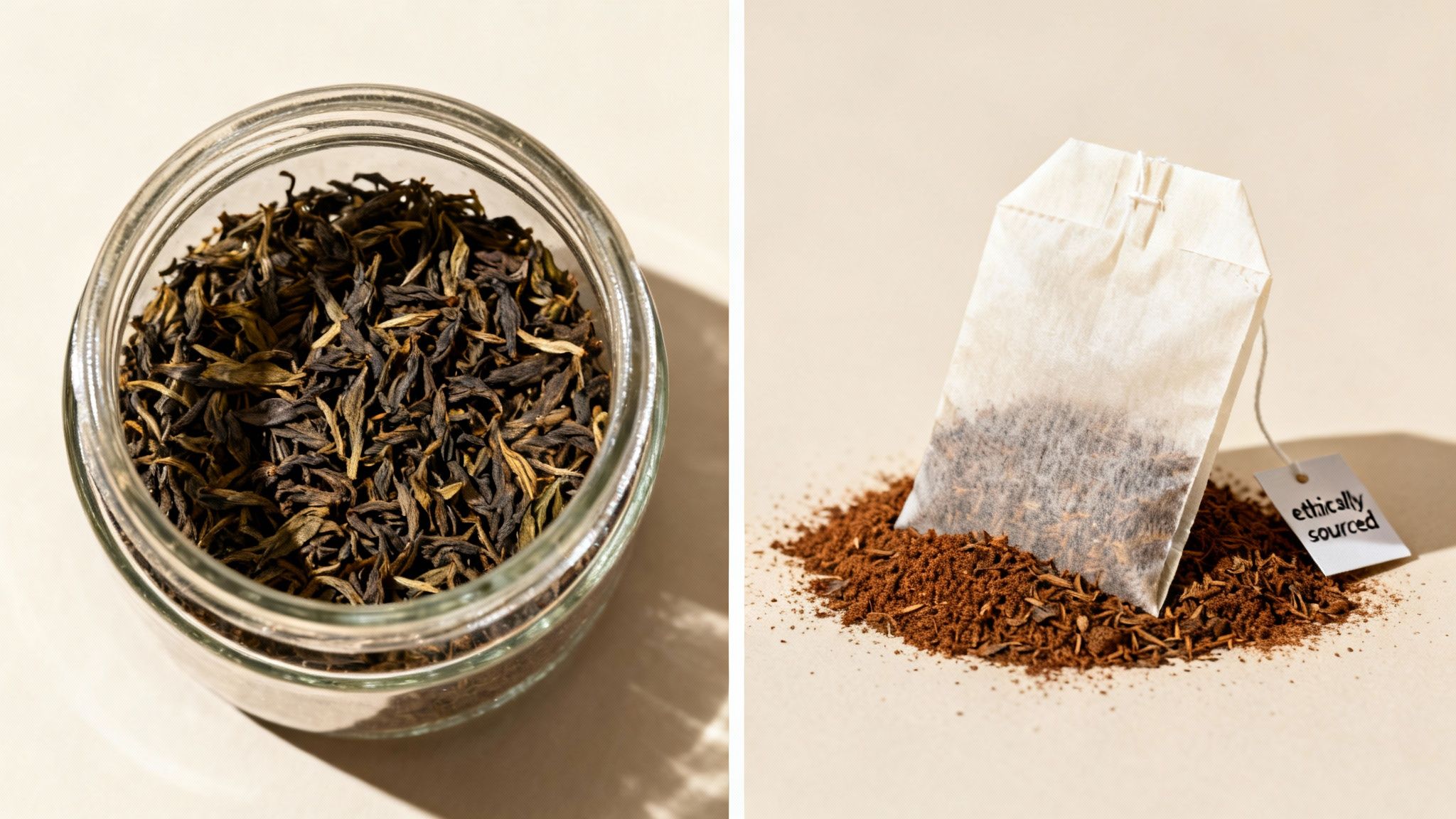
Diving into the world of tea can feel a bit much at first, but figuring out what makes a truly great brew comes down to a few simple things. It all starts with your eyes. The easiest way to spot a quality tea is to just look at the leaves themselves.
This is why whole-leaf tea is the cornerstone of everything we do here at Jeeves & Jericho. We only select large, unbroken leaves, and for a very good reason. Whole leaves hold onto all their natural essential oils—the very soul of a tea’s complex flavour and aroma. When you brew them, they have room to unfurl and slowly release all those nuanced notes that make for a memorable cup.
Compare that to what you find in most supermarket tea bags: tiny, broken bits of leaf called ‘fannings’ or ‘dust’. Sure, they brew up a dark-coloured mug in seconds, but the flavour is often flat, harsh, and missing all the character and subtlety you get from a proper whole-leaf tea.
Spotting Quality Beyond the Leaf
Of course, what’s in your cup is only half the story. The philosophy of the company you’re buying from matters just as much. A brilliant cup of tea is about more than flavour; it’s about the entire journey, from the tea garden right through to your teapot.
For us, quality is inseparable from our two core values: ethical sourcing and sustainability. These aren't just nice-sounding words for a label; they guide every single choice we make.
- Ethical Sourcing: This is all about building genuine, respectful partnerships with the farmers and tea gardens we work with. We make sure they get a fair price for their incredible skill and hard work, which helps them support their families and invest back into their communities.
- Sustainability: We're committed to supporting farming that works with nature, not against it. That means encouraging biodiversity, being mindful of water use, and steering clear of nasty pesticides, all to keep the land healthy for generations to come. You can read more about our approach in our guide to the benefits of organic loose leaf tea.
Choosing an ethically sourced tea means you’re investing in a system that values both people and the planet. It’s a conscious decision to support a supply chain built on fairness, respect, and a shared love for creating something truly special.
Why Your Choice Matters in a Big Market
The UK tea market is absolutely massive. With an estimated 100 million cups drunk every single day, the industry is huge. But that scale means that even small, individual choices, when added together, can make a real difference.
When you choose a high-quality, ethically sourced whole-leaf tea, you’re not just getting a better-tasting brew. You're casting a vote for a tea industry that’s fairer and more sustainable. You're backing the artisans who have dedicated their lives to their craft and helping protect the beautiful places where these amazing plants grow. Your daily cuppa becomes something much more meaningful.
Your Tea Questions, Answered
As you dive deeper into the world of tea, a few questions are bound to bubble up. We get it. It’s a vast and fascinating subject, so think of this as a quick-fire round to clear up some of the most common queries we hear.
We've put together some straightforward answers to help you connect the dots and feel that much more confident the next time you put the kettle on.
What's the Real Difference Between True Teas?
In a word? Oxidation. Grasp this one concept, and the whole puzzle of tea starts to make sense.
Believe it or not, every true tea—from the darkest black to the palest white—begins life on the very same plant: Camellia sinensis. It’s what happens after the leaves are plucked that defines what they become. Oxidation is simply the process of exposing the leaves to air, which changes their chemical makeup, colour, and flavour.
Think of it like a spectrum of flavour, all controlled by the tea master:
- White Tea: At one end, it's barely oxidised at all. This preserves its incredibly delicate, sweet character.
- Green Tea: Next up, the leaves are heated to stop oxidation in its tracks, locking in those fresh, grassy notes.
- Black Tea: At the other end of the scale, it's fully oxidised. This is what develops the deep, malty, and robust flavours we all know and love.
- Oolong Tea: This is the clever one, sitting somewhere in the middle. Oolongs are partially oxidised, creating a huge range of incredible flavours, from light and floral to dark and toasty.
It’s this careful, deliberate control of oxidation that gives us such an incredible variety of tastes from just one humble plant.
Which Tea Packs the Biggest Caffeine Punch?
As a general rule of thumb, black tea usually has the most caffeine, followed by oolong, green, and then white tea. But, and it's a big but, it's not quite that simple.
The final caffeine content in your cup can be a bit of a moving target, influenced by a few things:
- The Plant Itself: Just like grapes for wine, different varieties of the Camellia sinensis plant naturally contain different amounts of caffeine.
- The Harvest: Younger leaves and buds, often prized for high-grade white and green teas, can sometimes hold more caffeine than older, larger leaves.
- How You Brew It: This is the big one. The hotter your water and the longer you let it steep, the more caffeine you’ll extract from the leaves. Simple as that.
Then there's matcha. Because you're consuming the entire leaf, ground into a fine powder, you get a much more concentrated caffeine kick. A single bowl of matcha can easily have as much, if not more, caffeine than a strong cup of black tea.
Are Herbal Teas Really Tea?
Strictly speaking, no, they’re not. The word 'tea' is reserved for drinks made from the leaves of the Camellia sinensis plant.
Anything else—soothing chamomile flowers, zesty peppermint leaves, or earthy South African rooibos—is more accurately called an 'herbal infusion' or a 'tisane'. We love them for their amazing variety of flavours and the fact they are naturally caffeine-free. They’re the perfect brew for winding down in the evening. Just remember: if it's not from the tea plant, it's a tisane.
How Can I Spot a Genuinely Good Tea?
When it comes to loose-leaf tea, your senses are your most reliable guide. You can tell a lot about the quality before you even brew it.
Open the pouch and take a look. You want to see whole, unbroken leaves that look vibrant and smell fresh and aromatic. If you see a lot of dust, tiny broken bits, and stems (what the industry calls 'fannings'), you're looking at a lower-grade tea. These little particles brew up very quickly, often releasing too many tannins and resulting in a bitter, cloudy cup.
It’s exactly why at Jeeves & Jericho, we only source whole-leaf teas. Beyond the look and smell of the tea itself, a brand’s honesty is a great sign. Companies that are proud to talk about their ethical sourcing and the farms they work with are usually the ones most committed to quality, from the soil all the way to your cup.
Ready to explore? Put your new-found knowledge to the test and discover your next favourite brew in the world of premium, ethically sourced whole-leaf teas at Jeeves & Jericho. Pop over to our shop at https://www.jeevesandjericho.com.