


Giving up the buzz of caffeine doesn't mean you have to abandon the flavour, warmth, and ritual of a good cuppa. Non-caffeine teas open up a whole new world of satisfying brews, from soothing herbal infusions to rich, decaffeinated versions of your favourite classics. They offer all the comfort of a traditional tea, but without the jitters, making them perfect for any time of day.
A World of Flavour Without the Buzz
For so many of us, that daily tea ritual is a sacred moment of calm in a busy day. But what happens when you want that comfort without the caffeine kick? This is exactly where the wonderfully diverse category of non-caffeine teas comes in. They're the perfect answer whether you're winding down for bed, are sensitive to caffeine, or are just curious to try something new.

This isn’t just a niche interest anymore; it’s becoming a genuine movement. Here in the UK, the tea landscape is shifting as more of us choose caffeine-free options over a standard black tea. It's a trend significant enough to be felt in the market, with revenue in the Tea Processing industry actually declining as herbal varieties take a bigger slice of the pie. You can discover more insights on UK tea industry trends at IBISWorld.com.
Clarifying Your Options
The term “non-caffeine teas” can be a bit of a catch-all. It actually covers two very different types of brew, and knowing the difference is the key to finding your perfect cup.
- Naturally Caffeine-Free: These aren't technically "teas" at all. They’re infusions, often called tisanes, made from plants that simply don't produce caffeine. Think herbs, flowers, fruits, and spices.
- Decaffeinated Teas: These are the real deal—black, green, or oolong teas from the Camellia sinensis plant—that have gone through a special process to have most of their caffeine removed.
Here’s a simple way to think about it: Naturally caffeine-free infusions were born without caffeine, while decaffeinated teas have had it taken away. One is nature's original design, the other is a clever bit of science.
As we go through this guide, we'll dive into the unique character and benefits of each type. From the gentle floral notes of chamomile to the deep, earthy richness of rooibos, you’ll soon see there's a brew for every mood and moment. And at Jeeves & Jericho, we're here to be your trusted source for the most exceptional, ethically sourced blends you can find.
Understanding Your Caffeine-Free Tea Options
Dipping your toes into the world of caffeine-free tea can seem a bit overwhelming at first, but it's simpler than you might think. Really, it all boils down to two distinct categories. Once you get your head around this basic difference, you'll be well on your way to picking the perfect brew every time.
The two paths you can go down are naturally caffeine-free teas and decaffeinated teas. It’s a bit like this: naturally caffeine-free options come from plants that never produced caffeine in the first place. Decaffeinated teas, on the other hand, start their life as proper, caffeinated tea leaves and then have the caffeine removed.
Naturally Caffeine-Free: The Original Non-Caffeine Teas
This is by far the biggest and most exciting group. These drinks, which are technically called tisanes (pronounced ti-zans), are simply infusions made from bits of plants that are completely devoid of caffeine from the get-go.
Instead of using leaves from the tea plant (Camellia sinensis), they’re made from a whole host of wonderful ingredients.
- Herbs: This is where you’ll find classics like calming chamomile and brisk, refreshing peppermint.
- Spices: Think of warming ginger root or fragrant cinnamon bark.
- Flowers: Delicate floral notes come from ingredients like hibiscus and lavender.
- Fruits: Dried bits of apple, lemon, and berries create wonderfully sweet and tangy blends.
- Roots & Barks: Earthy options like liquorice root offer truly unique flavours.
Because these plants are inherently caffeine-free, what you get is a pure, unadulterated taste. A cup of peppermint tea tastes intensely of mint for the simple reason that that’s all there is to it—no chemical processes needed. This makes them a brilliant choice for anyone after a genuinely 100% caffeine-free experience, which is why we delve into so many of them in our guide to caffeine-free herbal teas.
Before we move on, here’s a quick rundown of the most popular naturally caffeine-free options to help you find your new favourite.
A Quick Guide to Naturally Caffeine-Free Teas
| Tea Type | Common Flavour Profile | Primary Benefit/Use Case |
|---|---|---|
| Herbal Tisanes | Grassy, floral, minty, or medicinal (e.g., Peppermint, Chamomile) | Relaxation, sleep aid, digestive support |
| Rooibos | Naturally sweet, nutty, earthy with hints of vanilla | Rich in antioxidants, good for any time of day |
| Honeybush | Sweet, honey-like, slightly roasted, similar to rooibos | Soothing a sore throat, general wellness |
| Fruit Blends | Sweet, tart, and fruity (e.g., Berry, Lemon & Ginger) | A vibrant, refreshing drink, great iced |
| Flower Blends | Delicate, fragrant, and floral (e.g., Hibiscus, Lavender) | Calming, often used for its visual appeal |
Each of these offers a completely different world of flavour, proving that 'caffeine-free' is anything but boring.
Decaffeinated Teas: A Familiar Taste
Right, let’s look at the other side of the coin. What if you absolutely love the classic, robust taste of an English Breakfast or a grassy Green Tea, but you need to steer clear of the caffeine? This is where decaffeinated teas save the day.
These begin as real tea leaves—black, green, or oolong—which all naturally contain caffeine. They then go through a process designed to carefully strip out the caffeine molecules. While modern methods are incredibly good, it's important to remember they usually remove about 97-99% of the caffeine, not every last bit.
A cup of decaffeinated black tea will still have a tiny trace of caffeine, typically around 2-5 milligrams, compared to the 40-70 milligrams in a regular cup. For most of us, that amount is completely unnoticeable, but it’s a vital distinction for anyone with a high sensitivity.
The whole point of decaffeination is to keep the tea's original character intact. While a few of the more subtle flavour notes might get lost along the way, a high-quality decaf will still give you that familiar, comforting taste you know and love. It’s the perfect compromise when you’re craving a traditional cuppa without the buzz.
The Real Wellness Benefits of Skipping Caffeine
Choosing a caffeine-free brew is so much more than a simple matter of taste. It's a conscious choice that can genuinely boost your overall well-being. When you swap your usual cuppa for a herbal or fruit infusion, you’re unlocking a whole host of tangible benefits that can reshape your daily routine for the better.

This shift isn't just a personal one; it's part of a much bigger wellness trend. The UK’s ready-to-drink tea market shows a clear demand for non-caffeinated options, particularly herbal and fruit varieties that put health benefits front and centre. As we all become more health-conscious, sugar-free, revitalising alternatives are starting to steal the show. You can read more about the UK's growing tea market and see for yourself.
Improving Your Sleep and Reducing Anxiety
One of the first things you'll likely notice when cutting back on caffeine is better sleep. It makes sense – caffeine is a stimulant designed to interfere with your natural sleep cycle, making it harder to drift off and reducing the quality of your rest.
A warm cup of chamomile before bed, for example, is a classic for a reason. It contains compounds that gently encourage relaxation, acting as a mild, natural sedative. Over time, this simple ritual can help reset your internal body clock, leading to deeper, more restorative sleep.
This calming effect often spills over into your waking hours, too. By avoiding the jittery peaks and subsequent crashes that caffeine can cause, many people find they feel a lot less anxious and restless. It helps create a more stable, peaceful mood throughout the day.
Supporting Digestion and Hydration
Many non-caffeinated teas are absolute heroes for your digestive system, offering gentle, natural support without the stimulating effects that can sometimes irritate the stomach.
- Ginger Tea: Famous for its anti-inflammatory properties and its incredible ability to soothe an upset stomach or ease nausea.
- Peppermint Tea: Known for relaxing the muscles of the digestive tract, which can bring welcome relief from indigestion and bloating.
What’s more, unlike caffeinated drinks which can have a mild diuretic effect, herbal teas are fantastic for hydration. Staying properly hydrated is vital for just about every bodily function, from keeping energy levels up to ensuring healthy digestion and clear skin.
A simple switch to herbal infusions can dramatically increase your daily fluid intake, contributing positively to your overall health and leaving you feeling more energised and refreshed.
Boosting Your Body with Antioxidants
While green tea often gets all the credit for antioxidants, many caffeine-free infusions are absolutely packed with them. Rooibos, for instance, is rich in polyphenols that help protect your cells from damage caused by free radicals. Likewise, hibiscus tea is well-regarded for its high antioxidant content, which can support cardiovascular health.
By weaving these delicious brews into your routine, you aren’t just enjoying a comforting drink; you’re actively nourishing your body. Each cup becomes an easy and enjoyable way to bolster your body's natural defences, making non-caffeine teas a cornerstone of a truly healthy lifestyle.
How to Brew the Perfect Cup Every Time
Getting the full, vibrant flavour from your favourite caffeine-free cuppa isn't some dark art. Honestly, a few simple tweaks can take a brew from 'good' to 'unforgettable'. It all boils down to the quality of your ingredients and knowing that different botanicals need a slightly different approach to truly sing.
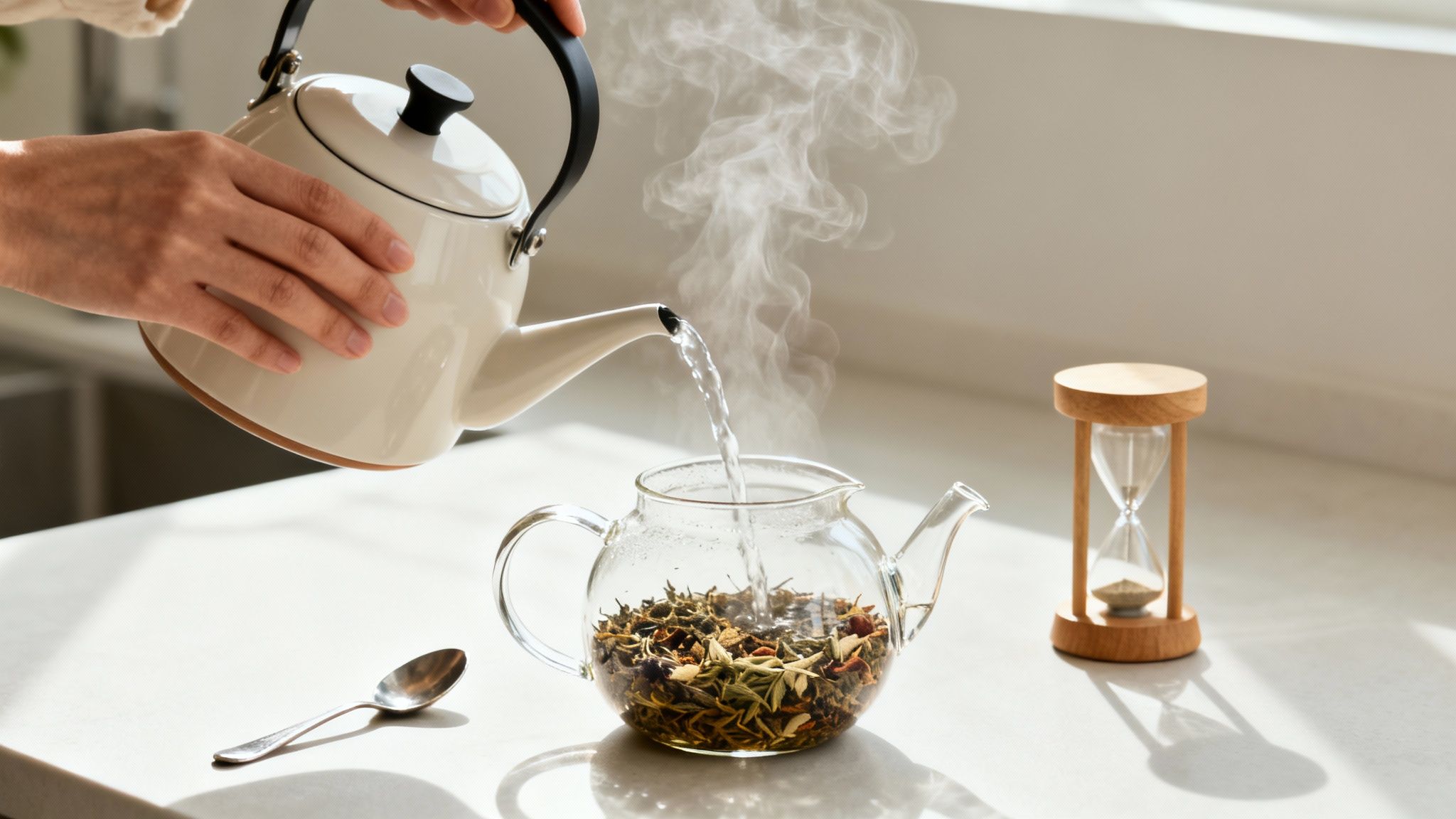
Whether you’re a tea bag fan or you love the ritual of loose-leaf, the secret is always in choosing blends with whole ingredients. When you can actually see whole chamomile flowers, big pieces of peppermint leaf, or chunky bits of dried fruit, you know you’ve got a product that’s held onto its essential oils—and therefore, its flavour. This commitment to whole ingredients is at the heart of what we do at Jeeves & Jericho.
Mastering Water Temperature and Steeping Time
Unlike a hardy black tea that can take boiling water on the chin, many herbal infusions are far more delicate. Blasting them with water that’s too hot can scald the leaves and flowers, leaving you with a bitter, muted cup. The golden rule? Match your water temperature and brew time to what's in your mug.
A few simple pointers can make all the difference:
- Delicate Florals & Herbs: For light, aromatic infusions like chamomile, mint, or lavender, use water that’s just off the boil (around 90-95°C). A shorter steep of 3-5 minutes is usually all they need to release their fragrant notes without a hint of bitterness.
- Robust Roots & Spices: Tougher ingredients like ginger, rooibos, or liquorice root need a bit more coaxing. Go ahead and use freshly boiled water (100°C) and give them a longer steep—think 5-7 minutes or even more to draw out their deep, complex character.
You can think of it like cooking. You wouldn’t roast a delicate piece of fish at the same high heat you’d use for root vegetables. The same principle applies here; gentle ingredients need a gentle touch.
A Simple Step-by-Step Brewing Guide
Ready to make your perfect cup? Follow these simple steps for a delicious brew every single time, especially if you’re diving into the wonderful world of loose-leaf.
- Measure Your Tea: Start with one teaspoon (that’s about 2-3 grams) of loose-leaf tea for every cup (roughly 250ml) of water. Feel free to adjust this up or down to find your perfect strength.
- Heat Your Water: Grab some fresh, filtered water and heat it to the right temperature for your chosen blend.
- Infuse the Tea: Pour the hot water over your tea in a pot or infuser and hit the timer.
- Steep for Success: Let it brew for the recommended time. This is where the magic happens and all those lovely flavours develop.
- Serve and Enjoy: Once steeped, just remove the infuser or strain the leaves. Sit back and enjoy.
For anyone keen to get deeper into the art of infusion, our complete guide on how to brew loose leaf tea is packed with more expert tips. A little attention to detail is all it takes to consistently create a satisfying cup that truly does justice to the beautiful ingredients you've chosen.
Choosing a Tea for Every Moment of Your Day
One of the real joys of exploring the world of non caffeine teas is realising just how neatly they can fit into any part of your day. There’s a perfect herbal brew for every occasion, mood, and moment – from a gentle nudge in the morning to a peaceful wind-down at night.
This means you can create comforting little rituals that support you from sunrise to sunset. Imagine starting your day not with a jolt of caffeine, but with a warm, gentle awakening. Or finding a natural way to refocus during a busy afternoon without paying for it with a restless night.
Teas for a Restful Night's Sleep
Winding down after a long day is probably the number one reason people reach for a caffeine-free cuppa. Certain herbs have a long-standing reputation for encouraging relaxation and prepping the body for a deep, restorative sleep. Think of it as your evening’s off-switch in a mug.
- Chamomile: The undisputed champion of bedtime teas. Chamomile contains compounds that have a wonderfully mild sedative effect, helping to soothe an overactive mind.
- Valerian Root: For those nights when you really need some help switching off, valerian is a more potent option known for its sleep-supporting qualities.
- Lavender: Sometimes the scent alone is enough to dial down the stress. A cup of lavender-infused tea makes for a beautifully tranquil pre-sleep ritual.
Making a cup of tea a consistent part of your bedtime routine can send a powerful signal to your brain that it’s time to sleep, which can genuinely improve your sleep quality over time. For more ideas on perfecting this nightly habit, you can explore our detailed guide on the best tea for bedtime.
Teas for an Afternoon Pick-Me-Up
Who says you need caffeine for a midday boost? When that 3 p.m. slump hits, a vibrant herbal or fruit tea can awaken your senses and clear your mind without any of the jitters. These brews are refreshing, packed with flavour, and provide a natural lift.
A bright, zesty fruit blend brimming with citrus or berries can be incredibly invigorating, especially served over ice on a warm day. In the same way, the cool, crisp flavour of peppermint tea is fantastic for cutting through that mental fog and helping you get back to the task at hand.
Gentle Teas for All Ages
The beauty of so many non-caffeine teas is just how gentle they are, making them a wonderful choice for the whole family. Mild, naturally sweet options can be a healthy and delicious treat for children or anyone with a sensitive system.
Rooibos is a brilliant family-friendly choice. It’s completely caffeine-free, low in tannins, and has a lovely, slightly sweet flavour that kids tend to love. You can serve it warm with a splash of milk or brew up a big batch to serve as a refreshing iced tea – a much healthier alternative to sugary drinks.
The Jeeves & Jericho Promise of Quality and Ethics
Choosing the perfect non-caffeine tea is about so much more than just a beautiful aroma or a delightful flavour. It's about knowing exactly where your brew comes from. It's about trusting the people who nurtured it from the ground up. Here at Jeeves & Jericho, we've built our company on the belief that the very best teas are born from strong, respectful relationships with the growers themselves.

This simple philosophy is what we call ethical sourcing. To us, it isn't just a buzzword; it’s our core promise. We foster direct partnerships with growers who share our passion for sustainable farming. By working side-by-side with them, we can guarantee total transparency and deliver a tea that is truly exceptional, both in its taste and its integrity.
And we know this matters to you, too. Tea drinkers across the UK are increasingly looking beyond the box, with sustainability and ethical practices driving a real shift towards premium herbal blends. The UK tea market is on a path of steady growth, and it's largely thanks to health-conscious people like you choosing ethical, non-caffeinated options. You can discover more about the future of the UK tea market on 6Wresearch.com.
Craftsmanship in Every Blend
Our commitment to doing things properly is poured into every blend we create. We're focused on crafting unique, non-caffeinated experiences that never, ever compromise on flavour. We use only the finest whole ingredients, ensuring a rich, full-bodied cup every single time.
Take our Spiced Bombay Chai, for instance. It's a carefully balanced dance of aromatic spices that gives you that warm, invigorating chai experience, just without the caffeine. It means you can settle down with the complex, comforting notes of an authentic chai any time of day or night.
When you choose Jeeves & Jericho, you're not just buying tea. You're supporting a system that values people and the planet, ensuring that every sip is as good for the world as it is for you.
We believe that an exceptional cup of tea should be a simple pleasure, accessible to everyone. That’s why we make it easy to explore our ethically sourced collection, offering free UK shipping on all orders over £25 from our online store. It's just our little way of bringing the world's finest, most responsibly produced teas right to your doorstep.
A Few Common Questions Answered
When you start exploring the world of teas without caffeine, a few questions always pop up. Let's clear up some of the common ones so you can feel confident choosing your next brew.
Is 'Caffeine-Free' the Same as 'Decaffeinated'?
It's a great question, and no, they're not the same. It all comes down to where the plant started.
'Caffeine-free' means the ingredient—be it peppermint, chamomile, or rooibos—never had any caffeine in it, ever. It’s naturally that way.
On the other hand, 'decaffeinated' means we've started with something that does contain caffeine, like black or green tea, and have taken most of it out. The process isn't 100% perfect, so a tiny trace amount might remain.
Can I Drink Herbal Teas if I'm Pregnant?
This is an important one. While plenty of herbal infusions like rooibos and peppermint are generally thought to be fine, some herbs can be surprisingly potent.
Because of this, it is absolutely essential to have a chat with your doctor or another qualified healthcare professional before trying any herbal teas during pregnancy or while breastfeeding. They'll give you the best advice for keeping you and your baby safe.
Do Non-Caffeine Teas Actually Do Anything for Your Health?
They certainly can. Beyond just being a delicious way to stay hydrated, many of the herbs, spices, and fruits in these blends have been used for their wellness properties for centuries.
Think of chamomile, which is famous for its gentle, calming nature that can help you drift off to sleep. Or ginger, which has long been the go-to for soothing an upset stomach. Many are also packed with antioxidants, which are brilliant for protecting your body's cells.
Ready to dive in and taste the difference that ethical sourcing makes? At Jeeves & Jericho, we pour our passion into finding the finest quality ingredients for every single cup. You can explore our full collection of beautiful non-caffeine teas and more right here: https://www.jeevesandjericho.com.