


When it comes down to it, the real difference between black and green tea boils down to a single, crucial step: oxidation.
Black tea is fully oxidised. This process unlocks its famously robust, malty flavours and gives it a higher caffeine kick. On the other hand, green tea is unoxidised, which is why it keeps its fresh, grassy notes and a much more delicate character. The choice really depends on what you're after—a bold brew to start your day, or a gentle, refreshing cup for the afternoon.
The UK’s Great Tea Debate
Here in Britain, black tea is more than just a drink. It's woven into the fabric of our culture, a comforting daily ritual for millions. Green tea, with its modern, wellness-focused image, is a bit of a newcomer but has been steadily winning people over.
What many don't realise is that both teas come from the very same plant, Camellia sinensis. It’s what happens after the leaves are picked that makes all the difference, shaping their unique colour, aroma, flavour, and even their health benefits.
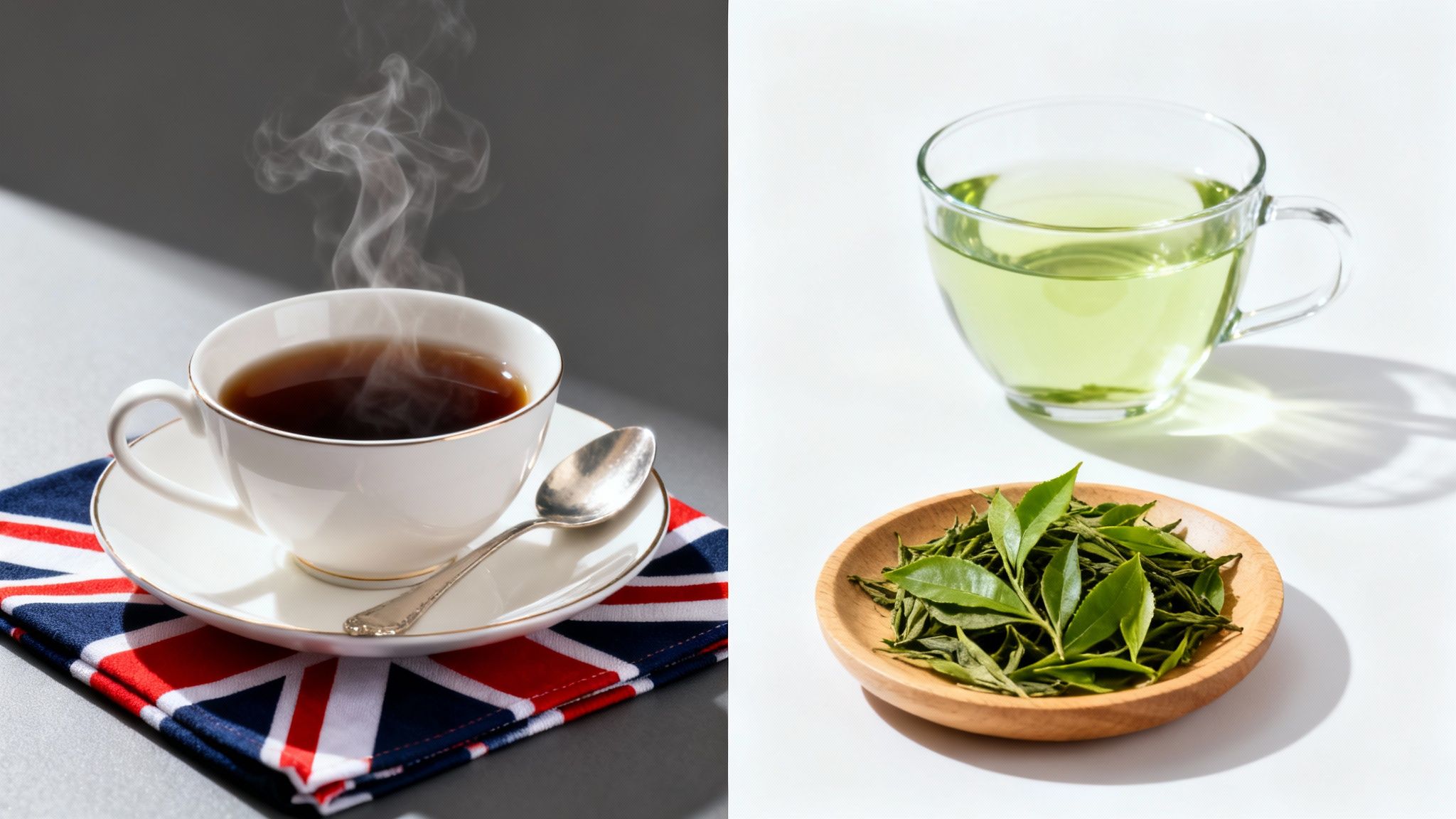
A Tale of Two Teas
This guide will walk you through the nuances of these two beloved infusions, looking at everything from caffeine content and flavour profiles to their much-talked-about health benefits.
In the UK, the nation has clearly picked a side. Black tea is the undisputed champion, the go-to choice for a massive 71% of us, while green tea is the main brew for just 13%. If you'd like to dive deeper, you can learn more about UK tea consumption habits. This isn't just a statistic; it shows a national palate that truly favours the strong, familiar character of a proper black tea.
The core distinction is beautifully simple: green tea leaves are heated right after picking to stop oxidation, keeping them close to their natural state. Black tea leaves, however, are rolled and left to react with the air, a process that completely transforms them, creating deeper, richer flavours.
Here’s a quick look at how they stack up before we get into the details.
| Feature | Black Tea | Green Tea |
|---|---|---|
| Processing | Fully oxidised | Unoxidised (steamed/pan-fired) |
| Flavour Profile | Bold, malty, robust, sometimes fruity | Vegetal, grassy, nutty, sometimes sweet |
| Caffeine | Higher (40-70 mg per cup) | Lower (20-45 mg per cup) |
| Primary Antioxidants | Theaflavins & Thearubigins | Catechins (EGCG) |
| Common Use Case | Morning energy boost, with milk/sugar | Afternoon focus, wellness routines |
How Processing Creates Two Distinct Teas
You might be surprised to learn that black and green tea don’t come from different plants. In fact, they both start their lives as fresh leaves picked from the very same species: Camellia sinensis. The real magic, the thing that sets them on two completely different paths, happens after the harvest. It all comes down to a single, crucial process called oxidation.
Think of what happens when you slice an apple and leave it on the counter. That browning? That’s oxidation. For tea, this natural reaction is either deliberately stopped in its tracks or encouraged to run its full course. This one decision by the tea maker defines the final tea's colour, flavour, and even its chemical makeup. It's the key to understanding why they're so wonderfully different.
The Green Tea Method: Preserving Freshness
With green tea, the goal is simple: prevent oxidation at all costs. As soon as the leaves are plucked, they’re quickly heated to stop the enzymes that cause browning. This step, sometimes called "fixing," is what locks in the leaf's natural green colour and all those fresh, grassy characteristics.
There are two main ways tea makers do this, and each method leaves a distinct mark on the flavour:
- Steaming: This is the go-to method in Japan for teas like Sencha. The leaves are blasted with hot steam for just a moment. This gives the tea a vibrant, almost electric green colour and a signature umami, or savoury, flavour with notes of seaweed and fresh-cut grass.
- Pan-firing: In China, it’s more common to see leaves being tossed in a large, dry wok, a bit like stir-frying. This technique, used for teas like our Dragon Well, results in a gentler, more mellow character with lovely toasty or nutty notes.
By halting oxidation right away, green tea keeps a high concentration of its original plant compounds. This includes potent antioxidants called catechins (the most famous being EGCG), which is why its flavour profile stays so close to that of the fresh leaf.
The essence of green tea production is speed and heat. By quickly deactivating enzymes after harvest, tea makers lock in the leaf’s vibrant, natural state, preserving the delicate compounds that define its fresh, grassy taste and bright colour.
The Black Tea Method: A Complete Transformation
For black tea, the philosophy is the complete opposite. Here, the aim is to encourage full oxidation. This controlled transformation is what turns the leaves from green to a deep coppery-brown, developing the rich, complex, and malty flavours we associate with a classic brew.
First, the leaves are withered to reduce their water content, which makes them soft and pliable. Then comes the crucial step: rolling. This bruises the leaves, breaking down their cell walls and allowing the enzymes inside to mix with the oxygen in the air. This is what kicks off the oxidation process.
The leaves are then left to oxidise in a cool, humid room for several hours. During this time, the fresh catechins found in green tea are converted into new, more complex compounds called theaflavins and thearubigins. These are the powerhouses behind black tea’s signature character:
- Theaflavins: Give the tea its briskness and bright, coppery colour.
- Thearubigins: Create the deep reddish-brown hue and provide that rich, malty depth of flavour.
The image below shows just how dramatic this transformation is.
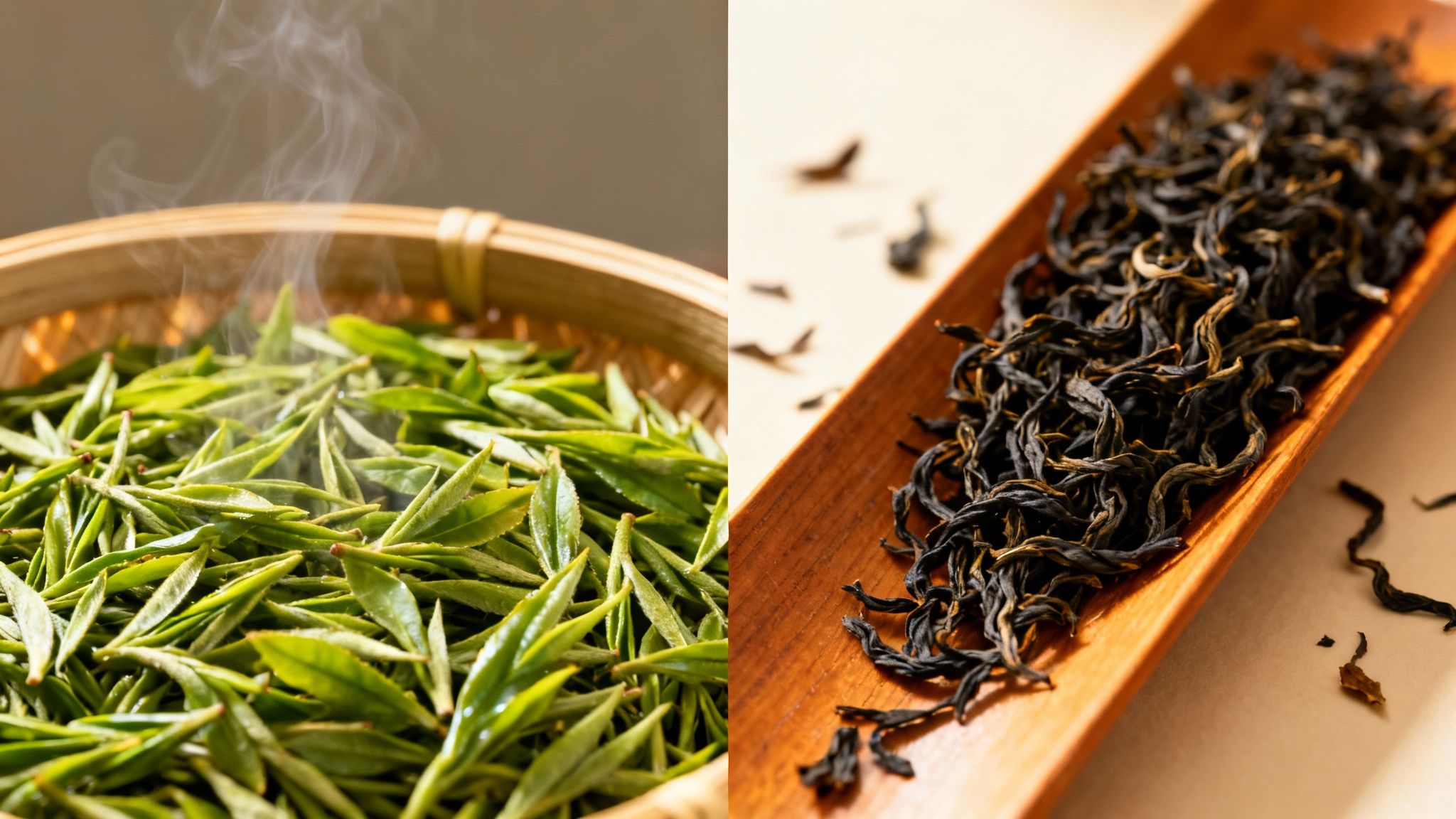
This journey from green to brown is a true metamorphosis, creating a flavour profile worlds away from the original fresh leaf. Finally, the leaves are dried with hot air, which stops the oxidation completely and locks in their new flavour and aroma. This fundamental difference is precisely how a bold, malty English Breakfast and a delicate, vegetal Sencha can both come from the very same plant.
A Detailed Comparison of Flavour and Aroma
While processing methods are the technical reason black and green teas differ, it’s the flavour and aroma that truly defines the experience in your cup. The journey of oxidation doesn't just change the tea's colour; it completely reshapes its sensory profile, creating two distinct worlds of taste waiting to be explored.
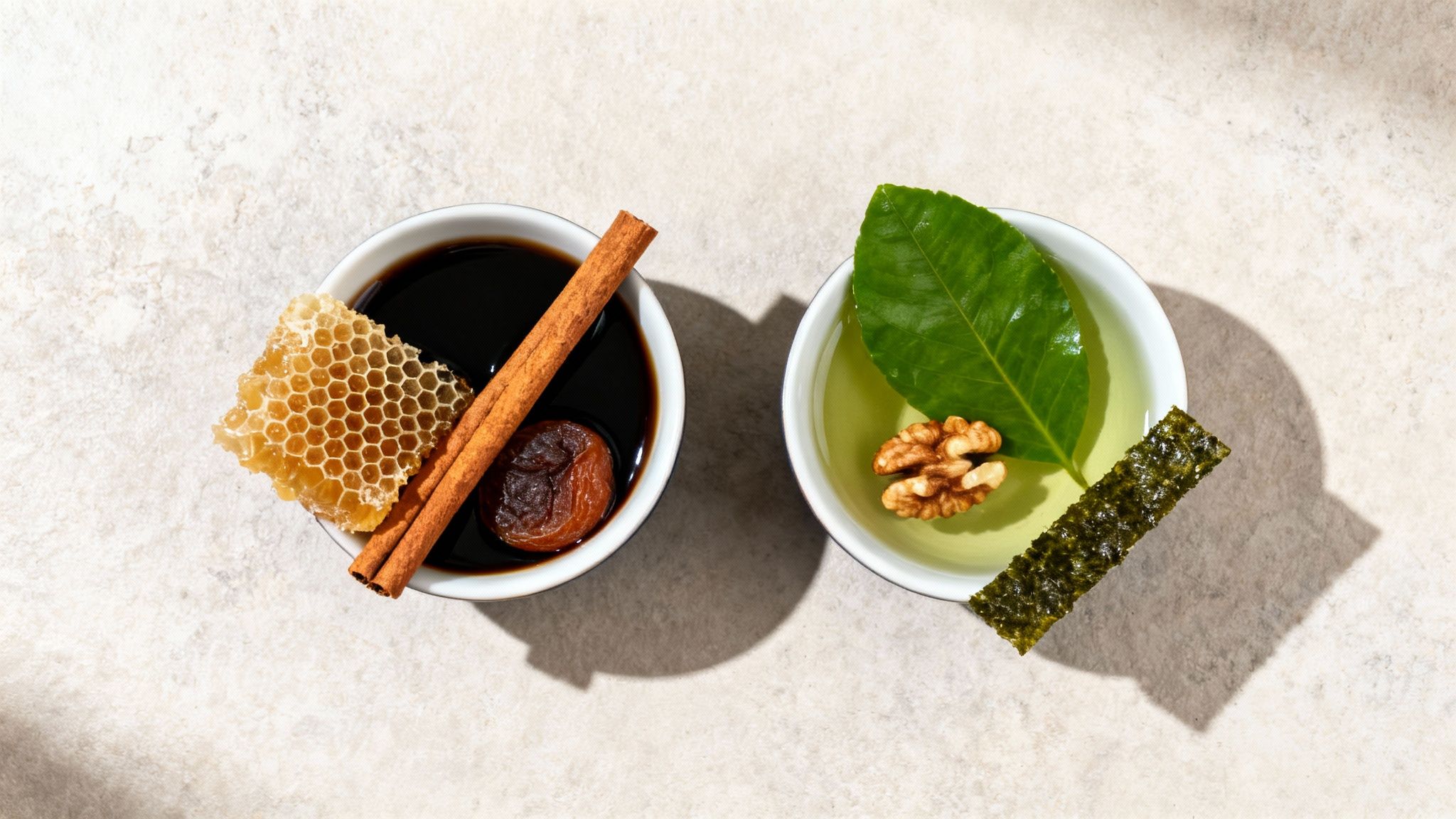
Getting to grips with these nuances is key. It helps you move beyond simple preferences to really appreciate what makes each one special.
The Rich and Robust World of Black Tea
Full oxidation gives black tea its signature depth and complexity. Instead of the fresh, vegetal notes you’d find in a green tea, you’ll discover a spectrum of richer, darker flavours, often described as malty, robust, and sometimes sweet.
The specific notes can vary dramatically depending on where the tea was grown and how it was handled. For instance:
- Assam: Famous for its bold, full-bodied, and distinctly malty character. It’s the perfect base for a strong English Breakfast.
- Darjeeling: Often called the "champagne of teas," it offers a much lighter and more delicate profile with floral and fruity notes, sometimes reminiscent of muscatel grapes.
- Ceylon: This tea provides a crisp, brisk flavour with hints of citrus and spice, offering a bright, invigorating cup.
Many black teas also carry undertones of honey, dried fruit, cocoa, or even a subtle smokiness. This broad and satisfying flavour profile makes black tea incredibly versatile, standing up well to milk and sugar. You can explore a wide selection of these profiles in our guide to black tea varieties to find your perfect match.
The Fresh and Vibrant Notes of Green Tea
Green tea, by contrast, is a celebration of freshness. By halting oxidation, tea makers preserve the leaf's natural, vibrant character. The result is a flavour profile that is primarily vegetal, grassy, and sometimes nutty or sweet.
Just like with black tea, the specific taste is heavily influenced by its origin and the "fixing" method used to stop oxidation:
- Japanese Sencha: Steaming preserves a bright, oceanic character with distinct umami (savoury) notes and a flavour often compared to fresh seaweed or steamed greens.
- Chinese Dragon Well: This pan-fired tea delivers a gentler, smoother experience with a mellow, toasty flavour and chestnut-like sweetness.
The core sensory difference is clear: black tea offers deep, developed flavours created through transformation, while green tea presents the pure, preserved essence of the fresh leaf itself. Choosing between them is a matter of preferring richness over freshness.
The aroma of green tea is often just as important as its taste, with scents ranging from freshly cut grass to delicate floral blossoms. It’s a much more delicate brew, best enjoyed on its own to fully appreciate its subtle complexities.
A Sensory Comparison of Black and Green Tea
To make the comparison clearer, here’s a look at the key sensory attributes of both teas, side-by-side. It’s a great way to pinpoint the characteristics you might enjoy most.
| Sensory Attribute | Black Tea (e.g., English Breakfast, Assam) | Green Tea (e.g., Sencha, Dragon Well) |
|---|---|---|
| Flavour Profile | Malty, robust, rich, full-bodied | Vegetal, grassy, fresh, light |
| Common Notes | Honey, caramel, stone fruit, cocoa, spice | Umami, toasted nuts, seaweed, sweet corn |
| Aroma | Earthy, sweet, floral, sometimes smoky | Fresh, grassy, oceanic, slightly floral |
| Body | Medium to full, often with a pleasant astringency | Light to medium, typically smooth and clean |
| Ideal Pairings | Rich foods like red meat, chocolate cake, strong cheeses | Lighter fare like seafood, salads, steamed vegetables |
This framework shows how a robust black tea is the perfect companion for a hearty meal or a decadent dessert, its strong flavours standing up to rich foods. A crisp green tea, however, acts more like a palate cleanser, enhancing the delicate flavours of lighter dishes without overwhelming them.
Caffeine Kick vs. Health Perks
When it comes down to choosing between black and green tea, most of us are weighing up two things: the caffeine hit and the potential health benefits. This is where the oxidation process really shows its hand, influencing not just the flavour in your cup but how each tea makes you feel.
It’s a common myth that green tea is always the low-caffeine option. The truth is a bit more complicated. While black tea generally packs more of a punch, the final caffeine count depends on the specific tea leaves, how long you brew it, and even the water temperature.
A Closer Look at Caffeine Levels
On average, you can expect a standard cup of black tea to contain anywhere from 40-70 mg of caffeine. This is what delivers that familiar morning lift, making it the go-to for so many of us trying to get the day started. In contrast, green tea tends to be gentler, usually landing between 20-45 mg per cup.
You can definitely feel the difference. The higher caffeine in black tea gives a more immediate, noticeable boost—think a softer version of a coffee buzz. Green tea, on the other hand, offers a more sustained, calm focus. It's less of a jolt and more of a gentle nudge. For a proper deep dive into what affects the stimulant in your brew, our guide to caffeine content in teas has you covered.
So, the choice really depends on the moment:
- Need a proper wake-up call? Black tea is your friend.
- For that mid-afternoon focus? Green tea delivers clarity without jeopardising your sleep.
- Sensitive to caffeine? Green tea is often the safer, more comfortable bet.
The Science Behind the Sip: Tea's Antioxidants
Both teas get their stellar health reputation from polyphenols, a class of antioxidants that help protect our bodies from cellular wear and tear. But—and it's a big but—the oxidation process completely changes the type of polyphenols you get in your cup, leading to different benefits.
Because it isn't oxidised, green tea is packed with powerful antioxidants called catechins. The star of the show is epigallocatechin gallate (EGCG), a compound that has been heavily studied for its potential to support metabolic health and fight oxidative stress.
The crucial health difference is all in the antioxidant profile. Green tea hangs onto its catechins (like EGCG), while in black tea, they transform into theaflavins and thearubigins. Neither is ‘healthier’—they just do different jobs.
When black tea undergoes full oxidation, those catechins transform into something new: theaflavins and thearubigins. These are the very compounds that give black tea its deep, dark colour and brisk flavour profile.
Research suggests these unique compounds bring their own set of advantages to the table. Theaflavins and thearubigins have been looked at for their potential role in supporting cardiovascular health, possibly by helping to maintain healthy cholesterol levels. They might also be good for your gut, encouraging beneficial bacteria to thrive.
Matching the Tea to Your Wellness Goals
Ultimately, pitting black and green tea against each other for health isn't about finding a single winner. It's about figuring out which one aligns best with what you're looking for. The science doesn't point to one being superior, but to two fantastic drinks with distinct strengths.
To help you choose, think about what you want from your cuppa:
You might lean towards green tea if you're hoping for:
- Metabolic support: Its high EGCG content is often linked to helping maintain a healthy metabolism.
- Cellular protection: Catechins are brilliant antioxidants known for their protective qualities.
- A gentle energy lift: The lower caffeine provides alertness without the risk of jitters.
You might reach for black tea if you're more focused on:
- Heart health: Theaflavins and thearubigins are the compounds studied for their link to cardiovascular wellness.
- Gut balance: These unique polyphenols may help foster a happy gut environment.
- A more robust energy boost: Its higher caffeine content makes it a reliable morning pick-me-up.
By understanding what makes them different, you can use each tea with purpose. Whether you need a bold morning brew for your heart or a gentle afternoon sip for your metabolism, both black and green tea have compelling reasons to be part of your daily ritual.
Mastering the Perfect Brew for Each Tea
How you brew your tea is everything. It’s what unlocks the incredible potential tucked away in those leaves, and just a few small tweaks to your routine can make the difference between a sublime, aromatic cup and one that’s just… flat. Getting the water temperature and timing right is fundamental to truly appreciating the unique character of black and green teas.
Think of it this way: the robust, fully oxidised leaves of black tea need a bit of encouragement—that is, some serious heat—to release their deep, complex flavours. Green tea, on the other hand, is far more delicate. Its fresh, unoxidised leaves require a much gentler approach to avoid scorching its grassy, sweet notes.

How to Brew Black Tea
To really coax out that rich, malty character from black tea, you’ll need water that’s just off the boil. This higher temperature is what awakens the theaflavins and thearubigins—the compounds that give black tea its signature briskness and depth of flavour.
For a perfect cup every time:
- Water Temperature: Bring fresh, cold water to a lively boil, then let it settle for just a moment. You’re aiming for around 95°C. Pouring straight boiling water on the leaves can sometimes scald them.
- Leaf Quantity: A good rule of thumb is one teaspoon (about 2-3 grams) of loose-leaf black tea for every 250ml cup.
- Steep Time: Let the leaves infuse for 3 to 5 minutes. Less time will give you a lighter brew, while a longer steep creates a stronger, more full-bodied cup. Just be careful not to leave it too long, or you risk introducing bitterness.
If you’re keen to dive deeper, our guide on how to brew loose leaf tea is packed with more tips and tricks.
How to Brew Green Tea
Brewing green tea is a more delicate affair. The most common mistake by far is using water that’s too hot, which is a sure-fire way to get a bitter, astringent taste that completely overpowers the tea’s natural sweetness. Cooler water is absolutely key to protecting its fragile catechins.
Here’s how to get a smooth, flavourful cup of green tea:
- Water Temperature: The sweet spot is between 75-80°C. If you don’t have a temperature-controlled kettle, no problem. Just boil the water and let it stand for two or three minutes before you pour.
- Leaf Quantity: Same as with black tea, use about one teaspoon of loose leaves per 250ml of water.
- Steep Time: Green tea works its magic much faster. An infusion of just 1 to 3 minutes is plenty. Many high-quality green teas are also fantastic for multiple infusions, with each steep revealing a subtle new layer of flavour.
At its core, the rule is simple: high heat and more time for the hardy black tea leaf; lower heat and less time for the delicate green. This small adjustment respects their unique journeys and unlocks the taste they were always meant to have.
By tailoring your brewing to the tea in your cup, you honour the entire process, from the farm to your pot. It’s this mindful approach that lets you experience the best of both worlds—from the invigorating richness of a morning black tea to the calm, grassy notes of an afternoon Sencha.
Picking the Perfect Tea for Any Moment
It’s never really about finding the one "best" tea, but about choosing the right brew for the right moment. Once you get a feel for their distinct characters—their caffeine kick, flavour, and how they make you feel—you can start matching your cuppa to your mood, your schedule, or your wellness goals. This is where comparing black and green tea gets really interesting and practical.
So, instead of just giving you a sweeping recommendation, let’s look at a few real-world situations. Each moment calls for something a little different, making one tea the clear winner over the other.
For a Morning Wake-Up Call
When you need to properly shake off the morning cobwebs and get your head in the game, a robust black tea is just the ticket. It has a higher caffeine content, usually around 40-70 mg per cup, giving you a noticeable lift without the jittery highs and crashing lows that can come with coffee.
The bold, malty notes of a classic like Jeeves & Jericho's English Breakfast are deeply satisfying. It's strong enough to hold its own with a splash of milk and even a touch of sugar, making it the perfect partner for a proper breakfast. Plus, those theaflavins in black tea are already at work, giving your cardiovascular system a bit of support as you launch into your day.
For an Afternoon of Calm Focus
We all know that mid-afternoon slump. But reaching for a powerful caffeine hit can often spell trouble for your sleep later on. This is where green tea truly comes into its own. With a gentler caffeine dose of 20-45 mg per cup, it offers a smooth, sustained alertness rather than a sudden jolt.
The secret weapon here is L-theanine, an amino acid found in green tea that works in tandem with caffeine to create a sense of calm, clear focus. This makes a smooth, vegetal green tea like a Dragon Well an ideal choice for getting through afternoon tasks, studying, or doing creative work. Its fresh, clean taste is also wonderfully refreshing, helping to clear the mind.
Think of your choice of tea as a tool to shape your day. A morning black tea is your motivator, while an afternoon green tea is more of a gentle guide, steering you toward productive calm without stealing your good night’s sleep.
Choosing Your Brew
Here in the UK, our tea habits are definitely changing. While a good strong black tea has long been the nation’s favourite, a growing interest in wellness has put green tea firmly on the map. The UK tea processing industry, valued at about £1.0 billion, has actually seen its revenue fall at a compound annual rate of 2.9% over the past five years, largely because of this shift. You can learn more about these changing consumer trends and see just how much green and herbal options are reshaping the market.
To make the choice even clearer, here are a few quick thoughts for other common moments:
- As a post-dinner digestive: The gentle, soothing nature of green tea makes it a lovely choice after a meal. Its fresh character helps cleanse the palate without feeling too heavy.
- For a rich, comforting latte: Black tea is the undisputed champion here. The strong, spicy notes of a blend like our Spiced Bombay Chai create a bold flavour base that doesn't get lost in all that lovely steamed milk.
- When you're feeling a bit under the weather: A simple green tea, maybe with a slice of lemon, is wonderfully hydrating and packed with protective catechins. It’s a gentle boost when your body needs it most.
By thinking about the occasion, you move beyond just picking a favourite and start to use tea with real intention. Whether you need a bold start or a calm continuation, the perfect leaf is waiting.
A Few Common Questions
Diving into the world of tea often brings up a few questions, especially when comparing two powerhouses like black and green tea. We've put together some clear answers to the queries we hear most often, helping you get the best out of every single cup.
Can I Drink Tea Every Day?
Absolutely. For most healthy adults, enjoying a few cups of black or green tea daily is perfectly fine and can be a wonderful part of a balanced lifestyle. The NHS suggests keeping daily caffeine intake below 400mg, and you’d have to drink a fair few cups to get near that limit. It’s a brilliant way to stay hydrated and take in all those natural plant goodies.
Does Milk Ruin The Goodness in Black Tea?
The jury is still out on this one, and the science is a bit mixed. Some studies hint that milk proteins might latch onto the tea's antioxidants, possibly making them a little less available to your body. On the flip side, other research has found no real difference.
The general feeling is that any potential effect is tiny. The most important thing is that you enjoy your brew, so if a splash of milk in your favourite black tea makes you happy, go for it.
Loose Leaf or Tea Bags: What's The Real Difference?
For a truly complex and nuanced flavour, loose leaf tea is hard to beat. The large, whole leaves have plenty of space to unfurl in the hot water, releasing a fuller spectrum of aromatic oils and taste. It's a more complete sensory experience.
Many standard tea bags, on the other hand, contain smaller, broken bits of leaf often called 'fannings' or 'dust'. They brew up quickly, but this can sometimes result in a sharper, more one-dimensional flavour. Pyramid bags are a good compromise, offering the convenience of a bag but with more room for the leaves to do their thing.
Which Tea Is Better For Weight Management?
Both black and green tea can be great additions to a healthy routine, as they’re naturally calorie-free (before you add milk or sugar, of course). That said, green tea often gets the spotlight in research around weight management.
Its high concentration of a catechin called EGCG (epigallocatechin gallate) has been linked in some studies to a gentle boost in metabolism. But let's be clear: no tea is a silver bullet for weight loss. It’s best seen as a wholesome choice within a balanced diet and active life, not a fix on its own.
Ready to explore the distinct worlds of black and green tea for yourself? Jeeves & Jericho has a curated selection of premium whole leaf teas, from our robust English Breakfast to the delicate Dragon Well. Find your perfect brew today.