


When we talk about ‘sustainable procurement’, what we’re really getting at is weaving environmental, social, and economic considerations into every buying decision you make. For a tea business, this isn't just about finding high-quality leaves. It's about choosing partners who protect the land, treat their workers with respect, and build a stronger, more reputable business from the ground up.
Why Sustainable Procurement Matters for Your Tea Business
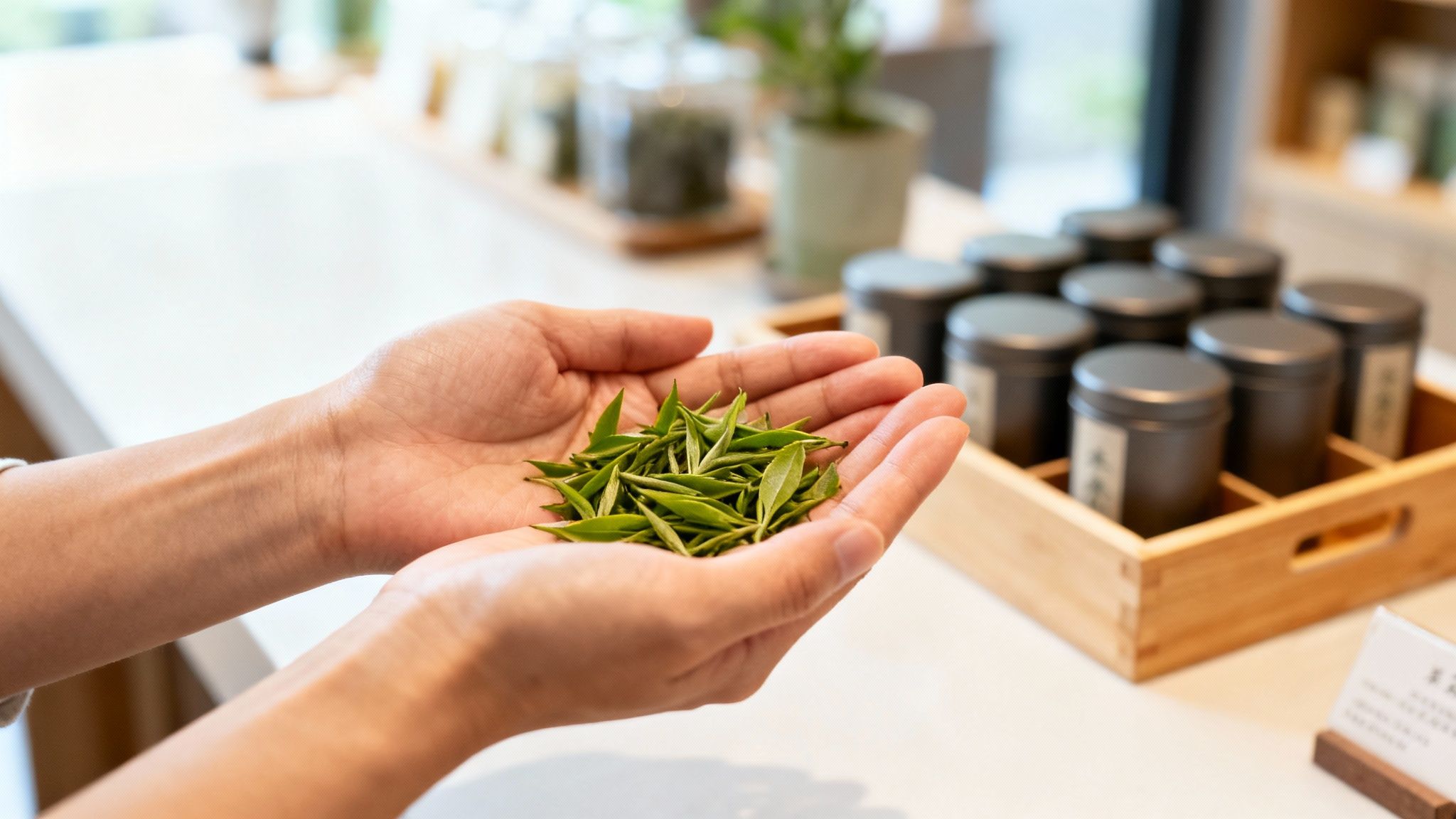
In the world of speciality tea, sourcing is everything. It’s what separates a forgettable brew from an exceptional cup that tells a story. Sustainable procurement has moved far beyond being a buzzword for corporate giants; it's now a fundamental strategy for growth, especially for small and medium-sized tea brands and their wholesale partners.
It’s a mindset shift. Instead of just buying a product, you’re investing in an ethical, resilient, and transparent supply chain. This means thinking about the entire journey of your tea, from the soil where the Camellia sinensis bush grows to the packaging it lands in. It's a real commitment to making purchasing decisions that leave a positive mark.
Building a Resilient and Reputable Brand
When you start digging into sustainable practices, you’ll find it brings real, tangible benefits that strengthen your business from the inside out. Thinking carefully about your supply chain naturally forces you to spot and manage risks.
What happens if a drought hits a key growing region, or a sudden change in labour laws disrupts the harvest? By partnering with suppliers who manage their resources responsibly and treat their people well, you’re actually building a far more stable and predictable supply line for yourself.
But it goes beyond just managing risk. Sustainability is a powerful way to make your brand stand out. Today's tea drinkers are more curious and conscious than ever. They want to know the story behind their tea. A transparent, ethical sourcing model builds incredible customer loyalty and helps you carve out a unique space in a crowded market.
By embracing sustainable procurement, you are not just managing risk; you are investing in your brand’s long-term health, reputation, and connection with a customer base that values authenticity and responsibility.
The Three Pillars of Sustainability
Sustainable procurement is best understood through three interconnected pillars. Each one is vital for a truly responsible sourcing strategy, and for a tea business, they come to life in very practical ways:
-
Environmental: This is all about protecting our planet. It means sourcing from farms that use organic methods, work to reduce water consumption, and protect local biodiversity. It also means thinking about choosing recyclable or compostable packaging and finding smarter ways to ship that lower your carbon footprint.
-
Social: This pillar is about people. It’s about ensuring fair wages and safe working conditions for the tea pluckers and factory workers who are the backbone of our industry. It can also mean supporting community development projects in the regions you source from, ensuring your business is a positive force in people’s lives.
-
Economic: This ensures long-term financial health for everyone involved. It’s about paying fair prices that allow farmers to invest back into their land and their communities. This fosters stable, long-term partnerships, which is a world away from simply chasing the lowest possible price.
For wholesale partners, working with brands that prioritise these pillars is a huge strategic advantage. It guarantees a consistent supply of high-quality, ethically sourced teas that tap directly into the growing demand for conscious consumerism.
Crafting Your Sustainable Procurement Policy
Before you can change how you buy, you need to be crystal clear on why you're changing. This is exactly where a sustainable procurement policy comes in. It’s not just more corporate paperwork; it’s your brand’s compass for making ethical and responsible sourcing decisions.
Think of it as the foundational document that turns your brand’s values into concrete actions. For a small tea business, this doesn't need to be an intimidating fifty-page manual. It just needs to be a clear, practical tool that guides your team and shows your suppliers and customers what you stand for.
The goal is to create a living document that grows with your business, helping you make consistent choices that reflect your brand’s heart. It gets everyone on the same page, from the person blending your teas to your wholesale partners.
Defining Your Core Principles
First things first, ask the big questions. What does sustainability actually mean to your brand? Is your main focus on organic farming, fair labour conditions, or cutting down on plastic waste? Your policy has to be a genuine reflection of your unique mission.
For instance, a tea brand specialising in single-origin Darjeeling might make fair wages and community development projects at their partner estates the top priority. Another brand focused on herbal infusions might put a stronger emphasis on biodiversity and regenerative agriculture.
There’s no single right answer, but your principles must be authentic. These will become the pillars of your policy—the non-negotiables that guide every sourcing decision you make from here on out.
Key Components to Include in Your Policy
A strong policy provides clarity and sets clear expectations for everyone you work with. While you’ll want to tailor it to your business, a few key elements create a really robust framework.
Here's a breakdown of what you should aim to include to make your policy comprehensive and effective.
Key Components of a Sustainable Procurement Policy
| Component | Description | Example for a Tea Brand |
|---|---|---|
| Supplier Code of Conduct | The core of your policy. It outlines the minimum standards you expect from suppliers on labour rights, health and safety, and environmental management. | Requiring all partner estates to have clear grievance mechanisms for workers and provide adequate personal protective equipment (PPE). |
| Environmental Standards | Specific commitments related to your environmental impact. This could cover water conservation, waste reduction, or pesticide use. | Committing to source only from farms that use integrated pest management and have active water conservation programmes in place. |
| Social & Ethical Standards | Your stance on the human side of the supply chain. This includes fair wages, working hours, and a zero-tolerance policy for child or forced labour. | Stating a clear preference for suppliers who pay a living wage, not just the legal minimum wage, in their respective regions. |
| Traceability & Transparency | Your commitment to knowing where your tea comes from. This sets out your requirements for supply chain visibility and documentation. | Requiring documentation that traces each batch of tea back to a specific estate, cooperative, or even a particular block of a garden. |
By laying these out, you create a clear roadmap. For a bit of inspiration on how to put these values into words, you can explore our own ethical policy, which details our commitments to responsible sourcing.
Setting Measurable and Realistic Goals
A policy without goals is just a nice piece of paper. To make your document work for you, you have to attach measurable objectives to your principles. This is what turns your policy from an idea into an actual strategy.
So, instead of a vague goal like "be more eco-friendly," get specific.
A powerful goal is one you can track. For example: "Source 75% of our black tea from Rainforest Alliance Certified farms by the end of next year," or "Reduce the plastic in our consumer packaging by 30% within two years."
These kinds of specific, time-bound goals create real accountability. They give your team a clear target to work towards and a benchmark you can use to measure your progress and celebrate your successes along the way.
This isn’t just a niche practice anymore, either. In the UK, the adoption of dedicated sustainable procurement policies is picking up serious steam, with the number of companies using one expected to more than double from 26% in 2023 to 53% by 2025. You can dig into this trend in the latest CIPS and RS Indirect Procurement Report.
This shift shows that a clear policy is becoming a core part of building a resilient, forward-thinking business. It’s your first, most important step in joining this movement and making a tangible, positive impact.
How to Find and Vet Ethical Tea Suppliers

Once your sustainable procurement policy is down on paper, the real work begins. This is where your principles meet the complex reality of the global tea trade—finding partners who genuinely live and breathe the same values you do.
Sourcing the right suppliers is easily the most important step in building a brand that's sustainable in more than just name. It goes so much deeper than just chasing the best price or leaf quality. You’re looking to build relationships with growers, cooperatives, and estates who are true partners in your mission. That means having a clear, consistent way to find them, check them out, and work with them.
Identifying Potential Partners
So, where do you even start? The search for ethical suppliers kicks off with some solid research. You’re on the lookout for producers who are already shouting about their commitment to responsible practices.
A few practical places to begin your search:
- Certification Bodies: Organisations like Fairtrade International, Rainforest Alliance, and the Soil Association all keep lists of certified producers. These directories are gold mines for finding farms that have already been through rigorous third-party checks.
- Industry Events and Networks: There's nothing quite like a face-to-face chat. Trade shows and conferences that focus on speciality tea or ethical sourcing are brilliant for making those direct connections and hearing a producer’s story firsthand.
- Specialist Importers: Working with importers who focus on ethical and traceable teas can give you a leg up. They often have a curated network of brilliant suppliers and have already done a lot of the initial groundwork for you.
For those of us based in the UK, a good first port of call is to explore established networks of wholesale tea suppliers in the UK. Many have spent years building relationships with ethical estates across the globe, which can cut your search time down considerably.
Conducting Thorough Due Diligence
Once you’ve got a shortlist, it’s time to get your hands dirty. Simply sending out a questionnaire isn’t going to cut it. You need to dig deeper to verify their claims and really get a feel for how they operate. Proper due diligence is about gathering evidence and painting a complete picture of their practices.
This is the point where you move from what they say to what they actually do. Think of it as a collaborative conversation, not an interrogation. After all, the goal is to find long-term partners, so building that trust from the very beginning is vital.
Your vetting should zero in on three key areas: their paperwork, direct chats, and what third parties have to say. Let’s look at what that means in practice.
Key Insight: Don't just take certifications at face value. Always ask for the certificate numbers and check them directly with the issuing body. It’s a simple step that ensures their credentials are both current and legitimate, protecting your brand from any accidental misrepresentation.
A Practical Vetting Checklist
To keep your evaluations consistent and thorough, it helps to use a structured checklist. It makes comparing suppliers much fairer and ensures you don't overlook any crucial details.
1. Review Certifications and Documentation
Start by asking for copies of all their relevant certifications (like Organic, Fairtrade, or Rainforest Alliance). But don't stop there. Ask for the documents that back up their other sustainability claims. This could be anything from:
- Internal environmental management plans.
- Records of their water and energy use.
- Worker pay scales and example employment contracts.
- Details of any community projects they’re involved in.
2. Engage with Supplier Leadership
Get on a video call and just talk to them about their sustainability philosophy. It’s your chance to gauge their passion and ask some direct questions. I always like to ask about their biggest sustainability challenges and the initiatives they’re most proud of. Their answers often tell you everything you need to know about their priorities.
3. Conduct Virtual or In-Person Site Visits
An in-person visit is the gold standard, of course. But for most small businesses, a detailed virtual tour can be just as insightful. Ask them to walk you through their processing facilities and parts of the tea garden. Get them to show you everything, from waste disposal areas to worker housing.
4. Check for Broader Commitments
True sustainability doesn't stop with the tea leaves. How a business handles its packaging and waste, for example, is a huge indicator of its overall commitment. For instance, looking at a guide to choosing recyclable coffee cups provides a great framework for vetting product claims that you can easily apply to other packaging needs.
This level of detailed vetting is becoming the norm. Data from EcoVadis shows that the average sustainability scores for large UK companies climbed from 53.9 in 2020 to 58.7 in 2024. This was driven in part by a +6.4 point jump in sustainable procurement efforts as they dig deeper into their supply chains. It’s a clear sign that the market is shifting towards greater accountability—a shift your brand can be at the forefront of.
Integrating Sustainability into Contracts and Operations
A beautifully written sustainable procurement policy is a fantastic starting point, but it's only a map. To actually reach your destination, you need to turn those commitments on paper into concrete actions that shape your business every single day. This is where we bridge the gap between policy and reality, making sustainability a tangible, measurable part of how you work.
It all begins with weaving your principles into the very agreements you make with your suppliers. A handshake and a promise are great, but legally binding clauses create clarity and shared accountability. This isn't about being adversarial; it’s about making sure everyone is on the same page and committed to the same goals from the get-go.
Translating Policy into Contract Clauses
Your supplier contracts are one of the most powerful tools you have for driving real change. By including specific sustainability requirements, you elevate your expectations from a polite suggestion to a core condition of your partnership. People often call these 'green clauses', and they can be easily adapted to fit the priorities of your tea business.
Think of these clauses as a direct reflection of your procurement policy’s pillars. They formalise your standards on everything from environmental compliance to fair labour practices, creating a clear framework for performance.
Here are a few examples you could adapt for your own contracts:
- Environmental Compliance: "The supplier agrees to comply with all local and national environmental laws and will provide, upon request, documentation of their waste management and water conservation programmes."
- Labour Rights: "The supplier guarantees that all workers are provided with fair wages, safe working conditions, and reasonable hours, in accordance with International Labour Organisation (ILO) conventions. No form of forced, bonded, or child labour is used at any stage of production."
- Traceability Requirement: "For each shipment, the supplier must provide documentation tracing the tea back to the specific estate or cooperative of origin, including harvest dates and processing details."
A contract clause is more than just legal text; it’s a shared promise. It transforms your sustainability goals into a mutual commitment, ensuring that your partners are actively helping you build a more ethical supply chain.
By weaving these clauses into your standard agreements, you create a system of accountability. It ensures sustainability isn't an afterthought but an integral part of your business relationships, right alongside quality and price.
Weaving Sustainability into Daily Operations
Beyond the legal language, your sustainable procurement practices have to become part of your operational fabric. It's about creating systems that make your commitments visible and actionable every single day. For a tea business, one of the most critical parts of this is traceability.
Traceability is your ability to follow the journey of your tea from the garden where it was picked to the cup it’s served in. This isn't just a nice story to tell; it's a powerful operational tool. A solid traceability system lets you verify the claims made by your suppliers, manage quality control with incredible precision, and give your customers the transparency they’re increasingly looking for.
You might, for instance, use a batch coding system that links each bag of tea you sell to a specific shipment, which in turn is linked back to the estate's own documentation. This creates an unbroken chain of information that builds trust and proves your sourcing story is authentic. This level of detail is a cornerstone of modern sustainable supply chain management and is essential for any brand that wants to lead with integrity.
From Traceability to Transparency
Once you have traceability systems humming along, you can turn that data into compelling transparency. This is where you get to share the story of your tea with your customers. Think about how you can use this information on your packaging, your website, or your social media channels.
It could be as simple as adding a QR code to your tea tins that links to a page about the specific estate where the tea was grown, complete with photos and details about their community projects. It also means being transparent about other operational choices, like your packaging. For more ideas on this, you can explore our guide to sustainable packaging solutions.
This final step closes the loop, connecting your sourcing policies directly with your customer's experience. It’s how you show that your commitment to sustainability is real, generating authentic stories that build deep, lasting brand loyalty.
Measuring and Communicating Your Sustainable Impact

Getting a sustainable procurement policy in place is a massive step forward, but the work doesn’t stop there. If you aren't tracking your progress, you're missing out on the chance to improve, adapt, and crucially, share the positive impact you're making.
Measurement is what turns good intentions into solid results. It gives you the hard data needed to make even smarter sourcing decisions down the line. And communicating those results is what builds real trust with your customers, strengthens wholesale partnerships, and makes your tea brand stand out in a crowded market that genuinely values transparency.
Think of it as a feedback loop: the data sharpens your strategy, and your strategy creates powerful stories that connect with your audience. It’s how you prove your commitment is more than just words on a page.
Establishing the Right Key Performance Indicators
You can't measure everything, so you’ve got to focus on the Key Performance Indicators (KPIs) that actually matter for a tea business. Go back to your procurement policy—what are the goals you set out? Your KPIs should be specific, measurable, and link directly back to your environmental, social, and economic ambitions.
For a speciality tea brand, a good starting point is a mix of supplier-focused and operational metrics.
- Percentage of Certified Tea Sourced: This is a straightforward but powerful one. Track how much of your tea comes from farms with recognised certifications like Organic, Fairtrade, or Rainforest Alliance.
- Supplier Diversity: Measure the percentage of your spend that goes to smallholder farms, women-owned cooperatives, or local businesses in the origin countries. This puts a number on your commitment to social equity.
- Carbon Footprint Reduction: Get specific. You could track CO₂ emissions per kilogram of tea shipped and set a target to lower it by prioritising sea freight over air freight wherever possible.
- Waste Reduction: Look at your packaging. Monitor the percentage of recyclable or compostable materials you use and aim to improve it year after year.
Choosing the right KPIs is about telling your unique story through numbers. Instead of tracking dozens of generic metrics, select a handful that vividly illustrate the specific positive impact your brand is striving to make.
Gathering and Analysing Your Data
Once your KPIs are locked in, you need a simple way to collect the data. This doesn't call for fancy software; a well-organised spreadsheet is often more than enough for a small business to get started.
Set a schedule for regular check-ins—quarterly usually works well—to update your numbers. This information should come straight from supplier documents, shipping invoices, and your own records. For example, your suppliers can provide copies of their certifications, and your logistics partners can give you data on shipping routes.
Looking at this data over time helps you spot trends and see where you need to focus. You might realise that while your organic sourcing is top-notch, your packaging waste is higher than you thought. That’s a valuable insight, allowing you to redirect your efforts and make a real difference.
Turning Data into Compelling Narratives
Your data is so much more than numbers on a spreadsheet; it's the foundation for authentic, powerful storytelling. This is how you connect with your customers and partners on an emotional level, showing them the real-world impact of choosing your brand. The key is to be honest—avoid greenwashing by sharing the journey, challenges and all.
And this isn't just a "nice-to-have" anymore. A landmark 2025 study from CIPS and IntegrityNext found that 70% of UK companies have fully implemented sustainability initiatives in their procurement, with a staggering 85% reporting tangible positive impacts. This shows that everyone, from consumers to business partners, expects to see proof. You can find more insights in The State of Sustainable Procurement 2025 report.
Here are a few practical ways to share your progress:
1. Create a Simple Annual Impact Report
This doesn’t need to be a glossy, corporate affair. A simple, nicely designed PDF or a dedicated page on your website can showcase your progress against your KPIs. Use charts and infographics to bring the data to life.
2. Weave Stories into Your Marketing
Use your social media and email newsletters to highlight specific wins. Instead of just saying "we support fair trade," tell the story of a specific farming cooperative you work with, sharing photos and quotes from the growers themselves.
3. Use On-Pack Messaging
Your packaging is prime real estate. A small icon or a short line like "Sourced from Rainforest Alliance Certified Farms" or "Packaged in 100% Compostable Materials" can speak volumes. Add a QR code that links to a page with more detail for those who want to dig deeper.
By measuring your impact and talking about it openly, you close the loop on your sustainable procurement strategy. You create accountability, build loyalty, and prove that your tea business is a genuine force for good.
Common Questions About Sustainable Sourcing
Diving into sustainable sourcing for your tea business can feel like a big step, and it’s completely natural to have a few questions swirling around. Getting these worries out in the open is often the best way to get moving, turning what feel like roadblocks into a clear path forward.
For most smaller tea companies we speak to, the concerns usually come down to the same things: the cost, the logistics, and frankly, just figuring out where on earth to start. Let’s tackle some of the most common questions we hear, one by one.
Will Sustainable Procurement Increase My Costs Significantly?
This is almost always the first question, and for good reason. It’s true there can be an initial outlay – perhaps to cover certification fees or for higher-grade, ethically grown teas. But looking at it as a pure cost is a mistake.
In our experience, sustainable procurement practices often lead to long-term savings. These aren't always obvious at first glance. Think better supply chain efficiency, less packaging waste, and more stable pricing because you've built solid, long-term relationships with your growers.
It’s better to see it as an investment in the resilience of your business and your brand, not just another line item in your expenses. The brand equity you build attracts loyal customers who genuinely want to support businesses doing things the right way, which is a much more secure place to be.
How Can a Small Tea Company Effectively Audit Suppliers Abroad?
The thought of flying out to conduct your own on-the-ground audits in remote tea gardens can feel totally out of reach for a small business. The trick is to lean on trusted partners and established systems instead of trying to reinvent the wheel.
A great place to start is by seeking out suppliers who already hold recognised, third-party certifications. You’ll know these names:
- Fairtrade: This ensures farmers and workers receive fair prices and have decent working conditions.
- Rainforest Alliance: Focuses on protecting biodiversity, promoting sustainable livelihoods, and upholding human rights.
- Organic Certifications: Look for bodies like the Soil Association, which verify that no synthetic pesticides or fertilisers were used to grow the tea.
These organisations have their own robust, independent auditing processes, which gives you a huge head start. You can also work with specialist importers who do their own due diligence on the ground. Beyond that, building genuine, transparent relationships through regular video calls and clear requests for documentation can tell you a lot about how they operate.
What Is the Single Most Important First Step to Take?
Feeling a bit overwhelmed? The most crucial first step is simply to create a clear and simple Sustainable Procurement Policy. This doesn't need to be a fifty-page masterpiece on day one. It just needs to define your core values and set some realistic goals.
Think of it as your North Star for every buying decision you make. It clarifies what you expect from your suppliers and communicates your commitment to your team and your customers. Start small. Pick one or two areas you're really passionate about—maybe it's switching to compostable packaging or sourcing all your Assam from a specific Fairtrade-certified estate—and build out from there.
At Jeeves & Jericho, we've built our business on the principles of ethical sourcing and exceptional quality. Explore our collection of whole leaf teas and see how a commitment to sustainability can elevate every cup. Find your next favourite brew at https://www.jeevesandjericho.com.