


When you start to explore the world of tea, one of the first things you learn is that there are six main categories: black, green, white, oolong, yellow, and pu'erh. While we often call any hot, plant-based infusion 'tea', these six are the real deal – the 'true teas' that all spring from one incredible plant.
Your Journey Through the World of Tea Begins Here
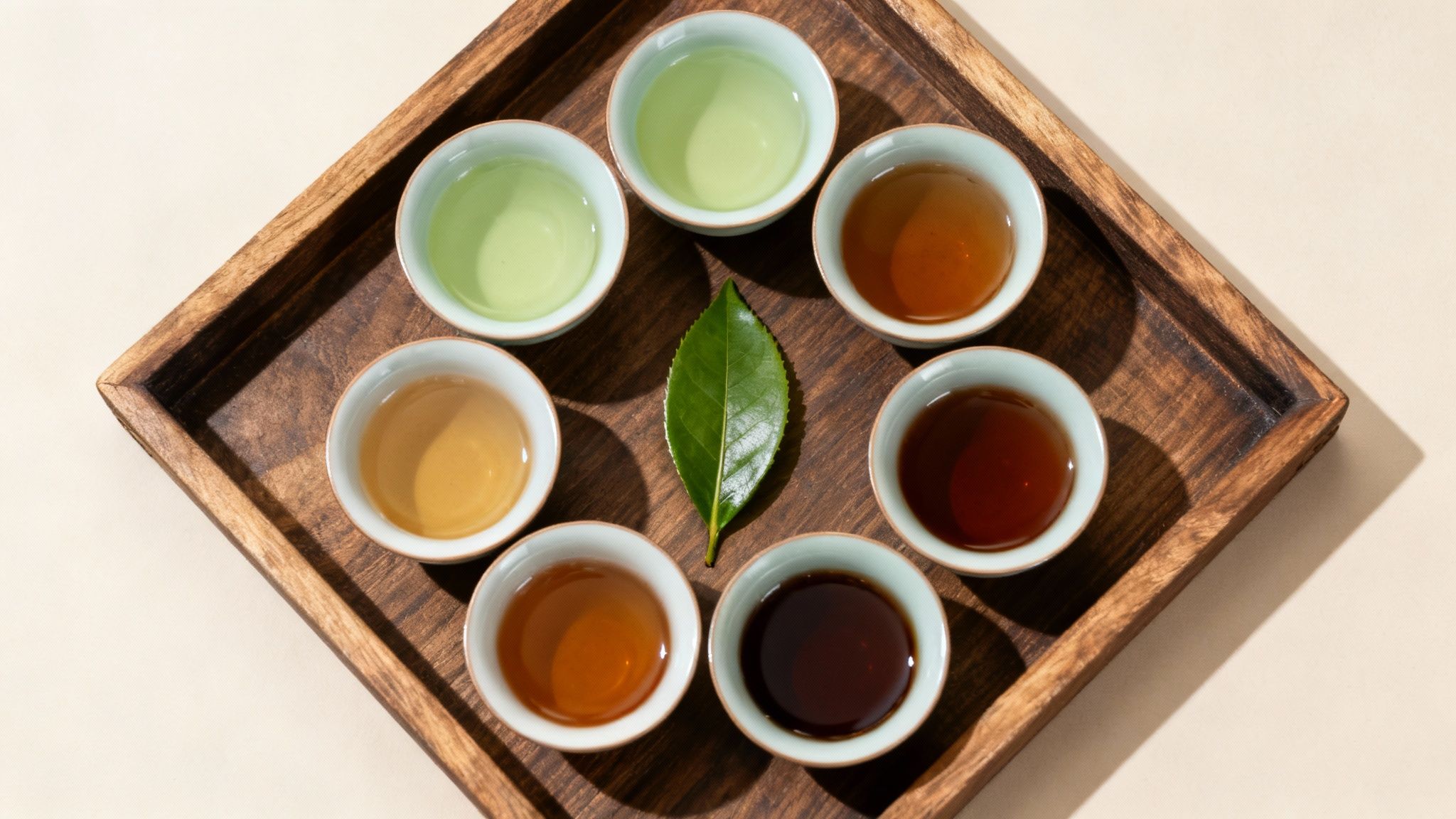
It always comes as a surprise to people, but every true tea you've ever sipped comes from the leaves of a single species: Camellia sinensis.
Think of it like wine. A single grape variety, say Chardonnay, can become a crisp, unoaked white, a rich and buttery oaked bottle, or even a sparkling Champagne. It all comes down to the craft of the winemaker.
Tea is exactly the same. The magic lies in what happens to the leaves after they're picked. The key process is a natural one called oxidation, and it's this that transforms a simple green leaf into the incredible spectrum of colours, aromas, and flavours we know and love.
The Role of Oxidation
So, what is oxidation? It’s simply the series of chemical reactions that kick off the moment a tea leaf is plucked and its cell walls are broken. The enzymes inside the leaf start to react with oxygen, changing its entire chemical makeup. This affects everything from the colour of the brewed tea to its taste in your cup.
The real skill of a tea master is in controlling this process with absolute precision. They can stop it almost immediately to create a light, fresh tea or let it run its full course to produce something dark and robust.
By masterfully guiding the level of oxidation, artisans can craft an astonishing diversity of teas from the very same plant. It's a beautiful expression of centuries of agricultural artistry and refinement.
To give you a clearer picture, here's a quick rundown of how the main tea types compare.
Quick Guide to the Six Main Types of Tea
This table summarises the primary tea categories from the Camellia sinensis plant, highlighting their oxidation levels and core flavour profiles.
| Tea Type | Oxidation Level | Common Flavour Notes |
|---|---|---|
| White | 0-5% (Minimal) | Delicate, floral, sweet, melon |
| Green | 0% (None) | Grassy, vegetal, nutty, marine |
| Yellow | 10-20% (Slight) | Mellow, sweet, nutty, smooth |
| Oolong | 10-80% (Partial) | Floral, fruity, creamy, toasted |
| Black | 100% (Full) | Malty, robust, fruity, honey |
| Pu'erh | Varies (Fermented) | Earthy, woody, mushroom, smooth |
As you can see, it's a journey from the barely-touched freshness of white tea all the way to the deep, complex notes of a fully oxidised black tea.
Exploring the Tea Spectrum
Over the next few sections, we'll walk you through each of these major tea types, diving into what makes them unique. We'll look at:
- White Tea: The most delicate, minimally processed and barely oxidised.
- Green Tea: Swiftly heated after picking to prevent oxidation, locking in its fresh, green character.
- Oolong Tea: The most diverse category, partially oxidised anywhere between a green and a black tea.
- Black Tea: Fully oxidised to create those deep, malty, and familiar robust flavours.
- Pu'erh Tea: A fascinating fermented and aged tea, known for its earthy, complex notes that develop over time.
Here at Jeeves & Jericho, we believe that understanding this process makes every cup more rewarding. It’s why we’re so committed to sourcing high-quality, whole leaf teas directly from ethical growers—so you can experience the true, authentic character of each one. Consider this your starting point for a lifetime of flavourful exploration.
Black Tea: The Robust Heart of Tea Culture
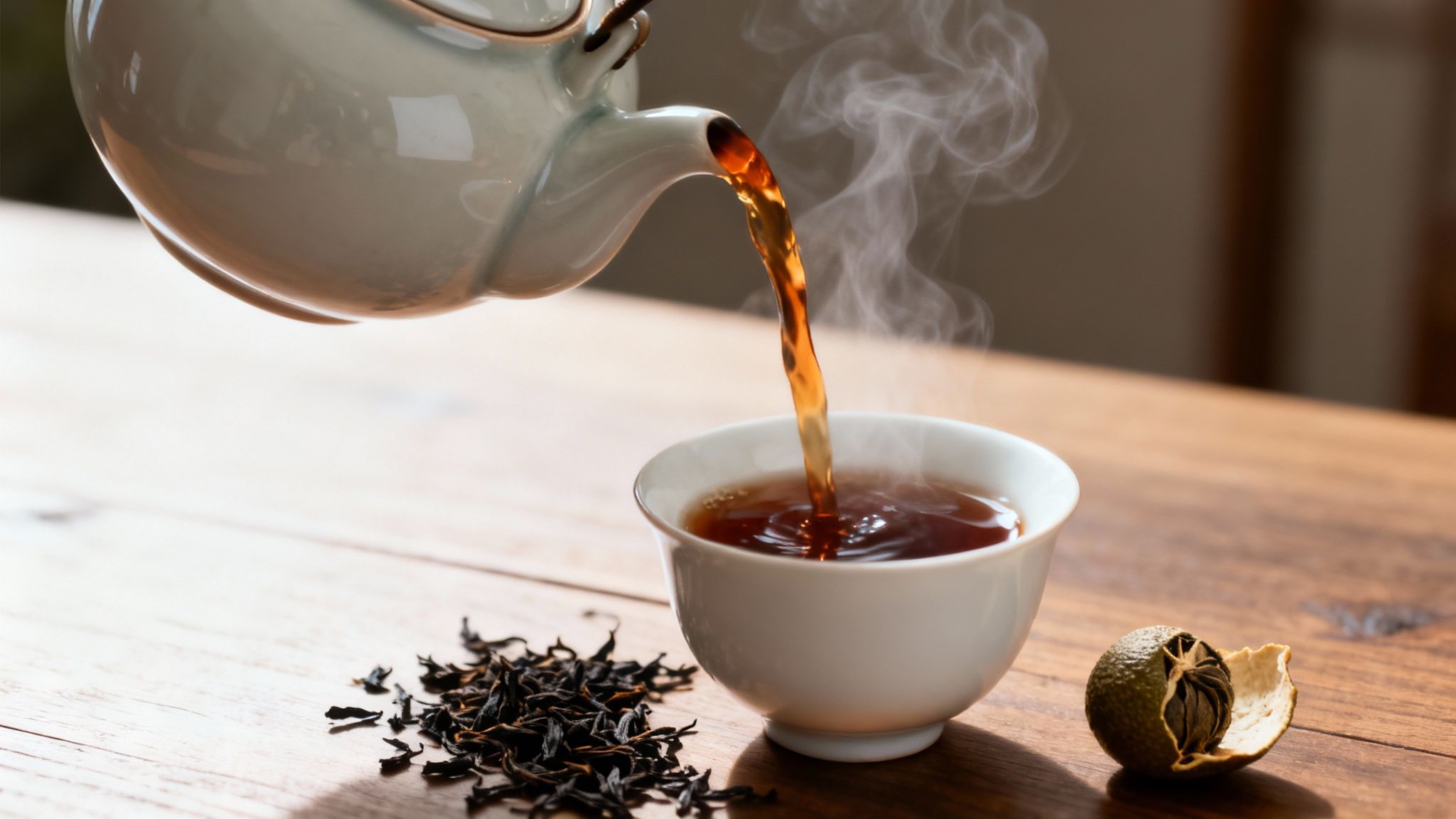
When you think of a classic ‘cuppa’, what comes to mind? For most of us, it’s a steaming mug of black tea. From a bustling London café to a quiet kitchen table, it’s the most popular and widely enjoyed tea in the Western world, hands down.
Its deep amber colour, full-bodied flavour, and rich, malty aroma are all down to one crucial step in its journey from the bush to your cup: full oxidation. Where green tea is heated to prevent oxidation, black tea leaves are encouraged to embrace it, allowing them to transform completely. This process unlocks the comforting, complex notes we know and love.
The Art of Crafting Black Tea
Making black tea is a four-step dance, a beautiful interplay between the raw leaf and the tea master’s skill. Each stage is vital in developing the tea's final character.
- Withering: First, the freshly plucked leaves are laid out to wilt. This gently reduces their moisture, making them soft and pliable for what comes next.
- Rolling: The now-supple leaves are rolled, either by hand or machine. This isn't just about shaping them; it breaks the leaf’s cell walls, releasing the enzymes that kickstart oxidation.
- Oxidation: Here’s where the real magic happens. The rolled leaves are left to rest in a temperature-controlled room, where they react with the air. As they oxidise, they turn from green to a deep coppery brown, developing those signature malty, fruity, and sometimes spicy notes.
- Drying (Firing): Finally, the leaves are fired with hot air to stop the oxidation process in its tracks. This locks in all that wonderful flavour and aroma, creating a stable leaf that’s ready for brewing.
It's this commitment to full oxidation that gives black tea its bold flavour — strong enough to stand up to milk and sugar — and a longer shelf life than its greener cousins.
Iconic Blends and Single-Origin Stars
While the process is methodical, the results are anything but uniform. The world of black tea is wonderfully diverse, with each variety telling the story of its home soil and traditions.
Here in the UK, black tea is still king. Blends like English Breakfast and Earl Grey are the very backbone of our national tea culture, with Brits sipping over 100 million cups every single day.
Black tea isn’t just a drink; it’s a ritual. It’s the comforting brew that starts the day, the welcome pause in a busy afternoon, and the warm welcome you offer a friend. Its reliability is matched only by its incredible depth.
Some of the most famous names on any tea list belong to the black tea family:
- Assam: A bold, powerful tea from India, known for its distinct malty punch. It’s the engine behind many of our favourite breakfast blends.
- Darjeeling: Often called the "Champagne of teas," this Indian variety is much more delicate, with beautiful floral aromas and notes of muscatel grape.
- Earl Grey: A timeless British classic. At its heart, it’s a simple black tea blend infused with the fragrant, citrusy oil of bergamot orange.
- English Breakfast: Not a single tea, but a carefully crafted blend of several black teas—usually Assam, Ceylon, and Kenyan—designed to be rich, robust, and invigorating.
At Jeeves & Jericho, we honour this incredible heritage by sourcing exceptional whole-leaf black teas from the world’s finest estates. Our commitment to ethical partnerships means that every cup, whether it’s a classic English Breakfast or a fragrant single-origin Darjeeling, delivers the pure, full-bodied flavour it was always meant to have.
To discover the nuances for yourself, dive into our complete guide to black tea varieties and find your new favourite.
Green Tea: A Fresh and Vibrant Wellness Staple
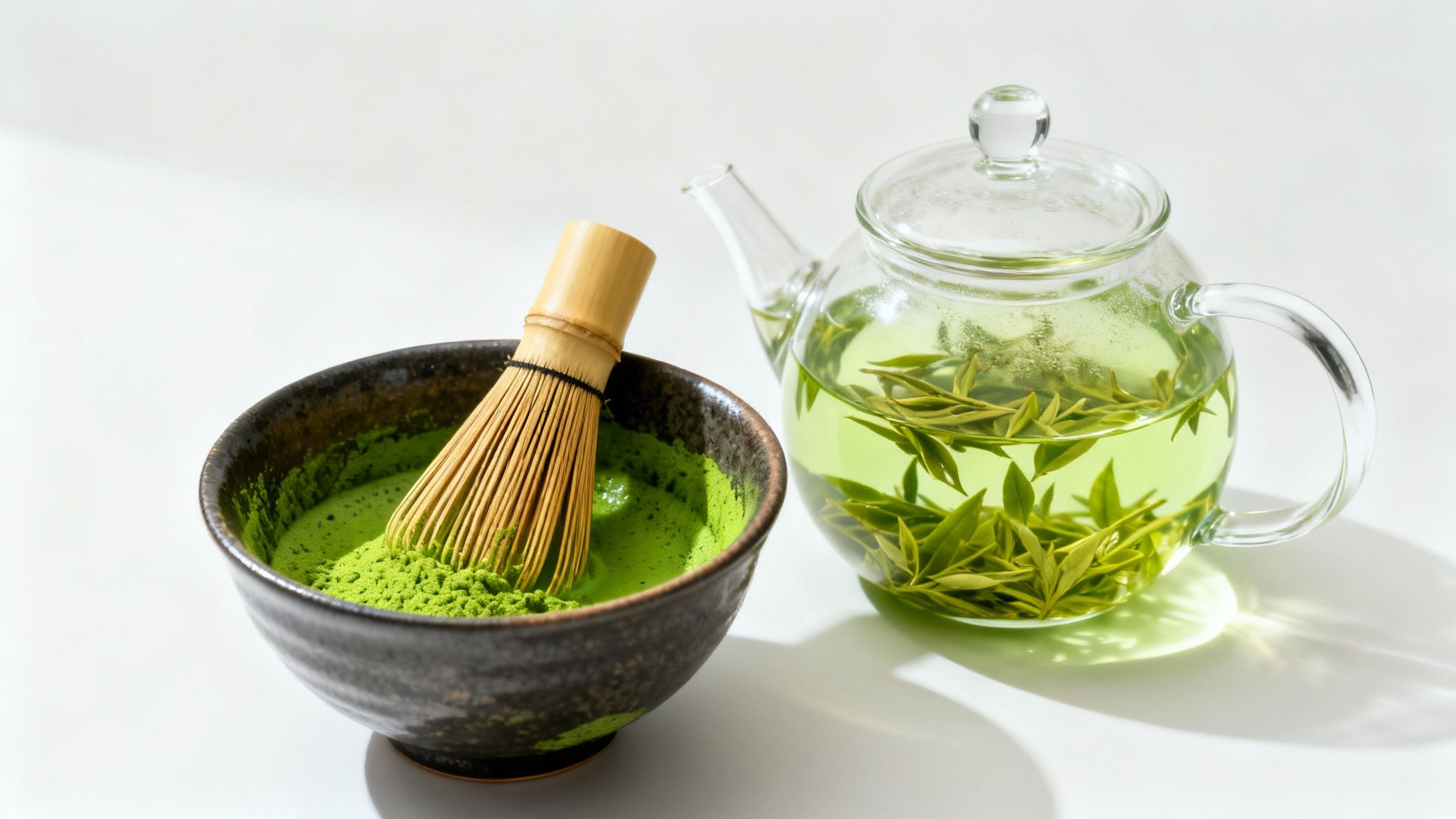
If black tea is all about embracing oxidation, green tea is its complete opposite. Think of it as the art of preservation, a way of capturing the fresh, vibrant spirit of the Camellia sinensis leaf right at its peak. It's loved for its bright, vegetal character and has become a rising star on any modern tea menu.
The secret to keeping green tea, well, green, all comes down to one critical step. Almost immediately after the leaves are picked, they're quickly heated to stop the oxidation process dead in its tracks. This simple action halts the enzymes that would otherwise cause the leaves to brown, locking in that gorgeous natural colour and those delicate, grassy flavours.
This heating process, known in the trade as "fixing" or "kill-green," is what truly sets green tea apart. It's a bit like blanching fresh garden peas to keep them brilliantly green and crisp instead of letting them turn dull and soft.
Different Methods, Different Flavours
How the tea master chooses to apply this heat is where the magic really happens, creating a wonderful spectrum of flavour profiles.
- Steaming (Japan): In Japan, the leaves are typically steamed. It's a quick and intense method that preserves a bright, almost electric green colour. This gives us those characteristically savoury, umami, and marine notes you'll find in a classic Sencha.
- Pan-Firing (China): Over in China, it's more common to see the leaves pan-fired in large woks. This is a gentler, slower approach that coaxes out warmer, toasted flavours, resulting in smoother, nuttier, and subtly sweet teas like the famous Dragon Well (Longjing).
We're seeing a real appreciation for these nuanced flavours grow, particularly among younger generations here in the UK. Green tea is having a moment, driven by both its wellness credentials and its complex taste. Recent research shows that 32% of Gen Z daily tea drinkers opt for green tea—well above the national average—and more than half of under-35s have tried matcha at home.
A Spotlight on Matcha: The Green Tea Powerhouse
You simply can't talk about green tea without mentioning matcha. It’s more than just a tea; it's a cultural phenomenon that has found a very welcome home in UK cafés and kitchens. This isn't an infusion of leaves but the whole leaf itself, stone-ground into a fine, vivid green powder.
The process is incredibly painstaking. For several weeks before harvest, the tea bushes are shaded from the sun, which ramps up their chlorophyll and L-theanine levels. The result is a deeper green colour and a uniquely creamy, umami-rich flavour, without the bitterness that can sometimes creep into other green teas.
Matcha is the concentrated soul of green tea. By consuming the entire leaf, you receive a potent dose of its nutrients and flavour, creating a smooth, energising experience that is both calming and clarifying.
This unique character makes a premium matcha, like the ones we source from Uji, Japan, perfect for everything from a traditional tea ceremony to the modern matcha lattes that have taken our cafés by storm. Its sheer versatility is a huge reason for its boom in popularity, making it a hero ingredient for home brewers and our wholesale partners alike.
Brewing Your Perfect Green Tea
To really unlock the beautiful flavours in your green tea, temperature is everything. If you use water that’s too hot—close to boiling—you'll scorch the delicate leaves and release too many tannins, which leads straight to a bitter, astringent brew.
For most green teas, the sweet spot for water temperature is between 70-80°C. A simple trick is to let your kettle boil, then just leave it to cool for a few minutes before you pour. It’s a small bit of patience that makes a world of difference, rewarding you with a cup that is sweet, fresh, and bursting with character. To find the perfect green tea for your palate, take a look at our guide on what is the best green tea for you.
Diving a Little Deeper: White, Oolong, Yellow & Pu’erh
Once you’ve explored the classic worlds of black and green tea, a whole other level of flavour and craftsmanship opens up. This is where things get really interesting, showing just how much artistry a tea master can bring to the humble leaf.
Think of white, yellow, oolong, and pu'erh teas as the single-origin coffees or fine wines of the tea world. They’re less common, often trickier to produce, and offer an incredible spectrum of complex flavours. If you’re ready to take the next step on your tea journey, this is it.
White Tea: The Essence of Purity
White tea is all about subtlety and minimal intervention. It’s the closest you can get to drinking the fresh tea leaf right from the plant, capturing the pure, delicate sweetness of the earliest spring growth.
To create it, tea pickers carefully select only the youngest, unopened buds and new leaves. That's it. There’s no rolling or firing; the leaves are simply withered and air-dried. This gentle touch prevents oxidation and protects the fine, silvery-white hairs on the buds that give the tea its name.
The result is a beautifully pale, golden liquor that is light, refined, and exceptionally smooth. You won’t find any bitterness here. Instead, you get gentle, nuanced notes of melon, honey, and soft florals. Our Silver Needle is a perfect expression of this, made purely from these precious buds for a truly sublime cup.
Oolong Tea: The Master of the Middle Ground
If you imagine a flavour scale with fresh green tea on one end and rich black tea on the other, oolong would fill the entire space in between. As a partially oxidised tea, it’s by far the most diverse and complex category, a true playground for the tea maker.
Making oolong is an intricate dance. The leaves are carefully bruised, shaken, and rested to encourage a specific level of oxidation—anywhere from a light 10% to a deep 80%. This process can be halted at any moment, unlocking a staggering range of flavours.
-
Lighter Oolongs (10-30% oxidation): These are closer to green teas. Often rolled into tight little balls, they unfurl dramatically in hot water, releasing fragrant, creamy notes of orchid, lily, and butter.
-
Darker Oolongs (60-80% oxidation): Leaning towards black teas, these are typically twisted into long leaves and often roasted. This develops deeper, warmer notes of toasted nuts, ripe peaches, honey, and even hints of cocoa.
Oolong is a testament to the tea master's craft. By skilfully guiding the oxidation, they can pull an incredible variety of aromas and tastes from the very same leaves, making every oolong a unique and rewarding experience.
Yellow Tea: The Lost Imperial Treasure
Yellow tea is the rarest of the six main tea types, a mellow mystery that was once a closely guarded secret of the Chinese imperial courts. The process starts like a green tea, but a crucial extra step changes everything: sealed yellowing.
After an initial heating to stop oxidation, the warm, damp leaves are carefully wrapped in cloth or paper. This stage, known as ‘men huan’, allows the leaves to gently steam in their own moisture. It’s a slow, non-enzymatic oxidation that coaxes out an entirely different character.
This special step smooths away the grassy bite of green tea, replacing it with something altogether softer and sweeter. Expect a remarkable smoothness with notes of sweet corn and toasted rice. It’s a subtle but deeply satisfying glimpse into a treasured tea-making tradition that was almost lost to time.
Pu'erh Tea: Aged Like a Fine Wine
And then there's Pu'erh. This one is in a category all its own. While other teas are defined by oxidation, Pu'erh is the only truly fermented tea. Hailing from Yunnan province in China, it’s crafted to be aged, developing deeper, more complex flavours over years, and even decades.
You’ll generally find two types of Pu'erh:
-
Sheng (Raw) Pu'erh: The traditional method. Leaves are processed similarly to green tea, then pressed into dense cakes to age naturally over time. A young Sheng can be quite bright and sharp, but as it matures, it transforms completely, gaining incredible depth with notes of camphor, old wood, and dried plums.
-
Shou (Ripe) Pu'erh: A modern style developed in the 1970s to speed things up. The leaves are piled, dampened, and covered to encourage a rapid microbial fermentation over a few weeks. This creates a tea that’s dark, rich, and velvety smooth right away, with deep, earthy flavours of a damp forest floor, mushrooms, and dark chocolate.
Pu'erh is a profoundly different experience—grounding, complex, and full of character. For any serious tea lover, it’s an essential part of the adventure.
Understanding Herbal Infusions and Spiced Chai
So far, we’ve journeyed through the incredible world of Camellia sinensis — the single plant that gives us every true tea. But what about all the other wonderful brews we love, like peppermint, chamomile, or the soul-warming spice of chai? Now, we step beyond the tea plant into a territory just as vibrant and flavourful.
Lots of drinks we call ‘tea’ aren’t technically teas at all. They’re more accurately called tisanes (pronounced ti-zahn) or herbal infusions. The rule of thumb is simple: if it doesn't come from the Camellia sinensis plant, it’s not a true tea, but it's part of a much-loved family of infusions.
These drinks are made by steeping bits and pieces of other plants—flowers, fruits, leaves, roots, or spices—in hot water. This small distinction is key, as it’s why most herbal infusions are naturally 100% caffeine-free, making them a perfect choice for any time of day or night.
The World of Herbal Infusions
The sheer variety of herbal infusions is practically endless. It’s a huge spectrum of flavours and wellness benefits that cultures across the globe have cherished for centuries. Each one tells a story of where it comes from.
- Chamomile: Made from delicate, daisy-like flowers, this infusion is famous for its calming effect. Its gentle, apple-like sweetness makes it the go-to for winding down before bed.
- Peppermint: With its sharp, invigorating, and cooling menthol character, peppermint is a classic for soothing digestion and clearing the senses.
- Rooibos: Hailing from South Africa, this "red bush" tisane has a naturally sweet, nutty, and smooth profile. It’s completely free of caffeine and low in tannins, so it never gets bitter.
- Fruit Infusions: Blends of dried fruits like hibiscus, rosehip, and berries create brilliantly coloured, tart, and juicy brews that are just as delicious hot as they are iced.
Herbal infusions are like nature’s pantry in a cup. They offer a caffeine-free way to enjoy a warm, flavourful drink while tapping into the gentle, time-honoured properties of plants, from soothing relaxation to digestive comfort.
This diverse category genuinely offers something for every palate, making it an essential part of any proper tea and infusion menu.
The Aromatic Embrace of Chai
Now, let's turn to one of the most beloved spiced drinks in the world: Chai. While it often gets lumped in with herbal infusions, traditional Masala Chai (which simply means ‘spiced tea’ in Hindi) is special because it brings both worlds together.
Chai isn’t just a flavour; it’s a cultural ritual with deep roots in India. It starts with a base of strong black tea—usually a robust Assam—which is then simmered with a heady mix of aromatic spices, milk, and a sweetener. The beauty of it is in the balance, where the bold tea stands up to the warmth of the spices without getting lost.
The classic spice blend, known as karha, usually includes:
- Cardamom: For a sweet, floral, and slightly minty note.
- Cinnamon: To bring that familiar sweet and woody warmth.
- Ginger: Adding a pungent, spicy kick.
- Cloves: Giving a deep, sweet, and slightly peppery aroma.
- Black Peppercorns: For a surprising hint of heat.
This invigorating, comforting, and wonderfully fragrant brew is now a global café staple, offering a fantastic alternative to coffee. Its cultural influence has spread far and wide, inspiring all sorts of creative takes, from lattes to a Chaiwala Cocktail Afternoon Tea.
To really get to grips with its rich history, you can read our deep dive into the story of chai tea from India. At Jeeves & Jericho, our Spiced Bombay Chai is crafted with an authentic recipe, ensuring every sip delivers that perfect, soul-warming balance of spice and tea.
How to Choose and Brew Your Perfect Cup
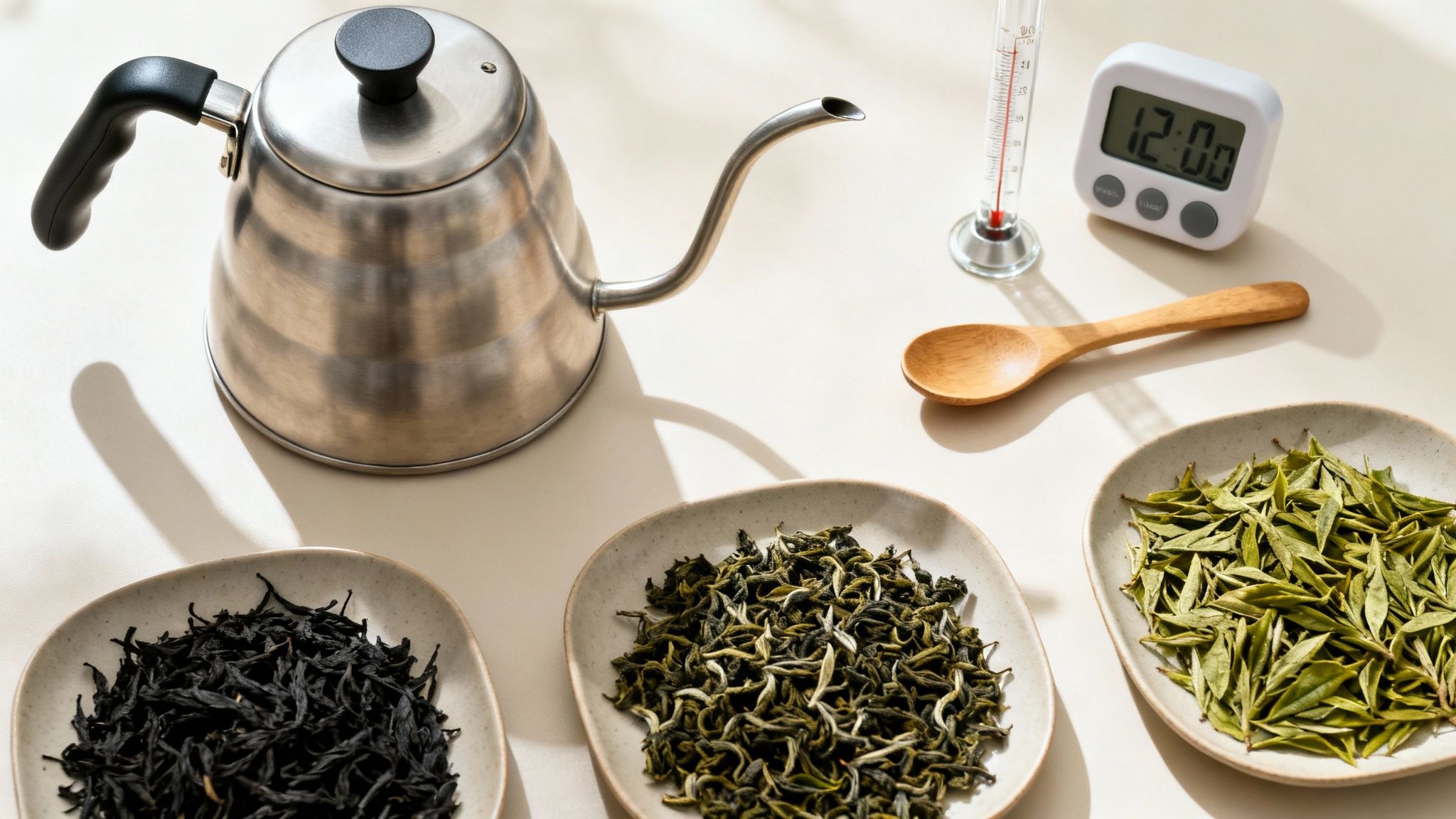
Now that we’ve walked through the main types of tea, you’re ready for the fun part: finding your perfect match and learning to brew it like a pro. Think of choosing a tea as a personal journey. It’s all about listening to what you fancy – your taste, the time of day, and even your mood.
Looking for a bold, malty kick to get the morning started? A punchy black tea like an English Breakfast is your best friend. Maybe you need a gentle pick-me-up for the afternoon slump, something without the jitters? A lighter oolong or a bright green tea could be just the ticket. And for those quiet, caffeine-free evenings, you can’t go wrong with a soothing herbal infusion like chamomile.
Getting to grips with what a flavor profile is and how to read one can be a real game-changer. It helps you pinpoint the specific notes you love, giving you the confidence to explore any tea list and discover new favourites.
Mastering the Art of Brewing
Once you’ve picked your tea, it’s time to get the kettle on. This is where the magic really happens, and a few small tweaks can turn an average brew into a truly sublime one. The two most critical factors are water temperature and steeping time.
If your water is too hot, it can easily scorch delicate leaves like greens and whites. This releases tannins, which is what makes a tea taste bitter. On the flip side, water that’s too cool won’t be able to draw out the full depth of flavour from a robust black tea.
Steeping for too long is another common pitfall that can make any tea harsh and astringent. It’s always best to start with a shorter time, have a little taste, and then decide if it needs a minute longer.
The real art of brewing isn’t just about pouring hot water over leaves. It’s about gently coaxing out the complex tapestry of aromas and flavours that the tea master so carefully cultivated. A little bit of care honours their craft and rewards you with an exceptional cup.
Perfect Brewing Guide for Every Tea Type
To get you started, here's a quick-reference guide for the main tea categories. Treat these as a starting point – the best part of tea is experimenting to find what works for you.
| Tea Type | Water Temperature (°C) | Steeping Time | Jeeves & Jericho Suggestion |
|---|---|---|---|
| White Tea | 75–80°C | 2–4 minutes | Our delicate Silver Needle shines with a gentle brew. |
| Green Tea | 70–80°C | 1–3 minutes | Cooler water prevents bitterness in our vibrant green teas. |
| Oolong Tea | 85–95°C | 2–5 minutes | Can often be re-steeped multiple times. |
| Black Tea | 95–100°C | 3–5 minutes | Use boiling water for a full-bodied extraction. |
| Herbal Infusion | 100°C | 5–7 minutes | A longer, hotter steep extracts maximum flavour. |
These simple guidelines will help you unlock the best flavours from your chosen leaves, every single time.
The Whole-Leaf Difference
Finally, it’s worth remembering that the quality of your leaf makes all the difference. Using whole-leaf tea, like the kind we ethically source here at Jeeves & Jericho, gives the leaves room to unfurl completely and release their nuanced, complex flavours. This offers a far richer and more satisfying taste compared to the fine 'dust' you often find in standard tea bags.
Whether you're a home enthusiast looking to elevate your daily ritual or a wholesale partner curating a thoughtful menu for your customers, remember that tea is all about discovery. So don't be afraid to play around. Explore, taste, and most of all, enjoy every single cup.
Your Tea Questions, Answered
As you dive deeper into the world of tea, a few questions always seem to pop up. Whether it's about that morning caffeine kick or how to keep your favourite leaves tasting their best, getting the basics right makes all the difference. Let's tackle a few of the most common queries we hear.
Do All Types of Tea Have Caffeine?
In a word, yes—if we're talking about "true tea". Anything that comes from the Camellia sinensis plant, whether it’s black, green, oolong, white, yellow, or pu'erh, will naturally contain caffeine. The amount can vary quite a bit depending on how it's grown, processed, and brewed, but black tea usually packs the biggest punch.
But what about chamomile or peppermint? Those are herbal infusions, sometimes called 'tisanes'. Because they aren't made from the tea plant, they are completely caffeine-free, making them a perfect, soothing brew for any time of day or night.
What Is the Difference Between Loose Leaf Tea and Tea Bags?
It all comes down to the quality and size of the leaf. When you buy loose leaf tea, you're getting whole or large, broken leaves. These leaves need room to unfurl in the hot water, and as they do, they release a whole spectrum of complex flavours and aromas. It’s a far more nuanced and satisfying brew.
Your standard tea bag, on the other hand, is often filled with the leftovers—tiny particles known as "fannings" or "dust". They brew up a strong cup very quickly, but you lose all the subtlety. The flavour is often one-dimensional and can even turn bitter.
Think of it as a choice between depth and convenience. Whole leaves offer a richer, more authentic taste experience that truly honours the tea's character.
How Should I Store My Tea to Keep It Fresh?
Great question. Proper storage is the secret to preserving all that incredible flavour and aroma. Tea has four enemies: light, heat, moisture, and strong odours.
The best way to protect your leaves is to keep them in an airtight container stashed away in a cool, dark place like a kitchen cupboard. Steer clear of the fridge or freezer, though—the condensation can ruin the delicate leaves. A little bit of care goes a long way, keeping your tea vibrant and delicious for months.
At Jeeves & Jericho, we’re all about sourcing exceptional, whole leaf teas that are as ethical as they are delicious. Why not explore our full collection and find your perfect brew today at https://www.jeevesandjericho.com.