


The secret to a perfect cup of tea isn't just about the quality of the leaves or how long you let it steep. It’s all about one surprisingly simple thing: getting the water temperature right. The best water temperature for tea can be anything from a gentle 75-85°C for delicate greens to a full-on rolling boil of 95-100°C for robust black teas.
Nailing this single step is what unlocks the true flavour of your tea.
Why Water Temperature Unlocks Your Tea's True Flavour
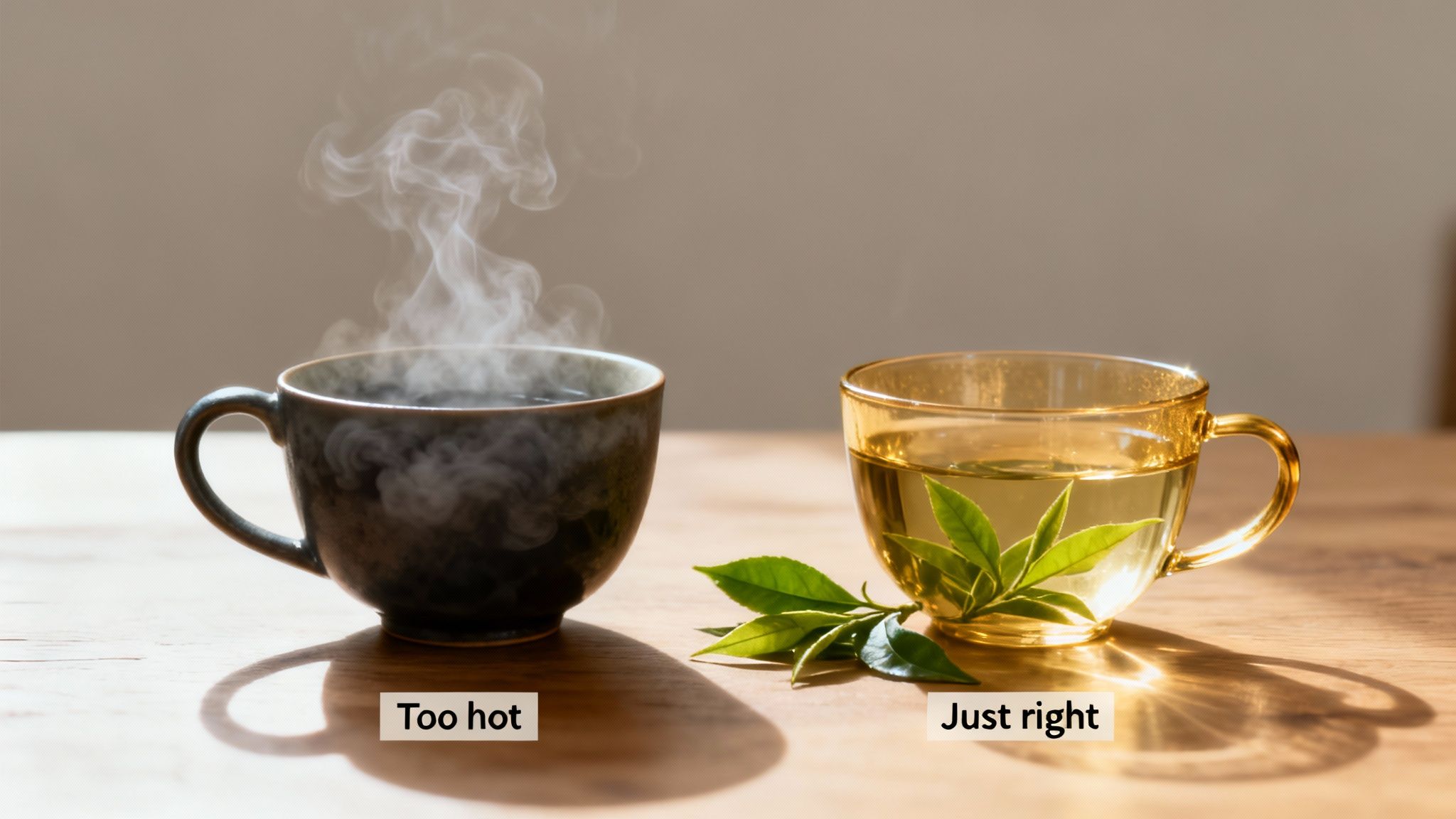
Ever brewed a cup of tea that ended up tasting bitter, or just disappointingly weak? The culprit is almost always the water temperature. Think of it like cooking a delicate sauce. If the heat is too high, you’ll scorch the ingredients and get a harsh, unpleasant flavour. Too low, and nothing really comes together, leaving you with something bland and boring.
It all comes down to the chemistry happening inside the tea leaf. Different compounds in the leaf dissolve at different temperatures, and you need to get the balance just right.
- Amino Acids: These are the good guys, responsible for the lovely sweet, savoury, and brothy notes in tea (often called umami). They dissolve at lower temperatures.
- Tannins (Polyphenols): These give tea its structure and briskness, but in excess, they’re what make it taste bitter and astringent. They’re extracted much faster at higher temperatures.
Getting the temperature spot-on means you extract all that delicious sweetness without releasing a flood of bitter tannins. It's a simple adjustment that will completely change your daily brew for the better.
The Science of a Perfect Brew
If you pour boiling water straight onto a delicate green tea, you're essentially burning the leaves. It's a shock to their system, causing them to immediately release a wave of tannins. The result? A bitter, harsh cup that completely masks the subtle, grassy notes you were hoping for.
On the flip side, using water that’s too cool for a strong black tea will leave it tasting flat and lifeless. The heat just isn't high enough to draw out all those deep, malty flavour compounds that make it so satisfying.
The right water temperature creates a controlled extraction, coaxing out layers of flavour in the correct sequence. It’s the difference between a one-note, harsh drink and a nuanced, aromatic experience that evolves with every sip.
Why Precision Matters for Every Cup
It might sound fussy, but it makes a huge difference. With the average Brit drinking over 532.5 cups of tea a year, it’s a shame so few realise that the right temperature can swing extraction efficiency by 30-50%. This directly impacts not just the taste, but the health benefits you get from your brew.
Mastering this one variable is the most effective step you can take towards brewing perfection, whether you're at home or hoping to experience the best afternoon tea out and about.
Your Essential Tea Temperature and Steeping Chart
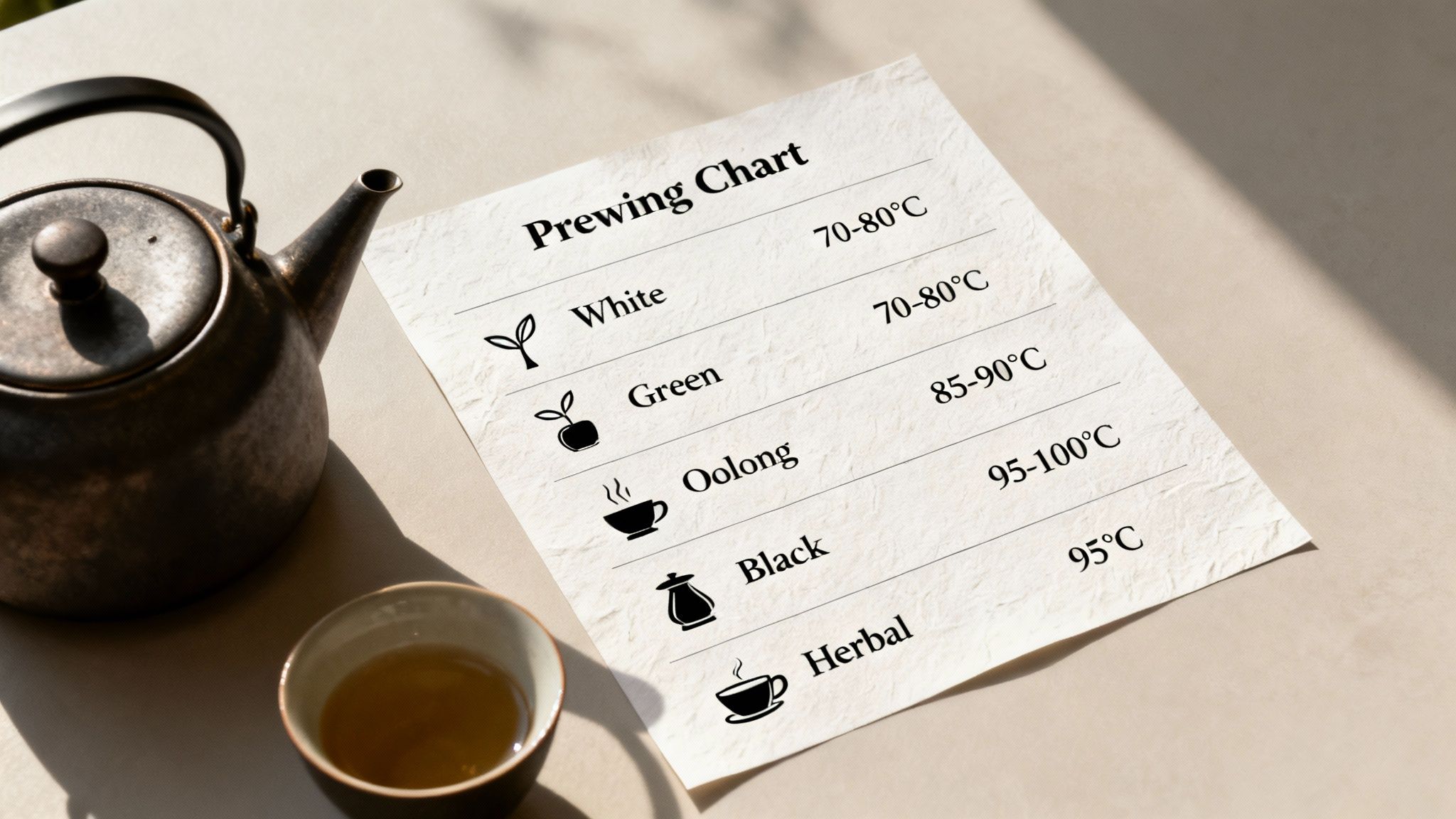
Right, now that we’ve got the science out of the way, let’s get practical. To make things wonderfully simple, we've put together a handy guide to help you find the best water temperature for tea, whatever you’re brewing.
Think of this as your personal cheat sheet for a perfect cup, every single time. It takes the guesswork out of the equation, giving you the ideal temperatures and timings to unlock the true flavour of each tea. Pin this up by your kettle, and you can say goodbye to bitter, disappointing brews for good.
Quick Reference Brewing Guide
We've designed this guide for those moments when you just want a quick answer. Whether you're a seasoned tea connoisseur or just starting your journey, these recommendations offer a solid, reliable starting point for your daily ritual.
The secret to a truly great brew? These are guidelines, not rigid rules. Your perfect cup is a personal thing, so use these temperatures as a foundation and have a play to find what you love most.
Ready to completely transform your tea routine? Let’s dive into the specifics for each type of tea, from the most delicate white teas to the most robust, hearty blends.
Recommended Water Temperature and Steeping Time by Tea Type
The chart below is your go-to reference for brewing the most popular types of tea. We’ve included the ideal temperature in Celsius, how long you should let it steep, and the kind of flavours you can expect when you get it just right.
| Tea Type | Ideal Temperature (°C) | Steeping Time | Resulting Flavour Profile |
|---|---|---|---|
| White Tea | 75–85°C | 1–3 minutes | Delicate, subtly sweet, with light floral and fruity notes. |
| Green Tea | 75–85°C | 1–3 minutes | Fresh, grassy, or vegetal with a clean, sometimes nutty finish. |
| Oolong Tea | 85–95°C | 2–5 minutes | Highly varied; from light and floral to dark, roasted, and fruity. |
| Black Tea | 95–100°C | 3–5 minutes | Robust and full-bodied with malty, fruity, or brisk characteristics. |
| Pu-erh Tea | 95–100°C | 2–4 minutes | Deeply earthy, rich, and smooth with a complex, often mushroom-like aroma. |
| Herbal Infusion | 95–100°C | 5–7 minutes | Varies by blend; can be floral, minty, fruity, or spicy. |
| Chai | 95–100°C | 4–6 minutes | Bold and spicy with warming notes of cinnamon, cardamom, and ginger. |
| Matcha | 70–80°C | Whisk until frothy | Creamy and smooth with a distinct umami or savoury-sweet flavour. |
How to Use This Chart Effectively
This chart is all about helping you brew with confidence and consistency. Simply find your tea on the list, heat your water to the recommended temperature, and pop a timer on for the suggested steeping duration. It’s that easy.
Of course, temperature is only half of the story. If you want to go a bit deeper, understanding how long to brew tea is the perfect next step. Temperature and time are the two pillars of a perfect brew, after all.
Remember, this is your starting block. If your black tea feels a bit too punchy after five minutes, try brewing it for just three next time. If a green tea tastes a little shy, nudge the temperature up by a few degrees. The real joy is in the experimentation, so have fun discovering what makes the perfect cup for you.
How Temperature Affects Different Tea Types
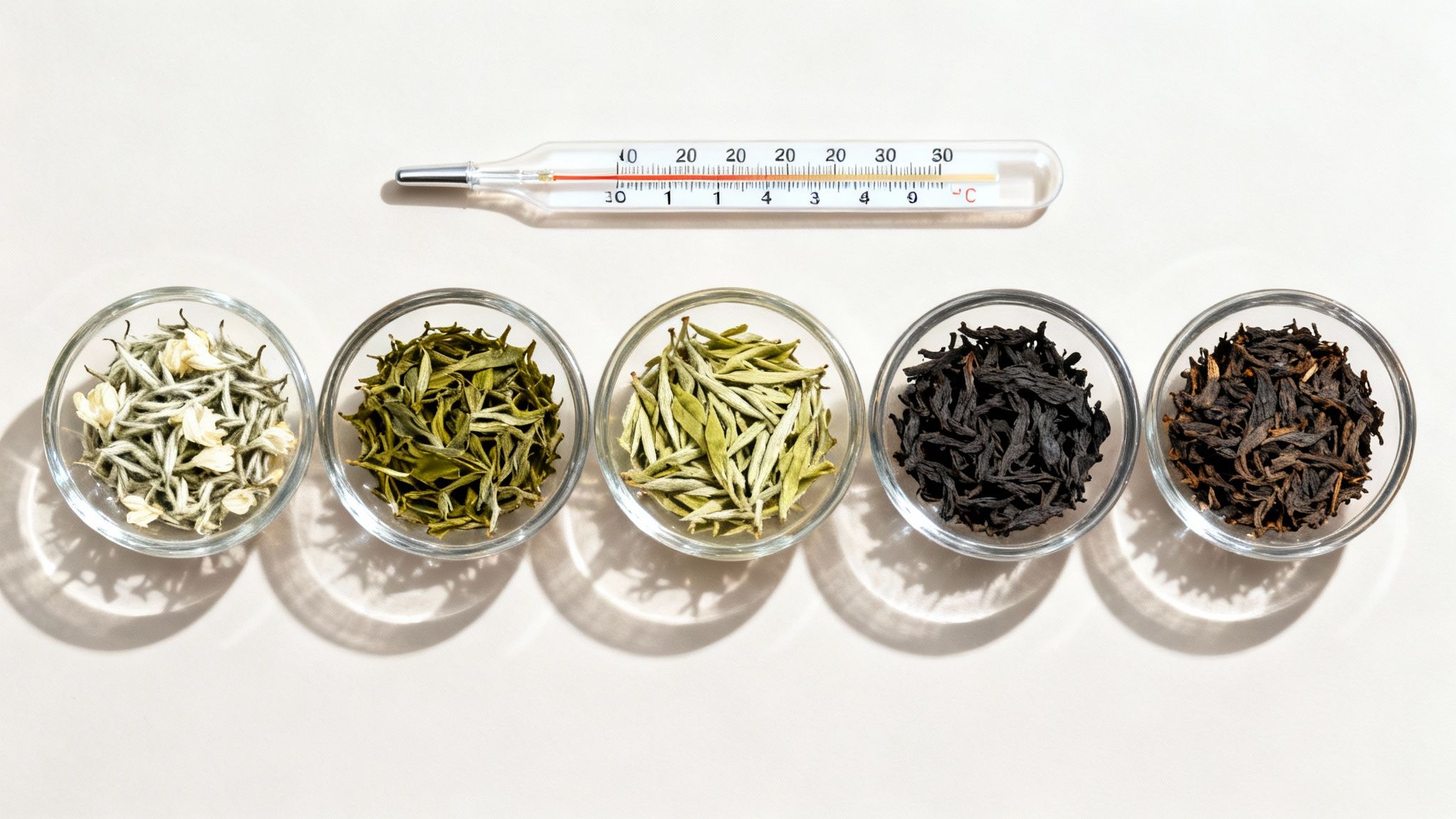
It’s one thing to memorise the numbers on a brewing chart, but the real fun begins when you understand why each tea has its own sweet spot. It all boils down to the unique chemistry within the leaf.
Think of it like this: using water that’s too hot is like shouting at the leaves. You’ll get a harsh, bitter reaction as they release all their defensive tannins at once. Too cool, and it’s like whispering – the deeper, more complex flavours will never fully wake up. Getting the temperature just right is how you have a proper conversation with your tea.
The Delicate Nature of Green and White Teas
Green and white teas are the most delicate of the bunch. Because they are minimally processed, their leaves are full of fragile compounds called catechins, which give them that fresh, grassy character and a host of health benefits. They are also incredibly sensitive to heat.
Dousing these leaves in water above 85°C is like scalding them. The shock forces them to release a flood of tannins, which completely smothers their subtle sweetness and leaves you with a bitter, astringent brew. Stick to cooler water, somewhere between 75-85°C, and you’ll gently coax out the lovely amino acids, preserving the tea’s clean finish.
With green and white teas, the aim of the game is preservation. You want to protect their delicate structure to enjoy the nuanced, sweet flavours they’re holding onto. Cooler water is your best friend here.
For a deeper dive into the world of tea, you can explore the main types of tea in our detailed guide.
The Adaptable Character of Oolong Tea
Oolongs are fascinating. They sit somewhere on the spectrum between green and black teas, and their character is all down to their level of oxidation. This one factor directly dictates the perfect water temperature.
- Lightly Oxidised Oolongs: These lean closer to green teas, with bright, floral notes. They prefer slightly cooler water, usually around 85-90°C, to protect those delicate aromatics.
- Heavily Oxidised Oolongs: These are much more like black teas, with rich, roasted, and fruity profiles. They need hotter water, around 90-95°C, to unlock their deeper, more complex compounds.
This incredible range makes oolong a joy to experiment with. By tweaking the temperature by just a few degrees, you can uncover entirely new layers of flavour, from orchid and honey to roasted nuts.
The Robust World of Black and Pu-erh Teas
Finally, we have the boldest members of the tea family. Black and Pu-erh teas are fully oxidised (or fermented, in Pu-erh's case), which makes their leaves tough and their flavour compounds much more stable. To break through and draw out those deep, malty, and earthy notes, you need some serious heat.
Near-boiling water (95-100°C) is non-negotiable. Anything cooler will give you a weak, thin brew that just tastes flat and disappointing. The intense heat is what dissolves the larger molecules responsible for their signature richness and deep colour. This applies to heavily spiced blends, too. Our Spiced Bombay Chai, for example, truly sings at 95°C, releasing 20% more aromatic oils for that authentic kick.
Getting these temperatures right can turn a simple daily cuppa into a proper ritual. It’s a small detail that makes a world of difference, something the 37% of young UK adults trying multiple tea types a month are quickly discovering. You can find more insights on these trends from industry studies on tea consumption patterns.
Simple Ways to Get Your Water Temperature Just Right
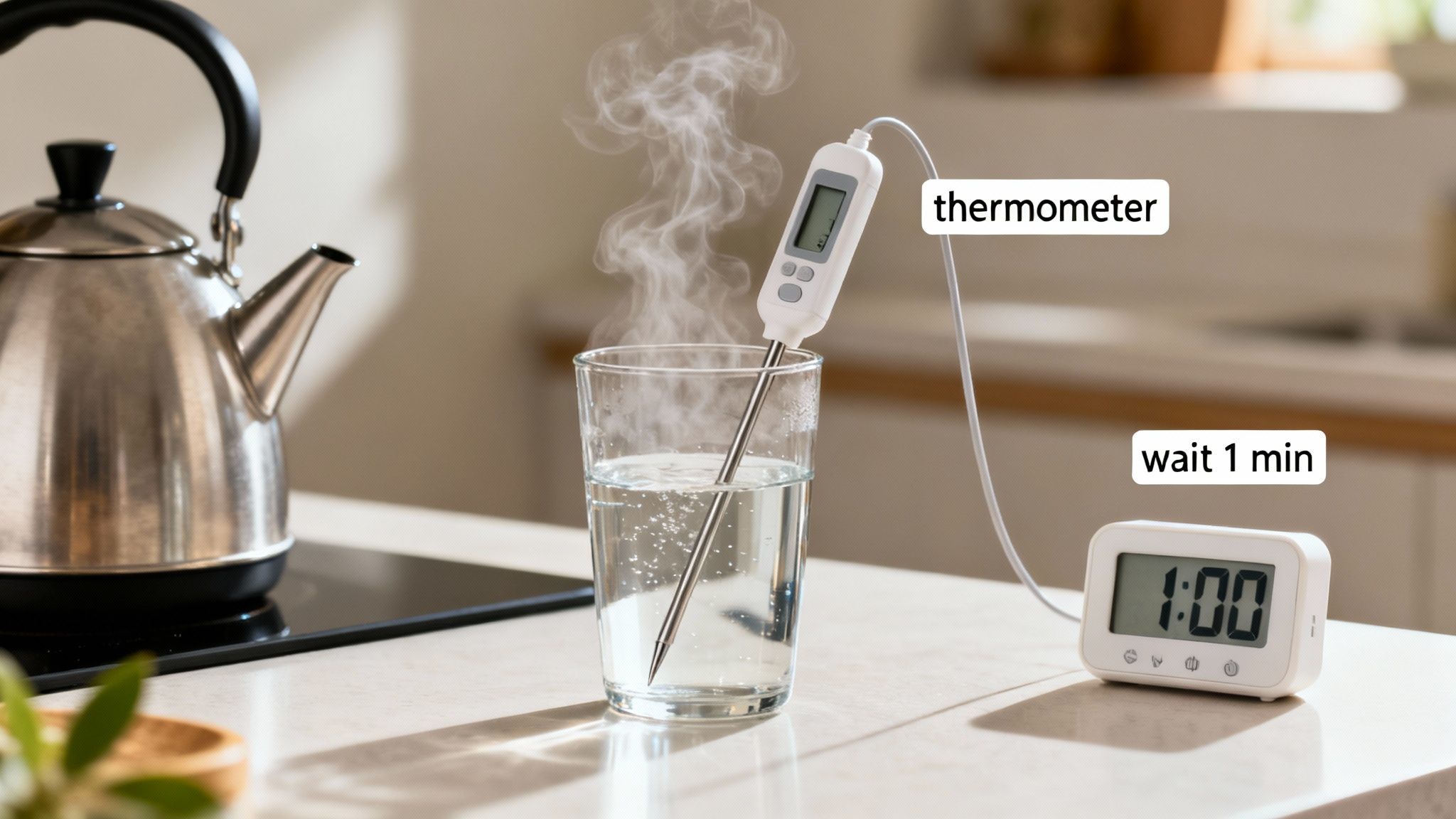
You don’t need a science lab to find the best water temperature for tea. While there are some handy gadgets out there, getting it right is easily done with what you probably already have in your kitchen.
The real trick is just finding a method that works for you and sticking with it. Whether that’s a fancy kettle or a good old-fashioned stopwatch, consistency is what matters most. Let’s look at a couple of straightforward ways to do it.
The Gadgets for Tea Lovers
For anyone who loves a bit of precision, a couple of tools can make hitting that perfect temperature completely foolproof. They take out all the guesswork, so you get a perfect cup every time.
- Variable Temperature Kettles: These are the gold standard for a reason. You just tell it what temperature you want (say, 80°C for a green tea), and it heats the water perfectly and keeps it there.
- Digital Thermometers: A quick-read kitchen thermometer is a brilliant, wallet-friendly option. Simply boil your water in any kettle, then pop the thermometer in to check the temperature as it cools to your target.
Using tools like these is the most direct way to follow brewing guides with total confidence, unlocking all those subtle flavour notes hiding in your tea leaves.
The Classic Boil and Wait Method
No special kit? No worries at all. The most traditional way to nail the temperature is the simple 'boil and wait' technique. It’s a beautifully intuitive approach that tea drinkers have relied on for centuries.
It’s exactly what it sounds like: bring the water to a rolling boil (100°C), then simply let it stand for a few minutes to cool down. As a rule of thumb, water in a kettle will drop about 5-6°C every minute it sits.
There's something really satisfying about this method. It connects you to the whole ritual of tea making, turning a simple brew into a mindful moment. It’s a great reminder that a brilliant cup of tea doesn't depend on expensive gear.
A Quick Guide to Waiting Times
So, how long should you wait after the kettle clicks off? Here’s a handy cheat sheet to get you started.
- For Black, Pu-erh, and Herbal Teas (95-100°C): You can pretty much pour straight away, or just wait 30 seconds.
- For Oolong Teas (85-95°C): Let the water rest for 1 to 2 minutes.
- For White and Green Teas (75-85°C): Give it a good 3 to 4 minutes before you pour.
After a few goes, you'll get a real feel for it. Soon enough, you'll be brewing consistently delicious tea with nothing more than your kettle and a timer.
Common Brewing Mistakes and How to Fix Them
Getting the water temperature just right for your tea is a bit of an art, and honestly, we’ve all made these simple mistakes along the way. But figuring out these common slip-ups is the fastest way to turn a good cup of tea into a truly fantastic one.
The biggest culprit? Using water straight from a rolling boil for every single tea. While a robust black tea can take the heat, pouring 100°C water over delicate green or white leaves essentially shocks them. It scorches the leaves, which then release a rush of bitter tannins and kill all those lovely, subtle sweet notes. You’re left with a harsh, astringent brew that’s a shadow of what it could have been.
Another classic pitfall is re-boiling the same water that’s been sitting in the kettle. Every time you boil water, you strip out some of its dissolved oxygen. Using this flat, de-oxygenated water can leave your tea tasting disappointingly lifeless, robbing it of its bright aroma and vibrant flavour.
Simple Fixes for a Flawless Brew
The good news is that these are incredibly easy habits to change, and you'll notice the difference in your very next cup.
- Cool It Down: For those more delicate teas, just let your boiled kettle sit for a moment. Waiting 3-4 minutes is usually all it takes to bring the temperature down into that perfect 75-85°C sweet spot.
- Always Use Fresh Water: Before every brew, tip out the old water and start again with fresh, cold water from the tap. This ensures it’s full of oxygen, which is vital for unlocking a bright, flavourful cup.
- Don’t Underdo It: On the other hand, water that’s too cool won't do justice to your black or Pu-erh teas. You'll get a weak, under-extracted brew. Make sure the water is at least 95°C to properly unlock their deep, rich character.
The goal is not just to make tea, but to have a conversation with the leaves. Using the right temperature respects their unique chemistry and allows them to express their full range of flavours without bitterness or blandness.
By avoiding these simple traps, you're giving your tea leaves the chance to really show off what they can do. If you'd like to dive deeper, our guide on how to brew loose leaf tea has plenty more tips to help you refine your technique.
A Few Final Questions on Tea Temperature
Even armed with a trusty temperature chart, a few questions always seem to come up as you get closer to perfecting your brew. Think of this as the final polish on your tea-making skills, clearing up those last little details that make all the difference.
Does The Type of Water I Use Matter?
In short, yes, but perhaps not how you think. Whether you're using filtered, spring, or tap water, the ideal temperature for your chosen tea remains the same. The real difference is in the taste.
Water heavy in minerals can sometimes flatten the delicate notes of a tea. For the cleanest, most vibrant flavour, we always find filtered water gives the best results. But no matter the source, getting the temperature right for your specific leaves is what truly unlocks their best character.
What Happens If I Steep My Tea Too Long?
We've all done it—got distracted and left the tea bag in. Steeping tea for too long, even at the perfect temperature, is a one-way ticket to a bitter brew. This is what's known as over-extraction.
The process releases too many tannins, which are the compounds that create that dry, astringent feeling in your mouth.
The result is a harshness that completely masks the nuanced, delicate flavours of the tea. If you're after a stronger cup, the trick isn't to brew it for longer, but to simply add more tea leaves. You'll get all the richness without any of the bitterness.
Can I Reuse Tea Leaves for a Second Cup?
Absolutely! This is one of the great joys of drinking high-quality, whole leaf teas. Re-steeping your leaves is a brilliant way to get more out of them, and you’ll often discover new layers of flavour with each infusion.
For the second round, a couple of small tweaks will help draw out the remaining goodness.
- Bump up the heat: Give the water temperature a little nudge, about 5–10°C warmer than your first infusion.
- Give it more time: Extend the steeping time a little to help coax out those deeper notes.
You'll be surprised by what you find. A second cup can often reveal subtle, complex notes that were hiding in the background the first time around, making the experience all the more rewarding.
Ready to put your new knowledge to the test? At Jeeves & Jericho, we’ve curated a collection of exceptional, ethically sourced whole leaf teas, chai, and matcha to elevate your daily ritual. Find your next favourite brew and taste the difference that doing things properly makes. https://www.jeevesandjericho.com