


Though the electric-green powder is synonymous with Japanese culture today, its story doesn't actually begin there. The true origin of matcha traces back over a thousand years, not to the serene tea fields of Uji, but to Tang Dynasty China (618–907 AD). This is where the practice of grinding tea into a fine powder first took root.
The Surprising Ancient Roots of Matcha Tea
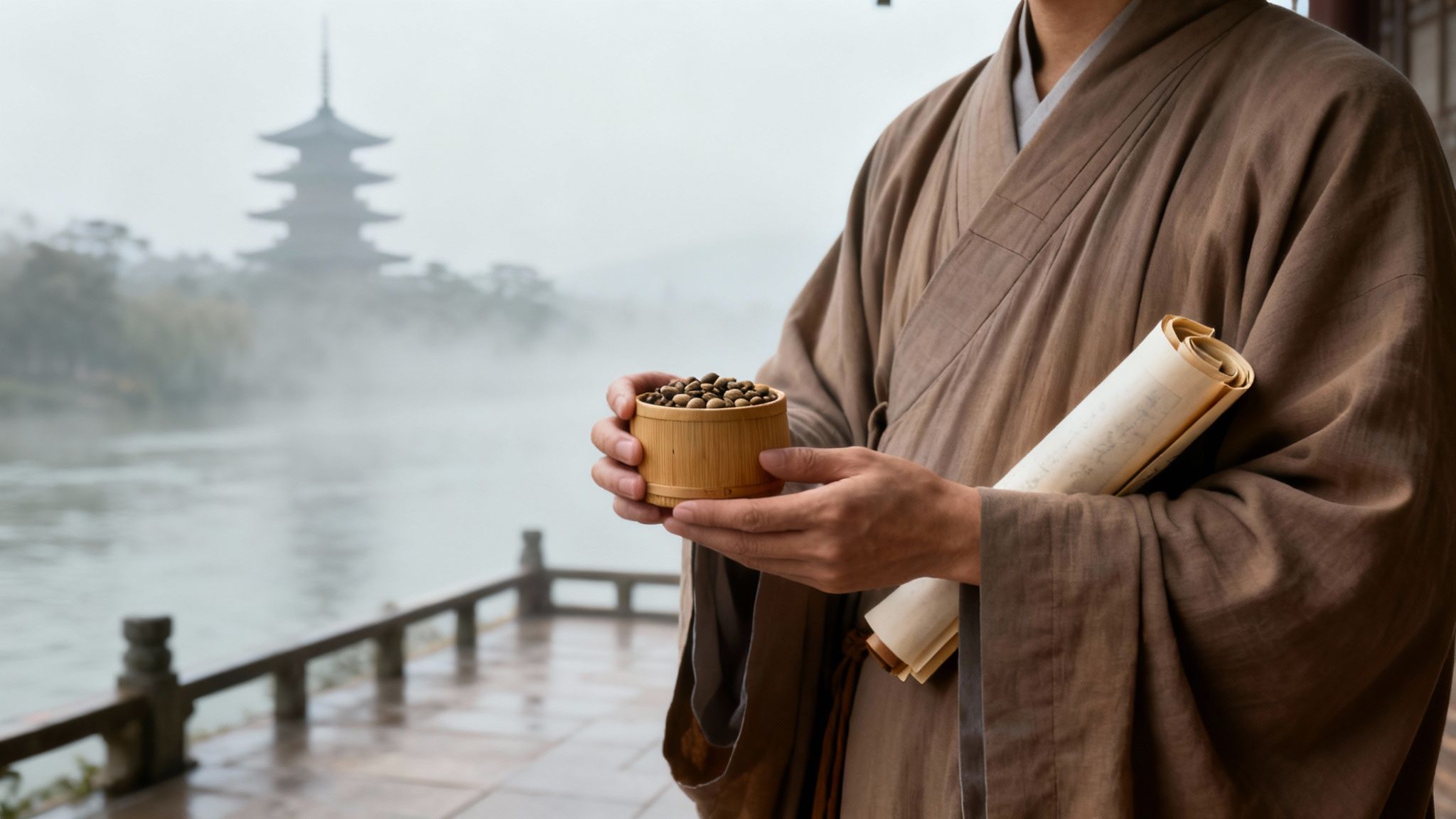
Back in ancient China, tea was a prized commodity, especially among the elite and Buddhist monks. They developed a unique method of processing: leaves were steamed to stop them from oxidising, dried, and then meticulously ground into a fine dust.
This powder was then whisked with hot water in a bowl, creating a frothy, vibrant drink. It was valued for its ability to sharpen focus and promote a sense of well-being, which made it a staple in monasteries. For monks, it was a practical tool, helping them stay alert and centred during long hours of meditation.
The Journey from China to Japan
So, how did this powdered tea make its way to Japan? The crucial link is a Zen Buddhist monk named Eisai. In 1191, after studying in China, he returned home not just with new philosophical insights, but also with tea seeds and the Chinese method for preparing powdered green tea. This moment changed everything.
Eisai was a passionate advocate for tea's health benefits. He famously wrote in his book, Kissa Yōjōki ("Drinking Tea for Health"), that tea was a "miraculous medicine" for a long and healthy life. He shared his knowledge—and his precious tea seeds—with fellow monks and Japan's ruling samurai class, who quickly embraced the new practice.
The act of preparing and drinking powdered tea became deeply intertwined with Zen Buddhist principles. It was no longer just a beverage but a form of moving meditation, a practice in mindfulness, harmony, and discipline.
This new way of drinking tea struck a chord deep within Japanese culture. Monks began cultivating it in temple gardens, and samurai warriors valued the calm focus it brought them, making it part of their code. The seeds Eisai planted began a centuries-long journey of cultural adoption and refinement.
Japan's Refinement and the Birth of Chanoyu
While the idea of powdered tea was an import, its transformation into the art form we recognise today is uniquely Japanese. Over the centuries that followed, Japanese tea masters obsessed over every detail, perfecting its cultivation and preparation. This evolution reached its peak with the development of the Japanese tea ceremony, known as Chanoyu or Sadō ("The Way of Tea").
In the 15th and 16th centuries, masters like the legendary Sen no Rikyū codified the core principles that still guide the tea ceremony today:
- Wa (Harmony): Creating a sense of unity between the host, guests, and their surroundings.
- Kei (Respect): Showing sincere respect for one another and for the tea utensils themselves.
- Sei (Purity): Maintaining a clean and uncluttered space, both physically and spiritually.
- Jaku (Tranquillity): Reaching a state of calm and inner peace through the ritual.
This meticulous refinement turned a simple drink into a profound spiritual practice. Matcha’s story may have started in China, but its soul was forged in the Zen temples and tearooms of Japan, where it became a symbol of simplicity, mindfulness, and the quiet beauty of the everyday.
Why Uji, Japan Became the Heart of Premium Matcha
While the story of matcha may have begun in China, it was in Japan that the craft was truly perfected. And when you talk about the best matcha in Japan, one name echoes above all others: Uji.
Nestled just southeast of Kyoto, Uji isn't just a place on a map; it's the undisputed epicentre of premium matcha. This is a reputation it has meticulously built and defended for over 800 years.
This legendary status is anything but an accident. It’s the result of a magical synergy between geography, climate, and centuries of human expertise. There's a perfect word for this: terroir. Just as the specific soil and sun of Champagne, France, create its iconic sparkling wine, Uji’s unique terroir provides the perfect canvas for growing exceptional tea.
The Magic of Uji’s Terroir
Think of it as a natural recipe where every ingredient is in perfect harmony. Uji’s environment gives the tea plants everything they need to produce leaves bursting with flavour and nutrients.
- Nutrient-Rich Soil: The nearby Uji River regularly floods its banks, leaving behind a rich, mineral-heavy sediment. This creates incredibly fertile soil, giving the tea plants a head start.
- Ideal Climate: The region sees significant temperature swings between day and night. This gentle stress actually encourages the plants to hoard more nutrients in their leaves, deepening their complexity.
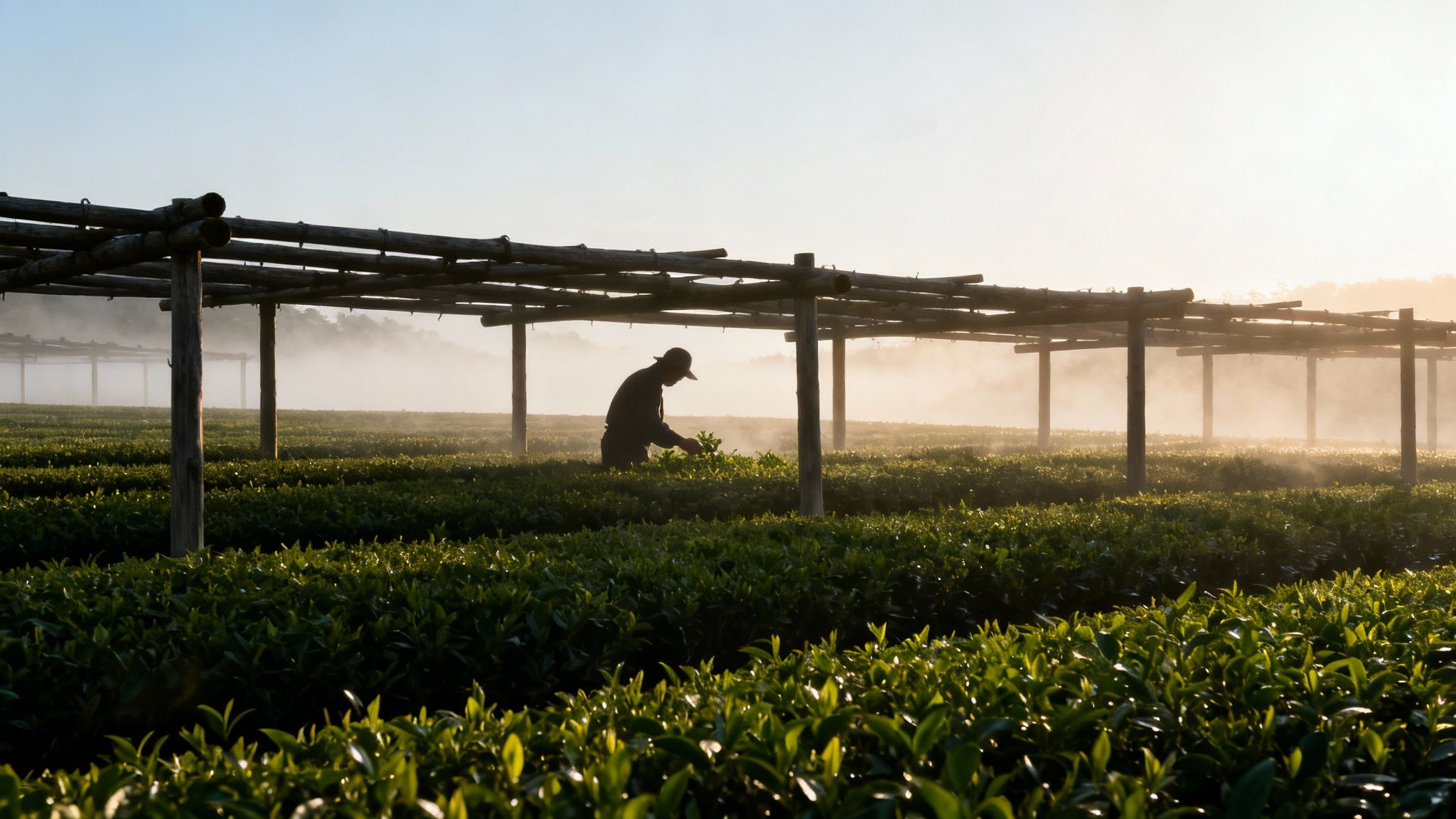
- The Famous Uji Mist: A blanket of morning mist is a common sight here, acting as a natural soft-light filter. It shields the delicate new leaves from the harsh sun, a natural precursor to the shading techniques perfected here.
This powerful combination means that tea grown in Uji naturally develops a deeper, more complex flavour profile, especially that sought-after savoury richness known as umami. The plants simply thrive, producing leaves that are softer, a more vibrant green, and packed with everything that makes matcha so special.
Perfecting the Art of Shading
Beyond its natural gifts, Uji is where Japanese tea farmers truly mastered the critical cultivation technique of shading. Back in the 16th century, they began building elaborate canopies of bamboo and reeds—called 'tana'—over their tea bushes for about three to four weeks before harvest.
This deliberate light deprivation forces the plant into overdrive, producing far more chlorophyll and resulting in that stunningly vivid green colour. More importantly, it dramatically boosts the levels of L-theanine, an amino acid responsible for matcha’s signature mellow sweetness and calming umami character. This single innovation cemented Uji's role as the birthplace of high-grade matcha as we know it today.
Terroir gives Uji its potential, but it is the centuries-old dedication to techniques like tana shading that unlocks it. This fusion of nature and nurture is what makes the matcha tea origin of Uji so revered.
Uji and Other Esteemed Japanese Tea Regions
While Uji is undoubtedly the gold standard, other regions in Japan also produce fantastic matcha, each with a distinct character shaped by its own terroir. Knowing the difference helps you appreciate what makes each one unique.
- Nishio (Aichi Prefecture): Another historic matcha powerhouse. Nishio's terroir gives its matcha a deep colour and a robust, full-bodied flavour.
- Kagoshima (Kyushu Island): This southern region’s volcanic soil often produces matcha with a brighter, slightly more astringent profile—perfect for those who enjoy a sharper green tea taste.
Interestingly, you can see preferences for different origins and grades emerge around the world. In the UK, for instance, tastes are quite specific. While conventional matcha has its place, organic varieties are the fastest-growing segment. Yet, it’s the ceremonial-grade matcha from premium regions like Uji that remains the most sought-after. It’s clear that UK consumers place a high value on quality, sustainability, and authentic origin.
For anyone chasing the absolute pinnacle of quality, there’s no substitute for sourcing directly from Uji’s artisan farmers. You can dive deeper into what makes authentic matcha tea from Japan so special and why those direct relationships matter. It’s the only way to ensure you’re experiencing matcha as it was always intended—a perfect expression of its celebrated home.
The Art of Transforming a Leaf Into Fine Powder
The journey from a glossy green tea leaf to a scoop of vibrant matcha powder isn't a simple case of drying and crushing. It’s a delicate art form, a meticulous process honed over centuries, designed to protect and amplify every quality that makes matcha so special. The final product is a direct reflection of this incredible craftsmanship.
It all begins in the fields, long before the leaves are even picked. For about 20 to 30 days before the spring harvest, farmers carefully cover the tea plants with elaborate frames, plunging them into near-darkness. This is the crucial shading stage, and it’s what sets the foundation for truly exceptional matcha.
Deprived of sunlight, the plant goes into overdrive. It floods its leaves with chlorophyll to soak up every last ray of available light, creating that iconic, almost electric green colour we associate with premium matcha. At the same time, the plant ramps up production of L-theanine, the wonderful amino acid responsible for matcha’s distinct savoury umami flavour and its famous calming, focused energy.
From Harvest to Tencha
Once the shading is complete, the pace picks up. A series of precise, rapid-fire actions begins, all designed to preserve the leaf's unique character. Only the youngest, most tender leaves from the very top of the plant are carefully hand-picked for the best grades.
Immediately after picking, the leaves are flash-steamed for a mere 15-20 seconds. This brief but vital step stops oxidation in its tracks, locking in that brilliant green colour and preserving the delicate nutrients and aromas that would otherwise fade away. It’s a bit like blanching vegetables to keep them crisp and vibrant.
After steaming, the leaves are gently air-dried in large, multi-chambered facilities. Then comes one of the most painstaking steps of all: the de-stemming and de-veining. Workers meticulously remove the tough central vein and stem from each leaf, a task that demands immense skill and patience.
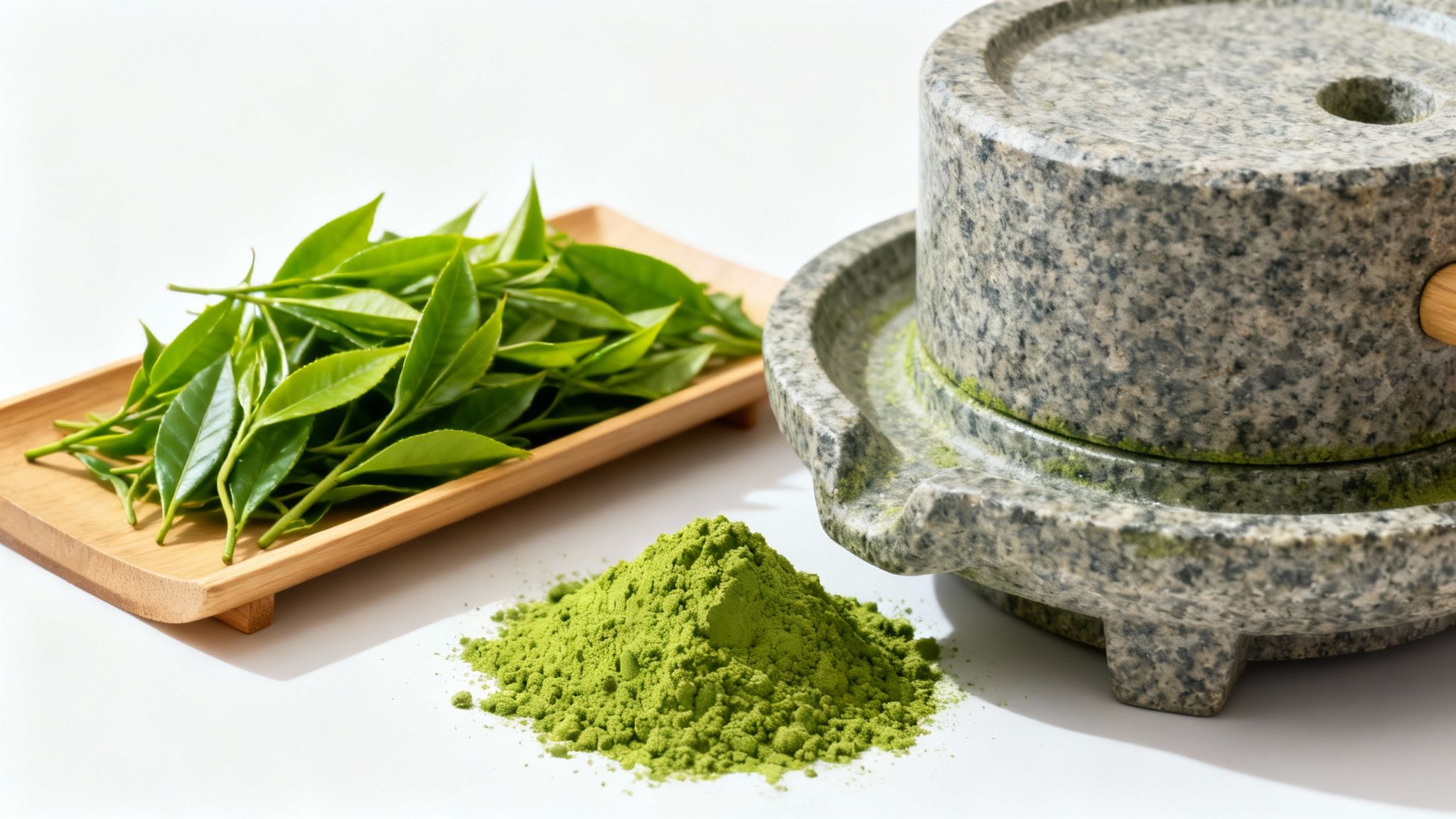
The result of this purification process is a precious, flaky material known as 'tencha'. Tencha isn't matcha yet; it's the pure flesh of the shade-grown tea leaf, the raw ingredient from which all true matcha is born.
This careful separation is the secret behind matcha's incredibly fine, silky texture. Cheaper green tea powders often skip this step, grinding the entire leaf—stems, veins, and all—which results in a coarser, more bitter-tasting powder.
The Final Transformation by Stone Mill
The final, almost ceremonial step in creating matcha is the grinding. True ceremonial-grade matcha is made by slowly grinding the tencha between two large, grooved granite stone mills. This traditional method is incredibly slow and deliberate, and for a very good reason.
The friction from the stone mills generates minimal heat, which is absolutely essential for preserving matcha’s delicate flavour profile and nutritional goodness. Grinding too quickly with industrial machines would effectively "cook" the powder, destroying its complex aromas and introducing a harsh, burnt taste.
This careful, step-by-step approach transforms the humble tea leaf into the brilliant powder we know and love. We've summarised the key stages below.
The Matcha Production Journey From Field to Powder
A summary of the key stages in traditional matcha production, highlighting the purpose and outcome of each meticulous step.
| Production Stage | Process Description | Impact on Final Product |
|---|---|---|
| Shading | Covering tea plants for 20-30 days before harvest to block direct sunlight. | Boosts chlorophyll (vibrant green colour) and L-theanine (umami flavour, calming effect). |
| Harvesting | Hand-picking only the youngest, most tender leaves from the top of the plant. | Ensures a smoother, sweeter, and more nutrient-dense final product. |
| Steaming | A brief steam bath (15-20 seconds) immediately after harvesting. | Halts oxidation, locking in the green colour, flavour, and nutrients. |
| Drying & Sorting | Leaves are air-dried, then meticulously de-stemmed and de-veined by hand. | Creates the pure leaf material called 'tencha' and guarantees a silky, non-gritty texture. |
| Grinding | Slowly grinding the tencha between traditional granite stone mills. | Creates an ultra-fine powder (5-10 microns) without heat damage, preserving delicate aromas. |
This patient process really showcases the immense skill behind authentic matcha:
- Precision: The mills are expertly carved to produce a powder just 5-10 microns in size—finer than talcum powder.
- Patience: A single stone mill can only produce about 30-40 grams of matcha per hour. That’s roughly the amount you’d find in one of our standard tins.
- Preservation: The slow, cool grind protects the sweet, mellow notes and rich umami that were so carefully cultivated in the fields.
It’s this final, unhurried transformation that turns pristine tencha into the luxurious, silky powder we recognise as matcha. Every step, from shading the plant to the slow turn of the granite mill, is a testament to the artistry and dedication required to produce this remarkable tea. This immense effort is precisely what gives authentic matcha its value and cherished status.
Understanding Matcha Grades and What They Really Mean
Dipping your toe into the world of matcha can feel a bit daunting, especially when you’re met with terms like ‘Ceremonial’, ‘Premium’, and ‘Culinary’. These aren’t just fancy marketing labels; they tell you a story about the tea’s origin, when it was harvested, and how it was made. Getting to grips with these grades is the secret to picking the right powder for the right moment and truly appreciating the craft that goes into every tin.
A good way to think about it is like olive oil. You have that special extra-virgin oil you’d only use for drizzling over a finished dish, and then you have your everyday oil for cooking. Matcha grades work in a very similar way, with each one perfectly suited to a specific use, bringing its own unique flavour and texture to the table.
While there’s no official, government-regulated grading system, the distinctions are deeply rooted in centuries of Japanese tradition. Each grade is a direct reflection of the meticulous process behind its creation—from the specific leaves chosen to the way they’re processed.
Ceremonial Grade: The Pinnacle of Matcha
Right at the top of the pyramid is Ceremonial Grade matcha. This is the highest quality you can find, the very same used in the traditional Japanese tea ceremony, Chanoyu. It's crafted exclusively from the youngest, most delicate tea leaves plucked during the year's very first harvest, known as ichiban-cha.
These precious leaves are hand-picked from the tips of shade-grown tea plants, often in revered regions like Uji. The weeks spent under cover boost their chlorophyll and L-theanine content, which gives the final powder some very distinct characteristics:
- Vibrant Colour: A brilliant, almost electric jade green hue.
- Silky Texture: The powder is stone-ground to an incredibly fine consistency, feeling like silk between your fingers.
- Complex Flavour: It’s naturally sweet, deeply savoury (umami), and exceptionally smooth, with almost no bitterness.
This grade is meant to be savoured simply, whisked with hot water into a frothy, beautiful tea. This is where its delicate, nuanced notes can truly shine. Using it in a latte or for baking would be like using a fine vintage wine in a sangria—you’d simply lose all the subtle qualities that make it so special.
Premium and Culinary Grades: Everyday Versatility
Moving down the scale, we find grades that are more suited to modern, everyday uses. Premium Grade matcha is often made from the second harvest (niban-cha) or is a blend that strikes a fantastic balance between quality and a more accessible price. It still has a lovely green colour and a smooth flavour, though you might notice a little more astringency than in its ceremonial cousin.
This balance makes it perfect for daily drinking, especially in matcha lattes or smoothies. Its flavour is robust enough to stand up to milk and sweeteners without getting lost, providing that classic matcha taste in a creamy beverage.
Finally, we have Culinary Grade (or cooking grade). This powder comes from later harvests (sanban-cha), where the leaves have been exposed to more sunlight. This exposure increases the concentration of antioxidants called catechins, which in turn gives the tea a much bolder, more bitter flavour profile.
The colour is often a less vibrant, more yellowish-green, and the powder isn’t quite as fine. This isn't a sign of poor quality, but rather an indication of its intended purpose. That strong taste is exactly what you need to cut through other ingredients in baking, cooking, and making things like sauces or ice cream.
To dive deeper into these distinctions, our detailed guide on the types of matcha tea can help you choose with even more confidence. Ultimately, matching the grade to your intention is the key to getting the best possible experience from this incredible tea.
Navigating the Modern Matcha Supply Chain
Matcha has come a long way from the quiet temples of Japan. This ancient powder, once the preserve of monks and nobles, is now a familiar sight on high-street cafe menus and in kitchen cupboards across the UK and Europe. But its meteoric rise comes with a catch, putting huge pressure on the very traditions that make matcha so special.
The global appetite for authentic matcha has put a real strain on Japanese tea farmers. You just can't rush or scale up the painstaking, time-honoured methods of cultivation and production. This creates a tricky balancing act where skyrocketing demand from places like the UK often outstrips what heritage regions like Uji can sustainably produce, threatening the quality and integrity of the craft.
This surge is impossible to ignore here in the UK. Matcha has gone from a niche health food product to a mainstream staple. In a single recent year, matcha on menus jumped by an incredible 30.22% year-on-year in cafes and restaurants, while its overall menu share grew by 6.9% annually. This kind of explosive growth sends ripples all the way back down the supply chain, leaving Japanese producers scrambling to keep up. You can dig deeper into these powerful matcha trends and their market impact to get the full picture.
The Importance of Ethical and Transparent Sourcing
In this crowded global market, the story behind your matcha suddenly matters more than ever. Modern supply chains can be notoriously murky, and it’s all too easy for the vital link between the farmer and your cup to get lost along the way. This is where ethical sourcing steps in, not just as a buzzword, but as a genuine commitment to keeping the legacy of matcha alive.
Choosing matcha from suppliers who foster direct relationships with farmers is the single best way to support this tradition. When companies like us at Jeeves & Jericho work directly with artisan tea estates in Uji, it guarantees a few critical things:
- Fair Compensation: Farmers are paid a fair price for their incredible skill and dedication, which allows them to keep their craft going for generations to come.
- Sustainable Agriculture: Direct partnerships naturally encourage farming practices that protect the environment and the precious terroir of regions like Uji.
- Guaranteed Authenticity: It gives you a clear line of sight from the tea field right to your cup, so you know you’re getting a genuine, high-quality product.
Ethical sourcing isn't just about fairness; it's about custodianship. It ensures that as matcha's popularity grows, the culture, quality, and communities that created it are protected and honoured, not exploited.
Why Traceability Matters from Soil to Sip
In a market where the word "matcha" can mean almost anything, traceability is your guarantee of quality. It’s the ability to follow your powder all the way back to its specific region, farm, and even harvest date. This level of detail is the only way to confirm you’re drinking true matcha, made from shade-grown tencha leaves and stone-ground in the traditional Japanese way.
Certifications, like organic labels, are a helpful part of this. They provide an extra layer of assurance about how the tea was farmed, which is hugely important to today's conscious consumer. For a product so deeply connected to its matcha tea origin, this kind of transparency isn't a luxury—it's essential. It honours the centuries of dedication behind every vibrant green scoop and gives you the power to make a choice that supports the future of this incredible tea.
How to Choose, Prepare, and Store Your Matcha
Getting to know the rich history and meticulous craft behind matcha is one thing; bringing that perfect bowl to life in your own kitchen is another. But that’s where the real magic happens.
The good news is you don’t need to be a tea master to enjoy this incredible drink. Getting the basics right—choosing, preparing, and storing your matcha correctly—is all it takes to experience the full spectrum of flavour and benefits that artisans have spent centuries perfecting.
Selecting Your Perfect Matcha
When you're on the hunt for a high-quality matcha, trust your senses. A top-tier powder, especially a ceremonial grade, has a few tell-tale signs that signal its freshness and careful craftsmanship.
- Vibrant Colour: Look for a brilliant, almost electric jade green. If you see a dull, yellowish, or brownish hue, it's a sign of an older, lower-quality powder or one that's been poorly stored.
- Silky Texture: The powder should feel incredibly fine, almost like silk or talcum powder between your fingers. Any hint of grittiness means that stems and veins weren't properly removed during the milling process.
- Sweet Aroma: A great matcha has a fresh, grassy, and subtly sweet smell. If it smells dusty or bitter, it’s best to give it a miss.
The UK matcha market has absolutely exploded, reflecting a huge shift in British tastes. It was recently valued between £203.88 million and £219.6 million, and it's projected to nearly double within a decade. It seems the secret is out.
Preparing a Traditional Bowl
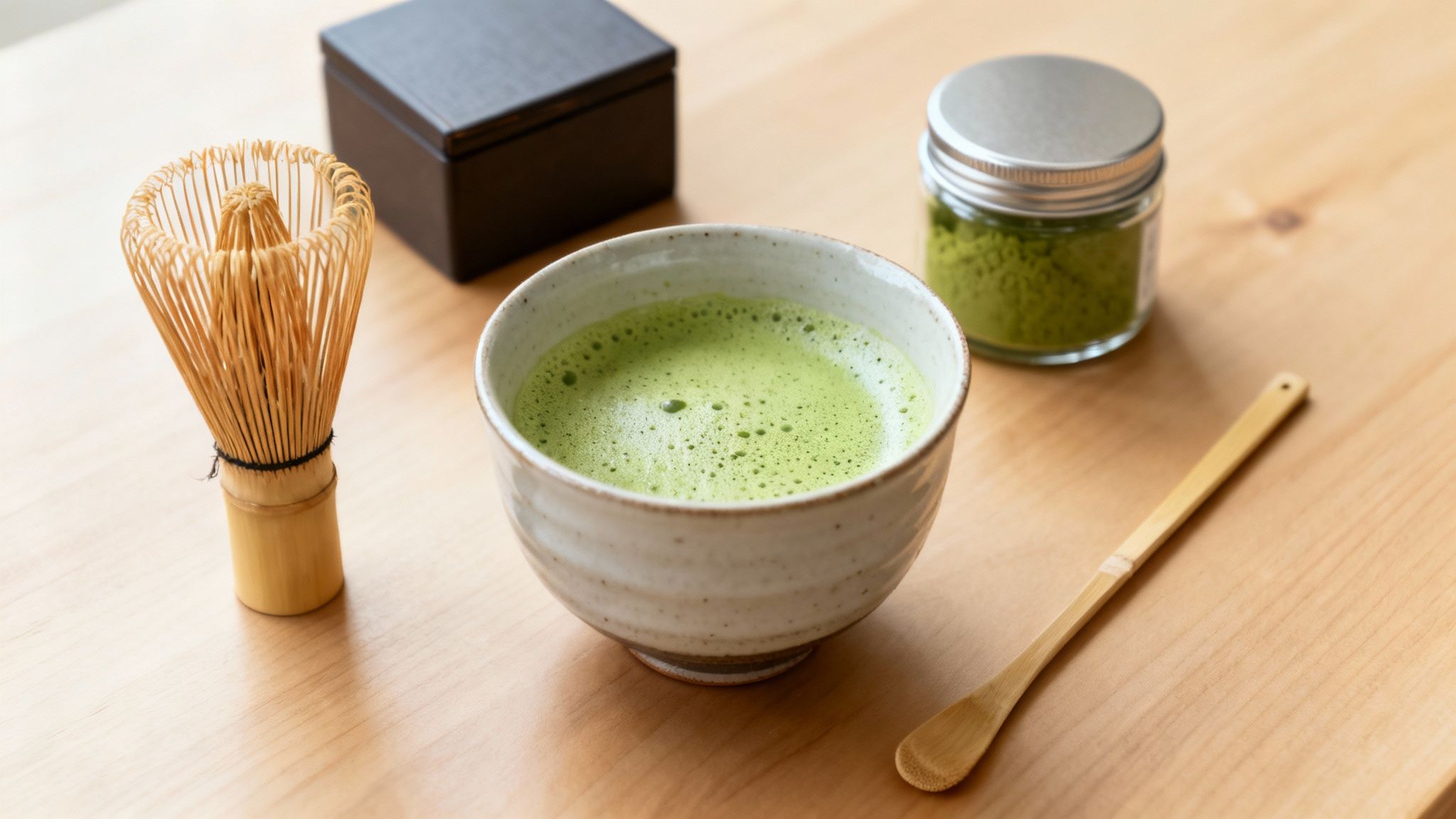
Crafting a traditional bowl of matcha is a mindful ritual that rewards you with a smooth, frothy, and deeply flavourful drink. The essential tools are a bamboo whisk (chasen), a tea bowl (chawan), and a scoop (chashaku).
- Sift the Matcha: First, use a fine-mesh sieve to sift 1-2 chashaku scoops (about half a teaspoon) of matcha into your bowl. This is a non-negotiable step for preventing clumps and getting that silky-smooth consistency.
- Add Hot Water: Pour roughly 60-70ml of hot water over the powder. The sweet spot for temperature is around 80°C (175°F). Boiling water will only scorch the delicate leaves and create a bitter taste.
- Whisk Vigorously: Using your chasen, whisk the tea in a rapid 'W' or 'M' motion until a delicate foam covers the surface. The idea is to aerate the tea, not just stir it.
- Enjoy Immediately: Drink your matcha straight from the bowl while the foam is fresh. This is how you’ll savour its full texture and aroma.
Pro Tip: To really elevate the experience, warm your chawan with a splash of hot water before you start. It’s also a good idea to soak the tines of your chasen in warm water for a minute to make the bamboo more pliable and less likely to break.
Proper Storage for Lasting Freshness
Matcha is incredibly sensitive to its surroundings. Its biggest enemies are oxygen, light, and heat, all of which will quickly degrade its vibrant colour, delicate flavour, and nutritional potency.
To keep it at its best, always store your matcha in an airtight, opaque container. Once you've opened it, keeping it in the fridge is your best bet to slow down oxidation. By protecting it from the elements, you’ll ensure that every scoop is as fresh and flavourful as the last.
For a more detailed walkthrough, check out our comprehensive guide on how to prepare matcha tea and master the basics.
A Few Final Questions on Matcha Origin
Still have a few thoughts brewing about matcha's story? Let's clear up some of the most common questions to round out your understanding of this incredible tea.
Is All Japanese Green Tea Considered Matcha?
Not at all. Think of it a bit like wine – all Champagne is sparkling wine, but not all sparkling wine is Champagne. Matcha is a very specific, and highly prized, type of Japanese green tea.
While Japan produces other famous green teas like sencha and gyokuro, only matcha is made from shade-grown ‘tencha’ leaves that are meticulously stone-ground into an emerald-fine powder. This unique process is what gives matcha its unmistakable creamy body, vibrant green colour, and deep umami flavour. You drink the entire leaf, rather than just infusing it.
Why Is Matcha From Uji Considered the Best?
Uji’s reputation as the pinnacle of matcha production wasn't built overnight. It’s the result of a perfect marriage between an ideal natural environment—its terroir—and centuries of human dedication. The region's distinct climate, misty mornings, and mineral-rich soils are a dream for growing top-tier tea.
But it’s the human element that truly sets it apart. Uji is where the foundational techniques of matcha production, especially the art of shading the tea plants, were first developed and then perfected over generations. This deep history of craftsmanship creates a matcha with unparalleled quality and complexity.
Can Authentic Matcha Be Grown Outside of Japan?
While the tea plant itself, Camellia sinensis, can grow in many places around the world, truly authentic, high-quality matcha is almost exclusively a Japanese creation. The specific cultivation and processing methods are Japanese innovations, refined and protected for centuries.
The painstaking steps—from the delicate shading process that creates tencha to the slow, traditional stone-grinding—are what define real matcha. Powders produced elsewhere often cut corners, skipping these crucial steps. The result is a product that might look similar but simply can't replicate the authentic flavour, vivid colour, and silky texture of its Japanese counterpart. This is why the matcha tea origin is so fundamental to its quality.
At Jeeves & Jericho, we believe in honouring that heritage. Our commitment to authenticity means we source our matcha directly from the finest artisans in Uji, Japan, ensuring every single scoop is a true taste of this rich history. Discover the difference origin makes for yourself.