


When you start to explore the world of tea, you quickly realise it’s a vast and wonderful place. With hundreds of varieties, it can be a little overwhelming. But here’s the secret: almost everything you’ll drink falls into two main groups.
You have the true teas—like black, green, and oolong—which all come from a single remarkable plant, Camellia sinensis. Then you have herbal tisanes, which are infusions made from all sorts of other lovely things like flowers, herbs, and spices. Getting your head around this simple distinction is the first step on a truly flavourful adventure.
A Journey Through the World of Tea
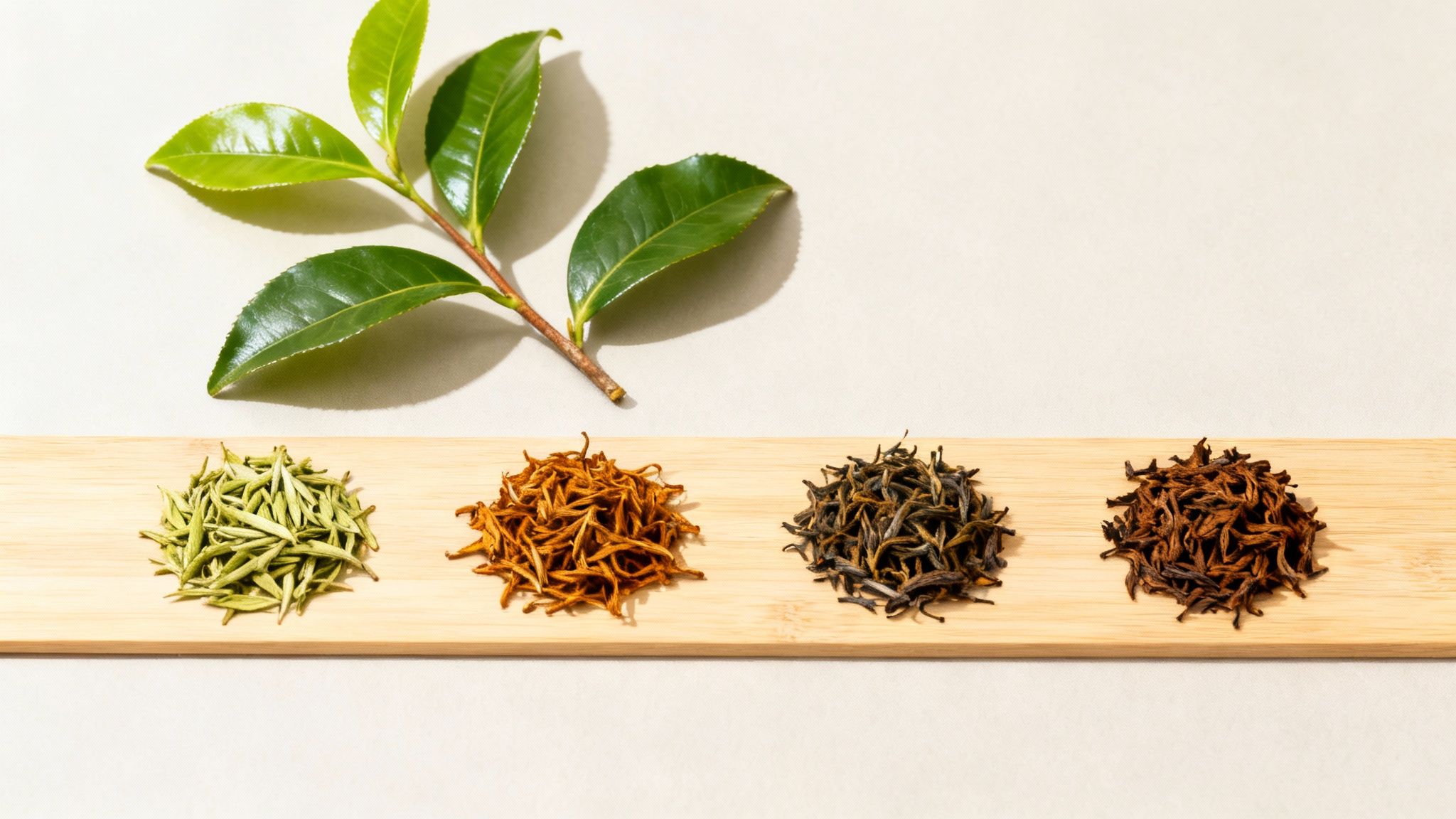
It seems incredible, doesn't it? That a robust, malty breakfast tea and a delicate, grassy green tea can both begin life as leaves on the very same species of plant. The sheer diversity that comes from Camellia sinensis is astonishing. So, how is it done?
The magic lies in two things: where the tea is grown (the terroir, much like with wine) and, crucially, what happens to the leaves after they've been picked. The most important part of that process is a natural chemical reaction called oxidation.
Understanding Oxidation
If you've ever seen a sliced apple turn brown, you've seen oxidation in action. It's a simple, natural process that occurs when the enzymes inside the tea leaves react with oxygen in the air. Tea makers are masters of this process; they can stop it, slow it down, or let it run its full course to create wildly different teas.
- No Oxidation: To make green tea, the leaves are heated right after picking. This halts the enzymes and locks in the fresh, green, vegetal notes.
- Partial Oxidation: For oolong teas, the process is started and then stopped somewhere in the middle. This creates an incredible spectrum of flavour, from light and floral to dark and roasty.
- Full Oxidation: The leaves are allowed to fully oxidise, which changes their colour to a deep brown and develops those rich, malty, and fruity notes we love in black tea.
This single, carefully controlled step is the main reason why teas from the same plant can taste so completely different from one another.
Oxidation is the artful conversation between the tea leaf and the air, guided by the tea master. It’s what transforms a simple leaf into a complex story of flavour and aroma, defining its final character in the cup.
True Teas Versus Herbal Tisanes
First, we’ll dive into the main categories of "true tea," all from the Camellia sinensis plant. To give you a quick lay of the land, here’s a simple table summarising what sets them apart.
Quick Guide to the Main Tea Categories
| Tea Type | Oxidation Level | Common Flavour Profile | Caffeine Content |
|---|---|---|---|
| White | Minimal (0-5%) | Delicate, floral, sweet, subtle | Low |
| Green | None (0%) | Grassy, vegetal, nutty, sometimes oceanic | Low to Medium |
| Oolong | Partial (10-80%) | Varies widely: from floral and creamy to roasty | Medium |
| Black | Full (100%) | Malty, robust, fruity, sometimes smoky or sweet | High |
| Pu-erh | Fermented/Aged | Earthy, rich, complex, mellow, woody | Medium to High |
This chart is a great starting point for understanding the core members of the true tea family.
After exploring these classics, we’ll venture into the vibrant, naturally caffeine-free world of herbal infusions, more properly known as tisanes. These are the chamomile, peppermint, and rooibos brews we all know and love.
Knowing this fundamental difference is like having a map for your tea journey. It gives you the foundation to appreciate why each variety is unique and helps you discover new favourites, from ethically sourced classics to exciting modern blends.
Exploring the Five True Teas
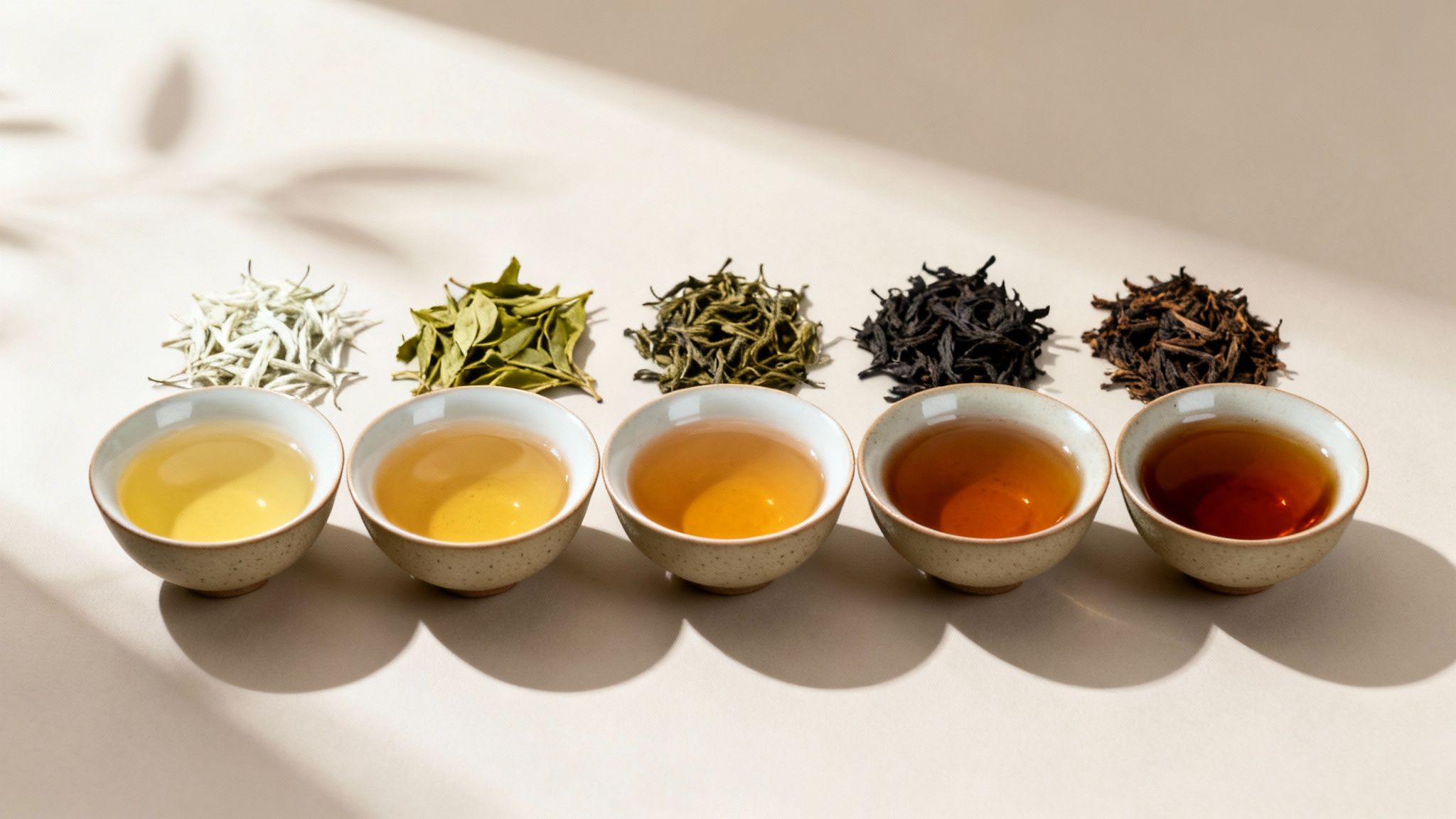
Right, let's get to the heart of it: the five true teas. These are the main events in our tea varieties list, and they all come from a single remarkable plant, Camellia sinensis. Each one tells a story—not of a different plant, but of a different journey from the field to your cup. It’s the artistry of the tea master, controlling every step, that gives us such an incredible spectrum of flavour.
Imagine the freshly plucked tea leaf as a blank canvas. The methods used to process it—withering, rolling, oxidising—are the brushes and paints. The end result? A masterpiece, whether it’s the deepest black tea or the most delicate white.
Let’s take a closer look at each of these five characters.
Black Tea: The Bold Classic
Black tea is probably what springs to mind for most people in the West. It’s known for that deep colour, robust body, and an invigorating kick. It gets this way through full oxidation. The leaves are rolled to break down their cell walls and then left to react with oxygen, which completely transforms their chemistry and taste.
This is where those dark, malty, and often fruity notes come from. From a full-bodied Assam grown in India's Brahmaputra valley to a brisk, bright tea from Ceylon (Sri Lanka), black tea has an impressive range.
Here in the UK, black tea is practically a religion. It’s the cornerstone of our tea culture, and blends like English Breakfast and Earl Grey are cherished staples. It's little wonder we get through over 100 million cups a day. Recent figures show the tea market hitting £759.0 million in sales, a solid 10.4% jump, proving that our love for a proper brew is as strong as ever.
Green Tea: The Fresh Original
At the complete opposite end of the spectrum, you’ll find green tea. To keep its vibrant colour and delicate, grassy flavours, the oxidation process is stopped almost as soon as it begins. This is usually done with a bit of heat, either by pan-firing the leaves (common in China) or steaming them (the Japanese method).
This simple step deactivates the enzymes that would otherwise cause the leaves to darken, locking in their natural, fresh character. The result is a tea that’s vegetal, sometimes savoury, and full of life.
- Chinese Green Teas: Think of Dragon Well (Longjing), which is pan-fired. This gives it a smooth, nutty, almost toasty flavour.
- Japanese Green Teas: Varieties like Sencha are steamed, creating a brighter green leaf and a more distinct umami, grassy, or even seaweed-like taste.
White Tea: The Purest Expression
If black tea is a bold declaration, then white tea is a subtle whisper. It’s the least processed of all the true teas, crafted from the youngest, most tender buds and leaves of the plant. These buds are often still covered in fine, silvery-white hairs, which is exactly where the name comes from.
The process is beautifully simple: the leaves are withered and then gently dried. There’s no rolling or deliberate oxidation, although a tiny bit happens naturally while they dry.
White tea represents purity in the tea world. Its minimalist processing allows the natural, nuanced character of the tea plant to shine through, offering a flavour that is sweet, floral, and incredibly delicate.
Because it’s so subtle, you need to treat it with care. Brew white tea with cooler water (around 75-80°C) to avoid scorching the delicate leaves and ruining its flavour. Famous examples include Silver Needle, made purely from buds, and White Peony (Bai Mu Dan), which has a mix of buds and young leaves.
Oolong Tea: The Complex Connoisseur
This is where the art of tea making gets really interesting. Oolong sits in the fascinating middle ground between green and black teas. It’s partially oxidised, with levels that can range anywhere from 10% to 80%. This huge variation makes oolong the most diverse and complex tea category out there.
Making oolong involves a skillful dance of repeatedly rolling and oxidising the leaves. The tea master has to stop the process at the perfect moment to create the intended flavour profile.
- Lightly Oxidised Oolongs: Closer to a green tea, these are bright, floral, and sometimes creamy. Tie Guan Yin (Iron Goddess of Mercy) is a perfect example.
- Heavily Oxidised Oolongs: These lean more towards black tea, with roasted, fruity, and honey-like notes. Look for something like Da Hong Pao (Big Red Robe).
This complexity makes oolong a true favourite among tea fanatics, offering a whole new world of flavour in every cup.
Pu-erh Tea: The Aged Wonder
Pu-erh (or Pu'er) is totally unique in our tea varieties list because it’s the only one that’s properly fermented and often aged. Hailing from Yunnan province in China, Pu-erh goes through a microbial fermentation process after it’s been made, which transforms its character over time—much like a fine wine.
There are two main styles:
- Sheng (Raw) Pu-erh: This is the traditional kind, aged naturally over many years. When it's young, it can be quite sharp and grassy, but with time it mellows into something deep, complex, and incredibly smooth.
- Shou (Ripe) Pu-erh: A more modern invention, this method speeds up the ageing process. It produces a dark, rich, and earthy brew that is smooth and ready to drink right away.
Pu-erh is often pressed into cakes or bricks for ageing. Its earthy, woody profile offers a grounding and deeply satisfying experience that’s unlike any other tea. If you're keen to explore the darker, richer end of the tea spectrum, you can learn more about the different types of black teas in our detailed guide.
Discovering the World of Herbal Tisanes
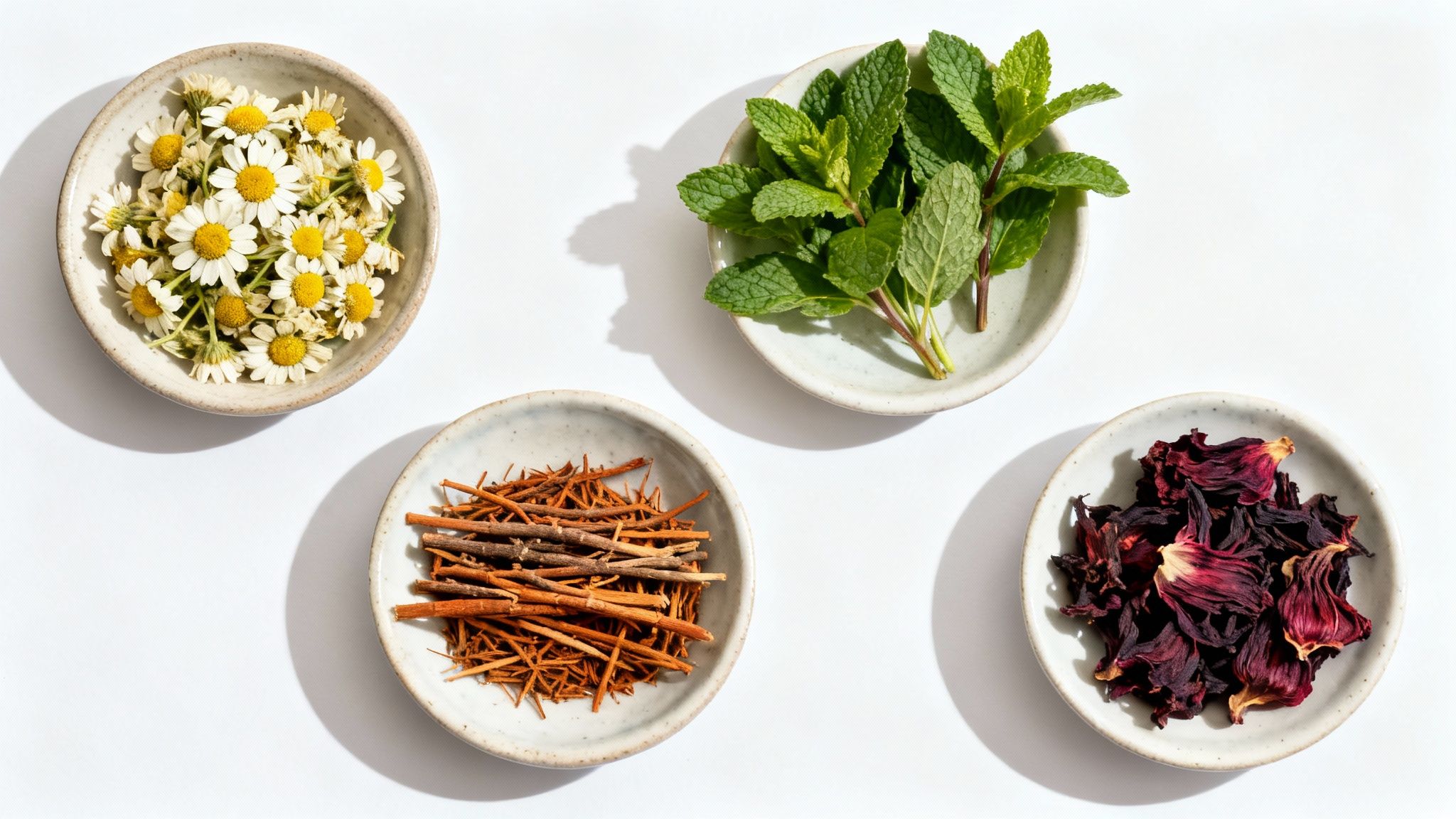
Once we venture beyond the leaves of Camellia sinensis, we step into the colourful, fragrant world of herbal infusions. While most of us call them "herbal teas," they aren't technically teas at all. The proper term is tisane – a catch-all for anything brewed from flowers, herbs, fruits, spices, and roots.
This little piece of tea trivia is more important than it sounds. It’s the reason behind their most celebrated quality: they are all naturally 100% caffeine-free. This makes a tisane the perfect companion at any hour, whether it’s a calming cup before bed or a zesty, hydrating brew on a hot afternoon.
The sheer variety can be a bit overwhelming, so to get a handle on this vibrant category, it helps to group them by what they’re made from.
Flower-Based Tisanes
Some of the most beloved herbal brews come from flowers, cherished not just for their delicate flavours but also for their long-held association with calm and relaxation.
Chamomile is probably the most famous of the bunch. Made from dried, daisy-like blossoms, it has a gentle, almost apple-like sweetness. For centuries, it's been the go-to brew for winding down and encouraging a sense of peace before sleep.
Then there's hibiscus, a real showstopper. Brewed from the vibrant calyces of the roselle flower, it steeps into a deep crimson liquor with a wonderfully tart, cranberry-like tang. It’s fantastic hot or cold and is packed with Vitamin C.
Leaf and Herb-Based Tisanes
This is where you'll find some of the most invigorating and refreshing brews around. These tisanes are made from the leaves of aromatic plants and are often praised for their revitalising character.
Peppermint is a true classic. That bright, cool flavour comes from the high menthol content in the leaves, making it a brilliant digestif after a meal or a welcome pick-me-up when you need to clear your head.
In the same vein, lemongrass offers a zesty, citrusy brew but without any of the acidity you’d get from a real lemon. It's light, fragrant, and has a super clean finish. If you'd like to explore more, our guide to caffeine-free herbal teas is full of inspiration.
A tisane is nature’s pantry in a cup. Each ingredient, whether it's a fragrant flower, a zesty root, or a soothing herb, tells a story of its origin, offering a pure and direct connection to the plant it came from.
Root and Spice-Based Tisanes
For those who crave a bit more warmth and punch in their cup, root and spice tisanes are just the ticket. These are infusions with bold, warming, and often pungent flavours that really wake up the senses.
Ginger root is an absolute powerhouse here. A few slices of fresh ginger steeped in hot water create a spicy, comforting drink that’s a lifesaver for soothing an unsettled stomach or just warming your bones on a cold day.
Another key player is liquorice root. Don't think of the sweet shop confectionary; pure liquorice root tea has a unique, lingering natural sweetness that's incredibly satisfying. You’ll often find it blended with peppermint for a beautifully balanced, soothing brew.
Fruit and Berry Tisanes
Last but not least, fruit and berry tisanes are all about sweet, tangy, and juicy flavours. They’re simply dried fruits and berries steeped in hot water, creating colourful and aromatic infusions that the whole family can enjoy.
- Apple & Cinnamon: A comforting classic that tastes like liquid apple pie in a mug. Perfect for a cosy evening in.
- Lemon & Ginger: This dynamic duo balances the fire of ginger with the bright zest of lemon for a truly stimulating cup.
- Mixed Berry: Blends of strawberries, raspberries, and blackcurrants create a tart, sweet infusion that is absolutely delicious served over ice.
Of course, this is just scratching the surface. From the earthy notes of South African Rooibos to the quiet calm of valerian root, the world of tisanes is practically endless. There truly is a perfect, caffeine-free brew out there for everyone.
The Rise of Specialty and Blended Brews
Beyond the classic world of true teas and herbal tisanes, there’s a whole new frontier opening up. This is where tradition and innovation collide, creating an exciting and ever-expanding tea varieties list. It's a space driven by a shared curiosity for new flavours, wellness benefits, and unique experiences that take tea far beyond the ordinary cuppa.
Two brews, in particular, have gone from niche curiosities to beloved staples in cafés and homes everywhere: Matcha and Chai. Each offers a completely distinct flavour journey, and their soaring popularity shows just how much our idea of tea is changing. They’ve helped transform it from a simple infusion into a rich, complex, and thoughtful drink.
This isn’t just about new drinks; it’s about a real shift in tastes. In the UK, younger generations are looking beyond the traditional black tea. Recent data from YouGov shows that 32% of Gen Z daily tea drinkers now choose green tea, and another 28% are opting for herbal varieties.
The Art of the Blend
Tea blending is a true art form. It’s a delicate dance of combining different ingredients—tea leaves, botanicals, spices, fruits—to create something harmonious and balanced. A master blender is a bit like a perfumer, meticulously selecting each component to build a specific aroma and taste profile. The goal is synergy, where the final creation is far more than just the sum of its parts.
This isn't a new concept, of course. Just think of Earl Grey, one of the most famous blended teas in history. It’s a simple but iconic marriage of robust black tea and the fragrant, citrusy oil of bergamot orange. This timeless classic is the perfect example of how a single addition can completely elevate a base tea, creating something entirely new and memorable.
Today, blenders are pushing those boundaries even further, crafting complex infusions for every palate imaginable.
- Fruit & Floral Blends: These bring together tea leaves with dried fruits, flower petals, and natural essences. You might find a black tea lifted by rose petals and raspberry pieces, or a delicate green tea paired with jasmine flowers or mango.
- Wellness Blends: Formulated with specific benefits in mind, these often mix herbs and spices prized for their traditional properties. Think of blends designed to aid sleep, digestion, or immunity, featuring ingredients like turmeric, ginger, and chamomile.
Matcha: The Vibrant Green Powerhouse
Matcha isn't just another green tea; it's a completely different way of experiencing it. Hailing from Japan, where it’s central to the traditional tea ceremony, its preparation is a meticulous ritual in itself. Unlike regular green tea, where you steep and then discard the leaves, with matcha, you’re consuming the entire leaf, stone-ground into an ultra-fine, vibrant green powder.
That unique flavour and vivid colour come from a special growing process. For several weeks before harvest, the tea bushes are shaded from sunlight, which ramps up their chlorophyll and L-theanine content. This gives matcha its rich, creamy, umami-laden flavour profile, with a smooth finish that’s free from the bitterness you can sometimes find in other green teas.
Matcha offers the full, concentrated essence of the tea leaf. By consuming the whole leaf as a powder, you receive a more potent dose of its nutrients and flavour, creating a uniquely rich and mindful drinking experience.
Chai: The Soulful Spiced Brew
Chai is a warm, aromatic, and invigorating brew that originated in India. While "chai" simply means "tea" in Hindi, the world has come to know it as Masala Chai—a powerful concoction of strong black tea simmered with a medley of fragrant spices.
There’s no single, definitive recipe for chai; it changes from region to region, and even from one family to the next. However, the classic spice blend, known as karha, usually features:
- Cinnamon
- Cardamom
- Cloves
- Ginger
- Black Peppercorns
These spices are gently simmered with black tea, milk, and a sweetener to create a rich, creamy, and layered drink that’s both comforting and stimulating. The warmth of the spices plays perfectly against the robustness of the tea, making it the ideal brew for a chilly day. To experience this soulful tradition firsthand, you can find authentic blends like our very own Spiced Bombay Chai.
How to Brew the Perfect Cup Every Time
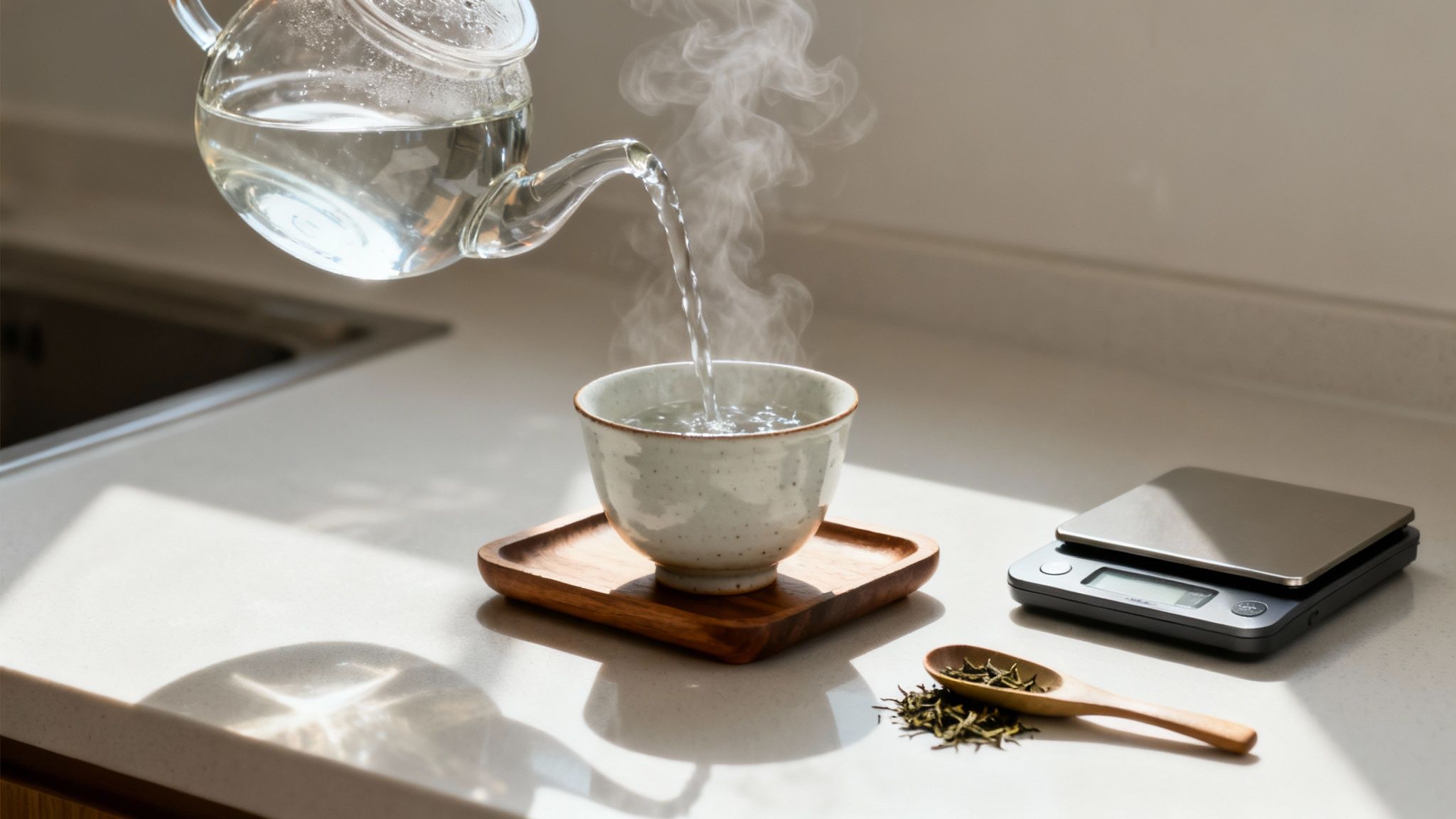
Working your way through the world of tea is a real adventure, but unlocking the magic in each leaf all comes down to how you brew it. Don't worry, the perfect cup isn't about complicated rituals. It’s about honouring the leaf by understanding four simple, golden rules that coax out its best flavours.
Get these right, and you'll turn your daily cuppa from something merely good into something truly exceptional. Think of it like cooking: you wouldn’t handle a delicate piece of fish the same way you’d treat a hearty joint of beef. Tea is no different. The secret to a consistently delicious cup, every single time, boils down to four things: water quality, leaf quantity, water temperature, and steeping time.
The Four Golden Rules of Brewing
Our national love for a good brew is no secret, with Brits putting away over 100 million cups every single day. While the humble teabag still reigns, there’s a growing curiosity for more premium, loose-leaf varieties. In fact, 34% of Gen X and Millennials now drink tea regularly, driving a huge market. To make every one of those cups count, it’s worth getting back to basics.
Let’s break down the fundamentals for a truly proper brew:
- Water Quality: Your cup of tea is over 98% water, so it makes a massive difference. Fresh, filtered water will always give you a cleaner, brighter taste. Hard tap water, on the other hand, can make your tea taste flat, or even a bit metallic.
- Leaf Quantity: A little precision goes a long way. The general rule of thumb is 2-3 grams of loose leaf tea (roughly one teaspoon) for every 200ml of water. Popping it on a small kitchen scale takes out all the guesswork and keeps things consistent. For a deeper dive, have a look at our guide on how to brew loose leaf tea.
- Water Temperature: This might just be the most important factor of all. Boiling water is great for robust black teas and most herbal infusions, but it will absolutely scorch delicate green and white teas, leaving them bitter and astringent. A variable temperature kettle is a real game-changer here.
- Steeping Time: Every tea has its own sweet spot. Under-brew it, and you’ll get a weak, watery cup. Leave it too long, and it can become unpleasantly sharp. Just set a timer to make sure you hit that perfect window.
Brewing tea is a partnership between you and the leaf. By controlling the water, time, and quantity, you create the ideal environment for the tea to express its full character—from its subtle aromas to its complex layers of flavour.
Tea Brewing Parameters At A Glance
Trying to remember the perfect temperature and time for every single tea can feel like a lot to take in at first. We’ve put together this quick-reference table to take the guesswork out of it, giving you a straightforward guide to brew with confidence.
| Tea Category | Water Temperature (°C) | Steeping Time (Minutes) | Example |
|---|---|---|---|
| White Tea | 75-80°C | 2-4 | Silver Needle |
| Green Tea | 70-80°C | 1-3 | Japanese Sencha |
| Oolong Tea | 85-95°C | 2-5 (multiple infusions) | Tie Guan Yin |
| Black Tea | 95-100°C | 3-5 | English Breakfast |
| Pu-erh Tea | 95-100°C | 1-4 (multiple infusions) | Shou Pu-erh |
| Herbal Tisanes | 100°C | 5-7 | Peppermint |
And if you’re serving tea for an event or in a cafe, knowing the different types of disposable tea cups available can be incredibly helpful for getting the right fit.
With these simple guidelines in your back pocket, you’re ready to explore the entire world of tea, perfectly equipped to get the very best out of every leaf.
A Few Final Questions
Diving into the world of tea can bring up all sorts of questions. From how to brew and store it, to understanding what makes a cuppa ethical, we get asked a lot. Let’s tackle some of the most common queries we hear.
What's the Real Difference Between Loose Leaf and Tea Bags?
It all comes down to the size and quality of the leaf. Loose leaf tea is just what it sounds like: whole or large, broken leaves. When you pour hot water over them, they have plenty of room to unfurl and release their full, complex range of flavours and aromas.
Your average tea bag, on the other hand, is usually filled with tiny, broken bits of tea called 'fannings' or 'dust'. While they brew in a flash, the flavour can be a bit one-dimensional and sometimes even harsh. Think of it like cooking with a whole cinnamon stick versus pre-ground powder—the whole version just has so much more depth and character.
Does All Tea Have Caffeine in It?
Not at all, and it’s a great question to ask. The answer depends entirely on whether you're drinking a 'true tea' from the Camellia sinensis plant or a herbal infusion, also called a tisane.
- True Teas: All five of the classics—black, green, white, oolong, and pu-erh—are made from the tea plant and naturally contain caffeine. The levels vary a bit, with black tea typically at the higher end and white tea at the lower.
- Herbal Tisanes: These are your chamomile, peppermint, and rooibos infusions. Because they're made from completely different plants, they are naturally caffeine-free. This makes them a perfect choice for winding down in the evening.
How Should I Store My Tea to Keep It Fresh?
To keep your tea tasting its best, you need to protect it from its four biggest enemies: light, air, moisture, and strong smells. The easiest way to do this is to pop it in an opaque, airtight container and store it in a cool, dark place like a kitchen cupboard.
Definitely avoid the fridge, as condensation can create moisture that will spoil the leaves. It's also a good idea to keep it away from your coffee and spices, as dry tea leaves are brilliant at absorbing nearby aromas, which will completely change their taste. A little care goes a long way in making sure every cup is as fresh as the first.
Ethically sourced tea is a promise of respect. It ensures fair wages and safe conditions for the farmers who cultivate the leaves, sustainable farming practices that protect the environment, and a transparent supply chain from the garden to your cup.
What Does 'Ethically Sourced' Actually Mean?
When you see that a tea is ethically sourced, it means that the entire journey from the soil to your teapot is guided by fairness and sustainability. It's a genuine commitment to ensuring the people who grow and pick your tea are treated with respect.
This means they receive fair pay for their hard work, have safe working conditions, and are often part of a system that invests back into their communities. It also means the farming practices are kind to the environment, protecting the land for years to come. Choosing an ethically sourced tea isn't just about buying a lovely product; you're supporting a better, fairer way of doing things for both people and the planet.
At Jeeves & Jericho, our commitment to ethical sourcing is at the very heart of what we do. We work directly with our farmers to ensure every single leaf meets our high standards for both quality and fairness. We invite you to explore our full collection of exceptional, ethically sourced whole leaf teas, chai, and matcha today. https://www.jeevesandjericho.com