


From the bold, malty punch of Assam to the famously delicate, muscatel notes of Darjeeling, the world of black tea is a wonderfully varied one. What’s fascinating is that these hugely distinctive profiles don’t come from different species of plant. They all start life as leaves from the same evergreen shrub, Camellia sinensis, but it’s their unique origins and processing that create such different experiences in the cup.
Uncovering the World of Black Tea
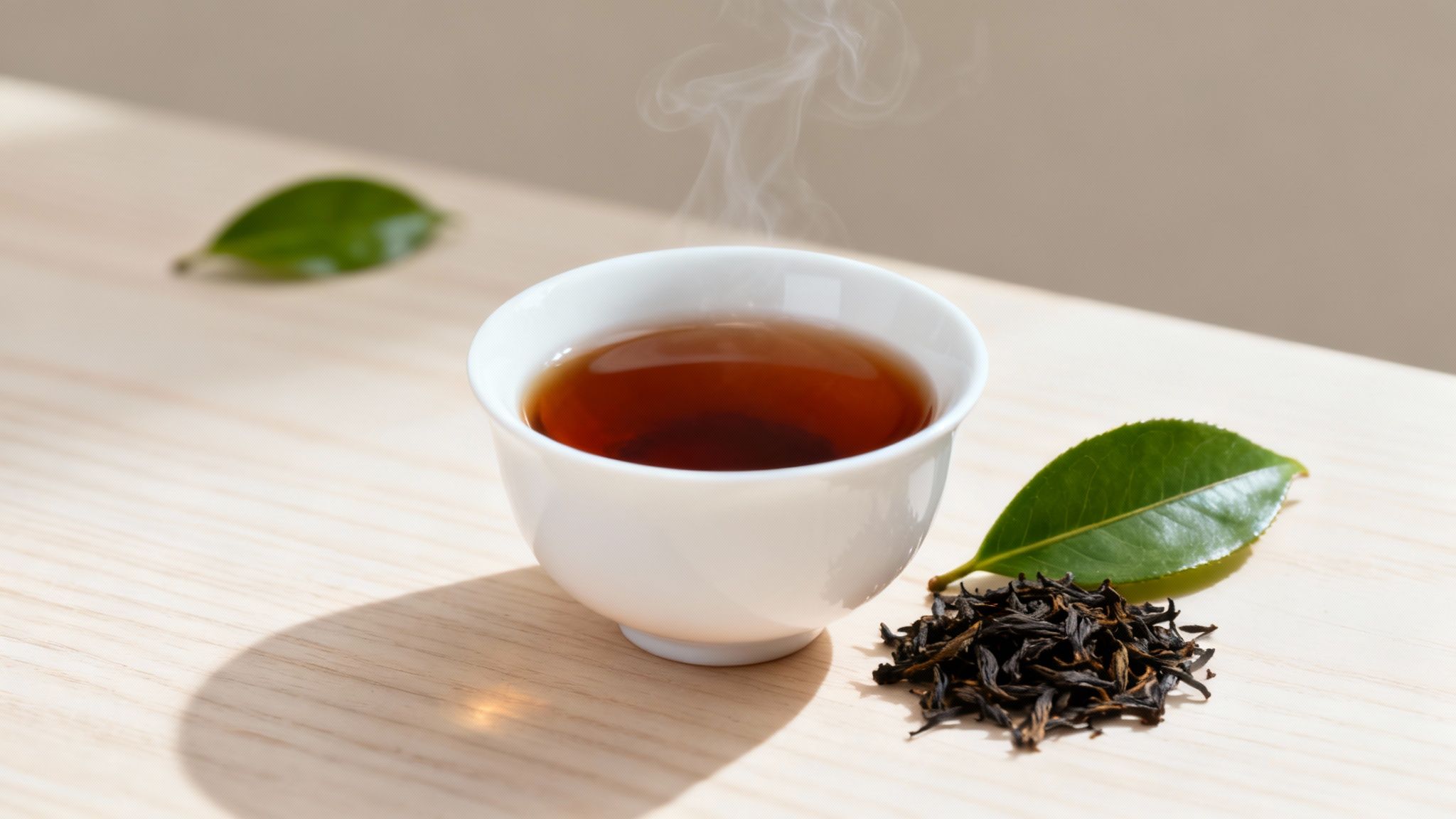
Welcome to the captivating universe of black tea, a brew cherished right across the UK and the wider world. While there are countless types of tea, what really sets black tea apart comes down to one crucial step in its creation: full oxidation.
Think of it like slicing an apple and leaving it on the counter; that browning you see is a natural reaction to the air. A very similar process transforms fresh, green tea leaves into the dark, richly flavoured leaves we all recognise. It's this very transformation that develops the deep amber colour and complex, robust flavour profiles that define our favourite brew.
Unlike its green and oolong cousins, which are either unoxidised or only partially so, black tea undergoes a complete enzymatic change. This gives it a much longer shelf life and that signature bolder character—qualities that made it the perfect commodity for long sea voyages centuries ago.
A Cornerstone of British Culture
Black tea’s story in Britain is one where culture and commerce are completely intertwined. Since it first arrived in the 1600s, it has profoundly shaped our daily routines and rhythms. In fact, black tea makes up the vast majority—an estimated 86%—of all tea we drink here in the UK.
It's a testament to its cultural significance. Iconic blends like English Breakfast and Earl Grey were developed specifically to satisfy British tastes, cementing black tea's place as a true national staple.
To help you get started on your own tea journey, we've put together a quick guide to some of the most popular black teas, their origins, and what makes each one special.
Quick Guide to Black Tea Varieties
This table offers a snapshot of the core single-origin black teas you'll encounter. Each has a story and a flavour profile shaped entirely by the land it comes from.
| Tea Type | Region of Origin | Core Flavour Profile |
|---|---|---|
| Assam | India | Strong, bold, and malty |
| Darjeeling | India | Light, delicate, and floral with muscatel notes |
| Ceylon | Sri Lanka | Crisp, bright, and citrusy |
| Keemun | China | Fruity, winey, and slightly smoky |
| Yunnan | China | Smooth, sweet, and earthy with hints of chocolate |
This guide will be your map as we navigate the distinct flavours, origins, and brewing methods for each variety. And if your passion for a great brew extends to sharing it with others, you might enjoy this collection of unique gifts for coffee and tea lovers for a bit of inspiration.
The Single Origin Stars of Black Tea

While tea blends are all about creating a familiar, consistent flavour, single-origin teas tell a story. They’re a snapshot of a specific place, carrying the unique signature of their home. This sense of place is what the wine world calls terroir—that beautiful, complex interplay of soil, climate, altitude, and even local tradition.
Think of it like comparing a Scottish single malt whisky from Islay to one from Speyside. They're both whisky, sure, but they taste worlds apart. It's the same with single-origin black teas. Each one offers a distinct personality that’s worth getting to know, from the bold plains of India to the misty mountains of China.
Assam: The Bold Heart of India
Deep in Northeast India, in the low-lying plains of the Brahmaputra river valley, you’ll find Assam. This is a tea with a powerful, full-bodied character—the quintessential “builder's tea” in its purest form. It delivers a rich, malty flavour that stands up beautifully to a splash of milk and a bit of sugar.
The region’s hot, humid summers and heavy rainfall are perfect for a particular varietal, Camellia sinensis var. assamica. This plant’s larger leaves yield a darker, stronger brew that has become the backbone of many classic breakfast blends.
An Assam is unmistakable. Its deep amber liquor and brisk finish make it the perfect morning kick-start. If you love a strong, invigorating cup to get you going, exploring single-estate Assams is a real treat.
Darjeeling: The Champagne of Teas
High in the Himalayan foothills, the gardens of Darjeeling produce some of the most delicate and prized black teas on the planet. It’s often called the "Champagne of Teas," and for good reason—its flavour profile is a world away from the malty punch of Assam.
Here, the high altitude, cool misty climate, and unique soil create a much lighter, more nuanced tea. Darjeelings are famous for their distinctive muscatel note, a sweet, fruity character reminiscent of Muscat grapes.
A huge part of the Darjeeling story is its "flushes," or seasonal harvests. Each one brings a different character to the cup:
- First Flush (Spring): Light, floral, and incredibly aromatic with a pale liquor.
- Second Flush (Summer): More full-bodied, this is where the classic muscatel flavour really comes through.
- Autumnal Flush: Richer and warmer, with notes of ripe fruit and spice.
Because it’s so delicate, a good Darjeeling is almost always drunk without milk. You wouldn't want to miss those complex floral and fruity notes.
Ceylon: The Bright Jewel of Sri Lanka
Ceylon tea, from the island nation of Sri Lanka, is all about a bright, crisp, and clean taste. What’s fascinating is how much its flavour can change depending on the altitude where it’s grown, giving you a whole spectrum of tastes from one small country.
The different growing regions each have their own signature:
- Nuwara Eliya (High-grown): Delicate and fragrant, often compared to a light Darjeeling.
- Uva (High-grown): Smooth and mellow with an exotic, aromatic character.
- Dimbula (High-grown): Full-bodied and wonderfully refreshing.
- Ruhuna (Low-grown): Strong and full-flavoured, often forming the base of robust blends.
Generally, Ceylon teas are known for their briskness and subtle hints of citrus or spice. This vibrant character makes them brilliant for an afternoon pick-me-up or as the base for a seriously good iced tea.
Yunnan: The Ancient Cradle of Tea
Head to Yunnan province in southwestern China—considered by many to be the birthplace of tea itself—and you’ll find a black tea that is remarkably smooth and complex. Known locally as ‘Dianhong’, Yunnan black tea is famous for its stunning golden-tipped leaves and its complete lack of bitterness.
The flavour is often described as sweet and gentle, with notes of honey, dark chocolate, and sometimes a whisper of peppery spice. It doesn't have the brisk astringency of an Assam or Ceylon; instead, it's velvety and mellow, making it a fantastic starting point for anyone new to single-origin teas.
Those beautiful golden buds in a high-quality Yunnan are a sign of meticulous craftsmanship. They’re packed with the compounds that give the tea its signature sweetness and smooth mouthfeel.
Keemun: The Burgundy of Teas
Another of China's most celebrated black teas, Keemun, comes from Anhui province in the east. It’s a relative newcomer, first produced in the late 19th century, but it quickly won fans around the world for its uniquely aromatic quality.
Keemun is often described as having notes of wine, fruit, and a hint of smoke, sometimes with a floral, orchid-like scent. This complexity has earned it the nickname "the Burgundy of Teas." It’s less bold than Assam but more layered than Ceylon, hitting a delicate balance that’s both satisfying and intriguing.
You'll find it as a key ingredient in some traditional English Breakfast blends, where it lends its aromatic character to the malty base. But on its own, Keemun is a sophisticated brew that seems to reveal something new with every sip.
Nilgiri: The Fragrant Blue Mountains
Our final stop is the Nilgiri, or 'Blue Mountains', of Southern India. Teas from this region are wonderfully fragrant and brisk, offering a balanced cup that is both flavourful and smooth. Nilgiri teas tend to sit in a delightful middle ground—not as punchy as Assam or as ethereal as Darjeeling.
They are known for being exceptionally clean on the palate, with bright, fruity notes and a crisp finish. This clarity makes them an excellent choice for iced teas, as they rarely go cloudy when chilled. Because of their well-rounded character and low astringency, Nilgiri teas are often called very "forgiving" to brew, meaning they consistently produce a beautiful, aromatic cup.
The Art of the Blend and Scented Teas
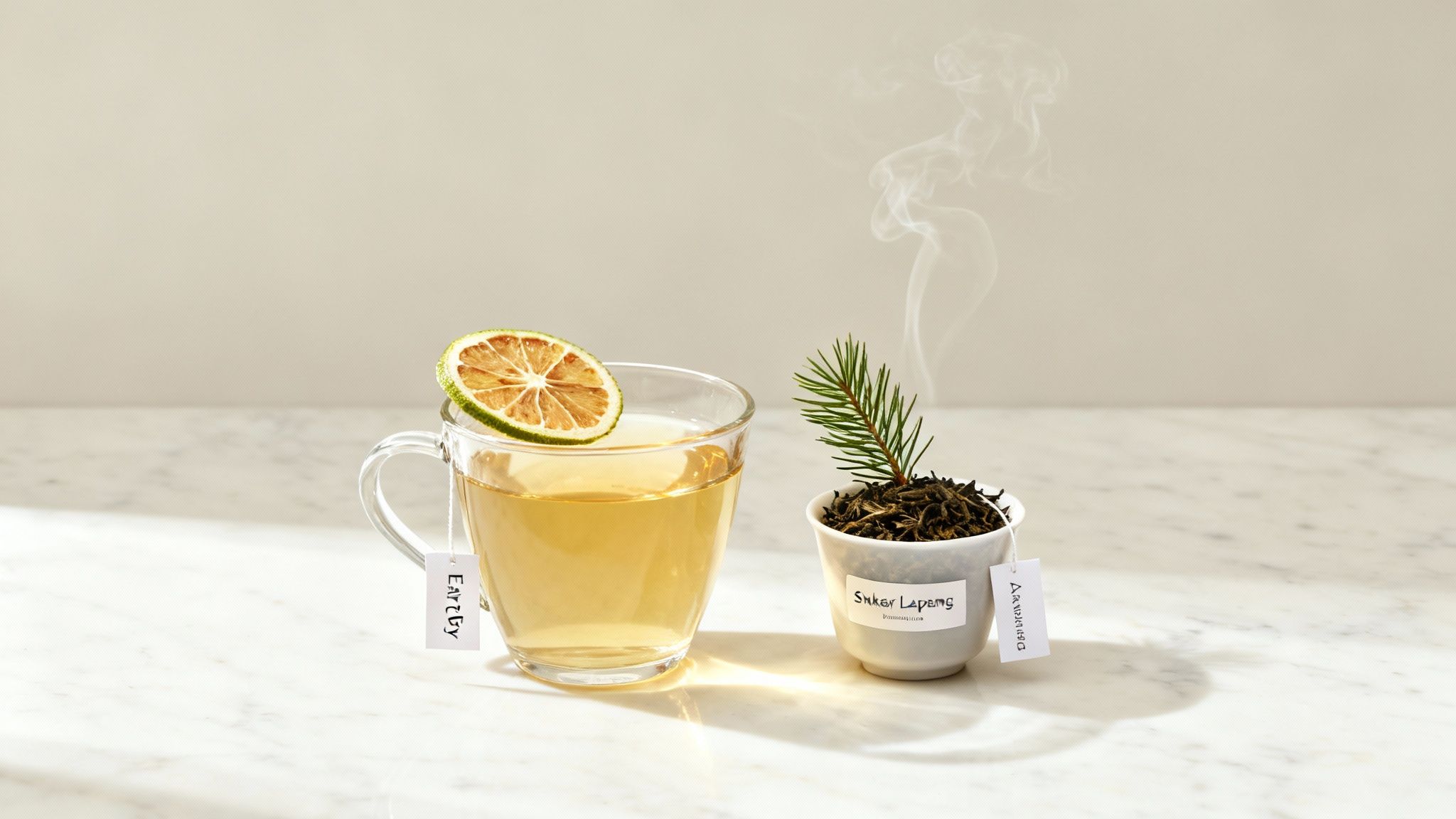
Beyond the pure expression of a single-origin tea lies the creative world of blends and scented varieties. Think of a single-origin as a solo artist, showcasing the unique character of one specific place. A blend, on the other hand, is more like an orchestra, where different instruments are brought together to create something harmonious and complete.
The whole point of blending is to achieve balance and, crucially, reliability. Expert tea tasters are masters at combining leaves from different harvests and regions to craft a signature flavour that tastes exactly the same, cup after cup, year after year. It's this consistency that makes blended black teas the absolute backbone of the British tea scene.
Iconic Black Tea Blends
The most famous blends didn't just appear out of nowhere; they were born from a desire for a particular kind of brew. Over time, some have become so well-loved they've taken on a life of their own.
- English Breakfast: This is the quintessential British cuppa—robust, full-bodied, and practically begging for a splash of milk. It’s traditionally a gutsy mix of malty Assam, a bright Ceylon, and often a brisk Kenyan tea for an extra kick. The goal is simple: a rich, invigorating brew to get the day started properly.
- Irish Breakfast: If you thought English Breakfast was strong, meet its even bolder cousin. Typically dominated by powerful Assam teas, this blend delivers a serious malty punch and brews up a deep reddish colour. It’s for those who like their tea with no messing about.
- Russian Caravan: This blend is a throwback to the old tea trade routes. It often features Chinese teas like a wine-like Keemun and a complex Oolong, sometimes with a whisper of smoky Lapsang Souchong to evoke the campfires of the long camel journeys across Asia. The result is a wonderfully smooth, aromatic, and ever-so-subtly smoky tea.
The Aromatic World of Scented Teas
While blends mix different black teas together, scented teas go one step further, introducing a completely new fragrance from flowers, fruits, or essential oils.
The art lies in delicately infusing the tea leaves with these new aromas during processing, adding another layer of flavour and complexity. It’s a fine balance; the tea master’s job is to ensure the added scent complements the tea’s natural character, rather than drowning it out.
In the UK, black tea isn't just a drink; it's a cultural cornerstone, making up around 75% of all tea we drink. We get through over 100 million cups a day, a ritual that stretches all the way back to the 16th century. And while we often think of India or China, a huge portion—around 75% of the market volume—actually comes from East Africa, especially Kenya. These leaves are then blended with Indian or Sri Lankan teas to create those familiar, robust flavours we love. You can dive into more details in the UK Tea Census Report from 2022.
Earl Grey: The Bergamot Classic
Earl Grey is without a doubt the most famous scented tea in the world. Its signature is that beautiful, citrusy perfume of bergamot oil, which comes from the rind of a fragrant orange grown mostly in Italy.
Legend has it the blend was created for Charles Grey, the 2nd Earl Grey and Prime Minister back in the 1830s. The fragrant oil was supposedly added to mask the taste of lime in the water at his family estate. True or not, the combination was a masterstroke.
A truly good Earl Grey creates a perfect harmony between a full-bodied black tea base (often Ceylon and Assam) and the bright, floral-citrus notes of the bergamot. It's elegant, refreshing, and an absolute staple of afternoon tea.
Lapsang Souchong: The Smoky Enigma
For those with a more adventurous streak, Lapsang Souchong is a tea like no other. It’s famous—or perhaps infamous—for an intensely smoky flavour and aroma that sets it miles apart from any other black tea.
Hailing from the Wuyi Mountains in China's Fujian province, Lapsang Souchong gets its unique character from how it’s dried. After the leaves have oxidised, they are laid out over smoking pine wood fires.
The leaves soak up all that aromatic smoke, creating a brew with a powerful, campfire-like scent and a surprisingly smooth, crisp finish. It’s incredible with savoury food and often gets called the "whisky of teas." While its bold profile isn't for everyone, it’s a brilliant example of the amazing diversity of flavour you can get from the humble Camellia sinensis plant.
How to Brew the Perfect Cup of Black Tea
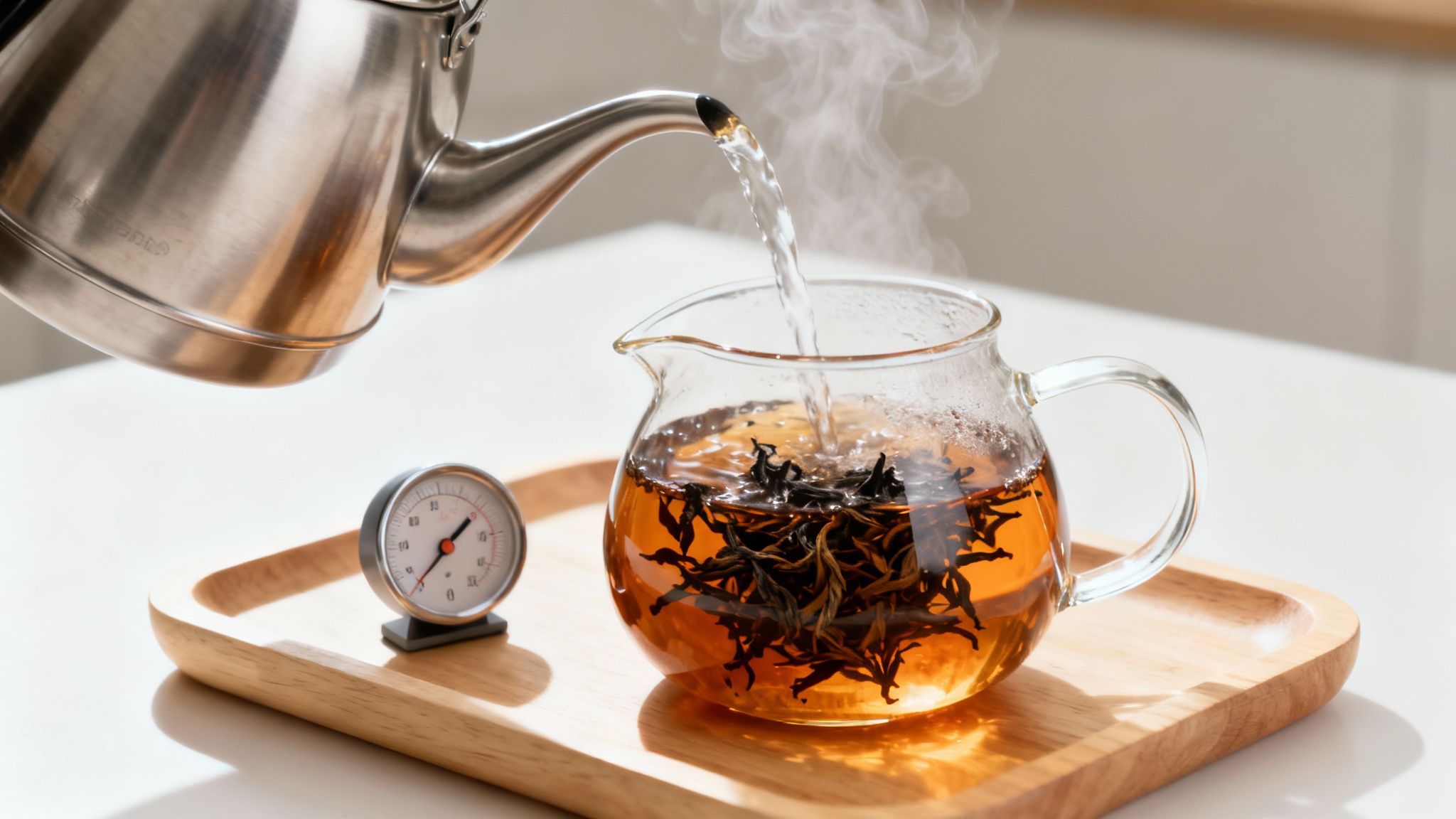
Getting to know the different types of black tea is just the beginning of the adventure. The real magic unfolds the moment you add hot water, as the brewing process is what unlocks the leaf’s true character and flavour.
There aren't any rigid rules for the perfect infusion, but understanding a few key variables will make all the difference. Get to grips with the interplay between water temperature, steeping time, and the tea-to-water ratio, and you'll transform your daily cuppa into a genuinely delightful experience.
These elements don't work in isolation; they’re all connected. For example, water that’s too hot can easily scorch delicate leaves, leaving you with a bitter brew. On the other hand, steeping for too long can draw out too many tannins, resulting in an unpleasantly sharp taste.
Mastering the Core Brewing Variables
Nailing these three elements is fundamental to a great cup of tea. Think of it like a simple recipe where tiny adjustments can lead to dramatically different—and delicious—outcomes.
- Water Temperature: Not all black teas are created equal. A robust Assam can happily take boiling water (100°C), but a delicate first-flush Darjeeling will show off its floral notes far better with slightly cooler water, somewhere around 85-90°C.
- Steeping Time: This is all about controlling the strength and body of your tea. As a general guide, black teas are steeped for 3-5 minutes. Shorter times will give you a lighter, more delicate cup, while a longer steep builds a stronger, more robust flavour.
- Tea to Water Ratio: A great starting point is about one teaspoon (or 2-3 grams) of loose-leaf tea per 200ml cup of water. This helps ensure the flavour is nicely balanced—not too weak or overwhelmingly strong.
The quality of your water makes a surprising difference. Heavily chlorinated or hard water can mask the subtle flavours of a high-quality tea. Using fresh, filtered water provides a clean canvas, allowing the tea's true character to shine through.
A Quick Brewing Guide for Different Black Teas
To give you a head start, here’s a quick guide with some recommended brewing parameters for popular black teas. Don't be afraid to experiment and adjust them to find what works best for you.
Black Tea Brewing Parameters
| Tea Type | Water Temperature (°C) | Steeping Time (Minutes) |
|---|---|---|
| Assam | 95-100°C | 3–5 minutes |
| Darjeeling | 85-95°C | 2–3 minutes |
| Ceylon | 90-100°C | 3–4 minutes |
| Keemun | 90-95°C | 2–3 minutes |
| English Breakfast | 95-100°C | 3–5 minutes |
| Earl Grey | 90-95°C | 3–4 minutes |
These are just starting points, of course. The best cup of tea is always the one you enjoy the most, so use these as a foundation for your own brewing journey.
Loose Leaf Versus Tea Bags
The age-old debate often comes down to convenience versus quality. Tea bags are wonderfully quick and mess-free, making them perfect for a busy morning.
However, loose-leaf tea almost always offers a superior flavour experience. The larger, unbroken leaves have more room to unfurl and infuse properly, releasing a much greater depth of flavour and aroma. For anyone looking to explore this further, our guide on how to brew loose-leaf tea has plenty of expert tips. It's the best way to truly appreciate the wonderful nuances between the different types of black teas.
Pairing Black Tea with Food
Pairing tea with food is a bit of an art, but it’s one that can completely transform a meal. It's much like pairing wine—the vast world of black tea flavours can complement, contrast, and balance a huge range of dishes, taking you well beyond the usual scone and cream.
The trick is to think about matching intensity. A bold, punchy tea needs a dish with enough backbone to stand up to it, while a more delicate tea would just get lost against anything too powerful. The real goal is to find that perfect harmony where both the food and the tea taste even better together.
Classic Pairings for Hearty Teas
The strongest black teas are a brilliant match for rich, flavour-packed foods. That natural astringency they have is fantastic for cutting through fats and sweetness, cleansing your palate and getting you ready for the next delicious mouthful.
- Assam: With its deep, malty character, Assam is the ultimate partner for a full English breakfast. Its robustness can handle sausages, bacon, and eggs without a problem. It’s also incredible with rich chocolate desserts or a dense slice of fruitcake.
- English Breakfast: This classic blend is a true all-rounder. Try it alongside a Sunday roast beef, a hearty stew, or even just a sharp cheddar cheese on toast. Its strong, brisk flavour provides a brilliant contrast to savoury, umami-rich dishes.
It's all about synergy. The tannins in a strong black tea work in a similar way to those in red wine. They cut through the richness of red meat or creamy sauces, which makes the food feel less heavy and the tea taste smoother in return.
Pairings for Aromatic and Lighter Teas
When you're brewing a more fragrant or nuanced black tea, you'll want to pair it with something that won't overpower its delicate notes. Think citrus, light pastries, and subtle spices.
- Earl Grey: The bright, citrusy perfume of bergamot makes Earl Grey a fantastic match for anything with lemon. A lemon drizzle cake, a citrus tart, or even a light, flaky fish dish would be beautifully enhanced. Of course, it’s also the go-to for afternoon tea scones and sandwiches.
- Darjeeling: Often called the "Champagne of Teas," a light first-flush Darjeeling is at its best with delicate foods. Think cucumber sandwiches, light sponge cakes, or gently steamed vegetables. Its floral, muscatel notes are easily drowned out, so keeping it simple is the way to go.
- Lapsang Souchong: Now for an adventurous one! This smoky tea is an incredible pairing partner. Its unique campfire aroma is just made for equally bold and savoury flavours. Try it with a strong blue cheese, smoked salmon, or cured meats. For something really surprising, have it with a rich, dark chocolate truffle—the combination is amazing.
Health Notes and Mindful Consumption
We all know a good cup of black tea is a comforting ritual, but there's more to it than just great flavour. It's packed with natural antioxidants called flavonoids, which are plant compounds thought to be brilliant for supporting cardiovascular health. Suddenly, that daily cuppa feels even more worthwhile.
Then there's the gentle lift from its moderate caffeine content. Unlike the jarring jolt you get from coffee, the caffeine in tea works in tandem with an amino acid called L-theanine. This clever combination is known for creating a state of calm focus, sharpening your mind without any of the jitters. If you're curious about the specifics, you can dig into the typical caffeine content in different teas.
Sourcing with a Conscience
Drinking mindfully isn't just about what's in the cup; it's also about where it came from. As more people catch on to black tea's health benefits, ethical sourcing has become a huge part of the conversation for discerning tea drinkers.
When you're choosing a tea, have a look for certifications that signal responsible practices. These labels are a straightforward way to know your purchase is good for both people and the planet.
Here are a few key ones to watch for:
- Fair Trade: This ensures that farmers get a fair price for their crop and work in safe conditions.
- Rainforest Alliance: This seal means the tea was grown using methods that support social, economic, and environmental sustainability.
For an even deeper sense of mindful consumption, try pairing your tea ritual with a quiet moment of reflection. Learning some essential meditation techniques can beautifully complement your brew. By making these thoughtful choices, you ensure every sip is as good for the global community as it is for you.
Your Black Tea Questions, Answered
Even after diving deep into the world of black tea, a few questions always seem to pop up. Think of this as our little FAQ corner, designed to clear up some common head-scratchers and help you on your tea journey.
Orange Pekoe Isn't a Flavour
This one catches almost everyone out at some point. It’s easy to assume ‘Orange Pekoe’ is a type of tea, like Darjeeling or Ceylon, but it’s actually a tea-grading term.
‘Orange Pekoe’ simply refers to the grade of the leaf—specifically, its size and whether it's a whole, young leaf from the top of the tea bush. It’s a mark of quality, not a flavour profile. So, you can absolutely have an ‘Assam Orange Pekoe’. This just means you're getting a high-grade, whole-leaf tea from the Assam region, and you can expect that classic malty taste.
The Caffeine Question: Tea vs. Coffee
When it comes to the sheer amount of caffeine, coffee definitely takes the crown. A standard 240ml cup of black tea usually has about 47mg of caffeine, though this can vary. That same cup filled with coffee? It could have anywhere from 95mg to 200mg.
But black tea has a trick up its sleeve that coffee doesn't: an amino acid called L-theanine. This wonderful compound works in harmony with caffeine to create a sense of calm, focused alertness—giving you a gentle lift without the jitters you might get from a strong coffee.
To Milk or Not to Milk?
Ah, the great debate. While it's always down to personal taste, some black teas are practically made for a splash of milk and a bit of sugar, while others are best left alone. It all depends on the tea's natural character.
- Best with milk: Those big, bold, and sometimes punchy black teas cry out for milk. Think of a strong Assam, a classic English Breakfast, or most Kenyan blends. The milk softens their astringency and balances the rich flavours, making for a perfectly comforting cuppa.
- Best without milk: On the other hand, more delicate, aromatic teas are best enjoyed as they are. A light, floral first-flush Darjeeling or a complex Keemun would have their beautiful, subtle notes completely overwhelmed by milk. We always recommend trying these teas on their own first to really appreciate what makes them so special.