


If you're serious about your tea, a quality strainer for loose tea is the single most important bit of kit you can own. It's the key to unlocking the true flavour of whole leaf teas. Unlike teabags, a good strainer gives the leaves room to unfurl and properly infuse, guaranteeing a balanced, aromatic, and sediment-free cup every time.
Why the Right Strainer Unlocks the Perfect Brew
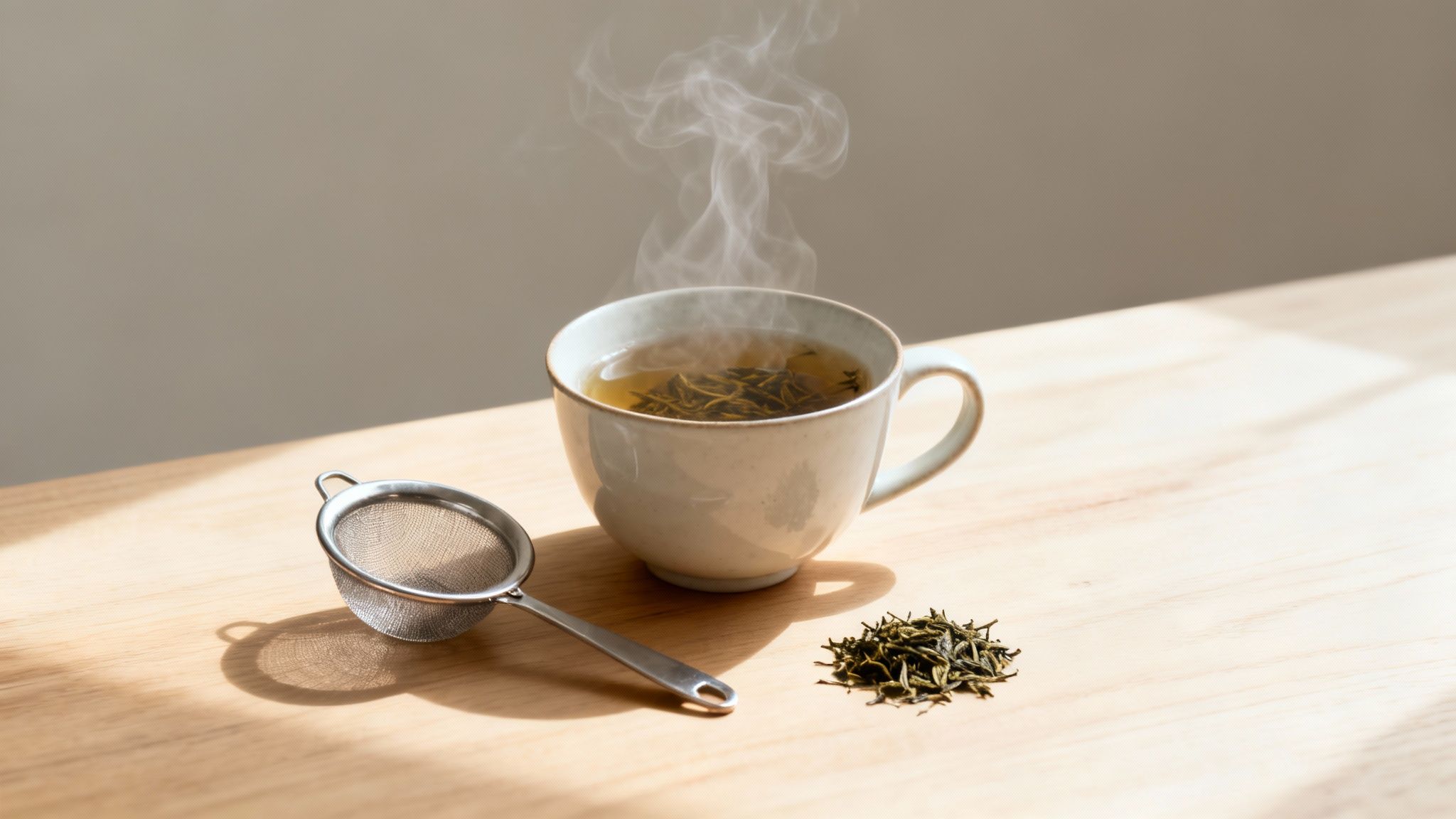
Choosing a strainer might seem like a small detail, but it's what separates a mediocre brew from a truly memorable one. Think of it as the conductor of an orchestra; its job is to manage the delicate dance between tea leaves and water, letting every note of flavour and aroma sing in perfect harmony. Without the right tool, even the most exquisite tea can fall flat.
This simple device turns making tea from a chore into a mindful ritual. It’s about so much more than just keeping leaves out of your cup – it’s about control, precision, and appreciating the craft that went into your chosen blend. A well-designed strainer ensures a consistent infusion, preventing the bitterness that comes from over-steeping while giving you that clean, smooth sip we all crave.
The Growing Appreciation for Loose Leaf Tea
Here in the UK, where tea is practically part of our DNA, there's a real shift towards a more thoughtful cuppa. In fact, around 55% of UK consumers now actively look for fair-trade or single-origin loose teas. We’re all becoming more curious about where our products come from and the stories behind them.
This movement is exactly why the humble strainer for loose tea is making a comeback. For those of us who value quality and authenticity, it’s become an essential companion for our daily brew.
For the discerning tea drinker, the strainer is not just an accessory; it is a gateway to the full potential of loose leaf tea. It empowers you to brew with intention, unlocking the nuanced flavours that teabags simply cannot offer.
Ultimately, getting the right strainer is an investment in your daily enjoyment. It ensures every cup is a perfect expression of the tea's character. If you're ready to get started, have a look at our guide on how to brew loose leaf tea.
Exploring Different Types of Tea Strainers
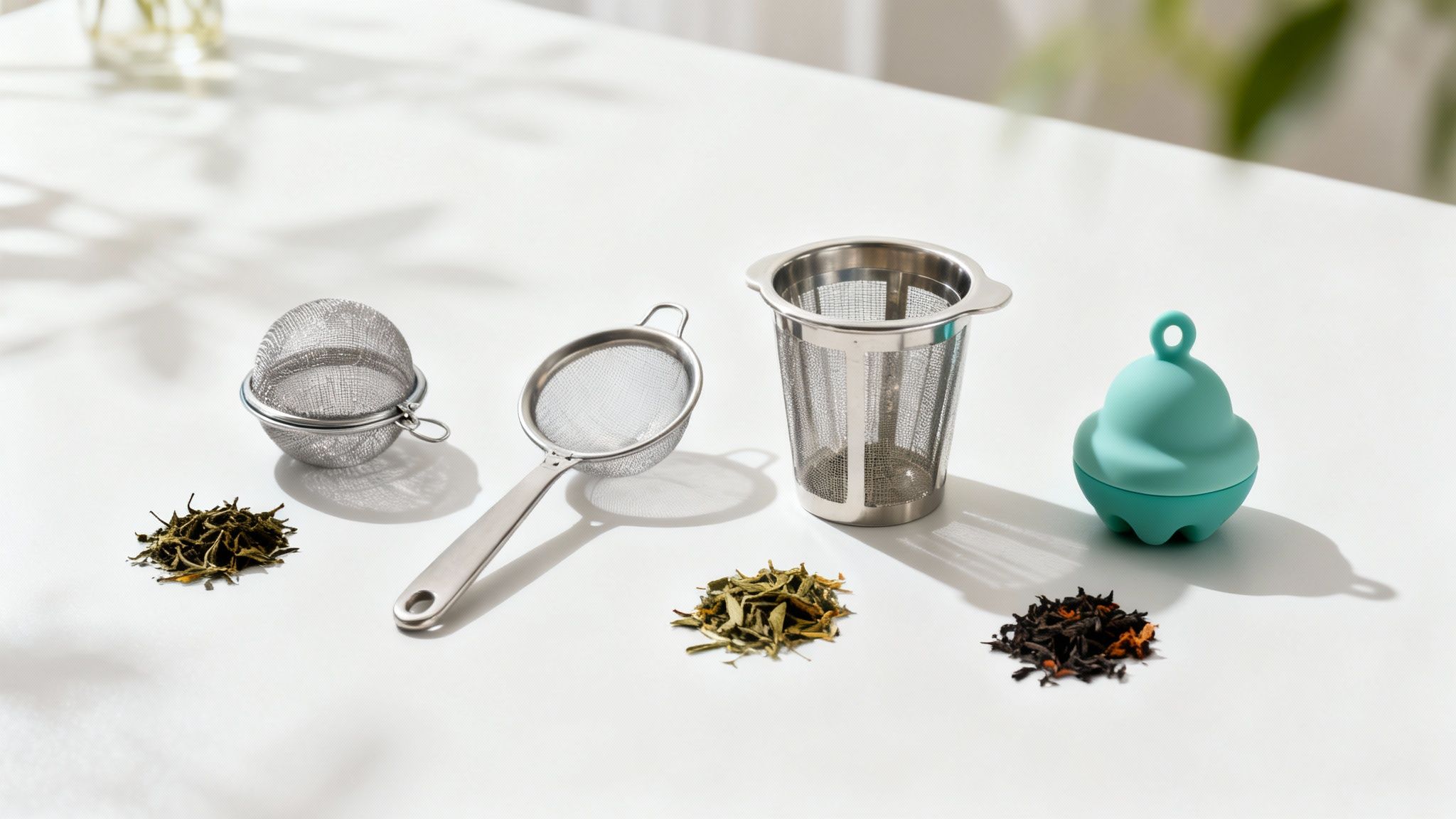
Choosing a strainer isn't just a practical decision; it's about matching the tool to your tea and your ritual. The world of tea strainers is wonderfully diverse, with each design offering its own unique blend of convenience, performance, and style. Getting to grips with the differences is the first step to perfecting your daily brew.
Think of it this way. A tiny tea ball is a bit like a submarine, perfect for a quick one-cup mission. In contrast, a big brewing basket is more like a spacious jacuzzi for your leaves, giving them all the room they need to stretch out and release their full, complex flavour.
Let's dive into the most common types you'll come across, breaking down what they do best so you can find your perfect match.
A Quick Comparison of Common Tea Strainers
To make things a bit clearer, here’s a simple table that breaks down the most popular types of tea strainers. It covers their best uses, what we love about them, and what to watch out for.
| Strainer Type | Best For | Pros | Cons |
|---|---|---|---|
| Tea Ball | Single cups of fine-leaf or broken-leaf teas, especially when travelling or at the office. | Portable, convenient, and easy to store. | Too small for large whole-leaf teas, restricting flavour development. |
| Hand Sieve | Serving from a teapot to a group, ensuring a clean pour. | Allows leaves to infuse freely in the pot for maximum flavour. | Not for single-cup brewing; requires a separate teapot. |
| Brewing Basket | Daily single-cup brewing of any and all loose-leaf teas. | Offers plenty of room for leaves to expand; easy to fill and clean. | Less traditional or ceremonial than using a teapot and sieve. |
| Novelty Infuser | Casual tea drinkers who enjoy a bit of fun with their brew. | Fun, decorative, and makes a great gift. | Function often takes a back seat to form; can let small leaves through. |
This table is just a starting point, of course. The best way to find your favourite is to experiment, but this should give you a solid idea of where to begin.
The Classic Tea Ball Infuser
The tea ball is probably the most recognisable strainer out there. It’s that little mesh sphere that clasps shut, usually with a chain to hang it from the side of your mug.
Their biggest selling point is portability and convenience. They’re small, a doddle to store, and absolutely perfect for making a single cup at your desk or when you're on the move. Just pop your leaves in, lock it, and drop it into your hot water.
But that compact size is also their main weakness. High-quality whole-leaf teas, like delicate oolongs, need space to properly unfurl. A cramped tea ball can suffocate them, leading to a weak, underdeveloped brew. They're much better suited to broken-leaf black teas or finer herbal blends that don't expand quite so much.
The Handle-Held Sieve
A handle-held sieve is a truly elegant, traditional tool. You simply hold it over your cup as you pour the tea from a teapot, catching the leaves as the liquid flows through. This classic method allows the leaves to infuse completely freely inside the pot, which many purists argue creates the most authentic, full-bodied flavour.
This type of strainer is ideal for anyone who loves the ceremony of brewing in a teapot and sharing with friends. It guarantees no stray leaves end up in anyone's cup, giving you a clean, professional pour every time.
- Best Use: Perfect for serving tea from a teapot.
- Advantage: Allows for maximum leaf expansion within the pot for a far superior infusion.
- Disadvantage: You have to brew in a separate teapot, so it isn't designed for brewing straight into a mug.
The In-Mug Brewing Basket
The brewing basket is, frankly, the unsung hero of the tea world. It’s arguably the most versatile and effective strainer available, brilliantly combining convenience with top-notch performance. These deep, cylindrical baskets sit perfectly inside your mug, giving your tea leaves all the space they could ever need to expand.
Most are made from a super-fine stainless steel mesh, which stops even the tiniest particles (we're looking at you, rooibos!) from escaping. Their wide top also makes them incredibly easy to fill and, crucially, to clean. Just a quick tap sends the used leaves into the compost, followed by a simple rinse.
For the daily tea drinker who wants both quality and simplicity, the brewing basket is a total game-changer. It gives you the leaf expansion of teapot brewing with the single-cup ease of a tea ball.
This makes them a fantastic all-rounder, ready to handle everything from fine herbals to huge, whole-leaf speciality teas. To see how different infusers work with various cups, have a look at our detailed guide on tea infusers for cups.
Novelty and Decorative Infusers
And finally, we have the novelty infusers. These are the ones that come in all sorts of quirky shapes—animals, submarines, you name it. They're usually made from silicone and can add a little bit of fun to your tea break.
While they're certainly charming, their focus is definitely on looks over function. The holes can sometimes be a bit too big, letting small leaf bits escape, and they often don't hold very much tea. They make a lovely gift for a casual tea drinker, but they might not cut it for someone serious about getting the absolute best flavour from their premium loose leaf.
Pairing Your Strainer with Your Favourite Tea
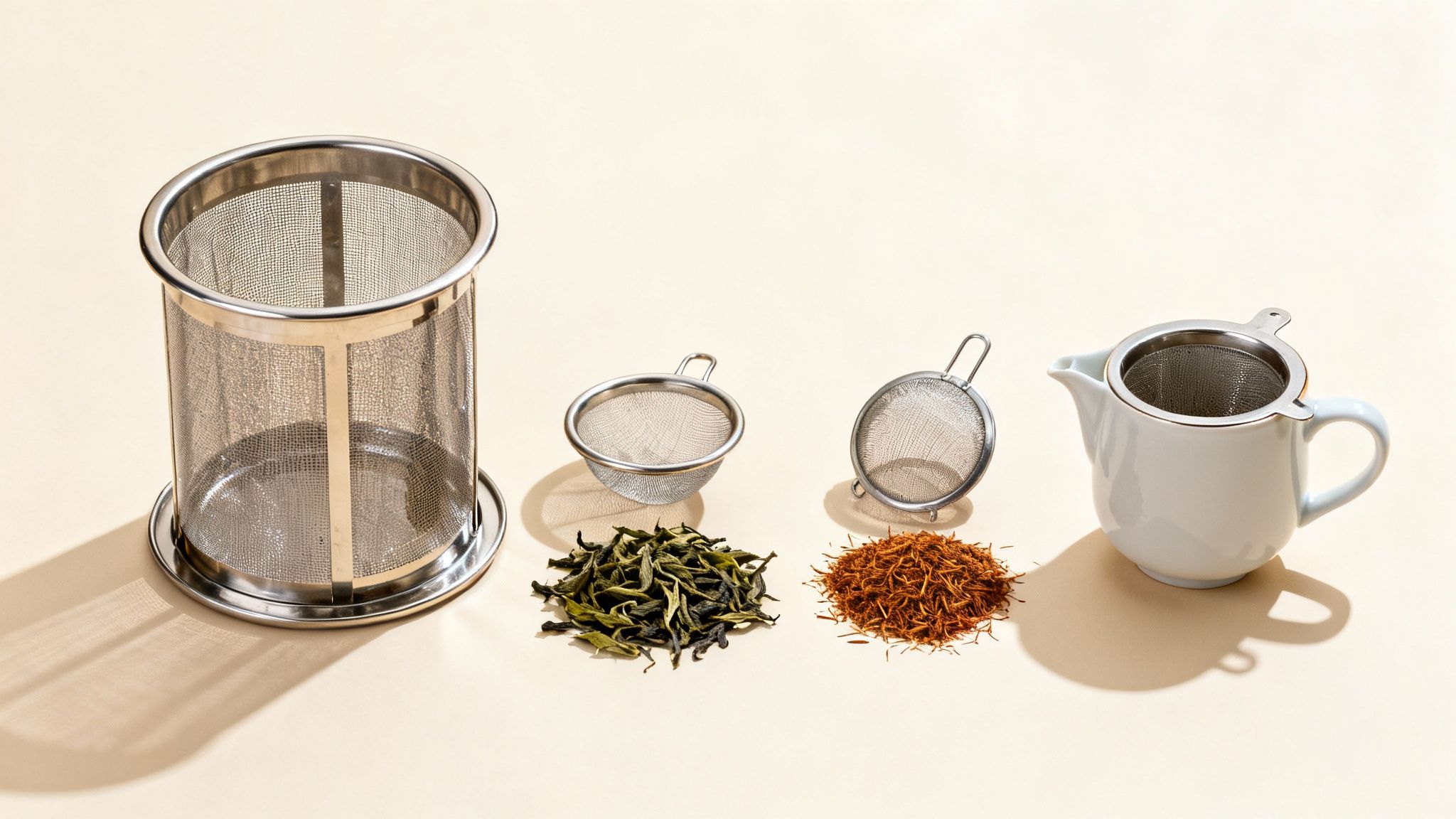
Choosing the right strainer for your loose tea is more art than science, and matching it to your favourite blend is where the real magic happens. It’s a bit like picking the right glass for a fine wine; the vessel itself can change the entire experience. Really, it all boils down to two things: the size of the tea leaves and how you like to brew your cuppa.
Get this pairing wrong, and you're in for a disappointing cup. Imagine trying to cram a delicate, large-leaf white tea into a tiny tea ball. The leaves simply won't have room to unfurl and release their subtle, complex notes, leaving you with a weak, underwhelming brew. On the flip side, using a wide-mesh strainer for a fine rooibos blend means you'll end up with a mouthful of sediment.
Getting it right ensures every cup you brew lives up to its full potential, delivering the exact flavour and aroma the tea master intended. It's a simple step that makes a world of difference.
The Importance of Leaf Size
The physical size of your tea leaves is the biggest clue as to which strainer you should reach for. When tea hits hot water, it expands dramatically—some leaves can swell to several times their dry size. Your strainer has to be able to accommodate this transformation.
For teas with very small, fine leaves, the main job is filtration. You need something that will keep all those tiny bits out of your cup.
- Fine-Leaf Teas: Blends like rooibos, honeybush, or finely broken black teas (often found in chai) demand a fine-mesh strainer. A brewing basket made from micro-perforated stainless steel is a fantastic choice, as is a traditional handle-held sieve with a really dense weave.
On the other hand, premium whole-leaf teas need one thing above all else: freedom. Their large, unbroken leaves must have plenty of space to expand and circulate.
- Large-Leaf Teas: Varieties like Oolong, Silver Needle white tea, or whole-leaf green teas absolutely thrive in a spacious brewing basket. They can also be brewed freely in a teapot. These methods give the leaves the room they need to unfurl properly, guaranteeing a rich, nuanced, and complete flavour.
Think of your strainer as a dance floor for your tea leaves. A small tea ball is a crowded room where only a few can move, while a large brewing basket is a grand ballroom, giving every leaf the space it needs to perform.
Matching Strainers to Brewing Methods
How you make your tea also plays a massive part. Are you a traditionalist who loves the ritual of a teapot, or do you prefer the speed and convenience of brewing straight in your mug? Each method has its perfect strainer partner.
If your routine involves brewing a large pot to share or to enjoy over time, a handle-held sieve is your best friend. This method lets the leaves infuse without any restrictions inside the pot, which many purists believe produces the most authentic flavour. The sieve simply acts as a gatekeeper, catching the leaves as you pour.
For the solo tea drinker or anyone after maximum convenience, an in-mug infuser or brewing basket is the clear winner. This handy tool combines steeping and straining into one easy step. It gives the leaves plenty of room to expand but with the practicality of brewing a single serving quickly and with minimal fuss. This makes it a brilliant all-rounder for daily use at home or in the office.
Perfect Pairings with Jeeves & Jericho Blends
To see how this works in practice, let’s look at a few examples from our own collection. Pairing a Jeeves & Jericho blend with the right strainer will take your brew from good to truly exceptional.
Here are our top recommendations:
-
For our Spiced Bombay Chai: This blend is packed with fine-cut black tea and a host of aromatic spices. To capture all that flavour without any gritty bits, a fine-mesh brewing basket is the perfect tool. It keeps the smaller particles contained while giving the spices enough room to infuse properly.
-
For our Organic Dragon Well Green Tea: With its beautiful, flat, whole leaves, this delicate green tea needs its space. A large, deep brewing basket is ideal, allowing the leaves to gently expand and release their sweet, nutty notes without being cramped.
-
For our Earl Grey Supreme: A true classic that often uses larger black tea leaves. For the full experience, we suggest brewing it freely in a teapot and using a classic handle-held sieve when you pour. This traditional method really honours the tea’s distinguished character.
How Materials Impact Your Tea's Flavour
When you’re picking out a strainer for loose leaf tea, it's easy to get caught up in the shape and size. But the material it’s made from is just as important—it can genuinely change how your tea tastes. Think of it like cooking: a cast iron pan gives a steak a totally different character than a stainless steel one. The same principle applies here.
The ideal material is non-reactive, which is just a fancy way of saying it won’t leave behind any strange metallic or plastic notes in your delicate brew. It also needs to be tough and easy to clean, so the ghost of yesterday's smoky Lapsang Souchong doesn't haunt today’s gentle Silver Needle. Let's take a look at the most common materials and see how they stack up.
Stainless Steel: The Gold Standard
Food-grade stainless steel is, for good reason, considered the best all-rounder for a tea strainer. Its biggest plus is that it is completely non-reactive. This means it won't rust, corrode, or leach any metallic taste into your cup, letting the pure, intended flavour of the leaves come through loud and clear.
This neutrality is a must when you're brewing high-quality, nuanced teas where the subtle notes can be easily lost. Stainless steel is also incredibly durable, shrugs off stains, and is a doddle to clean. A good stainless steel brewing basket isn’t just a purchase; it’s an investment that promises years of perfect, clean-tasting brews. It’s the reliable workhorse of the tea world.
Silicone: A Flexible Friend
Silicone strainers have popped up everywhere, often in bright colours and fun, quirky shapes. Their main appeal is their flexibility—they’re soft, pretty much unbreakable, and a dream to pack for a trip. As long as you’re buying from a reputable brand, food-grade, BPA-free silicone is perfectly safe and won't leach chemicals into your hot water.
There is a catch, however. Silicone is porous, which means it can hang onto strong aromas and flavours over time. If you use the same silicone infuser for a punchy peppermint tea and then a delicate white tea, you might just find a hint of mint where it doesn’t belong. It's for this reason that most tea purists tend to stick with stainless steel for their finest blends.
A key takeaway for any tea enthusiast is that the tools you use should honour the tea. A neutral material like stainless steel respects the integrity of the leaf, ensuring that what you taste is exactly what the tea grower intended.
Traditional Materials: Bamboo and Ceramic
Stepping away from modern options, traditional materials can connect us to the long history and ceremony of tea. They bring a certain aesthetic to the brewing ritual that many of us really appreciate.
-
Bamboo: Often found in handle-held sieves, bamboo is natural, sustainable, and has a lovely look. It adds a rustic, earthy touch to the whole process. The downside is that it needs a bit more care—it must be dried thoroughly to prevent mould and can absorb flavours over time.
-
Ceramic: While you won't often find a strainer made entirely of ceramic, it's a fantastic material for teapots with built-in strainers. Just like stainless steel, high-quality glazed ceramic is non-reactive and is brilliant at holding onto heat. This makes it a wonderful choice for teas that benefit from a stable brewing temperature. You can dive deeper into how temperature affects your brew in our guide on the best water temperature for tea.
Ultimately, the best material for your strainer really comes down to what you prioritise. For pure flavour and something that will last you ages, stainless steel is unbeatable. For fun and travel, silicone is a solid option, but its tendency to hold onto flavours makes it less ideal for daily use with a variety of teas.
Keeping Your Strainer in Pristine Condition
A clean strainer is absolutely essential for a pure-tasting brew. Over time, tea leaves release tannins and natural oils that coat the mesh, leaving a stubborn film that can taint the flavour of your next cup. Keeping your strainer in top nick is easy, but it does ask for a bit of consistency.
Think of it like washing a paintbrush. If you rinse it straight away, the paint glides right off. But if you let it dry, you're in for a serious scrubbing session. It's the exact same principle with your tea strainer; a quick rinse now saves you a deep clean later.
Simple Daily Care
The most important step is also the easiest: rinse your strainer immediately after every use. Don’t let soggy leaves sit there and dry onto the mesh. The moment you've finished brewing, just tap the used leaves into your compost or bin.
Then, give the strainer a good rinse under a strong stream of warm water, making sure to get both the inside and out. That quick blast is usually enough to shift any tiny leaf particles and stop residue from building up. For stainless steel strainers, this daily rinse is often all it takes to keep them looking and working like new.
Tackling Stubborn Stains
Even with diligent rinsing, you might eventually notice some dark, stubborn stains setting in, especially if you're a fan of strong black teas. When this happens, a simple, non-toxic cleaning solution is your best friend.
- Create a Paste: Mix a little bicarbonate of soda with a few drops of water until you have a thick paste.
- Apply and Scrub: Using an old toothbrush or a small scrubbing brush, gently work the paste into the stained areas of the mesh. Use small, circular motions to lift the residue.
- Let It Sit: For really tough stains, let the paste sit on the strainer for 15-20 minutes.
- Rinse Thoroughly: Wash the strainer completely under warm running water, making sure every last bit of bicarb is gone.
This trick works wonders on stainless steel and is a far better choice than harsh chemicals that could damage the metal or leave an unwanted aftertaste.
Caring for Different Materials
Naturally, the material your strainer is made from will change how you clean it. What's fine for robust steel might be too much for delicate bamboo.
- Stainless Steel: These are workhorses – highly durable and simple to clean. They can handle a bicarbonate of soda scrub and are often dishwasher-safe, though handwashing is always a bit gentler on very fine mesh.
- Bamboo: This calls for a gentler touch. Avoid soaking it for long periods. After rinsing, make sure it is completely dry before putting it away to prevent any mould from growing. And never, ever put a bamboo strainer in the dishwasher.
- Silicone: Generally safe for the top rack of the dishwasher. If it's holding onto the aroma of a particularly strong tea, you can soak it in a bowl of warm water with a splash of white vinegar for about 30 minutes. Just give it a thorough rinse afterwards.
Taking good care of your tea tools is a key part of the brewing ritual. A well-maintained strainer doesn't just last longer; it honours the quality of the tea, ensuring every cup is as clean and flavourful as the last.
This principle of proper upkeep goes beyond just your tea accessories. To make sure your strainers and other essential kit are always in top shape, these commercial kitchen equipment maintenance strategies offer some fantastic broader insights. Good habits ensure better performance and longevity from all your equipment.
Elevating Your Cafe's Tea Service
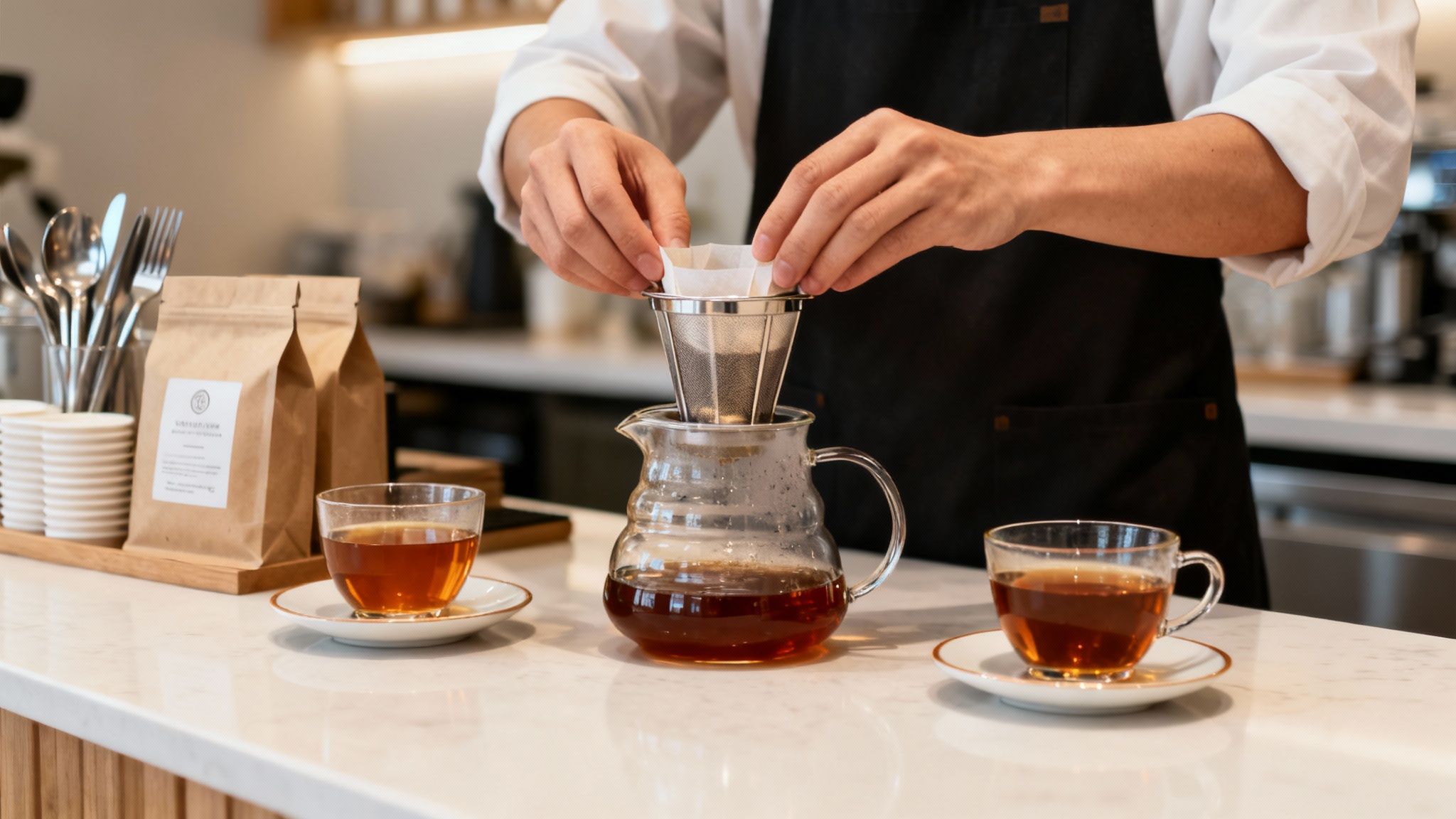
For cafes and coffee shops, it's the little details that turn a simple pitstop into a memorable experience. While coffee often steals the limelight, a beautifully executed loose-leaf tea service can be a real point of difference, setting you miles apart from the competition. And that whole experience hinges not just on the quality of your leaves, but on the tools you use to brew them.
The right strainer for loose tea is a crucial piece of that puzzle. It quietly communicates a commitment to quality and craft that your customers will absolutely notice. Moving beyond generic teabags to a proper loose-leaf ritual instantly elevates the perceived value of what you’re offering, justifying a better price point and building real customer loyalty. It shows you take tea just as seriously as you take your coffee.
This shift also taps into the growing customer desire for authenticity and sustainability. A thoughtful tea service, complete with durable, reusable strainers, cuts down on waste and dials up the entire sensory experience—from the aroma of the dry leaves to that final, perfect sip.
Practicality in a Professional Setting
In a bustling cafe, efficiency is just as vital as quality. Your choice of tea strainer has to be a workhorse—able to withstand constant use, be easy for baristas to handle, and deliver a consistently brilliant brew, every single time. This is where professional-grade tools are non-negotiable.
While charming, those novelty infusers or delicate bamboo strainers simply aren't built for a commercial environment. The undisputed champion for cafe use is the stainless steel brewing basket.
- Durability: They’re built to last, shrugging off dents, rust, and the general wear and tear of a fast-paced cafe.
- Efficiency: Their wide-mouth design makes them quick to fill with leaves and even quicker to empty and clean, seriously speeding up workflow during those hectic peak hours.
- Consistency: The ultra-fine mesh guarantees a clean, sediment-free cup for every customer, no matter which tea they’ve ordered.
Investing in a good set of high-quality brewing baskets streamlines your whole tea service, empowering your staff to prepare premium loose-leaf tea with the same speed and confidence as an espresso.
The Aesthetics of the Perfect Brew
Beyond pure function, the visual appeal of your tea service plays a huge role. Presenting a customer with a beautiful pot of tea alongside a sleek, handle-held sieve or a personal brewing basket creates a moment of table-side theatre. It’s an interactive, engaging ritual that just feels special.
This presentation reinforces the premium nature of the tea itself. The choice of a high-quality strainer for loose tea is a visual cue that signals a superior experience, much like beautiful latte art does for coffee. It tells your customers that they’re about to enjoy something crafted with genuine care.
For a cafe, every detail contributes to the brand's story. The deliberate choice of a proper strainer demonstrates an investment in quality that elevates the entire customer journey, turning a simple cup of tea into a signature experience.
This focus on quality is more important than ever. For coffee shops, offering premium whole-leaf teas from ethical sources enhances menu appeal and keeps customers happy. The UK tea market continues to evolve, with oolong being the fastest-growing segment—a clear signal of a diversification that favours a good, versatile strainer for varied leaf sizes. With e-commerce now making up over 18% of loose-leaf retail, businesses can benefit from the accessibility that partners like Jeeves & Jericho provide. You can discover more insights about the UK tea market on OMR Global.
A Few Lingering Questions About Tea Strainers
Even after getting to grips with the different types of strainers and how to look after them, you might still have a question or two. That’s perfectly normal. Delving into the world of loose-leaf tea is a journey, and the right strainer is a key part of that. We’ve rounded up some of the most common queries to give you clear, practical answers and help you brew with complete confidence.
Think of this as the final piece of the puzzle, tying up any loose ends so you can make the perfect cup, every single time.
Can I Just Use One Strainer for All My Teas?
You certainly can, but it’s not always the best way to get the most out of your tea. A versatile option like a large stainless steel brewing basket will do a great job with most varieties. That said, some teas truly come alive when they’re matched with their perfect strainer.
Take very fine teas like rooibos or certain herbal blends – they really need an extra-fine mesh to stop any dust from making its way into your cup. And for delicate white or green teas with big, beautiful leaves, a spacious basket is miles better than a small tea ball, giving them all the room they need to expand. It’s also a good idea to keep separate strainers for very punchy teas (like a smoky Lapsang Souchong) and delicate ones (like a Silver Needle) to avoid any unwanted flavour crossover.
It’s a bit like using different glasses for red and white wine. The right tool simply elevates the experience, letting the true character of the drink shine through.
How Do I Stop My Tea from Going Bitter?
This is a classic problem, but the good news is that bitterness is rarely the strainer's fault. Nine times out of ten, a bitter brew is down to over-steeping – leaving the leaves in hot water for too long.
A good strainer actually gives you more control to prevent this. Unlike a teabag you might forget about in your mug, a strainer makes it simple to lift the leaves out the very moment your tea is ready. For the best results, always follow the recommended brewing time and water temperature for your specific tea. Green teas, for example, need cooler water and much shorter steeps than robust black teas. Your strainer is simply the tool that helps you get this timing spot on.
Are Mesh Tea Balls a Good Choice for High-Quality Tea?
Mesh tea balls are brilliantly convenient and portable, which makes them perfect for a single cup at the office or when you're on the move. They do have one major drawback, though: space.
High-quality whole-leaf teas, especially Oolongs, white teas, and big-leaf black teas, need to unfurl and expand properly to release their full, complex flavour. When they’re crammed into a small tea ball, this just can’t happen, which often results in a weak, one-dimensional brew. For everyday teas with smaller, broken leaves, a tea ball is fine. But to really do justice to your premium Jeeves & Jericho blends, we always recommend a roomier brewing basket or infuser.
What's the Difference Between a Strainer and an Infuser?
In the tea world, you’ll hear these terms used interchangeably all the time, but there is a subtle, traditional distinction.
- A ‘strainer’ was traditionally a sieve-like tool you’d hold over your cup to catch the leaves as you poured from a teapot where the leaves had been brewing freely.
- An ‘infuser’ is technically any device, like a tea ball or a basket, that goes into the water to hold the leaves while they steep.
These days, however, ‘strainer’ has become the go-to catch-all term for any gadget that separates loose tea from water. It's in this friendlier, broader sense that we’ve used it throughout this guide to cover all the tools you can use to brew the perfect cup.
At Jeeves & Jericho, we believe that the right tools are essential to unlocking the full potential of our ethically sourced, whole-leaf teas. Explore our curated selection of high-quality tea accessories to find the perfect strainer that will elevate your daily ritual.