


If you're serious about creating a beautiful bowl of matcha, a quality matcha whisk and holder are two bits of kit you simply can’t do without. These traditional tools are specifically designed to whip up the iconic creamy froth and smooth texture that electric gadgets just can't touch, turning your daily cup into a moment of calm.
The Essential Tools for Your Matcha Ritual
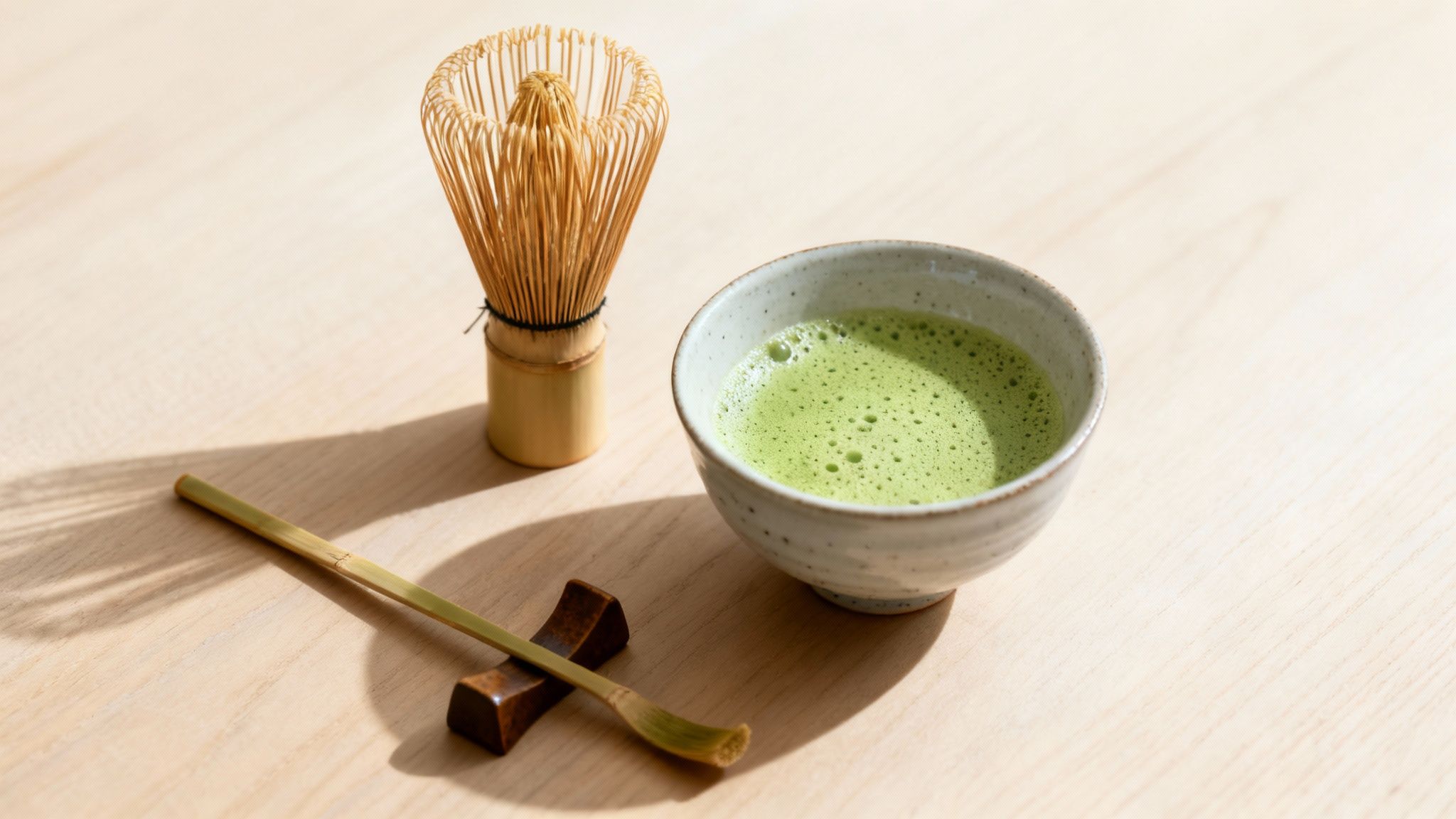
Think of a barista pulling the perfect espresso shot; they have their high-quality tamper and portafilter. The matcha whisk, or chasen, and its holder, the kusenaoshi, are no different. They aren't just accessories; they are precision instruments, carefully crafted for an exceptional result. It's their traditional design that is crucial for achieving that sought-after velvety microfoam we all love.
This guide will walk you through why these tools are just as important as the quality of your matcha powder. We'll cover everything from picking the right set to mastering its use, so you can elevate your home tea ceremony with confidence. Getting these fundamentals right is the first step toward a much more rewarding matcha practice.
Why Your Tools Matter
The quality of your matcha experience hinges on more than just the tea itself. The right tools ensure the preparation is spot-on, which directly impacts the flavour, texture, and aroma in your bowl. A traditional bamboo whisk is absolutely essential for aerating the tea correctly.
- Authentic Texture: A bamboo chasen’s fine tines are uniquely designed to suspend the matcha powder evenly, creating a smooth, clump-free consistency that’s impossible to replicate.
- Enhanced Flavour: Whisking properly releases the matcha’s full-bodied, delicate umami notes without introducing the metallic taste a metal whisk might.
- Mindful Practice: The simple act of using these traditional tools transforms making a drink into a calming, focused ritual.
The connection between the right tools and a superior result is undeniable. Just as a chef needs a sharp knife, a matcha enthusiast needs a proper chasen and kusenaoshi to unlock the tea’s full potential.
Once you have your core matcha tools sorted, you might find yourself exploring various types of teapots to suit different brewing moods. For now, though, mastering your bamboo chasen matcha whisk is the key.
Understanding the Bamboo Matcha Whisk (Chasen)
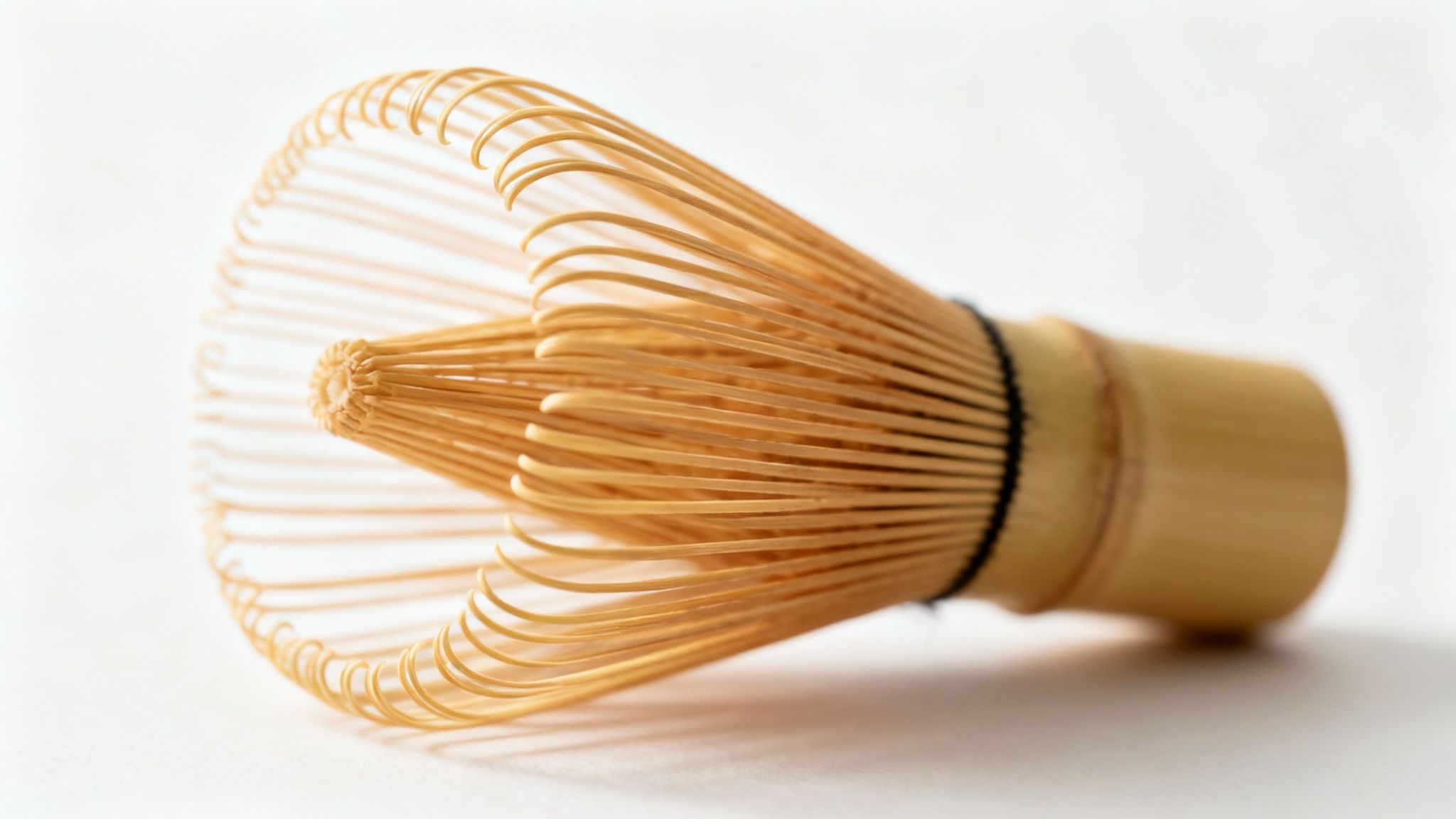
The traditional matcha whisk, or chasen, is much more than a simple kitchen utensil. It's a beautiful piece of artistry, meticulously handcrafted from a single piece of bamboo. Its whole purpose is to transform fine matcha powder and hot water into a perfectly smooth, frothy bowl of tea.
The design is brilliantly simple yet effective: a sturdy handle that blossoms into dozens of delicate, flexible prongs, known as hosaki. These are the magic-makers. As you whisk, they expertly suspend the tea powder in the water, breaking up any stubborn clumps and whipping air into the liquid to create that signature, velvety microfoam.
This process is about more than just texture; it coaxes out the matcha's complex flavours and aromas. The number of tines on your matcha whisk and holder set isn't just for show – it dictates the kind of tea you'll create.
Why Tine Count Matters
The number of prongs on your whisk directly affects the froth you can achieve. Different whisks are designed for different styles of matcha, so picking the right one is key to perfecting your daily ritual.
- 80-Tine Whisk: This is the go-to for preparing koicha, a thick, almost syrup-like matcha with an incredibly intense flavour. The lower tine count gives it the strength needed to blend the dense paste properly.
- 100-120 Tine Whisk: The most common and versatile choice, this whisk is perfect for making usucha (thin tea). Its greater number of flexible tines makes it far easier to whip up a light, creamy foam with those desirable fine bubbles.
For most of us enjoying a daily bowl of matcha at home, a 100 or 120-tine whisk is the perfect companion. It’s designed specifically to produce that light, velvety texture that makes a beautifully prepared cup of usucha so special.
It’s clear people are paying more attention to the craft of making matcha properly. The global market for matcha whisks was valued at around £28.8 million and is expected to hit £70.4 million by 2033, growing even faster than the matcha tea market itself. This shows a real appreciation for the ritual, and you can learn more about preparing matcha tea the right way in our dedicated guide.
Why the Whisk Holder (Kusenaoshi) Is a Game Changer
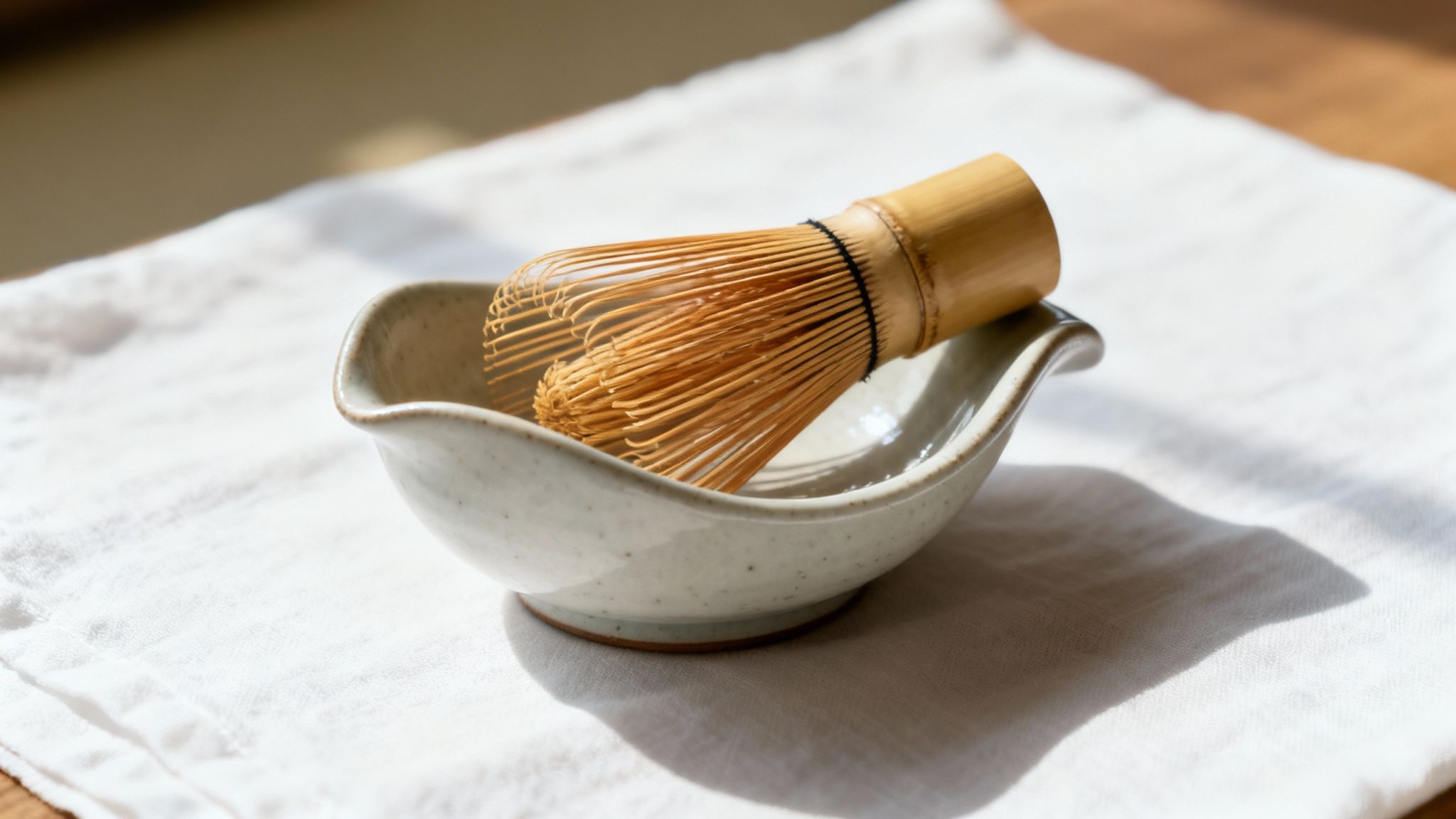
While the bamboo whisk often steals the spotlight, its trusty companion, the holder or kusenaoshi, is every bit as important. Think of it this way: you wouldn't leave a fine artist’s paintbrush to dry bristles-down in a jar, would you? The same care applies to your delicate chasen.
A proper whisk holder is far more than just a pretty stand; its job is to look after your whisk’s shape. The elegant, tulip-like form is designed specifically to protect and maintain the curve of those fine bamboo tines. Without it, the delicate prongs quickly lose their shape, turning inwards, becoming brittle and misshapen.
And that's not just a matter of looks. A whisk that's lost its shape simply can’t do its job properly, making it near impossible to whip up that creamy, dreamy froth that makes a bowl of matcha so special.
Functionality Meets Longevity
By popping your whisk onto its holder after each use, you’re allowing air to circulate freely through the tines. This is the secret to proper drying, which not only prevents mould but also dramatically extends the life of your whisk. It’s a simple step with a huge payoff.
A well-cared-for chasen, rested on its kusenaoshi, will not only last much longer but will perform better day in, day out. It's a small investment that protects a vital tool, ensuring every bowl of matcha is as perfect as the last.
Beyond the practicalities, the holder also adds a touch of beauty and intention to your tea ritual. Its elegant form brings a sense of calm and order to your countertop, turning a simple daily brew into a mindful moment. A matcha whisk and holder set truly makes all the difference, both to the quality of your tea and the pleasure of your practice.
How to Choose the Right Matcha Whisk and Holder
Picking the right whisk and holder really comes down to personal taste, but a few pointers can help you find the perfect set for your daily ritual. Think about how you like your matcha and what matters to you—it's all about making every bowl a moment of pure enjoyment.
First off, what kind of matcha do you drink most often? As we've seen, the number of tines on a chasen makes all the difference. If you love a light, frothy usucha, a whisk with 100-120 tines is your best friend. Its fine, flexible prongs are brilliant at whipping up a delicate, creamy foam. But for those who prefer the thick, intense experience of koicha, you'll want a sturdier, 80-tine whisk to properly blend the dense paste until it's perfectly smooth.
Materials and Craftsmanship
The materials your tools are made from are just as important as the design. A genuine matcha whisk is always carved from a single piece of bamboo—a wonderfully sustainable and flexible material that won’t add any unwanted flavour to your tea. We always recommend looking for whisks that are ethically made, celebrating the incredible traditional craftsmanship behind these little works of art.
When it comes to the holder, or kusenaoshi, ceramic is hands-down the best choice. It’s got a bit of weight to it, so it's nice and stable. Plus, the smooth, glazed surface is a breeze to clean and won't get mouldy. A ceramic holder doesn't just look after your whisk; it brings a touch of timeless style to your tea setup.
Choosing a matcha whisk and holder made from traditional, high-quality materials is an investment in both the longevity of your tools and the quality of your daily ritual. It’s a commitment to authenticity and a mindful practice.
It's clear that more and more of us are seeking out these authentic tea experiences. The UK matcha market was recently valued at a staggering £219.6 million and is expected to keep growing, showing a real shift towards quality and tradition among British tea drinkers. You can discover more insights about the UK matcha market. This just goes to show how much choosing genuine, well-crafted tools really matters.
Matcha Whisk (Chasen) Comparison Guide
To make things a bit simpler, here’s a quick guide to help you compare the different whisk types.
| Tine Count | Best For Matcha Type | Ideal User | Froth Level |
|---|---|---|---|
| 80 Tines | Thick (Koicha) | The traditionalist or koicha enthusiast | Minimal, rich |
| 100 Tines | Thin (Usucha) | The daily matcha drinker seeking good froth | Medium, creamy |
| 120 Tines | Thin (Usucha) | The perfectionist aiming for the finest foam | High, velvety |
Ultimately, the right whisk is the one that best suits the way you love to prepare and drink your matcha. Whether you're after a rich, meditative koicha or a light, everyday usucha, there’s a chasen out there for you.
Your Guide to Proper Whisking and Storing
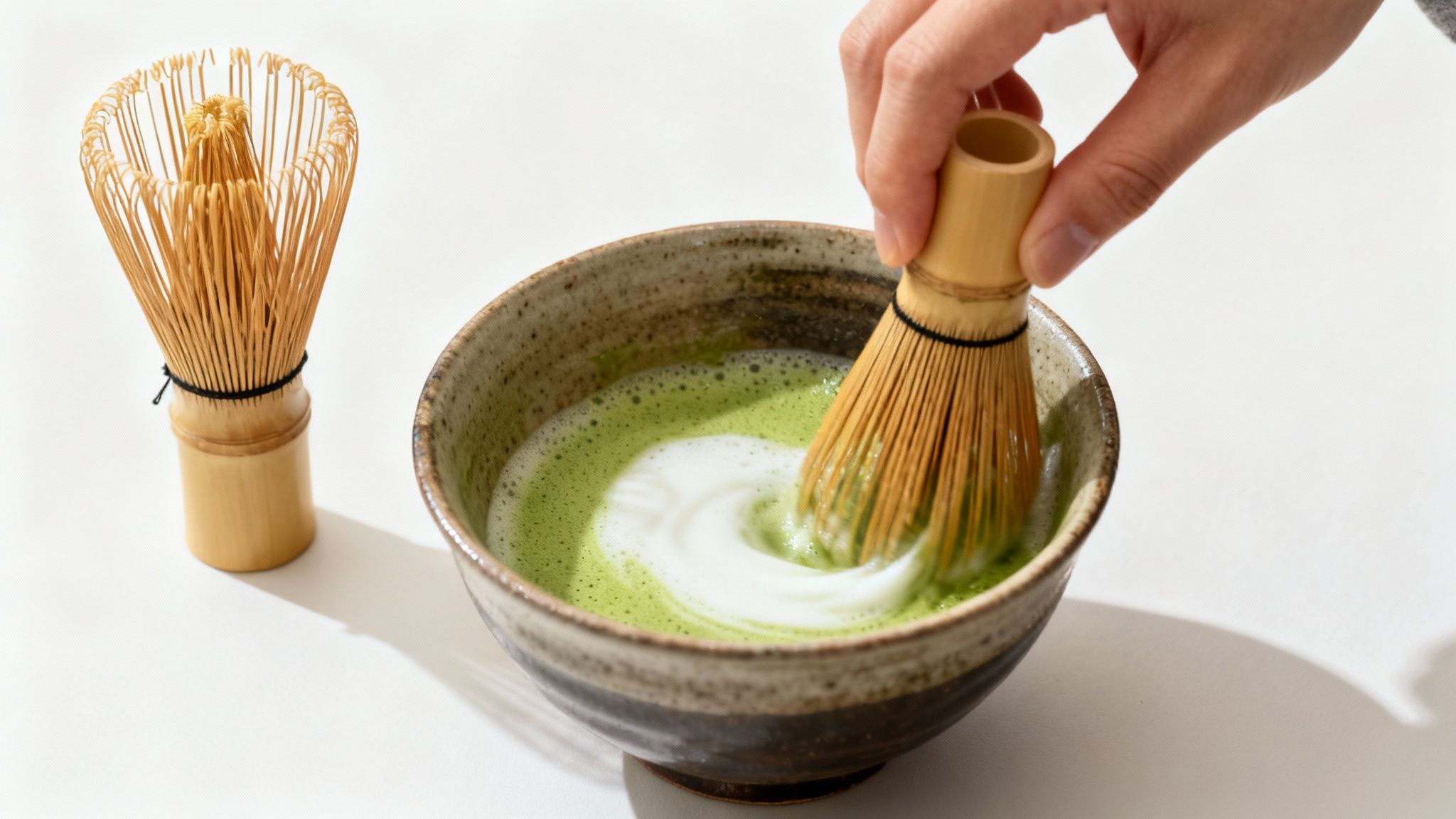
Learning to use your matcha whisk and holder is much simpler than it appears, and it's the real secret to whipping up a cafe-quality bowl of matcha at home. It’s all about a light touch and a quick hand. This simple ritual elevates your daily cup from a chore into a genuinely mindful practice.
Before you even think about whisking, give your chasen a quick soak. Just a minute or two in warm water is all it needs. This makes the delicate bamboo tines supple and flexible, preventing them from snapping as you whisk. Think of it as a warm-up for your most important tool.
The Art of Whisking
With your whisk prepped and ready, it’s time to create that signature froth. The key isn't brute force; it's all in the technique. Try to avoid grinding the whisk into the bottom of the bowl—this can damage the tines and won’t help you get that lovely foam.
Instead, a few simple steps will get you there:
- Add Matcha and Water: Sift your matcha into the bowl, then add a little hot (never boiling) water.
- Master the Motion: With a relaxed wrist, start whisking briskly in a zigzag 'W' or 'M' shape across the bowl. You're trying to whisk air into the tea, not just stir it around.
- Create the Froth: Keep up this fast movement for about 15-20 seconds. You’ll soon see a layer of fine, velvety microfoam begin to form on the surface.
The perfect motion should come entirely from your wrist, not your whole arm. Imagine you’re drawing quick, overlapping letters across the tea, introducing tiny air bubbles to build that beautiful, creamy texture without scraping the bowl.
Smart Storage for Longevity
What you do after you’ve enjoyed your matcha is just as crucial. Give your whisk a thorough rinse under warm running water straight away to get rid of any green residue. Soap is a definite no-no.
After a gentle shake to remove excess water, place your clean whisk on its kusenaoshi, or holder, with the tines pointing downwards. This lets it air dry properly and, most importantly, helps it maintain that iconic curved shape. It’s a simple habit that prevents mould and keeps your whisk in perfect condition for your next bowl.
Proper care is central to both the matcha ritual and a well-run kitchen. For more great advice, we have a whole guide on the best storage for tea, and you can also find helpful tips for organizing kitchen utensils to keep everything in its right place.
A Small Investment for a Far Better Brew
Getting your hands on a proper matcha whisk and holder isn't just about buying a couple of nice-looking accessories. It’s about slowing down and turning a daily caffeine fix into something more intentional—a small, mindful ritual that sets a calmer tone for your day.
Using the traditional chasen and kusenaoshi is a nod to the centuries of Japanese craftsmanship that go into every bowl of matcha. It’s a way of connecting with the tea itself, helping you coax out its full, complex flavour and that signature velvety froth. It makes the preparation feel less like a chore and more like a craft, which is exactly what our ethically sourced, premium matcha deserves.
Think of a good whisk and holder not as an expense, but as an investment. They don't just improve the taste; they protect your tools and ensure every single cup you make is as good as it can be.
And it seems we’re not the only ones embracing this mindful approach to tea. This summer alone, matcha sales in the UK skyrocketed, with over 1.6 million transactions in just two months. A huge 76% of these were in London, showing a real shift towards more authentic tea experiences. You can read more about Britain's growing love for matcha here.
Ready to see how the right tools can completely change your matcha game? Have a look at our curated collection of authentic matcha tools and start your journey.
A Few Final Questions
Still have a couple of questions rattling around? Not to worry. Here are the answers to a few things people often ask us about their matcha tools.
Can I Just Use a Metal Whisk or an Electric Frother Instead?
You could, but honestly, the results just don’t stack up. The traditional bamboo chasen is a work of art, designed with up to 120 delicate, flexible tines. These are what whip the fine matcha powder into a perfectly suspended, creamy froth without a single clump in sight.
A metal whisk can actually react with the tea and spoil its delicate flavour profile. And while electric frothers seem like a quick fix, they tend to create big, airy bubbles – a world away from the velvety microfoam you’re after.
How Long Will My Bamboo Whisk Last?
If you look after it properly, a good quality bamboo whisk should see you through many months of daily rituals, sometimes even up to a year. It’s time for a replacement when you notice several of the tines have snapped or the central knot starts to come undone. The absolute best way to get the most out of your whisk is to use a holder after every single use.
Is a Matcha Whisk Holder Really Necessary?
We think so, yes. For a small investment, a kusenaoshi, or whisk holder, makes a huge difference to the life of your whisk. It allows the bamboo to air dry thoroughly and evenly, which stops mould from setting in. More importantly, it helps those delicate tines keep their signature curve – something that’s absolutely crucial for whipping up a proper froth.
And How Do I Clean Everything?
It couldn’t be simpler. As soon as you’ve finished making your matcha, just rinse the whisk’s tines under a gentle stream of warm water. There’s no need for any soap. Give it a gentle shake to get rid of any excess water, then pop it straight onto its holder to dry. For the ceramic holder, a quick wipe with a damp cloth or a hand wash is all it needs.
Ready to bring a touch of tradition and quality to your daily brew? Explore our full collection of authentic, ethically sourced matcha and teaware at Jeeves & Jericho and feel the difference for yourself.