


Cold infusion, or cold brewing, is a beautifully simple idea: steeping tea leaves in cold water for a good long while, usually 8-12 hours in the fridge. This patient, gentle process completely changes how the flavour is extracted, giving you a drink that's naturally sweeter, smoother, and far less bitter than its hot-brewed cousin.
Why Cold Infusions Are a Real Game Changer
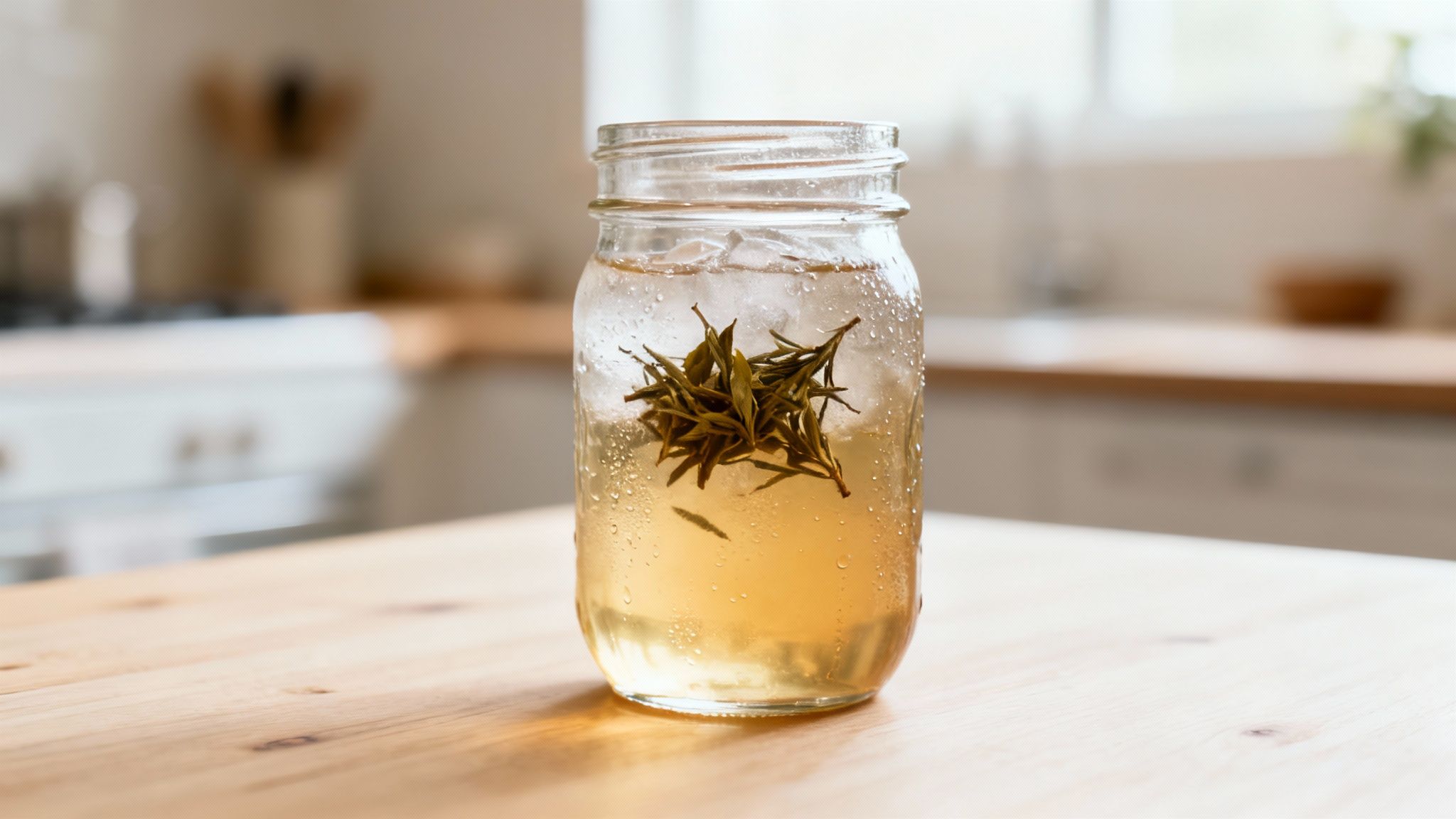
If you’ve ever found hot tea a bit too astringent or a standard iced tea a little harsh, then cold infusion is the answer you've been looking for. It's much more than a trend; it's a brewing technique that unlocks the delicate, nuanced character hidden inside high-quality tea leaves. The secret is all in the science.
Think of hot water as an eager, slightly aggressive extractor. It pulls out everything from the leaf very quickly—including the tannins, which are the molecules responsible for that mouth-drying bitterness. Cold water, on the other hand, is patient and selective. It gently coaxes out the sweeter, more aromatic compounds while leaving most of those bitter tannins behind.
A Smoother, More Flavourful Experience
What you get is a brew that is remarkably clean and smooth on the palate. By skipping the high heat, a cold infusion brings some serious advantages to the table:
- A Naturally Sweet Profile: With fewer tannins, the tea leaf’s own sweetness shines through. This often means you don't need to reach for the sugar or sweeteners at all.
- Reduced Acidity and Bitterness: The resulting drink is much less acidic and bitter, making it incredibly refreshing and a bit easier on the stomach.
- Lower Caffeine Content: While it's not caffeine-free, cold steeping extracts less caffeine than hot brewing, creating a more mellow and balanced drink for a gentle lift.
This gentle approach is just perfect for appreciating the subtle complexities of premium whole leaf teas. Take our delicate White Peony, for instance. It can easily turn bitter if you brew it too hot, but in a cold infusion, it unfolds with beautiful notes of melon and honey.
This method really does change the tea’s chemical profile. Studies have shown that cold brewing can create a brew that is up to 50-70% less bitter than its hot-brewed counterpart, making it the ideal choice for anyone who truly appreciates nuanced flavour.
Shifting Tastes in the UK
This smoother taste is a perfect match for how our drinking habits are changing. Across the UK, we've seen a structural decline in fizzy soft drink sales—down 12% since 2007—while cold non-alcoholic drinks have seen a 28% rise.
Cold infusions are riding this wave, with iced tea variations projected to grab 47.05% of the European market share by 2025. You can explore more about these market trends and what they mean for tea lovers. It’s clear we're all looking for healthier, more sophisticated options that don't skimp on flavour.
Finding the Right Gear for Your Cold Infusion
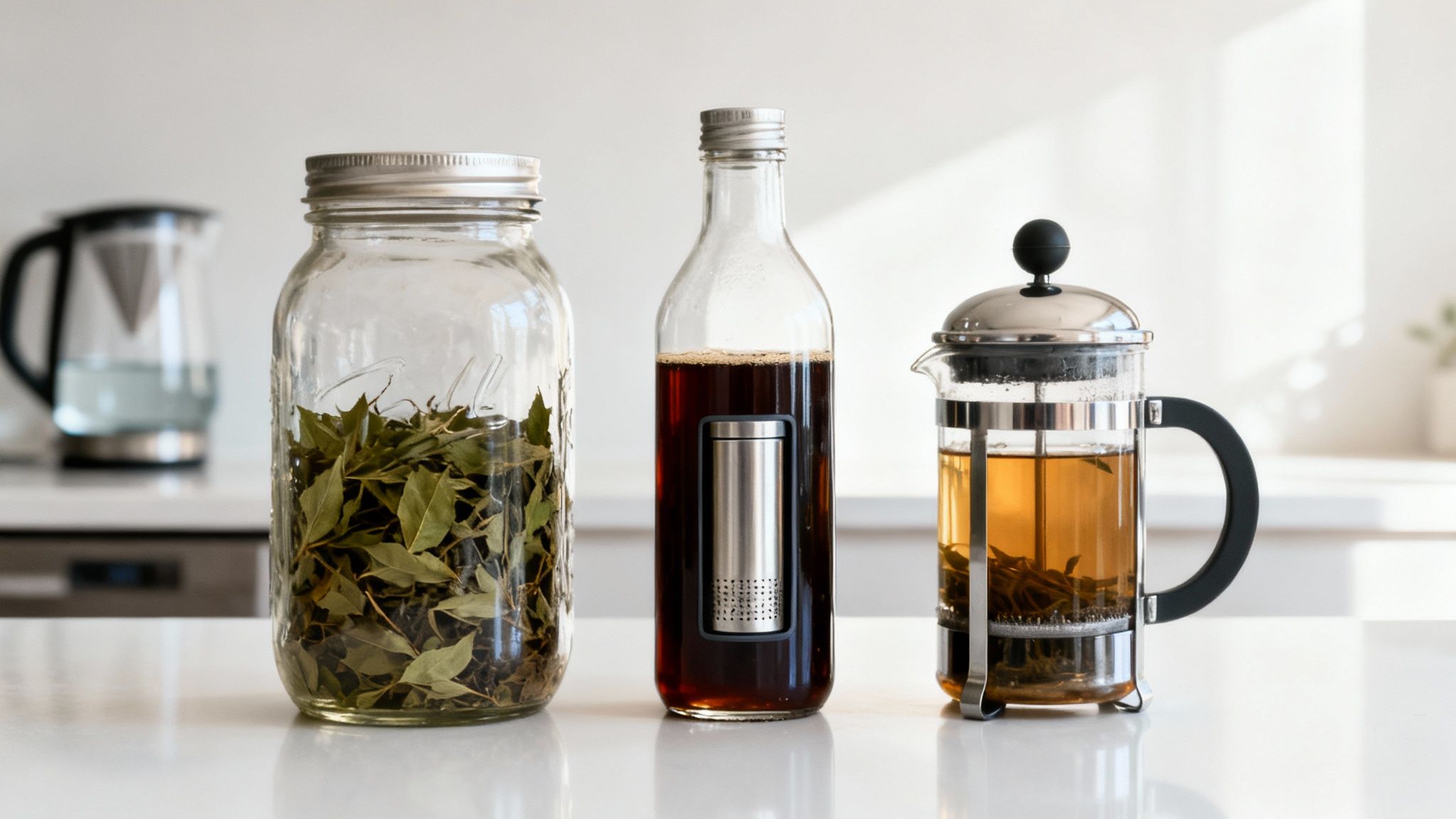
Before you start imagining a countertop cluttered with expensive new gadgets, let me reassure you. Making genuinely exceptional cold-infused tea has very little to do with fancy gear. In fact, you probably have everything you need sitting in your kitchen right now.
The real key is simply choosing the right vessel for the job. Think about how much tea you want to make and where you’ll be drinking it. A big glass pitcher or even a classic Mason jar is perfect for brewing up a large batch to keep chilled in the fridge. They're straightforward, effective, and you get the simple pleasure of watching the beautiful colour develop over time.
You might be surprised to hear that a French press also works brilliantly for cold brewing. Just let the leaves swim freely in the water, and when the infusion is ready, press the plunger down to strain. It's an elegant, all-in-one solution that keeps things tidy, especially for medium-sized batches.
Choosing Your Ideal Vessel
If you're after a brew for the commute or a post-gym refresher, a dedicated cold brew bottle with a built-in filter is your best friend. These are designed for single servings and are completely self-contained, making them the ultimate grab-and-go option.
Here's a quick rundown to help you decide which is the best fit for your lifestyle.
Choosing Your Cold Infusion Vessel
| Vessel Type | Best For | Pros | Cons |
|---|---|---|---|
| Glass Pitcher / Jar | Big batches for home or sharing | Easy to use and clean, and you can see the tea infusing. | Requires a separate strainer; can be bulky. |
| French Press | Medium batches; an all-in-one method | Infuses and strains in one vessel, minimising mess. | Can be tricky to clean thoroughly; glass is fragile. |
| Cold Brew Bottle | Single servings on the go | Highly portable, with a convenient built-in filter. | Limited capacity; not ideal for making large amounts. |
Each option has its place, and you'll likely find yourself using different ones on different days. It’s all about what works for you.
But beyond the container, there are two ingredients that will make or break your brew: the water and the tea itself. Always start with filtered water. Tap water often contains chlorine or other minerals that can easily muddy the delicate, nuanced flavours of a good tea.
Most importantly, the quality of your tea leaves is everything. Premium, whole-leaf teas, like the ones in our ethically sourced collections at Jeeves & Jericho, are non-negotiable for a superb cold infusion. Their larger leaves are designed for a slow, gentle extraction, releasing layers of complex flavour without any of the bitterness or cloudiness you get from lesser-quality tea bags. After all, with so few ingredients, there's nowhere for poor quality to hide.
If you're curious about other straining methods, you can learn more about infuser tea cups and their uses. Getting these foundations right ensures every glass you pour is absolutely perfect.
Mastering Your Ratios and Steeping Times
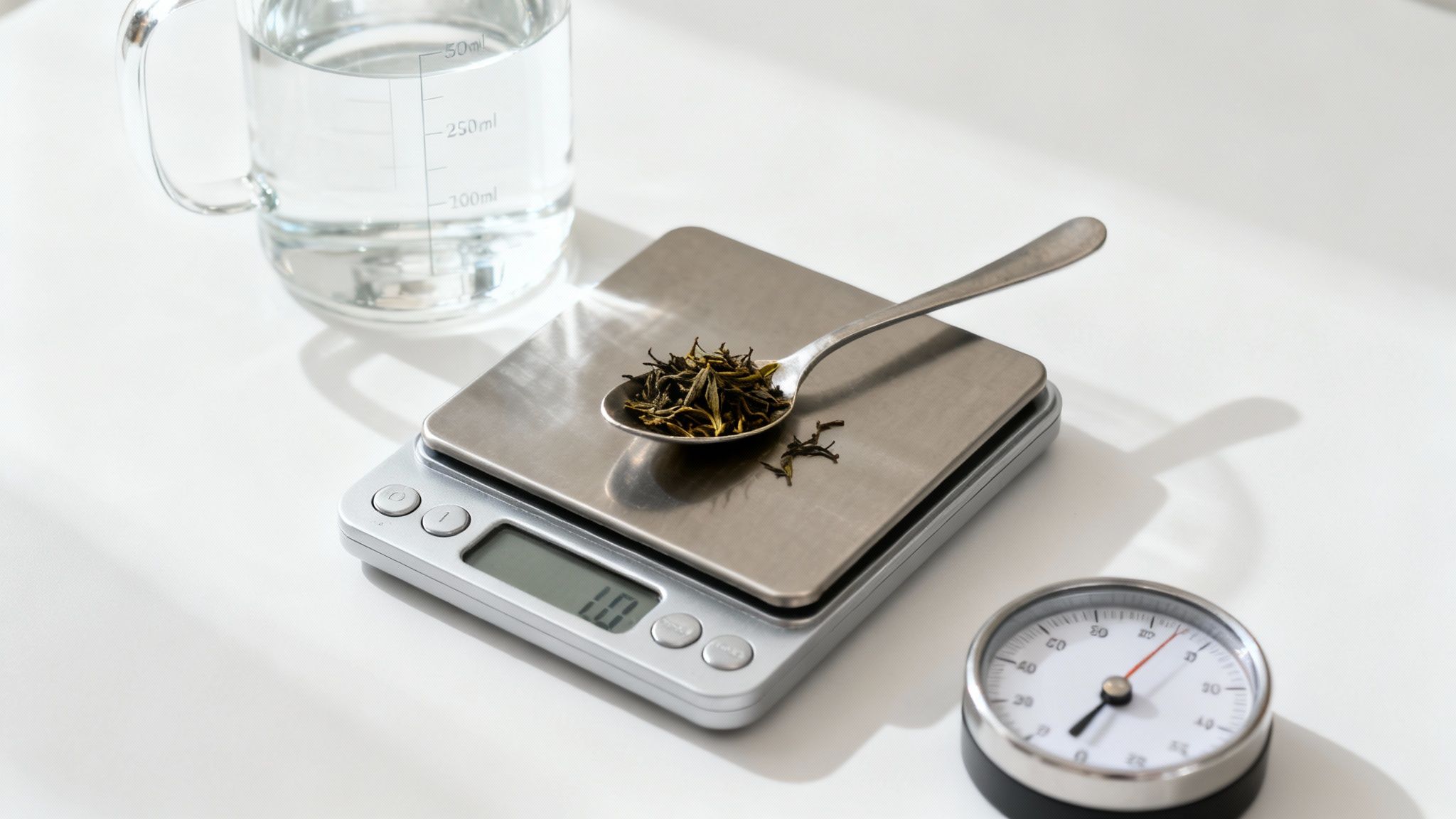
This is where the real magic happens. Forget rigid rules; think of these guidelines as a starting point for your own flavour experiments. Nailing the balance between tea and water is the first step to a perfect brew, and it’s simpler than you might think.
A solid rule of thumb is to use one to two teaspoons of loose leaf tea for every 250ml of cold, filtered water. For a standard 1-litre pitcher, that works out to about 4-8 teaspoons, which is roughly 10-15 grams of tea.
This is where your personal taste comes in. If you love a bolder, more intense flavour, lean towards the higher end of that range. Prefer something lighter and more delicate? Start with a bit less. The beauty of cold infusions tea is its forgiving nature, so it's easy to adjust until you find your ideal strength.
Adjusting for Different Tea Types
Of course, not all teas are created equal, especially when they’re steeping slowly in cold water. Each variety has its own personality and needs a slightly different approach to unlock its best qualities. A delicate white tea, for instance, requires a much gentler touch than a robust black tea.
This nuanced approach is catching on, mirroring what's happening in the wider UK drinks market. The ready-to-drink (RTD) tea and coffee sector is booming, with RTD tea currently holding a 52.7% market share. It’s the premium options, making up a huge 61.3% of the price segment, that are really surging. Cold infusion methods preserve antioxidants without any bitterness, which appeals directly to health-conscious drinkers. It's why so many are choosing ethically sourced, whole leaf teas from companies like Jeeves & Jericho for a superior home-brewing experience.
Just like with tea, getting the cold brew coffee ratio right is key to achieving that perfect balance and flavour. The principles of slow, cold extraction reward patience with a much smoother taste, no matter what you're brewing.
To help you get started, we've put together a handy guide for some of our favourite Jeeves & Jericho teas. Use it as a launching pad, but don’t be afraid to play around. After all, the perfect cup is the one you enjoy most. For a deeper dive, you might also like our guide on how long to brew different types of tea.
Cold Infusion Guide By Tea Type
This table breaks down our recommended starting points for some classic tea types. These ratios and times are designed to bring out the best in each leaf when infused slowly in the fridge.
| Tea Type | Recommended Ratio (Tea to 1L Water) | Ideal Steeping Time (In Fridge) | Flavour Profile Notes |
|---|---|---|---|
| White Tea (e.g., White Peony) | 12-15g | 6-8 Hours | Extremely delicate and sweet with notes of melon and honey. Avoid over-steeping to preserve its gentle character. |
| Green Tea (e.g., Dragon Well) | 10-15g | 4-7 Hours | Smooth, grassy, and refreshingly clean with umami notes. Shorter steep times prevent any hint of bitterness. |
| Oolong Tea (e.g., Iron Goddess) | 15-18g | 8-10 Hours | Ranges from floral and light to rich and roasted. Cold infusion beautifully captures its complex, layered aroma. |
| Black Tea (e.g., Assam) | 10-12g | 10-12 Hours | Bold, smooth, and malty without the astringency of a hot brew. Perfect for a robust, full-bodied infusion. |
| Herbal Infusion (e.g., Peppermint) | 10-15g | 12+ Hours | Bright, vibrant, and aromatic. Most herbals can steep for extended periods to fully extract their essential oils. |
| Chai (e.g., Spiced Bombay Chai) | 15-20g | 12+ Hours | A wonderfully smooth and spicy brew. The longer steep time allows the spices to fully infuse without bitterness. |
Remember, these are just suggestions! Your water, your fridge temperature, and your personal palate will all play a part, so have fun finding what works for you.
Getting Creative with Your Cold Brew
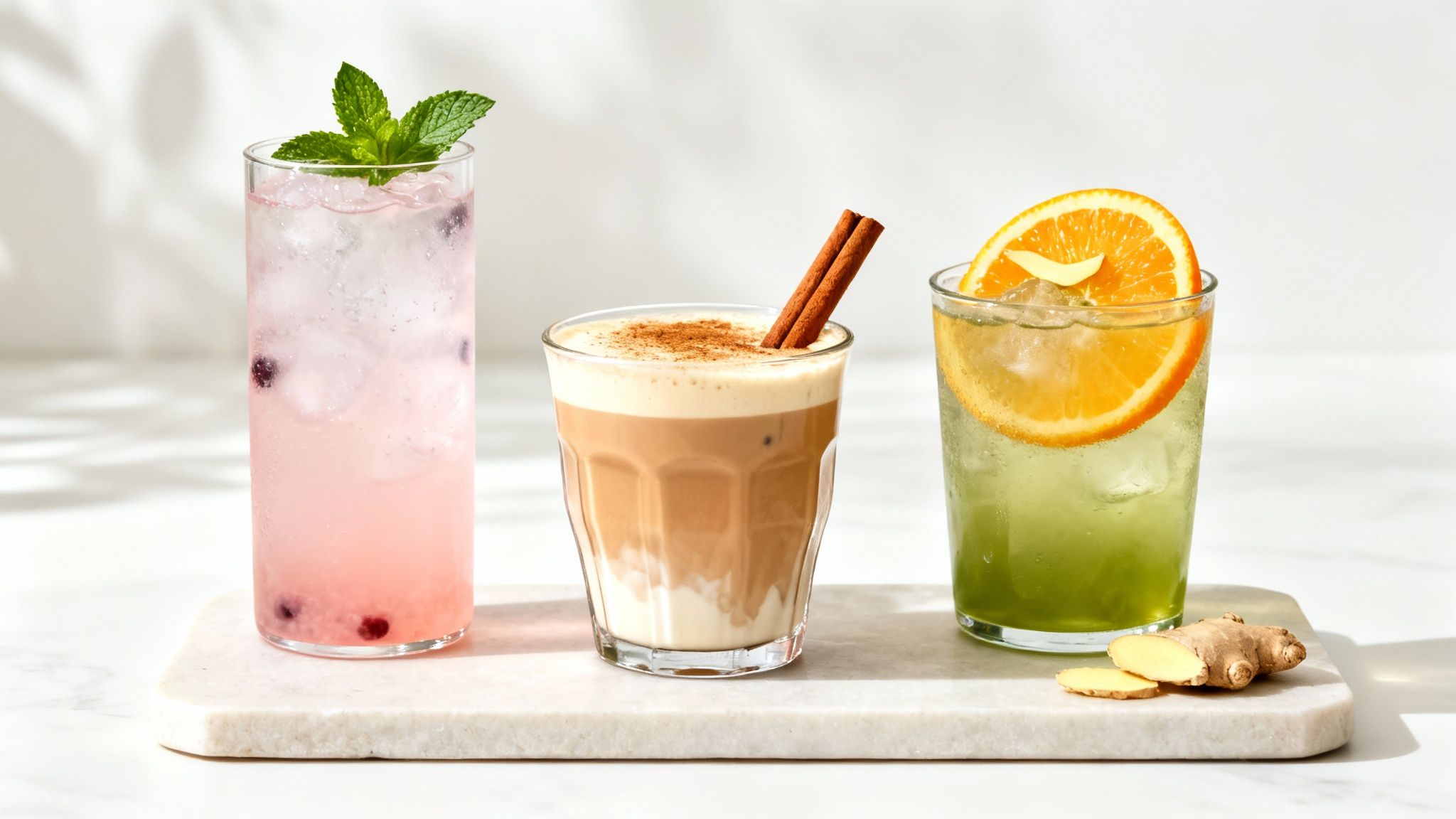
Once you’ve got the hang of the basic ratios and steep times, this is where the fun really begins. A simple cold infusion is a beautiful thing on its own, but it’s also the perfect base for building some truly stunning flavour combinations. Moving beyond just tea and water is how you start to make the brew your own.
Think of these recipes as starting points. They’re here to show just how versatile cold infusions tea can be, so don't be afraid to swap in different fruits, herbs, or milks to see what you can dream up.
Summer Berry and Mint White Tea
This is basically a British summer in a glass. The gentle, almost honeyed notes you get from a cold-brewed white tea—our delicate White Peony is perfect for this—play beautifully with the bright sweetness of fresh berries and a cooling sprig of mint.
- You'll need: 1 litre of cold-infused white tea, a handful of fresh raspberries or sliced strawberries, and a generous sprig of fresh mint.
- How to make it: Just add the berries and mint to your finished cold brew. Let it all mingle for at least 30 minutes in the fridge before pouring over ice.
- Why we love it: The delicate profile of the white tea doesn’t steamroll the fruit. Instead, it complements it, creating a sophisticated and deeply refreshing drink that’s miles better than any sugary cordial.
Spiced Bombay Chai Cold Brew Latte
A cold-brewed chai latte is a bit of a revelation. The slow infusion process smooths out the tannins in the black tea, resulting in a brew that’s incredibly mellow and allows all those gorgeous spices to sing without a hint of harshness.
This smoother character is a huge part of why cold infusions are popping up everywhere. Cafe consumption has bounced back by 22% since the pandemic, and now 40% of summer menus feature cold tea options. It helps that cold steeping can extract up to 1.5 times more catechins (a type of antioxidant) than hot brewing, creating a drink that’s both potent and smooth. It’s the ideal method for our whole leaf Spiced Bombay Chai. You can read more about what’s happening in the European iced tea market to see how these trends are shaping up.
- You'll need: 2 parts cold-infused Jeeves & Jericho Spiced Bombay Chai, 1 part oat milk (or your favourite milk), and a dash of maple syrup or honey if you like it sweet.
- How to make it: Fill a glass with ice. Pour in the cold brew chai, then slowly top with the oat milk to get that lovely layered effect. Give it a stir just before you drink.
- Why we love it: Oat milk has this natural creaminess that’s a perfect match for the warm notes of cinnamon, cardamom, and clove in the chai. It makes for a rich and satisfying dairy-free latte.
A little tip from us: we find that brewing our Spiced Bombay Chai for a full 12 hours, or even a bit longer, gives the best result for a latte. That extended time really lets the complex spice blend infuse properly, creating a robust concentrate that stands up beautifully to milk.
Citrus Ginger Green Tea Sparkler
If you’re after a drink with a bit of a kick, this sparkler is always a winner. The clean, grassy notes of a cold-brewed green tea are brilliantly lifted by the zing of fresh ginger and the bright acidity of citrus.
- You'll need: 3 parts cold-infused green tea, 1 part sparkling water, a few thin slices of fresh ginger, and a wheel of orange or lemon for garnish.
- How to make it: Gently muddle the ginger slices in the bottom of a tall glass. Fill it with ice, add the cold brew green tea, and top with sparkling water. Garnish with your citrus wheel.
- Why we love it: The carbonation from the sparkling water really helps to carry the tea's aroma, while the ginger and citrus cut through with a sharp, cleansing flavour that’s incredibly invigorating on a warm day.
A Quick Word on Cold Brew Matcha
Making cold brew matcha is beautifully simple and gives you an incredibly smooth, vibrant, and umami-rich drink. It’s worth using a high-quality ceremonial grade, like our Uji Matcha, to get that silky texture and deep, satisfying flavour.
- Sift your matcha. Add 1-2 teaspoons of matcha powder to a small bowl through a fine-mesh sieve. Honestly, don’t skip this step—it’s the secret to a clump-free drink.
- Make a paste. Add just a splash of cold water (about 2 tablespoons) and whisk it vigorously. A bamboo whisk (chasen) is best, but a small milk frother also works a treat. Keep going until you have a smooth, frothy paste.
- Top it up. Pour your matcha paste into a glass and top up with around 250ml of cold, filtered water. Stir well, add plenty of ice, and enjoy it straight away for the best and freshest flavour.
Storing Your Tea and Troubleshooting Common Issues
So, you’ve made a beautiful batch of cold brew tea. The next step is making sure it stays that way. Thankfully, proper storage is dead simple and keeps those delicate flavours you waited patiently for tasting crisp and fresh.
Your best bet is a sealed glass container – a pitcher with a tight lid or a big Mason jar works perfectly. Pop it in the fridge, and it’ll be safe from any rogue smells from last night’s curry. Stored this way, your cold infusions tea will be delicious for 3-5 days, but I find it’s always at its absolute best in the first 48 hours.
Solving Common Brewing Problems
Even with a method as forgiving as cold brewing, you might hit a few snags. Don’t worry, it happens to all of us. The fixes are usually straightforward and are all part of the fun of figuring out what you like.
Is your brew tasting a bit weak or watery? This is a classic, and it nearly always comes down to two things: not enough tea, or not enough time. If your brew lacks punch, just add an extra teaspoon or two of leaves next time. Or, simply let it steep for a few more hours.
Remember, our steeping times are just a guide. A bold black tea might need the full 12 hours to really open up, while a delicate green could be perfect in just four. It’s all about experimenting.
Another thing you might notice is a cloudy brew. It’s not harmful, but it doesn’t look quite as appealing. This murkiness often comes from using the fine dust found in standard tea bags or from hard tap water. The easy fix? Stick to high-quality, whole leaf teas and always use cold, filtered water for the cleanest, brightest result. For a deeper dive on keeping your leaves in top condition, take a look at our guide on how to store loose leaf tea properly.
Here are a couple more quick fixes:
- My tea tastes slightly bitter. You’ve probably just left it steeping a touch too long. This is most common with delicate greens and whites. Next time, try knocking an hour or two off the infusion time.
- The flavour seems flat. This can happen if your tea leaves are a bit old and have lost their vibrancy. Always try to use fresh, good-quality leaves for the best flavour.
Once you know what to look out for, you can guarantee every batch is a success. It’s the best way to build your confidence and hone your cold brewing craft.
Your Cold Infusion Questions, Answered
Even with a method as straightforward as cold brewing, a few questions tend to crop up. Let's get them answered so you feel completely confident every time you make a new batch.
Is Cold Infused Tea Healthier Than Hot Tea?
While a proper cup of hot tea is full of goodness, cold infusions do bring a few unique advantages to the table. The gentle, slow extraction process draws out fewer tannins from the tea leaves.
This gives you a brew that’s naturally less acidic and bitter, which many people find is a bit kinder on the stomach. Some studies even suggest this slower method is better at preserving certain delicate antioxidants, like catechins, which can be damaged by high temperatures.
And because cold-infused tea has such a naturally sweet and smooth profile, you're much less tempted to reach for the sugar bowl. It’s a brilliant, low-calorie way to stay refreshed and hydrated.
The real difference lies in the flavour extraction. A hot brew is a rapid, intense process. A cold infusion is more like a slow, patient conversation with the tea leaf, coaxing out its most delicate and sweet notes.
Can I Use Regular Tea Bags?
You can, but honestly, you won't get the best results. For that superior flavour and crystal clarity you’re after, we always recommend using high-quality, whole leaf loose tea. The reason is simple: most standard tea bags are filled with finely cut tea particles, often called "dust" or "fannings."
These tiny bits of leaf infuse far too quickly, even in cold water, which can leave you with a cloudy, bitter, or astringent brew. They just aren't designed for a long, slow steep.
Whole leaf teas, like the ones we source at Jeeves & Jericho, are the exact opposite. Their large, unbroken leaves are perfect for a gradual extraction, allowing complex layers of flavour to unfurl gently over several hours. This is what gives you a cleaner, richer, and far more nuanced drink. If you do prefer the convenience of a bag, look for the pyramid-style ones, as they often contain larger pieces of leaf.
How Is Cold Infusion Different From Iced Tea?
Ah, this is the big one. It really gets to the heart of what makes this method special. Traditional iced tea is usually brewed hot and then cooled down fast, often by pouring it over a mountain of ice in a technique called 'flash chilling'.
This sudden change in temperature can shock the tea, causing some of its chemical compounds to seize up. It’s often why iced tea can have a more astringent or bitter taste.
Cold infusion is a completely different world. It’s a slow, deliberate steeping process where the tea leaves sit in cold water for an extended period, usually between 8-12 hours in the fridge. This patient approach extracts a different profile of flavour compounds, creating a drink that is incredibly smooth, naturally sweet, and has a lot less bitterness and caffeine. It’s not just chilled tea; it’s an entirely different drink.
Ready to explore the smooth, nuanced world of cold brewing for yourself? Jeeves & Jericho offers an exceptional range of ethically sourced, whole leaf teas that are perfect for creating your own flawless cold infusions. Discover your next favourite brew today.