


If you’ve only ever had iced green tea that’s bitter and astringent, you’re in for a treat. Cold brewing isn't just about using cold water; it's a completely different way to extract flavour from the leaves, resulting in something remarkably smooth, naturally sweet, and incredibly refreshing.
Why Cold Brewing Green Tea Is a Game Changer
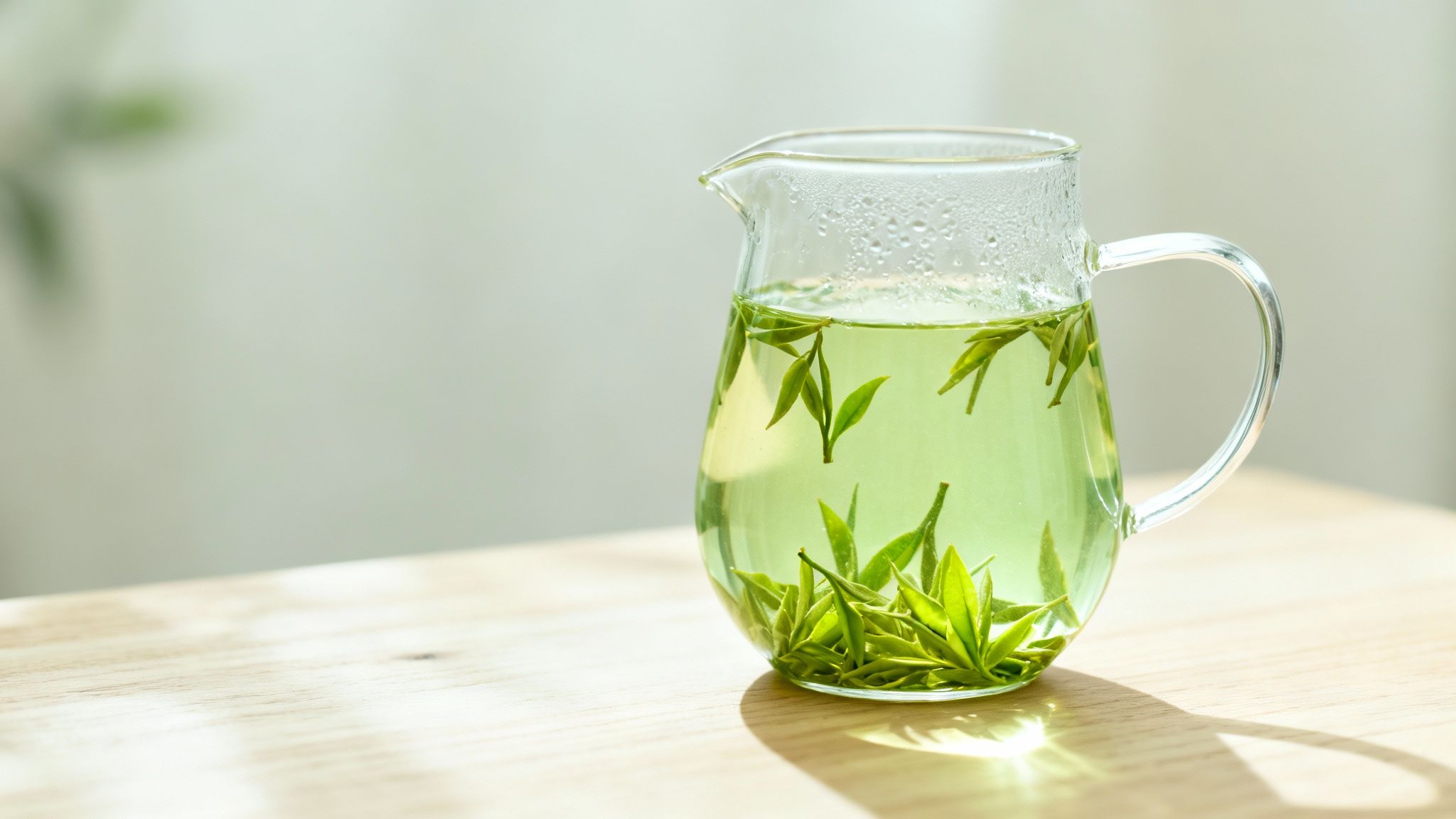
The secret is all down to chemistry. When you pour hot water over tea leaves, the infusion is fast and aggressive. It pulls out everything—including the tannins that cause that familiar bitter taste.
Cold water, on the other hand, is much more gentle. It coaxes out the delicate flavour compounds over several hours, leaving most of the bitter tannins and some of the caffeine behind. This slow, patient process unlocks the tea’s inherent sweetness and nuance.
A Smoother, Sweeter Profile
The end result is a brew with a completely different personality. Gone are the sharp, grassy notes. In their place, you’ll find a mellow, rounded flavour where the natural sugars and amino acids (like L-theanine) can really shine. It’s so smooth, you often won’t feel the need to add any sweeteners at all.
The magic of cold brewing lies in what it leaves behind. By avoiding high temperatures, you sidestep the chemical reactions that create bitterness, allowing the pure, clean essence of the tea leaf to shine through.
This gentle method is perfect for high-quality leaves like Japanese Sencha, where delicate umami notes can easily be lost to heat. If you're keen to learn more about this particular variety, we've got a whole article on the benefits of Sencha green tea you might enjoy.
Cold Brew vs Hot Brew A Quick Flavor Comparison
To really understand the difference, a side-by-side comparison speaks volumes. Here’s a quick breakdown of what you can expect from each brewing method.
| Attribute | Cold Brewed Green Tea | Hot Brewed Green Tea |
|---|---|---|
| Taste Profile | Mellow, naturally sweet, low bitterness, often with fruity or floral notes. | Brisk, vegetal, sometimes grassy, with noticeable bitterness and astringency if over-steeped. |
| Aroma | Subtle, delicate, and clean. | Robust, often grassy or earthy. |
| Tannin Extraction | Minimal. Results in a smoother, less astringent mouthfeel. | High. Can lead to a dry, astringent sensation. |
| Caffeine Level | Lower than its hot-brewed counterpart. | Higher, as caffeine is more soluble in hot water. |
As you can see, cold brewing isn't just about temperature—it's about transforming the very character of the tea.
It’s no surprise that this method is gaining fans, especially as more people look for healthier, more natural drinks. Here in the UK, the green tea market is booming, projected to grow from USD 1.8 billion in 2025 to a staggering USD 3.9 billion by 2031. This surge is all down to a growing appreciation for its health benefits, and cold brew is one of the most delicious ways to enjoy them.
Selecting the Best Green Tea for Cold Brewing
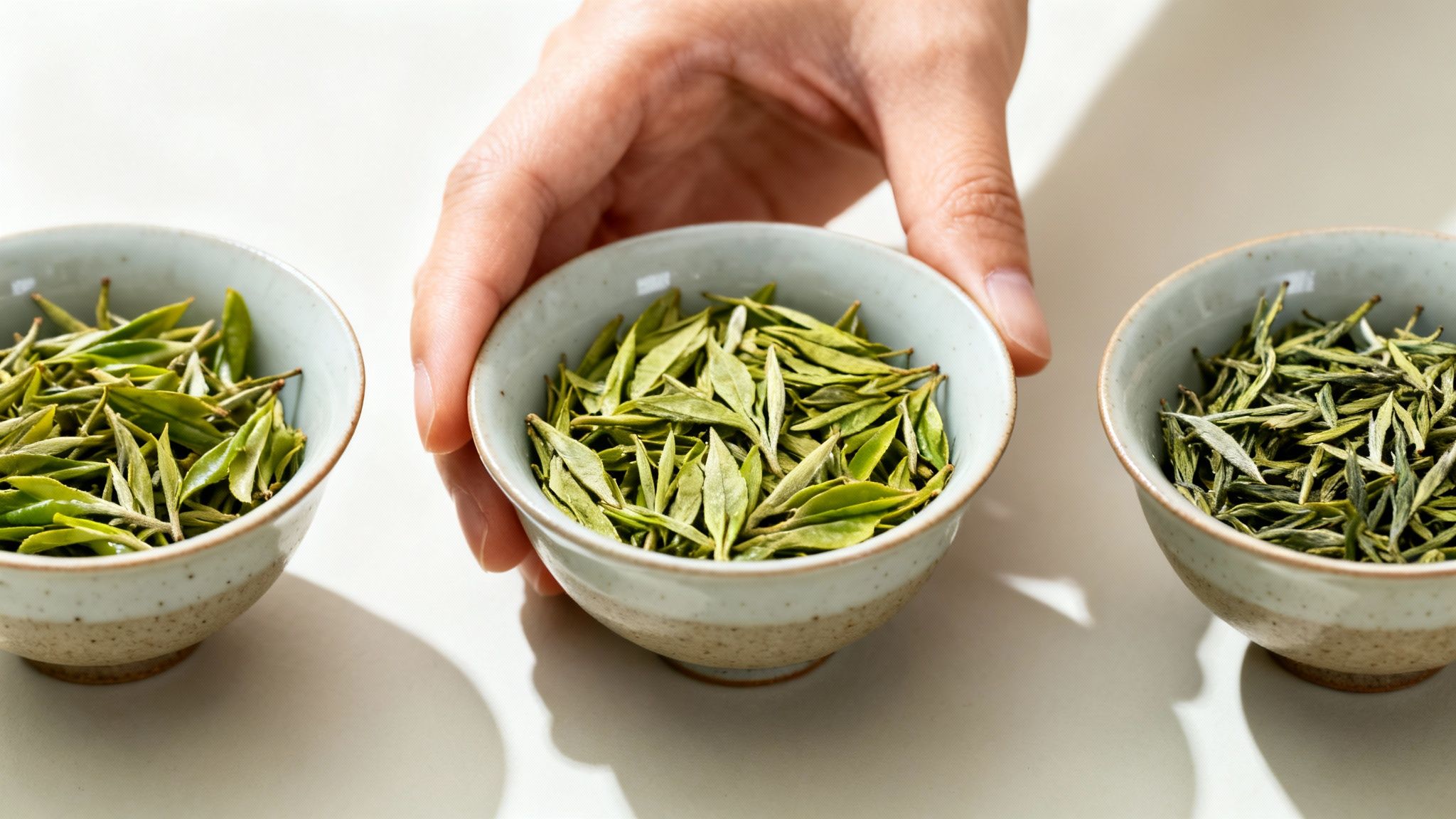
The secret to a truly phenomenal cold brew always starts with the leaves. While you can technically cold brew just about any green tea, some varieties absolutely sing when given this gentle treatment, unlocking subtle layers of flavour that hot water can sometimes bully out of existence.
Japanese green teas, in particular, are the superstars of the cold brew world. That characteristic grassy, savoury umami they're famous for is beautifully preserved—and often even enhanced—by a long, slow, cold steep.
Top Choices for Cold Brewing
Not sure where to begin? You can't go wrong with one of these. They’re fantastic performers every time.
- Sencha: There's a reason this is a classic. Cold-brewed Sencha is incredibly smooth and clean, with a refreshing vegetal taste and a whisper of natural sweetness. It's the perfect starting point.
- Gyokuro: As a shade-grown tea, Gyokuro is packed with L-theanine, the amino acid that gives it that deep, almost brothy umami flavour. Cold brewing is the ideal method for showing this off, creating a rich and intensely satisfying drink.
- Dragon Well (Long Jing): This famous pan-roasted Chinese green tea offers a completely different, but equally delicious, profile. When you cold brew it, all its toasty, nutty character comes to the forefront, without a hint of the bitterness or astringency that can sometimes appear with hot water.
While Japanese teas get a lot of praise for their umami, don't write off high-quality Chinese greens. They often have a more mellow, sometimes floral, profile that makes for a wonderfully delicate and nuanced cold brew. If you want to explore this further, our guide on what is the best green tea is a great place to look.
A quick tip: always try to use whole, unbroken leaves. They infuse more slowly and evenly, releasing their complex flavours without the dusty bits that can make a brew cloudy or flat.
Loose Leaf vs Tea Bags
It’s the age-old debate, but for cold brewing, quality is really what counts. Whole loose-leaf tea will almost always give you a more complex and flavourful result. It’s simple, really—the leaves have all the room they need to properly unfurl and release their magic.
Of course, convenience matters too. If you're set on using tea bags, go for high-quality, oversized pyramid tea bags. They’re designed to give whole leaves more space to infuse, coming much closer to the freedom of a loose-leaf steep. Just try to avoid the standard flat paper bags, as they’re often filled with the tiny, broken leaf particles (known as fannings) that produce a one-dimensional flavour. It’s a small choice that makes a massive difference to your final brew.
Your Practical Guide to the Cold Steep Method
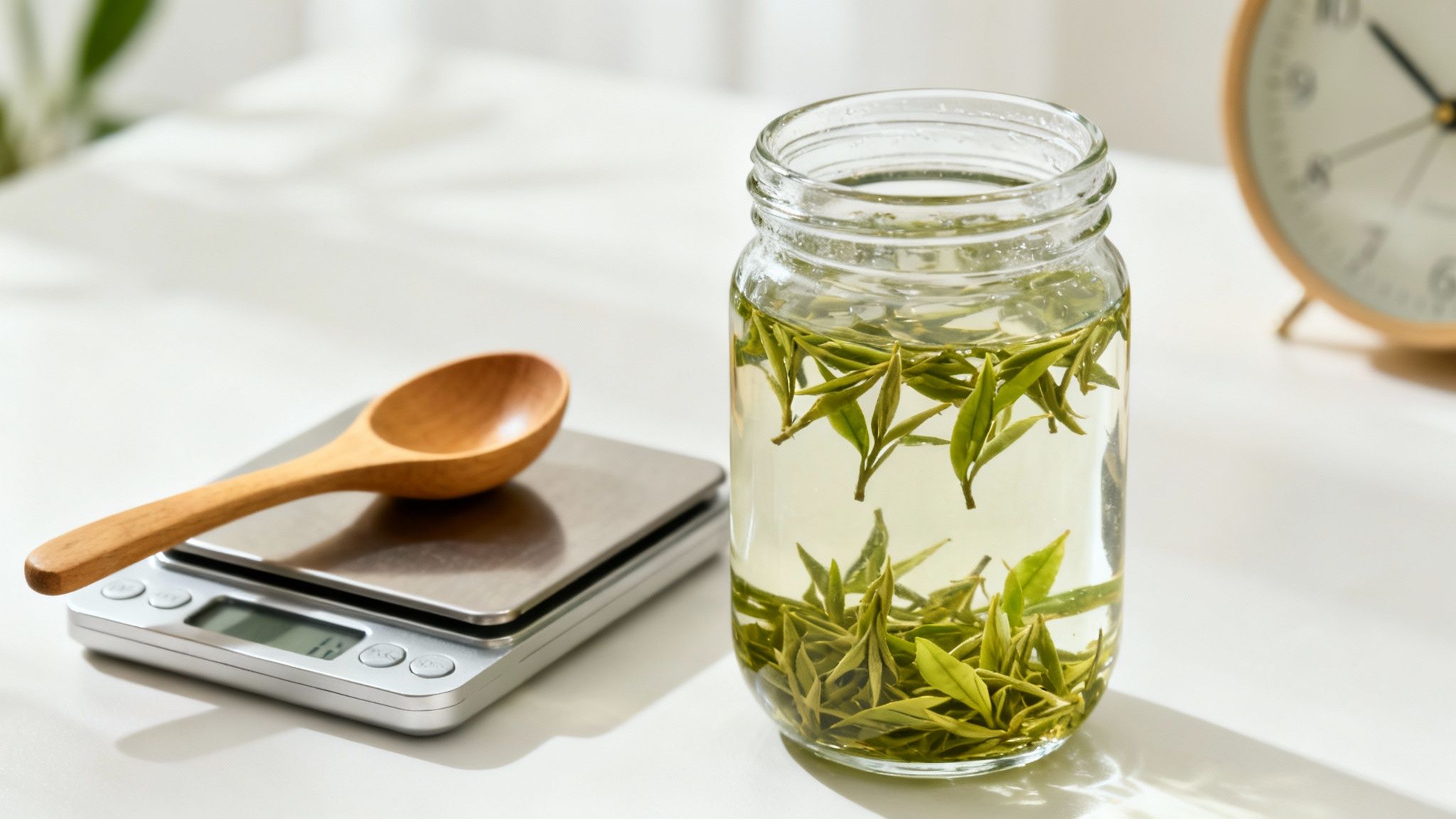
Right, now that you’ve picked out the perfect leaves, it's time to get brewing. Don't worry, the beauty of cold steeping is its brilliant simplicity. This isn't about complex techniques; it's about patience and letting the tea work its magic.
Honestly, you'll be amazed at how such a straightforward method can produce such a refined, flavourful drink. You don’t need any fancy gadgets. At its heart, all you need is a clean glass jar or pitcher, your chosen green tea, and some cold water. That’s it.
Of course, a good infuser can make life a bit easier and tidier. A pitcher with a built-in filter or a dedicated cold brew bottle is a great bit of kit, but they’re not essential to get started. If you’re just using a simple jar, you can easily strain the leaves through a fine-mesh sieve once it's done. Our guide on choosing the right infuser tea cups has a few tips that are just as useful for pitchers.
Nailing the Leaf-to-Water Ratio
The single most important part of getting a balanced brew is the ratio of tea to water. A weak, watery brew is just as disappointing as one that’s overwhelmingly strong.
A brilliant starting point for almost any green tea is 10 grams of tea per 1 litre of water. That’s roughly 2 heaped teaspoons of loose-leaf tea. This ratio almost always gives you a brew with a full, satisfying flavour that isn’t overpowering, making it a reliable baseline for your first few goes.
Think of this as your foundation. If you try it and find the flavour a bit too subtle, nudge it up to 12 or even 15 grams next time. On the flip side, if you're working with a particularly delicate tea like a premium Gyokuro, you might want to dial it back a touch to let those nuanced notes really come through.
Our Top Tip: For the cleanest, purest taste, always use cold, filtered water. Tap water often contains minerals and chlorine that can muddle the delicate flavours of green tea, leaving you with a dull or flat-tasting brew.
The Art of Patience: Steeping Time and Temperature
The next piece of the puzzle is time. Unlike hot brewing where you’re counting minutes, cold brewing is a marathon, not a sprint. Your patience will be handsomely rewarded. To keep the tea fresh and safe, always let it steep in the fridge.
For most green teas, a good window to aim for is between 6 and 12 hours.
- A shorter steep (6-8 hours) will give you a lighter, more delicate drink, highlighting the brighter, grassy notes of the tea.
- A longer steep (10-12 hours) draws out a richer, more full-bodied flavour with greater depth and sweetness.
Try not to push it much beyond 12 hours at first. Even in cold water, some teas can start to develop a hint of bitterness if left for too long. To give you a better idea, here’s a quick guide for some of our favourites.
Recommended Steeping Times for Different Green Teas
This table offers a starting point for getting the best flavour from different types of green tea. Remember, these are just guidelines—the best way to find what you love is to experiment!
| Green Tea Type | Recommended Cold Steeping Time (in Fridge) | Expected Flavour Profile |
|---|---|---|
| Sencha | 8-10 hours | Smooth, refreshing, and grassy with a sweet finish. |
| Gyokuro | 10-12 hours | Rich, brothy umami, with a deep, complex sweetness. |
| Dragon Well | 6-8 hours | Mellow, toasty, and nutty with a clean, smooth body. |
| Genmaicha | 6-8 hours | Nutty and savoury from the toasted rice, with a comforting, light finish. |
Ultimately, the fun is in the discovery. Try your first batch at the 8-hour mark and have a taste. If you're craving a bit more body and depth, simply let the next batch infuse for a couple more hours. This hands-on approach is the absolute best way to perfect your own cold brew ritual.
Elevate Your Brew with Flavours and Creative Servings
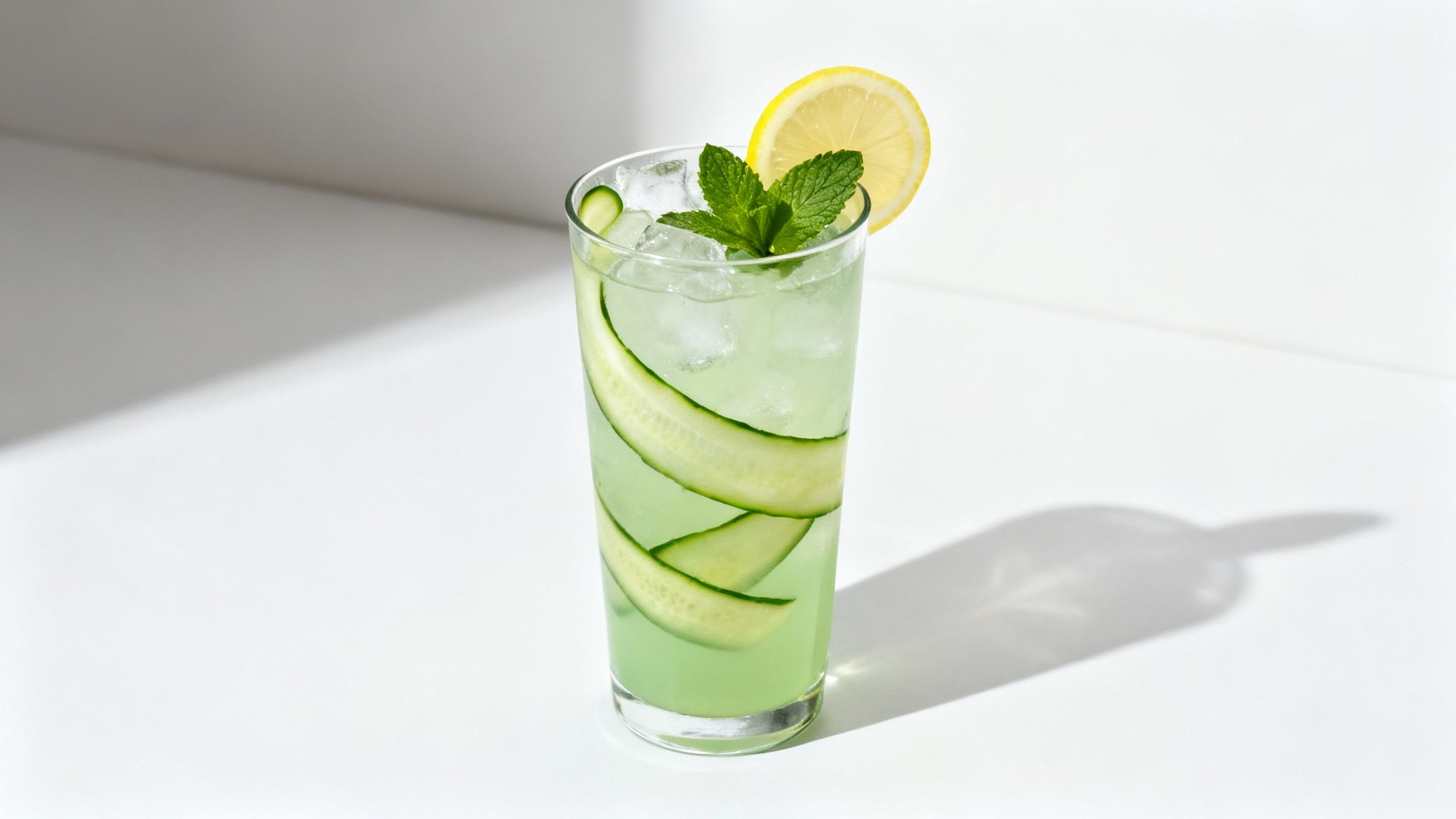
Once you’ve nailed the basic cold brew, you've got a brilliant starting point for all sorts of delicious drinks. A pure, unadulterated cold brew is a thing of beauty, but it also serves as the perfect canvas for flavour infusions.
This is where the real fun starts. Introducing new elements to complement the tea’s smooth, mellow profile lets you get creative and tailor each batch to your mood or the season. The trick is to add flavours that enhance the tea, not overwhelm it.
Simple Infusions for Effortless Flavour
The easiest way to add a twist is by infusing other ingredients right in the pitcher. But a quick word of warning: highly acidic ingredients like citrus can mess with the brewing process itself. If you add lemon slices from the get-go, they can stop the umami and sweetness from coming through, leaving you with a dull, bitter brew.
Always brew your green tea first. For the best results, add acidic fruits and other strong flavours after the tea has finished steeping. This keeps the tea’s delicate character and vibrant colour intact.
With that in mind, here are a few simple infusions that work a treat:
- Fresh Mint or Basil: Pop a handful of fresh mint leaves into your pitcher after you've strained the tea. Its cool, clean flavour is a classic pairing that’s incredibly refreshing. Basil, on the other hand, adds a more complex, slightly peppery note.
- Cucumber Ribbons: Use a vegetable peeler to shave long, thin ribbons of cucumber. They look stunning in a glass pitcher and add a subtle, spa-like freshness that beautifully complements the grassy notes of a good Sencha.
- Muddled Berries: Gently crush a few fresh raspberries or strawberries at the bottom of your glass before pouring the cold brew over them. It adds a gorgeous splash of colour and a burst of summery sweetness.
More Creative Serving Suggestions
Beyond simple additions, you can turn your cold brew into something really special. These ideas are perfect for when you have guests over, or just fancy treating yourself on a warm afternoon.
A sparkling green iced tea is a brilliant, low-sugar alternative to a fizzy drink. Just mix your finished cold brew with an equal part of sparkling water or a good quality, neutral-tasting tonic.
For a more sophisticated tipple, try a green tea mocktail. Combine your cold brew with a dash of elderflower cordial and a squeeze of fresh lime, then serve it over plenty of ice.
Finally, a quick note on storage. Keep your cold brew in a sealed, airtight container in the fridge. It will stay fresh and delicious for 3-5 days, making it easy to have a perfect cup ready and waiting.
Troubleshooting Your Cold Brew Green Tea
Even with a method as wonderfully forgiving as cold brewing, things can sometimes go slightly awry. Don't worry if your first attempt isn't perfect—think of it as part of the learning curve. A few simple tweaks are usually all it takes to get things back on track.
Let’s tackle the most common issues you might run into.
My Brew Tastes Weak or Watery
The most frequent complaint we hear is about a brew that’s thin and lacks character. If your tea tastes more like vaguely tea-flavoured water, the culprit is almost always your leaf-to-water ratio.
Cold brewing is a gentle process, so it needs a generous amount of tea to coax out a full, satisfying flavour.
- Be more generous with the leaves: The easiest fix is to simply add more tea. If you started with our baseline of 10 grams per litre, try upping it to 12 or even 15 grams next time.
- Give it more time: You could also let it steep for a couple more hours in the fridge. Pushing an 8-hour steep to 10 or 12 hours can really help develop more depth and body.
Why Is My Cold Brew Cloudy?
A bit of a haze isn't necessarily a bad sign, but if your brew looks properly murky, it’s usually down to tiny tea particles, or 'fines'. These are often found in lower-grade teas or bags where the leaves have been broken into smaller, dustier pieces.
Using high-quality, whole leaves will make a massive difference and reduce cloudiness. If you’re still getting a little sediment, you can always filter the finished brew through a finer strainer, a coffee filter, or even a bit of cheesecloth for a crystal-clear result.
A slight cloudiness can actually be a good thing, signalling a brew rich in amino acids. But if it's genuinely murky, it often means you're using tea dust instead of proper leaves, which can lead to a flat, one-dimensional flavour.
Help, My Cold Brew is Bitter!
This is a rare one, but bitterness can occasionally creep into a cold brew. When it does, it usually means one of two things: you’ve either steeped it for way too long, or you’ve made a common slip-up with acidic additions.
Even with cold water, steeping for an extreme length of time—we’re talking over 24 hours—can start to extract too many tannins, resulting in bitterness. Try to stick within that 6–12 hour window for the best balance.
More often than not, though, the culprit is adding citrus too early. Tossing lemon slices in with the tea leaves right at the start creates an acidic environment that messes with the extraction of those lovely, sweet amino acids. This can turn the brew bitter and dull its flavour. Always add your citrus after the tea has finished steeping and been strained.
Your Cold Brew Questions, Answered
Once you’ve got the hang of the basics, a few common questions always seem to come up. We get it. Perfecting your cold brew is a journey, and we’re here to help you navigate it. Think of this as your go-to guide for those little details that make all the difference.
Can I Use Tea Bags for Cold Brew Green Tea?
Yes, you can, but it’s all about choosing the right ones. While we’ll always champion loose-leaf tea for its incredible depth of flavour, a good quality tea bag can still produce a lovely cold brew.
The best choice, by a long shot, is a pyramid tea bag. Their roomy, pyramid shape allows the whole leaves inside to unfurl and infuse properly, much like they would in a loose-leaf infuser. For a well-rounded brew, we’d suggest using 2-3 tea bags per litre of water.
If you can, try to avoid the standard flat, paper tea bags. They're usually filled with what's known as tea 'fannings' – tiny, dust-like particles that tend to create a brew that's a bit cloudy, weak, and missing the delicate character you get from whole leaves.
How Much Caffeine Is in Cold Brew Green Tea?
This is one of the best things about the cold brew method – it naturally lowers the caffeine hit. You can expect your cold brew green tea to have 30-50% less caffeine than the same tea brewed hot.
Why is that? Caffeine is much more soluble in hot water. The slow, gentle infusion of cold brewing is brilliant at coaxing out all the smooth, sweet flavour compounds and antioxidants, but it leaves a fair bit of the caffeine behind in the leaves.
This makes cold brew green tea a fantastic all-day drink. It’s refreshing enough for a mid-afternoon lift, but gentle enough that it won't keep you up at night, even if you’re sensitive to caffeine.
Can I Reuse My Tea Leaves for a Second Cold Brew?
You absolutely can, and we highly encourage it! Getting a second infusion is one of the great joys of using high-quality whole leaf teas, especially premium ones like Sencha or Gyokuro. It feels good knowing you’re getting every last bit of enjoyment from your leaves.
For the second round, you’ll just need to give the leaves a little more time to release their remaining flavour. A good starting point is to increase the steeping time by about 50%. So, if your first steep was 12 hours, let the second one go for around 18 hours.
The second brew will be noticeably lighter and more subtle, but it will still be beautifully smooth and worthwhile. Just be sure to keep everything in the fridge for both infusions and start the second steep right after pouring off the first to keep it fresh.
It seems we're not the only ones enjoying our green tea cold. The trend is especially popular with younger drinkers in the UK, where 32% of Gen Z daily tea drinkers now prefer green varieties over others—a big leap from the 20% national average. For a deeper dive into how our tea habits are changing, have a look at the 2025 UK Tea Census on yougov.com.
Ready to discover your new favourite cold brew? Explore the hand-picked selection of premium green teas from Jeeves & Jericho and find the perfect leaves for your next batch at https://www.jeevesandjericho.com.