


So, when it comes to the big question—is matcha better than coffee?—the honest answer is, it really depends on what you're after. If you need a quick, powerful jolt of energy right before hitting the gym, coffee is probably your best bet.
But if what you're really looking for is a calm, sustained focus to get you through a long day at your desk, without the jitters and the inevitable crash later on, then matcha is the clear winner.
The Ultimate Guide to Choosing Your Daily Brew
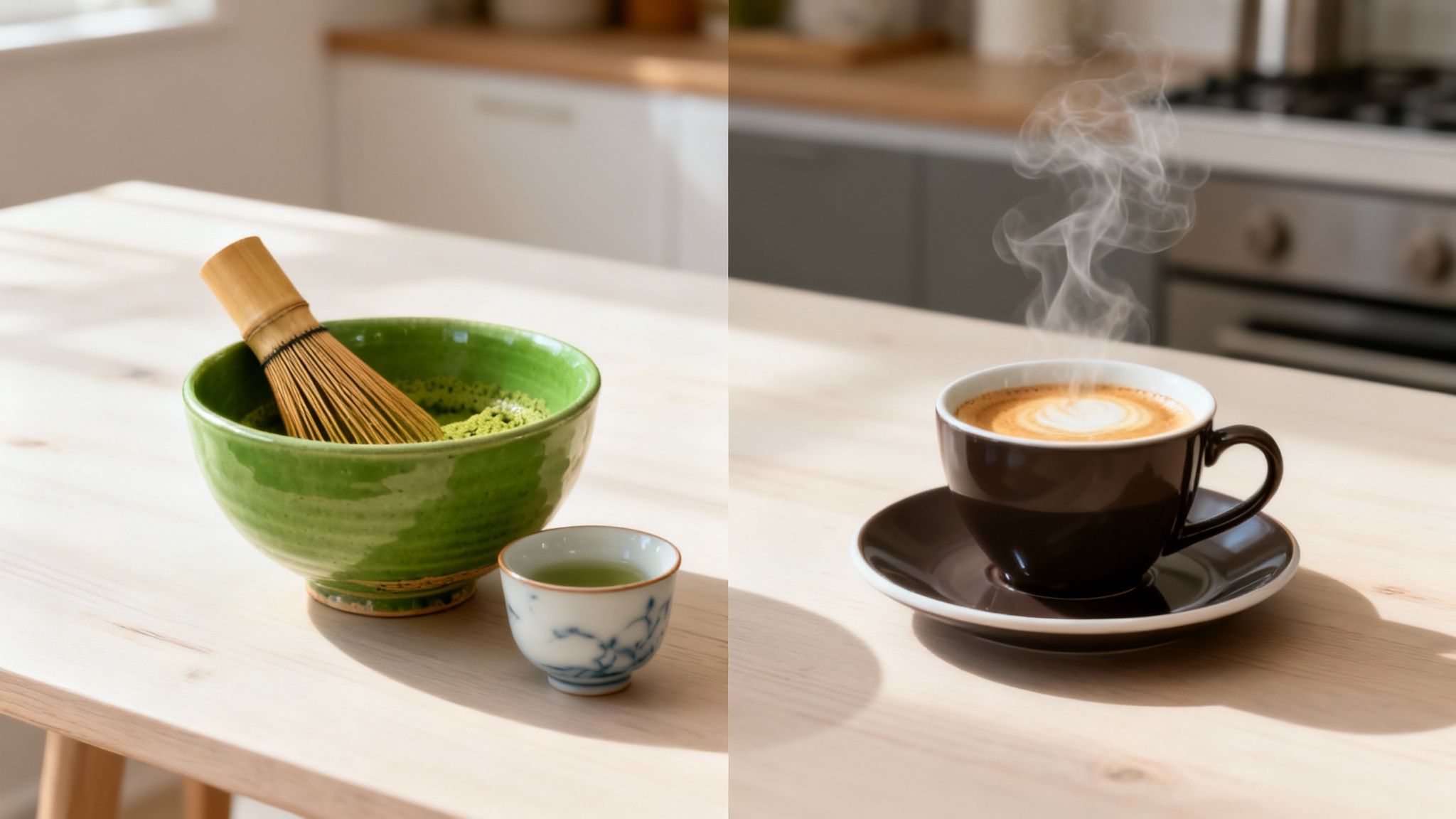
The matcha vs. coffee debate is buzzing in cafés and kitchens all over the UK, and for good reason. It’s more than just picking a drink; it's about choosing how you want to feel, focus, and get through your day. This isn't just a matter of taste—it's about the completely different experiences each one offers your mind and body.
This guide is here to give you a straight-talking, balanced look at both. We’ll dive into the science, the real-world effects, and even the rituals behind them, helping you find the perfect brew for your lifestyle.
Quick Comparison Matcha vs Coffee Key Differences
To get a quick feel for how they stack up, this table cuts straight to the chase. It highlights what you can expect from a high-quality matcha, like our own ceremonial grade Uji, compared to your standard cup of coffee.
| Characteristic | Matcha (Jeeves & Jericho Uji) | Coffee (Standard Arabica Brew) |
|---|---|---|
| Caffeine Level | Moderate (30-70mg per serving) | High (95-140mg per serving) |
| Energy Release | Slow, sustained, calm alertness | Fast spike followed by a crash |
| Key Compound | L-Theanine (promotes calm) | Chlorogenic Acids (antioxidants) |
| Taste Profile | Umami, vegetal, slightly sweet | Bitter, acidic, roasted notes |
| Preparation | Mindful ritual with whisk & bowl | Quick process (e.g., machine) |
| Gut Health | Generally gentler, less acidic | Can be highly acidic, may cause issues |
| Dental Impact | Non-staining, antibacterial | Can stain teeth over time |
It’s clear that matcha is having a moment. Here in the UK, sales of matcha-based drinks shot up by a remarkable 202% increase in 2023 alone. It's a huge shift in how we're choosing to fuel ourselves, moving away from the default coffee order.
This isn’t just a local trend, either. It’s part of a global movement, with the matcha market predicted to hit nearly US$7 billion by 2033. If you're interested, you can explore more data on the global matcha market and see just how quickly it's growing.
The Science Behind the Buzz: Caffeine, L-Theanine, and Antioxidants
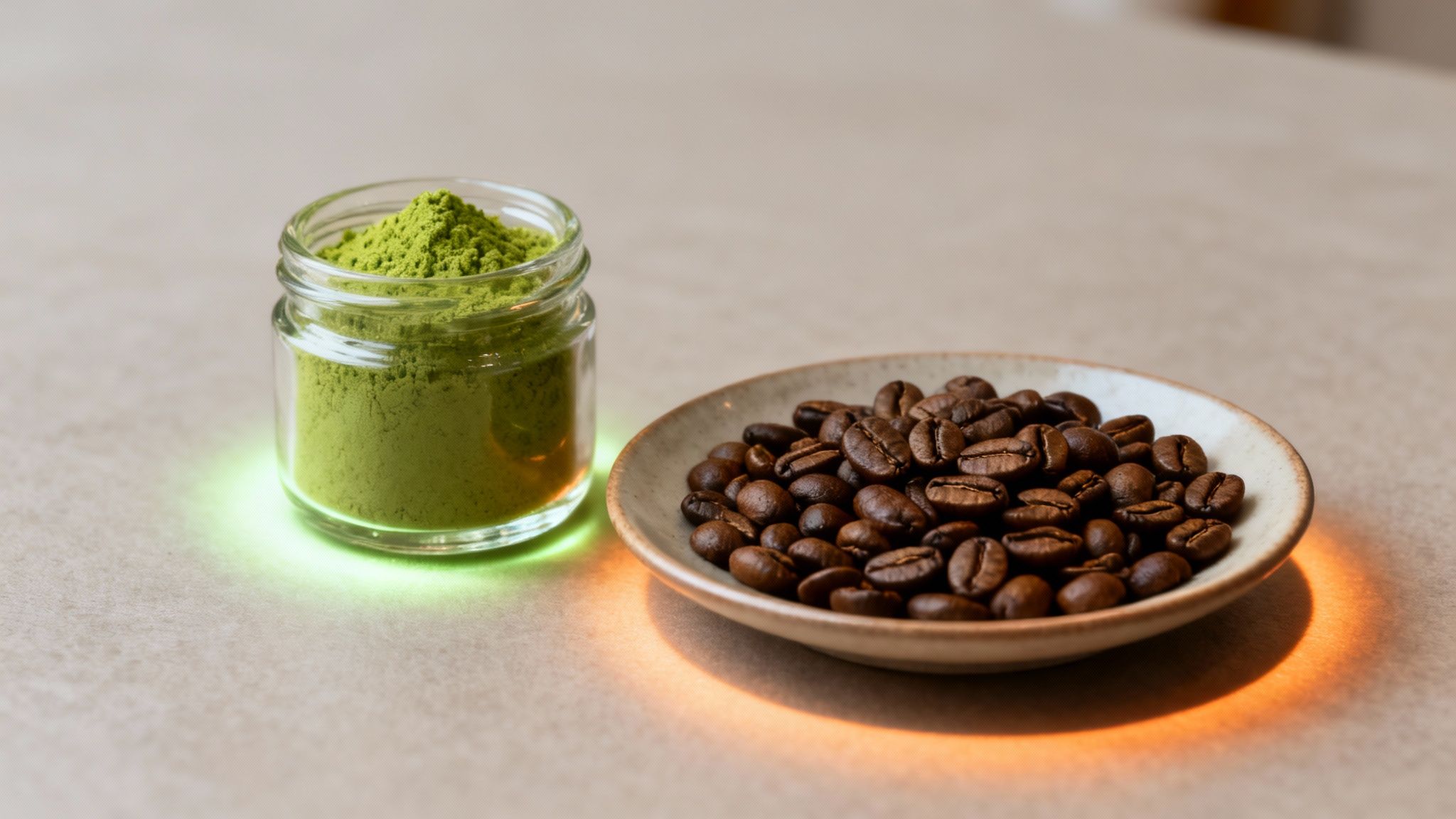
To really get to the heart of the matcha vs. coffee debate, we need to look under the bonnet at what’s actually going on chemically. Yes, they both give you a caffeine kick, but the way they deliver it—and the other powerful goodies they contain—creates a profoundly different experience for your mind and body. This is where the real story unfolds.
The most obvious starting point is caffeine, but even here, the numbers and effects are quite distinct. A standard cup of coffee packs a punch with around 95-140mg of caffeine, delivering that familiar, rapid surge of energy. Matcha is a bit more reserved, typically containing a more moderate 30-70mg per serving for a gentler lift.
But the caffeine content is only half the tale. The real game-changer in matcha is a unique amino acid called L-theanine.
The L-Theanine Difference: Calm Alertness
L-theanine is matcha’s secret weapon, the key to its signature ‘calm alertness’. It works in beautiful harmony with caffeine, slowing its absorption into the bloodstream and taking the edge off its effects. This is why you don’t get that sharp spike and the dreaded crash that so often follows a strong coffee.
Instead of a jolt, you get a sustained, steady wave of energy that can last for hours. This unique biochemical partnership is what people are talking about when they describe matcha’s boost as smoother and more sustained. It directly addresses a common complaint with coffee—that it can trigger anxiety or jitters. Matcha, with its L-theanine sidekick, promotes a feeling of calm focus.
This synergy has a fascinating effect on the brain, too. L-theanine is known to encourage the production of alpha brain waves, which are linked to a state of relaxed wakefulness and creative thinking—the kind of mental clarity you might find during meditation.
Key Takeaway: Coffee delivers a powerful, fast-acting energy spike driven purely by caffeine. Matcha offers a smoother, longer-lasting energy plateau, thanks to the unique partnership between caffeine and L-theanine that fosters focus without the jitters.
This distinction is precisely why so many people make the switch from coffee to matcha, especially if they’re looking to manage anxiety or improve concentration over a long workday. Coffee is brilliant for a quick wake-up call, but matcha truly excels at keeping you focused and composed all day. You can dive deeper into the specific matcha powder health benefits in our detailed guide.
Comparing Antioxidant Powerhouses
Beyond energy and focus, both matcha and coffee are packed with antioxidants, but they bring different players to the field. These vital molecules help protect our bodies from the oxidative stress caused by free radicals, which contribute to ageing and various health issues.
For many of us, coffee is a primary source of antioxidants, mainly thanks to compounds called chlorogenic acids. These have been linked to some great benefits, like reducing inflammation and helping to manage blood sugar levels.
Matcha, however, contains an incredibly high concentration of a powerful class of antioxidants known as catechins. Because you’re consuming the entire ground tea leaf—not just an infusion—you get a much more potent dose of these compounds compared to a standard cup of green tea.
The most famous of these is epigallocatechin gallate (EGCG). This antioxidant powerhouse is one of the most studied natural compounds out there for its potential to support everything from cardiovascular health to metabolism. To get a wider perspective, it's worth exploring the powerful benefits of loose leaf tea in general to understand the context of these fantastic compounds.
- Coffee's Profile: Rich in chlorogenic acids, which help combat inflammation.
- Matcha's Profile: Packed with catechins, especially EGCG, offering robust cellular protection.
At the end of the day, both drinks are fantastic sources of antioxidants. However, matcha's profile, led by the celebrated EGCG, is often considered more potent and unique, making it a serious contender if your focus is on long-term wellness.
Comparing The Effects on Energy and Mental Focus

While the science tells us what's happening in our bodies, the real difference is how each drink makes you feel. The subjective experience of energy and focus is where the gap between matcha and coffee truly widens. It’s not really about which one is stronger, but which type of energy you need at a particular moment.
Coffee is legendary for its instant, powerful kick. That morning espresso delivers a rapid jolt that slices through mental fog and brings on a sharp sense of alertness. It's a fantastic tool for getting you going or tackling very specific, short-term tasks.
The catch, of course, is the notorious "caffeine spike and crash." Once that initial high wears off, many of us are left feeling drained, a bit irritable, and instinctively reaching for another cup just to get back to normal.
The Coffee Energy Curve: A Spike and A Slump
You can think of coffee's energy as a sprinter—incredibly fast and powerful right out of the blocks, perfect for short bursts of high-intensity effort. It’s the ideal fix when you need to wake up now or power through the last hour of a big project.
Think about these common scenarios where coffee’s punchy energy really comes into its own:
- Pre-Workout Boost: You need a quick jolt to get the most out of an intense gym session.
- Meeting Prep: You have to find sharp, immediate focus for a critical presentation that’s just minutes away.
- Beating the Afternoon Slump: That 2 PM drowsiness hits, and you need a fast, effective pick-me-up.
But this energy isn't built for the long haul. The inevitable crash can throw your productivity off track later in the day, often leading to a dependency cycle. It's this very pattern that has many people asking if matcha is a better choice for all-day performance.
Matcha’s Energy Plateau: A Steady and Sustained Focus
Matcha, on the other hand, offers a completely different energy profile. It’s more of a marathon runner than a sprinter. Thanks to the calming influence of L-theanine, the caffeine is released slowly and evenly into your system.
This creates a prolonged state of what we call 'calm alertness'—an energy plateau that can last for three to six hours. You won't feel a sudden rush, but rather a gentle, sustained lift in focus and clarity that supports you throughout your day, without the jarring peaks and troughs of coffee.
This steady, jitter-free energy release is matcha’s defining quality. It fosters a state of productive flow, perfect for deep, uninterrupted concentration without the nervous buzz or subsequent crash that can derail a focused afternoon.
This makes matcha an incredible companion for tasks that demand long-term concentration and mental stamina. For anyone from creative professionals to students deep in revision, this stable energy is a game-changer. The focus it brings is clear and composed, not frantic or forced.
A Situational Guide for Choosing Your Drink
Ultimately, the choice isn’t about one drink being universally "better" than the other. It’s about matching the right tool to the right job. By understanding their distinct effects, you can strategically pick your drink based on what your day demands.
To make it simple, we've put together a practical guide to help you decide.
| Scenario | Best Choice | Why It Works |
|---|---|---|
| A full day of creative work or writing | Matcha | Provides sustained, calm focus for several hours, ideal for deep work without the jitters or crash that could disrupt your flow. |
| An urgent 30-minute deadline | Coffee | Delivers a fast, powerful energy spike to sharpen your mind and push through a short, high-pressure task. |
| A long study session for exams | Matcha | The L-theanine promotes alpha brain waves, which aid in memory retention and calm concentration over a long period. |
| Waking up after a poor night's sleep | Coffee | Its strong, immediate effect is perfect for a quick and effective wake-up call to get your day started immediately. |
| An afternoon of brainstorming | Matcha | Encourages a state of relaxed alertness, which is highly conducive to creative thinking and open-minded collaboration. |
By seeing them as different tools in your productivity toolkit, you can harness the unique strengths of both to suit your needs.
Your Body's Response: Digestion, Sleep, and Wellbeing
The immediate hit of caffeine is one thing, but what happens hours after you’ve finished your cup? The choice between matcha and coffee sends ripples through your entire system, influencing everything from your gut health to how well you sleep at night. This is where the two drinks really start to show their differences.
If you’ve ever felt that familiar pang of digestive discomfort after your morning brew, you’re not alone. Coffee is notoriously acidic, with a pH that typically lands between 4.85 and 5.10. For some, this can irritate the stomach lining, leading to issues like acid reflux or general unease.
Matcha, on the other hand, is a much gentler affair. It’s more alkaline, meaning it’s far less likely to cause the same kind of irritation. For anyone with a sensitive stomach who still wants a daily ritual, matcha is a far friendlier option.
How Coffee and Matcha Affect Your Sleep
The impact on your sleep is perhaps the clearest distinction between the two. Coffee’s caffeine has a long half-life, which means an afternoon cup can easily linger in your system well into the evening, making it harder to drift off and get that deep, restorative rest.
This lingering stimulation is a classic culprit for poor sleep quality. Even if you do manage to fall asleep, the caffeine can disrupt your natural sleep cycles, leaving you feeling groggy and reaching for another coffee the next morning. It’s a tricky cycle to break.
This is where matcha really shines, thanks again to its L-theanine content. That remarkable amino acid doesn't just smooth out your energy during the day; it also helps promote a sense of calm in the evening. While there’s still caffeine in matcha, the L-theanine helps to ease your mind, making it a much safer bet for an afternoon pick-me-up that won’t sabotage your night.
Choosing matcha in the afternoon provides a gentle energy lift to overcome the slump, but its L-theanine content helps ensure you can still wind down effectively at bedtime, protecting your precious sleep quality.
A Broader Look at Overall Wellbeing
The story doesn't end there. The comparison extends to other subtle, yet important, aspects of daily health, from your smile to your skin. These long-term effects contribute to the bigger picture of whether matcha is better than coffee for your personal wellbeing goals.
Over time, the dark pigments in coffee can lead to stubborn tooth staining, often requiring professional treatments to reverse. Matcha, however, doesn't stain. In fact, the catechins it contains have antibacterial properties that can actually improve oral hygiene by tackling the bacteria behind plaque and bad breath.
- Dental Health: Coffee is well-known for staining teeth, while matcha’s antibacterial compounds can help you maintain a healthier mouth.
- Skin Health: The high concentration of antioxidants in matcha—especially EGCG—helps fight the oxidative stress that contributes to skin ageing. By protecting your cells from damage, a daily matcha habit can support a clearer, more radiant complexion from the inside out.
When you look at the whole picture—from gut to grin to a good night's sleep—matcha makes a compelling case. Its gentle, supportive nature fits seamlessly into a wellness-focused lifestyle, offering benefits that go far beyond a simple caffeine boost. For anyone prioritising their long-term health, the scales often tip in favour of green.
The Ritual of Preparation, Taste, and Experience
Putting aside the chemistry for a moment, the choice between matcha and coffee often comes down to a feeling. It's a sensory decision, one that begins long before the first sip, rooted in the ritual of how each drink is made and the distinct flavours they offer. This is where your personal taste and daily rhythm really come into the picture.
Let's be honest, modern coffee preparation is usually about one thing: speed. An espresso machine pulls a shot in seconds, a pod machine gets the job done with the press of a button. The whole process is built to be functional, a quick and efficient caffeine delivery system.
The flavour of coffee is punchy, direct, and a familiar comfort to most of us. It’s defined by those classic roasted, bitter, and acidic notes, which can range from nutty to chocolatey depending on the beans. For many, it's that powerful taste that really kickstarts the day.
The Mindful Practice of Matcha
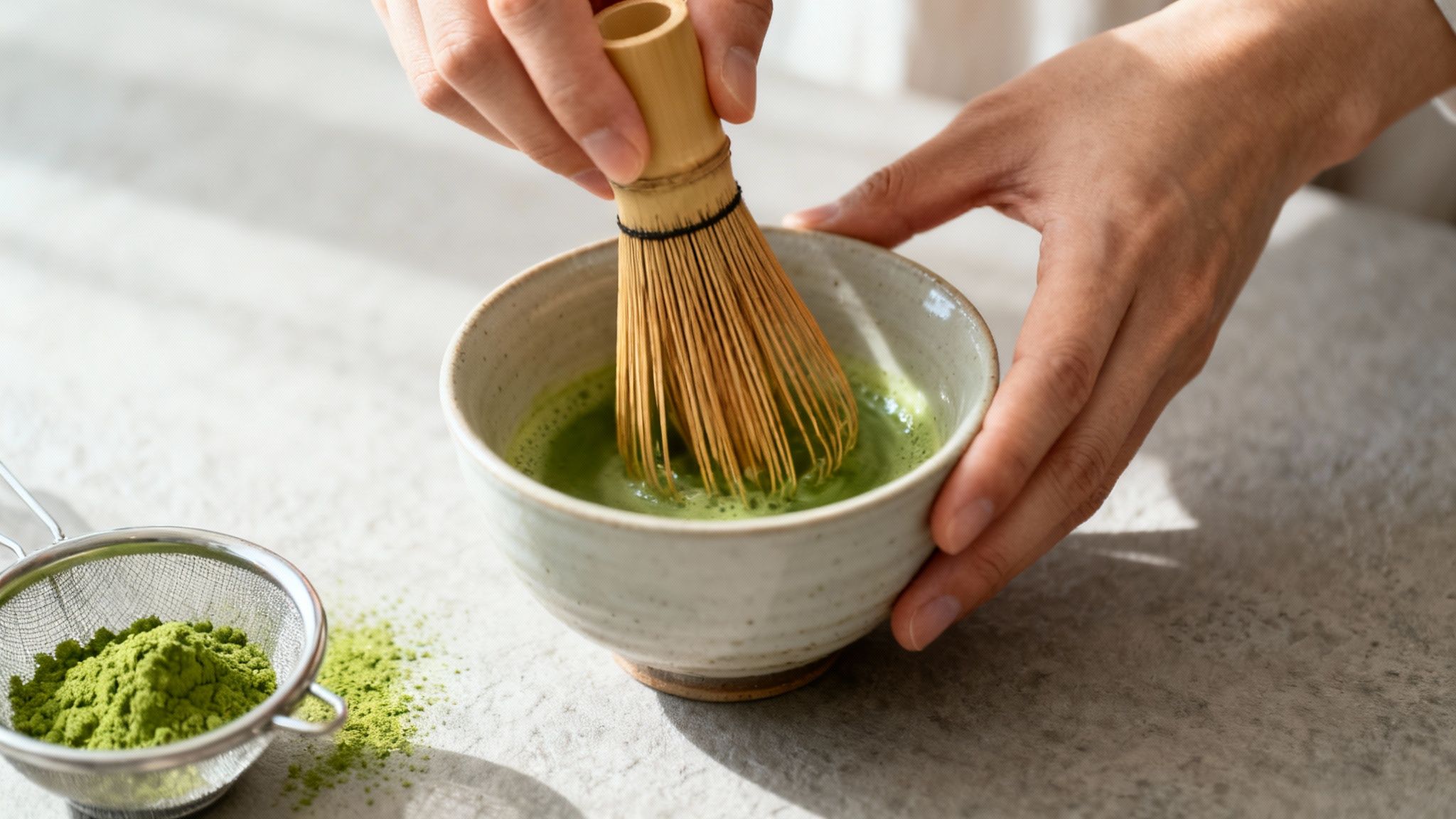
Making matcha is a world away from this. It’s a deliberate, almost meditative practice that’s been part of Japanese tradition for centuries. The simple act of sifting the fine green powder, adding warm water, and whisking it into a delicate froth with a bamboo chasen is a calming ritual in itself.
This process forces you to slow down and be present, turning a simple drink into a moment of mindfulness. It’s far less about a quick fix and more about carving out a pocket of serenity in your day. If you’re curious to get it right, our guide to preparing matcha tea is a brilliant place to start.
The flavour of a truly good matcha is also far more complex than many people realise. While a lower-grade powder can be a bit harsh, a premium ceremonial grade, like the Uji matcha we source, offers something truly special.
A top-quality matcha has a smooth, rich body with that distinctive umami character—a satisfying, savoury depth that keeps you coming back. This is beautifully balanced by a subtle, natural sweetness and fresh, almost grassy notes.
This unique combination of flavours makes for a sophisticated and deeply rewarding experience that unfolds with every sip. Crucially, it doesn't have the sharp acidity you often find in coffee, making it a much smoother, rounder drink.
Comparing the Sensory Journey
So, how do the two experiences stack up when you put them side-by-side? They really do appeal to different moments and mindsets.
| Aspect | Coffee Experience | Matcha Experience |
|---|---|---|
| Preparation Ritual | Generally fast and functional, built for efficiency (e.g., espresso machine, pod). | A mindful, deliberate, and calming process of sifting, whisking, and creating a froth. |
| Primary Flavours | Bold, roasted, acidic, and often carrying bitter notes. | Complex, smooth, and savoury umami with a subtle, vegetal sweetness. |
| Aroma | Rich, intense roasted scent of ground coffee beans. | Fresh, grassy, and slightly sweet aroma of finely ground tea leaves. |
| Mouthfeel | Varies from thin and watery to rich and oily, often with a sharp, acidic finish. | Creamy, smooth, and full-bodied with a clean, lingering aftertaste. |
Ultimately, it comes down to what you want from your daily ritual. If you value speed and a powerful, familiar flavour to jolt you into action, coffee is a brilliant choice. But if you’re looking for a more intentional, calming practice with a complex and sophisticated flavour, then embracing the art of matcha offers an experience that’s truly special. You’re not just making a drink; you’re connecting with a rich cultural tradition.
Cost, Sustainability, and Where It All Comes From
So, we've talked flavour, focus, and feelings. But what about the journey your morning drink takes to get to your cup? A proper comparison has to look at the pounds and pence, as well as the story behind the scenes.
At first glance, a tin of ceremonial grade matcha might seem a bigger spend than a bag of coffee beans. But here's the thing: you only need a gram or two per serving. That single tin can last you a good while, and when you do the maths, the cost-per-cup often works out to be pretty similar to a bag of specialty coffee you'd brew at home.
When you're out and about, the prices in a café usually even out. A well-made matcha latte often costs about the same as a flat white. The real question is what you’re paying for – the quality of the ingredients and the ethics of how they were produced.
Ethical Sourcing and Sustainability
This is where the matcha vs. coffee debate gets really interesting. The coffee industry has long grappled with big issues like dodgy labour practices, deforestation, and massive monoculture farms that can wreck the soil and demand a ton of pesticides. Certifications like Fair Trade are a step in the right direction, but it can still be hard to know what’s really going on.
Contrast that with high-grade matcha, especially from celebrated regions like Uji, Japan. It's often grown on small, family-run farms. These growers have generations of skill behind them, using traditional methods that respect the local ecosystem.
Sourcing directly from these small-scale Japanese tea farms means we get a transparent, ethical supply chain. It ensures the farmers are paid fairly for their incredible skill and hard work, keeping a rich cultural heritage alive while producing something truly special.
This direct connection is everything to us at Jeeves & Jericho. We think knowing where your tea comes from is just as important as how it tastes. You can read more about our approach in our guide to sustainable procurement practices.
And if you’re looking to make your daily ritual a bit greener, simple swaps like sustainable reusable coffee filters can make a real difference, cutting down on waste no matter what you're brewing.
Ultimately, choosing a high-quality matcha isn't just about treating yourself to a better tasting drink. It’s about supporting a more sustainable and fair system—one that values the artisans who put quality above all else. It means every cup you enjoy is good for you, and good for the people and the planet that made it possible.
Still on the Fence? Your Final Questions Answered
Even with all the facts laid out, you might still be mulling things over. The truth is, answering "is matcha better than coffee?" isn't a simple yes or no – it really depends on you. Let’s clear up those last few lingering questions so you can make your choice with confidence.
Here are the direct answers to the queries we hear most often, helping you decide whether to make the switch or just add a new ritual to your day.
Can I Drink Matcha Every Day?
Absolutely. In fact, drinking matcha daily is the best way to really feel its full range of benefits, from that lovely sustained energy to its antioxidant boost. Most people find that having one to three servings a day is the perfect amount to feel great without overdoing it.
Remember, a single serving is just a gram or two of powder, so a little goes a long way. This daily rhythm allows your body to get in sync with its gentle, steady energy.
Will I Get Hooked on Matcha Like I Am on Coffee?
This is a big one for a lot of people, and the short answer is no, not in the same way. Coffee delivers a big, fast caffeine hit that can create a real cycle of dependency. Your body starts to crave that jolt, and if you miss a cup, the headaches can be brutal.
Matcha is a different story. Thanks to L-theanine, its energy release is slow and steady. You don't get the dramatic peaks and crashes that lead to dependency, so it's far less likely you'll feel withdrawal symptoms if you skip a day.
The magic of matcha lies in the synergy between its caffeine and L-theanine. It supports your system rather than shocking it, making for a balanced daily ritual without the jitters or the risk of dependency.
Is Matcha a Hassle to Make at Home?
Not at all. While the traditional Japanese tea ceremony is a beautiful, intricate art, making a delicious cup of matcha at home is incredibly simple. Honestly, it's much easier than pulling a perfect espresso shot. You certainly don't need a counter full of expensive kit to get started.
At its simplest, you just whisk the powder with hot (not boiling!) water. If you're making a latte, a cheap electric milk frother does the job brilliantly. You can have a perfect cup ready in under a minute, making it just as quick as any other morning brew.
Which Is Better for Weight Management?
Both drinks can fit into a healthy lifestyle, but matcha probably has the edge here. The powerful catechins in matcha, especially EGCG, have been shown in studies to help give your metabolism a gentle nudge and increase fat oxidation—particularly if you drink it before a workout.
While a cup of black coffee can also temporarily speed up your metabolic rate, matcha’s unique blend of compounds offers more consistent support for your body’s fat-burning processes, and without spiking stress hormones like cortisol.
Ready to feel the difference for yourself? Jeeves & Jericho sources only the finest ceremonial grade matcha directly from the fields of Uji, Japan. We do this to ensure every single cup delivers a smooth, vibrant flavour and the calm, focused energy you’re looking for. Discover our premium matcha collection today.