


Perfecting your matcha at home is simpler than you might think. It really comes down to a few key details: sifting 1-2 teaspoons of ceremonial grade powder into a bowl, adding about 60ml of hot water (around 70-80°C), and whisking in a 'W' shape until you see a beautiful, fine froth. This small ritual is the key to unlocking that smooth, umami-rich flavour that’s leagues ahead of most café brews.
Your Journey into the World of Matcha
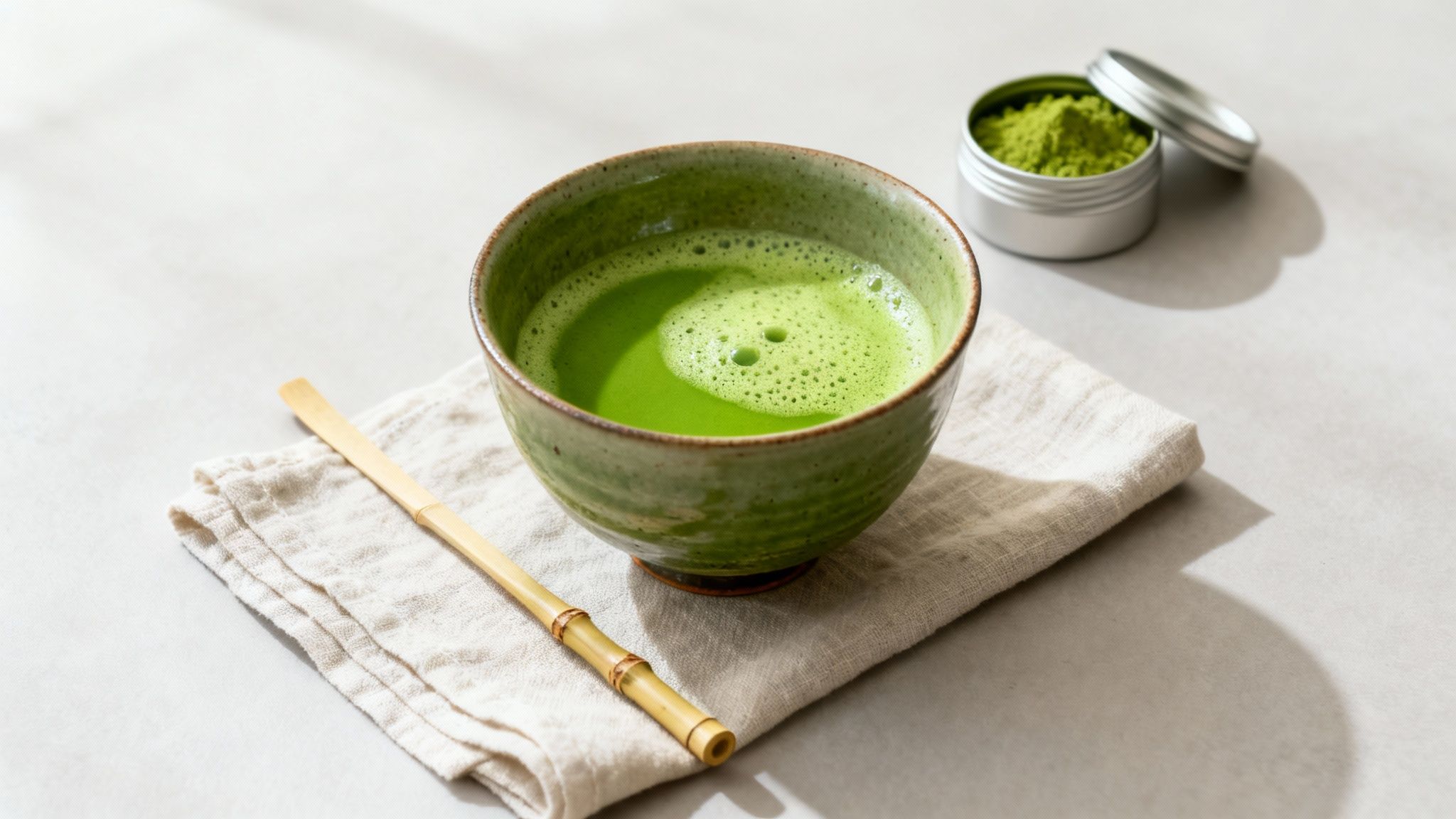
Welcome to the vibrant world of matcha. This guide isn't just about whisking green powder in a bowl; it’s about creating a small, mindful practice that rewards you with incredible flavour and a sense of calm, focused energy. We'll get into why this ancient Japanese tea has become such a modern-day staple.
It’s clear that knowing how to make a proper matcha is more than a fleeting trend; it’s a genuine shift in how we approach our daily drinks. Just look at the UK matcha tea market—it shot up from $219.6 million in 2024 to an expected $234.97 million in 2025. That growth is all down to people like us who care about quality and preparation.
This isn't just a drink; it's an experience. The process of making matcha—sifting the powder, warming the bowl, whisking to a perfect foam—is a moment of meditative calm in a busy day.
My goal here is to make the essentials feel simple and accessible. Forget those complicated instructions and intimidating rituals. We’re going to focus on straightforward, practical steps for a flawless cup, every single time. To really appreciate what makes this powdered tea so special, it helps to see where it fits within the fascinating world of types of Japanese tea.
What This Guide Will Cover
I want to give you the confidence to start brewing properly from day one. Here’s a little look at what we’ll cover:
- Traditional Preparation: We’ll master the art of usucha (thin tea), which is the most common way to enjoy matcha, celebrated for its delicate, frothy top.
- Modern Variations: Fancy something different? You'll learn how to whip up creamy, café-quality matcha lattes and refreshing iced drinks right from your own kitchen.
- Essential Toolkit: I’ll demystify the traditional tools and point you towards practical alternatives you probably already have at home.
- Sourcing and Storage: We'll explore how to spot high-quality ceremonial grade matcha and, just as importantly, how to keep it fresh to protect its flavour and benefits.
This is all about finding what works for you and creating a cup that you’ll genuinely love.
Setting Up Your Matcha Toolkit
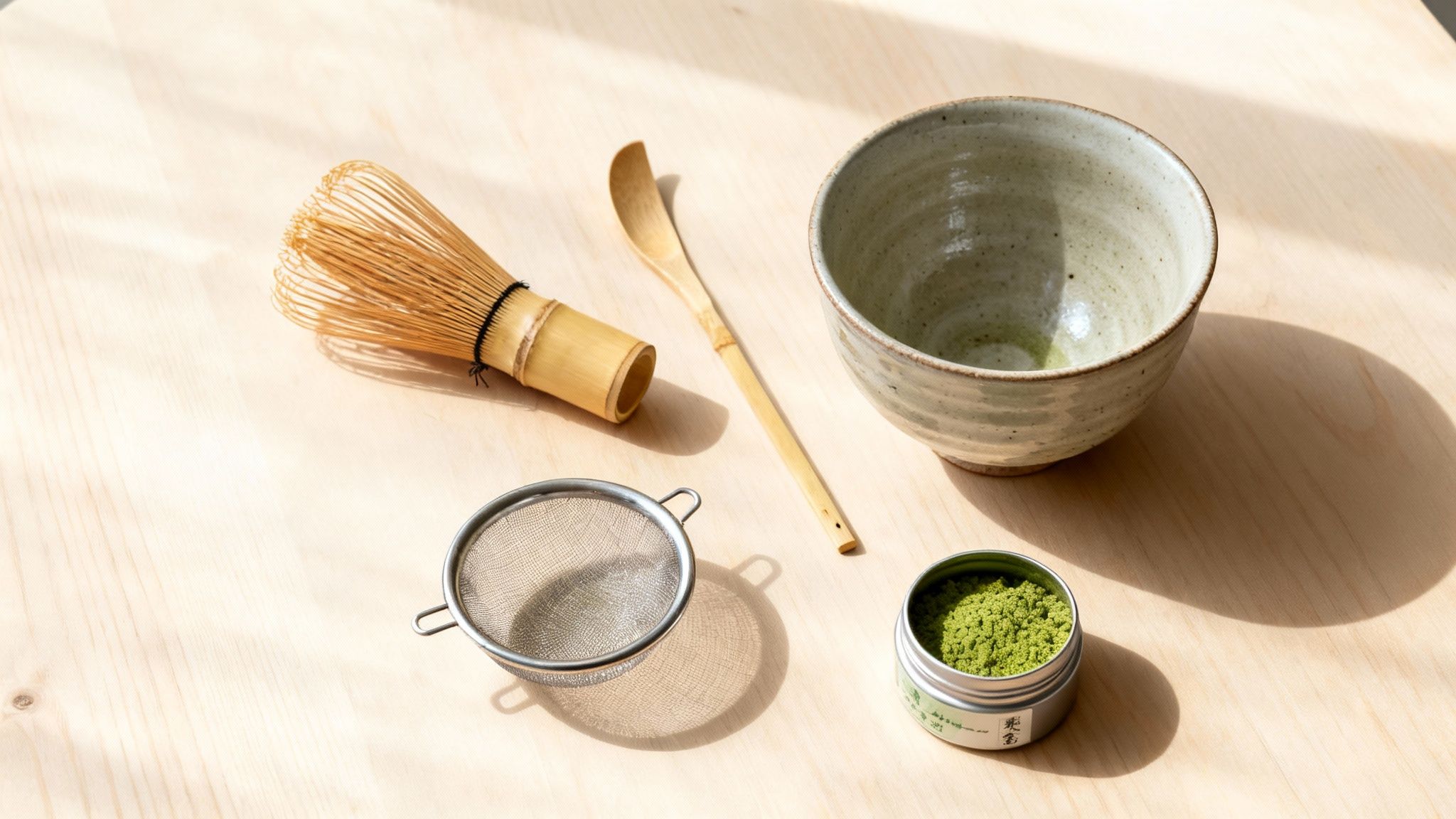
If you’ve ever wondered how artisan cafes achieve that perfect, silky bowl of matcha, the secret often lies in the tools. Having the right equipment really does make all the difference, transforming the process from simply making a drink into a satisfying daily ritual.
While you can certainly get by with a few kitchen workarounds, the traditional tools are designed specifically for the job. Think of it like trying to chop vegetables with a butter knife versus a proper chef’s knife – both will get you there, but one gives a far superior result.
At the heart of any matcha kit is the bamboo whisk, or chasen. Its fine, flexible tines are expertly crafted to suspend the matcha powder evenly in the water, all while whipping in air to create that signature layer of delicate foam. A metal whisk or a spoon just can’t replicate it.
The Traditional Trio
To make your journey into matcha at home a smooth one, there are a few purpose-built items that are worth their weight in gold. They aren’t just for show; each one plays a key role in achieving the ideal texture and flavour.
Before we dive into the specifics, here's a quick look at the essentials and why they matter.
Your Matcha Preparation Toolkit
| Essential Tool | Traditional Name | Primary Purpose | Helpful Alternative |
|---|---|---|---|
| Bamboo Whisk | Chasen | Aerates the matcha to create a smooth, frothy layer. | Electric milk frother |
| Ceremonial Bowl | Chawan | Provides a wide, flat base for effective whisking. | A wide-bottomed soup or cereal bowl |
| Bamboo Scoop | Chashaku | Measures the perfect portion of matcha powder. | A standard teaspoon |
| Fine-Mesh Sieve | Chakoshi | Prevents clumps for a flawlessly smooth texture. | Any small tea strainer or kitchen sieve |
As you can see, you don't need to have the traditional set-up from day one, but it certainly helps. Let's break down why these items are so effective.
Why They Work
-
Ceremonial Bowl (Chawan): The wide, flat bottom of a chawan is no accident. It gives you plenty of room to whisk vigorously in that "W" or "M" motion without splashing, and it helps the chasen make full contact with the liquid.
-
Bamboo Scoop (Chashaku): This elegant little scoop is designed to measure out just the right amount of powder. Typically, you'll use 1-2 scoops for a standard serving of usucha (thin tea).
-
Fine-Mesh Sieve: This might be the most underrated tool of them all. Sifting your matcha before adding water is the single best thing you can do to prevent lumps. It guarantees a perfectly smooth, silky drink every single time.
Building even a small, dedicated toolkit completely changes the experience. It encourages a bit of mindfulness and turns a quick caffeine fix into a proper ceremony. Even just starting with a quality whisk will dramatically improve your homemade matcha.
Modern Workarounds And Starter Sets
Not ready to invest in the full traditional set? Don’t worry. An electric milk frother is a fantastic alternative to the bamboo whisk and does a great job of creating a decent foam, especially for lattes.
In a pinch, you can even shake the matcha and water together in a sealed jar. It’s a surprisingly effective method and works particularly well when you're making iced matcha on the go.
If you are just starting out, many retailers offer brilliant starter sets that include the essential bowl, whisk, and scoop. This is often the most economical way to get your hands on the core pieces. To get the most out of your tools, it’s worth learning how to look after them; you can find great advice on caring for your matcha whisk and holder.
When looking at modern accessories like storage containers, it can be useful to know a bit about materials like high-quality food grade silicone to ensure they are safe and durable.
Crafting the Perfect Traditional Brew
This is where the real magic happens. With the right tools in hand, it’s time to get to grips with the two classic styles of Japanese tea ceremony: usucha and koicha. Forget any complicated jargon; this is all about a few simple, repeatable actions that lead to a truly exceptional brew.
We’ll start with usucha, or "thin tea." This is the bright, frothy, and invigorating matcha you’ve likely seen in speciality cafes. It's the perfect daily ritual, offering a beautifully balanced taste that’s both uplifting and calming.
Mastering usucha really just comes down to controlling a few key variables. Once you get the feel for them, the process becomes an intuitive and deeply rewarding part of your day. The aim is a harmonious blend with a delicate, creamy layer of foam on top.
The Art of Usucha (Thin Tea)
The journey to a perfect bowl of usucha starts before the water even touches the powder. First, take a moment to warm your bowl (chawan). Just pour in a bit of hot water, give it a swirl, and then tip it out. This simple step stops the matcha from cooling down too quickly and helps create a better foam.
Next up is the single most important trick for a clump-free brew: sifting. Place a fine-mesh sieve over your bowl and measure 1-2 bamboo scoops (that's about half to one teaspoon) of ceremonial grade matcha into it. Gently push the powder through with your scoop. This breaks up any tiny clumps, guaranteeing a silky-smooth texture in your final tea.
Now for the water. The sweet spot is 70-80°C (160-175°F). If your water is too hot, it will scorch the delicate tea leaves, leaving you with a bitter, unpleasant flavour. Don't have a variable-temp kettle? No problem. Just boil it and let it sit for a few minutes before pouring.
The perfect bowl of usucha isn’t just about taste; it’s about texture. The whisking technique is designed to create a stable suspension of tea particles in water while incorporating air, which results in that iconic, velvety foam.
Add just a tiny splash of your warm water to the sifted powder. Using your bamboo whisk (chasen), gently work it into a smooth, thick paste. This little trick ensures all the matcha is fully incorporated before you add the rest of the liquid.
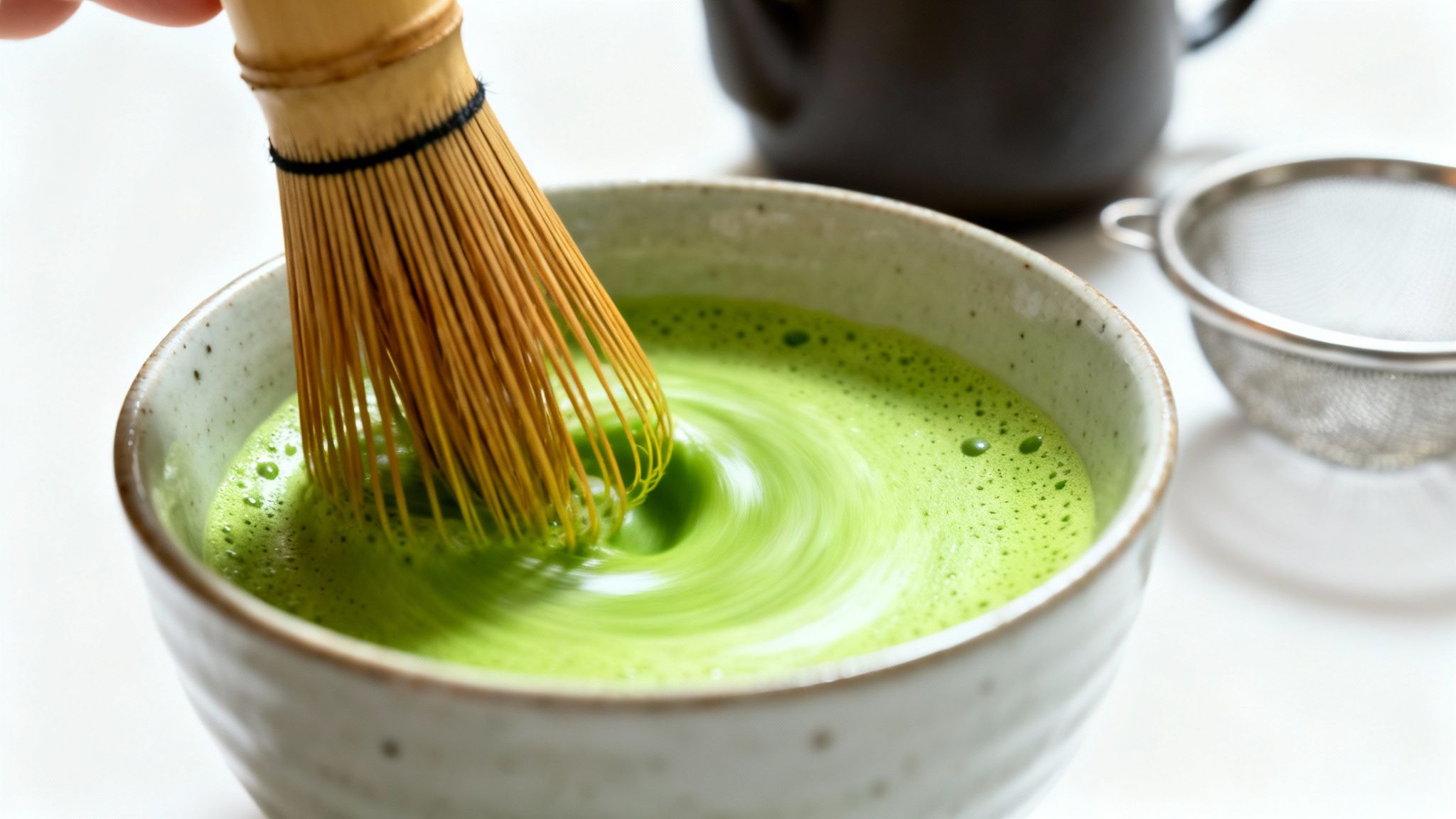
Once you have your paste, pour in the remaining water – about 60-80ml. Now it's time to whisk. The movement should come from your wrist, not your whole arm. Whisk vigorously in a quick 'W' or 'M' shaped motion, not in circles. You're trying to agitate the surface to create lots of fine bubbles.
This technique is crucial for releasing flavour and nutrients. The demand for authentic matcha preparation is soaring; for example, over 982 London sellers recently moved more than 1.2 million units. This boom shows just how much people appreciate a proper brew. Using a chasen for 15-20 rapid strokes is the key to a froth that retains far more catechins than simply steeping tea. You can discover more about the thriving UK matcha market and its consumer trends.
Keep whisking for about 20-30 seconds until the surface is covered in a delicate foam with tiny bubbles. And there you have it. Your perfect bowl of usucha is ready to enjoy.
Exploring Koicha (Thick Tea)
For the true matcha aficionado, there's koicha, or "thick tea." This is a completely different experience – far more intense, rich, and contemplative. It has a consistency similar to warm honey or melted chocolate and is always made with the highest quality ceremonial grade matcha you can find.
The preparation is quite different from usucha. You'll use double the amount of matcha—around four bamboo scoops (two teaspoons)—but roughly the same amount of water, or perhaps even a little less.
The whisking motion also changes. Instead of a rapid 'W' movement, you'll use a slow, deliberate, kneading action. Gently move the whisk in circular and side-to-side patterns to blend the dense powder into the small amount of water. The goal is a smooth, thick consistency with a glossy sheen, not a frothy top. Because of its intensity, koicha is often shared, savoured slowly in small sips.
Creating Modern Matcha Lattes and Iced Drinks

While there's a unique, mindful focus in a traditional bowl of usucha, matcha’s versatility really shines in modern café-style drinks. Moving beyond the ceremonial bowl opens up a whole world of creamy lattes and crisp, refreshing iced teas that, thankfully, are surprisingly simple to recreate at home.
The secret to any good matcha latte or iced drink is getting the foundation right. You can't just dump powder into cold milk and hope for the best—it won't work. Instead, the first step is always to create a concentrated matcha shot, a smooth, potent base that will blend perfectly with whatever you add to it.
This shot is essentially a mini, more intense usucha. You'll use the same principles: sifted powder, warm (never boiling) water, and a good, vigorous whisk. The result is a vibrant, clump-free liquid that’s ready to become the heart of your favourite modern matcha drink.
Crafting the Perfect Matcha Latte
A truly great matcha latte strikes that beautiful balance between earthy tea, creamy milk, and just a hint of sweetness. It’s all about getting the texture and proportions spot on.
First things first, prepare your matcha shot. Sift 1 teaspoon of ceremonial grade matcha into a bowl, add about 30-40ml of 80°C water, and whisk it into a smooth paste before adding the rest of the water. Whisk again until it's frothy. This concentrated base is crucial—it ensures the matcha flavour stands strong and isn't lost in the milk.
Next up is the milk. You can use any you prefer—dairy, oat, almond, and soy all work beautifully. Heat around 180-200ml of milk until it’s hot but not simmering, then use an electric frother or even a French press to create a velvety microfoam.
Pro Tip: When you're frothing, aim for the texture of wet paint. This creates that silky consistency that mixes beautifully with the matcha, rather than a stiff, bubbly foam that just sits on top. A good swirl of the jug and a gentle tap on the counter helps pop any large bubbles.
Pour the frothed milk over your matcha shot. I find it helps to hold back the foam with a spoon at first, letting the liquid milk combine, before letting the foam gently flow over the top. If you fancy a bit of sweetness, now's the time. A touch of honey, maple syrup, or vanilla syrup complements the matcha without masking its delicate flavour.
Conquering Iced Matcha Drinks
Making an iced matcha drink comes with a common pitfall: matcha powder simply doesn't dissolve well in cold liquids. This is where your concentrated shot becomes absolutely essential. It’s the only way to avoid that gritty, clumpy mess at the bottom of your glass.
For a clean, invigorating iced matcha tea, just prepare your shot as usual. Let it cool for a minute, then pour it over a glass filled with ice and top it up with cold, filtered water. It’s a wonderfully simple and refreshing drink for a warm afternoon.
The iced matcha latte is just as straightforward. For a really detailed walkthrough, you can check out our complete guide on how to make a flawless iced matcha latte.
- Prepare Your Base: Whisk up your standard matcha shot.
- Sweeten If You Like: Stir your sweetener (like maple syrup or honey) directly into the warm matcha shot. This is key to making sure it dissolves completely.
- Build Your Drink: Fill a tall glass with ice, pour in your cold milk of choice, and then slowly pour the sweetened matcha shot over the top. That moment when the vibrant green cascades into the white milk is almost as good as the first sip.
The best part about these drinks is how you can make them your own. Play around with different milks, tweak the sweetness, and find that perfect balance that makes your homemade matcha latte your new favourite ritual.
How to Source and Store Your Matcha
A truly exceptional cup of matcha starts long before you ever pick up your whisk. It all begins with the powder itself, as the quality of your tea leaves dictates everything from the nuanced flavour to the vibrant colour and health benefits. The world of matcha can feel a bit daunting at first, but once you know what to look for, you’ll be able to spot the good stuff.
First things first, you'll want to look for ceremonial grade matcha. While culinary grade is brilliant for baking or adding to smoothies, ceremonial grade is milled from the youngest, most tender tea leaves. This results in a naturally sweeter, more complex flavour with hardly any bitterness, making it perfect for drinking straight. If you're curious to learn more about this premium powder, you can dive into the details of what makes ceremonial grade matcha superior.
Spotting High-Quality Matcha
Beyond the official grade, your own senses are your best guide. A top-tier matcha should have a stunning, almost electric green colour. If you open a tin and find a dull, yellowish, or brownish powder, it’s often a sign of oxidation or that it was made from older, lower-quality leaves.
Next, have a good sniff. It should smell fresh, subtly sweet, and wonderfully grassy. The texture of the powder is another dead giveaway—it should be incredibly fine and silky, almost like talc. This fine grind is absolutely essential for creating a smooth, clump-free brew with that iconic frothy top layer.
Don't forget to check the origin. Places in Japan like Uji, Nishio, and Fukuoka are legendary for producing some of the world's finest matcha, all thanks to their perfect climate and generations of tea-growing expertise.
Protecting Your Investment Through Proper Storage
Once you've brought your beautiful matcha home, storing it properly is key to preserving its delicate character. Matcha has three main enemies: light, air, and heat. Exposure to any of them will quickly dull its colour, flatten its flavour, and degrade its nutrients.
Think of matcha like a fine spice or fresh coffee beans—its vibrancy is fleeting. Proper storage isn't just a suggestion; it's the only way to ensure your last cup is as good as your first.
Always keep your matcha in an airtight, opaque container. Most quality brands package their matcha in a suitable tin, so you're often covered there. Just be sure to store that tin in a cool, dark place, like a kitchen cupboard away from the oven or any direct sunlight.
For maximum freshness, especially if you buy a larger amount, you can store the sealed container in the fridge. One important tip: always let the tin come back to room temperature before opening it. This prevents condensation from forming inside, which can introduce moisture and cause the powder to clump.
Your Common Matcha Questions, Answered
Even with the best instructions, mastering the art of matcha often brings up a few questions. The beautiful ritual of preparing a bowl can involve a little bit of troubleshooting, so we’ve put together answers to some of the most common queries we hear.
Getting these details right is what turns making matcha from a task into a truly enjoyable part of your day. Let's get them sorted.
Why Does My Matcha Taste Bitter?
A bitter taste is almost always a tell-tale sign of one thing: the water is too hot. Matcha powder is incredibly delicate, and its ideal temperature range is between 70-80°C. Anything hotter—especially water straight from a boiling kettle—will scorch the tea, instantly creating a harsh, unpleasant flavour.
The fix is simple. Just let your boiled water sit for a minute or two to cool down before you pour it. It's also worth checking your measurements; using too much powder for the amount of water can throw the balance off and lead to a more intense, bitter taste.
Why Won't My Matcha Froth Properly?
That beautiful, creamy microfoam is what we're all after, and it really comes down to a few key things working in harmony. If your matcha is falling a bit flat, one of these is likely the culprit.
First, sifting your matcha is non-negotiable. Passing it through a fine-mesh sieve breaks up any tiny clumps that get in the way of proper aeration. Secondly, your whisking technique is everything. Using a proper bamboo whisk (a chasen), you need a rapid 'W' or 'M' motion with your wrist for about 20-30 seconds. A slow, circular stir just won't cut it.
Finally, the quality of the matcha itself plays a huge part. Fresh, high-quality ceremonial grade matcha is ground to an ultra-fine powder that's designed to froth beautifully. Older or culinary grade powders often have a coarser texture and simply won't produce the same results.
A good froth isn't just about appearances; it's a sign that the tea particles are perfectly suspended in the water. This is what creates that signature velvety texture and unlocks the full spectrum of matcha's complex, umami-rich flavour.
Can I Make Matcha Without a Bamboo Whisk?
While a traditional chasen is definitely the best tool for the job, you can absolutely make a great bowl of matcha without one. Your best alternative is a handheld electric milk frother. Just pop your sifted matcha and hot water into a mug and let the frother do the work until you have a lovely foam.
Another brilliant, and surprisingly effective, method is to use a simple jar with a tight-fitting lid.
- Add your sifted matcha and water to the jar.
- Screw the lid on tightly.
- Shake it like you mean it for about 30 seconds.
This 'shake' method is fantastic for making iced matcha lattes, giving you a smooth, well-mixed base with almost no effort.
What’s the Difference Between Ceremonial and Culinary Matcha?
This is a really important distinction, as it affects flavour, colour, and how you should use the tea. Ceremonial grade matcha is made from the youngest, most tender tea leaves from the first harvest, which are then carefully stone-ground into an impossibly fine powder. It has a vibrant, electric green colour and a naturally sweet, mellow flavour that's perfect for drinking on its own.
Culinary grade, on the other hand, is made from older leaves harvested later in the season. This gives it a much stronger, more bitter flavour profile that's designed to hold its own against other ingredients in lattes, smoothies, or baking. For the purest tea experience where the matcha is the star of the show, you always want to choose ceremonial.
Ready to brew the perfect cup? At Jeeves & Jericho, we source only the finest ceremonial grade Uji matcha to ensure every bowl is a moment of pure bliss. Explore our collection and elevate your tea ritual today.