


Chai is so much more than just another cup of tea. It's a journey into a world of creamy, aromatic, and spiced deliciousness that has its roots in India and has since captured hearts everywhere. While the word chai simply means 'tea' in Hindi, what most of us know and love is actually masala chai—a warming blend of strong black tea, milk, a fragrant mix of spices, and just the right amount of sweetener.
Your Introduction to the World of Chai
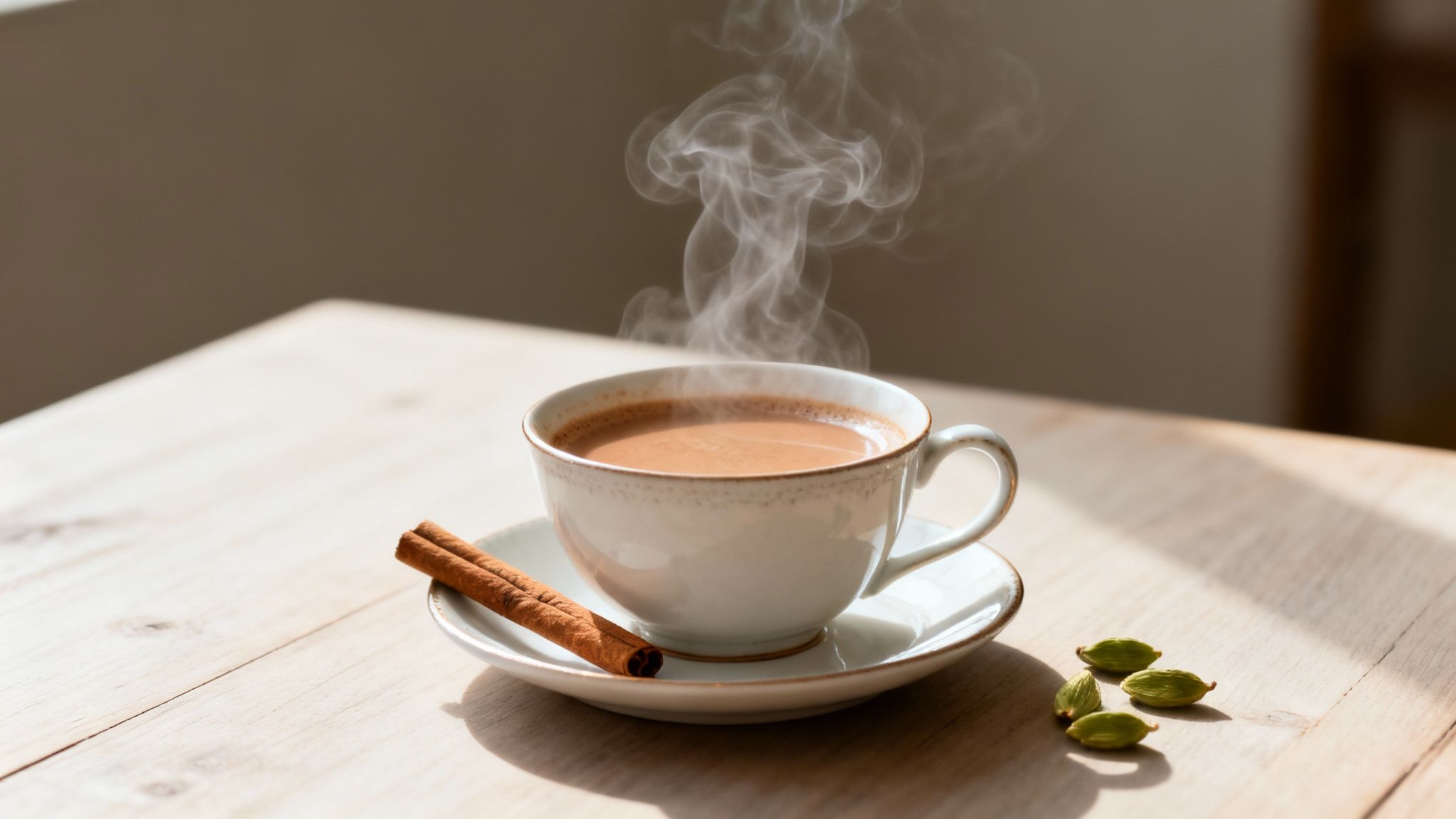
Drinking proper chai is a full sensory experience. It starts with the incredible aroma of spices like cinnamon and cardamom that hits you before you even take a sip. Then comes the comforting warmth of the creamy, sweet liquid itself.
This isn't your average 'dunk a teabag in hot water' situation. Authentic chai is made by simmering all the ingredients together in a pot, which allows the flavours to properly mingle and develop into something rich and wonderfully complex. It’s this process that turns a few simple ingredients into something truly special, creating a drink that’s both invigorating and deeply soothing.
In India, it’s a cultural cornerstone, enjoyed all day long and often bought from street-side vendors known as chai wallahs.
More Than a Drink, A Cultural Shift
Here in the UK, a nation of famously devoted tea drinkers, chai is really starting to make its mark. While a traditional brew still holds the top spot, chai’s unique flavour is winning over a new crowd of tea lovers. It's all part of a bigger shift towards speciality teas, especially among younger, more health-conscious people looking for something a bit more exciting than the standard cuppa.
With Brits drinking an average of 265 litres of tea each year, there's plenty of room for chai to carve out its own space. For anyone curious about where our tea habits are heading, this 2025 UK Tea and Infusions Census Study offers some fascinating insights.
At its heart, chai is all about balance. It’s a perfect harmony of sweet, spicy, milky, and bold flavours all working together to create a drink that is both comforting and stimulating.
To get a clearer picture, let's break it down into its core parts. The following table gives a quick overview of what makes chai, well, chai.
Chai at a Glance
| Component | Description |
|---|---|
| Tea Base | Typically a robust black tea like Assam, which provides a strong, malty foundation that can stand up to the milk and spices. |
| Spices (Masala) | A fragrant mix that often includes cinnamon, cardamom, cloves, ginger, and black pepper. The blend can vary by region and family. |
| Milk | Usually whole milk to add creaminess and perfectly balance the intensity of the spices and the strength of the tea. |
| Sweetener | Sugar is common, but jaggery (unrefined cane sugar) or honey can also be used to round out the flavours and add sweetness. |
These four elements come together to create the chai we know and love. Each one plays a crucial role in crafting that signature flavour profile.
Tracing the Rich History of Chai
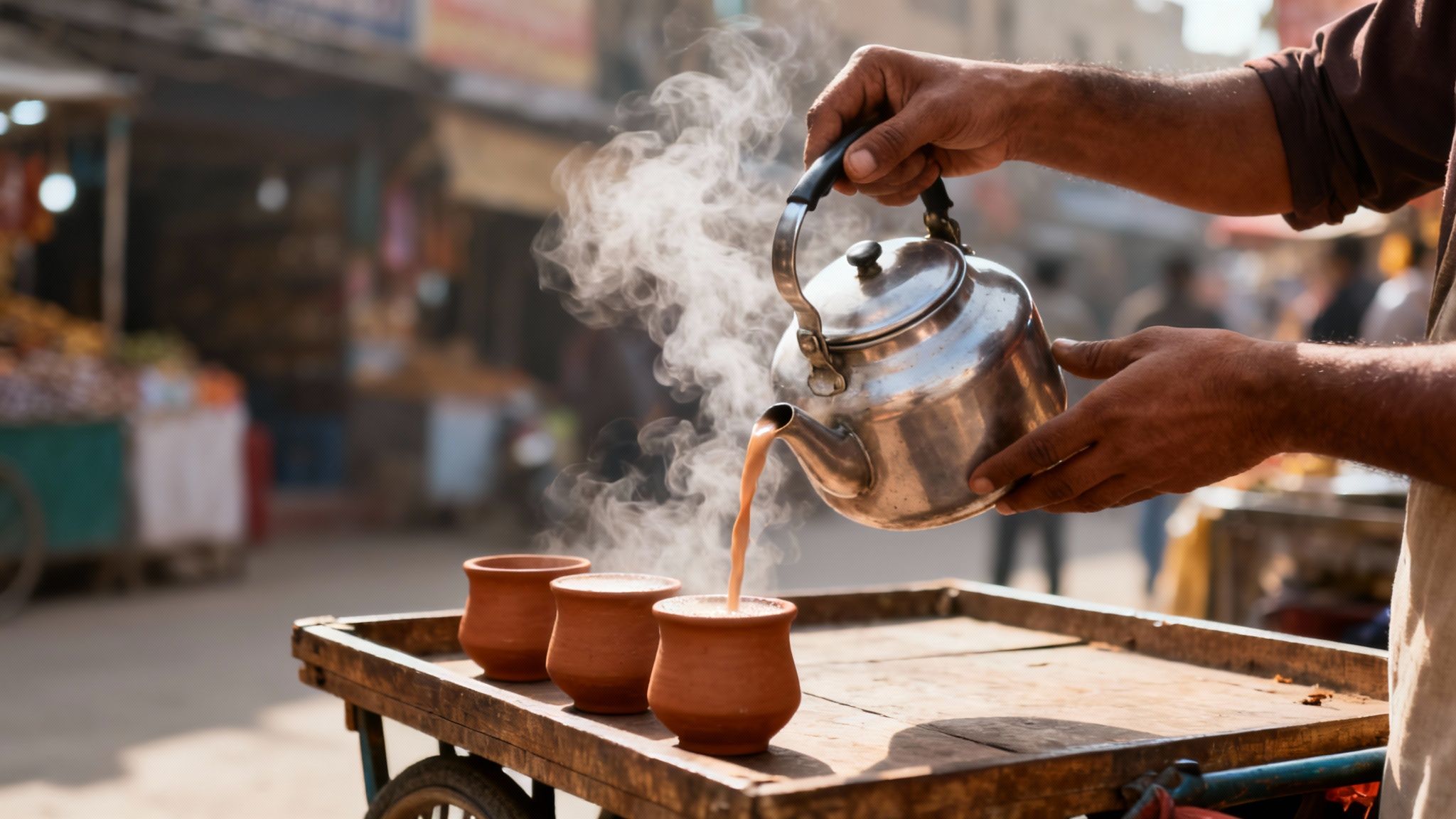
To really get to grips with chai, you have to rewind the clock. Way back. Long before it became a fixture on every café menu, chai started its journey thousands of years ago in India, not as a tasty drink, but as a remedy in Ayurvedic medicine.
This ancient healing practice used blends of spices, simmered in hot water, to create tonics that were thought to cleanse the body and keep you in good health.
These early versions looked very different to the chai we know and love today. They were purely a mix of herbs and spices, completely free of any black tea leaves, milk, or sugar. Each brew was specifically designed to tackle different ailments, using the natural goodness of ingredients like ginger, cardamom, and cloves.
The British Influence and the Birth of Modern Chai
The story takes a sharp turn during the British colonial era. In the 19th century, the British East India Company began setting up huge tea plantations in places like Assam, determined to end China’s monopoly on the tea trade. To build a new market, they pushed hard to get Indians to start drinking tea.
At first, the locals weren't too keen on the British habit of drinking plain black tea. But this is where the street vendors, the famous chai wallahs, spotted an opportunity. They took the black tea the British were promoting and made it their own, adding their traditional spice mixes, milk, and a generous helping of sugar to make it more appealing and affordable. This clever fusion is what gave us the milky, sweet, spiced drink we now call masala chai.
The chai wallah is a cornerstone of Indian culture. These vendors weren't just selling tea; they were creating bustling social hubs on street corners and railway platforms, serving up fresh, hot chai that quickly became an essential part of daily life for millions.
It was an act of pure genius. They took a foreign import and wove it into the fabric of local culture and taste, paving the way for chai’s incredible popularity across the subcontinent. The drink is a perfect window into the wider world of Indian Cuisine.
From Local Staple to Global Sensation
For decades, this new kind of chai was a cherished local tradition in India. Its leap to global fame is much more recent, picking up speed as people travelled more and cultures began to mix. Today, the aromatic brew has found fans all over the world, including right here in the UK.
From its ancient medicinal roots to the lively streets of modern India, the story of chai is all about evolution and adaptation. Every single cup tells a rich story of tradition, clever innovation, and cultural fusion. To see how this tradition continues, you can discover more about chai the way India drinks tea in our other post.
The Building Blocks of a Proper Chai
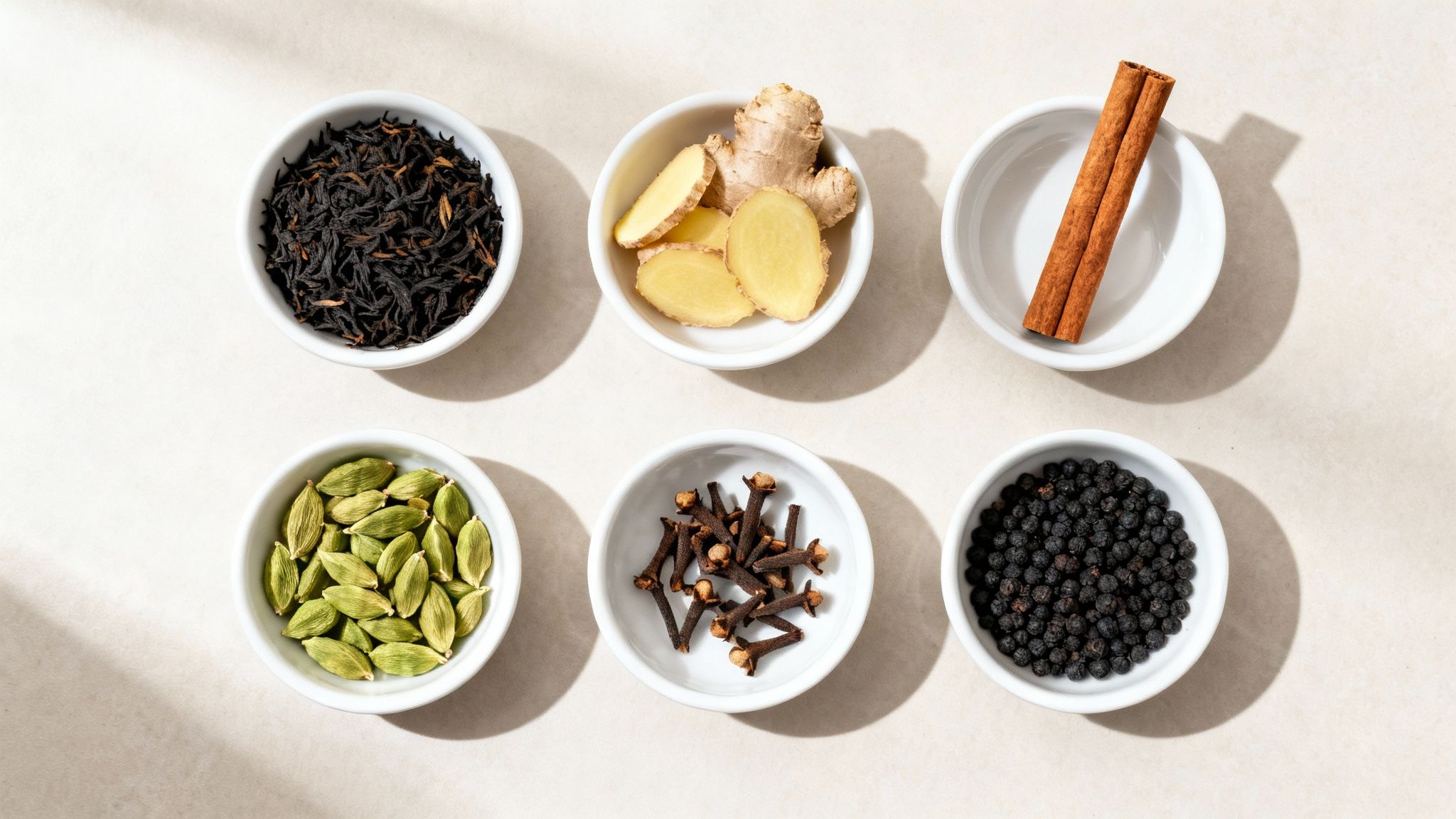
That unmistakable, soul-warming flavour of chai doesn't just happen by chance. It’s a carefully crafted symphony of ingredients, all working together in perfect harmony. At its heart is the masala, the specific blend of spices that turns a simple cup of tea into something truly magical.
To really appreciate a good chai, it helps to know what goes into it. Let’s pull back the curtain and look at the key players.
A Bold Tea Base
First things first: the tea. You need a strong, robust black tea that can hold its own against the milk, sugar, and a whole host of powerful spices. It’s the foundation of the entire drink.
The classic, go-to choice for an authentic chai is Assam black tea. Grown in India's Assam region, it's famous for its full-bodied, malty character. Think of the tea as the stage and the spices as the performers—without a sturdy stage, the whole show falls apart. Assam provides that essential structure, giving the final brew its deep, rich colour and satisfying depth.
The Symphony of Spices
While the tea provides the base note, it's the spices that create the melody. The traditional masala is a carefully balanced ensemble, and while there's no single "correct" recipe—blends vary from region to region, even from one family to the next—a classic chai usually features a core group of aromatic spices.
A well-made chai is a masterclass in balance. It is neither overly sweet nor excessively spicy. Instead, each ingredient complements the others, creating a layered flavour experience that is both invigorating and deeply comforting.
Let's meet the key players in this aromatic orchestra and see what they bring to the cup.
-
Ginger (Adrak): This is the very soul of the blend. Ginger delivers a pungent, warming heat that cuts right through the creamy milk, giving the chai a zesty, invigorating kick.
-
Green Cardamom (Elaichi): Often called the "Queen of Spices," green cardamom lends a fragrant, slightly sweet, and wonderfully complex floral note. It’s responsible for that unmistakable, sophisticated aroma.
-
Cinnamon (Dalchini): A familiar friend, cinnamon brings a sweet, woody warmth to the party. It beautifully rounds out the sharper notes from the other spices, adding a comforting and cosy sweetness.
-
Cloves (Laung): Don't underestimate these small, dried flower buds; they pack a powerful punch. Cloves add an intense, slightly sweet, and pungent flavour with a hint of astringency that adds real complexity.
-
Black Peppercorns (Kali Mirch): For that gentle, sharp heat at the back of your throat, you can thank black peppercorns. They add a subtle spiciness that complements the warmth of the ginger and gives the chai a pleasant, lingering finish.
Exploring the Many Faces of Chai
If you think you know chai, you might just be at the beginning of the story. The classic masala chai is a brilliant starting point, but the world of chai is a vast and flavourful one, full of regional twists and modern takes that each offer something completely different.
Saying you know "chai" after trying one type is a bit like saying you know all music after hearing a single song. The bold, spicy punch of a traditional Masala Chai is worlds away from the delicate, savoury notes of a Kashmiri Noon Chai. Each brew tells its own story through a unique blend of spices and preparation methods.
So, let's take a little tour, from the bustling street-side stalls of India to the cosy corners of your favourite UK café.
Traditional Indian Chai Styles
Across India, chai is more than a drink; it's a daily ritual. How it's made changes from place to place, reflecting local ingredients and tastes, creating a wonderful tapestry of flavours.
-
Masala Chai: This is the icon, the one most people picture when they hear the word "chai." It starts with a strong black tea, usually a robust Assam, which is then simmered with milk, sugar, and a comforting blend of spices. Think cardamom, cinnamon, ginger, cloves, and a kick of black pepper. It’s the perfect harmony of creamy, sweet, and spicy.
-
Bombay Cutting Chai: Found on the energetic streets of Mumbai, "cutting chai" is a stronger, more concentrated masala chai served in small glasses. The name "cutting" refers to the half-pour, making it a quick, affordable jolt of energy for people on the go. The flavour is intense and straight to the point.
-
Kashmiri Chai (Noon Chai): This one is a real departure. Hailing from Kashmir, this beautiful pink tea is unlike any other chai. It uses green tea leaves and a pinch of baking soda (the secret to its rosy colour), and it’s seasoned with salt, not sugar. Often garnished with crushed pistachios and almonds, its flavour is wonderfully savoury, creamy, and delicate.
Modern and Western Adaptations
As chai has travelled the globe, it has inspired a whole new generation of creative drinks. These versions have become mainstays in coffee shops and cafés right across the UK, putting a contemporary spin on the classic.
Chai's journey from a traditional Indian staple to a global café favourite really shows off its versatility. Modern versions like the chai latte have opened the door for millions to discover its aromatic charm, even if they're often a sweeter, milder version of the original.
Here are a few of the most popular adaptations you're likely to see:
-
Chai Latte: Probably the most famous Western interpretation. A chai latte is usually made with a chai concentrate or syrup, which is then topped with steamed, frothy milk. It tends to be much sweeter and less spicy than a traditional brew, serving as a gentle and creamy introduction.
-
Dirty Chai: For those who need that extra kick. A "dirty chai" is simply a chai latte with a shot of espresso thrown in for good measure. The result is a powerful fusion of rich coffee notes and sweet, aromatic chai spices.
-
Rooibos Chai: A brilliant caffeine-free alternative. This blend swaps out the black tea for South African rooibos. The naturally sweet, earthy notes of rooibos work beautifully with the classic masala spices, making for a soothing, flavourful brew you can enjoy any time of day or night.
To help you get a clearer picture, we've broken down the key differences between these popular chai styles. Think of it as your field guide to finding your perfect cup.
Comparing Popular Chai Varieties
| Chai Variety | Key Ingredients | Flavour Profile | Common Preparation |
|---|---|---|---|
| Masala Chai | Black tea, milk, sugar, various spices (cardamom, ginger, cloves, cinnamon) | Spicy, sweet, creamy, and robust | Simmered all together on the stovetop |
| Bombay Cutting Chai | Stronger black tea, more concentrated spice blend, milk, sugar | Intense, potent, and very spicy | Brewed strong, served in a small half-glass |
| Kashmiri Chai | Green tea, baking soda, salt, milk, nuts (pistachios, almonds) | Savoury, creamy, nutty, and delicate | A more complex process involving aeration to develop colour |
| Chai Latte | Chai concentrate/syrup, steamed and frothed milk | Sweet, milky, and mildly spiced | Mixed like a coffee latte; concentrate and steamed milk |
| Dirty Chai | Chai concentrate/syrup, steamed milk, a shot of espresso | A mix of coffee bitterness and sweet chai spice | A standard chai latte with added espresso |
| Rooibos Chai | Rooibos (red bush tea), masala spices | Earthy, naturally sweet, spicy, and caffeine-free | Brewed like masala chai or steeped like an herbal tea |
Ultimately, whether you're drawn to the authentic, punchy flavours of a street-side cutting chai or the comforting creaminess of a café latte, there's a world of chai out there waiting to be explored.
How to Brew the Perfect Cup of Chai at Home
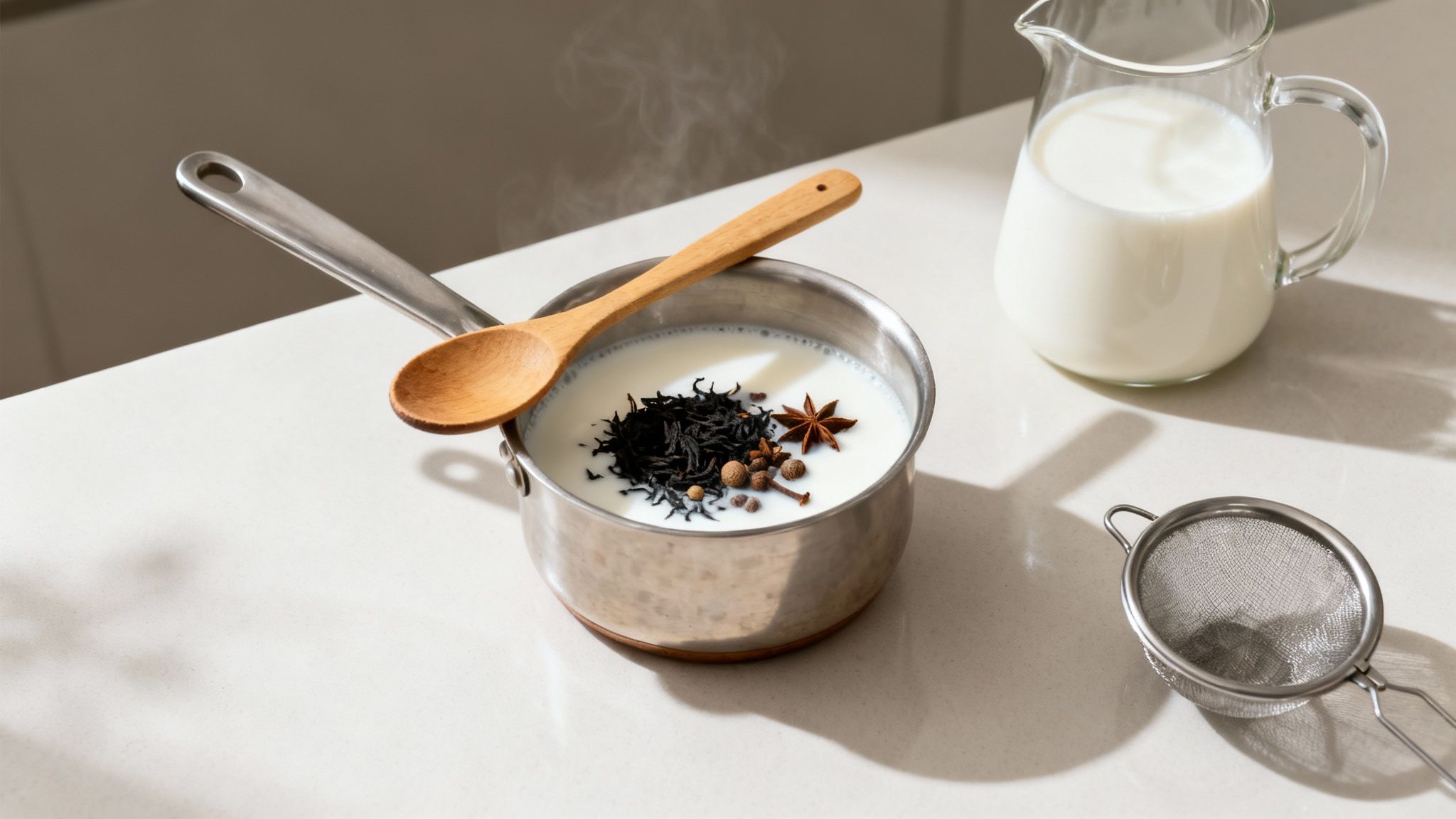
Ready to step into the role of your own chai wallah? Crafting a genuinely delicious cup of chai at home is far easier than you might think, and infinitely more rewarding than just dunking a tea bag. The real secret is in the traditional stovetop method, which patiently coaxes every last drop of flavour from the spices and tea leaves.
It’s all about gently simmering the ingredients together, letting the complex aromas of the spices fully infuse the milk and water. This slow dance of heat and time is what separates a truly authentic brew from a quick imitation. The result is a rich, balanced, and deeply satisfying drink that warms you from the inside out.
The Classic Stovetop Method
For the most authentic experience, all you really need is a saucepan and a little bit of patience. This simple, step-by-step process unlocks the true heart and soul of what chai is all about.
-
Awaken the Spices: Start by giving your whole spices (like cardamom pods and cloves) a gentle crush to release their essential oils. Pop them in a saucepan with water and some fresh ginger, then bring it all to a gentle simmer for about 5-10 minutes. Your kitchen will start to smell absolutely incredible.
-
Infuse the Tea: Now, add your loose-leaf black tea to the spiced water. Let this simmer for another 2-3 minutes. Try not to let it boil too long at this point, as that can draw out too much bitterness from the tea.
-
Add Milk and Sweetener: Pour in the milk and your sweetener of choice. Bring the mixture back to a simmer, stirring every now and then to stop a skin from forming. You want it hot, but not boiling over.
-
Strain and Serve: Once everything is heated through and beautifully combined, carefully strain the chai into your favourite mug or cup.
The real art of brewing chai is in the simmer. If you rush it, the spices never get a chance to fully bloom. Letting them gently infuse into the water and milk is the absolute key to achieving that signature layered and aromatic flavour.
Modern Convenience Meets Traditional Flavour
While the stovetop method is second to none, sometimes you just need a quality cup without all the fuss. High-quality pyramid tea bags or a pre-blended loose-leaf chai can be a fantastic shortcut. These options give the whole spices and quality tea leaves enough room to properly expand and infuse, getting you a rich flavour that’s much closer to the real thing.
For an even more detailed walkthrough, you can follow our complete spiced chai tea recipe for a foolproof brew every single time. And if you're looking to perfect your brewing and serving ritual, this helpful tea cup guide offers great insights into how different designs and materials can elevate the whole experience.
Uncovering the Health Benefits of Chai
Chai is so much more than just a comforting, fragrant brew. For centuries, its ingredients have been cornerstones of Ayurvedic medicine, prized for their ability to support wellbeing. It’s a perfect example of where incredible flavour and genuine function meet.
The black tea base alone is a fantastic starting point, packed with antioxidants called flavonoids. These are thought to be great for heart health, helping to manage things like blood pressure and cholesterol. A simple, delicious way to top up your antioxidant levels.
The Power of the Spice Rack
But the real heart of chai lies in its masala spice blend. This is where things get really interesting, as many of these spices are celebrated for their powerful natural properties, turning your daily cuppa into something that does you a world of good.
-
Soothing Digestion: Ginger, black pepper, and cardamom have long been go-to remedies for digestive support. Ginger is brilliant for calming nausea, while black pepper actually helps the body better absorb nutrients from food.
-
Anti-inflammatory Effects: You'll often find cinnamon and ginger in chai, both of which contain potent anti-inflammatory compounds. Enjoying these spices regularly can help to gently reduce inflammation throughout the body.
The real beauty of chai is how all the spices work together. It’s not about one single ingredient, but the synergy of the whole blend that creates such a balanced, beneficial brew.
A Mindful Boost
Beyond the physical benefits, the simple ritual of making and sipping a chai can be a wonderfully calming moment in a hectic day. The gentle warmth and invigorating aroma can help sharpen your focus while soothing your mind.
Plus, its moderate caffeine content gives you a gentle lift, not the jarring jolt you might get from coffee. This blend of antioxidant-rich tea and beneficial spices makes chai a brilliant addition to a healthy lifestyle.
To get into the nitty-gritty, you can learn more about chai tea health benefits in our dedicated guide. It’s a drink that truly looks after body and soul.
Your Chai Questions, Answered
Let's clear up a few of the most common questions that pop up when people start exploring the world of chai. Think of this as your quick-fire round to help you brew and sip with confidence.
How Much Caffeine Is In Chai?
Your average cup of masala chai, brewed with a proper black tea base, will have around 40-60mg of caffeine. That's roughly half of what you'd get in a similar-sized cup of coffee, which is why so many people love it for a gentle lift without the jitters.
Of course, this can shift a bit depending on the specific tea you use and how long you let it brew. If you're steering clear of caffeine altogether, look for a chai made with a rooibos base – it's a brilliant, flavourful alternative.
Is a Chai Latte the Same as Traditional Chai?
Not quite, though they are related. The chai latte you find in most cafés is a Western invention, born from the inspiration of traditional chai. It’s usually made by adding steamed, frothy milk to a pre-made chai syrup or a highly concentrated tea. The end result is a much milkier, sweeter drink where the spices are often more of a whisper than a shout.
The real magic of traditional masala chai happens on the stovetop. It's an infusion where loose-leaf tea, whole spices, milk, and water are all simmered together, allowing the flavours to marry into something wonderfully complex and robust.
This slow-simmer method is key to coaxing out the full depth of the spices, giving you a far more authentic taste of what chai is all about.
At Jeeves & Jericho, we're all about that authentic experience. It's why our Spiced Bombay Chai is blended with whole spices and high-quality loose-leaf tea – so you can brew a truly exceptional cup, the proper way.