


Step into the world of Indian tea, and you're stepping into a culture where a cup of chai is part of the daily rhythm, from the busiest city streets to the quietest mountain slopes. India gives us some of the world's most famous brews, a whole spectrum of flavours shaped by the unique patch of earth they come from. The big names you'll hear are Assam, Darjeeling, and Nilgiri, and each tells a very different story in the cup.
A Journey Through India's Tea Heritage
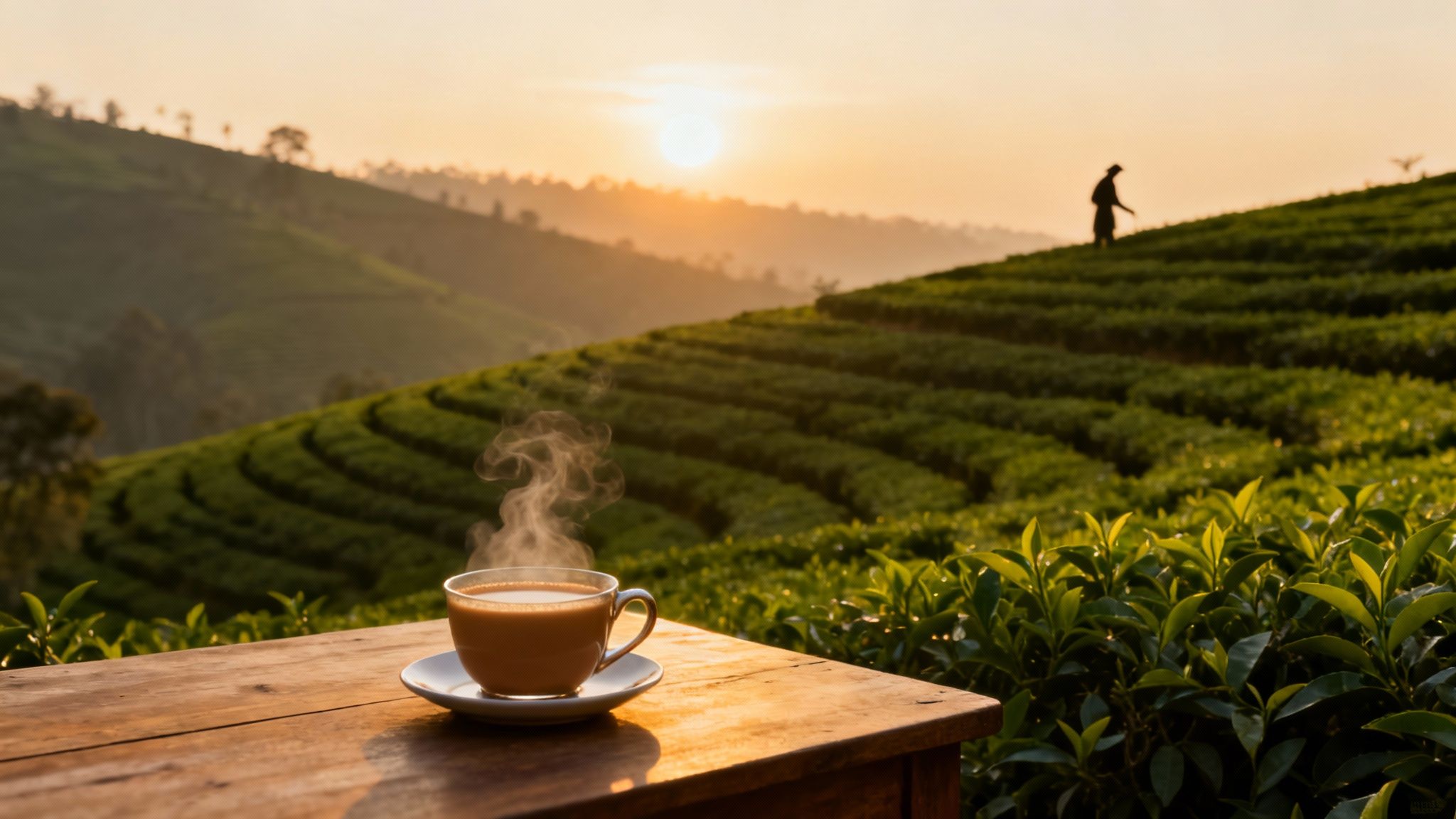
The story of Indian tea is one of deep roots and constant evolution. It starts with the native Camellia sinensis assamica plant, which grew wild in Assam long before it was cultivated, and has since grown into a true global giant. Today, India is the second-largest tea producer in the world—a fact that speaks volumes about its incredible growing conditions and generations of expertise.
Think of this guide as your personal tour through the vast, complex landscapes of Indian tea. We'll be travelling from the leaf to your cup, exploring the legendary regions that put Indian tea on the map and uncovering the stories that make each one so special. It’s all about connecting this incredible heritage with the craft of finding and brewing a truly great cup of tea.
What You Will Discover
We want to go beyond just listing off names and places. The goal is to give you a real, practical understanding of what makes each tea tick, so you can truly appreciate the subtle differences that make one brew so different from the next.
Here’s what we’ll get into:
- The Three Pillars: We’ll take a closer look at the big three—Assam, Darjeeling, and Nilgiri—exploring how their unique climates create such distinct flavour profiles.
- Processing Methods: You’ll see how different production techniques like Orthodox and CTC (Crush, Tear, Curl) can completely change a tea’s final taste and aroma.
- Cultural Significance: We’ll dive into the role of tea in everyday Indian life and hospitality, especially the beloved masala chai.
Our goal is to demystify the world of Indian tea, helping you move from simply drinking tea to truly experiencing it. By understanding the origins and craft, you can select and brew each cup with newfound confidence and appreciation.
This journey will reveal not just the different tea types in India, but the passion and tradition that make every single sip an experience.
The Three Pillars of Indian Black Tea
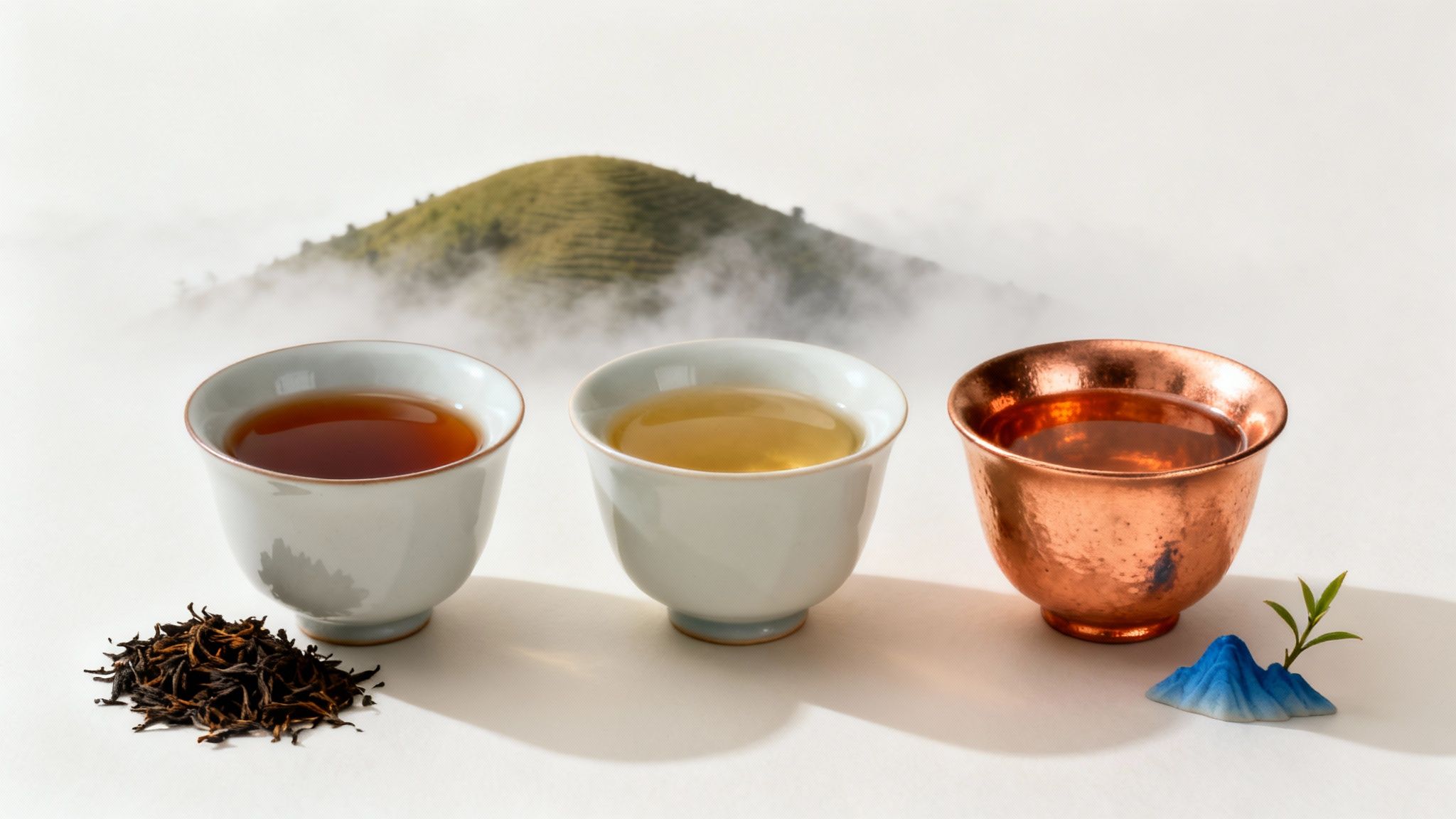
When you start to explore the world of Indian black tea, three names quickly rise to the top: Assam, Darjeeling, and Nilgiri. These aren't just places on a map; they are the undisputed titans of production, each defined by its unique terroir—that magical mix of soil, climate, and altitude that gives a tea its soul.
Think of them like different grapes from the same family vineyard. They share a common ancestry, but their individual personalities couldn't be more distinct. Understanding these three is the key to getting to grips with Indian tea, from the punchy, malty brews of the lowlands to the ethereal, floral notes found high in the mountains. This is where the story really begins.
Assam: The Bold Foundation
Our journey kicks off in the lush, rain-swept lowlands of the Brahmaputra River valley in Northeast India. This is the heartland of Assam tea, the powerhouse that forms the backbone of countless breakfast blends and the traditional base for a proper masala chai. The native Camellia sinensis var. assamica plant thrives here, producing big, bold leaves that brew a famously strong, full-bodied, and malty cup.
You can spot an Assam a mile off. It has a deep, reddish-brown colour and a robust flavour that can easily stand up to milk and sugar without getting lost. The taste often brings to mind malt, honey, and sometimes a hint of spice. It’s the wake-up call in a mug, the brew that gets you ready for the day.
Assam’s strength and rich flavour make it an absolute essential in the global tea market. It provides that powerful base that so many of us, especially in the West, have come to expect from a proper cup of black tea.
It’s this very robustness that makes Assam the go-to for invigorating morning blends. It’s rich, satisfying, and exactly what you need to get going.
Darjeeling: The Champagne of Teas
From the lowlands, we climb high into the misty, cloud-kissed foothills of the Himalayas. Here, tucked away at altitudes of up to 2,000 metres, you’ll find the beautiful tea gardens of Darjeeling. This region produces some of the most sought-after and priciest teas in the world, earning it the nickname, the 'Champagne of Teas'.
Unlike the hearty Assam plant, Darjeeling teas come from the smaller-leafed Camellia sinensis var. sinensis. The dizzying altitude, cool air, and unique soil slow down the growth of the tea bushes, which concentrates all those wonderful flavours in the leaves. The result is a tea that is incredibly delicate, light, and wonderfully aromatic.
A cup of Darjeeling is a world away from Assam. It brews a much lighter, golden or amber liquor, with a complex bouquet of floral and fruity notes. Its most prized characteristic is a distinct muscatel flavour—a sweet, tangy taste reminiscent of muscat grapes. It’s so fragrant and nuanced that it’s best enjoyed on its own, without any milk or sugar to get in the way.
Nilgiri: The Fragrant Southerner
Finally, our journey takes us south to the Western Ghats, to the rolling "Blue Mountains" of Tamil Nadu. This is the Nilgiri region, India's third major tea-producing area. While it might not have the global fame of Darjeeling or the sheer muscle of Assam, Nilgiri tea is a true gem with a personality all its own.
Grown at high altitudes, Nilgiri teas are wonderfully fragrant and brisk. They strike a perfect balance—less malty than an Assam, but more full-bodied than a delicate Darjeeling. The flavour is clean and bright, often with subtle fruity or floral undertones that make it exceptionally smooth and refreshing.
One of Nilgiri’s best-kept secrets is its versatility. It brews into a clear, bright liquor that rarely goes cloudy when it cools, making it a fantastic choice for iced tea. Its balanced character also means it plays well with others, adding a fragrant lift to blends without ever overpowering them. This consistency makes it one of the most reliable tea types in India.
For an even deeper dive into these and other varieties, be sure to check out our complete guide to black tea varieties.
Comparison of Major Indian Tea Regions
To really get a feel for the differences between these three pillars of Indian tea, it helps to see their key characteristics side-by-side. Each one shines in different situations and appeals to a different kind of tea drinker. This little table should help clear things up.
| Characteristic | Assam Tea | Darjeeling Tea | Nilgiri Tea |
|---|---|---|---|
| Flavour Profile | Bold, strong, malty, full-bodied | Delicate, floral, fruity, muscatel | Fragrant, brisk, smooth, subtly fruity |
| Aroma | Malty and earthy | Floral and grape-like | Floral and citrusy |
| Colour | Deep reddish-brown | Light golden or amber | Bright reddish-coppery |
| Best With | Milk and sugar | Plain | Plain, or with lemon/honey |
| Ideal For | Morning blends, masala chai | Afternoon tea, solo sipping | Iced tea, blending, all-day drinking |
Whether you're after a powerful kick-start to your morning or a delicate afternoon treat, one of these three regions has the perfect brew waiting for you.
How Tea Processing Shapes Your Brew
Ever wondered why a delicate Darjeeling tastes so different from a punchy Assam? They both come from the exact same plant, Camellia sinensis, after all. The real magic isn't just in the soil or the mountain air; it’s all down to the craft and science of how the leaves are processed after they’re plucked from the bush.
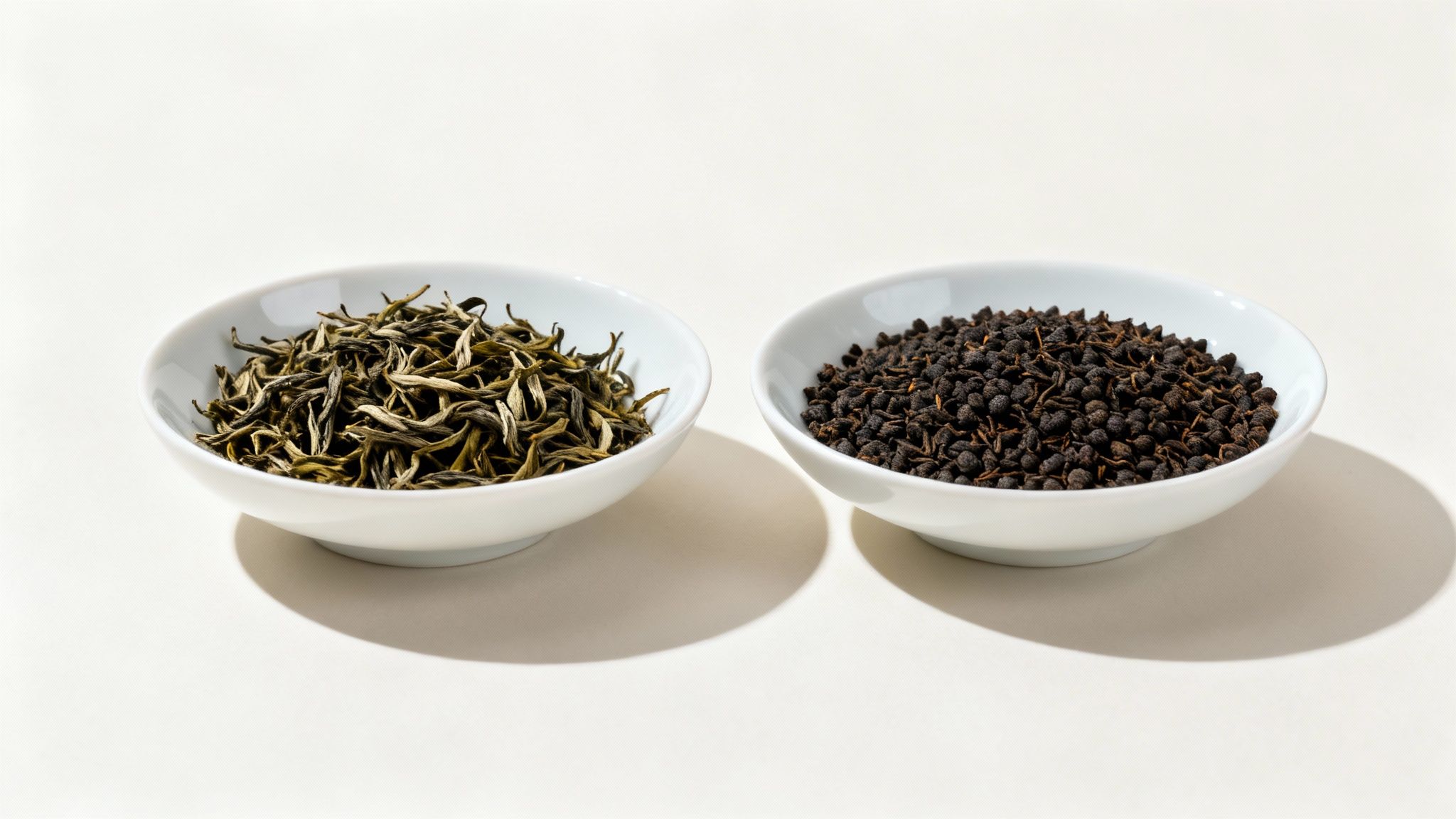
In India, two main methods shape the final character of black tea: the Orthodox method and the CTC method. You can think of it like the difference between a stonemason hand-carving a sculpture and a factory precision-moulding one. Both start with the same raw material, but the journey they take results in two completely different creations. Getting to know these two paths is the key to understanding the incredible diversity of tea types in India.
The Orthodox Method: An Artisan's Touch
The Orthodox method is the old-school, time-honoured technique. It’s all about preserving the grace and integrity of the whole tea leaf. This is a gentle, patient process: the leaves are withered, rolled, oxidised, and then carefully dried. The rolling stage is crucial – the leaves are twisted just enough to break their cell walls, releasing the enzymes that begin the oxidation process.
It’s this delicate handling that coaxes out the nuanced, complex flavours that make premium teas so special.
- Flavour Profile: Orthodox teas are known for their layered and subtle notes. Because the leaves are mostly intact, they unfurl slowly in hot water, releasing their flavour compounds gradually. The result is a cup with elegant floral, fruity, or the famous muscatel character.
- Best For: Anyone who loves to sip and savour a tea on its own will appreciate the complexity here. Darjeeling teas are made almost exclusively this way, which is exactly why they’re so aromatic and prized around the world.
This method is less about force and more about finesse, gently unlocking the sophisticated personality hidden inside every leaf.
The CTC Method: Power and Purpose
Then we have the CTC method, which stands for Crush, Tear, Curl. It’s the complete opposite of the gentle Orthodox approach. Developed during the industrial revolution to ramp up production, this is a fully mechanised process designed for efficiency and consistency. Freshly picked leaves are fed through a series of sharp-toothed rollers that do exactly what the name says: crush, tear, and curl them into tiny, uniform pellets.
This aggressive treatment ruptures the leaf cells instantly, exposing everything to oxygen and triggering a very fast, very full-on oxidation. The result is a tea built for power.
CTC processing is the driving force behind the global tea bag industry. It produces a tea that infuses in a flash, giving a dark, strong brew with a consistent flavour – the perfect, robust base for milky drinks like a classic masala chai.
Those tiny, dense pellets have a huge surface area, which is why a CTC tea brews so quickly and delivers such a satisfying kick. While it might not have the delicate subtleties of an Orthodox tea, it more than makes up for it with a bold, malty, and brisk flavour that’s perfect for a get-up-and-go morning brew. Many Assam teas are processed this way, which is what gives them their signature strength and deep, rich colour.
Discovering India's Other Tea Treasures
While India is rightly famous for its strong, characterful black teas, the country's tea gardens are quietly producing a whole host of other treasures. In places like Darjeeling and Nilgiri, skilled tea masters are turning their generational expertise to crafting exceptional green, white, and oolong teas. These less-oxidised varieties reveal a much more delicate, nuanced side to Indian tea.
Stepping away from the familiar world of black tea opens up a brilliant new spectrum of flavours. And these aren't just copies of Chinese or Japanese styles; they have a unique character all their own, shaped by the Indian terroir. Think surprisingly robust green teas, exquisitely subtle whites, and wonderfully complex oolongs that tell a story of innovation rooted in deep tradition.
The Rise of Indian Green Tea
Indian green tea is really starting to make a name for itself, both at home and abroad. While many other countries steam or pan-fire their green teas, Indian estates often use a gentle steaming process that stops oxidation while keeping a distinctly vegetal, sometimes nutty character. The flavour is often bolder and more astringent than many East Asian greens, which makes it a fantastic choice if you enjoy a more vigorous cuppa.
This trend is really taking off with younger drinkers here in the UK. Recent data shows that 32% of Gen Z daily tea drinkers now choose green tea, a big jump from the national average of 20%. It’s a shift that seems tied to a growing focus on health and wellness, with 'clean' caffeine sources becoming much more sought after. You can dive deeper into these consumer trends over on YouGov.
The Delicate Art of Indian White Tea
White tea is the very definition of minimal processing. Only the youngest, most tender buds and leaves are picked, usually in the very early spring. They're then carefully withered and dried in natural sunlight, a simple method that prevents almost all oxidation. This gentle touch preserves the fine, downy silver hairs on the buds that give the tea its name.
The result? A brew of incredible subtlety and elegance.
- Flavour Profile: Indian white teas, especially those from Darjeeling, are prized for their delicate, sweet, and often fruity notes. You might find hints of honey, apricot, or a light floral bouquet.
- Brewing: This is a tea that needs a bit of care. Use water that’s well below boiling (around 80°C) and a short steep to avoid overwhelming its fragile flavour.
Because it’s so lightly handled, white tea is celebrated for holding onto a high concentration of antioxidants. It offers a gentle, refined experience—perfect for a quiet moment of reflection.
Exploring Indian Oolong Teas
Oolong tea sits in that fascinating middle ground between green and black. It's partially oxidised, a process that can be stopped at any point from around 10% to 80%. This huge range allows for an incredible diversity of flavours, and Indian producers are creating some truly remarkable examples.
Estates in Darjeeling, in particular, are producing lightly oxidised oolongs that bring out the region’s signature floral and muscatel notes, but with an added layer of creamy complexity. These teas are often meticulously hand-rolled, a process that coaxes out intricate aromas of stone fruit, orchids, and honey. An Indian oolong offers a sophisticated and evolving flavour journey in every single cup, showing just how versatile the tea plant can be in the hands of a skilled artisan.
The Cultural Heartbeat of Masala Chai
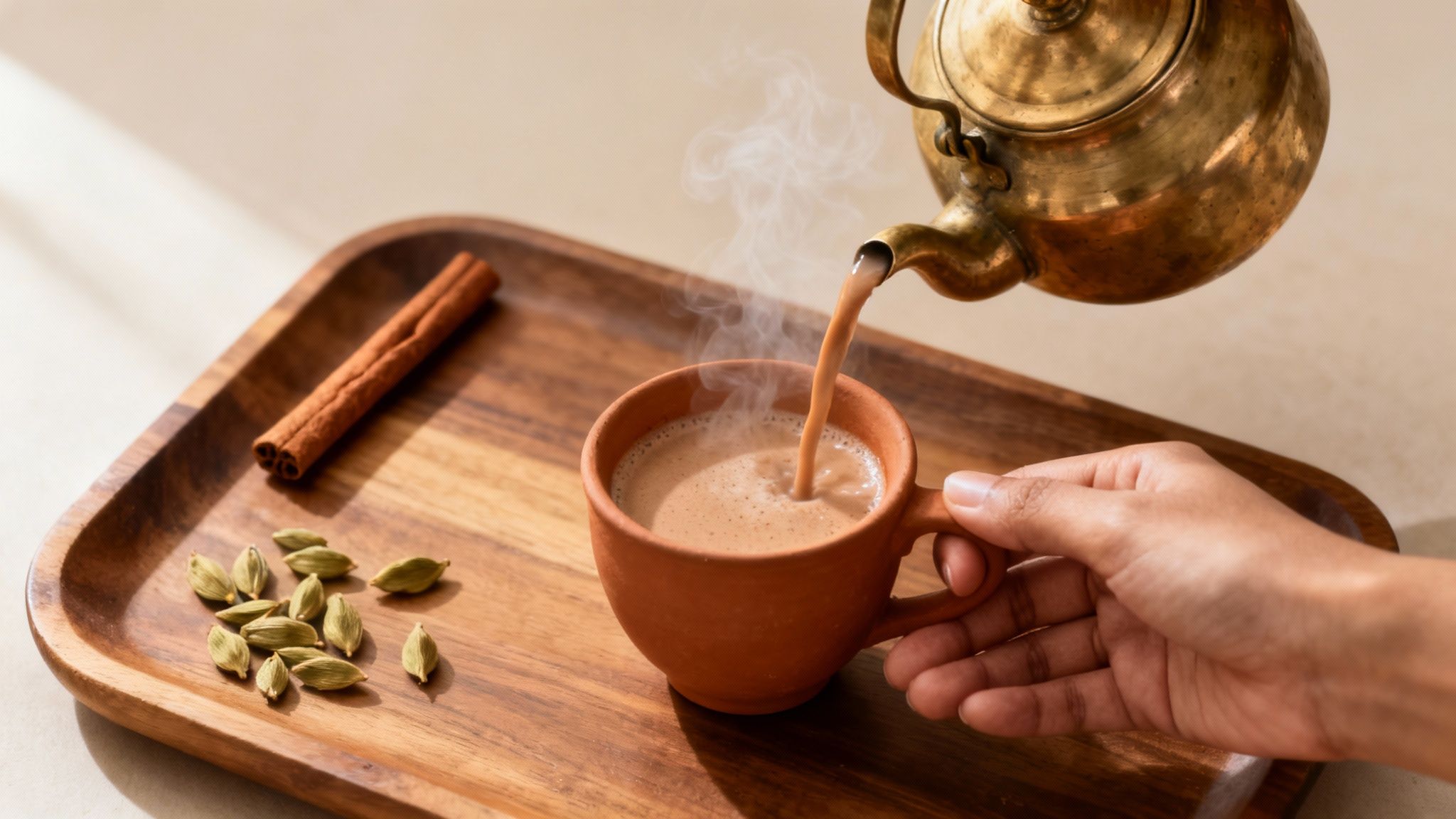
To really get to the heart of Indian tea, you have to talk about masala chai. It's so much more than just a drink; it's an institution, a ritual woven into the very fabric of daily life. Chai is the first thing offered to a guest, the fuel for late-night chats, and the comforting punctuation mark in the day for millions.
In India, chai signifies hospitality and community. From the bustling street corners where "chai wallahs" pour steaming cups to quiet family kitchens, the simple act of making and sharing chai is a cherished tradition. It’s a great leveller, bringing people from all walks of life together for a shared moment of warmth.
This beloved brew is a masterclass in balance—a symphony of strong, spicy, creamy, and sweet notes all working in perfect harmony. It’s a sensory experience that captures the vibrant spirit of India in a single cup.
What Goes Into a Perfect Chai?
At its core, a proper masala chai needs a powerful black tea base. The go-to choice is almost always a strong CTC Assam. You need that robust, malty character to provide the backbone, giving the brew enough tannic structure to hold its own against the milk and spices without getting lost.
This strong tea foundation is then brought to life with a blend of aromatic spices, known as a "masala." Every family and chai wallah guards their own secret recipe, but a few core ingredients form the soul of the brew.
- Cardamom: This is the star for many, bringing a sweet, floral, and slightly minty aroma that is central to the chai experience.
- Ginger: Adds a pungent, fiery heat that cuts beautifully through the creaminess of the milk.
- Cloves: Contribute a sweet, almost medicinal warmth with just a touch of astringency.
- Cinnamon: Lends a comforting, woody sweetness that rounds out the whole spice blend.
- Black Peppercorns: Offer a sharp, piquant kick, providing a brilliant contrast to the sweetness.
These spices are simmered with the tea, milk, and a sweetener (often sugar or jaggery) to create something rich, fragrant, and deeply satisfying. To see how it all comes together, you can read our complete guide on the origins of chai tea from India.
Fascinating Regional Twists
While the classic recipe is everywhere, India’s incredible culinary diversity has given rise to countless regional takes on chai. These local variations offer a fascinating glimpse into the different flavour preferences across the country, showing how one simple concept can be reinterpreted in endless, delicious ways.
Head to Kashmir, and you might find "Noon Chai," a savoury, pink-hued tea made with salt, baking soda, and green tea leaves. In Hyderabad, the creamy and decadent Irani Chai is a local legend, made by brewing a thick tea decoction separately from milk that’s been boiled for hours until it reduces and caramelises.
The real beauty of chai lies in its adaptability. It’s a canvas for regional tastes, with each variation telling a unique story about its local culture, climate, and history.
Other regional specialities might include fennel seeds for a sweet, anise-like note, or even lemongrass for a zesty, citrusy lift. This flexibility is what keeps chai so exciting—a timeless classic that is constantly being reinvented.
For any café owner, mastering a signature chai blend can be a huge draw. It offers an authentic, comforting experience that customers really connect with. Whether you stick to a traditional recipe or get creative with a house blend, the secret is to honour the balance of strong tea, fresh spices, and creamy milk that makes masala chai one of the most beloved tea types in India and, frankly, the world.
A Practical Guide to Brewing and Pairing Indian Teas
Knowing your Assam from your Darjeeling is one thing, but brewing them correctly is where the magic really happens. To get the best out of your tea leaves, you have to treat them right. Think of it like a recipe – the water temperature, how long you let it steep, and the amount of leaf all have to work in harmony to create that perfect flavour.
A big, gutsy Assam, for instance, needs a bit of encouragement. It loves water just off the boil (around 95-100°C) for a good 3-5 minutes to draw out all that deep, malty character. A delicate Darjeeling first flush, on the other hand, requires a much softer touch. Cooler water (think 80-85°C) and a shorter steep of 2-3 minutes will protect its fragile floral notes and stop it from turning bitter.
Perfect Pairings for Your Palate
Pairing tea with food is a game-changer. It can lift a simple meal into something truly memorable, creating a conversation between the flavours on your plate and in your cup. The trick is to either complement or contrast. A strong, brisk Assam is the classic partner for a full English breakfast for a reason; its sharp edge cuts right through the richness of sausages and eggs.
A fragrant, crisp Nilgiri, with its clean profile, is wonderful with lighter bites. Try it alongside a lemon drizzle cake or a creamy panna cotta.
The art of pairing is all about balance. A delicate tea can be easily drowned out by a powerful dish, while a big, bold brew can stand up to and even enhance rich foods.
For a timeless classic, you can't go wrong with a light Darjeeling served with scones and clotted cream. If you fancy diving deeper, exploring curated afternoon tea experiences is a fantastic way to immerse yourself in the culture.
Brewing Your Best Cup
To get the most from your loose-leaf tea, here are a few simple starting points. For a more detailed walkthrough, you can have a look at our complete guide on how to brew loose leaf tea.
- Assam: Use 1 tsp of leaves per 200ml cup. Its bold flavour is the ideal backbone for a traditional masala chai, as it won't get lost amongst the milk and spices.
- Darjeeling: Go for 1 tsp of leaves per cup. Its subtle complexities are best appreciated on their own, so try it black to let those incredible aromatics really sing.
- Nilgiri: Again, 1 tsp of leaves per cup will do it. This tea's versatile character makes it a brilliant choice for iced tea, as it stays bright and clear even when chilled.
Still Curious About Indian Tea?
We get a lot of questions about the wonderful world of Indian tea, so we've put together a few of the most common ones. Hopefully, these will clear things up and help you get the most out of your next brew.
What Is the Main Difference Between Assam and Darjeeling Tea?
It really all comes down to where they grow and the flavour that creates. Assam comes from the low-lying plains, which gives it that classic bold, malty, full-bodied character and deep colour. It's the powerhouse of the tea world, perfect for a strong breakfast tea or as the base for masala chai.
Darjeeling, on the other hand, is a high-altitude tea from the Himalayan foothills. This unique environment results in a much more delicate, floral, and complex brew. It’s famous for its distinctive muscatel (think muscat grape) note. So, if Assam is your rich and dependable friend, Darjeeling is the aromatic, elegant, and slightly mysterious one.
Is Masala Chai Always Made with Black Tea?
For a truly authentic masala chai, yes, it has to be a strong black tea. Traditionally, that means a gutsy CTC Assam. This isn't just for show; you need a robust tea that can hold its own against all those beautiful spices and creamy milk.
Without that strong black tea base, the final drink would taste thin and the spices would completely take over. The tannins in the tea are crucial for balancing the sweetness and creaminess, creating that perfect, harmonious cup. You might see herbal infusions called 'chai' these days, but the real deal starts with a proper black tea.
Which Indian Tea Has the Most Caffeine?
If you're looking for a proper pick-me-up, Assam black tea is usually your best bet. The tea plant it comes from, Camellia sinensis var. assamica, is naturally higher in caffeine than its Chinese cousin, which is used for Darjeeling.
The way it's processed matters, too. The popular CTC method creates small, hard pellets that infuse very quickly, releasing a good jolt of caffeine into your cup. A strong brew of Assam will almost always have more caffeine than a delicate cup of Darjeeling, and both will have much more than Indian green or white teas.
At Jeeves & Jericho, we believe that knowing where your tea comes from makes every sip more meaningful. You can explore all our ethically sourced, full-leaf teas and bring the true taste of India into your cup at home. Find your new favourite brew at https://www.jeevesandjericho.com.