


Let's clear up a common misconception straight away: white tea is not caffeine-free. It's a myth we hear all the time. A typical 240ml cup usually contains around 15-30mg of caffeine. While that’s quite a bit less than your morning coffee, it’s just enough to give you a gentle, welcome lift.
So, How Much Caffeine Are We Talking About?
Many people assume that because white tea is so delicate and minimally processed, it must be naturally low in caffeine. And while it is on the lower end of the scale, the real story is a bit more complicated than just "less processing means less caffeine."
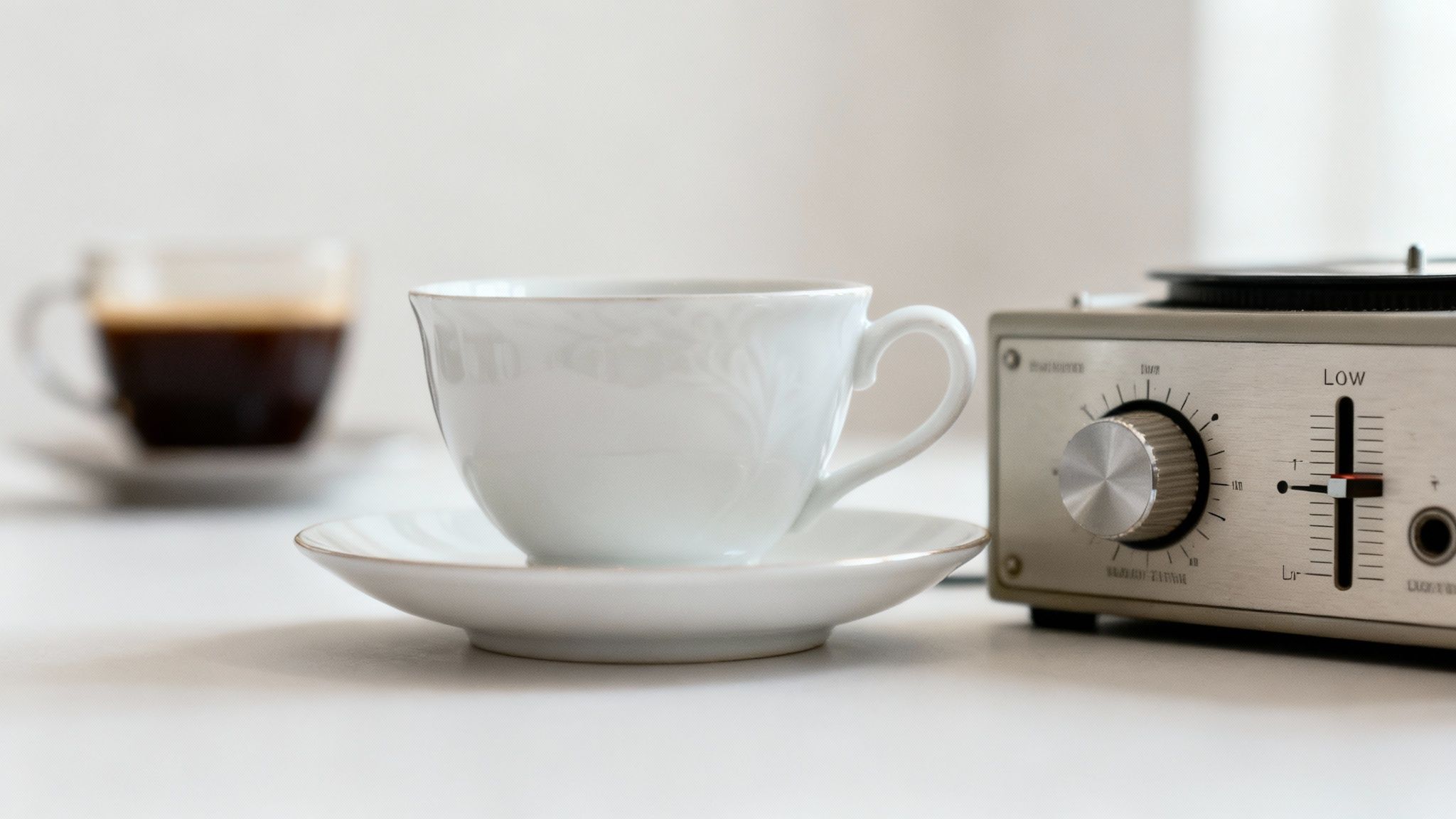
A good way to think about it is like the volume on a stereo. All true teas come from the same plant, Camellia sinensis, which naturally contains caffeine. Coffee and black tea are like turning the volume way up—a powerful jolt. Green tea sits somewhere in the middle.
White tea, on the other hand, is the gentle background music of the tea world. It’s definitely there, but it’s subtle, calming, and never overpowering.
The real magic of white tea is in its balance. It offers just enough of a lift to bring about a state of calm alertness, without the jittery rush you might get from stronger drinks.
Caffeine at a Glance White Tea vs Other Beverages
To really put things into perspective, it helps to see how white tea stacks up against other popular drinks. Here’s a quick comparison of the typical caffeine you’ll find in a standard 240ml (8oz) cup.
| Beverage | Typical Caffeine Range (mg) |
|---|---|
| White Tea | 15–30 |
| Green Tea | 25–45 |
| Black Tea | 40–70 |
| Brewed Coffee | 95–200 |
As you can see, the difference is pretty stark. It’s easy to understand why white tea has become such a popular choice for those looking for a gentler daily ritual. Here in the UK, it’s a brilliant alternative for anyone wanting to cut back without going cold turkey on caffeine.
In fact, with NHS guidelines recommending no more than 400mg of caffeine a day for most adults (and just 200mg for pregnant women), a lovely cup of white tea fits perfectly into a balanced routine.
But remember, that 15-30mg figure is just a starting point. The exact amount in your cup is never a fixed number—it can change based on a whole host of fascinating factors, which we're about to dive into. If you're curious about the wider world of tea, have a look at our complete guide to caffeine content in teas.
What Really Determines Caffeine in White Tea
While that typical 15-30mg figure gives us a decent starting point, it barely scratches the surface. The final caffeine hit in your cup isn't some fixed number; it's the result of a fascinating journey that starts long before the leaves even see hot water.
Think of it like winemaking. The grape variety, the soil it grows in, and the time of harvest all shape a wine's final character. It’s much the same with tea. A handful of key variables come together to determine the caffeine profile, turning each brew into a unique experience. Understanding these helps explain why one white tea might feel quietly uplifting, while another gives you a more noticeable buzz.
The Tea Plant's Own Defence Mechanism
The most important factor is the tea plant itself, Camellia sinensis. Caffeine isn't there for our benefit—it's the plant's natural insecticide. It produces caffeine to discourage insects from munching on its tender new growth.
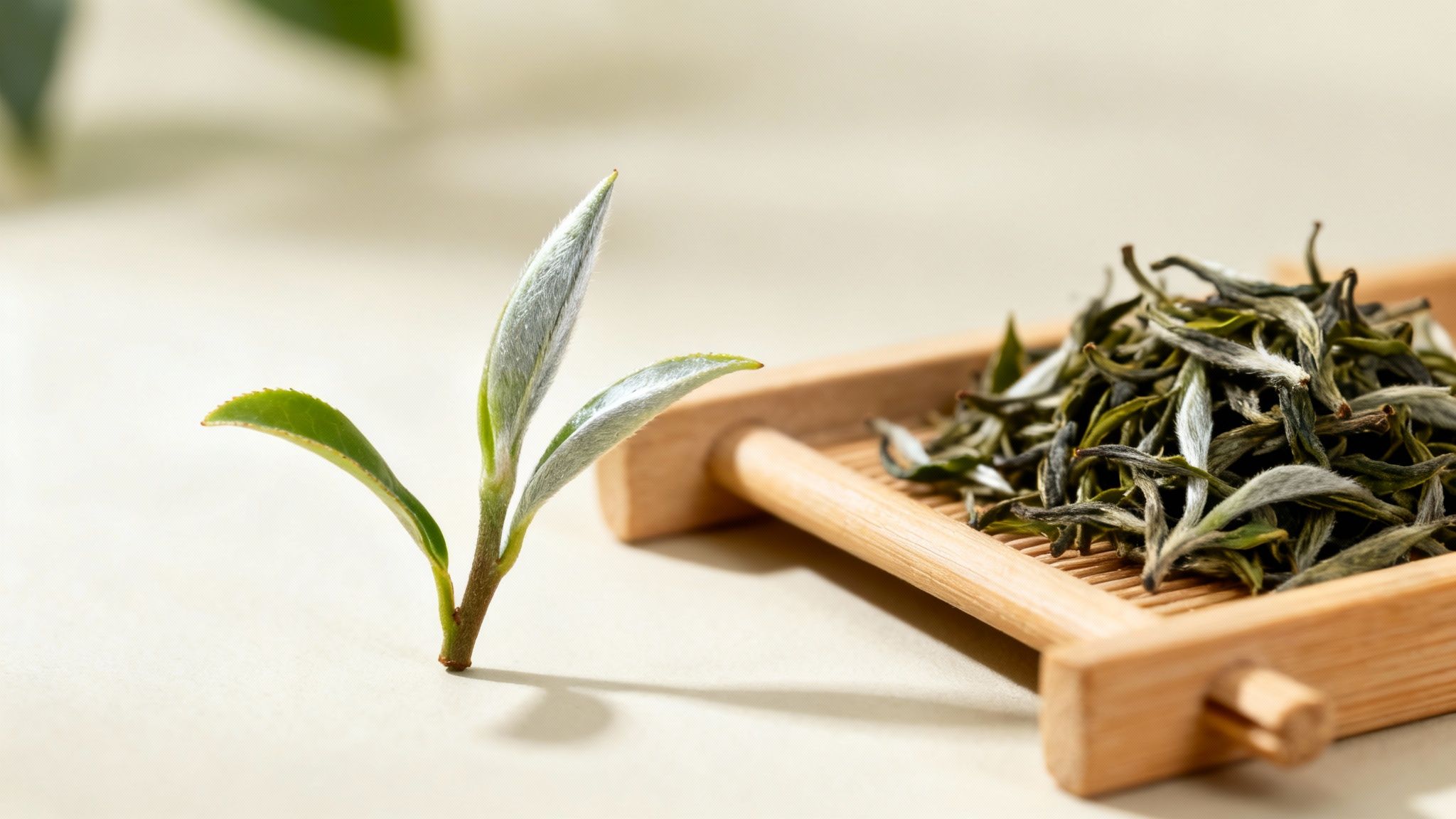
This biological defence directly influences how much caffeine ends up in your white tea. The youngest, most delicate buds and leaves are the most vulnerable to pests. To protect them, the plant sends most of its caffeine right to these new shoots. These are the very parts prized for high-quality white teas like Silver Needle.
It's a brilliant paradox of nature: the most delicate and prized parts of the tea plant are often the most potent in caffeine. The plant invests its protective energy where it matters most—in its newest growth.
This explains one of the biggest myths about white tea. Many people assume that because a tea like Silver Needle is made only from downy, unopened buds, it must be low in caffeine. In reality, the opposite is often true. Those buds are packed with the plant’s natural defences, making them surprisingly robust in caffeine content.
Cultivar and Leaf Age: The Genetic Blueprint
Just as there are countless varieties of apples, there are thousands of tea plant cultivars, each with its own genetic fingerprint. Some are naturally inclined to produce more caffeine than others. This is why a white tea from Fujian, China, might have a completely different caffeine level than one grown in Sri Lanka, even if they're processed in the exact same way.
On top of that, the age of the leaf at harvest is absolutely crucial.
- Buds (Tips): As we've seen, these contain the highest concentration of caffeine. Teas made exclusively from buds, like Silver Needle, have the potential for much higher caffeine levels.
- Young Leaves: The first couple of leaves just below the bud also have plenty of caffeine, though usually a bit less than the bud itself. Teas like White Peony (Bai Mu Dan), which use a bud and the top two leaves, tend to have a more moderate, blended caffeine profile.
- Mature Leaves: Older, tougher leaves further down the stem contain far less caffeine. These are almost never used for premium white teas.
This natural variation is a huge part of what makes exploring different white teas so rewarding. To get a broader picture of how this works across all tea types, you can check out our general guide on whether tea has caffeine.
Processing: The Gentle Touch
While the plant sets the stage, the way the tea is processed plays a supporting role. The defining feature of white tea is its minimal processing—it’s essentially just withered and dried. This gentle approach preserves the natural state of the leaves, including their original caffeine content.
Unlike black tea, which undergoes heavy oxidation that fundamentally changes its chemical makeup, white tea's light touch means its caffeine levels remain largely unchanged from how they were on the plant. This is why the choice of cultivar and which part of the plant is picked are so much more important than the processing itself.
Here in the UK, this is often misunderstood, with many still wrongly assuming that a pale-coloured brew means a low-energy drink. British sources now confirm that white tea's caffeine can range anywhere from 6-75mg per 250ml cup. Bud-heavy varieties pack a stronger punch, highlighting that those downy buds hoard extra caffeine to fend off pests. It's a clear reminder that the colour of your tea is no indicator of its kick.
Debunking the Biggest White Tea Caffeine Myths
The world of tea is steeped in tradition, but along with it comes a fair few myths. When it comes to white tea and caffeine, there are a couple of persistent misunderstandings that often cloud the picture. It’s time to clear the air.
By far the most common assumption is that less processing automatically means less caffeine. On the face of it, this makes a certain kind of sense. White tea is the most gently handled of all true teas—it’s simply withered and dried. But this delicate process doesn’t actually remove any caffeine; it just preserves the leaf in its most natural state.
All the caffeine is already right there in the leaf when it's plucked from the Camellia sinensis plant. Because white tea isn't oxidised, its chemical profile remains almost completely untouched. This means the caffeine level in your cup is incredibly close to what was in the fresh leaf on the bush, making the part of the plant that's picked far more important than how it's processed.
The Myth of the Pale Brew
Another old chestnut is that the colour of a tea tells you how much caffeine is in it. People often see the beautiful, pale golden liquor of a white tea and assume it must be a bit on the weak side. Nothing could be further from the truth.
That light colour is a direct result of avoiding oxidation. When tea leaves are rolled or bruised, enzymes react with oxygen and turn them dark, which is exactly what happens with black tea. White tea leaves are handled so carefully that this process is sidestepped, preserving their delicate appearance and flavour.
Caffeine itself is completely colourless and dissolves easily in water. This means the depth of colour in your cup has almost no connection to its kick. A pale brew can pack just as much punch as a dark one.
It’s a crucial point for any tea lover to grasp. Judging a tea’s caffeine by its colour is like judging a book by its cover—you're missing the real story. The things that truly matter are the plant’s genetics and which specific leaves are chosen for the harvest.
Setting the Record Straight with Science
For years, these myths have guided tea drinkers, but modern science tells a very different story. In fact, some of the most prized and delicate white teas can have just as much caffeine as a robust black tea. It all comes back to the plant's natural defence mechanism—the youngest, most tender buds are packed with the most caffeine to ward off hungry insects.
This isn't just a theory; it’s been proven. Pioneering research back in the 2010s at an Oxford Brookes University lab tested a range of white teas available right here in the UK. The results were eye-opening. They clocked Silver Needle and White Peony at 25-46mg of caffeine per 150ml cup, a range that put them squarely in the same league as certain Yunnan black teas. It proved once and for all that the type of leaf trumps the oxidation myth every single time. You can read more about these fascinating tea caffeine findings and how different teas stack up.
Ultimately, knowing the truth about caffeine in white tea helps you make better choices. So, forget the old tales about processing and colour. Instead, pay attention to where the tea comes from, what part of the plant is used (buds vs. leaves), and—most importantly—how you brew it. That's how you'll find your perfect cup.
How Your Brewing Method Puts You in Control
The story of your white tea’s caffeine content doesn't end when the leaves are picked and packed. In fact, a crucial chapter is about to be written by you. You, the brewer, have the final say on just how much of a kick your cup delivers.
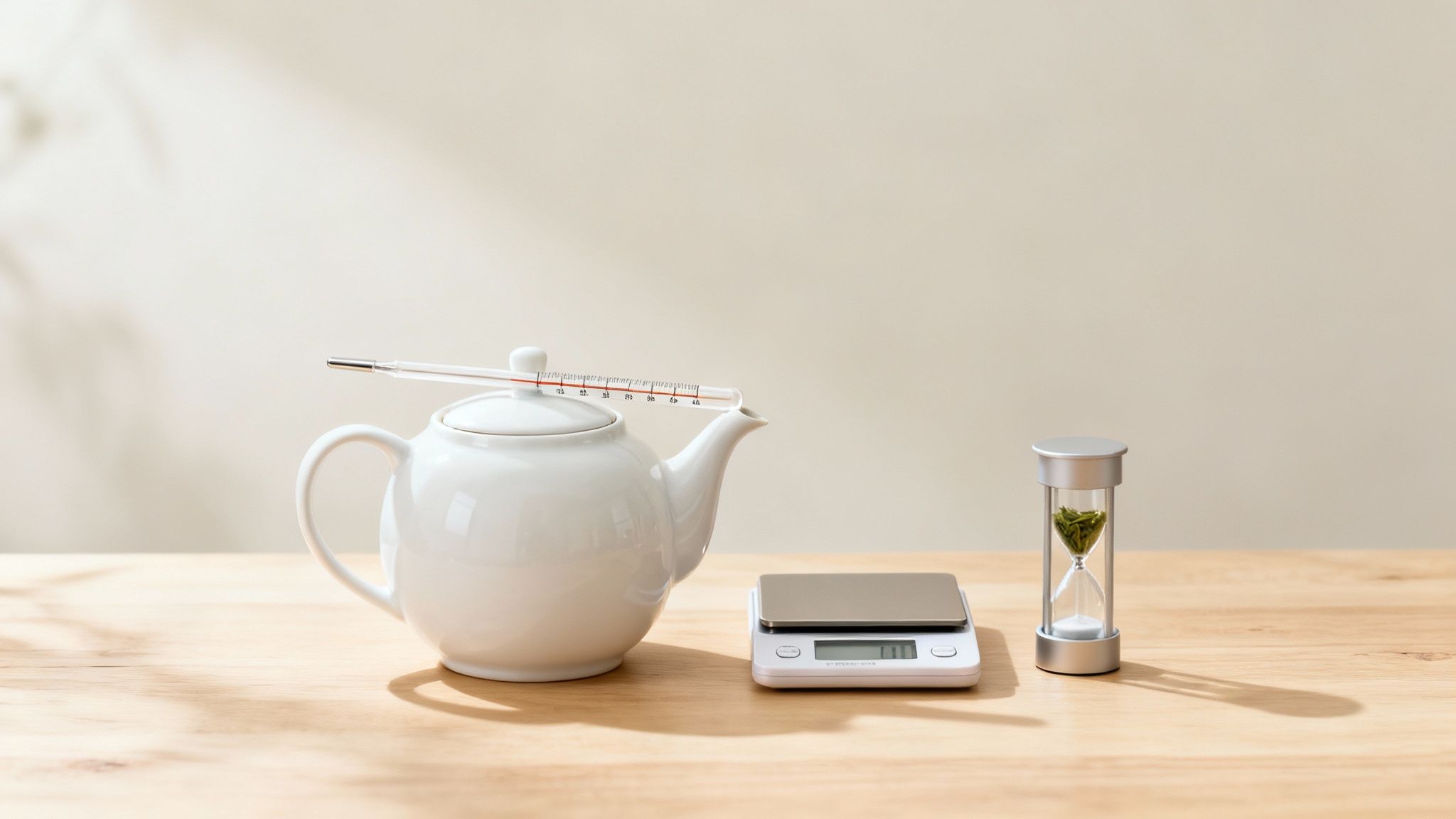
Think of it like being the conductor of an orchestra. The tea leaves are your musicians, but your kettle, timer, and scales are the baton you use to shape the final performance. By tweaking just a few simple things, you can craft a brew that’s perfectly in tune with your mood, whether you need a gentle start to the day or a soothing, quiet cup for the evening.
The Temperature Dial
Your kettle is arguably the most powerful tool you have for managing caffeine. Caffeine is a soluble compound, and it dissolves into water much more readily when things get hot. A simple adjustment of the temperature can make a world of difference to your final brew.
For a milder, lower-caffeine infusion, go cooler. Brewing with water around 75-80°C (167-176°F) will gently coax out the delicate, nuanced flavours of the white tea without pulling out quite so much caffeine. It’s the perfect setting for a relaxing afternoon.
If you’re after a bit more of a lift, pushing the temperature up towards 85°C (185°F) will extract more caffeine and create a more robust cup. Just be careful not to hit boiling point, as that can easily scorch the delicate leaves and leave you with a bitter taste.
Mastering the Clock
Right alongside temperature, the time you let your tea steep is another critical dial you can turn. The longer the leaves mingle with the water, the more caffeine they’ll release. It's a pretty direct relationship, which gives you a wonderfully precise way to customise your drink.
A quick steep of just 1-2 minutes will give you a lighter-bodied tea with a noticeably lower caffeine hit. This is a brilliant technique if you're sensitive to caffeine or fancying a cup later in the day. You’ll still get that beautiful aroma and flavour, just without the jolt.
For a fuller-bodied cup and a more pronounced caffeine boost, let it brew for 3-5 minutes. This gives the soluble compounds, including caffeine, more time to dissolve fully, resulting in a richer, more potent drink. If you want to dive deeper into infusion times, our guide on how long to brew tea has you covered.
The Leaf-to-Water Ratio
The last piece of the puzzle is perhaps the most straightforward: how much tea you actually use. It stands to reason that more leaves in the pot means more potential caffeine in the cup. If you usually use a heaped teaspoon, try using a little less for a gentler infusion.
This is especially handy for fluffy teas like a Silver Needle or White Peony, where it’s easy to misjudge the volume. Using a small kitchen scale to weigh out around 2-3 grams per 240ml cup is a great way to ensure consistency and gives you yet another way to finely tune the strength and caffeine.
Here's a simple guide to help you put all this into practice and craft the perfect cup for any occasion.
Brewing for Your Desired Caffeine Level
| Goal | Water Temperature | Steep Time | Expected Outcome |
|---|---|---|---|
| Less Caffeine | Cooler (75-80°C) | Shorter (1-2 mins) | A delicate, nuanced brew with a gentle lift. |
| More Caffeine | Hotter (80-85°C) | Longer (3-5 mins) | A richer, more robust cup with a noticeable energising effect. |
Ultimately, your control over these three elements—temperature, time, and tea quantity—is the key to unlocking a truly personal tea experience. You move from simply making tea to crafting it.
Choosing the Right Jeeves & Jericho White Tea
It’s one thing to know the science behind caffeine in white tea, but the real fun starts when you put that knowledge into practice. Let’s connect all these ideas to the wonderful world of flavour and experience, and find the perfect Jeeves & Jericho white tea for you.
Every tea has its own story, and its caffeine character is a key part of the plot. Whether you fancy a gentle morning lift or a calming evening ritual, knowing which leaves are in your cup helps you make a choice that’s right for the moment. At Jeeves & Jericho, we’re committed to sourcing exceptional, high-quality teas, making sure every single sip is a remarkable one.
We carefully select our teas not just for their exquisite taste but for their unique character. This means you can apply everything you've just learned about cultivars, leaf age, and caffeine to our own curated collection.
Silver Needle: A Delicate and Potent Choice
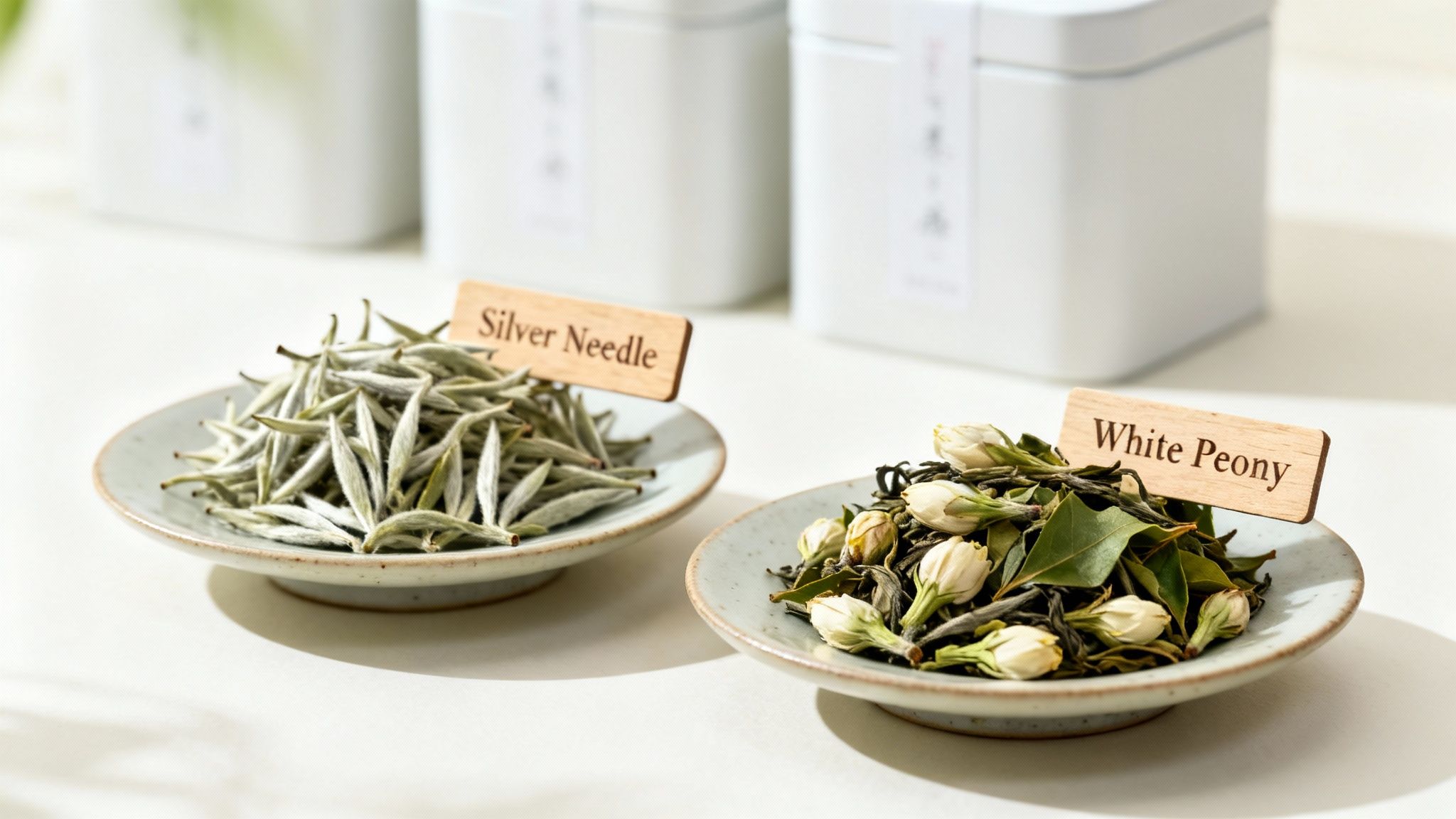
Our Silver Needle (Bai Hao Yin Zhen) is the very picture of elegance. Made exclusively from the youngest, unopened buds of the tea plant, it’s the purest form of white tea you can find. These silvery, downy buds are treasured for their delicate, sweet flavour profile, with lovely notes of honeydew and a smooth, velvety texture.
As we've covered, these young buds are where the tea plant concentrates its natural defences—including caffeine. This means that despite its gentle appearance, our Silver Needle can pack a more pronounced, clean energy boost. It’s the perfect choice for a morning or early afternoon when you want focus and clarity without the jolt of coffee.
Think of Silver Needle as a source of focused potential. Its caffeine is present yet refined, offering a state of calm alertness that sharpens the senses. It’s an ideal companion for creative work or quiet contemplation.
White Peony: A Nuanced and Balanced Brew
For those who prefer a slightly more complex and full-bodied flavour, our White Peony (Bai Mu Dan) is an excellent choice. This tea is crafted from a blend of a single terminal bud and the top two leaves from the tea shoot. This combination creates a beautiful brew with a golden hue and a wonderfully nuanced taste.
The inclusion of young leaves alongside the bud results in a more moderate and balanced caffeine profile. You can expect floral notes, hints of apricot, and a slightly richer body compared to the singular delicacy of Silver Needle.
This makes White Peony a wonderfully versatile tea. It has enough of a gentle lift to be enjoyed in the morning but is also mellow enough for a mid-afternoon pause. It strikes a beautiful balance between the potency of the bud and the subtlety of the leaf.
Choosing between them really comes down to what you’re looking for in terms of taste and effect:
- For a brighter, clearer lift and a delicate flavour: Choose our Silver Needle.
- For a more rounded, complex taste and a moderate, balanced effect: Opt for our White Peony.
By understanding the nature of each tea, you can tailor your choice to the moment. You're no longer just picking a tea; you're choosing an experience—the perfect partner for your day, confident in the quality and character of every single leaf.
White Tea and a Healthy Lifestyle
So, beyond the numbers and the science, where does a cup of white tea actually fit into a healthy, modern life? For most people, it’s far more than just a hot drink. It’s a small ritual, a quiet moment that’s as good for the mind as it is for the body. It’s a conscious choice for a gentler way to live and drink.
This is a choice that sits comfortably within UK health guidelines. The NHS suggests most adults cap their daily caffeine at around 400mg. When you consider a typical cup of white tea has just 15-30mg, you can see how easy it is to enjoy a cup or two without a second thought, leaving plenty of headroom for anything else.
That low caffeine content makes white tea an incredibly versatile drink. It’s a soft start to the morning or a soothing break in a hectic afternoon, all without nudging you anywhere near that daily caffeine ceiling.
The Ritual of a Proper Brew
In a world that seems to be getting faster and louder, the simple act of brewing loose-leaf tea can feel like hitting the pause button. It’s an invitation to slow down and tune into your senses – the smell of the dry leaves, the way the water’s colour slowly deepens, and the delicate, complex flavours that unfold with each sip.
This little ritual is a benefit in its own right. It’s a chance to step away from the screen, put down your phone, and just be present. Enjoying a cup of white tea becomes less about the caffeine hit and more about the calming, centering experience itself.
Bringing white tea into your daily routine is about more than just what’s in the cup. It’s about how you drink it, turning a simple brew into a small, restorative act of self-care.
More Than Just a Gentle Lift
We've talked a lot about the caffeine in white tea, but its wellness story doesn’t end there. White tea is packed with antioxidants, particularly a group known as polyphenols, which are brilliant for supporting your body's overall health.
Because it’s the least processed of all the teas, white tea holds onto a higher concentration of these good-for-you compounds. This makes it a fantastic addition to a balanced lifestyle, offering a unique combination of a gentle caffeine lift and a wealth of antioxidants for both steady energy and long-term well-being.
- Supports Calm Focus: The L-theanine works in harmony with the caffeine to create a feeling of relaxed alertness, perfect for getting things done without the jitters.
- Rich in Antioxidants: Helps protect the body and contributes to a holistic sense of wellness.
- A Mindful Practice: The simple act of brewing encourages a moment of calm and presence in an otherwise busy day.
While we're on the subject, it's also worth looking into green tea's health benefits, as both teas come from the very same plant and have their own unique advantages. Ultimately, making room for white tea in your day is a simple and genuinely enjoyable way to look after both your body and mind.
Your White Tea Caffeine Questions, Answered
When you're delving into the world of tea, it’s natural for a few questions to pop up, especially around caffeine. We get asked a lot about it, so we've put together some straightforward answers to the most common queries.
Our aim is to help you feel confident in choosing and brewing the perfect cup, whatever the time of day.
Is White Tea a Good Way to Cut Down on Coffee?
Without a doubt. For anyone in the UK looking to ease off a heavy coffee habit, switching to a delicate white tea is a brilliant move. A typical cup of white tea has just 15-30mg of caffeine, a world away from the 95-200mg you'd find in a similar-sized coffee.
It’s a great way to lower your overall caffeine intake without having to go cold turkey. You still get that gentle, welcome lift, but without the intense buzz or potential jitters that stronger drinks can bring. Think of it as a smoother, more graceful way to find your focus.
Does Re-steeping White Tea Leaves Lower the Caffeine?
Yes, and it makes a huge difference. The lion's share of the caffeine—often more than half—is released in that very first brew. This means your second and third infusions of the same leaves will be progressively lighter in caffeine.
This is a fantastic trick for enjoying tea in the evening. You can have a full-flavoured first cup in the afternoon, then re-steep the same leaves later on for a much softer brew that won't get in the way of a good night's sleep.
High-quality loose-leaf teas, like our Silver Needle or White Peony, are made for this. Not only does the caffeine content fall with each steep, but the flavour profile also shifts and evolves, revealing new subtleties every time.
Can I Drink White Tea Before Bed?
This really comes down to how sensitive you are to caffeine. Since white tea isn't completely caffeine-free, some people might find it a little too stimulating right before turning in.
But if you're not overly sensitive, or if you use the re-steeping method we just mentioned, a cup of white tea in the evening can be a wonderfully calming ritual.
If you fancy giving it a go, here are a few pointers:
- Go for a second or third brew: This ensures the caffeine level is at its lowest point.
- Keep the steep short: Just a minute or two in the water will minimise how much caffeine is extracted.
- Listen to your body: The best advice is always to pay attention to how you feel. If you find it affects your rest, maybe keep white tea as a daytime treat.
Ultimately, knowing these little details gives you complete control over your tea experience.
At Jeeves & Jericho, we believe a truly great cup of tea is one that fits seamlessly into your life. Take a look at our curated collection of exceptional white teas and discover a gentler, more flavourful daily ritual. Find your perfect white tea today.