


For many, a soothing cup of herbal tea feels like the perfect answer to an upset stomach. But if you’re reaching for peppermint tea to calm acid reflux, you might be making a common mistake that can actually leave you feeling worse. While peppermint is praised for its ability to ease issues like bloating, its famously relaxing properties are the very reason it can trigger heartburn.
Let's unravel this surprising paradox.
The Soothing Myth of Peppermint Tea for Acid Reflux
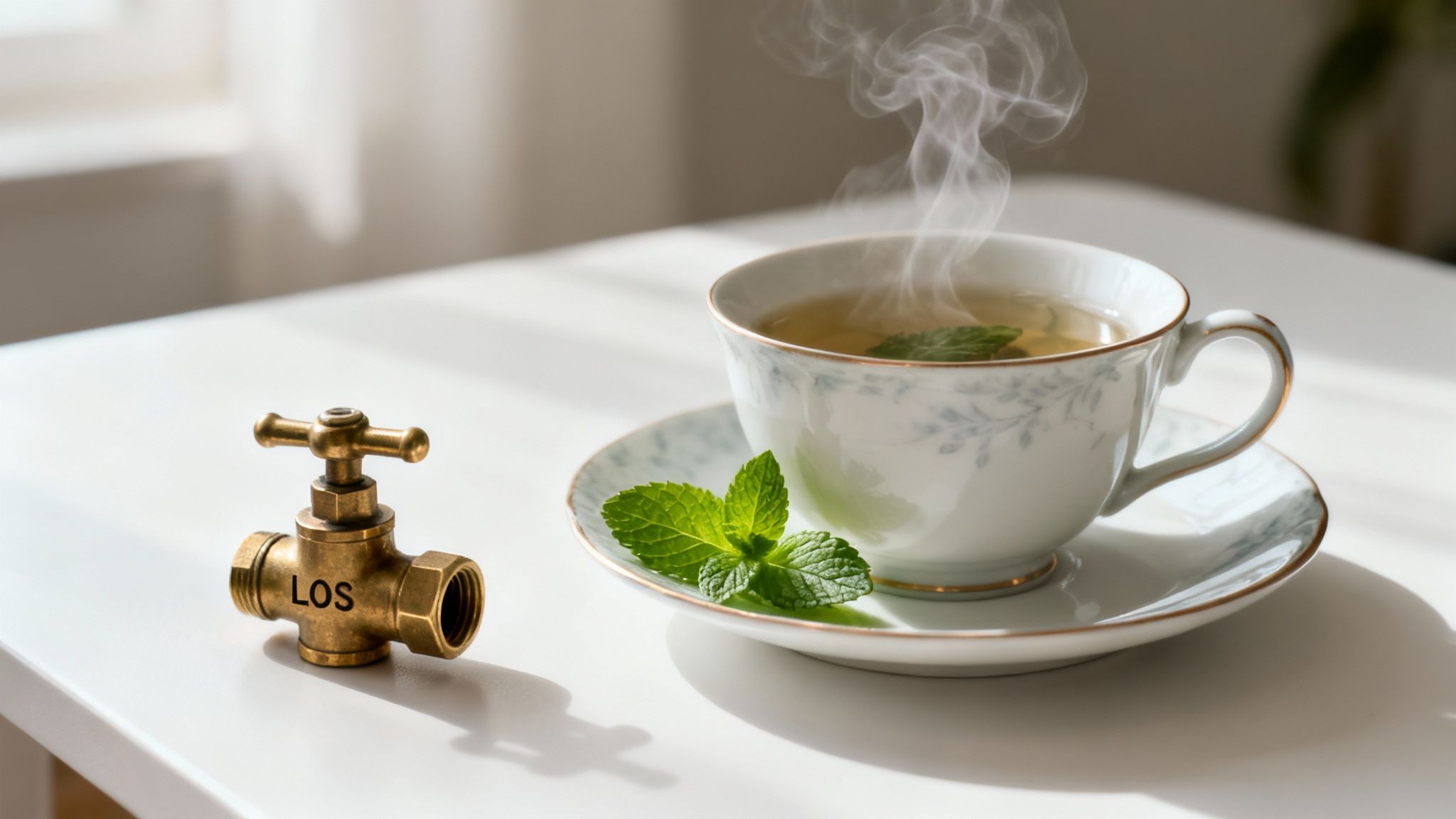
Peppermint has built a fantastic reputation in the world of herbal remedies. It's known for its antispasmodic qualities, which help to calm the muscles in the stomach. This is exactly why it’s often a great help for conditions like Irritable Bowel Syndrome (IBS), where those muscle spasms are the main culprit behind the discomfort.
The problem is, this same relaxing effect becomes a real issue for anyone prone to acid reflux.
How Peppermint Relaxes the Wrong Muscle
To get why, picture your digestive system as having a crucial one-way valve at the top of your stomach. This little gate is a ring of muscle called the lower oesophageal sphincter (LOS). Its job is simple but vital: it opens to let food into your stomach and then snaps shut to keep powerful stomach acid from splashing back up into your oesophagus.
The active compound in peppermint, menthol, doesn’t know the difference between the stomach muscles causing cramps and this all-important LOS valve. When you drink a cup of peppermint tea, the menthol tells this muscular gate to relax and go a bit slack.
Instead of holding the line, the LOS loosens, creating an opening for stomach acid to creep back into the delicate lining of the oesophagus. That backflow is what causes the all-too-familiar burning sensation of heartburn.
It’s a true catch-22: the very property that makes peppermint a hero for some digestive woes makes it a villain for acid reflux. So while you’re sipping away, hoping for relief, you could be unintentionally opening the floodgates.
To show how peppermint’s effects can be both a blessing and a curse, here’s a quick breakdown:
Peppermint Tea's Dual Effect on Digestion
| Digestive Aspect | Intended Soothing Effect (For Bloating/IBS) | Unintended Reflux Effect (For GERD) |
|---|---|---|
| Muscle Relaxation | Calms spasms in the stomach and intestines, easing cramps and bloating. | Relaxes the lower oesophageal sphincter (LOS), the valve that keeps acid in the stomach. |
| Menthol's Role | The active compound acts as a natural antispasmodic, targeting smooth muscle. | Menthol doesn't discriminate—it relaxes the LOS just as effectively as other digestive muscles. |
| The Outcome | Discomfort from trapped gas and cramping is often relieved. | The weakened LOS allows stomach acid to splash back up, causing heartburn and reflux. |
This table neatly summarises why a tea that feels calming for one person can be a major trigger for another.
And this isn't just word-of-mouth wisdom. Here in the UK, where acid reflux is a widespread issue, studies have backed this up. One piece of research highlighted that daily peppermint tea consumption can double the risk of GERD, precisely because of the menthol’s effect on the LOS. You can read more about the study's findings on The Independent.
Understanding this simple mechanism is the first step to managing your symptoms properly. While the world of herbal infusions is full of wonderful, supportive blends, it’s all about picking the right one for your body. If you’re keen to learn more, our guide to the best teas for gut health is a great place to start.
How Menthol Creates the Perfect Storm for Heartburn
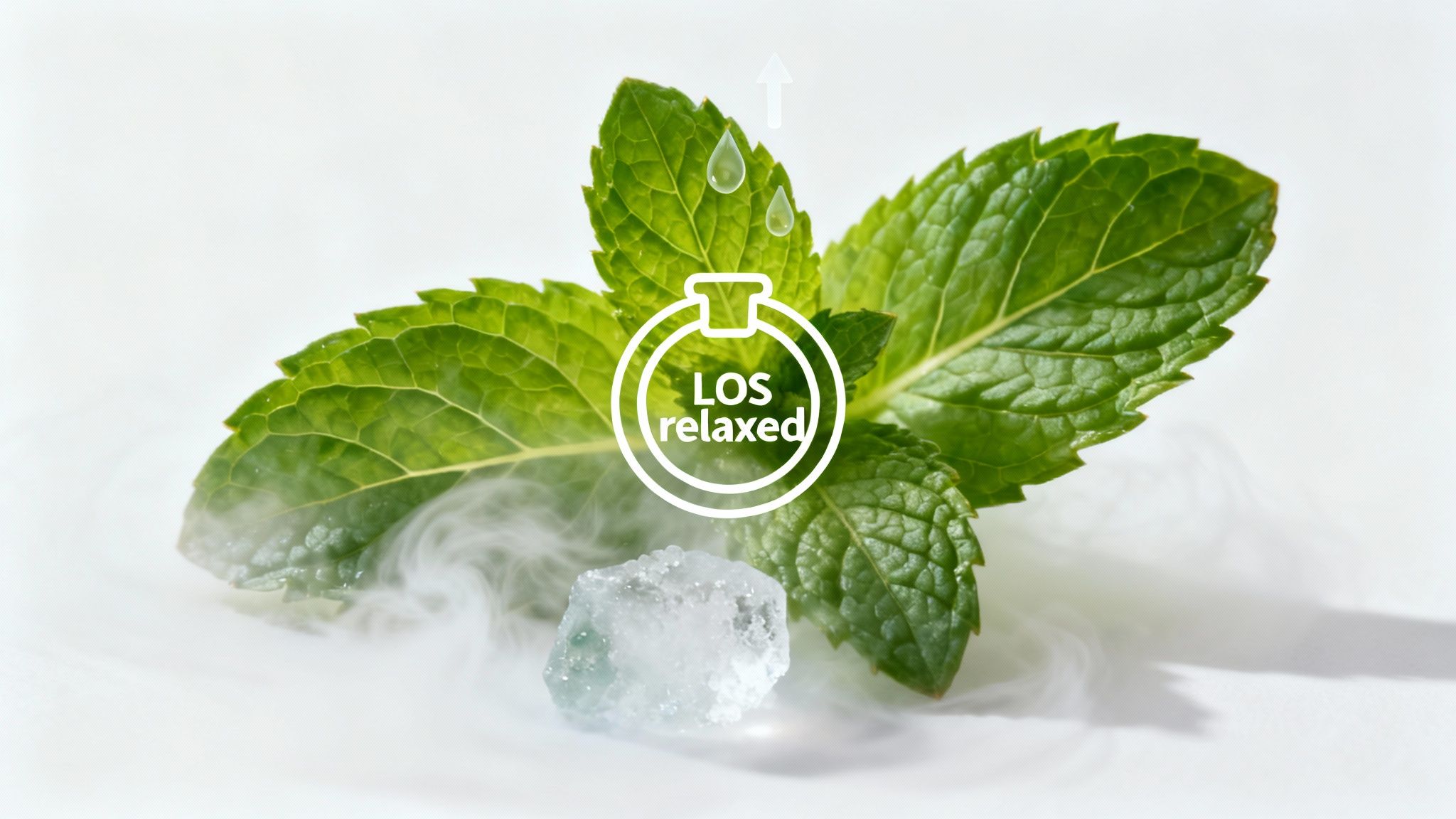
To get to the bottom of why peppermint tea can be such a problem for heartburn, we need to talk about its famous active compound: menthol. It’s the very thing that gives peppermint its signature cool, refreshing character. It’s also a natural muscle relaxant, what scientists would call an antispasmodic.
That soothing quality is fantastic for calming down an upset stomach, particularly the intestinal spasms that cause bloating and discomfort in conditions like IBS. The trouble is, that very same quality can completely backfire if you’re prone to acid reflux. It all comes down to a small but vital muscle you’ve probably never even thought about.
The Gatekeeper Muscle and Its Unfortunate Weakness
Right where your oesophagus meets your stomach, there’s a muscular ring called the lower oesophageal sphincter (LOS). You can picture it as a tightly controlled gate. Its job is to open just long enough to let food through into the stomach, and then to snap firmly shut to keep all that powerful stomach acid where it belongs.
When you drink a cup of peppermint tea, the menthol gets to work relaxing muscles all through your digestive system. Unfortunately, it doesn't know the difference between the muscles causing cramps and this crucial gatekeeper muscle. It tells the LOS to relax, too.
This causes the sphincter to lose its tension, becoming slack and much less effective at its job. Instead of a secure seal, you're left with a weakened barrier. It’s like a faulty lid on a jar; it only takes a little pressure for the contents to spill out. And in this case, that means harsh stomach acid splashing back up into your oesophagus, causing that all-too-familiar burning pain we call heartburn.
The very quality that makes peppermint a digestive soother for some is exactly what makes it a potent trigger for acid reflux. It unintentionally sabotages the one muscle responsible for keeping stomach acid locked away.
This isn’t just a small side effect. In the UK, acid reflux is a major issue, leading to over 5,000 GP visits for every 100,000 people in England each year. While peppermint's menthol is a blessing for IBS sufferers, it can be a real curse for the estimated 10 million UK adults with GERD. In fact, studies show that peppermint can lower the pressure of the LOS by as much as 30%, creating the perfect opportunity for acid to escape. You can find more insights about peppermint tea's benefits and risks on Teakruthi.
The Chain Reaction of Discomfort
This simple biological interaction kicks off a chain of events that many people who get heartburn will recognise instantly.
- You drink peppermint tea: Your body absorbs the menthol.
- The LOS relaxes: That muscular gate at the top of your stomach loses its tight grip.
- Stomach pressure increases: Things like normal digestion or even just lying down put pressure on your stomach.
- Acid splashes back: The weakened LOS can’t hold back the acid anymore.
- Heartburn begins: You feel that unmistakable burning sensation rising in your chest and throat.
It explains perfectly how a drink that feels so cool and calming on the way down can cause such fiery trouble later on. For acid reflux, peppermint tea really does create the perfect storm.
Who Should Steer Clear of Peppermint Tea
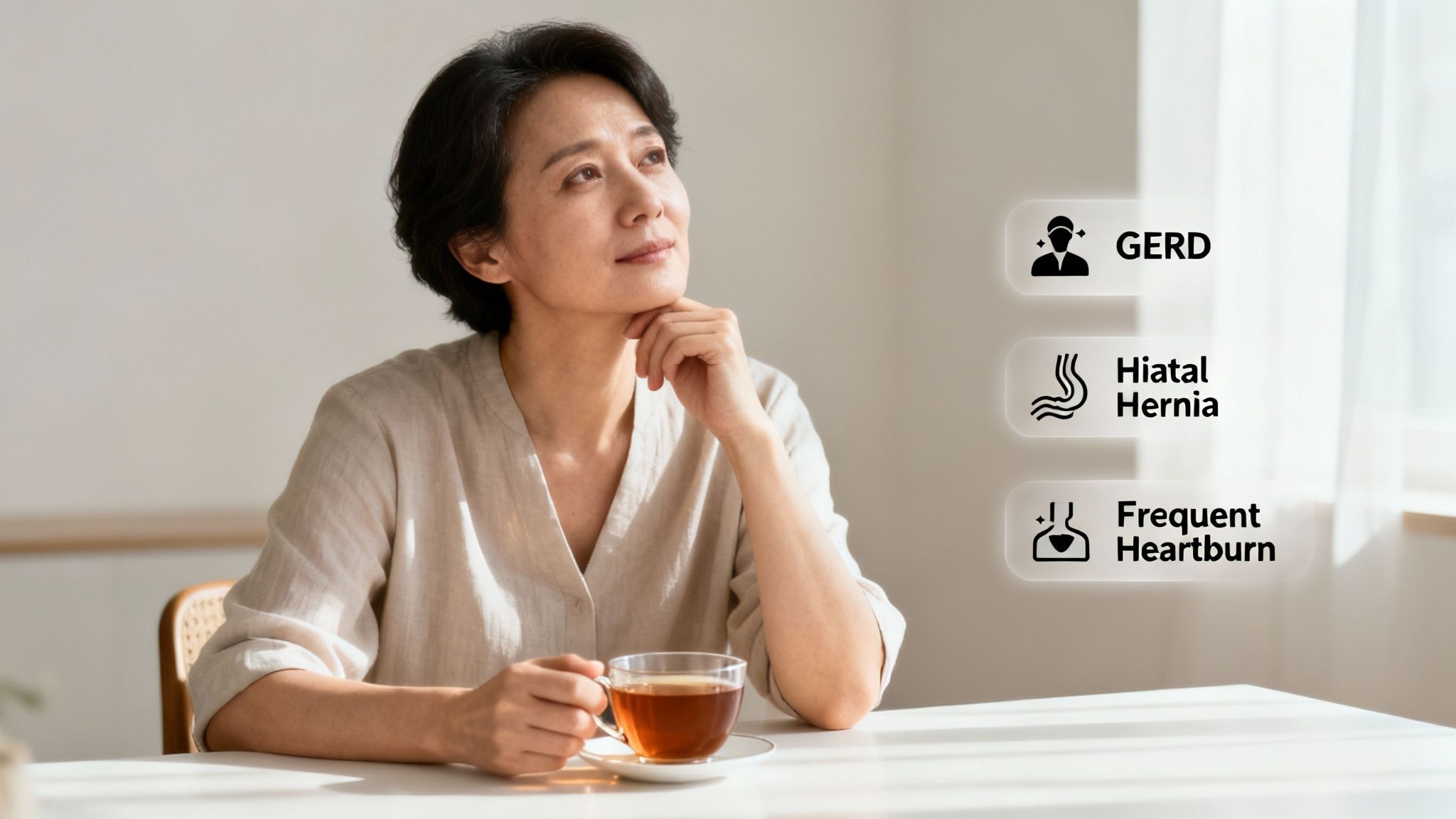
While many of us can happily sip on a cup of peppermint tea without a second thought, for some, it's a real trigger for discomfort. Knowing if you fall into one of these groups is the key to managing your digestive health and avoiding any unnecessary flare-ups.
When it comes to peppermint tea and acid reflux, the decision to drink it isn't black and white. It really comes down to your own personal health history. That soothing cup could easily backfire if you have certain conditions, so it pays to be informed.
High-Risk Groups for Peppermint Tea
If you've been diagnosed with a specific digestive issue, you should be particularly cautious. The very thing that makes peppermint feel so soothing—its muscle-relaxing effect—is precisely what can worsen your symptoms.
You should think twice about peppermint tea if you have:
- A GERD Diagnosis: With gastro-oesophageal reflux disease, your lower oesophageal sphincter (that crucial valve) is likely already a bit weak. Peppermint will only relax it further, making reflux more frequent and severe.
- A Hiatal Hernia: This condition, where the top of your stomach bulges through your diaphragm, already compromises the function of the LOS. Adding peppermint into the mix is a recipe for worsening acid backflow.
- Frequent Heartburn: If you find yourself reaching for antacids more than twice a week, it's a major red flag. This points to an underlying sensitivity that peppermint tea is almost certain to aggravate.
For these groups, the risk simply outweighs any potential digestive benefit. The menthol directly undermines the goal of keeping stomach acid where it belongs, making it a poor choice for managing symptoms.
Telltale Signs Peppermint Tea Is a Trigger
Even if you haven't got a formal diagnosis, your body has its own ways of telling you that peppermint isn't your friend. Pay close attention to how you feel after a cup. If you're wondering what to drink for heartburn, it's also worth knowing that caffeine can be another common trigger, which you can learn about in our guide on whether tea has caffeine.
Keep an eye out for these telltale signs that peppermint might be a trigger for you:
- A lingering sour or acidic taste in your mouth after you've finished your tea.
- Chest discomfort or a burning feeling that starts within an hour of drinking.
- A persistent dry cough or that annoying feeling of having to constantly clear your throat.
- More burping or regurgitation than usual after your brew.
If any of that sounds a bit too familiar, it's a clear signal your body is reacting to the menthol. The best thing you can do is listen to those signs and switch to a gentler herbal alternative.
Tips for Drinking Peppermint Tea More Safely
If you only get a bit of mild heartburn now and then and can’t imagine life without peppermint tea, there are smarter ways to enjoy it. While we wouldn't recommend it for anyone with chronic acid reflux, those with only a slight sensitivity can try a few mindful habits to lower the risk of discomfort.
It’s all about moderation and a bit of strategy. By being deliberate about how and when you drink your peppermint tea, you can often sidestep its potential downsides. It all starts with making sure your stomach isn't empty, which can leave the oesophagus a bit more vulnerable.
Timing and Preparation Matter
The simplest changes often make the biggest difference. Instead of reaching for a cup first thing in the morning on an empty stomach, try having it after a meal. The food acts as a buffer, soaking up some stomach acid and softening the menthol's direct impact on your lower oesophageal sphincter (LOS).
Here are a few practical tips to make your peppermint tea experience a bit safer:
- Brew Lightly: Let your tea steep for a shorter time—around 1-2 minutes instead of the usual 3-5. A lighter brew extracts less menthol, dialling down its muscle-relaxing effects without completely losing that refreshing flavour.
- Limit Your Intake: Just one cup a day. Overdoing it is one of the fastest ways to overwhelm your system and bring on a reflux episode. It's all about mindful sipping.
- Post-Meal Enjoyment: Savour your tea as a gentle digestif about 30 minutes after a meal. This gives your stomach a head start on digestion, creating a much more stable environment.
The goal isn’t to get rid of the menthol entirely, but to manage its concentration and timing. A weaker brew after a solid meal is far less likely to cause the LOS to relax than a strong cup on an empty stomach.
Choose Quality and Purity
The quality of the tea itself also plays a huge part. Many tea bags you find on supermarket shelves are filled with low-grade peppermint dust, artificial flavourings, or other additives that can be irritating. Sometimes these extras can cause an upset stomach all on their own, completely separate from the menthol.
For this reason, always choose high-quality, pure peppermint leaves. At Jeeves & Jericho, we only source whole peppermint leaves, which means you get a clean, unadulterated brew free from anything artificial. This commitment to purity gives you better control over what you're putting into your body.
Ultimately, listening to your body is the most important rule of thumb. If you try these tips and still feel that familiar discomfort, it’s a clear sign that peppermint tea probably isn’t for you. For broader information on health precautions, you can also consult these general health and safety guidelines.
Finding Your Perfect Reflux-Friendly Herbal Tea
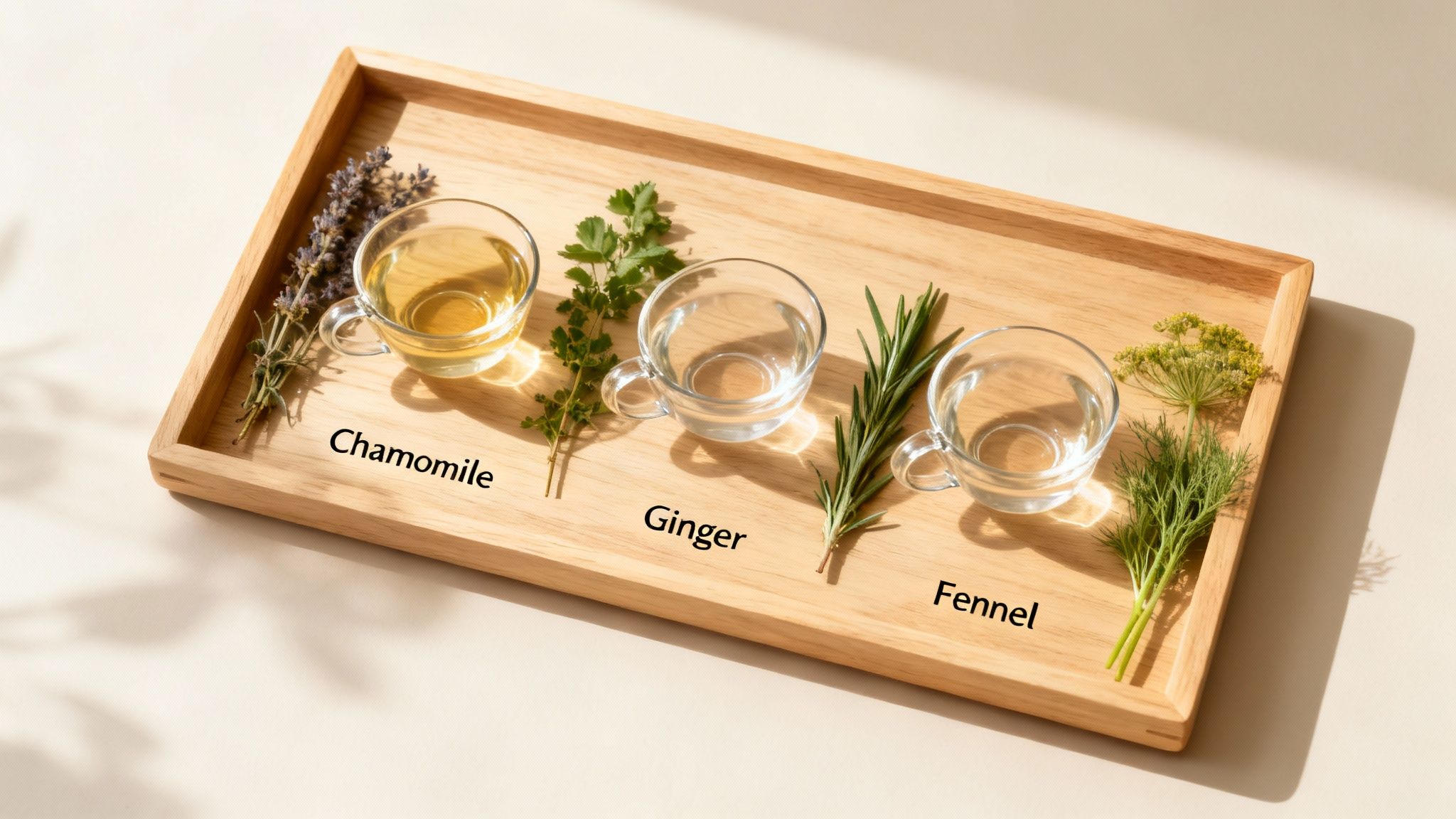
Just because peppermint tea is off the menu doesn't mean you have to give up the comforting ritual of a warm herbal brew. Far from it. A whole world of delicious and genuinely soothing alternatives is waiting for you—teas that can calm your digestive system without relaxing that all-important lower oesophageal sphincter (LOS).
If you’re a fan of our premium matcha and chai, you appreciate quality, and it’s worth understanding exactly why peppermint can be a problem. As specialists at London Acupuncture Therapy point out, its relaxing effect on the oesophageal sphincter is a real issue. In fact, research shows a staggering 65% of self-medicating patients found their heartburn actually worsened with peppermint. This reflects wider UK trends where up to 22% of GERD cases are linked to minty triggers. You can read more about these insights into peppermint and GERD online.
Thankfully, plenty of other botanicals offer gentle relief. The secret lies in choosing herbs known for their anti-inflammatory or digestion-aiding properties, but which don’t mess with the LOS.
Chamomile: The Gentle Calmer
Chamomile is probably the most famous soothing cuppa out there, and for very good reason. It’s celebrated for its calming effects on both the mind and the digestive tract.
This delicate, apple-scented flower contains compounds that help to reduce inflammation. By soothing the mucous membranes lining your digestive system, it can ease the irritation caused by stomach acid, giving you gentle comfort without any unwanted side effects. It’s the perfect brew for winding down in the evening.
Ginger: The Digestive Aid
While it certainly has a spicy kick, ginger is a fantastic ally against an unsettled stomach. Crucially, unlike peppermint, it’s known to help increase LOS pressure—in other words, it strengthens the very barrier that’s meant to keep acid down.
Ginger also helps to speed up stomach emptying, which reduces the chance of acid reflux happening in the first place. A cup of warming ginger tea after a meal can aid digestion and calm nausea, making it a powerful and reflux-friendly choice.
Key Takeaway: The best herbal teas for acid reflux work by either soothing inflammation (like chamomile) or actively supporting proper digestive function without relaxing the crucial LOS muscle (like ginger).
Fennel: The Bloating Buster
Fennel tea, with its subtle, sweet, liquorice-like flavour, is another excellent option. It’s particularly brilliant at easing the gas and bloating that can often accompany—or even worsen—acid reflux by increasing pressure in the abdomen.
By helping to relax the stomach muscles (but not the LOS), fennel can bring relief from that uncomfortable fullness and cramping. This makes it a wonderful digestif that supports overall gut comfort. Digging into general strategies for herbal tea reflux relief can introduce you to even more soothing alternatives.
Choosing the right herbal tea is a comforting and effective way to manage your symptoms. For those interested in exploring a wider selection, our complete guide to caffeine-free herbal teas offers plenty of inspiration for your next soothing cup.
Your Questions on Peppermint Tea and Digestion, Answered
When you're dealing with a sensitive stomach, choosing the right herbal tea can feel a bit like a guessing game. You’re after that soothing warmth, but you’re also keen to avoid anything that might stir up trouble. We get it.
To cut through the noise, we've pulled together answers to the most common questions we hear about peppermint tea and how it plays with our digestive system. Think of this as your practical guide to sipping confidently.
Can I Drink Peppermint Tea if My Heartburn Is Only Occasional?
If heartburn is more of a rare visitor than a permanent resident and you don’t have a GERD diagnosis, then you might just get away with peppermint tea in moderation. The key, as always, is to listen to your body.
A good way to test the waters is to have a cup after a meal, rather than on an empty stomach. Stick to one cup and see how you feel. If you notice even the slightest bit of discomfort, that's your cue to stop and reach for something gentler, like a lovely chamomile or ginger infusion.
Does the Quality of the Tea Make a Difference for Acid Reflux?
It certainly does, though maybe not in the way you’d expect. While the menthol naturally found in peppermint is the main culprit for triggering reflux, the overall quality of your tea still has a big part to play in your digestive happiness.
Cheaper tea bags are often bulked out with artificial flavours, preservatives, and other additives that can easily irritate the stomach lining. By choosing a high-quality, whole-leaf peppermint tea, you know you’re getting a pure, unadulterated product. But—and it’s a big but—even the most pristine peppermint tea contains menthol, which can relax the lower oesophageal sphincter. It always carries a potential risk for those prone to reflux.
Is Spearmint Tea a Safer Choice for Acid Reflux?
That's a very fair question. Spearmint contains a lot less menthol than its punchy cousin, peppermint. Because of this, some people find it doesn’t trigger their heartburn in quite the same way.
However, spearmint isn’t entirely off the hook. It still has compounds that can relax that all-important muscle at the bottom of the oesophagus. For that reason, if you have GERD or get heartburn often, it's probably best to steer clear of both mint teas, just to be on the safe side. You're much better off with infusions that actively help, like ginger, chamomile, or fennel.
Remember, the aim isn't just to dodge triggers but to actively choose drinks that will soothe and support your digestive system. Safer alternatives offer all the comfort without any of the worry.
What Other Lifestyle Habits Help Manage Acid Reflux?
Choosing the right tea is a wonderful, positive step, but managing reflux well usually means looking at the bigger picture. A few small tweaks to your daily routine can make a world of difference to how you feel.
Why not try weaving some of these simple habits into your day?
- Avoid Common Triggers: Keep an eye on how you react to spicy foods, caffeine, alcohol, and fatty meals. They're often the usual suspects.
- Eat Smaller Meals: Try having five or six smaller meals throughout the day instead of three big ones. This puts less pressure on your stomach.
- Time Your Meals: Give yourself a good two to three hours to digest after eating before you lie down or head to bed.
- Elevate Your Head: Popping a few pillows under your head—or raising the head of your bed by about six to eight inches—uses gravity to help keep stomach acid where it belongs.
At Jeeves & Jericho, we believe that knowing more about your tea helps you enjoy it more. Explore our handpicked collection of high-quality, reflux-friendly herbal teas to find your perfect soothing brew today. Visit us at https://www.jeevesandjericho.com.